
Heists & Cons: 20 Films for November Nights
The November collection · 20 films · One more night in
Coats on the hook. Something warm on the stove. Someone on screen has a very complicated plan. November belongs to heists and cons: crews coming together, impossible jobs, charming liars, and the pleasure of trying to stay one step ahead.
This shelf starts with Ocean’s Eleven, The Sting, Inside Man, Heat and Focus, then makes room for fifteen more films from the archive. Pick a mood, pull a tape, or let the three-night shuffle choose your next stretch of evenings.
The setting is cozy; every movie isn’t. The harder-edged jobs bring violence and tension. The introductions below keep the endings to themselves, while the archive’s podcast discussions go into detail.
Spoilers ahead in the shelf verdicts and category cards. Watch the film before opening its podcast discussions. For a first watch, skip to the spoiler-light introductions.
Pull a tape from the November shelf
All 20 films in this guide, in guide order. Point at a tape, tap it, or use the arrow keys to explore each film and its archive coverage.
Tape 1 of 20
Ocean’s Eleven (2001)
- Episode aired
- On the mics
- Chris Ryan, Juliet Litman, Sean Fennessey, and Amanda Dobbins
Spoiler territory: the panel’s verdicts.
- Who Won the Movie
- Brad Pitt vs. George Clooney (1-1 on explicit ballots; a further Pitt endorsement may be a second voice)
- Most Rewatchable Scene
- The poker scene
- Apex Mountain
- Brad Pitt; George Clooney (vote split); Steven Soderbergh (vote split)
Tape 2 of 20
The Sting (1973)
- Episode aired
- On the mics
- Bill Simmons, Chris Ryan, and Sean Fennessey
Spoiler territory: the panel’s verdicts.
- Who Won the Movie
- Robert Redford
- Most Rewatchable Scene
- The train poker game is selected twice; the first Gondorff-Hooker meeting is another explicit favorite. The opening con, roulette loss, counterfeit handoff, train setup, fake race, revenge exchange, Salino reveal, and final con are additional nominees.
- Apex Mountain
- Redford and George Roy Hill
Tape 3 of 20
Inside Man (2006)
- Episode aired
- On the mics
- Bill Simmons, Sean Fennessey, and Chris Ryan
Spoiler territory: the panel’s verdicts.
- Who Won the Movie
- Spike Lee
- Most Rewatchable Scene
- Final Plummer-Foster confrontation; Foster-Denzel courthouse exchange; Albanian-language sequence
- Apex Mountain
- Clive Owen; Jodie Foster; Juicy Fruit; Gangstas iz Genocide
Tape 4 of 20
Heat (1995)
- Episode aired
- On the mics
- Bill Simmons, Chris Ryan, and Michael Mann
Spoiler territory: the panel’s verdicts.
- Who Won the Movie
- Michael Mann — recalled from the previous Heat episode
- Most Rewatchable Scene
- The heists, diner encounters, crew debate and final handclasp
- Apex Mountain
- Mann’s moments of creative command
Tape 5 of 20
Focus (2015)
- Episode aired
- On the mics
- Bill Simmons and Wesley Morris
Spoiler territory: the panel’s verdicts.
- Who Won the Movie
- Car-crash henchman; Margot Robbie
- Most Rewatchable Scene
- Super Bowl scene; explanation of the con
- Apex Mountain
- No affirmative selection
Tape 6 of 20
The Town (2010)
- Episode aired
- On the mics
- Bill Simmons, Ryen Russillo, and Chris Ryan
Spoiler territory: the panel’s verdicts.
- Who Won the Movie
- Split: Jeremy Renner; Ben Affleck; Boston
- Most Rewatchable Scene
- The North End heist
- Apex Mountain
- Blake Lively: yes
Tape 7 of 20
The Italian Job (2003)
- Episode aired
- On the mics
- Bill Simmons, Chris Ryan, and Van Lathan
Spoiler territory: the panel’s verdicts.
- Who Won the Movie
- Mini Coopers; Edward Norton also proposed.
- Most Rewatchable Scene
- Opening Venice heist and escape.
- Apex Mountain
- Mini Coopers; possibly Seth Green; Hollywood around 2003.
Tape 8 of 20
Thief (1981)
- Episode aired
- On the mics
- Bill Simmons, Sean Fennessey, and Chris Ryan
Spoiler territory: the panel’s verdicts.
- Who Won the Movie
- James Caan; Michael Mann
- Most Rewatchable Scene
- Diner scene
- Apex Mountain
- Chicago diners; Robert Prosky death scenes; Joliet Prison
Tape 9 of 20
Den of Thieves (2018)
- Episode aired
- On the mics
- Bill Simmons, Chris Ryan, and Van Lathan
Spoiler territory: the panel’s verdicts.
- Who Won the Movie
- Christian Gudegast; the film itself; Gudegast or Schreiber alternative
- Most Rewatchable Scene
- Benihana; final 66 minutes; Nick crashes his wife’s date
- Apex Mountain
- Pablo Schreiber; three-for-three suit stores; Los Angeles Fed; school rivalry; Benihana; misdirected stripper texts; gearing up; Angel City Donuts; 50 Cent’s film career
Tape 10 of 20
Out of Sight (1998)
- Episode aired
- On the mics
- Bill Simmons, Ryen Russillo, and Bill Lawrence
Spoiler territory: the panel’s verdicts.
- Who Won the Movie
- Steven Soderbergh
- Most Rewatchable Scene
- Hotel bar scene; trunk scene
- Apex Mountain
- Steaks in a fridge
Tape 11 of 20
Catch Me If You Can (2002)
- Episode aired
- On the mics
- Bill Simmons, Chris Ryan, and Sean Fennessey
Spoiler territory: the panel’s verdicts.
- Who Won the Movie
- Leonardo DiCaprio
- Most Rewatchable Scene
- Hollywood hotel; stewardess recruitment and airport escape
- Apex Mountain
- No definite affirmative choice
Tape 12 of 20
Sneakers (1992)
- Episode aired
- On the mics
- Bill Simmons, Kyle Brandt, and Joanna Robinson
Spoiler territory: the panel’s verdicts.
- Who Won the Movie
- Robert Redford.
- Most Rewatchable Scene
- The sound-based route reconstruction leads the choices; Kyle prefers the final fortress heist, with Joanna also praising the Scrabble decoding.
- Apex Mountain
- Scrabble tiles and evading motion sensors qualify; the major actors mostly do not.
Tape 13 of 20
Ocean’s Twelve (2004)
- Episode aired
- On the mics
- Chris Ryan, Sean Fennessey, and Amanda Dobbins
Spoiler territory: the panel’s verdicts.
- Who Won the Movie
- Steven Soderbergh; Europe
- Most Rewatchable Scene
- Tess-goes-to-Rome hotel scene with Bruce Willis
- Apex Mountain
- Brad Pitt
Tape 14 of 20
Point Break (1991)
- Episode aired
- On the mics
- Bill Simmons, Shea Serrano, Jason Concepcion, and Mark Titus
Spoiler territory: the panel’s verdicts.
- Who Won the Movie
- Patrick Swayze
- Most Rewatchable Scene
- The beach football game; the first bank robbery stakeout; the airplane parachute scene
- Apex Mountain
- Patrick Swayze
Tape 15 of 20
Reservoir Dogs (1992)
- Episode aired
- On the mics
- Bill Simmons, Sean Fennessey, and Chris Ryan
Spoiler territory: the panel’s verdicts.
- Who Won the Movie
- Quentin Tarantino
- Most Rewatchable Scene
- The commode story; the Mr. Blonde and Mr. White showdown through the ear-cutting; the ending where Chris Penn's character figures it out
- Apex Mountain
- Michael Madsen
Tape 16 of 20
Ronin (1998)
- Episode aired
- On the mics
- Bill Simmons and Chris Ryan
Spoiler territory: the panel’s verdicts.
- Who Won the Movie
- John Frankenheimer
- Most Rewatchable Scene
- Second car chase
- Apex Mountain
- Stellan Skarsgård; late-1990s France movies; Nice as a movie setting
Tape 17 of 20
The Usual Suspects (1995)
- Episode aired
- On the mics
- Bill Simmons and Chris Ryan
Spoiler territory: the panel’s verdicts.
- Who Won the Movie
- Christopher McQuarrie
- Most Rewatchable Scene
- Final Palminteri-Spacey scene leading into the reveal
- Apex Mountain
- Turkish piss streams; Kevin Pollak; Stephen Baldwin; Chazz Palminteri; Peter Greene; Turkish crime lords; the limp; Baldwin brothers as a troika
Tape 18 of 20
Trading Places (1983)
- Episode aired
- On the mics
- Bill Simmons, Chris Ryan, and Van Lathan
Spoiler territory: the panel’s verdicts.
- Who Won the Movie
- Eddie Murphy
- Most Rewatchable Scene
- Trading floor; Curtis’s nude scenes; bar and limousine reveal also strongly considered
- Apex Mountain
- Hoagie City; 1983 Philadelphia; Philadelphia films, qualified; commodities
Tape 19 of 20
Rounders (1998)
- Episode aired
- On the mics
- Bill Simmons, Chris Ryan, Sean Fennessey, and Van Lathan
Spoiler territory: the panel’s verdicts.
- Who Won the Movie
- Brian Koppelman and David Levien; poker; Edward Norton
- Most Rewatchable Scene
- Rolled-up aces speech; Mike defeats Teddy KGB
- Apex Mountain
- Oreos
Tape 20 of 20
The Color of Money (1986)
- Episode aired
- On the mics
- Bill Simmons, Chris Ryan, and Sean Fennessey
Spoiler territory: the panel’s verdicts.
- Who Won the Movie
- Paul Newman
- Most Rewatchable Scene
- The Chalkies/Werewolves sequence leads many choices
- Apex Mountain
- Billiards, Balabushka cues, Mary Elizabeth Mastrantonio, and sweater vests
Pick a mood, build your three nights
Tap a lane to narrow the posters, then let the archive deal you a queue. Every poster jumps to that pairing below.
-
 Ocean’s Eleven 2001
-
 The Sting 1973
-
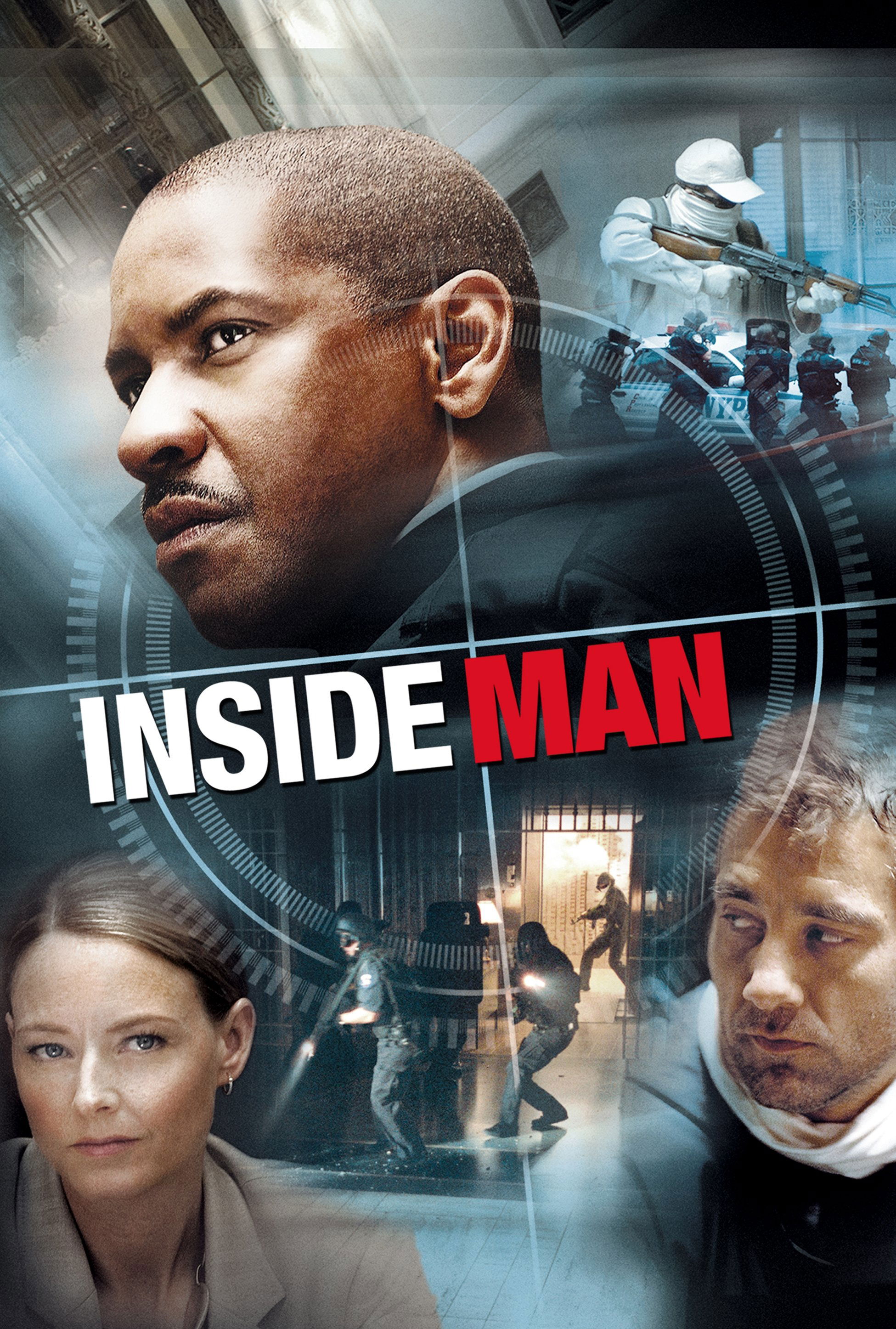 Inside Man 2006
-
 Heat 1995
-
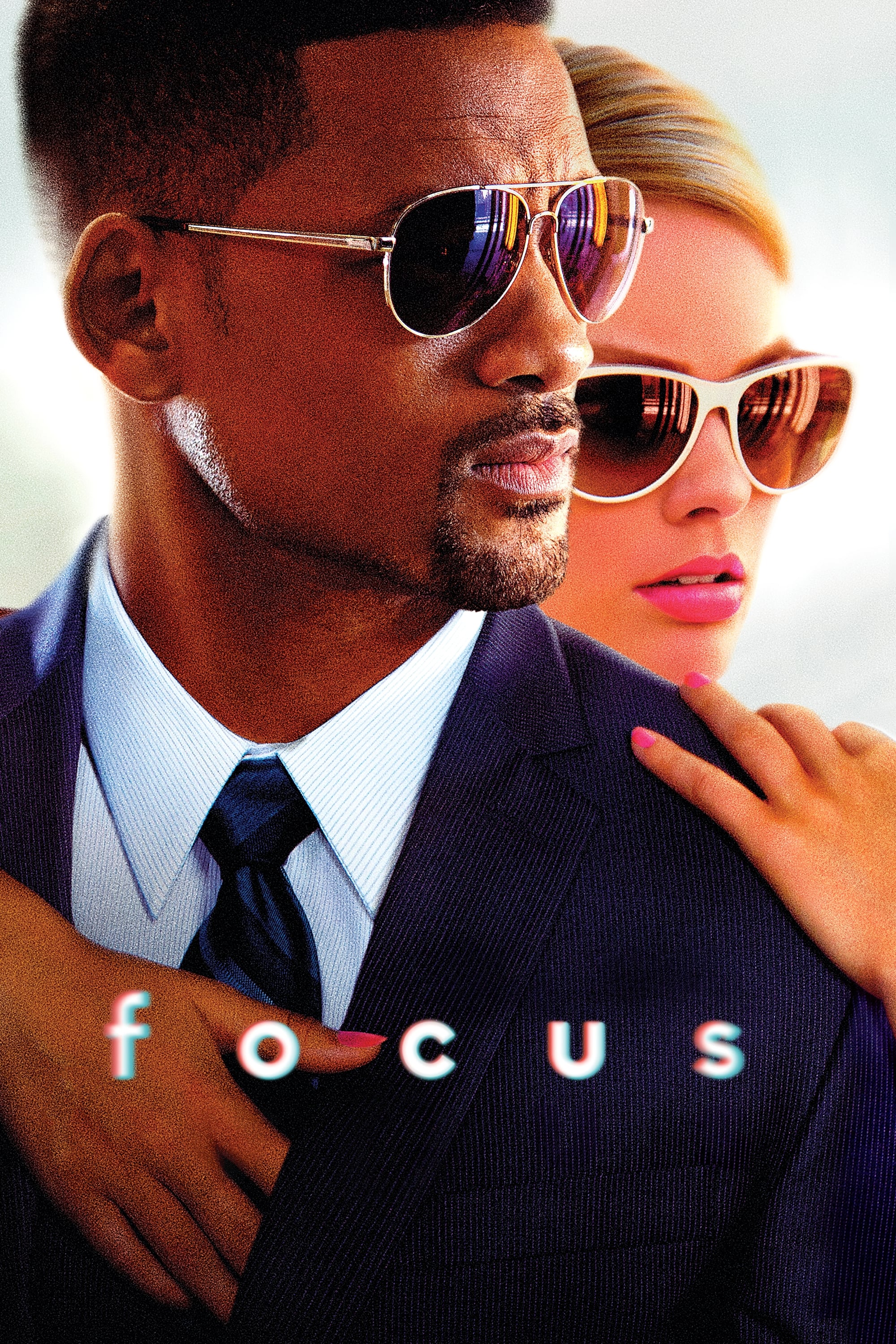 Focus 2015
-
 The Town 2010
-
 The Italian Job 2003
-
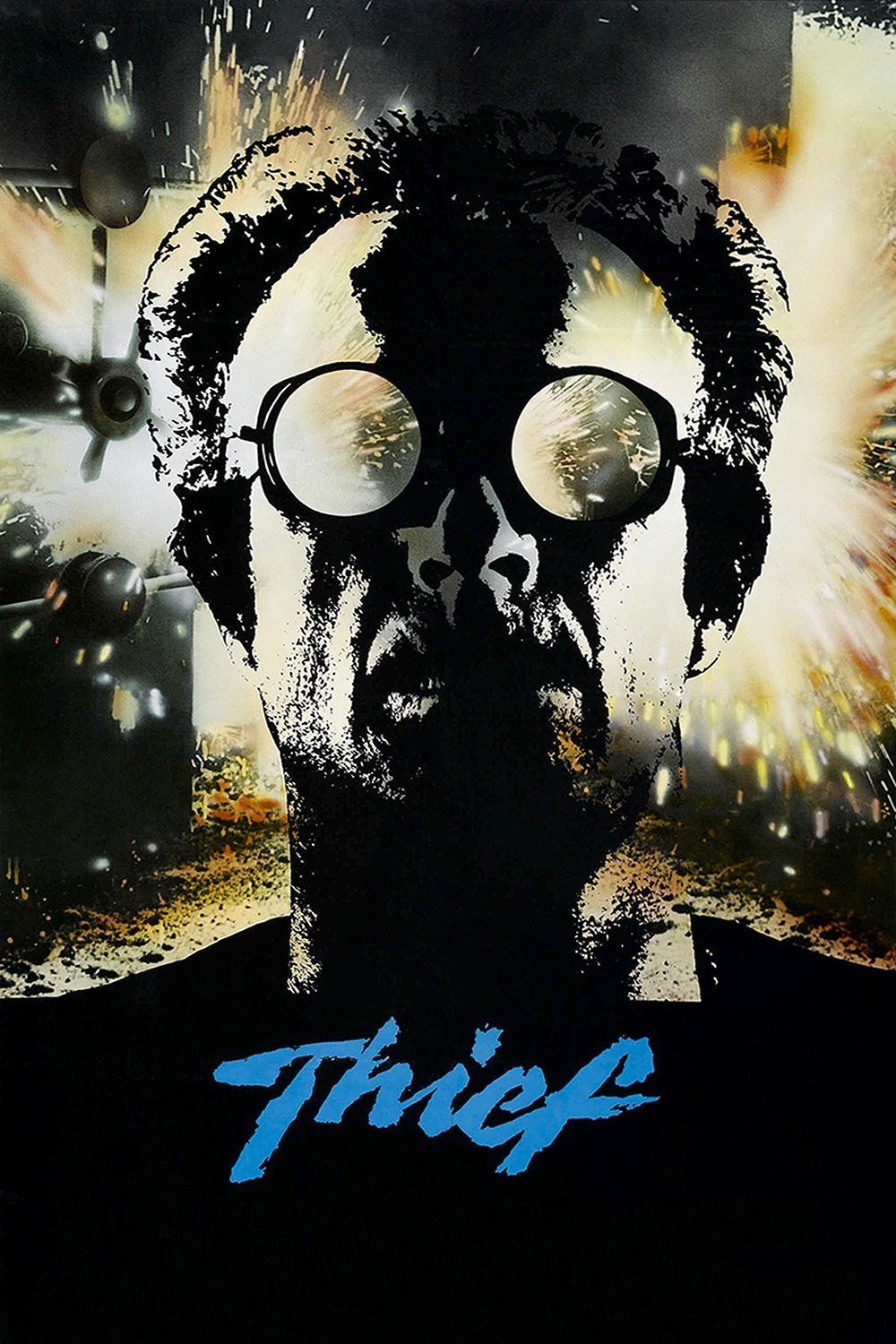 Thief 1981
-
 Den of Thieves 2018
-
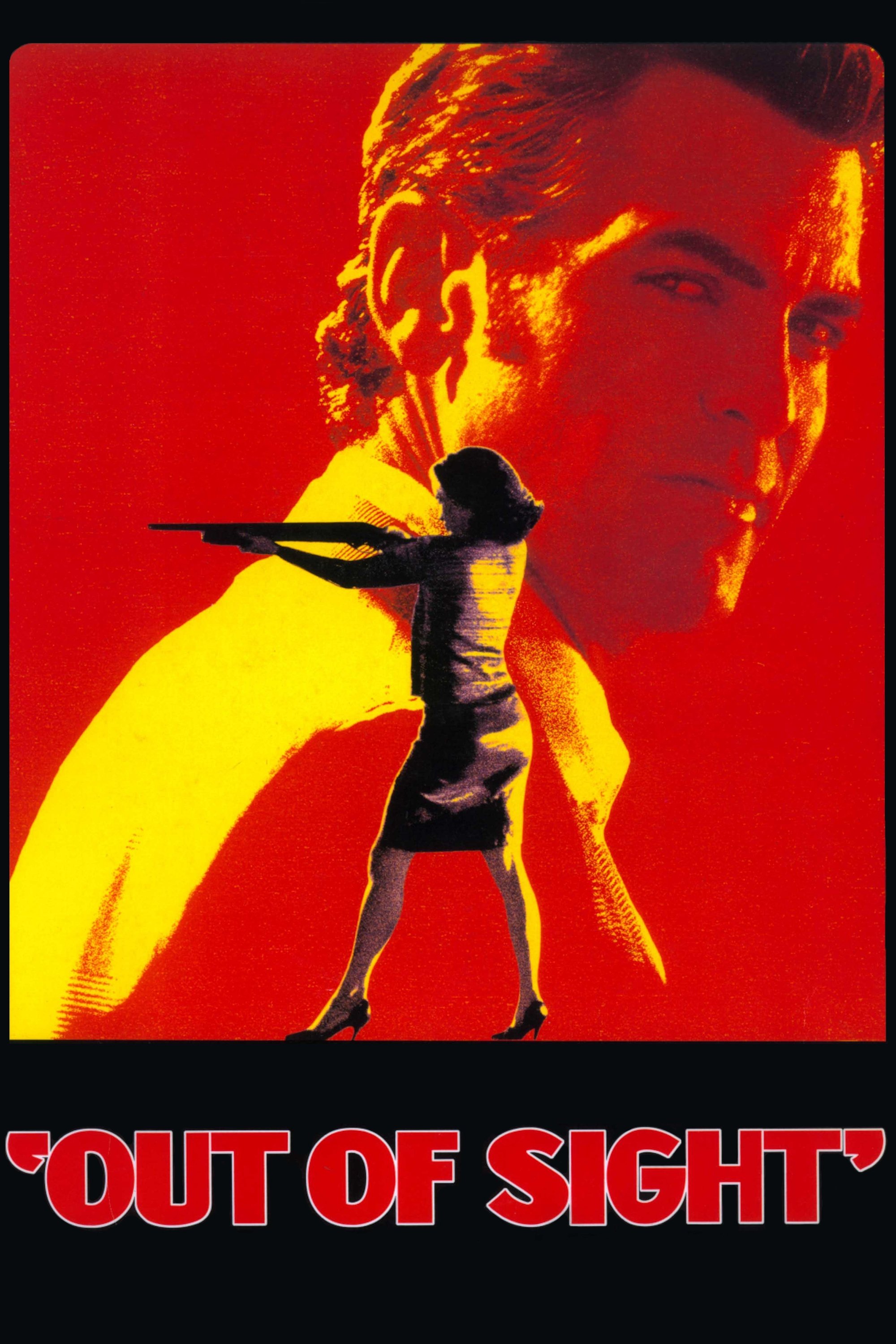 Out of Sight 1998
-
 Catch Me If You Can 2002
-
 Sneakers 1992
-
 Ocean’s Twelve 2004
-
 Point Break 1991
-
 Reservoir Dogs 1992
-
 Ronin 1998
-
 The Usual Suspects 1995
-
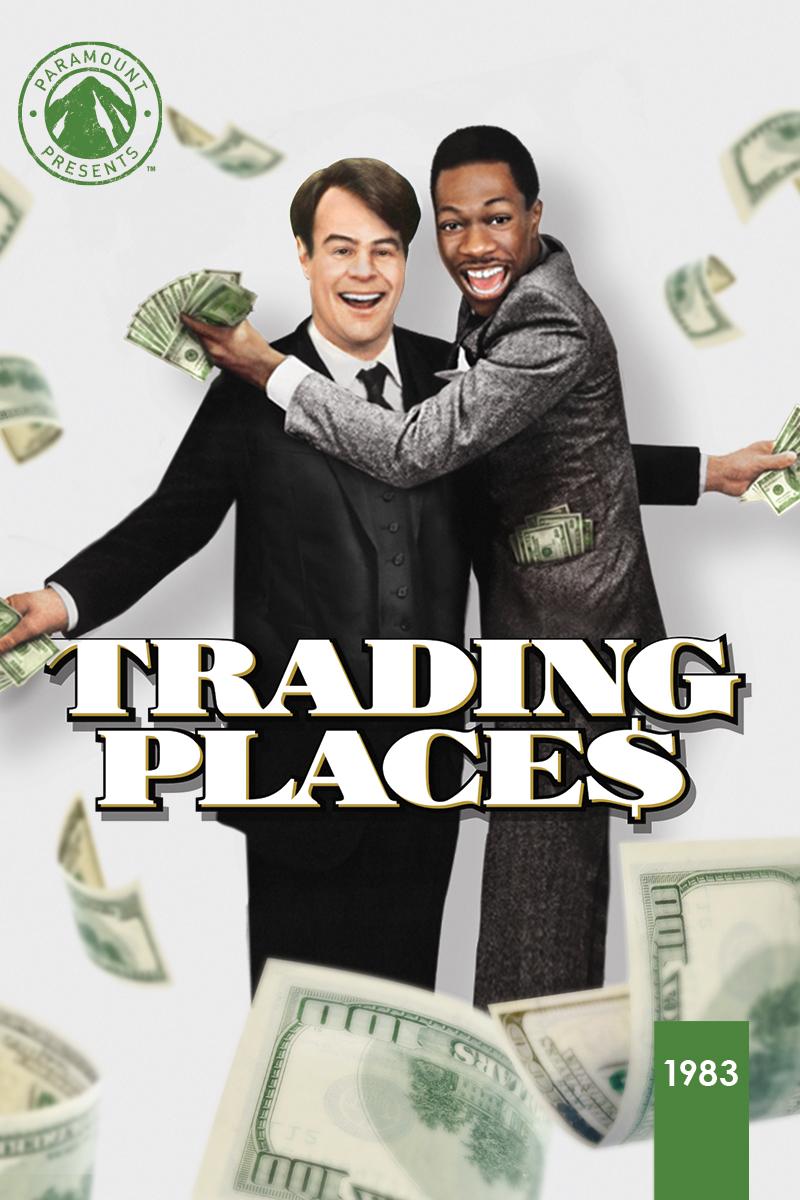 Trading Places 1983
-
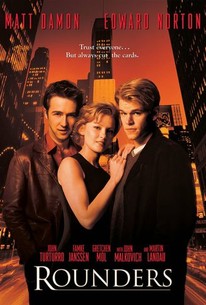 Rounders 1998
-
 The Color of Money 1986
1. Ocean’s Eleven (2001)
Start with the invitation everyone can accept. Steven Soderbergh’s casino caper makes assembling the crew feel as satisfying as the job itself. The pleasure is in the easy rhythm: a look across a room, a perfectly timed interruption, another specialist arriving with exactly the skill required. This is the opening-night pick for a group that wants charm, precision and a reason to order more food.

Most Rewatchable Scene
The poker scene
In the discussion (7)
- The category is hard for this film because it is defined by flow rather than individual scenes, and the heist itself goes on without distinguished scenes, so the nominees are top-heavy: the poker scene including Danny Ocean's entrance and banter, Ruben's introduction with the three Vegas robbery attempts scored to Take My Breath Away, Clooney's this-is-how-we're-gonna-do-it monologue, and the Claire de Lune montage of the guys looking at the fountain.
- Claire de Lune has been one host's alarm sound for ten years, a beautiful way to wake up thinking about the eleven career criminals staring at a fountain; it is called the most iconic scene, very still with few faces, the band breaking up, a beautiful end note on a well-executed heist; a running bit insists the show will not be celebrating a movie about bad people.
- Asked for a most rewatchable scene, she has a list of about twelve that includes everything already mentioned; the one actual standalone scene is Danny and Tess at dinner the first time, which is Julia Roberts on eleven. — Amanda Dobbins
- The dinner scene shows the level of the writing and their chemistry; the House Always Wins speech is loved because every Clooney-and-Pitt aside is a delight, it is the one with actual proper nouns, and the 'been practicing that' deflation sums up the charm of the movie: something cool that gets punctured by a sarcastic joke; the clip is played.
- Linus doing recon and presenting Terry Benedict's whole day, ending with Julia Roberts' entrance, is almost as good as Clooney coming up the escalator as she walks down, with Brad Pitt eating his shrimp cocktail, a favorite of his foods.
- Rewatching the night before, Bernie Mac is very funny: every line, the encounter with the van dealership guy that feels like a different movie, and the stage showdown with Linus in front of Terry Benedict.
- The poker scene gives a contact high: being in on a joke the others are not, the patter, the Incan matrimonial head mask market and fencing, a peek at their career criminal nature; it is visually distinct, dark with lighting that breaks the screen around the round table against the sun-drenched Vegas, and shows why Brad Pitt, bored and staring at mermaids in LA bars, wants this; the car shot on the way to Musso and Franks is loved, and the poker scene is picked out of affection.

Who Won the Movie?
Brad Pitt vs. George Clooney (1-1 on explicit ballots; a further Pitt endorsement may be a second voice)
In the discussion (3)
- The candidates are Clooney, Pitt, Damon or Soderbergh; the first pick is Brad Pitt, as much as that host loves George Clooney, called a plot twist: effervescent, understated, perfect, and also so hot.
- A further endorsement of Pitt, not counted as a ballot because it may be the same voice as the first pick: watching every second of him, his voice and that suit; Clooney gets to play this character in life and movies all the time, including at Harry and Meghan's wedding, while Pitt rarely gets this role, so it is good for his legend; he is an astonishing sidekick for a guy who otherwise has to carry Meet Joe Black, standing to the side eating snacks and delivering one-liners; he won easily.
- The case for George Clooney: his biggest hit except Gravity, which does not really need him; the only real franchise he has been part of, since people forget the Batman movie; he has stayed one of the most famous people in the world for 25 years without doing what stars do to stay huge, and this was the one time he leaned into the center of his celebrity, and the movie does not work without him; the argument is liked, since after Michael Clayton there are few signature Clooney performances, but he found love so he is fine.
Podcast choices
- Speaker not identified
- Brad Pitt
- Speaker not identified
- George Clooney
2. The Sting (1973)
Trade the casino lights for a beautifully dressed confidence game. Paul Newman and Robert Redford give this pick its warmth, while the setup invites you to keep asking who knows what. Let the film teach you its rhythm instead of trying to solve every move. Pair it with Ocean’s Eleven on another evening to compare two very different kinds of criminal hospitality.
Most Rewatchable Scene
The train poker game is selected twice; the first Gondorff-Hooker meeting is another explicit favorite. The opening con, roulette loss, counterfeit handoff, train setup, fake race, revenge exchange, Salino reveal, and final con are additional nominees.
In the discussion (12)
- The opening switch with Luther is nominated as a strong opening con.
- The train stretch combining Lonnegan’s pickpocketing, card tricks, gin trick, and poker game is nominated as one long sequence. — Bill Simmons
- Hooker immediately losing his winnings at roulette is included despite an objection that the bet is implausible. — Bill Simmons
- Hooker paying Snyder with counterfeit money is nominated.
- The poker game is selected for Newman’s comic drunk performance and the four-jack cheat.
- Hooker apparently offering to double-cross Gondorff is nominated for making the audience question the con. — Bill Simmons
- The fake Blue Note race is nominated. — Bill Simmons
- Gondorff and Hooker’s exchange about revenge being for suckers is nominated. — Bill Simmons
- Salino’s reveal as the assassin and death are nominated. — Bill Simmons
- The final con, fake shootings, and Hooker declining his share are nominated. — Bill Simmons
- The poker game is explicitly selected by two participants. — Chris Ryan
- Gondorff and Hooker’s first meeting, with hungover Gondorff and their verbal sparring, is selected as another favorite. — Chris Ryan
In the discussion (3)
- Paul Newman receives the first winner vote.
- Robert Redford receives two winner votes because he walks out of the movie “smelling like gold.”
- George Roy Hill is proposed as an alternative for directing both this film and Butch Cassidy and the Sundance Kid. — Bill Simmons
Podcast choices
- Speaker not identified
- Paul Newman
- Speaker not identified
- Robert Redford
- Speaker not identified
- Robert Redford
3. Inside Man (2006)
A bank robbery, a negotiation and several people who would prefer not to explain themselves: Spike Lee gives the familiar setup a wonderfully alert energy. Watch how authority changes hands across a conversation. This is a good middle-of-the-month selection when you want a puzzle with momentum, and enough competing agendas to keep the post-movie conversation going without anybody needing a flowchart.
In the discussion (16)
- The bank-robbery setup comes first: meticulous crime setups are a favorite, with the crew entering in painter jackets with fluorescent strips.
- Asked what disguise they would use for a heist, the picks are plumbers and a cable repairman installing the jails network, while another wants only to be the driver.
- The driver pitch prompts jokes about a risky U-turn bit and a terrifying wheelman, plus disappointment that the movie has no second switch van.
- Watching the people in line invites imagining your own move as a hostage: get straight down with hands visible, or offer to help the robbers.
- One of Clive Owen's best scenes is his anger when the Gold Digger ringtone goes off, followed by the strip-to-your-underwear order; it is tense because the character's limits are still unknown, and shuffling the hostages is disorienting.
- The first Foster-Plummer scene shows two strong actors, with Foster coming in off the bench, and the conversation is staged on the Brooklyn Promenade for scenery.
- The video-game scene is offered as a controversial pick: some found it hacky social commentary, but the speaker enjoyed Owen vibing with the boy, and their son asked if the game was real.
- Spike, pushing 50, is seen reacting to a generational gap in hip-hop culture, both criticizing it and trying to understand it; it plays a little old-guy. — Sean Fennessey
- Spike also added the imagined raid scene for action; the video game likewise slows the film but gives Owen a quieter moment, and the boy relates more to Owen than to Denzel.
- The boy's 50 Cent line is a little clumsy, but Spike committing to it and building the game from scratch is appreciated.
- The first Clive-Denzel phone call, with the pina colada and Amber-and-Tiffany back-and-forth, is praised as hard to pull off on a phone.
- Other beats listed are the first Owen-Foster meeting, and the hostage-release reveal that everyone is "actually hostage," a voila moment.
- The last Plummer-Foster scene, with "I sold my soul" and her Bin Laden's nephew joke, is named the speaker's pick for most rewatchable, a chess match and the exclamation point of the film.
- As a cap, the Foster-Denzel courthouse exchange with the Baron Rothschild blood-in-the-streets line is added, along with the interrogations, which the speaker read were improvised but was unsure count as scenes. — Sean Fennessey
- A dark-horse pick is the sequence where the police try to identify the Albanian recording: the most New York sequence, with the body-bags line and the woman with the bag of parking tickets.
- The two conversations that Foster pivots are the favorites. — Sean Fennessey
In the discussion (4)
- The question is called really hard, with a joke not to say Ransone.
- A tangent calls The Doors terrible and jokes about Kyle McLaughlin's scenes.
- "It's got to be Spike," with repeated agreement: "I had Spike, I got Spike." — Sean Fennessey
- Denzel's mid-2000s run is then called a real sweet spot, without a separate vote. — Sean Fennessey
Podcast choices
4. Heat (1995)
Give Michael Mann’s film the whole evening. Its professionals have routines, loyalties and private lives that cannot stay neatly separated from the work. The scale is larger and the mood more severe than the playful cons elsewhere on this shelf. It is an intense, violent pick, best saved for a night when you can turn up the sound and put the phone away.
Most Rewatchable Scene
The heists, diner encounters, crew debate and final handclasp
In the discussion (14)
- The first armored-car robbery and Big Boy diner confrontation establish a ruthless crew — Michael Mann
- Mann says Kevin Gage encouraged actual head contact in the diner scene — Michael Mann
- Eady’s expression and Neil moving a seat closer make their first encounter compelling — Michael Mann
- Tom Sizemore’s commitment in the heist debate is a standout — Michael Mann
- Mann explains that the transmission-station location would interfere with surveillance bugs — Michael Mann
- The Pacino/De Niro diner meeting is the central acting showcase — Michael Mann
- Mann filmed both leads together using three cameras; he rejects the body-double rumor — Michael Mann
- Neutral restaurant colors and tight reverse angles foreground the faces — Michael Mann
- Mann avoided emotional rehearsal to preserve discovery during filming — Michael Mann
- Chris Ryan singles out Hanna’s vulnerability disarming Neil — Michael Mann
- The bank shootout preserves clear spatial geography — Michael Mann
- Mann describes precise range mockups and actor training with SAS advisers — Michael Mann
- The final handclasp was settled before the rest of the narrative was reverse-engineered — Michael Mann
- Moby’s closing cue was selected during editing; Goldenthal and Lisa Gerrard are also discussed — Michael Mann
Who Won the Movie?
Michael Mann — recalled from the previous Heat episode
This discussion recalls a choice from an earlier episode.
In the discussion (2)
- A speaker recalls that “we both voted for Michael Mann” when they did The Re-Heat episode — Bill Simmons
- This is a recollection of the earlier episode, not a new ballot — Bill Simmons
5. Focus (2015)
A confidence game is as much about managing attention as telling a convincing story. Will Smith and Margot Robbie make this the shelf’s pick for practiced charm, quick adjustments and the problem of trusting someone who is good at deception. Choose it after The Sting for a different generation of the con, then compare how the two films invite you to watch the room.
Most Rewatchable Scene
Super Bowl scene; explanation of the con
In the discussion (23)
- The segment opens by saying there is an obvious winner but the candidates will be walked through. — Bill Simmons
- The opening hotel-bar scene recalls Out of Sight; the whole movie has an Out of Sight vibe with Soderbergh color schemes and a retro jazz-ish soundtrack. — Bill Simmons
- The hotel-room shakedown where Will Smith isn't buying it is liked, quoted through the Saudi bachelor party and cancer lines.
- Her thief audition on Bourbon Street is short but good; she carries it, and the sequence won one participant over on her, with a Pretty Woman-like sense of an actress blossoming in the part. — Bill Simmons
- The pre-Super Bowl bedroom scene, where he explains the Mello nickname and his dad's hammers-and-nails advice, is the needed quiet scene showing why to care about the couple. — Bill Simmons
- The Super Bowl scene is called one of the most rewatchable scenes of the last 10 years. — Bill Simmons
- The fake teams and uniforms, resembling Seahawks or XFL gear, are indefensible because the Super Bowl rights were not obtained; the sequence runs over 10 minutes. — Bill Simmons
- On rewatch you see Smith setting up B.D. Wong's gambler Lee Wan, and Sympathy for the Devil, often misused, works well. — Bill Simmons
- First time through it looks like he will blow the money; Jess spots Farhad through binoculars and gets it; B.D. Wong is great and it is a good 10-minute scene despite fake teams. — Bill Simmons
- B.D. Wong is having the time of his life off a Law & Order set and is probably overdoing it, flagged for the later overacting award. — Wesley Morris
- For a non-gambler the scene seems to head into a dark Leaving Las Vegas turn and reveals you can bet on anything. — Wesley Morris
- As a gambling scene it works, like a home-run hat pool at a ballgame; the one flaw, saved for nitpicks, is the terrible odds of the final double-or-nothing bet. — Bill Simmons
- Bored rich men betting in a suite is realistic, the reveal of the planted fives is cool, and the clever switch is worrying about Smith instead of the actual gambling addict. — Bill Simmons
- Liyuan just loves the action and the story, so losing does not bother him; the high matters more than the stakes. — Bill Simmons
- The limo dump with the $80K payoff, held as one shot while she breaks down, is very Soderbergh; why he does it is deferred. — Wesley Morris
- In Buenos Aires three years later she flips the con on him over drinks; the music is unnecessary goosing. — Wesley Morris
- On rewatch Smith visibly seems turned on in the drinks scene, rated a seven on a scale topped by William Hurt in Body Heat, with The Big Easy also cited. — Wesley Morris
- Owens (Gerald McRaney) sniffs around the hotel room while Robbie escapes by the balcony; balcony escapes are always welcome.
- The Owens rant is called overwritten screenwriting leaning on McRaney's southern military masculinity. — Wesley Morris
- The final candidate is Nikki explaining the con to the bad guys, the shooting and the whole ending. — Bill Simmons
- The Super Bowl scene is named most rewatchable 'for me'. — Bill Simmons
- Asked 'What do you have?', the reply picks the explanation of the con: the keylogger necklace and two montages letting Robbie then Smith tell their sides. — Wesley Morris
- The ending also features Rodrigo Santoro and the beefy security guy; the guy's roughly 90-second pharmacy sequence is praised as a Soderbergh- or Michael Mann-style bit and deferred to aged-best. — Wesley Morris
Who Won the Movie?
Car-crash henchman; Margot Robbie
In the discussion (5)
- A 'crazy choice' is announced and described as not an obvious answer; 'Farhad' is interjected. — Bill Simmons
- The pick is the henchman who performs the car-crash stunt in essentially a single take, shot from both sides so blood appears after impact, driving into Smith and Robbie. — Wesley Morris
- The character is looked up on air as Brennan Brown as Horst, with doubt whether that was his name; 'That guy wins the movie for me.' — Wesley Morris
- The other pick is Margot Robbie, who goes toe to toe with a huge star and pulls him out of a five-year movie coma; Smith could win, but she is in a better place afterward. — Bill Simmons
- She could have a Charlize-type career, though she is not yet as good an actress. — Bill Simmons
Podcast choices
- Wesley Morris
- Car-crash henchman
6. The Town (2010)
For the next stop after Heat, bring the job closer to home. Ben Affleck’s Boston crime film puts friendship, neighborhood and escape into the same tight space. The crew matters as much as the machinery of the robbery. Choose it for an evening that can handle emotional pressure as well as action, then take the argument about loyalty into the podcast.
Most Rewatchable Scene
The North End heist
In the discussion (18)
- The opening bank robbery is nominated.
- The pre-robbery meeting and practical details are praised. — Bill Simmons
- Claire working the safe and Doug calming her are praised. — Bill Simmons
- Claire walking blindfolded to the water and the title card are praised.
- Doug asking Jim for help without explaining why is nominated.
- Jim shooting the attackers’ legs and “there goes college soccer” are praised.
- Doug, Claire, and Jim’s lunch encounter is nominated. — Bill Simmons
- Doug covering Jim’s neck tattoo is highlighted. — Bill Simmons
- Doug and Jim’s post-lunch confrontation is nominated.
- The North End robbery is an early leading choice and receives two final votes. — Bill Simmons
- The construction-detail cop looking away is praised. — Bill Simmons
- Doug and Jim’s cemetery fight is nominated. — Ryen Russillo
- Doug confronting Fergie and learning about his mother is nominated. — Bill Simmons
- Hamm interrogating Blake Lively at Sully’s is nominated.
- The Fenway heist and shootout receive Russillo’s final vote. — Ryen Russillo
- Doug killing Fergie is nominated. — Bill Simmons
- Hamm interrogating Affleck is nominated as the movie’s Heat diner scene. — Chris Ryan
- Bill and Chris make the North End robbery their final choices.
Who Won the Movie?
Split: Jeremy Renner; Ben Affleck; Boston
In the discussion (4)
- Jeremy Renner is selected by one host without hesitation. — Bill Simmons
- Ben Affleck is selected for directing and launching his next career phase.
- Boston is selected as the third answer. — Ryen Russillo
- A long Revolutionary-era anecdote argues that the city’s combative identity spans centuries. — Ryen Russillo
7. The Italian Job (2003)
This is the 2003 F. Gary Gray film: the Mini Coopers, the specialist crew and the pleasure of watching a plan turn into movement. It is an easy bridge from Ocean’s Eleven to the more muscular action picks. Make it the relaxed group night, with the conversation ready to turn toward the familiar heist question: which job on this team would you actually be qualified to do?
Most Rewatchable Scene
Opening Venice heist and escape.
In the discussion (9)
- Charlize talking to her dad by phone is proposed. — Bill Simmons
- The Venice safe heist and speedboat chase are grouped as a major choice.
- The double cross is proposed. — Bill Simmons
- The cable-repair infiltration is proposed. — Bill Simmons
- The date and confrontation with Steve are proposed. — Bill Simmons
- The Hollywood Boulevard, subway, river, and helicopter chase is proposed. — Bill Simmons
- Putting the crew together and explaining their backstories is proposed.
- The driving-rain introduction of Skinny Pete is proposed.
- The opening Venice sequence is the final consensus choice. — Bill Simmons
Who Won the Movie?
Mini Coopers; Edward Norton also proposed.
In the discussion (2)
- Edward Norton is proposed because the performance is captivating on rewatch.
- Mini Coopers are selected emphatically as the movie winner. — Craig Horlbeck
Podcast choices
- Craig Horlbeck
- Mini Coopers
8. Thief (1981)
Go back to an earlier Michael Mann professional. Thief makes the tools, concentration and working habits of its central character part of the attraction. The mood is nocturnal and hard, so save it for the darker lane. Seen near Heat, it offers another way into the question that runs through this collection: what happens when someone tries to draw a clean line around a dangerous life?
Most Rewatchable Scene
Diner scene
In the discussion (29)
- First pick: Caan going to the plating company to demand his $185,000 within three hours; it is the first time Farina is seen, and the eight horrified 1981 office workers are a highlight. — Bill Simmons
- A joke that Chris used to enter the office the same way, moving the chair to see what was on the desk.
- Willie Nelson's big prison scene is complicated but fascinating, an intense staring contest with the faces a foot apart; Mann seems to have few friends but insanely intense connections with the ones he has.
- The Nelson scene is not obviously working at first but pays off with "I don't want to die in here, Frank"; his line readings are sometimes odd, but his open, empathetic face makes it work.
- Willie Nelson on Frank's postcard collage is briefly puzzling on a rewatch until you remember he is Frank's best friend. — Chris Ryan
- Praski's (Prosky's) first scene: his first movie at 51, dressed like a grandfather in a golf shirt tucked into pressed slacks. — Bill Simmons
- Mann auditioned dozens of New York actors for Leo; Bruckheimer advised that the right person had not walked in the room yet, and Prosky, a theater actor, was found, leading to a That Guy career. — Bill Simmons
- Peak Prosky is this role: an avuncular, warm, familial sensibility with pure evil right under the surface. — Sean Fennessey
- The Natural is raised as close but too evil; later roles such as Last Action Hero and Mrs. Doubtfire made him the favorite uncle. — Sean Fennessey
- Prosky originated Shelley Levene in Glengarry Glen Ross. — Sean Fennessey
- Caan lays out what he won't steal: just diamonds and cash, no coin collections. — Bill Simmons
- The diner monologue is the reason for the episode after it was caught while flipping channels and texted to Chris; it is called the best moment of Caan's career, better than any Godfather moment, laying out the character's spine in four minutes. — Bill Simmons
- It is called a favorite first date in movie history: Caan is two hours late, they scream at each other on the drive, and he tells a woman he just met about his prison fight with Morphus. — Bill Simmons
- Caan called it the scene he was most proud of; it was filmed at a Howard Johnson's in Illinois that Mann had a connection to, and the wide shot is Heat DNA, though Heat never shows the two men together. — Bill Simmons
- An amazing piece of filmmaking; the underrated part is the car speech before the diner, two people who have looked at each other for eight months cutting out the games. — Sean Fennessey
- Caan cracking the love affair like a safe ("cut the mini moves and the bullshit and get on with this big romance") while being impatient with the woman he plans to marry is hilarious. — Sean Fennessey
- One-last-job movies raise the question of why not ask her out after the job; the woman complicating the last job is a Mann recurring thing. — Chris Ryan
- Mann's top restaurants are ranked: diner, Chinese restaurant, Musso and Frank-style steakhouse, a close-booth place like Dan Tana's, and hibachi for the glimmering blades. — Chris Ryan
- The Chinese-restaurant waiter gives a borderline Dion Waiters performance and is nicknamed David. — Bill Simmons
- The elevator-shaft scene is weirdly harrowing and shows Mann's precision; it is liked more than the safe crack, though the opening keyhole-camera drilling sequence is great. — Sean Fennessey
- A first-time viewer at home was riveted by the talking but hid behind an iPad during the drilling; Fincher's Panic Room is imagined as a response to Thief. — Sean Fennessey
- Prosky lays down the law in an incredible monologue ("I run you", whacking out the whole family, wimpy burgers), shot upside down from Frank's POV, ending with Belushi dropped in acid. — Bill Simmons
- Belushi's death scene could have used another minute of setup. — Bill Simmons
- The ending is fun to watch but has issues: it hinges on Attaglia getting a glass of milk, Mann's written ending reunited Frank with Jessie, and seeing the girlfriend again would have been more satisfying.
- Burning the postcard reads as Frank giving up the idea that he could be happy or emotionally available. — Chris Ryan
- Biggest nit here: he should have gone back in the house and stolen things, though sparing Leo's wife is a purposeful choice by a man with a samurai code.
- Mann repeatedly sends the wife packing, as in a two-part season-one Miami Vice episode and Heat's walk-away with Amy Brenneman in the car, which is called weird given the question of whether Mann himself hasn't been married to the same woman for about 50 years.
- Final answer: the diner scene with Tuesday Weld, met with "Me too." — Sean Fennessey
- One more honorable mention is deferred to What's Aged the Best. — Bill Simmons
Who Won the Movie?
James Caan; Michael Mann
In the discussion (3)
- Caan is the obvious answer, but Prosky is called one of the great crime-movie villains; no explicit final pick is stated in this turn. — Bill Simmons
- One pick is Michael Mann.
- Another pick is Jimmy Caan, who can't be shaken from the "I am a straight arrow" car speech.
Podcast choices
- Speaker not identified
- Michael Mann
- Speaker not identified
- James Caan
9. Den of Thieves (2018)
Choose this when the evening calls for a big, bruising crime picture. The attraction is the pressure around the job and the competing teams trying to control it. Put it on the same side of the shelf as Heat and The Town, with room to argue afterward about the characters’ choices. This is the noisy night in, rather than the gentle Sunday afternoon.
Most Rewatchable Scene
Benihana; final 66 minutes; Nick crashes his wife’s date
In the discussion (17)
- The opening donut-store robbery establishes an eerie, empty Los Angeles atmosphere late at night. — Chris Ryan
- The opening robbery establishes military training, theft of the truck rather than its contents, and escalation to killing police. A guard reaching for coffee becomes a fatal mistake. — Van Lathan
- Nick’s crime-scene entrance combines eating a donut, apparently avoiding its blood, with quick deductions about the getaway and cigarette and vegan insults. His sleepless appearance contrasts with his investigative ability. — Chris Ryan
- The driving flashback introducing Donnie to the crew remains understandable despite the chronology. Mirrored briefings and the later explanation of Donnie’s information connect the police and robbers. — Chris Ryan
- The untraceable shredded-currency premise is accepted despite its elaborate mechanics and the easier alternative of an ordinary bank robbery. Comparisons with Heat and Fast Five lead to a wish for simpler Fast franchise heists.
- The prom-date intimidation scene is praised for 50 Cent, the assembled garage crew, and the return deadline. A participant imagines Ringer film enthusiasts intimidating his own daughter’s date.
- Benihana is a favorite scene for Nick’s crude restaurant insults, high-school rivalry, Samoan and Spam taunts, and Merrimen’s demand to respect family. The hosts initially acknowledge uncertainty about whether the restaurant is literally Benihana.
- The hosts speculate about the football positions Merrimen and Nick could have played, with Merrimen’s leadership questioned as a quarterback. Long Beach Poly’s stronger program complicates Nick’s boasting. — Bill Simmons
- Nick's boast about beating Long Beach Poly is questioned because of that program's strength and Antonio Pierce's coaching connection; the Benihana confrontation nearly becomes a fight before Nick leaves. — Chris Ryan
- Donnie's apparent impending murder in the tent, with acid and protective equipment, is compared with the realization of danger in Goodfellas, Lethal Weapon 2, and Speed. — Chris Ryan
- The gun-range confrontation shows Nick impressed by Merrimen's shooting and establishes mutual admiration alongside recognition of danger.
- The fake Pico Savings robbery is a rewatchable swerve, using the familiar claim that the robbers want the bank’s money rather than the customers’ money. — Chris Ryan
- Donnie emerging from the cash container and stealing the money while the cameras are off is praised as especially tense. — Chris Ryan
- The hosts mock the women eating Chinese food that has spent several days in an air duct.
- One participant favors the final 66 minutes, beginning with Nick leaving the playground, while distinguishing the emotional appeal of Benihana from the technical achievement of the corridor shootout. — Bill Simmons
- Nick crashing his wife’s date to sign divorce papers is nominated for his taking food and drinks, claiming ownership, and invoking his own police status. — Van Lathan
- The date’s humiliation is debated: one response says he must stand up to Nick to preserve the relationship, while another says he cannot recover. — Van Lathan
Who Won the Movie?
Christian Gudegast; the film itself; Gudegast or Schreiber alternative
In the discussion (3)
- Christian Gudegast is the first explicit winner choice for shepherding the film through fifteen years of development; a following response agrees. — Chris Ryan
- Another winner choice is the film itself, because its unexpected reception and sustained enthusiasm produced a sequel people want to see. — Van Lathan
- The final winner response leaves Christian Gudegast and Pablo Schreiber as alternatives, prompting discussion of whether Schreiber could have had a defining action franchise and whether Halo filled that role. — Chris Ryan
Podcast choices
10. Out of Sight (1998)
Soderbergh supplies another kind of getaway: a crime film whose conversations can be as compelling as its criminal business. George Clooney and Jennifer Lopez make this an especially good date-night selection. Watch for the pauses, the teasing and the balance between confidence and uncertainty. It shares a director with Ocean’s Eleven, but brings a more intimate kind of chemistry to the collection.
Most Rewatchable Scene
Hotel bar scene; trunk scene
In the discussion (28)
- The trunk scene is introduced as the candidate that is going to win. — Bill Simmons
- Snoopy's prison shakedown of Albert Brooks's Ripley, ending with the goldfish killing, is praised as an amazing four-minute scene with a beginning, middle and end. — Bill Simmons
- The ending is loved for being so mean: Clooney's character gives Ripley a prison education in being a mark, and the price rises from two grand to three. — Ryen Russillo
- Killing the fish is a signpost that the character is truly bad, like Dennis Freena threatening Charles Groden in Midnight Run, and it gives the movie jeopardy. — Bill Lawrence
- The earlier kidney shank after a thrown fight felt like 'just prison'; only the goldfish made him the bad guy. — Bill Simmons
- Albert Brooks plays the shakedown like a pawn-shop haggle, and the Bauschen Lom mispronunciation is great comedy.
- Michael Keaton's one scene is a candidate that won't win; Tarantino allowed his Jackie Brown character in the movie as a crossover, and Lopez wears a Marino jersey. — Bill Simmons
- A speaker who puts actors from earlier shows on the next one recalls a Cougar Town and Community crossover with Danny Poody working as an extra. — Bill Lawrence
- Keaton reportedly took no money and liked that viewers might see the character as a real cop; Tarantino had to clear the cameo across two studios. — Bill Lawrence
- Keaton's uncomfortable laugh when Dennis Farina confronts him only lands if you have seen Jackie Brown; it may be the only movie with two Batmen. — Bill Lawrence
- Asked for a favorite crossover, the answer recalls a Facts of Life and Different Strokes connection. — Ryen Russillo
- The favorite crossover offered is Coolidge from The White Shadow appearing as a janitor on St. Elsewhere and greeting Salami in an elevator. — Bill Simmons
- Next candidate: the hotel bar scene, which cuts between the sex scene and its foreplay like Don't Look Now and ends with Clooney's "what if" speech, called as good as an actor's monologue gets. — Bill Simmons
- Detroit glows in the background, and the uninteresting guys from New York City who hit on her set up Clooney as the hero. — Ryen Russillo
- Parts come straight from the book; the lines are not written to show off, and the stranger-connection idea is relatable because people just keep walking. — Ryen Russillo
- The scene is not awkward or uncomfortable, and on rewatch there is nothing in it that could not be shown in a PG movie, yet it is still one of the sexiest love scenes. — Ryen Russillo
- Free-pass anecdote: the speaker's wife, Krista, named George Clooney as her free pass and was later found sitting beside him on the Warner Brothers lot, where the Drew Carey and ER stages were next to each other; she still finds this scene sexy. — Bill Lawrence
- Bottle Rocket's hotel scene under the sheet is named a favorite sex scene for its restraint; a Requiem for a Dream answer is a joke. — Ryen Russillo
- The aftermath, where Lopez's character walks out angry at Clooney out of shame, plays like an actual couple. — Bill Lawrence
- The trunk is the famous scene, but the hotel bar chemistry between the two actors is rare. — Bill Simmons
- Candidate: the ending at Albert Brooks's house with double staircases, White Boy Bob accidentally killing himself and Lopez debating whether to shoot Clooney, a very 90s 15-minute stretch. — Bill Simmons
- Candidate: the Sam Jackson cameo and the realization of why she put them in the car together. — Bill Simmons
- The trunk scene was shot 45 times but none of those takes were used because a test audience disliked one long take, so it was reshot. — Bill Simmons
- One speaker thinks the hotel bar scene is better while the trunk is more important for its uniqueness, and personally goes with the hotel bar scene.
- The trunk sets up the hotel bar by forcing a conversation that would never happen otherwise, so it is probably more important; the changing distance between the actors in the hotel bar shots is questioned as a trick or bad editing. — Ryen Russillo
- Asked 'Bill, trunk or hotel bar?', the reply goes trunk, starting from Clooney emerging from the escape hole and the chaotic shootout seen from Lopez's point of view. — Bill Lawrence
- The Three Days of the Condor exchange in the trunk becomes clever on rewatch, since she doubts a quick romance and then does it herself. — Bill Lawrence
- Clooney's character misquotes Network, and she is annoyed but doesn't call it out because they just met. — Bill Simmons
In the discussion (4)
- The first answers given are Lopez and Soderberg. — Bill Lawrence
- Soderberg won because people thought he was a flash in the pan who couldn't make a commercial movie; without it he doesn't get Ocean's 11. — Bill Lawrence
- A two-tiered answer: Lopez wins the actual movie with the hardest job, but big picture Soderberg wins, since this didn't lead to the Lopez career that was wanted. — Bill Simmons
- The movie cemented Clooney as a top movie star, yet none of them feel he won; it did the most for Soderberg, and with Sondafeld it would not have been the same movie. 'So Soderberg, we'll go with that.' — Bill Simmons
Podcast choices
- Speaker not identified
- Steven Soderbergh
- Speaker not identified
- Steven Soderbergh
11. Catch Me If You Can (2002)
A confidence trick can begin with knowing how to look like you belong. Steven Spielberg turns that idea into a lively chase, with Leonardo DiCaprio and Tom Hanks on opposite sides of it. This is the pick for viewers who enjoy disguises, quick adjustments and the friction between a performance and a person. Leave time afterward to talk about the loneliness underneath the charm.
Most Rewatchable Scene
Hollywood hotel; stewardess recruitment and airport escape
In the discussion (13)
- Frank's substitute-teacher impersonation is a scene candidate that launches the story with conviction.
- Becoming a Pan Am pilot, obtaining the uniform and experiencing his first flight in the cockpit form an extended scene candidate; Pompeo's presence adds to the fantasy.
- Frank presenting his father with a new Cadillac is the next scene nomination.
- Walken balances his recognizable mannerisms with warm, dishonest, increasingly defeated fatherhood; the award speech, dancing and aging are praised.
- The short failed bank-loan visit, with Frank posing as chauffeur, is admired without being formally nominated; Frank succeeds at escaping problems his father cannot.
- The Hollywood hotel escape is a major scene candidate, especially the wallet reveal, discarded labels, invented agent identity and hotel setting.
- The Garner encounter is liked because Frank cannot be conned, but it is also considered a strange interlude. — Chris Ryan
- A raunchy deleted Jaws scene and alternate Deep Throat title are explicitly joking inventions, not production facts or an actual-film nomination. — Chris Ryan
- Garner's Alias-era appeal and the film's brief appearances by future stars Banks, Pompeo, Adams and Garner are noted.
- Frank's conversation with Martin Sheen as the father of the woman he loves is another admired scene. — Bill Simmons
- The engagement-party raid and bedroom confession are nominated, with cash-filled suitcases and Brenda struggling to understand Frank's collapsing identities.
- The eight-stewardess airport diversion, Frank's possible final return and exploding check-printer imagery are praised.
- The Hollywood hotel is one final scene choice; the complete stewardess recruitment and airport escape is the other.
In the discussion (1)
- An explicit collective statement says all think DiCaprio won the movie, followed by assent; no separately identifiable individual ballot statements are supplied. — Bill Simmons
Podcast choices
12. Sneakers (1992)
Sometimes the best part of the job is spending time with the team. Sneakers gives the collection its ensemble puzzle night: competing skills, friendly friction and the suspicion that the assignment is bigger than it first appears. It is a natural choice after the sleek confidence of Ocean’s Eleven, especially if your favorite heist scenes involve people thinking their way through a problem together.
Most Rewatchable Scene
The sound-based route reconstruction leads the choices; Kyle prefers the final fortress heist, with Joanna also praising the Scrabble decoding.
In the discussion (16)
- The 1969 prologue divides the panel: one participant would omit it, while the casting of the younger leads earns praise.
- The supposed NSA agents confronting Marty is nominated.
- The password-surveillance scene is nominated for Carl and Crease both wanting a look at the seduction.
- Marty getting caught in the mathematician’s office is preferred to the preceding surveillance gag. — Bill Simmons
- The Scrabble-code breakthrough is nominated. — Bill Simmons
- Cosmo’s return and his financial-equality monologue are nominated.
- Redford’s restrained reactions make an effective counterpoint to Kingsley’s large performance.
- The discussion questions why the film treats Cosmo’s equality rhetoric as madness and compares its aging radicals with other films. — Bill Simmons
- Reconstructing Marty’s journey through remembered sounds is selected for its suspense. — Bill Simmons
- The sound deductions are enjoyed despite doubts about concussion and implausible memory; the apparent missing Bay Area bridge is defended geographically.
- Cosmo addressing Marty over the intercom and revealing Liz as a hostage is nominated. — Bill Simmons
- James Earl Jones’s surprise arrival gives the ending an extra burst of excitement.
- The team’s requests for rewards make the final negotiation especially funny. — Bill Simmons
- Praises the entire Warner Brandes operation, from identifying him to the restaurant ruse. — Kyle Brandt
- Chooses the final fortress heist as his most rewatchable sequence. — Kyle Brandt
- Chooses the cocktail-party sound reconstruction and also praises the simultaneous Scrabble decoding and box testing. — Joanna Robinson
In the discussion (1)
- Robert Redford wins because the panel cannot take its eyes off him. — Kyle Brandt
Podcast choices
13. Ocean’s Twelve (2004)
Reassemble the crew for a looser, more mischievous evening. The sequel’s pleasures include watching familiar personalities bounce against each other when the rhythm changes. Make this a follow-up to Eleven, with permission to enjoy the detours. It is also a useful conversation starter for a recurring movie group: how much of a sequel’s appeal comes from the plot, and how much from being back in the company?
Most Rewatchable Scene
Tess-goes-to-Rome hotel scene with Bruce Willis
In the discussion (22)
- The reunion of the crew is nominated; Scott Khan (as transcribed) is called really good, and the 'it was one job that we did together' proprietary-stance exchange is quoted, with a take where a cast member cracks up kept in. — Chris Ryan
- The breakdown of the Vanderwood heist is nominated for Damon objecting to calling someone a freak and invoking Emily Dickinson; it plays like an Altman scene of overlapping dialogue, and subtitles reveal Pitt muttering 'don't touch my food.' — Chris Ryan
- The Matsui meeting with Robbie Coltrane is a five-minute scene in which no one knows what anyone is saying, capped by Damon reciting the lyrics to Kashmir. — Chris Ryan
- The train-station banter about how old Rusty is ('How old do you think I am?') is nominated. — Chris Ryan
- An 'Amanda Dobbins Memorial pick' goes to Vincent Cassel's introductory montage, with a plea to always film on location. — Chris Ryan
- Rusty and Danny getting drunk on red wine and watching Happy Days dubbed in Italian is nominated, with praise for the Potsie dubbing. — Chris Ryan
- Bruce Willis in the hotel, the whole Tess-comes-to-Rome stretch, the Faberge theft and the Night Fox's capoeira dance all feed the last 25 minutes before the final reveals. — Chris Ryan
- The reintroduction of the crew is singled out, especially Danny in the bank at the start, which has Thomas Crown Affair energy; his choosing not to rob the bank pivots the film from a grittier American tale to an international extravaganza. — Sean Fennessey
- The bank opening is also a nod to the start of Out of Sight; Rusty visiting Tover Grace (as transcribed) and the matador-suit stand-up routine are further nominees. — Sean Fennessey
- The film's title cards and timelines do not add up, but it is a movie of flashing moments, such as the Night Fox's story about Lamarca and the American businessman played by producer Jerry Weintraub. — Sean Fennessey
- Cherry Jones's moment with Damon in the truck ('You told Dad') is one of the funniest in the film, as is her chewing gum when she enters the jail cell.
- Runners-up: the Matsui meeting as a distillation of these movies, with Clooney's deadpan stillness and Damon's Kashmir timing, and Pitt and Clooney watching Happy Days, which this participant's husband called a beautiful movie about male intimacy. — Amanda Dobbins
- The Happy Days scene is inverted minutes later when Rusty bares his soul and a tired Danny pays him no attention. — Amanda Dobbins
- The pick is the whole Tess-goes-to-Rome sequence; another voice says it would be their pick too, and the bit is described as a whiteboard idea the movie was built around.
- The bit is a genuine risk, compared to Curb Your Enthusiasm casting real people as bad versions of themselves; the meta aspect is suggested as why Bill wanted this as a flawed rewatchable. — Sean Fennessey
- Viewers either find it delightful or ask whether Danny looks just like George Clooney if Tess looks like Julia Roberts; the message-board reading is mocked.
- The scene needs outside knowledge: Damon recounting The Sixth Sense to Bruce Willis, Julia Roberts's husband's real name being Danny, and the real name of Willis's daughter Tallulah. — Amanda Dobbins
- Damon's and Roberts's reactions when Willis walks in make the scene; Roberts's face is called possibly some of the greatest American acting, and they reportedly tried 23 versions of the scene. — Chris Ryan
- The Marcy publicist exchange is praised for its specificity about studio versus personal publicists on a European press tour.
- Tess's accent coaching and the Cockney accent draw a Dick Van Dyke comparison.
- The Julia Roberts hotel scene is declared the most rewatchable scene, with the whole Tess experience close behind. — Chris Ryan
- Roberts is underused in the first film, but here she joins the crew as the 12th, as in the paint-mixing 'too much ox blood' moment.
In the discussion (6)
- A case is made for Pitt, Damon and Soderbergh; the leaning is Damon or Soderbergh, since Damon jumps off the screen and almost didn't do it. — Amanda Dobbins
- Joke candidates: the long-term health of humanity, Obama's 2008 win, and Europe as a contender. — Sean Fennessey
- Soderbergh is the pick: the first is a movie-star movie, this is a director movie with no wasted shots. — Chris Ryan
- A planned Amsterdam history podcast and Rikes Museum (as transcribed) talk follow; one asks the real winner again.
- Amanda's Europe idea is praised, with Italy and The Talented Mr. Ripley noted. — Amanda Dobbins
- Soderbergh and Europe are declared co-winners, with apologies to Pitt and Damon. — Chris Ryan
Podcast choices
- Sean Fennessey
- Europe
14. Point Break (1991)
Let the bank-robbery shelf take a turn toward adrenaline. Kathryn Bigelow’s film makes belonging and temptation part of the pursuit, with a physical energy that separates it from the careful indoor cons. Pick it when November needs a blast of outdoor spectacle. It is an action-night choice, and a good companion to the collection’s recurring argument about whether a crew is a workplace or a way of life.
Most Rewatchable Scene
The beach football game; the first bank robbery stakeout; the airplane parachute scene
In the discussion (9)
- Candidate one is the beach football game, which one host has analyzed enough to nearly keep score: heavy air yardage to Lori Petty wide open in the end zone, unclear light from the car headlights, an offensive and a defensive line unheard of in backyard football, and Keanu always having time although Swayze nailed him once.
- Other candidates: the surfer brawl, where Anthony Kiedis turns out to be one of the dudes, shoots himself in the foot and Busey has to intervene; the big bank robbery leading to the foot chase, the moderator's own preference; the airplane and parachute scene; the airport shootout; and the ending.
- One host takes the parachute scene because it holds every part of the movie in three minutes: the two men battling for alpha-male status, Keanu backing down as Bodhi out-crazies him, the injury, and Bodhi letting the injured Utah know he has been beaten while staying just out of reach.
- Picks the beach football game because it grounds these counterculture characters, who look weird and spout philosophical things, in an American tradition: good old American boys playing football on the beach. — Jason Concepcion
- The football game also shows Bodhi's magnetic charisma, and when it devolves into Utah versus Bodhi, Utah earns his respect; it is a great introduction scene, with Bodhi's 'You don't know who this is?'
- Another backs the first bank robbery, the stakeout: Busey sends Utah for two meatball subs ('give me two'), and at the very end Utah has the shot on Bodhi and does not take it, the moment the movie becomes a psychological contest with Bodhi holding the upper hand.
- A host says 'I've changed my opinion' and goes with the beach football game, a scene they stay for even when the family is heading out to dinner, adding 'as you said' that it introduces the crew through the old eighties formula of bringing the new guy into the group with a contrived activity; the speaker is not identified.
- The football scenes are hilarious: Keanu shows the seeds of The Replacements, scrambling like a little white Mike Vick; Swayze sacks him off the edge like DeMarcus Ware; Keanu sheds seven or eight tacklers and runs Swayze down after 840 yards, out of bounds and into the water.
- When the surfers rush over and Bodhi introduces Johnny Utah as all-conference, the hosts say the writers could have made him a Heisman finalist, doubt surfers on the beach every day knew who he was, and one defends it because he beat SC in the Rose Bowl, so Southern California fans would know.
In the discussion (3)
- With only two choices, Keanu Reeves or Patrick Swayze, the answer is Bodhi, repeated several times because he put his fingerprints on everybody and Utah lets him go; after clarifying the question is about the actor, the answer stays Swayze. The repeated affirmations cannot be shown to come from different hosts, so only one ballot is counted.
- Utah let him go at the end despite responsibility for 12 deaths, or 20 deaths and billions in damage.
- A host adds that Swayze won the movie and was putting up wins year after year, winning Roadhouse, Ghost going away, Dirty Dancing and Young Blood with Rob Lowe; The Outsiders is the one he did not win, Matt Dillon did.
Podcast choices
- Speaker not identified
- Patrick Swayze
15. Reservoir Dogs (1992)
Here the attraction is the crew under pressure, and the ugly things that happen when trust becomes scarce. Quentin Tarantino’s debut belongs firmly in the darker lane: abrasive, violent and built for close attention to what people say. Save it for a group comfortable with that intensity. Follow the film before the episode; discussing the mechanics too early would spoil the reason to watch.
Most Rewatchable Scene
The commode story; the Mr. Blonde and Mr. White showdown through the ear-cutting; the ending where Chris Penn's character figures it out
In the discussion (21)
- The opening diner scene is the first candidate: the Madonna 'Like a Virgin' theory leads into the tipping argument, and the clip of Mr. Pink refusing to tip because society says he has to is played.
- A lot of guys came out of the movie with a new vision of the service industry; one host, who had worked as a busboy and waiter for two summers, was offended by Buscemi's character and says anyone who has worked food service knows you tip.
- Mr. White is teased as woke for dropping knowledge that waitressing is the number one job for non-college-educated women; the scene is said to foreshadow the rat, since Mr. Orange snitches on Mr. Pink when Joe demands to know who did not tip.
- A low-key favorite detail is the Budweiser bottles at breakfast; Tarantino scenes often happen in the morning with people behaving as if it were night, like the wolf arriving at six in the morning.
- It occurs to one host that the crew, dressed in uniform right before the heist, should not be seen together in public; it is called ludicrous and parked for nitpicks, defended as pre-surveillance state, and the waitress they stiffed would remember five guys in black suits smoking like chimneys and drinking Budweisers at nine in the morning; Joe should never be seen with them.
- A nerd question asks whether the roving camera around the table, shooting backs and sides of heads, was stolen from someone; Terry Gilliam loved it at Sundance, it is Scorsese-ish, and the handheld over-the-shoulder following of Madsen going for the gas can feels like a flex.
- The Copacabana tracking shot in Goodfellas is the comparison, called the greatest tracking shot in movie history; a Goodfellas episode could run four hours and needs a live audience.
- The shooting style is read as naturalism, putting the viewer inside the conversation, and the scene characterizes everyone at once: a beef between Blonde and White, jumpy Pink, Orange lying in the cut watching, Nice Guy Eddie showing who runs what, and Eddie Bunker as pop critic preferring the early stuff.
- It is one of the hosts' favorite opening scenes; an opening-scene week bracket is floated, half of Tarantino's openings would qualify including Inglourious Bastards (as transcribed), and openings and kickers are what matter most.
- Keitel versus Buscemi over the bleeding Tim Roth is the second candidate: a long, escalating, well-acted scene; it is argued as the best Buscemi performance, intense, neurotic and imposing, and the two guns pointed at each other was the first John Woo reference one host caught.
- Buscemi rankings: this first, The Sopranos second, Domestic Disturbance third ahead of Fargo and Miller's Crossing; Things to Do in Denver When You're Dead, remembered for 'boat drinks', Amongst Friends and Very Bad Things are recalled as the Tarantino rip-off era.
- The ear-cutting scene followed by the unexpected Tim Roth murder is the third candidate; Madsen gets the gleam in his eye once White and Eddie leave, talks to the severed ear, and the cutaway to the graffiti above the door at the perfect moment is why the scene does not gross one host out.
- Tarantino, for someone so violent, often does not show things: Marvin's head in Pulp Fiction is quick and the trunk dummy is obvious, though Hitler's body and Jamie Foxx's forty kills in Django are counterexamples; he also had no money and never shows the suitcase, and Mr. Blonde's speech before the torture is recited.
- The movie does not get many Fraternal Order of Police screenings; Mr. Orange's unexpected murder of Mr. Blonde is a great twist nobody saw coming the first time.
- Tim Roth performing the commode story, from meeting his boss at the diner through the different settings, is a candidate, with the 'panic hits me like a bucket of water' passage recited.
- He had never seen anything like it at the time: the color palette shifts to the graffiti background and the movie comes alive, Roth's energy changes completely as he learns to be the character, and it layers Tarantino's recurring themes of story within a story, seeing Freddy instead of Mr. Orange, and the former actor's process of memorizing lines in the apartment with the Silver Surfer poster; the jumps between settings were unlike anything he had seen. — Chris Ryan
- Roth gets to flex his chops with some of the most anguished yelling in a movie, but his accent is called very bad even though a dialect coach was on set the whole shoot; is he supposed to be Dutch? A rare bad accent inside a great performance.
- Roth delivering the monologue in the bathroom to cops who stand still while the German shepherd watches showed one host that writing could do that.
- Buscemi arguing about the name selections is a shorter but iconic scene, with the trade request and Joe's 'city council meeting' refusal recited; the Joe Cabot bit is saved for later.
- Chris Penn doubting Mr. Orange's story, and Vic Vega's return from prison with the Scagnetti talk and the wrestling with Chris Penn and Tierney, are thrown in as further candidates.
- The final choices split three ways: the commode story; the ear-cutting scene, taken as the whole twenty-five-minute stretch from the Mr. Blonde and Mr. White showdown to learning what a psychopath he is, since the shootings are never shown; and the ending with Chris Penn figuring it out in seven minutes, which displaced the opening diner for one host after twenty years. Three-way shootouts in general are loved and are said to have influenced one host's later work.
In the discussion (3)
- Tarantino is the no-brainer: nobody ever launched a career so aggressively, he was compared to Orson Welles as a debut shot out of a cannon, and unlike Welles, whose next movie was Magnificent Ambersons, he topped it with Pulp Fiction.
- Agreement comes surprisingly easily; the runner-up would be Roth for his performance, which prompts the missed nitpick about his accent.
- The Caruso call is praised, one host claims to have won the pod and a who-won-the-pod category is suggested, and the guests are thanked before the closing Vudu read.
Podcast choices
- Speaker not identified
- Quentin Tarantino
- Speaker not identified
- Quentin Tarantino
16. Ronin (1998)
For a crew whose professional competence comes with very little reassurance, pull Ronin. The question is not simply whether the team can do the work, but whether anyone should trust the person standing next to them. Its action makes a bracing change of pace after a talkier confidence game. Pair it with The Italian Job on separate nights for two different flavors of getaway energy.
Most Rewatchable Scene
Second car chase
In the discussion (13)
- The first shootout is left off as merely fine; the list opens with De Niro turning on Sean Bean's character, demanding he draw the diagram again and asking the color of the boathouse, before Bean's character is paid off and dismissed. — Bill Simmons
- De Niro snapping and getting in someone's face is a favorite De Niro mode. — Bill Simmons
- The first big shootout and chase is shot on location; De Niro shooting evokes Neil McCauley, and a host suggests that had McCauley escaped LAX he would become this character, a thought saved for unanswerable questions. — Bill Simmons
- Jean Reno's driving faces and cars crashing through an outdoor bistro, with people scrambling, make it a how-did-they-do-that scene. — Bill Simmons
- The film is defined by how many innocent bystanders get killed, unlike action movies' usual invisible rules; the hosts approve, citing a Speed comparison and the motorcycle rider being wiped out. — Chris Ryan
- Low car-mounted cameras, wide shots and narrow streets make the chase feel car-sick real; the first Bourne movie borrows it, and a host quotes Frankenheimer's DVD commentary that violence does not happen in slow motion. — Chris Ryan
- The switched-case gimmick is a favorite action trope; Gregor is sneaky, De Niro spots the switch from paint on his jacket, and Focus is mentioned for its bag switching. — Bill Simmons
- In the playground scene Gregor nearly shoots a child to make a point until the Russian moves his gun, and Sam's meeting with his handler ('Do I know you?') is also cool. — Bill Simmons
- The amphitheater scene and the France footage in general are praised, including realistic tourist crowds at landmarks. — Bill Simmons
- The second chase is called the more legendary one: McElhone's character drives, Gregor quietly putting on his seatbelt minutes in is the funniest moment, and the wrong-way highway driving looks real and storyboarded, not CGI; it is named as the favorite. — Bill Simmons
- The Katarina Witt figure-skating countdown ends with her boyfriend and then her being shot, a tense scene. — Bill Simmons
- The final coffee scene, De Niro in a sling, has a Midnight Run goodbye feel; the hosts say an alternate ending had the IRA grab McElhone's character, that test audiences hated it while Frankenheimer preferred it, and one host calls cutting it a mistake. — Bill Simmons
- Asked for a favorite, the answer is the second chase, one of the best car chases ever filmed, with added praise for the warehouse banter ('labor or management'), the French tavern meeting, and the post-skating crowd chase and MacGuffin reveal. — Chris Ryan
In the discussion (3)
- Katarina Witt wins in one host's heart, but he does not want to give her the honor and leans to Frankenheimer instead. — Chris Ryan
- An unattributed voice hedges 'either Frankenheimer or Mamet'; De Niro is called really good but not great, showing up and doing his job in an era of four movies a year rather than giving a Neil McCauley-level performance. — Bill Simmons
- The second voice agrees it is Frankenheimer: arguably his best movie, inconceivable in the mid-90s, closer to Grand Prix than The Manchurian Candidate, showing his range and reliable genre filmmaking. — Chris Ryan
Podcast choices
- Speaker not identified
- John Frankenheimer
- Speaker not identified
- John Frankenheimer
17. The Usual Suspects (1995)
A crime-story wildcard for the part of the audience that enjoys listening carefully. Go in with as little advance explanation as possible: the way a story is told is central to the experience. This is a good selection when everyone watching agrees to keep their theories to themselves until the end. Open the archive afterward, when the details become fair game for a longer discussion.
Most Rewatchable Scene
Final Palminteri-Spacey scene leading into the reveal
In the discussion (13)
- The first 17 minutes, introducing the characters through the roundup, lineup, interrogation and holding pen, are called an absolute masterclass. — Chris Ryan
- On the lineup day the cast reportedly kept laughing because Benicio del Toro was farting, and Stephen Baldwin turns to the camera with his profane line about the keys, signalling that all bets are off. — Chris Ryan
- Each actor seems to be in a different register: del Toro doing a voice, Pollak doing one-liners, Gabriel Byrne in a Eugene O'Neill play and Baldwin in a spaghetti western; Baldwin is joked to be chasing a future overacting award. — Chris Ryan
- The interrogation-room scene is included, with Pollak's jail-shower line and the Queens exchange; Pollak is joked to be done setting picks for Tom Cruise. — Bill Simmons
- The police heist is praised along with a proposed rule: more than one ambush makes a good movie, more than two heists a great movie, and more than three an immortal one. — Bill Simmons
- Pouring accelerant on the car is the Reservoir Dogs moment, and the New York's Finest taxi service picking up the jeweler at LaGuardia makes the world feel real. — Chris Ryan
- Redfoot's first scene is praised, with the hosts noting the actor arrived fresh off his Pulp Fiction role and joking about the conspicuous seaside meeting spot. — Bill Simmons
- Kobayashi's first scene laying out Soze's demands is praised as an expository-character trope; his accent is hard to place, and although Verbal made up the name, the character exists because he picks Verbal up at the end. — Chris Ryan
- The three-minute Keyser Soze origin story, in which he shoots his own family and lets one man go to tell the story, is one host's second-favorite scene. — Bill Simmons
- In retrospect Soze's self-image resembles Glenn Danzig, a metalhead. — Chris Ryan
- The boat shootout, with the no-coke line, and the man in the cell insisting Soze is there are called incredible. — Bill Simmons
- One host picks the last Palminteri-Spacey scene leading into the ending, from the detective's condescension to the limp slowly disappearing; once the boat scene is on cable, he is in until the end. — Bill Simmons
- The other host agrees it has to be the reveal, adding only the aborted Kobayashi hit at the office building as a runner-up. — Chris Ryan
In the discussion (5)
- McQuarrie is picked because the film is now watched with different eyes, the script is a favorite, and he has gone on to great work. — Chris Ryan
- Asked who it would have been in 2000 or 2015, the answer is probably Spacey. — Chris Ryan
- For 20 years it was Spacey, whose 1995 with Seven and the Oscar was a Tommy Lee Jones moment, but now it is McQuarrie. — Bill Simmons
- The other host agrees ("I think you're right") that it is McQuarrie; "Stephen Baldwin, in my heart" is added. — Bill Simmons
- Baldwin is compared to the Starship Troopers lead who played it completely straight, carrying himself like the star though not one of the five biggest. — Bill Simmons
Podcast choices
- Speaker not identified
- Christopher McQuarrie
- Speaker not identified
- Christopher McQuarrie
18. Trading Places (1983)
Move the con into a comedy of money, status and people who believe they can arrange other people’s lives. Eddie Murphy and Dan Aykroyd give this shelf a welcome change of comic rhythm. It is a useful counterweight to a run of grim professionals: less brooding over the job, more pleasure in watching confidence collide with experience. Come ready for an older, sometimes abrasive comedy.
Most Rewatchable Scene
Trading floor; Curtis’s nude scenes; bar and limousine reveal also strongly considered
In the discussion (18)
- The opening credits establish Philadelphia, season and atmosphere before the characters. — Van Lathan
- Billy Ray’s supposed miraculous recovery reveals his street hustle and explosive comic presence.
- The collision with Louis leads to armed police confrontation and a Blues Brothers callback. — Bill Simmons
- The Dukes’ offer prompts Billy Ray to consult the chauffeur and test whether the arrangement is a joke. — Bill Simmons
- Billy Ray explores the house, calls Coleman his slave and breaks the vase while testing what ownership means. — Bill Simmons
- The bar reunion and limousine reveal are strong contenders.
- The house party turns Billy Ray protective of his possessions, including cigarette damage.
- The Christmas party through overhearing the bet is nominated, including salmon in the Santa suit. — Bill Simmons
- Billy Ray pockets one joint while confiscating the planted drugs. — Bill Simmons
- The bathroom conversation and inhaler are favorite details. — Bill Simmons
- Louis waking and confronting Billy Ray leads to the experiment explanation. — Bill Simmons
- The trading sequence is nominated.
- The final beach ending is nominated. — Chris Ryan
- Billy Ray’s jail stories, broken limousine phone and karate boasting are considered among the funniest comedy scenes. — Van Lathan
- Curtis’s nude scenes are emphatically selected as formative and highly rewatchable.
- The trading floor is an explicit final choice, praised as a satisfying heist-like conclusion beginning with the financial contributions at the station.
- The Dukes’ collapse culminates in the demand to reopen trading and indifference to a brother’s illness.
- Billy Ray proves his value through the kung-fu-grip market reasoning and saves the Dukes money. — Van Lathan
In the discussion (1)
- Murphy is proposed in the final winner question and explicitly affirmed in the response. — Bill Simmons
Podcast choices
- Speaker not identified
- Eddie Murphy
- Speaker not identified
- Eddie Murphy
19. Rounders (1998)
The poker and hustler wildcard brings the stakes down to the table. Reading the room, managing confidence and deciding whom to trust make it a good neighbor to the con films even though it is not a conventional heist. Save it for a late-night watch with friends who enjoy arguing about risk. The conversation can start with a simple question: when does confidence become the problem?
Most Rewatchable Scene
Rolled-up aces speech; Mike defeats Teddy KGB
In the discussion (12)
- Teddy crushing Mike opens the choices. A writer is credited with inventing three stacks of high society, replacing three big dimes, and spreading it into real casino language.
- Mike’s full-house shove fails to consider Teddy’s aces; the hosts blame overconfidence after bluffing Johnny Chan. Equinox basketball success versus trying out for the Lakers is an analogy, and his defeated face/Kinnish telling him to leave are praised.
- Reading the judges’ hands impresses the audience. The writers reportedly saw a similar real feat; seven-card stud makes it easier, and televised hand-reading is cited. Worrying too much about others’ cards remains a possible Mike flaw; one speaker simply finds it cool.
- The mansion game restores Mike and Worm’s rhythm and sharp dialogue. Worm engineers Mike’s lateness and repeatedly wins forgiveness, showing that Mike himself is his mark.
- The girlfriend’s departure and rolled-up-aces speech lead to the excited decision to play cards. Worm’s fist pump and the James Gang song make the scene elite.
- Chesterfield South, its nature-channel banter and rent-money insult are praised as a credible closed poker world; the real Mayfair is the reported model.
- The municipal-worker game is a candidate. Mike’s face registers disaster when Worm arrives; leaving immediately seems obvious, but the remaining four-thousand target explains taking the risk. A Wild On viewing excuse is hypothetical.
- Mike recounting the Johnny Chan bluff and the flashback are chosen. Turturro is praised despite only an estimated four or five scenes. — Bill Simmons
- The final Teddy confrontation is a sustained run of taunts, cookie tell and the winning straight. His turning away to soccer and theatrical lines are relished; the suggestion he fixed the match is a joke, and Borat is a character/impression comparison.
- Worm alone with Roman and Maurice and the hot-dog sequence receive an extra nomination for Norton’s virtuosity and the Sputnik insult. — Chris Ryan
- The judge’s yeshiva story is an extra choice for thematic importance despite apparent repetition. Petra’s visit is suggested then explicitly deferred to aged-best discussion.
- Two adjacent choices favor the rolled-up-aces speech; Van and Chris explicitly favor the final defeat of KGB. These are scene preferences, not movie-winner ballots. — Bill Simmons
In the discussion (3)
- The writers receive an explicit case for unique dialogue and script, qualified that the actors may be essential to realizing it. — Chris Ryan
- Poker is selected for the appealing world, with New York an added beneficiary. Another case centers on Norton as irreplaceable Worm; a shouted Michael Rappelma suggestion is rejected.
- The final response ranks poker first and Norton second, then says it would go for him after praising Worm despite his last 25 minutes absence. Without recording, that phrasing and overlapping earlier Norton case do not safely establish an additional distinct ballot. — Bill Simmons
Podcast choices
- Speaker not identified
- Poker
20. The Color of Money (1986)
Finish at the pool table, where looking beatable can be part of the performance. Martin Scorsese pairs Paul Newman and Tom Cruise in a story that makes skill, ego and hustling difficult to separate. This is a natural companion to Rounders: another evening spent watching people read opponents, test a partnership and decide how much confidence they can afford. Let the podcast take over after the final game.
Most Rewatchable Scene
The Chalkies/Werewolves sequence leads many choices
In the discussion (6)
- Vincent beating Julian and Eddie shutting down Carmen are nominated — Chris Ryan
- The entire Chalkies sequence, including Werewolves of London and Eddie’s speech, is selected — Chris Ryan
- Eddie and Carmen posing as a couple, the money-player battle, Amos hustling Eddie, Eddie’s comeback montage, and the tournament are nominated — Chris Ryan
- Eddie’s dinner demonstration and Balabushka bar sequence are nominated — Bill Simmons
- Grady Seasons and Amos are selected for Scorsese’s visual and editing choices — Sean Fennessey
- The Werewolves sequence is explicitly selected when a participant is asked for his choice — Bill Simmons
In the discussion (3)
- Newman is chosen twice and then confirmed as the winner
- Newman’s first competitive Oscar is criticized as overdue — Chris Ryan
- A revised Verdict ballot is debated between Newman and Hoffman, with Kingsley in Gandhi placed third — Chris Ryan
Keep the evening going
The list is an invitation, not homework: twenty films leave room to choose the tone that suits the night. Use the mood picker to make a shorter queue, or browse the movie archive for another route into the podcast. When you do listen, the category directory explains where to find the panel’s scene picks, winners and other recurring arguments.