Stats
- Episodes featuring their films
- 2
- Movies in this archive
- 3
Episodes featuring Chris Penn’s films
The Rewatchables
Mentioned in discussions


Picking Nits
Steph's engineering plans on a B average; his rudimentary drawings; no Pittsburgh accents; no big speech from the brother; the sudden late pregnancy; empty flasks; Steph and Brian not playing offense; Nickerson coaching defensive backs; the fourth-down framing
In the discussion (7)
- Steph's plan to be an electric engineer on a B average at an outskirts-of-Pittsburgh high school is never backed up, and his drawings on the wall, like the underwater dome, are rudimentary, terrible engineering.
- There are no Pittsburgh accents, called the best decision because the accents would be mocked, as with Chris Helmsworth (as transcribed) in Black Hat.
- The brother never gets a big speech to Steph like Chucky's to Will in Goodwill Hunting (as transcribed); the actor, lead of Robot Jocks (as transcribed), only gets a laid-off-today scene, and the speech maybe got cut.
- Chris Penn's girlfriend is super pregnant, eight and a half months, a month after the doctor confirms it.
- At the end after the wedding, the flasks clearly hold not a single drop of liquid.
- Earlier, the biggest nitpick is that it is preposterous neither Steph nor Brian Riley plays offense on a team of 37 guys.
- Tiny nitpicks: Nickerson seems best at coaching the defensive line rather than the defensive backs, and the fourth-down shot should have gone wider to show Chris Penn's character coming in with the second hit.

Apex Mountain
No affirmative selection
In the discussion (5)
- Tom Cruise is a no, and Chris Penn is a no but getting close with Footloose.
- For hot band geeks the American Pie character is more famous, and it is unclear whether Lisa Letzky is even a band geek; for Pittsburgh coal mine mill movies it is probably Deer Hunter, winner of five Oscars.
- Craig T. Nelson is a no; for high school football on screen, one personal apex is the Friday Night Lights TV show with Coach Eric Taylor, Kyle Chandler and Riggs, though this movie is much more realistic, and the other is the Friday Night Lights movie, the two meeting in the finals.
- A participant's dad found the movie pretty dated but enjoyed it because he loves Cruise.
- Leah Thompson (as transcribed) is a no because of Back to the Future, the 6-2 stack monster is a no, and Jennifer Warrens (as transcribed) obviously not, since Dirty Dancing is her Beatles.

Tom Sizemore Action Is the Juice Award for Best Toe-to-Toe Moment
Invoked for Brian telling Steph he's having a kid; no award given
In the discussion (2)
- Inside the overacting pick, Brian telling Steph he is having a kid is described as kind of trying to do the Tom Sizemore Award, going toe-to-toe with the star.
- The attempt is judged really bad and not Chris Penn's best work, though he is a good actor, while Cruise is cruising through the married-housing exchange.

The Ruffalo / Hanna / Rubinek / Partridge Overacting Award
Brian telling Steph he's having a kid; Salvucci at the Christmas concert
In the discussion (2)
- One nominee is Salvucci yelling about Christmas and school while smoking and drinking at the concert.
- The winner is Brian telling Steph he is having a kid, trying the Tom Sizemore Award move of going toe-to-toe with the star while Cruise is cruising; it is not Chris Penn's best work, and both are called winners.

Recasting Couch
David Caruso as Mr. Orange; James Gandolfini as Nice Guy Eddie or Joe Cabot; Dennis Farina as Joe Cabot; William Petersen as Mr. Blonde; Daniel Day-Lewis as Mr. Orange or Joe Cabot
In the discussion (5)
- A new category that might stick around: recast any key role in the movie with an actor you like, as long as it makes sense for 1992.
- He sprang the recasting category on the others without warning. — Bill Simmons
- Caruso could have been Mr. Orange because of that hair; Gandolfini as Nice Guy Eddie instead of Chris Penn, or as Joe Cabot given his physical bearing, is called a great pick; Schwarzenegger as Mr. Pink is a joke.
- Dennis Farina as Joe would be awesome, a little older but realistic as Eddie's father, and his reaction to Buscemi getting mad about being Mr. Pink would lift the scene to another level.
- William Peterson (as transcribed), 'Bill Pete', as Mr. Blonde is called really good; Daniel Day Lewis as Mr. Orange would bring in a different Brit Pack, or Oldman; DDL as Joe Cabot gaining seventy pounds and shaving his head draws a Lincoln impression.
In the discussion (2)
- Lawrence Tierney cannot win because he is a bad actor rather than an overactor; it has to be Chris Penn, bad for about ninety seconds after he shoots the cop, spit flying and eyes bulging, trying too hard like he is taking a shit, though he is really great overall; Sean Penn or James Woods are imagined in the scene.
- Another nominee is the last thirty seconds of Keitel, climbing on Roth almost romantically after their father-son bond; they bet on the Brewers.
In the discussion (3)
- Madsen is a yes: a case could be made and nobody argues against this being his Apex Mountain; Chris Penn is floated as a possible case.
- Tim Roth is not a yes here; Pulp Fiction is his peak, and he is not thought that great in this movie.
- Chris Penn's peak is somewhere between this and Shortcuts, maybe At Close Range, though people would point to Footloose; one host loves him in this movie and no decision is made.
Half-Assed Internet Research
Walkouts at screenings including Wes Craven and Rick Baker; a 2006 video game with only Madsen's likeness; actors wore their own clothes and Chris Penn used his own car; the soundtrack budget went to Stuck in the Middle with You; 272 fucks; no police traffic control for the carjacking; Madsen's aversion to violence; Roth peeled off the fake blood; the Vega brothers and the unmade Double V Vega; the title from Au Revoir les Enfants
In the discussion (6)
- Many people walked out of screenings, including Wes Craven and makeup legend Rick Baker; Tarantino is quoted saying the Last House on the Left director walked out of his movie and that it happens every screening because the violence or rude language is a mountain some cannot climb, which he wanted to be disturbing.
- A 2006 video game for PC, Xbox and PlayStation 2 used only Madsen's likeness, which he needed for the paycheck, and GameSpot labelled it an out-and-out failure; the budget was so low actors wore their own clothes, Chris Penn used his own car, and Tarantino is quoted in 2014 saying the whole soundtrack budget went to securing Stuck in the Middle with You.
- Guesses at the number of fucks run from 400 to 117; the answer is 272. With no budget for police traffic control, Buscemi's carjacking could only be shot when the lights were green, a dangerous true-indie move.
- Madsen allegedly struggled with the torture scene due to a strong aversion to violence, which feels half-assed for a man in forty action movies; Roth lay in fake blood so long in the summer heat that it dried and he had to be peeled off the floor, which is how the hosts expect to feel at the end of the podcast.
- Vic Vega and Vincent Vega were brothers, and Tarantino always wanted a prequel called Double V Vega until Madsen and Travolta got too old; the unmade Tarantino movies would make a good podcast.
- The title came from a Video Archives customer who mockingly refused 'Au Revoir Les Infants' (as transcribed) as 'reservoir dogs'; such weird, oblique titles were possible before everything was optimized, Tarantino treats them as his artist's flourish, as with the Inglourious Bastards spelling, and this one means nothing since there is no reservoir where they live.

Most Rewatchable Scene
The commode story; the Mr. Blonde and Mr. White showdown through the ear-cutting; the ending where Chris Penn's character figures it out
In the discussion (21)
- The opening diner scene is the first candidate: the Madonna 'Like a Virgin' theory leads into the tipping argument, and the clip of Mr. Pink refusing to tip because society says he has to is played.
- A lot of guys came out of the movie with a new vision of the service industry; one host, who had worked as a busboy and waiter for two summers, was offended by Buscemi's character and says anyone who has worked food service knows you tip.
- Mr. White is teased as woke for dropping knowledge that waitressing is the number one job for non-college-educated women; the scene is said to foreshadow the rat, since Mr. Orange snitches on Mr. Pink when Joe demands to know who did not tip.
- A low-key favorite detail is the Budweiser bottles at breakfast; Tarantino scenes often happen in the morning with people behaving as if it were night, like the wolf arriving at six in the morning.
- It occurs to one host that the crew, dressed in uniform right before the heist, should not be seen together in public; it is called ludicrous and parked for nitpicks, defended as pre-surveillance state, and the waitress they stiffed would remember five guys in black suits smoking like chimneys and drinking Budweisers at nine in the morning; Joe should never be seen with them.
- A nerd question asks whether the roving camera around the table, shooting backs and sides of heads, was stolen from someone; Terry Gilliam loved it at Sundance, it is Scorsese-ish, and the handheld over-the-shoulder following of Madsen going for the gas can feels like a flex.
- The Copacabana tracking shot in Goodfellas is the comparison, called the greatest tracking shot in movie history; a Goodfellas episode could run four hours and needs a live audience.
- The shooting style is read as naturalism, putting the viewer inside the conversation, and the scene characterizes everyone at once: a beef between Blonde and White, jumpy Pink, Orange lying in the cut watching, Nice Guy Eddie showing who runs what, and Eddie Bunker as pop critic preferring the early stuff.
- It is one of the hosts' favorite opening scenes; an opening-scene week bracket is floated, half of Tarantino's openings would qualify including Inglourious Bastards (as transcribed), and openings and kickers are what matter most.
- Keitel versus Buscemi over the bleeding Tim Roth is the second candidate: a long, escalating, well-acted scene; it is argued as the best Buscemi performance, intense, neurotic and imposing, and the two guns pointed at each other was the first John Woo reference one host caught.
- Buscemi rankings: this first, The Sopranos second, Domestic Disturbance third ahead of Fargo and Miller's Crossing; Things to Do in Denver When You're Dead, remembered for 'boat drinks', Amongst Friends and Very Bad Things are recalled as the Tarantino rip-off era.
- The ear-cutting scene followed by the unexpected Tim Roth murder is the third candidate; Madsen gets the gleam in his eye once White and Eddie leave, talks to the severed ear, and the cutaway to the graffiti above the door at the perfect moment is why the scene does not gross one host out.
- Tarantino, for someone so violent, often does not show things: Marvin's head in Pulp Fiction is quick and the trunk dummy is obvious, though Hitler's body and Jamie Foxx's forty kills in Django are counterexamples; he also had no money and never shows the suitcase, and Mr. Blonde's speech before the torture is recited.
- The movie does not get many Fraternal Order of Police screenings; Mr. Orange's unexpected murder of Mr. Blonde is a great twist nobody saw coming the first time.
- Tim Roth performing the commode story, from meeting his boss at the diner through the different settings, is a candidate, with the 'panic hits me like a bucket of water' passage recited.
- He had never seen anything like it at the time: the color palette shifts to the graffiti background and the movie comes alive, Roth's energy changes completely as he learns to be the character, and it layers Tarantino's recurring themes of story within a story, seeing Freddy instead of Mr. Orange, and the former actor's process of memorizing lines in the apartment with the Silver Surfer poster; the jumps between settings were unlike anything he had seen. — Chris Ryan
- Roth gets to flex his chops with some of the most anguished yelling in a movie, but his accent is called very bad even though a dialect coach was on set the whole shoot; is he supposed to be Dutch? A rare bad accent inside a great performance.
- Roth delivering the monologue in the bathroom to cops who stand still while the German shepherd watches showed one host that writing could do that.
- Buscemi arguing about the name selections is a shorter but iconic scene, with the trade request and Joe's 'city council meeting' refusal recited; the Joe Cabot bit is saved for later.
- Chris Penn doubting Mr. Orange's story, and Vic Vega's return from prison with the Scagnetti talk and the wrestling with Chris Penn and Tierney, are thrown in as further candidates.
- The final choices split three ways: the commode story; the ear-cutting scene, taken as the whole twenty-five-minute stretch from the Mr. Blonde and Mr. White showdown to learning what a psychopath he is, since the shootings are never shown; and the ending with Chris Penn figuring it out in seven minutes, which displaced the opening diner for one host after twenty years. Three-way shootouts in general are loved and are said to have influenced one host's later work.
In the discussion (7)
- Obvious non-candidates like Brad Pitt are taken out; Rubinek is a slam dunk, never more of an Apex Mountain candidate, a theater actor in On Golden Pond doing his best work, also good in the cable movie And the Band Played On and an all-time Law & Order guy with some forty episodes; big winner of this podcast.
- Christian Slater: a yes from one host that the others contest, going Heathers instead, then calling that too early and picking Pump Up the Volume because he invented podcasting, which is granted as a good point; nobody picked Broken Arrow or Hard Rain, and Broken Arrow was Travolta's real comeback when the wheels came off.
- Patricia Arquette: Boyhood is floated because she won the Oscar for it, then withdrawn; personally and subjectively this is her film, but career-wise it has to be the Oscar; the category is defined as when they were at the peak of their powers with the most options and respect, and she was pretty unknown here with a rough seven or eight years after, so it is not this.
- Tony Scott is an unequivocal yes for one host, over Man on Fire, because his commercial hits had faded, people doubted him, and this led to Crimson Tide, his career never in better shape than between the two; the others contest that yes, countering that it was a flop, that Crimson Tide is his apex, and that he made Top Gun, one of the biggest hits of all time, which launched Tom Cruise.
- The counter is that in the mid-eighties Top Gun was not received as a Tony Scott movie, the narrative was Tom Cruise as the biggest star in the world, whereas with True Romance Scott was part of the narrative; the Top Gun case is acknowledged, and a favorite Tony Scott movie is conceded not to be the same as apex; the category is elusive like the MVP award; the film is also the most critically acclaimed of his, at 92 percent.
- Bronson Pinchot: Beverly Hills Cop, a massive hit that made him a breakout star, with the espresso with a twist of lemon; Sizemore: Heat, since 'the action is the juice' is the definition of Apex Mountain; Chris Penn: Reservoir Dogs, Nice Guy Eddie, agreed.
- Walken: hell no, he is The Deer Hunter; an early-nineties case is made, hosting SNL in fall 1992 with Trivial Psychic and Stock Talk, this film in 1993, Pulp in 1994, a Walken-sance with everyone in on him and Jay Moore (as transcribed) doing the impression, plus King of New York, Wayne's World 2 the same year and Things to Do in Denver, but the Russian roulette in The Deer Hunter has to be his apex.

In the discussion (11)
- There are individually probably five Dion Waiters winners, like an Oscar category where every nominee could win; Val Kilmer cannot crack the top five and sits sixth; his Elvis is fine, and his 1993 of The Real McCoy, Tombstone with the all-time Doc Holliday, and this is incredible; a Doors episode is offered to Chris Iron (as transcribed) whenever he is ready.
- The field: Gary Oldman's Drexel, the white pimp who thinks he is black; Brad Pitt's Floyd, so great it spawned Pineapple Express; Christopher Walken pulling off a Sicilian; Gandolfini as the most evil hitman; Hopper counts with only two scenes; and a surprise entry, Saul Rubinek; Pinchot is left out for having too big a part, and Kilmer (as transcribed: 'Kim') and Rappaport are in too many scenes.
- A Pinchot tangent: he got the script finishing Perfect Strangers, was Serge in both Beverly Hills Cop films, the roller coaster scene was shot over two days with the cast throwing up or sedated, and his run from Risky Business through Perfect Strangers to this is not bad; he became a punching bag unfairly, like Andrew McCarthy, light comic actors who could star in 1989 but not 1999; the elevator scene with Sizemore and Penn bluffing Elliot is great.
- A Walken question: his only two Tarantino scenes are the watch speech in Pulp Fiction and this one, which is nuts; a Pulp Fiction episode would spend thirty minutes on the watch speech.
- Rubinek is shouted out for a Joel Silver impersonation at the height of Joel Silver on cocaine, doing the most with the least while Oldman, Gandolfini and Pitt had a lot to work with in their parts, smoking and driving on the PCH asking Elliot why he is calling on a Sunday.
- Cannot really decide for the first time; it is something between Pitt, Rubinek or Walken, and Oldman is loved too. — Chris Ryan
- Oldman is in three scenes and out of control and might have the line of the movie with white boy day; one host has Saul Rubinek in a walk because he has never done anything else, which is where another wanted to go; all the other characters' actors went on to Oscars and Emmys, while Rubinek's highlight reel starts here.
- Rubinek did not know he was doing Joel Silver; the character is written as just a producer and Tony Scott, who hated Silver, made him Silver, so Scott gets a lot of credit for molding the performance; it probably hurt Rubinek's career.
- Rubinek is the eleventh man who should not be able to score twenty points in seven minutes, the definition of the award; favorite moments are the taunt about knowing Elliot's name, the Body Bags 2 taste line and the 357,000 dollars someone is stealing; he was 20 to 1 heading in with Oldman applauding in the stands, Twitter expected Floyd or Drexel, but watched closely Rubinek is the correct winner.
- Earlier the cast is called the best Dion Waiters field the show has had, better than Heat, with Sam Jackson, Val Kilmer, Gary Oldman and Saul Rubinek in five-minutes-or-less performances; it is self-aware, actors knowing they have six pages and lighting them on fire, which Craig the producer, seeing it for the first time, noticed.
- During aged best, the Lee Donowitz discussion is saved for a fascinating Dion Waiters argument.
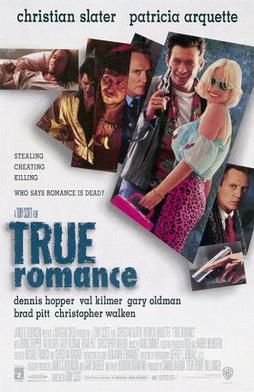

What’s Aged the Best?
The way the film looks; the dialogue; Gandolfini
In the discussion (10)
- Young Gandolfini: he is basically auditioning for Tony Soprano, and this and his Get Shorty role (transcribed 'bare') are the two poles of that character, sweet, charming, evil, menacing and violent; the film was one of the first DVDs a host bought, so he was always the guy from this movie.
- Floyd, who gives the directions down Beachwood to the Beverly Ambassador, was an A++ in the nineties and the DVD era, a spirit animal for anyone getting baked at two in the morning; the whole idea of Pineapple Express came from Judd Apatow and company loving Floyd and asking what would have happened if he chased the Italians.
- Unlike Tom Cruise in Tropic Thunder working to go viral, Pitt just lies on the couch with a couple of improv lines; the Floyd stuff is largely improvised, as are Hopper's eggplant and Walken's cantaloupe lines; Floyd is the most important character because he gets everyone together for the shootout, and 'don't condescend me' is a favorite line.
- Brad Pitt has an alternate path as one of the great character actors, fifteen non-essential but memorable parts up through Burn After Reading, but he was so handsome he had to be a leading man; Seven is a character he put thought into before material started being created for him; the Tarantino relationship continues through Inglourious Bastards and the coming Once Upon a Time in Hollywood.
- Dennis Hopper is so likable that even the Speed villain was hard to root against; the Clarence-Clifford scene is economical writing, 'you're just like your mother', three years apart, a recovering alcoholic who only has a Seven Up, telling you why Clarence would throw it all away; two lines are lifted, 'you're just like your mother' from Hopper's own line in Rumblefish and the beer line from The Last Picture Show.
- Pre-internet, movie quotes and pulling from the past mattered more; a host's column threw in movie lines because that is how he and his friends connected, and Twitter gifs have given it a renaissance.
- Sizemore and Penn together are the twelve-episode Fox cop show we never got; the hosts saw a Reitman live read at the Ace Hotel with Slater and Arquette, the Duplass brothers as the cops, J.K. Simmons as the estranged father, Kevin Pollack as Walken's part, Jon Favreau as Gandolfini's, Keegan-Michael Key and Paul Scheer as Drexel and Elliot Blitzer, May Whitman in several parts and Jason Segel as Floyd.
- Coming Home in a Body Bag is funny right on the heels of forty Vietnam movies; Saul Rubinek's Lee Donowitz as Joel Silver, Bronson Pinchot as his assistant, Boris the bodyguard who hates cops, and Dick Ritchie constantly asking whether the producer knows he is an actor; Donowitz is one of a host's favorite movie characters, saved for the Dion Waiters argument.
- The Hans Zimmer score is distinct and gives the movie levity; according to a host it is based on a composition from the 1500s by Carl Orff that Terrence Malick used in Badlands, which Zimmer redoes as an homage, and Arquette's opening voiceover mimics the Badlands voiceover; the film pulls the best parts of other things.
- Asked for a single best out of all of it, one goes with the way it looks, the peak of Tony Scott's neon vision of urban America; another is still responding to the dialogue, over the top and offensive on purpose because it is pulp; a third says Gandolfini, like watching Michael Jordan at North Carolina.