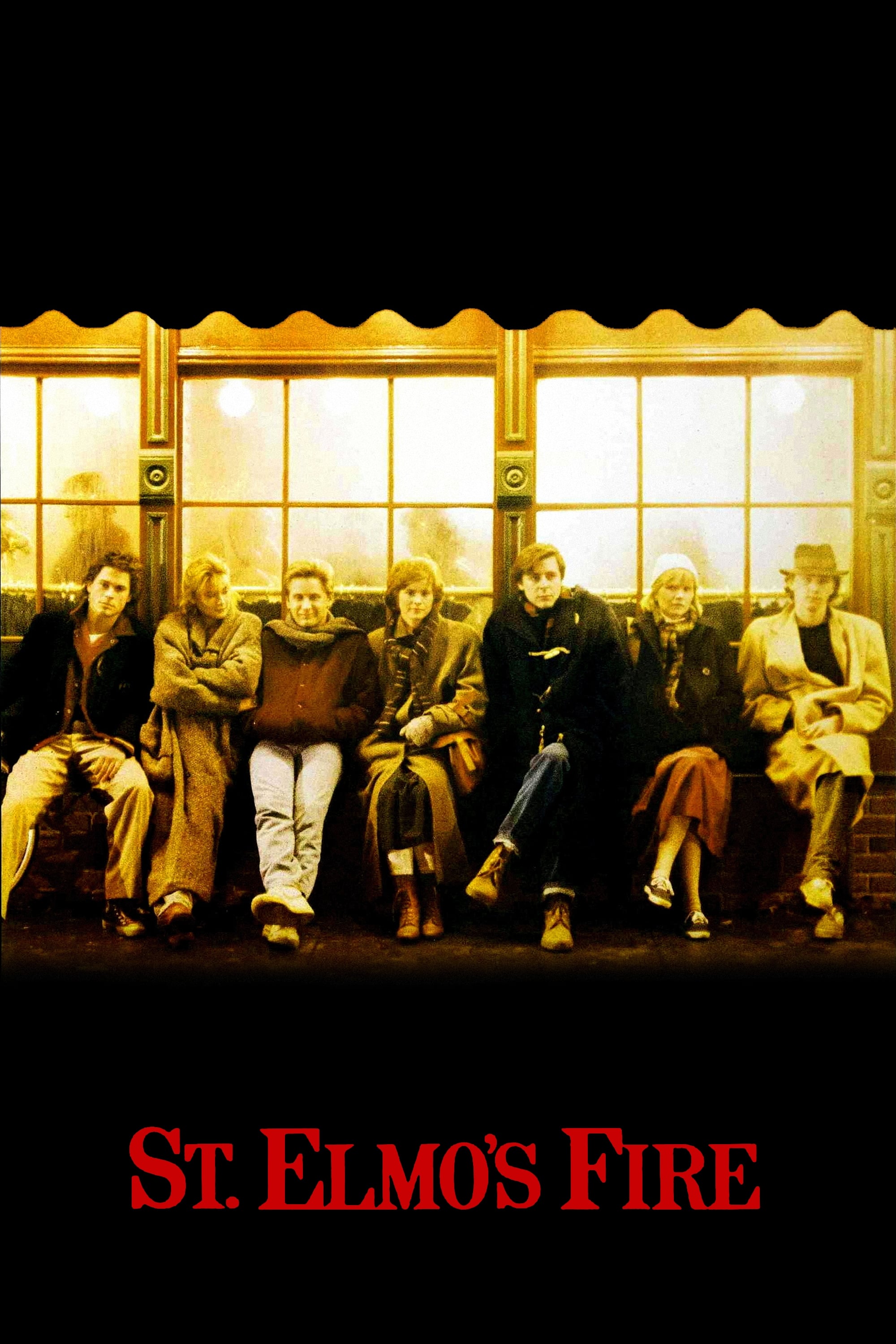
Stepping in early, one host says Robert Downey Jr. (transcribed 'Danny Jr.') as Kevin would make it a better movie; the other says he likes Andrew McCarthy. The name is spoken as 'Robert Downey as Kevin is the sweet spot' at 148.
For the Wendy part, an era-specific, better-looking brunette is sought: Daphne Zuniga (transcribed 'Daphne Zaniga'), contrasting with Demi Moore; the reply is "I like that."
Justine Bateman is raised and rejected as too famous given her 1985 show.
Helen Slater is proposed as Leslie and Linda Fiorentino, coming off Vision Quest, as Jules; the response is "That's pretty good."
Downey Jr. (transcribed 'Danny Jr.') is again called a win in that role (name as spoken at 148).
Wendy is dressed like a 1950s librarian, and making her weight a plot point is odd.
Billy's attraction to Wendy is inexplicable given his wife and bar habits; she is called miscast.
Andrew McCarthy is called miscast, with unintentional comedy through the roof; the other host likes him in the film.
The actor's smoking as Kevin looks learned the day before filming, and Kevin is compared to Troy in Reality Bites, though Troy's friendships make more sense.
Nobody notices Kevin is in love with Leslie, and Alec's cheating seems constant.
The Dale and Kirby plot has aged far worse than anything involving Kevin.
Kirby is a stalker: the rain-soaked black-tie arrival likened to Buffalo Bill, sniffing the pillow, and leaving his own party to drive three hours to the ski house.
Kirby has no other plot beyond law school, the DUI help, switching jobs and returning to law school; he takes bar orders as if nothing happened.
Dale's understanding boyfriend at the ski house, who even starts Kirby's car, is ridiculous.
The apartments are too glamorous for 22-year-olds; Schumacher is quoted saying youth movies deserved stars, clothes, sets and cars, and that glamour was very much his concept.
Too much time goes to Wendy's family with Martin Balsam instead of Jules; in a 10-episode version viewers would skip the Wendy episode.
Opening credits; theme music; David Foster soundtrack; the Andrew McCarthy impersonation it inspired; the title; Jules; the apartments; the record-splitting breakup; Billy's tie-wearing
The opening credits and music are repeated; the hosts say the soundtrack was David Foster's first, and that he later made a fortune and appeared on Real Housewives of Beverly Hills.
The hosts say Foster co-wrote the St. Elmo's Fire song with John Parr, and agree it was the number-one song in America.
The movie, the bar and the song are all called St. Elmo's Fire, and nobody in the film acknowledges it.
A comic's Andrew McCarthy impersonation (transcribed 'Jay Moore') was lifted from this movie and still gets a laugh.
The title is great; the hosts say Columbia hated it and sent a 35-page memo, with Sparks and The Real World as alternatives.
Billy's St. Elmo's Fire speech to Jules works the title in and is read aloud, but it is mocked as beyond Billy's seven brain cells and, per the hosts, Rob Lowe has called it embarrassing.
Jules is one of the best 80s characters; everybody either was a Jules or knew one, and one host was always all in on Jules in his 20s.
Jules's career-plan speech turns out to be a real career plan; in a sequel she might co-host The View or run a family reality empire like Jenner.
All the apartments have aged the best, including Alec and Leslie's loft with its marathon image.
Dividing records in the breakup was accurate for a time when people owned about 20 records, like a fantasy draft.
Billy Hicks's loose tie-wearing is a controversial pick said to be ready for a comeback; the other host agrees.
Billy's wet-look hair is called both aged best and aged worst.