
Referenced person
Saul Rubinek
Also referred to as Saul Rubenick, Saul Rubinick, Rubenek, Saul Rubineck, Rubenick, Saul Rubenek, Saul Rubideck, Saul Rubedeck, Ruben Eck, Rubinick, Saw Rubenek, Rubinek
Stats
- Episodes featuring their films
- 3
- Movies in this archive
- 3
Rewatchables episodes featuring Saul Rubinek’s films
Mentioned in discussions


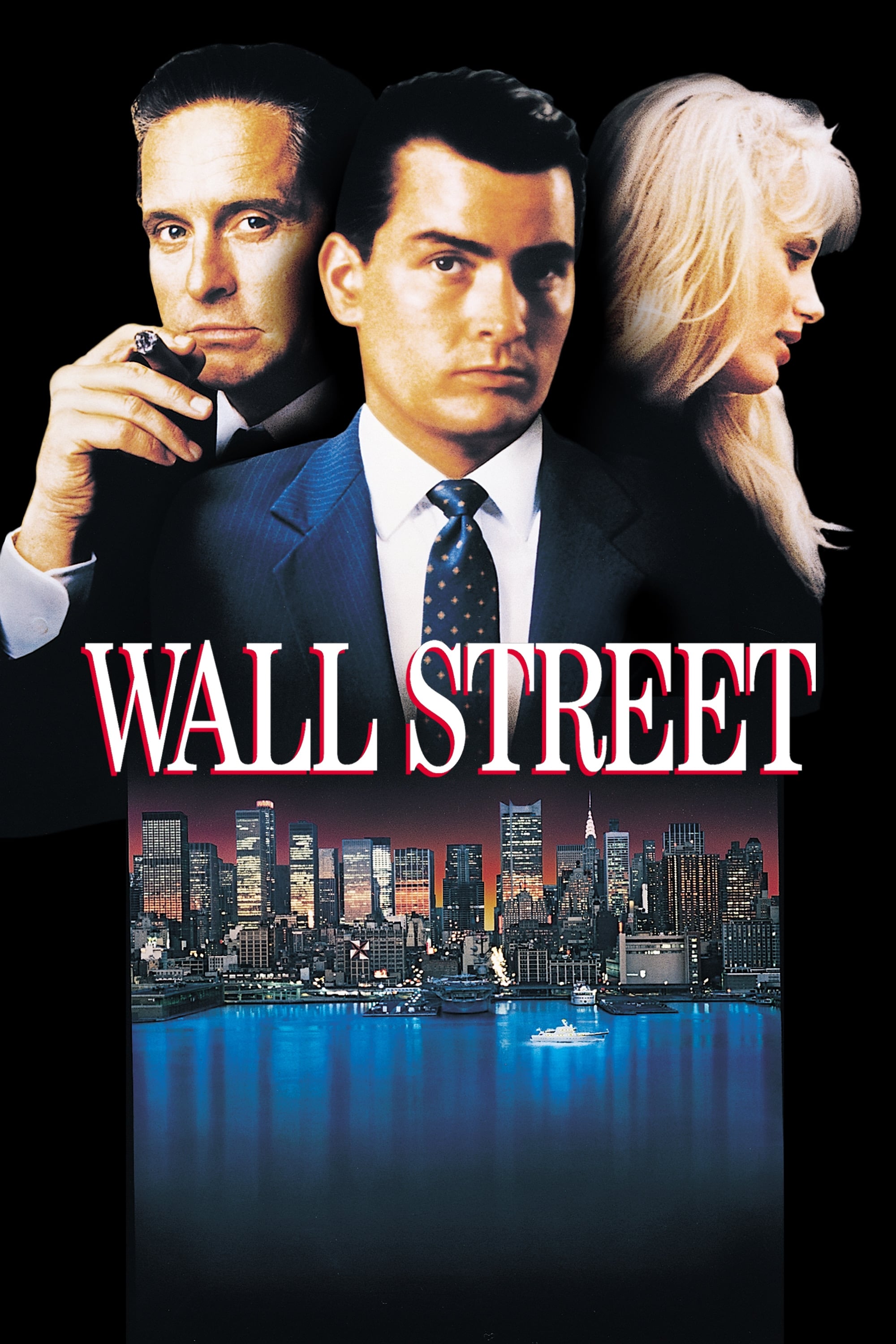
The Ruffalo / Hanna / Rubinek / Partridge Overacting Award
Costume-shop proprietor; Hungarian nomination rescinded
In the discussion (2)
- The Hungarian dancing partner is proposed for the Saul Rubinek Award.
- The Hungarian nomination is rescinded; the costume-shop proprietor is the remaining choice.


Apex Mountain
Post-prime Eastwood; post-prime Hackman; Saul Rubinek; small-penis revenge movies
In the discussion (7)
- Post-prime Eastwood receives a yes, combining acting, directing, and the adjacent In the Line of Fire/A Perfect World period.
- Crimson Tide is initially proposed for post-prime Hackman.
- Unforgiven is ultimately preferred for post-prime Hackman’s career influence, distinguishing that from enjoying Crimson Tide more. — Bill Simmons
- Freeman is rejected in favor of Shawshank. — Bill Simmons
- Saul Rubinek receives a yes through this and True Romance. — Bill Simmons
- Small-penis revenge films receive an affirmative response, prompting jokes about Quick Mike’s name and lack of accountability. — Bill Simmons
- Westerns are rejected; the 1950s or1960s are suggested instead, with High Noon, Liberty Valance, The Searchers, and The Good, the Bad and the Ugly as comparisons. — Sean Fennessey

Half-Assed Internet Research
Development; efficient production; dedication; awards; finances; casting; remake; set; actor autonomy
In the discussion (18)
- The film is described as Eastwood’s sixteenth directorial feature and first Oscar breakthrough, intended as his last Western. — Bill Simmons
- His fast, few-take style, avoidance of an action call, and tendency to finish under budget and schedule are described as an actor-centered approach. — Sean Fennessey
- The dedication honors Sergio Leone and Don Siegel, with Siegel’s efficient working style especially linked to Eastwood. — Sean Fennessey
- The Rookie and later Dirty Harry films are described as enabling more personal projects such as White Hunter Black Heart and Bird through the Warner partnership. — Chris Ryan
- Hackman reportedly would not join if the violence lacked reflection on its meaning. — Chris Ryan
- The film won picture, director, supporting actor, and editing. — Bill Simmons
- The Oscars telecast reportedly drew45million viewers. — Bill Simmons
- The 1976 script used The William Munny Killings and The Cut-Whore Killings titles; Eastwood acquired it in the early 1980s and delayed, ultimately reaching an appropriate age for the role. — Bill Simmons
- A script reader reportedly dismissed the screenplay before Eastwood later decided to make it. — Chris Ryan
- The stated budget is$14.4 million and gross$159.2 million.
- An uncertain internet report says a Six Flags Great Adventure coaster was to use the film’s theme before becoming Viper; the source’s reliability is explicitly questioned.
- Harris reportedly received the Eastwood call while watching High Plains Drifter.
- Rubinek reportedly followed Nicholson’s advice to send an audition tape, and Eastwood said the extra effort won him the role. — Sean Fennessey
- Eastwood reportedly preferred taped auditions because he disliked rejecting actors in person. — Sean Fennessey
- A 2013 Japanese remake starring Ken Watanabe is noted. — Bill Simmons
- Eastwood replaced opening and closing voiceover with text, preferred despite the text being difficult to read. — Bill Simmons
- Henry Bumstead reportedly built Big Whiskey in 32 days; the fresh construction suits the frontier setting. — Bill Simmons
- Rubinek recalls Eastwood granting him control over Beauchamp’s characterization and offering only practical adjustments, illustrating trust in actors. — Sean Fennessey

In the discussion (2)
- The award was renamed for Julianne Moore on the Magnolia episode; one participant, who says he wrote the Rubinek character, objects, and the award stays the Saul Rubinek Award for this podcast. — Sean Fennessey
- Murphy is chosen as the only performer with a really dramatic moment; the rest is sheer terror and survival.
In the discussion (3)
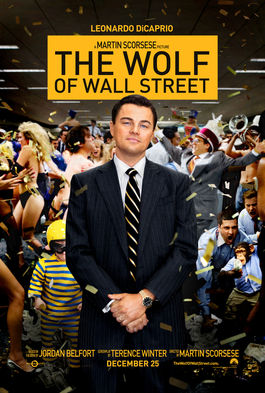
- The award is introduced as the Linda Partridge, don't call me lady, award for overacting and immediately derailed by confusion over the Joey Pants award.
- Reiner, not even a question: he is nuts in this movie and screams the entire time; the award, formerly the Saul Rubinek 'they stab me in the heart' and before that the Mark Ruffalo, is not a critique and Rob Reiner is not canceled, he just yells for five minutes, delivered like Rob Manfred ruling on sign stealing with Jim Crane and a couple of cops; no case for McConaughey, and Kimmy a little bit.
- Earlier, during the heat check, Dujardin is one host's overacting pick for being in a different movie.
In the discussion (1)
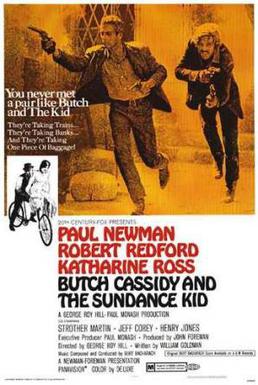
- The award is explained by Saul Rubinek in True Romance dialing it up when he realizes he has been betrayed; after scrolling through the movie, nobody is found to have overacted, Sweet Face at the brothel is considered and judged fine, and Cloris Leachman at the brothel is remembered.

In the discussion (2)
- The award is named for Saul Rubinek's turn as the movie producer Lee Donowitz in True Romance, so Eli Roth not only overacts here but has to win, because he plays Lee Donowitz's father; the family relationships between Tarantino characters are saved for internet research, and Sylvester Groth's case is denied under the bylaws of the Rewatchables.
- Every Roth line reading, like 'fuck a duck', is goofy, though the way Groth begins to weep in the theater after Hitler's praise of Nation's Pride has stuck with a host, and the two could flip-flop between the two acting awards.

In the discussion (3)
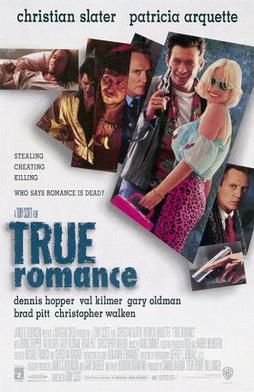
- The choices: Christian Slater, Patricia Arquette, Tony Scott, Quentin Tarantino, Sonny Chiba, Floyd or Saul Rubinek; Sonny Chiba is the Johnny Chan of the movie, a big winner who did not really do anything; since it was not a hit, it has to be Tarantino, who was minted and became someone to watch for the next twenty years, giving him sustainability after Reservoir Dogs.
- Slater is underrated on this pod: by this film he was Christian Slater in every movie, the Jack Nicholson impersonation that had been exciting in Heathers was now held against him; he is a good actor and believable in the part even though a case can be made the movie is about a schizophrenic, wish fulfillment in his head, a dream woman, a classic bag-of-money scenario, note-perfect gangsters and everyone liking a loser from a comic book store.
- Tarantino wins it because it proved Reservoir Dogs was not just a weird indie fluke, established a narrative, led to Pulp Fiction and is belatedly great, the most personal of his films with Clarence as his proxy; Tony Scott was another's runner-up, since the movie needed him and the Gandolfini scene in the wrong hands would go badly, and Tarantino directing it in 1993 would have shot it closer to the ear-cutting scene in Reservoir Dogs; he was famously not on set, and started Pulp Fiction about three months after this came out.
Podcast choices
- Speaker not identified
- Quentin Tarantino
The Ruffalo / Hanna / Rubinek / Partridge Overacting Award
Boris and Monty, the bodyguards
In the discussion (2)
- There is only one choice, the bodyguards, called Bruno and Boris and then corrected to Boris and Monty, going for it the whole time with about three lines including hating cops; Rubinek might win this one too, which would be three awards.
- Rubinek could almost replace Ruffalo as the award's namesake, with 'I treated you like a son and you stabbed me in the heart' as the new 'they knew'; after 57 episodes it is jokingly declared the Saul Rubinek award, to be quoted on a rom-com episode with Amanda; the bodyguards are congratulated since it cannot go to Rubinek if the award is named after him.
In the discussion (7)
- Obvious non-candidates like Brad Pitt are taken out; Rubinek is a slam dunk, never more of an Apex Mountain candidate, a theater actor in On Golden Pond doing his best work, also good in the cable movie And the Band Played On and an all-time Law & Order guy with some forty episodes; big winner of this podcast.
- Christian Slater: a yes from one host that the others contest, going Heathers instead, then calling that too early and picking Pump Up the Volume because he invented podcasting, which is granted as a good point; nobody picked Broken Arrow or Hard Rain, and Broken Arrow was Travolta's real comeback when the wheels came off.
- Patricia Arquette: Boyhood is floated because she won the Oscar for it, then withdrawn; personally and subjectively this is her film, but career-wise it has to be the Oscar; the category is defined as when they were at the peak of their powers with the most options and respect, and she was pretty unknown here with a rough seven or eight years after, so it is not this.
- Tony Scott is an unequivocal yes for one host, over Man on Fire, because his commercial hits had faded, people doubted him, and this led to Crimson Tide, his career never in better shape than between the two; the others contest that yes, countering that it was a flop, that Crimson Tide is his apex, and that he made Top Gun, one of the biggest hits of all time, which launched Tom Cruise.
- The counter is that in the mid-eighties Top Gun was not received as a Tony Scott movie, the narrative was Tom Cruise as the biggest star in the world, whereas with True Romance Scott was part of the narrative; the Top Gun case is acknowledged, and a favorite Tony Scott movie is conceded not to be the same as apex; the category is elusive like the MVP award; the film is also the most critically acclaimed of his, at 92 percent.
- Bronson Pinchot: Beverly Hills Cop, a massive hit that made him a breakout star, with the espresso with a twist of lemon; Sizemore: Heat, since 'the action is the juice' is the definition of Apex Mountain; Chris Penn: Reservoir Dogs, Nice Guy Eddie, agreed.
- Walken: hell no, he is The Deer Hunter; an early-nineties case is made, hosting SNL in fall 1992 with Trivial Psychic and Stock Talk, this film in 1993, Pulp in 1994, a Walken-sance with everyone in on him and Jay Moore (as transcribed) doing the impression, plus King of New York, Wayne's World 2 the same year and Things to Do in Denver, but the Russian roulette in The Deer Hunter has to be his apex.
Half-Assed Internet Research
Tony Scott changed the ending so Clarence lives; Elvis's estate refused any Elvis music; Drexel's eye came from the Dracula prop box; Rubinek did not know his audition was Joel Silver; the hotel deal was shot at the abandoned Ambassador Hotel; Sizemore lay with feathers in his mouth for days; Walken asked to shoot Hopper's half first; Warner Brothers wanted the title Reckless Hearts; the money exchange moved from a zoo to Six Flags; Gandolfini stayed in a dingy hotel; Slater and Arquette had an off-screen romance
In the discussion (8)
- Tony Scott changed the ending because he loved the characters; originally Clarence died and Alabama got away with the money, and apparently both versions were shot; one host dislikes Clarence being shot in the eye and maimed, wanting a shoulder wound if he lives; another loves that Scott liked him too much to let him go, classic sentimental Tony.
- A joke about a Ringer montage of characters ending up on the same perfect Mexican beach with their kids and 300,000 dollars in a suitcase: Red talking to Alabama, Shawshank, Paul Walker and Jordana Brewster from Fast 7, about two miles from Zawantaneo (as transcribed).
- Elvis's estate would not allow any Elvis music, so Charlie Sexton's Graceland, basically Sexton doing Elvis, opens the film; the music is a 1993 mishmash, a late-period Aerosmith song feels out of sync for a Tarantino film, and one host calls the music a missed opportunity that belonged in aged worst when Pixies-type bands were available, though Soundgarden's Outshined is what Floyd would listen to; the fifties stuff, the Big Bopper on the phone with Dick Ritchie and the Burl Ives song feel Tarantino; Drexel listening to techno is odd, Wu Tang would fit, but the techno gives the scene its unsettling vibe.
- Drexel's weird eye came from the Dracula prop box; Oldman's account is that over tea at the Four Seasons Scott could not explain the plot but described a pimp who is white but thinks he is black, and that was all he needed to hear; Rubinek's account is that at his audition Scott told him he had Joel exactly right, and he had no idea who Joel Silver was.
- The hotel drug deal was filmed at the abandoned Ambassador Hotel where Robert Kennedy was shot, near the end of Beverly by the 101, now a dog and cat hospital with the neighborhood schools renamed RFK; a host's daughter practiced at Virgil High School next to it for half a year without his knowing; in the Maxim oral history Sizemore recounted that his death was got in one take at the start of the shootout, so he lay on the ground with feathers in his mouth for days.
- Scott intended to shoot Walken's part first; Walken begged him to shoot Hopper first and found his character watching Hopper's half play out; Warner Brothers was going to change the title to Reckless Hearts until Arquette, Slater, Scott and Tarantino threw their bodies in front of it; the money exchange was meant for a zoo and ended at Six Flags when the location fell through; Gandolfini got into character as Virgil by staying in a dingy hotel and not showering or changing his underwear.
- Slater and Arquette seem to have had sparks on and off the set, evident in how they connect: Scott's account that Christian was instantly attracted and Patricia fell in love with him, a true romance; Arquette on a romantic, magnetized sexual attraction; Slater on love at first sight made tricky by being in a relationship; the phone booth scene is called one of the more believable sex scenes in movie history, with Slater really going for it.
- Earlier, during aged best, the Pineapple Express origin story is flagged as stepping on the internet research.

In the discussion (11)
- There are individually probably five Dion Waiters winners, like an Oscar category where every nominee could win; Val Kilmer cannot crack the top five and sits sixth; his Elvis is fine, and his 1993 of The Real McCoy, Tombstone with the all-time Doc Holliday, and this is incredible; a Doors episode is offered to Chris Iron (as transcribed) whenever he is ready.
- The field: Gary Oldman's Drexel, the white pimp who thinks he is black; Brad Pitt's Floyd, so great it spawned Pineapple Express; Christopher Walken pulling off a Sicilian; Gandolfini as the most evil hitman; Hopper counts with only two scenes; and a surprise entry, Saul Rubinek; Pinchot is left out for having too big a part, and Kilmer (as transcribed: 'Kim') and Rappaport are in too many scenes.
- A Pinchot tangent: he got the script finishing Perfect Strangers, was Serge in both Beverly Hills Cop films, the roller coaster scene was shot over two days with the cast throwing up or sedated, and his run from Risky Business through Perfect Strangers to this is not bad; he became a punching bag unfairly, like Andrew McCarthy, light comic actors who could star in 1989 but not 1999; the elevator scene with Sizemore and Penn bluffing Elliot is great.
- A Walken question: his only two Tarantino scenes are the watch speech in Pulp Fiction and this one, which is nuts; a Pulp Fiction episode would spend thirty minutes on the watch speech.
- Rubinek is shouted out for a Joel Silver impersonation at the height of Joel Silver on cocaine, doing the most with the least while Oldman, Gandolfini and Pitt had a lot to work with in their parts, smoking and driving on the PCH asking Elliot why he is calling on a Sunday.
- Cannot really decide for the first time; it is something between Pitt, Rubinek or Walken, and Oldman is loved too. — Chris Ryan
- Oldman is in three scenes and out of control and might have the line of the movie with white boy day; one host has Saul Rubinek in a walk because he has never done anything else, which is where another wanted to go; all the other characters' actors went on to Oscars and Emmys, while Rubinek's highlight reel starts here.
- Rubinek did not know he was doing Joel Silver; the character is written as just a producer and Tony Scott, who hated Silver, made him Silver, so Scott gets a lot of credit for molding the performance; it probably hurt Rubinek's career.
- Rubinek is the eleventh man who should not be able to score twenty points in seven minutes, the definition of the award; favorite moments are the taunt about knowing Elliot's name, the Body Bags 2 taste line and the 357,000 dollars someone is stealing; he was 20 to 1 heading in with Oldman applauding in the stands, Twitter expected Floyd or Drexel, but watched closely Rubinek is the correct winner.
- Earlier the cast is called the best Dion Waiters field the show has had, better than Heat, with Sam Jackson, Val Kilmer, Gary Oldman and Saul Rubinek in five-minutes-or-less performances; it is self-aware, actors knowing they have six pages and lighting them on fire, which Craig the producer, seeing it for the first time, noticed.
- During aged best, the Lee Donowitz discussion is saved for a fascinating Dion Waiters argument.

