

‹ All people

Film credit

Christian

Stats

Episodes featuring their films
0
Movies in this archive
1

Rewatchables episodes featuring Christian’s films

No episode credits in the archive yet.
No episodes found

Mentioned in discussions

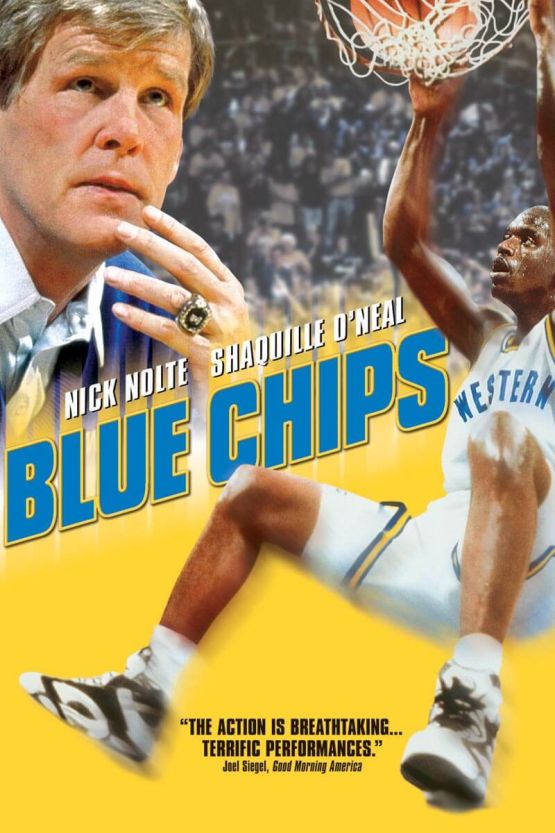
Blue Chips

Recasting Couch

Costner, Hackman or Gossett as Pete; Laettner as Ricky; Texas setting

In the discussion (8)
Approx. transcript time · 01:26:02Read transcript
  • A Shelton–Costner sports trilogy is imagined, with Costner playing a quieter Boeheim-like coach whose clean program is corrupted and whose edge recalls No Way Out.
  • Hackman is suggested as Happy, followed by a joke that Jenny would dress better for Costner.
  • Nolte’s resemblance to Bobby Knight and Jack Cates makes Pete hard to like; a defense places him among the era’s overbearing coaches, while Costner remains intriguing. — Van Lathan
  • Nolte is defended as perfect for this version of Pete. Hackman could play a Norman Dale losing control, while Pacino could suggest Pitino or Calipari, although excessive acting is a concern.
  • Lou Gossett is floated as Pete Bell. — Chris Ryan
  • A Black coach is considered plausible for the 1990s; the casting is explained instead as a deliberate effort to make Pete resemble Bobby Knight. — Bill Simmons
  • Los Angeles feels incidental beyond good weather and discussion of Big East television dominance; an SMU-like Texas setting with Happy as an oilman is suggested. — Bill Simmons
  • Christian Laettner as Ricky alongside Shaq and Penny could have better captured the era, followed by speculation that Shaq would object.
Forrest Gump The Rewatchables
Forrest Gump

The Stephen A. Smith Hottest Take Award

The competing takes read Forrest as Jesus, imagine his modern cancellation, and credit him with the Jets’ only Super Bowl.
In the discussion (3)
Approx. transcript time · 01:01:21Read transcript
  • A Christian-allegory reading maps Forrest to Christ, his beard and followers to a ministry, Lieutenant Dan to conversion, and Jenny to Mary Magdalene. — Chris Ryan
  • A second take argues a present-day Forrest would be canceled for his Klan name, public violence, exposure before the president, and years of public bodily functions. — Mallory Rubin
  • A third claims Forrest’s Alabama return yards built Joe Namath’s confidence and therefore enabled the Jets’ Super Bowl III title. — Sean Fennessey
In the discussion (4)
Approx. transcript time · 01:11:11Read transcript
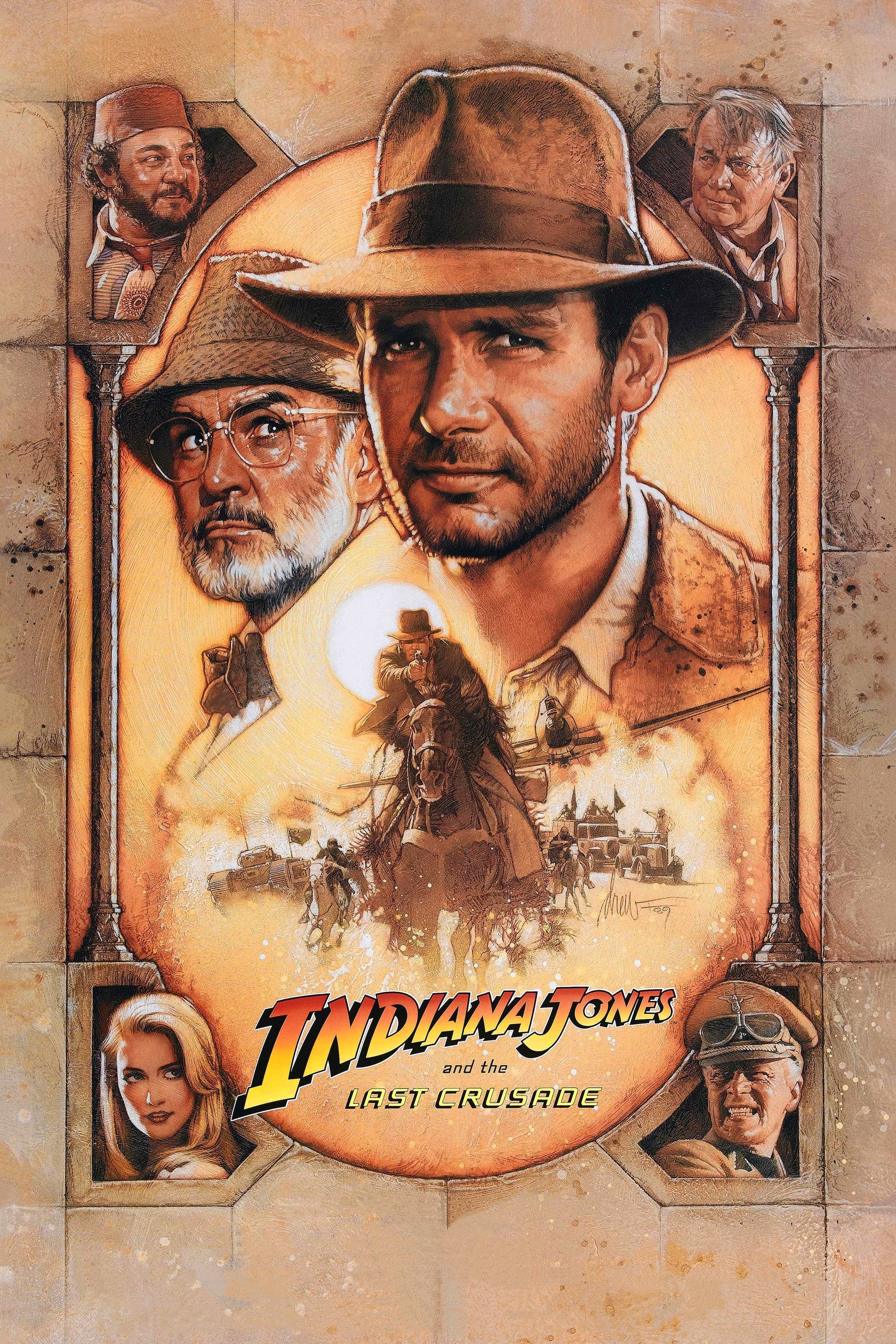
  • Indiana Jones and the Holy Grail is proposed; avoiding an explicitly Christian title is one suggested reason it was not used.
  • Indiana Jones and His Dad is a joking alternative title. — Bill Simmons
  • Indiana Junior and Senior is another joking title. — Bill Simmons
  • The One with Sean Connery is another joking title. — Bill Simmons
Boogie Nights The Rewatchables
Boogie Nights

Apex Mountain

Cinema doughnut shops; Ridgely; Hartley’s mainstream acting; Hoffman’s background acting; “The Touch” in movies; movies about porn; movie parties (possible); “Sister Christian” in movies; Hall
In the discussion (10)
Approx. transcript time · 02:11:33Read transcript
  • Wahlberg no; PTA personal favorite versus career power There Will Be Blood, not equated. Two second-place preferences and another first-place preference are retained; Master prior near-top relative placement uncertain.
  • Italian leather alternatives Montalban commercial and Sopranos jacket; cinema donut shops yes; Ridgely yes; Hartley mainstream acting yes with broader-career ignorance. — Bill Simmons
  • Hoffman background acting here over Magnolia; Reynolds no. Thomas Jane alternatives Hung qualified/disliked and 61 preferred. — Bill Simmons
  • Graham Austin Powers 2 era; West Covina yes with Crazy Ex Girlfriend alternative. Moore uncertain Hours/Still Alice corrected Oscar/Far From Heaven or this film for new access.
  • The Touch here over Transformers; prosthetic movie genitalia Bruno alternative; Ricky Jay maybe House of Games; movies about porn yes. — Bill Simmons
  • Guzman How to Make It in America hypothetical Jacoby choice, Out of Sight preferred; movie parties possibly best, Project X comparator. — Chris Ryan
  • Reilly no: Step Brothers or Chicago, Jerry Bus current work admired. Macy/Cheadle no. — Sean Fennessey
  • Side-character name Floyd: Gondoli preferred by one, True Romance Floyd another; Penn brothers question and Sean eventual the film transcribed as liquor appearance.
  • Ridgely emphatic yes; Sister Christian yes here, Jessies Girl original number-one release preferred; Your Love Outfield misidentification corrected; Hall yes. — Bill Simmons
  • Reseda location here versus Karate Kid (preferred by one), Tom Petty lyric third alternative. — Bill Simmons
8MM The Rewatchables
8MM

What’s Aged the Best?

The Los Angeles descent; Mrs. Christian; Cage’s reaction; Max’s rules; the Clevelander; Anthony Heald; the detective work; Machine; desperation

In the discussion (9)
Approx. transcript time · 00:53:00Read transcript
  • The stylized Los Angeles montage is praised even though its red-light district is described as a fabricated composite. — Bill Simmons
  • Mrs. Christian’s desire for the truth is appreciated; the panel wishes her first viewing of the film had been shown.
  • Cage’s extreme reaction to viewing the film is placed among his memorable overacting moments. — Bill Simmons
  • Max’s incomplete rules of life are admired and said to come from the original screenplay. — Bill Simmons
  • The Clevelander is named as an enduring detail. — Bill Simmons
  • Anthony Heald is praised for conveying the lawyer’s superiority and comfort around depravity.
  • Specific scenes and the traceable investigative process are praised, from the mother and former boyfriend to film enlargement, tattoos, and tedious searching. — Bill Simmons
  • Machine and the absence of a larger rational conspiracy remain effective. — Bill Simmons
  • The film’s atmosphere of desperation is considered particularly resonant at the time of the recording. — Van Lathan
Easy A The Rewatchables
Easy A

What’s Aged the Worst?

Marianne's Christian stereotype; Griffith and Micah chlamydia plotline; Chip adoption jokes; Huckleberry Finn references
In the discussion (14)
Approx. transcript time · 00:49:04Read transcript
  • Number one: Amanda Bynes's character as a negatively portrayed Christian, recalling One Tree Hill's clean teens. — Juliet Litman
  • Marianne resonated because a Fellowship of Christian Athletes group at the speaker's school behaved just like her and got meaner through high school. — Shea Serrano
  • Bynes is super funny and a really good actress, which makes her not taking pride in the work sad. — Shea Serrano
  • Marianne's group is partly plot necessity, needing teens believably outraged by one instance of sex; the speaker also had FCA and got sex education through a strain of Christianity, and understood the choice as a nod to The Scarlet Letter and puritanical heritage. — Amanda Dobbins
  • The rose-petal sex-ed demonstration is recalled. — Amanda Dobbins
  • Very pro-Amanda Bynes and fond of the performance, but tying Marianne's busybody ideology to her Christianity felt like stereotyping; coming from the Upper West Side and a large public school, Christianity just gets a bad rap in media. — Juliet Litman
  • A joke offers to email an FCA application to make her postgraduate chapter chairman. — Juliet Litman
  • The movie gets away with a fundamental problem: that a virginity rumor would be a scandal, would not be shut down immediately on Facebook, and would not become uglier bullying; it falls apart if you think too hard. — Amanda Dobbins
  • A teen movie in 2020 would address bullying; here the biggest slight is being forgotten, though Marianne is clearly the bully. — Amanda Dobbins
  • Olive being unfazed by Marianne continues the Tracy Flick line through Booksmart's Beanie Feldstein character; the formerly ignored now hold the power, a self-described reading-too-far. — Shea Serrano
  • Nominated for aged worst: the Mrs. Griffith and Micah plotline, where the guidance counselor sleeps with an of-age student, gives him chlamydia, and her marriage to Thomas Haden Church's teacher ends; unnecessary even if the movie telegraphs it is wrong. — Amanda Dobbins
  • The most sympathy goes to Thomas Haden Church's character, whose marriage is ruined while everyone else is fine. — Juliet Litman
  • Chip, Olive's undeveloped adopted little brother: Tucci's adoption jokes, like asking where he is from originally, feel aimed at the audience rather than a 10-year-old. — Shea Serrano
  • Everything tied to Huckleberry Finn is super weird: Olive's line about not knowing anyone who snuck off with a hulking black man and the ending where Brandon runs off with his black boyfriend are called offensive and dehumanizing, a bizarre characterization of the novel that could easily have been edited out.
True Romance The Rewatchables
True Romance

Half-Assed Internet Research

Tony Scott changed the ending so Clarence lives; Elvis's estate refused any Elvis music; Drexel's eye came from the Dracula prop box; Rubinek did not know his audition was Joel Silver; the hotel deal was shot at the abandoned Ambassador Hotel; Sizemore lay with feathers in his mouth for days; Walken asked to shoot Hopper's half first; Warner Brothers wanted the title Reckless Hearts; the money exchange moved from a zoo to Six Flags; Gandolfini stayed in a dingy hotel; Slater and Arquette had an off-screen romance

In the discussion (8)
Approx. transcript time · 01:07:13Read transcript
  • Tony Scott changed the ending because he loved the characters; originally Clarence died and Alabama got away with the money, and apparently both versions were shot; one host dislikes Clarence being shot in the eye and maimed, wanting a shoulder wound if he lives; another loves that Scott liked him too much to let him go, classic sentimental Tony.
  • A joke about a Ringer montage of characters ending up on the same perfect Mexican beach with their kids and 300,000 dollars in a suitcase: Red talking to Alabama, Shawshank, Paul Walker and Jordana Brewster from Fast 7, about two miles from Zawantaneo (as transcribed).
  • Elvis's estate would not allow any Elvis music, so Charlie Sexton's Graceland, basically Sexton doing Elvis, opens the film; the music is a 1993 mishmash, a late-period Aerosmith song feels out of sync for a Tarantino film, and one host calls the music a missed opportunity that belonged in aged worst when Pixies-type bands were available, though Soundgarden's Outshined is what Floyd would listen to; the fifties stuff, the Big Bopper on the phone with Dick Ritchie and the Burl Ives song feel Tarantino; Drexel listening to techno is odd, Wu Tang would fit, but the techno gives the scene its unsettling vibe.
  • Drexel's weird eye came from the Dracula prop box; Oldman's account is that over tea at the Four Seasons Scott could not explain the plot but described a pimp who is white but thinks he is black, and that was all he needed to hear; Rubinek's account is that at his audition Scott told him he had Joel exactly right, and he had no idea who Joel Silver was.
  • The hotel drug deal was filmed at the abandoned Ambassador Hotel where Robert Kennedy was shot, near the end of Beverly by the 101, now a dog and cat hospital with the neighborhood schools renamed RFK; a host's daughter practiced at Virgil High School next to it for half a year without his knowing; in the Maxim oral history Sizemore recounted that his death was got in one take at the start of the shootout, so he lay on the ground with feathers in his mouth for days.
  • Scott intended to shoot Walken's part first; Walken begged him to shoot Hopper first and found his character watching Hopper's half play out; Warner Brothers was going to change the title to Reckless Hearts until Arquette, Slater, Scott and Tarantino threw their bodies in front of it; the money exchange was meant for a zoo and ended at Six Flags when the location fell through; Gandolfini got into character as Virgil by staying in a dingy hotel and not showering or changing his underwear.
  • Slater and Arquette seem to have had sparks on and off the set, evident in how they connect: Scott's account that Christian was instantly attracted and Patricia fell in love with him, a true romance; Arquette on a romantic, magnetized sexual attraction; Slater on love at first sight made tricky by being in a relationship; the phone booth scene is called one of the more believable sex scenes in movie history, with Slater really going for it.
  • Earlier, during aged best, the Pineapple Express origin story is flagged as stepping on the internet research.
Face/Off The Rewatchables
Face/Off

Most Rewatchable Scene

The Somewhere Over the Rainbow shootout; the prison escape

In the discussion (12)
Approx. transcript time · 00:09:36Read transcript
  • A rewatchable movie needs four or five parts you have to watch when flicking channels at the 30 or 50 minute mark, and this one has a lot: the airport shootout that leaves Nick Cage in NFL concussion protocol, the surgery face-switch scenes, the escape from a maximum security prison on Catalina Island where everybody wears magnetic boots, the Somewhere Over the Rainbow shootout with a little kid in headphones, the boat chase and the ending.
  • Asked for the most rewatchable scene, answers that it is absolutely the Somewhere Over the Rainbow shootout. — Chris Ryan
  • The shootout begins with Cage entering a trip-hop bachelor pad in an airport hangar, Tricky's Christian Sands (as transcribed) playing to date it to 1997, Castor's son present for some reason, absinthe and a hallucinatory out-of-body experience, and the child always in the line of fire with nobody thinking to put him in a bathtub under a cover; one host would rewatch the whole movie if it were only this scene.
  • Castor's henchman brings out a beautiful oak box holding Chiclets, prescription pills guessed to be an early Dutch version of molly, a dozen rolled joints and two gold-plated handguns, presented as if it were the Ark of the Covenant or a Kansas basketball signing; the two men then fake-laugh at each other unironically a year before the Austin Powers henchmen scene.
  • One host personally thought the prison escape was the most rewatchable scene, and another says they are with them on that.
  • Picks the Somewhere Over the Rainbow shootout as John Woo's victory lap, Woo announcing he is in Hollywood and spending money, with the kid in slow motion, a shootout kept being added to, and so many vases full of lilies blown up again. — Jason Concepcion
  • Two of the hosts share a love of prison movies, to the point of two-in-the-morning emails about a Vince Vaughn prison-movie trailer; the magnetic gravity boots are a good prison wrinkle every jail in America should have, and the film keeps adding: a shootout, then drugs, then a kid in the middle, then Over the Rainbow; a prison in the ocean, then super magnets, then electrocution.
  • The prison is like the Death Star, an impregnable super weapon undone by one trick, since all you have to do is get rid of the boots; Cage brings the four-billion-dollar prison down with one cigarette, fighting to keep it, getting sent to shock treatment, burning a guard and starting a full-scale riot.
  • Travolta switches faces and goes into the prison as Castor Troy, and Castor's brother Pollux is for some reason immediately suspicious; a host does the Pollux impression on request, and nobody can explain why Pollux would wonder whether they switched faces when he thought his brother was dead after the wind turbine.
  • Answers that if he had his college enemy Neil's face on his face, and his voice, his wife Laramie would never be convinced it was him; there is nothing he could say. — Shea Serrano
  • The clip of the prison fight is played, where Travolta wearing Castor's face has to convince the brother it is really him, shouting I'm Castor Troy (as transcribed Caster Joy) and crying; one host calls it their favorite scene in the whole movie, and the tears are joked about as post-concussion emotion or life without a nicotine patch, with Roger Ebert imagined comparing it to first seeing Bergman.
  • Did people take Cage at face value because of Leaving Las Vegas? The entire 90s came and went before anyone collectively asked whether Nick Cage is a bad actor; asked whether they want to change their minds on the scene, the hosts say no.
Clueless The Rewatchables
Clueless

What’s Aged the Worst?

The Christian storyline, though the hosts move it toward aged pretty well; Christian's over-stylized retro persona; how the teenagers interact, such as Elton keeping Cher's photo in his locker; Murray and Elton sharing a popular crew; Cher and Ty doing a home workout video; the fashion computer's monitor

In the discussion (9)
Approx. transcript time · 00:24:53Read transcript
  • Cher's date with Christian is called the most problematic part of a problematic fave; asked whether falling for a gay man is a rom-com trope, the hosts can only think of the Rupert Everett and Madonna film and agree it is not really a rom-com thing, while finding it funny that the straight guys, Paul Rudd seeing Christian dance with a man and Murray, pick up on it before the ostensibly perceptive Cher and Dion.
  • Murray's reveal, played as a clip, uses 'friend of Dorothy', an old-school gay self-identifying marker from The Wizard of Oz, plus 'cake boy' and the Oscar Wilde, disco-dancing, Streisand-ticket-holding string; the hosts find it hilarious in a good way that Amy Heckerling put those words in Murray's mouth, call the Streisand line remarkable and Pulitzer-worthy, and the 'cake boy' line unfortunate.
  • Christian's analog in Emma, read from Wikipedia in a way Cher would endorse since she loves Cliff's Notes, is Frank Churchill, who courts Emma while secretly engaged to someone else and waiting on an aunt's inheritance, so the storylines are not really the same; the host prefers him being gay to that.
  • GLAAD ('Glad' as transcribed) gave Amy Heckerling an award for the storyline, which was very progressive at the time; Murray pointing out that Christian is gay is not malicious, the joke is that Cher is totally clueless, which one host says has happened to teenage girls and, going by the friends that host still counsels through it, women of all ages, so the item is moved to somewhere between aged best and aged pretty well.
  • What still annoys is Christian's style: the over-stylized guy obsessed with the twenties and thirties, who deserves Cher not knowing who Billie Holiday is, though Billie Holiday deserves better.
  • Discussing a possible remake, the hosts find the way these kids interact foreign to teenagers now; Elton keeping a photo Cher took in his locker is quaint, silly and confusing, which is part of why Elton gets kicked out of the picture because he sucks, and the 'social director of the crew' line is loved.
  • Murray and Elton being in the same crew of popular guys confuses one host, whose high school popular set was uniform in style rather than race; another went to a weird school with a wide range, and a third had a clearly defined cool tier with pressure to look the same, so the kids with sagging jeans and the Eltons would have mutually rejected each other.
  • Cher and Ty doing a home workout video instead of a class has aged badly, though it is set in the nineties when everyone had workout videos; the hosts recall sneaking a mother's 'Tybo' tape (as transcribed), a Paula Abdul video with a routine still remembered, and the Barbie workout video starring Jennifer Love Hewitt.
  • Earlier, during the opening-minutes discussion, the fashion computer's actual monitor is said to look like trash now and not to have aged well, even though the idea was forward thinking.
Clueless The Rewatchables
Clueless

Most Rewatchable Scene

Dionne on the freeway; Cher's debate speech; Cher's arrest

In the discussion (10)
Approx. transcript time · 00:10:03Read transcript
  • Dionne on the freeway is one pick, with the clip played: a cascade of ludicrous disasters including the biker gang, the old lady flipping the bird, the truck and the screaming, and it is what eventually leads Dionne to lose her virginity according to Cher; preceded by finding out Christian is gay, it is called a perfect, frenetic five minutes of pure comedy.
  • The freeway scene is infinitely referenceable for anyone who moved to Los Angeles late in their driving career; the hosts think it was filmed in Long Beach, probably the 405, because of a Long Beach sign in the back, and say the film takes on a whole new look once you live in LA; one navigated by Clueless for six months and mistook the Beverly Center for the Westside Pavilion where Ty had her near-death experience.
  • The debate speech about the Haitians, with the RSVP and Statue of Liberty line, is the pick. — Amanda Dobbins
  • The clip of the Haitians speech is played; the line about the Statue of Liberty is called politically true even though Cher is not aware of it, and she is smarter than she knows; the shot of her drawing out her gum after the last line is the one frame that describes Cher, and should have been her Oscar reel, since comedic performances are not honored enough and this is a defining performance of the decade.
  • A runner-up: the first ten minutes are among the best openings the host can think of, because the voiceover narration, usually a sign a film is being patched together, instead puts you in Cher's world with ten iconic lines in five minutes and the touch-screen fashion computer program, which was forward thinking even if the monitor looks like trash now and the hanger screensaver is perfect.
  • The yellow plaid outfit and Cher's cami-and-shorts pajamas are iconic, and the film gets too little credit for nailing walking and talking, less noticeable and weird than anything by Aaron Sorkin; Cher's default is walking and talking, taking a lap before committing to a location at school and in Contempo Casual at the mall.
  • A favorite small moment is Cher continuing to walk in the yellow plaid outfit while Dion and Murray have their weave argument and high school boys try to enter her space; she pushes them out of the way, a living diorama, and an excellent first-person piece of media, which is hard to do.
  • A third host has several nominations: the Val party, multifaceted and capped off by the head-shaving in the bathroom ('Dion shaving his head' as transcribed), with the 'keeping it real' clip; Ty's makeover, the ER montage, which loses points because nobody's hair dye comes out that easily, something the film taught the hosts that turned out not to be true.
  • The same host's favorite is Cher's arrest, with the exchange about her designer dress ('an Aliyah' as transcribed) and the robber's threat to shoot her, which has always resonated as really funny, plus the payphone, which the host used a lot as a kid; another thinks Cher is enough of a germaphobe not to touch a payphone, but she was desperate in Sun Valley, which is a lot further than the regular valley.
  • The lead-up has Cher's dad say you can get anywhere in LA in twenty minutes; one host defends it, since Silver Lake to the beach is thirty minutes before 11 a.m. on a Saturday, while another was late to everything for a year because everywhere actually takes forty-five minutes, like New York where a mile walk falls apart when the subway breaks down; the hosts agree the line means Beverly Hills destinations, not Venice, in 1995.
Displaying discussions 1 - 12 of 13 in total

Films in the archive

