

‹ All movies

Make a sequel

Bill Simmons: Blue Chips 2 should have happened, either continuing Butch and Neon in the late 1990s or making Butch a coach in the late 2000s.

Van Lathan: A present-day sequel with the former players hosting a podcast is proposed, with Tommy Alter imagined as Tony.

Cheat without shame

Bill Simmons: The cynical lessons are to cheat without shame, or simply cheat and win because nobody cares.

The film

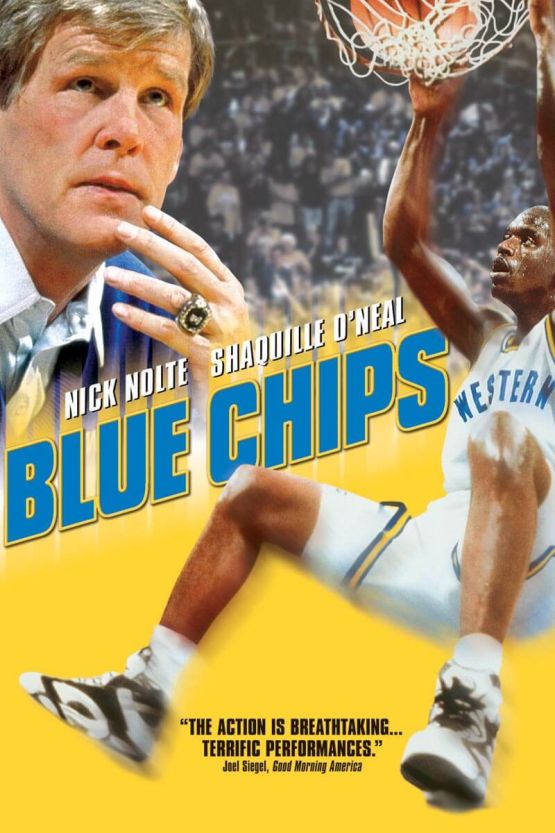
Blue Chips (1994)

Directed by William Friedkin · Sports

108 minutes

Cast

Selected cast credits · Film reference

Everything from the episode

In the order the hosts got to it. Open a row for the discussion.

13:24

Half-Assed Internet Research

Real basketball cast and games; Friedkin and Nolte preparation; production history

Real basketball cast and games; Friedkin and Nolte preparation; production history

In the discussion (12)
Approx. transcript time · 00:13:24Read transcript
  • Friedkin’s basketball enthusiasm reportedly included considering a one-third Celtics purchase and consulting Cousy, explaining the latter’s appearance.
  • The production reportedly used real players, coaches and games before six thousand spectators, but authentic play alone does not solve basketball’s cinematic difficulty. — Van Lathan
  • Anthony C. Hall is described as both actor and player; many real coaches and college stars supplied the basketball cast.
  • A claimed Kevin Garnett appearance cannot be located and his youth raises doubt; Geert Hammink is recognized. — Bill Simmons
  • Shelton reportedly developed the script in 1981, with studio delays before White Men Can’t Jump revived interest; Lansing brought in Friedkin while Shelton made Cobb. — Bill Simmons
  • Basketball was reportedly filmed at Frankfort High using full competitive games plus set plays; Knight repeatedly disrupted planned endings by coaching to win. — Bill Simmons
  • A $35 million budget and $26 million gross are reported; later home-video value and enduring cultural references are offered as qualifications. — Bill Simmons
  • Shaq’s reported worst-new-star Razzie nomination is rejected as unfair because his performance is good. — Bill Simmons
  • Friedkin’s reported claim that sports films cannot reproduce a real game’s unpredictable suspense is dismissed as sour grapes, with successful sports movies offered as the objection. — Bill Simmons
  • Shaq reportedly wore very thin soles to reduce height differences; framing him farther from Nolte and Mary McDonnell is discussed as another solution. — Chris Ryan
  • Shaq’s last college game is recalled as an Indiana loss to the team featuring Knight and the actor playing Ricky; Indiana’s subsequent Final Four loss to Duke is also recalled. — Bill Simmons
  • Butch’s Chicago gym is identified as Mount Carmel High School, and the crew including Shaq reportedly stayed at a Lafayette Howard Johnson’s for two weeks. — Van Lathan
17:00

Picking Nits

College calendar; recruiting timeline; reporter surveillance; fictional schools; late-night ending

College calendar; recruiting timeline; reporter surveillance; fictional schools; late-night ending

In the discussion (17)
Approx. transcript time · 00:17:00Read transcript
  • The deserted walkable neighborhood beside a giant arena raises doubts about its Los Angeles geography; UCLA and USC associations conflict. — Van Lathan
  • Indiana’s authentic uniforms and Knight’s participation seem surprising in such a bleak portrait when other teams are fictional. — Van Lathan
  • Bird casually shooting and retrieving rebounds after multiple back surgeries is doubted. — Van Lathan
  • Algiers is described as ordinary West Bank New Orleans, not the remote swamp journey implied by the recruiting trip.
  • The coaches barely remember a game they won last year, unlike Mind the Game’s detailed recollections of individual plays. — Van Lathan
  • A two-title coach facing dismissal after limited losing is questioned, with multiple disappointing Tony-era seasons offered as a qualification. — Bill Simmons
  • Western U apparently has no conference tournament; the treatment of an NIT season as successful also feels wrong for this program.
  • Neon’s tutoring, SAT results and immediate class attendance have an unclear and seemingly compressed calendar, despite a defense that he could already pass the exam. — Bill Simmons
  • The recruiting calendar is unclear: elite players would mostly be committed already, and Butch’s high school is still playing after Western’s season ends; AAU is offered as a possible explanation. — Chris Ryan
  • The Dolphins nickname feels wrong for a Los Angeles school never shown near the beach, though a coastal-location defense is offered and Pepperdine’s Waves are recalled.
  • Jacksonville University and the College of Mount St. Vincent are supplied as real examples using a dolphin mascot, tempering the naming complaint.
  • Ed O’Neill’s reporter having photographs of every recruiting violation and sophisticated surveillance-like technology seems implausible for a local reporter in 1994. — Bill Simmons
  • A local reporter devoted to exposing the beloved program would face intense hostility; a national reporter might make more sense, though the character is understood as a major Los Angeles journalist. — Bill Simmons
  • Freddie calling under-the-table recruitment his personal hell seems melodramatic, followed by an imagined failed Oklahoma State coaching tenure. — Chris Ryan
  • Indiana and Bobby Knight appear with real identities while other schools and the NCAA are fictionalized; universal real names would improve the film. Knight’s influence is only speculated as an explanation. — Bill Simmons
  • The ending’s children are playing outside late at night and fail to recognize supposedly famous Pete; a stranger interrupting their game would be unwelcome. — Bill Simmons
  • The late-night ending sparks jokes about social problems and how a disruptive stranger might be received today.
29:47

Probably Unanswerable Questions

Jalen Rose’s absence; Ricky’s father’s church remarks

Jalen Rose’s absence; Ricky’s father’s church remarks

In the discussion (3)
Approx. transcript time · 00:29:47Read transcript
  • The absence of the Fab Five, especially Jalen Rose, is questioned; Rose is proposed as an actor who could have played Tony. — Bill Simmons
  • Ricky’s father’s church comments are examined for racial undertones without a confident conclusion; Beaver’s performance is praised.
  • Why Jalen Rose was absent is the remaining unanswered question. — Van Lathan
32:41

Roger Ebert's review

In the discussion (1)
Approx. transcript time · 00:32:41Read transcript
  • Ebert’s stated score is three stars; the quoted review praises accurate tone and a cynical morality play about high-pressure college sports. No denominator is stated. — Van Lathan
36:14

Perfect Age to See This Movie

12–16 in 1994; older nostalgia audience today

12–16 in 1994; older nostalgia audience today

In the discussion (1)
Approx. transcript time · 00:36:14Read transcript
  • Ideal first-viewing ages range from twelve or thirteen through fourteen or fifteen to sixteen in 1994; today’s nostalgia audience might instead be middle-aged. — Bill Simmons
37:39

Most Rewatchable Scene

Press conference; point-shaving review; Cousy free throws

Press conference; point-shaving review; Cousy free throws

In the discussion (23)
Approx. transcript time · 00:37:39Read transcript
  • Pete’s repeated opening tirade is nominated as an anti-motivational introduction, contrasting hunched vulnerability with Pitino’s smooth confidence. — Bill Simmons
  • Cousy’s free-throw conversation is nominated; a reported plan to alternate shooters failed when he made twenty-one straight, leaving Nolte’s complaint improvised. — Van Lathan
  • The kindly athletic director is interpreted as a deliberately incurious figurehead who would also lose his job after the scandal. — Bill Simmons
  • The free-throw sequence is defended enthusiastically; Cousy reportedly recalled the crew’s reaction as contrasting his accuracy with Shaq’s misses the prior day. — Bill Simmons
  • The recruiting trip is called the best fifteen-minute stretch, with Chicago highlights and rival coaches appearing at every stop. — Bill Simmons
  • Gossett’s brief recruiter-facing school role is praised for balancing cynical control of the process with concern for the player; other actors accept small parts. — Bill Simmons
  • Woodard’s blunt millionaire answer and demands for a job and house are recruiting-sequence highlights. — Bill Simmons
  • The Indiana recruiting stop introduces Larry Bird and his actual French Lick home; the cameo leads into a commercial-location anecdote.
  • Bird’s house shares the driveway from the Magic Johnson Converse commercial; mismatched eyelines are noticed, but Bird’s presence carries the scene. — Chris Ryan
  • Shaq visiting the elementary classroom is praised for his gigantic yet childlike presence. — Van Lathan
  • The barn basketball sequence is admired, while its abundance of elite players, half-court rules and geography are questioned.
  • Happy’s untraceable-money pitch and argument that players deserve compensation are admired as a precursor to modern collectives.
  • The payoff montage gives the mother a job and house, Ricky money and a tractor, and Neon an unsolicited Lexus; Neon remains the purest character. — Van Lathan
  • Butch’s homesickness scene is a candidate. — Van Lathan
  • Happy claiming ownership of Pete is a candidate; whether his point-shaving admission fits his earlier denial of wrongdoing is questioned.
  • Reviewing the 1991 point-shaving tape is a favorite, with comically obvious turnovers and clock checks; The Gambler’s version is considered better. — Bill Simmons
  • The tape-review confrontation is called the best scene, while the wording distinguishes best from most rewatchable. — Bill Simmons
  • Freddie’s detached needling of the assistant who recruited Tony builds the tape-review confrontation toward an explosion. — Bill Simmons
  • Pete’s rebuke to Tony is read as self-accusation; an explicit display of Tony’s leverage would better explain why he stays on the team. — Van Lathan
  • The final game offers Knight’s referee arguments and Hurley’s play, but the improbable alley-oop and droning score disappoint; Tupac, Beastie Boys or The Natural music are imagined alternatives.
  • The final press conference is nominated for Ed’s probing question and Pete’s confession, with the final declaration compared to A Time to Kill’s emotional climax. — Bill Simmons
  • Two explicit choices favor the press conference; another response prefers the point-shaving review and adds Cousy’s free throws. — Chris Ryan
  • The tape-review staging lets Freddie needle the foreground assistant while Nolte remains behind them. — Bill Simmons
50:28

What’s Aged the Worst?

Missing hip-hop; unknown Neon; slur; Jenny’s wardrobe; Pete’s coaching and likability

Missing hip-hop; unknown Neon; slur; Jenny’s wardrobe; Pete’s coaching and likability

In the discussion (17)
Approx. transcript time · 00:50:28Read transcript
  • The lack of hip-hop is considered a missed opportunity for a 1994 basketball movie. — Bill Simmons
  • Quotation marks around Penny in the opening credit are disliked; consistent naming is preferred.
  • Neon remaining unknown despite recruiting infrastructure, military service and junior college is implausible; the spectacular new class should attract national reporting. — Chris Ryan
  • The press-conference slur for Chinese people ages badly, as does the premise that China has little interest in basketball.
  • Neon’s joke to Jenny and Pete is enjoyed, but it is considered likely to be cut today. — Van Lathan
  • Butch failing to run the motion offense is called absurd. — Van Lathan
  • McDonnell’s hairstyle and clothing are criticized as making the 41-year-old actor look much older and less attractive, with disagreement about Jenny’s appeal.
  • Jenny’s ongoing involvement is interpreted as love of basketball and her role as the moral compass. — Bill Simmons
  • Marques Johnson’s character inviting Jenny for drinks and wings is interpreted as a possible romantic approach. — Bill Simmons
  • Pete’s shame and confession are contrasted with a contemporary expectation of persistent denial. — Bill Simmons
  • Cousy being called Vic is disliked; playful alternatives closer to his own name are proposed. — Van Lathan
  • Dicky V’s scene is considered about forty seconds too long, despite recognition of his prominence.
  • Pete’s constant shouting and weak technical coaching prompt speculation that Freddie supplies the real tactical knowledge. — Chris Ryan
  • The complaint about McDonnell’s unflattering styling continues against disagreement that she still looks attractive; Dances with Wolves is used as a comparison.
  • Pete calling Happy about Butch is admired on paper for showing that Pete now works for the booster and has lost control. — Bill Simmons
  • Pete is criticized as too unlikable and spineless to root for; the defense is that helplessness is the point and winning changes how a volatile coach is perceived.
  • Ricky requesting only $30,000 and a tractor feels too modest for a major program; $50,000, $75,000 or $100,000 would fit better. A possible farm bill is offered as an explanation. — Chris Ryan
51:56

The Ruffalo / Hanna / Rubinek / Partridge Overacting Award

J. T. Walsh; Tony’s defending assistant

J. T. Walsh; Tony’s defending assistant

In the discussion (1)
Approx. transcript time · 00:51:56Read transcript
  • Happy is immediately nominated for the named overacting award, with the assistant coach defending Tony offered as competition. — Bill Simmons
56:08

The Slow Ride / Kid Cudi – Pursuit of Happiness Award for Best Needle Drop

All Along the Watchtower

All Along the Watchtower

In the discussion (1)
Approx. transcript time · 00:56:08Read transcript
  • Hendrix’s All Along the Watchtower is selected as the rare moment where music energizes the film, accompanying the campus walk to Tony. — Bill Simmons
1:00:46

The most 1994 thing

Local sports TV; young Shaq and Penny; VHS tapes

Local sports TV; young Shaq and Penny; VHS tapes

In the discussion (2)
Approx. transcript time · 01:00:46Read transcript
  • The abrasive local sportscaster represents early provocative sports commentary. — Bill Simmons
  • Young, lean Shaq and young Hardaway, VHS game tapes and small low-quality coaching-room televisions are period markers.
1:02:27

What’s Aged the Best?

Authentic basketball; cameos; young Penny; Friends of the Program

Authentic basketball; cameos; young Penny; Friends of the Program

In the discussion (6)
Approx. transcript time · 01:02:27Read transcript
  • Tony failing television class and Tarkanian doubting a recruit’s academic fit are enjoyed. — Chris Ryan
  • The UCLA-like setting is connected to O’Bannon’s later compensation lawsuit; this is a reported causal claim from the discussion.
  • Fictional college names are enjoyed, with Western University also recalled from One on One and uncertainty about the Texas opponent’s name. — Chris Ryan
  • Ricky’s returning-ball driveway hoop, Friends of the Program, the rules quotation and brooms used as shot blockers are praised.
  • Authentic coaching adjustments and strong Pitino, Bird and Cousy appearances hold up; the Richard Pitino credit and locker-room confidentiality sign are noticed. — Bill Simmons
  • Young Hardaway’s size, explosiveness, handling and unselfishness are praised as an unusually distinctive point-guard combination.
1:05:31

Nick Nolte’s 200-Page Pete Bell Novel Award for Most Ridiculous Commitment to a Movie

Nolte’s 200-page Pete Bell novel

Nolte’s 200-page Pete Bell novel

The panel proposes a new category here.

In the discussion (2)
Approx. transcript time · 01:05:31Read transcript
  • A proposed Nick Nolte’s 200-Page Pete Bell Novel Award recognizes the reported character novel given to Friedkin, whose response was lukewarm.
  • The award name is debated against Nicole Kidman’s proposed neurosurgery classes, with a suggestion to combine names like the overacting award. — Chris Ryan
1:07:01

The Great Shot Gordo Award for Most Cinematic Shot

Press-conference camera push; Algiers court

Press-conference camera push; Algiers court

In the discussion (2)
Approx. transcript time · 01:07:01Read transcript
  • The camera push through the audience toward Pete’s press-conference confession is selected. — Bill Simmons
  • The Algiers basketball setting is another admired image, with jokes about its exaggerated remoteness. — Bill Simmons
1:07:36

The Den of Thieves Benihana Award for Scene-Stealing Location

Butch’s Chicago gym

Butch’s Chicago gym

In the discussion (1)
Approx. transcript time · 01:07:36Read transcript
  • The Dennis Benihana scene-stealing location discussion favors Butch’s Chicago gym over the Algiers court; an elevated viewing track helps the basketball footage. — Bill Simmons
1:09:18

Sequel, Prequel, Limited Series, or All-Black Remake

Streaming series; Butch coaching; Pete’s return against Ricky or Western

Streaming series; Butch coaching; Pete’s return against Ricky or Western

In the discussion (5)
Approx. transcript time · 01:09:18Read transcript
  • A sequel with Butch coaching, drawing on Hardaway’s real coaching career, is proposed as Butch’s Boys.
  • The premise is considered especially well suited to an eight-episode streaming series from 2012 onward. — Van Lathan
  • An early-2000s sequel would return Pete to coaching with Neon as assistant against Ricky, now the dirtiest college coach.
  • A 2025 variation pits Butch against Ricky with Neon assisting; the heckler would host an influential Take a Hike podcast calling for coaches’ firings. — Van Lathan
  • Another sequel sends Pete to Montana State to rebuild honestly, then face Western and Freddie in a 15-versus-2 tournament matchup, recalling Friday Night Lights’ school rivalry. — Van Lathan
1:09:34

Chest Rockwell / Brock Landers Award for Best Character Name

Butch McRae; Neon Boudeaux

Butch McRae; Neon Boudeaux

In the discussion (1)
Approx. transcript time · 01:09:34Read transcript
  • Butch McCray is favored as a versatile character name; Ricky Rowe is solid and Neon Boudeaux the classic alternative. A claim that Butch was initially written white is discussed.
1:10:31

The Vincent Chase Award: Are We Sure This Character Is Actually Good at Their Job?

Pete Bell

Pete Bell

Flex pick · Chris Ryan

In the discussion (3)
Approx. transcript time · 01:10:31Read transcript
  • An explicitly invited CR flex questions Pete’s recruiting and coaching despite two titles: household-object demonstrations, indignation about expected payments and a simplistic defensive adjustment are criticized. — Bill Simmons
  • The rigid offense fails to adapt to Hardaway’s gifts; pick-and-rolls and alley-oops are suggested instead of forcing players into the system. — Van Lathan
  • Poor conditioning compounds the lack of tactical sophistication. — Bill Simmons
1:12:50

The Butch’s Girlfriend Award for the Weakest Link in the Film

Point-shaving subplot

Point-shaving subplot

In the discussion (1)
Approx. transcript time · 01:12:50Read transcript
  • The point-shaving subplot is the declared weak link: obvious evidence goes unnoticed, and Happy’s sabotage conflicts with boosting the program. — Van Lathan
1:15:49

John Belushi White Guy Dancing in Baptist Church Award

Nick Nolte

Nick Nolte

The panel proposes a new category here.

In the discussion (1)
Approx. transcript time · 01:15:49Read transcript
1:22:01

Best Possible Starting Five from the Actual Players in the Movie

Penny, Houston, Lynch, Cheaney, Shaq; Hurley sixth man

Penny, Houston, Lynch, Cheaney, Shaq; Hurley sixth man

The panel proposes a new category here.

Flex pick · Bill Simmons

In the discussion (4)
Approx. transcript time · 01:22:01Read transcript
  • The flex asks for the best starting five from the actual basketball players appearing in the film, clarifying that the players rather than their fictional characters are eligible. — Bill Simmons
  • An initial lineup includes Shaq, Penny, Bobby Hurley and Calbert Cheaney; Allan Houston joins the core. Pre-accident Hurley is praised, but wanting Penny to handle the ball pushes Hurley out.
  • The final proposed five is George Lynch, Allan Houston, Penny, Shaq and Calbert Cheaney, with Hurley as sixth man. The lack of a conventional power forward is defended because Shaq anchors the team. — Van Lathan
  • Ricky is suggested as a floor-spacing reserve; the lineup is criticized for insufficient shooting without Hurley, and Ricky is jokingly called a locker-room liability.
1:23:37

The Stephen A. Smith Hottest Take Award

Make a sequel; Shelton could make it great; Ricky’s imagined future

Make a sequel; Shelton could make it great; Ricky’s imagined future

In the discussion (4)
Approx. transcript time · 01:23:37Read transcript
  • Blue Chips 2 should have happened, either continuing Butch and Neon in the late 1990s or making Butch a coach in the late 2000s. — Bill Simmons
  • A present-day sequel with the former players hosting a podcast is proposed, with Tommy Alter imagined as Tony. — Van Lathan
  • Ricky’s constant sexual preoccupation inspires a deliberately crude hypothetical about increasingly adventurous behavior after a knee injury.
  • Ron Shelton directing could have made the good Friedkin film an all-time great basketball movie by adding fun and removing the self-righteous tone. — Van Lathan
1:26:02

Recasting Couch

Costner, Hackman or Gossett as Pete; Laettner as Ricky; Texas setting

Costner, Hackman or Gossett as Pete; Laettner as Ricky; Texas setting

In the discussion (8)
Approx. transcript time · 01:26:02Read transcript
  • A Shelton–Costner sports trilogy is imagined, with Costner playing a quieter Boeheim-like coach whose clean program is corrupted and whose edge recalls No Way Out.
  • Hackman is suggested as Happy, followed by a joke that Jenny would dress better for Costner.
  • Nolte’s resemblance to Bobby Knight and Jack Cates makes Pete hard to like; a defense places him among the era’s overbearing coaches, while Costner remains intriguing. — Van Lathan
  • Nolte is defended as perfect for this version of Pete. Hackman could play a Norman Dale losing control, while Pacino could suggest Pitino or Calipari, although excessive acting is a concern.
  • Lou Gossett is floated as Pete Bell. — Chris Ryan
  • A Black coach is considered plausible for the 1990s; the casting is explained instead as a deliberate effort to make Pete resemble Bobby Knight. — Bill Simmons
  • Los Angeles feels incidental beyond good weather and discussion of Big East television dominance; an SMU-like Texas setting with Happy as an oilman is suggested. — Bill Simmons
  • Christian Laettner as Ricky alongside Shaq and Penny could have better captured the era, followed by speculation that Shaq would object.
1:26:38

Casting What-Ifs

Friedkin wanted Nolte; Nolte wanted Friedkin

Friedkin wanted Nolte; Nolte wanted Friedkin

In the discussion (1)
Approx. transcript time · 01:26:38Read transcript
  • Friedkin reportedly wanted only Nolte for Pete; Nolte reportedly wanted to work with Friedkin after missing Sorcerer in the 1970s.
1:27:00

The Danny McBride Award for Playing Yourself

Rick Pitino

Rick Pitino

In the discussion (1)
Approx. transcript time · 01:27:00Read transcript
  • Rick Pitino is the agreed choice, with Bobby Knight and Tark also considered. The transcript renders the spoken first name as Richard.
1:27:13

The Joey Pants “That Guy” Award

Unnamed assistant defending Tony; J. T. Walsh disputed

Unnamed assistant defending Tony; J. T. Walsh disputed

In the discussion (3)
Approx. transcript time · 01:27:13Read transcript
  • J. T. Walsh is immediately chosen, then disputed as too great an actor to count as a That Guy; Marques Johnson is another suggestion. — Bill Simmons
  • Silk Cozart as Slick is considered, with White Men Can’t Jump recalled; Anthony C. Hall is another suggestion. — Bill Simmons
  • The unnamed assistant who defends Tony is called the real answer, although nobody supplies his name or a certain other credit. — Bill Simmons
1:28:04

The Dion Waiters Award for Best Heat Check Performance

Louis Gossett Jr.

Louis Gossett Jr.

In the discussion (3)
Approx. transcript time · 01:28:04Read transcript
  • Happy/J. T. Walsh, the two blondes, Lou Gossett, Larry Bird and Bob Cousy are candidates; Shaq is rejected for too much screen time. — Chris Ryan
  • Alfre Woodard is added as eligible for two scenes and one of the film’s best lines. — Chris Ryan
  • Lou Gossett is preferred for an intense roughly three-minute appearance recalling An Officer and a Gentleman; Cousy is considered too prominent across about four scenes. — Chris Ryan
1:31:38

Kevin Spacey Limo Scene Award for Craziest Foreshadowing of a Real-Life Event

Pete’s tirade and San Diego State’s UNC loss

Pete’s tirade and San Diego State’s UNC loss

The panel proposes a new category here.

Flex pick · Bill Simmons

In the discussion (1)
Approx. transcript time · 01:31:38Read transcript
  • Craig’s flex compares Pete berating the team at halftime to San Diego State’s coach against UNC; the ensuing discussion says SDSU lost by 27 after trailing by about 38. — Bill Simmons
1:34:38

Call Russillo for an Unprepared Take

Successful second call: Ricky’s ruthless negotiation

Successful second call: Ricky’s ruthless negotiation

The panel proposes a new category here.

In the discussion (3)
Approx. transcript time · 01:34:38Read transcript
  • A first call goes straight to voicemail; a suggestion to try again leads to a successful call requesting an unprepared Blue Chips take. — Bill Simmons
  • The caller recalls seeing the film at college and finding Ricky the most ruthless and prepared negotiator; Shaq’s character understands the situation while Nolte is shattered by the requested benefits. — Bill Simmons
  • The short cameo ends abruptly after a question about the posting date; persistence and Craig’s second-call suggestion are credited for the format finally working.
1:37:09

Apex Mountain

Shaq, Cousy and Pitino as actors; flunking TV; college basketball; Jenny as ex-wife

Shaq, Cousy and Pitino as actors; flunking TV; college basketball; Jenny as ex-wife

In the discussion (14)
Approx. transcript time · 01:37:09Read transcript
  • Nolte is rejected. Cheating in a basketball movie prompts alternatives from White Men Can’t Jump and Above the Rim. — Bill Simmons
  • Mary McDonnell and Bob Knight are rejected, with Knight’s 1987 championship after A Season on the Brink recalled as an alternative.
  • Flunking television in college is accepted, followed by a joke about doing it again in 1996. — Chris Ryan
  • Rick Fox’s brief role is placed in a strong acting run including Eddie, He Got Game and Oz, leading to a joke about an Oz rewatch. — Bill Simmons
  • The Gambler remains the choice for basketball point-shaving scenes. Uncut Gems is suggested for sports betting but distinguished from point shaving. — Chris Ryan
  • If widened to taking a dive in sports films, The Longest Yard and the devastating ending of The Color of Money are considered. — Bill Simmons
  • Shaq and Penny as a pair are rejected, but Shaq as an actor is accepted emphatically. — Bill Simmons
  • Bob Cousy and Rick Pitino as actors are accepted; Algiers is introduced with another joke about how difficult it is to reach. — Bill Simmons
  • Blue Chips is named a favorite college basketball movie for capturing a generation of players, though 1970s films including Fast Break remain an alternative preference. — Van Lathan
  • Recruiting-scene competition includes Moneyball’s first-base pitch to Chris Pratt’s character. — Van Lathan
  • Hoosiers’ apparently indifferent approach to Jimmy Chitwood is preferred as another recruiting scene. — Chris Ryan
  • He Got Game’s sexually charged Tech visit is another recruiting-scene choice.
  • Jenny is proposed as an apex movie ex-wife for helping with tape, recruiting and emotional support while remaining physically separate from Pete. — Chris Ryan
  • Jenny is compared with the wet-blanket sports-movie partner tradition; her final disappointment is defended because she has the film’s moral conscience. — Chris Ryan
1:40:46

Cruise or Hanks?

Hanks initially; Cruise reconsidered as Pete or Happy

Hanks initially; Cruise reconsidered as Pete or Happy

Flex pick · Chris Ryan

In the discussion (4)
Approx. transcript time · 01:40:46Read transcript
  • Hanks receives the initial choices; Cruise is doubted as someone who would be involved in college basketball. — Chris Ryan
  • Cruise could instead play Happy with Les Grossman or evil Jerry Maguire energy. — Bill Simmons
  • A further flex invitation leads to jokes about Cruise teaching Neon footwork in hidden platform shoes and being lifted to dunk. — Bill Simmons
  • Cruise as Pete with Jerry Maguire energy is reconsidered favorably, especially for the final broken-man speech; present-day Cruise becomes a possible choice. — Bill Simmons
1:41:21

Scorsese or Spielberg?

Scorsese

Scorsese

In the discussion (1)
Approx. transcript time · 01:41:21Read transcript
  • Scorsese is chosen.
1:41:23

What role would Philip Seymour Hoffman play?

Lexus deliveryman or Happy

Lexus deliveryman or Happy

In the discussion (2)
Approx. transcript time · 01:41:23Read transcript
  • Hoffman is suggested as the man delivering Neon’s Lexus. — Bill Simmons
  • Hoffman is also proposed as an excellent Happy. — Bill Simmons
1:50:11

Is This Movie Better With…?

Walsh as Markinson; Nell in Algiers

Walsh as Markinson; Nell in Algiers

In the discussion (2)
Approx. transcript time · 01:50:11Read transcript
  • J. T. Walsh’s A Few Good Men character Markinson is imagined responding to Pete’s press conference, followed by the heckler’s death-penalty line and suggestions for a drunk Cruise follow-up.
  • Happy is compared more to Jessup than Markinson; another joke inserts Nell into the Algiers woods while the coaches seek the gym. — Van Lathan
1:52:01

Just One Oscar

Shelton’s screenplay; Walsh alternative

Shelton’s screenplay; Walsh alternative

In the discussion (2)
Approx. transcript time · 01:52:01Read transcript
  • Nolte seems obvious but may go too far; Shelton’s screenplay is preferred because of his sports-writing skill. — Bill Simmons
  • Walsh is another choice despite doubt that anyone deserves an Oscar, followed by further support for the screenplay if an award must be given. — Van Lathan
1:52:42

What Piece of Memorabilia Would You Want From This Movie?

Tony’s 44 jersey; championship ring; TV/VCR and game footage

Tony’s 44 jersey; championship ring; TV/VCR and game footage

In the discussion (3)
Approx. transcript time · 01:52:42Read transcript
  • Pete’s prominently shown championship ring is attractive, but Tony’s number-44 blue Western jersey from the point-shaving game is preferred. — Van Lathan
  • A television–VCR combination with all the game tapes is another choice. — Bill Simmons
  • Unreleased practice and game footage is coveted, with over an hour of YouTube viewing proposed and Hurley in an Indiana uniform singled out. — Van Lathan
1:54:37

The Andy and Red – Zihuatanejo Award for What Happens the Next Day?

Ricky farming; NBA careers for Butch and Neon; Jenny moving on; football scandal

Ricky farming; NBA careers for Butch and Neon; Jenny moving on; football scandal

In the discussion (5)
Approx. transcript time · 01:54:37Read transcript
  • Ricky’s title-card fate is a knee injury and farm work; his lack of character depth and limited basketball footage are criticized.
  • Ricky’s player type is compared with Matt Harpring, Austin Croshere and Gordon Hayward as a fading basketball archetype. — Bill Simmons
  • Butch and Neon are projected along their actors’ actual career arcs, although Neon would enter older and might make an All-NBA team; his spin-move question is read as quintessential Shaq personality.
  • Pete and Jenny seem unlikely to reunite; Marques Johnson’s character might return, while Jenny is urged to move away and update her wardrobe.
  • Vic suffering a heart attack is imagined, followed by speculation that the football program would also be exposed as corrupt. — Van Lathan
1:56:24

The Coach Finstock Award for Best Life Lesson

Cheat without shame; film basketball wide

Cheat without shame; film basketball wide

In the discussion (2)
Approx. transcript time · 01:56:24Read transcript
  • The cynical lessons are to cheat without shame, or simply cheat and win because nobody cares. — Bill Simmons
  • Shoot basketball scenes wide from a familiar viewing perspective rather than overcomplicating coverage.
1:58:05

Best Double Feature

Above the Rim; The Program; One on One
In the discussion (4)
Approx. transcript time · 01:58:05Read transcript
  • White Men Can’t Jump is initially proposed, then corrected to Above the Rim. — Bill Simmons
  • The Program is another double-feature choice. — Van Lathan
  • One on One should play first as a 1970s version of similar Western University themes; its soundtrack, Annette O’Toole and basketball scenes are praised. — Bill Simmons
  • Robby Benson’s genuine basketball skill and youthful appearance inspire jokes, with the film’s sexual-initiation scene also recalled.
1:59:11

Who Won the Movie?

Shaquille O’Neal; Nick Nolte (split choices)

Shaquille O’Neal; Nick Nolte (split choices)

In the discussion (5)
Approx. transcript time · 01:59:11Read transcript
  • Nolte is the first explicit winner choice because his performance defines the film. — Bill Simmons
  • Cousy is a personal winner choice, defended for making ten consecutive free throws on camera despite an objection.
  • Cousy’s personal-win claim is repeated despite comparisons with Bird and Penny. — Van Lathan
  • Shaq receives two explicit winner choices, with the film called a lasting win and his most competent screen performance. — Van Lathan
  • Closing callbacks reiterate Cousy as a personal favorite, Nolte as the star choice and Shaq as the clear winner; Cousy’s free throws remain disputed and are not new ballots.
Podcast choices
Speaker not identified
Shaquille O’Neal
Speaker not identified
Shaquille O’Neal
2:00:39

Producer review

Enthusiastic first viewing; nostalgia, basketball, pace and ending

Enthusiastic first viewing; nostalgia, basketball, pace and ending

In the discussion (4)
Approx. transcript time · 02:00:39Read transcript
  • The first-time response is enthusiastic, calling it an early top-five Rewatchables contender for nostalgia, ambition, romanticism, opening scene, pace, Happy’s speech and basketball. — Bill Simmons
  • The casual real-player and coach cameos are praised as a refreshing snapshot of an era, compared with an imagined contemporary football film. — Bill Simmons
  • Creedence Clearwater Revival, Jenny as a great ex-wife and Cousy’s natural acting are praised; Cousy’s shooting form receives a Stanley-from-The-Office joke. — Bill Simmons
  • The ending works because the film does not culminate in the decisive big game and the games matter less to the drama than usual; its conclusion follows the first game of a season. — Bill Simmons
2:02:17

Is There a Better Title for This Movie?

Friends of the Program; The Recruits; retain Blue Chips

Friends of the Program; The Recruits; retain Blue Chips

In the discussion (3)
Approx. transcript time · 02:02:17Read transcript
  • Friends of the Program is proposed, but the objection is that it shifts focus from the players toward boosters. — Bill Simmons
  • Where the Dolphins Swim is joked about; Blue Chips is defended as teaching the term, though the title should perhaps have been spoken in the film. — Bill Simmons
  • The Recruits and a setup using top-ten blue-chippers are proposed; Friends of the Program might instead work for a separate Happy-centered film. — Bill Simmons
2:05:39

The Big Kahuna Burger Award for Best Use of Food and Drink

Shared nightly restaurant

Shared nightly restaurant

In the discussion (1)
Approx. transcript time · 02:05:39Read transcript
  • The idea of everyone from work using the same restaurant every night is enthusiastically endorsed, followed by jokes about a colleague arriving with two women. — Chris Ryan

More from the conversation

A future Boston film festival at the Coolidge Corner Theater is promoted, separate from this episode’s setting.
Approx. transcript time · 00:00:00Read transcript
Panel members promote television and superhero-discussion podcasts, with teasing about avoidance of comic-book movies.
Approx. transcript time · 00:01:51Read transcript
Once disappointing compared with its potential, the film has become more endearing through nostalgia; its losing, compromise and career-collapse arc inverts an uplifting sports movie.
Approx. transcript time · 00:03:28Read transcript
Shaq’s star rollout and Hardaway’s emergence enhance the film’s appeal; legal athlete compensation makes its recruiting conflict easier to assess retrospectively.
Approx. transcript time · 00:05:14Read transcript
A first theatrical viewing with family and a nicknamed friend recalls high expectations during a shift toward more sophisticated sports films.
Approx. transcript time · 00:06:03Read transcript
The easy watch touches poverty and NCAA restrictions without going deeply into either; modern attitudes could reverse Happy and Pete’s moral roles.
Approx. transcript time · 00:07:12Read transcript
College basketball’s prominent long-term stars and distinctive programs made the real-player and coach cameos meaningful; recruiting once carried optimistic institutional loyalties.
Approx. transcript time · 00:08:12Read transcript
Friedkin’s bleak moral outlook complicates the fan-service premise; Shaq’s immediate multimedia ambitions drew backlash despite college-generated celebrity.
Approx. transcript time · 00:10:23Read transcript
Coaches, recognizable team styles and stars staying several years gave the period a rich college-basketball identity.
Approx. transcript time · 00:11:58Read transcript
Nolte is seen as central; a Shelton-directed version is imagined as warmer and funnier, while Nolte fits the irascible coach.
Approx. transcript time · 00:15:05Read transcript
The performance mixes Bobby Knight with Jack Cates but gains depth when professional and romantic setbacks humble the supposedly all-powerful coach.
Approx. transcript time · 00:15:54Read transcript
Wide basketball shots are preferred over frantic coach-perspective coverage; older television, Coach Carter and The Way Back offer comparisons, and widescreen helps this film.
Approx. transcript time · 00:18:39Read transcript
The Indiana game is favored for easily followed Hurley playmaking; his accident and unrealized professional potential are discussed.
Approx. transcript time · 00:21:08Read transcript
Practices and specific coaching instructions are considered the most authentic basketball material.
Approx. transcript time · 00:22:01Read transcript
Recruiting-compensation jokes lead to debate over whether the movie predicted influencer-era selling out or merely stated that players deserved pay; gambling helps preserve Happy’s villainy.
Approx. transcript time · 00:22:33Read transcript
Happy’s diving-board confidence, leisure wardrobe and forceful booster behavior dominate the discussion; his source of wealth is uncertain and the pool guests’ ages are disputed.
Approx. transcript time · 00:24:23Read transcript
Butch’s difficulty in the motion offense and familiar basketball-practice terminology evoke memories of coaching drills.
Approx. transcript time · 00:26:27Read transcript
Nolte’s renewed stardom and Knight preparation are recalled; Shaq is praised while other athlete performances divide opinion, with modern camera exposure suggested as improved preparation.
Approx. transcript time · 00:26:55Read transcript
Cobb is criticized as persistently unwatchable despite promising ingredients.
Approx. transcript time · 00:31:12Read transcript
The 1990s are proposed as the strongest sports-film decade, with many examples and a repeatable modest-budget business model.
Approx. transcript time · 00:32:58Read transcript
Sports culture, agents and marketing expanded dramatic subjects; later documentaries and freely available footage competed with fictional sports films, though Air is defended.
Approx. transcript time · 00:34:19Read transcript
Mid-2000s sports films are described as increasingly formulaic one-star inspirational projects.
Approx. transcript time · 00:35:31Read transcript
Cousy’s accent leads to uncertain claims about French immigration, corrected toward his parents’ immigrant background without resolving his birthplace.
Approx. transcript time · 00:40:10Read transcript
Ricky’s money-and-girls motivation and injury prompt jokes imagining his later life and politics.
Approx. transcript time · 00:48:11Read transcript
New Orleans scenes are jokingly limited to Susie Q or Baby Please Don’t Go; House of the Rising Sun and later local rap are alternative musical cues.
Approx. transcript time · 00:49:56Read transcript
Outbreak is offered as a favorite Walsh scene and Breakdown as a restrained contrast; Happy is considered the fullest expression of Walsh’s style.
Approx. transcript time · 00:52:18Read transcript
Pouring a drink and immediately watching game film invites personal teasing and an Around the Horn joke.
Approx. transcript time · 01:01:55Read transcript
Hardaway’s early accolades and Finals appearance prompt an uncertain recollection of a Proposition 48 magazine cover.
Approx. transcript time · 01:08:50Read transcript
The payment is estimated at $63,000 in contemporary money, followed by jokes about buying Jenny a blouse.
Approx. transcript time · 01:21:47Read transcript
The Friday morning recording schedule is jokingly blamed on Craig’s optimism about a San Diego State tournament game.
Approx. transcript time · 01:31:56Read transcript
LSU’s talent under Dale Brown prompts jokes about recruiting inducements; a claim that Chris Jackson was from the Northeast is corrected to Mississippi.
Approx. transcript time · 01:33:49Read transcript
Hurley’s head-up traditional point-guard style prompts discussion of whether it survives, with Bronny, Garland, Scoot, Maxey and Reed Sheppard compared.
Approx. transcript time · 01:53:40Read transcript
A first-time viewer is invited to respond, and Ricky’s consecutive jumpers on a dirt road are offered as a rival athletic feat to Cousy’s free throws.
Approx. transcript time · 02:00:10Read transcript
Friedkin working outside his expected genre is praised for making the sports imagery distinctive, with a joke that directors should try every genre before specializing.
Approx. transcript time · 02:03:50Read transcript
Other Friedkin films and possible future Rewatchables are discussed, including The French Connection and To Live and Die in L.A.; the latter’s credits are compared with Mulaney’s Netflix show.
Approx. transcript time · 02:04:15Read transcript
A future Boston show and Coolidge Corner film festival are promoted; Boston/heist programming is distinguished from this episode, with Oz and late-night coaching jokes.
Approx. transcript time · 02:06:18Read transcript
The closing conversation covers a father’s festival plans, a new golden-retriever puppy, living near Coolidge Corner, ticket information and teasing about Boston.
Approx. transcript time · 02:07:18Read transcript