‹ All people

Referenced person

Magic Johnson

Stats

Episodes featuring their films
0
Movies in this archive
0

Rewatchables episodes featuring Magic Johnson’s films

No episode credits in the archive yet.

No episodes found

Mentioned in discussions

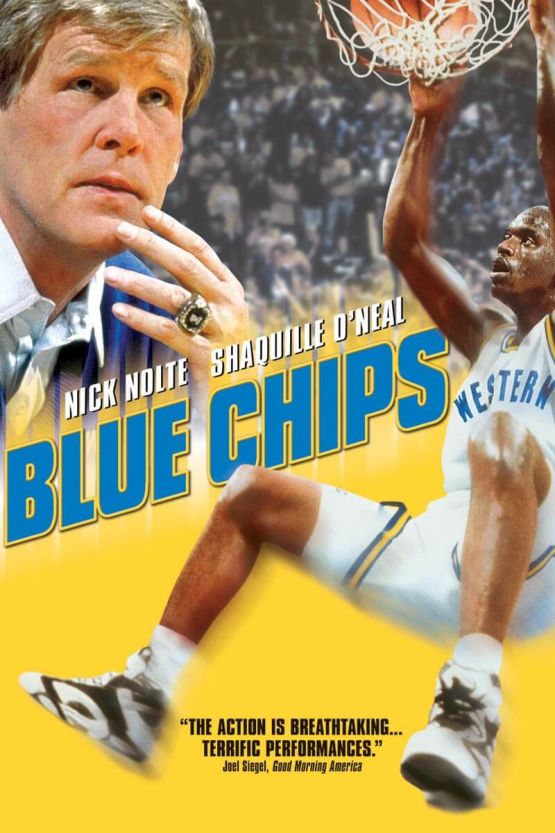
Blue Chips

Most Rewatchable Scene

Press conference; point-shaving review; Cousy free throws

In the discussion (23)
Approx. transcript time · 00:37:39Read transcript
  • Pete’s repeated opening tirade is nominated as an anti-motivational introduction, contrasting hunched vulnerability with Pitino’s smooth confidence. — Bill Simmons
  • Cousy’s free-throw conversation is nominated; a reported plan to alternate shooters failed when he made twenty-one straight, leaving Nolte’s complaint improvised. — Van Lathan
  • The kindly athletic director is interpreted as a deliberately incurious figurehead who would also lose his job after the scandal. — Bill Simmons
  • The free-throw sequence is defended enthusiastically; Cousy reportedly recalled the crew’s reaction as contrasting his accuracy with Shaq’s misses the prior day. — Bill Simmons
  • The recruiting trip is called the best fifteen-minute stretch, with Chicago highlights and rival coaches appearing at every stop. — Bill Simmons
  • Gossett’s brief recruiter-facing school role is praised for balancing cynical control of the process with concern for the player; other actors accept small parts. — Bill Simmons
  • Woodard’s blunt millionaire answer and demands for a job and house are recruiting-sequence highlights. — Bill Simmons
  • The Indiana recruiting stop introduces Larry Bird and his actual French Lick home; the cameo leads into a commercial-location anecdote.
  • Bird’s house shares the driveway from the Magic Johnson Converse commercial; mismatched eyelines are noticed, but Bird’s presence carries the scene. — Chris Ryan
  • Shaq visiting the elementary classroom is praised for his gigantic yet childlike presence. — Van Lathan
  • The barn basketball sequence is admired, while its abundance of elite players, half-court rules and geography are questioned.
  • Happy’s untraceable-money pitch and argument that players deserve compensation are admired as a precursor to modern collectives.
  • The payoff montage gives the mother a job and house, Ricky money and a tractor, and Neon an unsolicited Lexus; Neon remains the purest character. — Van Lathan
  • Butch’s homesickness scene is a candidate. — Van Lathan
  • Happy claiming ownership of Pete is a candidate; whether his point-shaving admission fits his earlier denial of wrongdoing is questioned.
  • Reviewing the 1991 point-shaving tape is a favorite, with comically obvious turnovers and clock checks; The Gambler’s version is considered better. — Bill Simmons
  • The tape-review confrontation is called the best scene, while the wording distinguishes best from most rewatchable. — Bill Simmons
  • Freddie’s detached needling of the assistant who recruited Tony builds the tape-review confrontation toward an explosion. — Bill Simmons
  • Pete’s rebuke to Tony is read as self-accusation; an explicit display of Tony’s leverage would better explain why he stays on the team. — Van Lathan
  • The final game offers Knight’s referee arguments and Hurley’s play, but the improbable alley-oop and droning score disappoint; Tupac, Beastie Boys or The Natural music are imagined alternatives.
  • The final press conference is nominated for Ed’s probing question and Pete’s confession, with the final declaration compared to A Time to Kill’s emotional climax. — Bill Simmons
  • Two explicit choices favor the press conference; another response prefers the point-shaving review and adds Cousy’s free throws. — Chris Ryan
  • The tape-review staging lets Freddie needle the foreground assistant while Nolte remains behind them. — Bill Simmons
In the discussion (10)
Approx. transcript time · 01:38:59Read transcript
  • Redford is a yes: one of the most bankable actors, at his handsome peak, and a Best Director winner who took down Scorsese; the Sundance Institute was formed in 1981. — Bill Simmons
  • Timothy Hutton is a probable yes, with Taps also considered, but the Oscar closes the deal.
  • Mary Tyler Moore is a no, followed by a tangent on attractive stars of earlier decades and her Laura Petrie on The Dick Van Dyke Show. — Bill Simmons
  • The 1981 Oscars are considered, but one host names 1994 as the Apex telecast and 1975's hosts are read; no Apex call is made for 1981.
  • Sutherland could be talked into Apex, but his peak is also placed at the 24-era moment when viewers learned he is Kiefer's father, and at JFK.
  • Judd Hirsch is an emphatic yes.
  • Elizabeth McGovern is a no. — Bill Simmons
  • The name Buck is declared Apex Mountain by one voice, supported with Buck Henry, Buck Showalter, Magic Johnson's nickname Young Buck, Craig's suggestion of Uncle Buck and Bucky Barnes, while Yankee fans' Bucky Dent is waved off. — Bill Simmons
  • The name Ward belongs to Ward Cleaver, but Buck and Ward in the same movie is declared Apex Mountain. — Bill Simmons
  • Intense Chicago movies are becoming Apex but are not there yet, and fucked up family movies are a no. — Bill Simmons
In the discussion (8)
Approx. transcript time · 01:24:35Read transcript
  • Recasting Costello is raised early: this is not a good Nicholson performance given expectations, and failing to get an Oscar nomination at his stature means something went wrong.
  • The part needs real weight and prestige, a Brando Godfather type; Daniel DeLois and Sean Penn are too young, Jimmy Con and Duval too old, and Gandalfini is not Irish.
  • Nicholson was at the tail end of his career, like Magic Johnson in 1996; the movie might be tighter without his indulgences, but it is hard to conceive without him; in A Few Good Men every choice was perfect, here he is all over the place.
  • Hackman is proposed and liked: imposing, has played bastards, never worked with Scorsese, though he may have checked out by then; one participant would rather roll the dice with Hackman.
  • James Badge Dale was not famous enough to register as the guy from earlier; the counterpoint is that it works because it is someone the audience does not know. — Bill Simmons
  • Ryan Gosling is rejected; Jake Gyllenha and Keith Ledger are floated, but a star disappearing for two hours would be distracting, and Badge Dale is legit good. — Sean Fennessey
  • They settle on Gene Hackman as Costello. — Bill Simmons
  • Hackman might refuse certain things, whereas Nicholson brought chaos such as the cocaine and a vibrator. — Chris Ryan
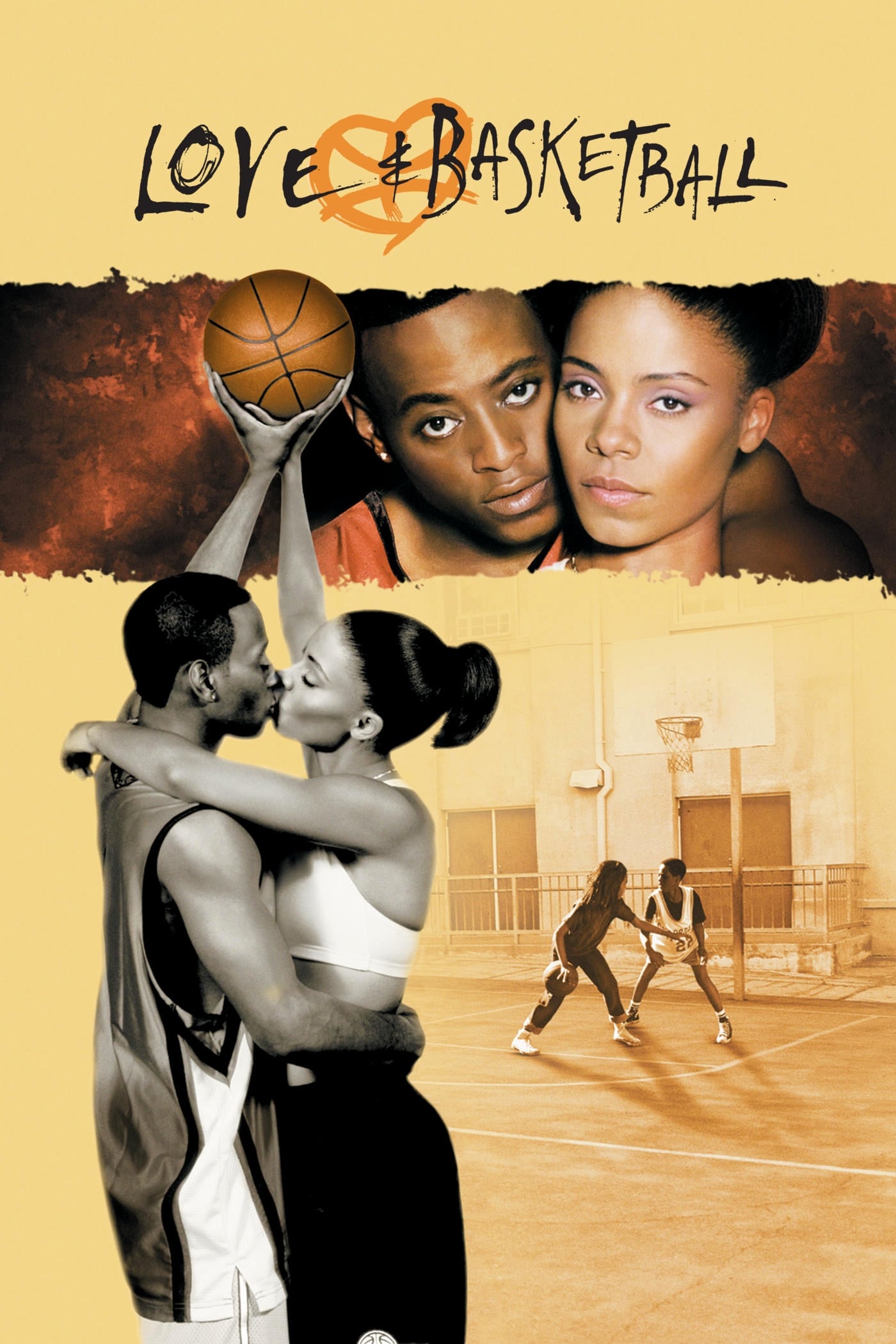
Love & Basketball

Picking Nits

Clippers in L.A. in 1981; one-and-done in 1989; first-team All-American; hospital stay for an ACL; open windows; adults living at home; the Magic Johnson points boast

In the discussion (8)
Approx. transcript time · 01:25:31Read transcript
  • Monica is a senior at Crenshaw in 1988 and meets Quincy in 1981, but his dad plays for the Clippers, who did not reach L.A. until 1984; San Diego Clippers items appear in his room. — Bill Simmons
  • Quincy going pro after one year in 1989 is too ambitious, since one-and-done did not really arrive until the mid-90s after the Fab Five. — Bill Simmons
  • Monica making first-team all-American is doubted given she seemed a three-star recruit and the era was loaded; second team would be more believable. — Jemele Hill
  • Quincy staying in the hospital for days after an ACL tear is questioned; the reply is that medicine was less advanced then. — Bill Simmons
  • A nit about how he fell is withdrawn after a Tony Allen Celtics precedent of tearing an ACL after hanging on the rim. — Bill Simmons
  • In an upper-middle-class neighborhood everyone leaves windows open, including a trophy-filled bedroom of an NBA player's son. — Bill Simmons
  • Quincy, a mid-20s NBA player about to marry, stays in his mom's house, and Monica still living at home is also odd. — Jemele Hill
  • Young Quincy answering 'maybe' when asked if his dad scored more than Magic Johnson is a good catch. — Jemele Hill
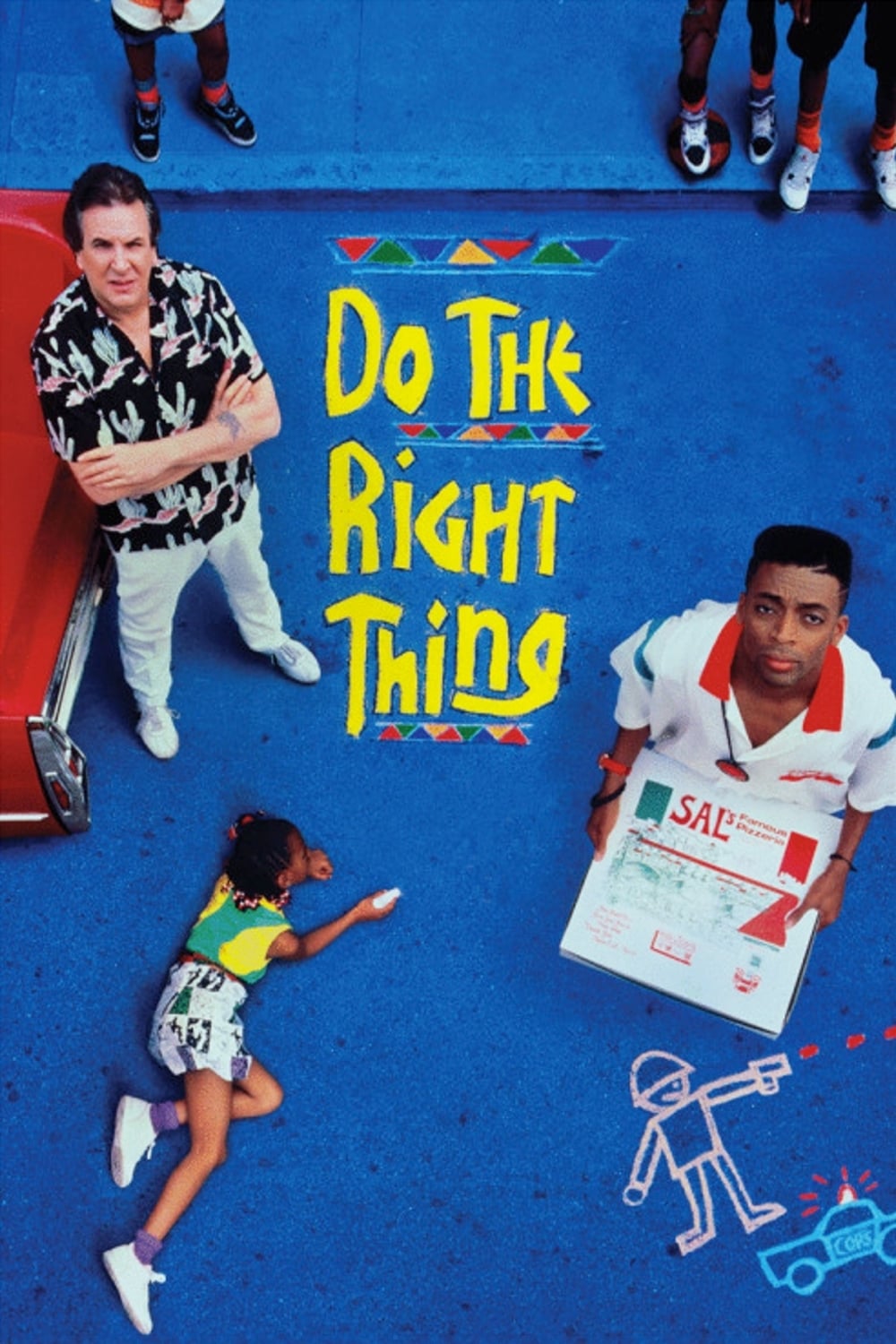
Do the Right Thing

The Neil McCauley “A Book about Metals” Award for Best Line from the Movie

Senor Love Daddy's roll call; Pino and Mookie's favorite-stars exchange

In the discussion (11)
Approx. transcript time · 01:22:36Read transcript
  • A detail noticed only on a recent rewatch: the Black Panther comic book and the 'we eat pizza' moment, called Lee ahead of the curve. — Sean Fennessey
  • Lee is credited with helping invent sneakerhead culture and the rock-star NBA image, not just Nike.
  • Radio Raheem's love and hate speech is played.
  • Sweet Dick Willie telling people to boycott the barber who messed up their head might be the funniest line in the movie.
  • The mayor telling Mookie 'always do the right thing' and Mookie's 'That's it? I got it. I'm gone.' came to mind when Lee won an Oscar; 'Stay black' is also cited. — Sean Fennessey
  • Senor Love Daddy's roll call is called the best: a diverse mini history of black music from Branford Marsalis to Bessie Smith, which later rap acts copied. — Wesley Morris
  • We Love Radio never reaches the street; Love Daddy stays behind the glass. — Sean Fennessey
  • Sal's 'I built this place with my bare hands' speech shows the film still working through his feelings; Lee did not have to let Sal speak, and the final conversation is balanced between antagonism and a moment of their old relationship. — Sean Fennessey
  • 'Why don't you go back to Massachusetts? I was born in Brooklyn' is cited. — Wesley Morris
  • The Pino and Mookie exchange about Magic Johnson, Eddie Murphy and Prince is called the best conversation in the movie because it is a real conversation black people have with non-black people who say 'you're different'. — Wesley Morris
  • Senor Love Daddy's 'y'all take a chill... that's the double truth, Ruth', which opened the podcast, is also cited. — Wesley Morris
In the discussion (8)
Approx. transcript time · 00:07:52Read transcript
  • The first category is introduced as the Dion Waiters Award for best heat check performance by a role player; nominees open with Scott Conn (as transcribed) as Tweeter, described as Wes Welker crossed with Charlie Sheen and as a blatant rip-off of Mac Davis's character in North Dallas 40, then Amy Smart as Jules, the wet-blanket girlfriend who exists to bring the hero down, with Crank, Crank 2 with Jason Statham and Road Trip recalled.
  • Asked for Amy Smart thoughts, has none at first, then offers one: she is great in Butterfly Effect. — Shea Serrano
  • Ali Larder (as transcribed) as Lance's original girlfriend who switches her attention to Mox in the hospital before Lance has even been operated on; her line that this is not about love but about her future is respected as honest, her dream of going to FSU and Tallahassee is mocked, and her debut is compared to Magic Johnson in the 1980 finals.
  • Billy Bob is called the greatest fat guy in sports movie history, with a debate over whether he has a last name at all, since he is once called William Robert; the last nominee is Miss Davis, the teacher slash stripper.
  • Asked who wins, first tries John Voight (as transcribed), then gives Ali Larder. — Shea Serrano
  • Voight is ruled ineligible as a starter who is too big for the award; Larder is called 100% the answer, since nothing is a bigger heat check than the whipped cream bikini, the scene friends told you to see the movie for; an underrated Darcy moment at the party, suggesting the dryer do the work, is debated as noise cover versus an assist.
  • In the whipped cream scene something is visibly taped on to cover her rear when she walks up from the side, odd modesty given the rest of the costume and a scene where a fat guy throws up hot dogs into the washer; nobody at a football party does laundry; she has only about seven scenes, two on the dryer and one changing in the car on the way from the hospital where her boyfriend's knee was torn up.
  • Agreement that it is Allie Larder, but Scott Conn's performance should not be slept on: of anyone in the movie he was the spin-off candidate, and a Tweeter half-hour sitcom on Fox would have absolutely worked.
Displaying all 6 discussions