
Film credit
Larry Bird
Stats
- Episodes featuring their films
- 2
- Movies in this archive
- 1
Rewatchables episodes featuring Larry Bird’s films
Mentioned in discussions

In the discussion (3)
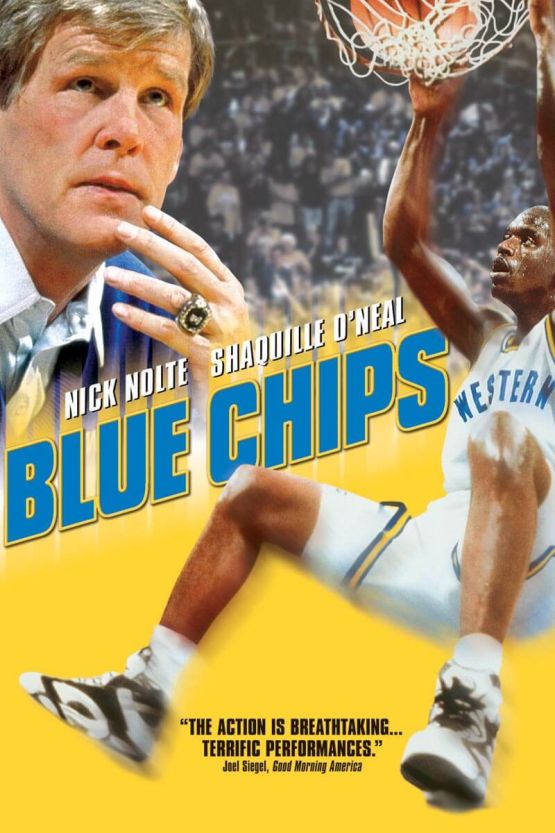
- Happy/J. T. Walsh, the two blondes, Lou Gossett, Larry Bird and Bob Cousy are candidates; Shaq is rejected for too much screen time. — Chris Ryan
- Alfre Woodard is added as eligible for two scenes and one of the film’s best lines. — Chris Ryan
- Lou Gossett is preferred for an intense roughly three-minute appearance recalling An Officer and a Gentleman; Cousy is considered too prominent across about four scenes. — Chris Ryan

Most Rewatchable Scene
Press conference; point-shaving review; Cousy free throws
In the discussion (23)
- Pete’s repeated opening tirade is nominated as an anti-motivational introduction, contrasting hunched vulnerability with Pitino’s smooth confidence. — Bill Simmons
- Cousy’s free-throw conversation is nominated; a reported plan to alternate shooters failed when he made twenty-one straight, leaving Nolte’s complaint improvised. — Van Lathan
- The kindly athletic director is interpreted as a deliberately incurious figurehead who would also lose his job after the scandal. — Bill Simmons
- The free-throw sequence is defended enthusiastically; Cousy reportedly recalled the crew’s reaction as contrasting his accuracy with Shaq’s misses the prior day. — Bill Simmons
- The recruiting trip is called the best fifteen-minute stretch, with Chicago highlights and rival coaches appearing at every stop. — Bill Simmons
- Gossett’s brief recruiter-facing school role is praised for balancing cynical control of the process with concern for the player; other actors accept small parts. — Bill Simmons
- Woodard’s blunt millionaire answer and demands for a job and house are recruiting-sequence highlights. — Bill Simmons
- The Indiana recruiting stop introduces Larry Bird and his actual French Lick home; the cameo leads into a commercial-location anecdote.
- Bird’s house shares the driveway from the Magic Johnson Converse commercial; mismatched eyelines are noticed, but Bird’s presence carries the scene. — Chris Ryan
- Shaq visiting the elementary classroom is praised for his gigantic yet childlike presence. — Van Lathan
- The barn basketball sequence is admired, while its abundance of elite players, half-court rules and geography are questioned.
- Happy’s untraceable-money pitch and argument that players deserve compensation are admired as a precursor to modern collectives.
- The payoff montage gives the mother a job and house, Ricky money and a tractor, and Neon an unsolicited Lexus; Neon remains the purest character. — Van Lathan
- Butch’s homesickness scene is a candidate. — Van Lathan
- Happy claiming ownership of Pete is a candidate; whether his point-shaving admission fits his earlier denial of wrongdoing is questioned.
- Reviewing the 1991 point-shaving tape is a favorite, with comically obvious turnovers and clock checks; The Gambler’s version is considered better. — Bill Simmons
- The tape-review confrontation is called the best scene, while the wording distinguishes best from most rewatchable. — Bill Simmons
- Freddie’s detached needling of the assistant who recruited Tony builds the tape-review confrontation toward an explosion. — Bill Simmons
- Pete’s rebuke to Tony is read as self-accusation; an explicit display of Tony’s leverage would better explain why he stays on the team. — Van Lathan
- The final game offers Knight’s referee arguments and Hurley’s play, but the improbable alley-oop and droning score disappoint; Tupac, Beastie Boys or The Natural music are imagined alternatives.
- The final press conference is nominated for Ed’s probing question and Pete’s confession, with the final declaration compared to A Time to Kill’s emotional climax. — Bill Simmons
- Two explicit choices favor the press conference; another response prefers the point-shaving review and adds Cousy’s free throws. — Chris Ryan
- The tape-review staging lets Freddie needle the foreground assistant while Nolte remains behind them. — Bill Simmons

What’s Aged the Best?
College towns; Indiana sports; cycling movies; Rod; Robyn Douglass; Mercedes; Amy Wright; John Ashton; Barbara Barrie; P.J. Soles; Cutters nickname
In the discussion (11)
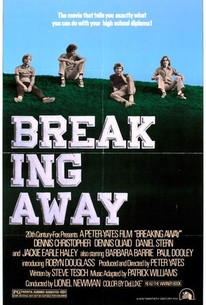
- College towns remain excellent film settings, with townie-student tension and familiar streets, bars and pizza places. — Chris Ryan
- Indiana sports in 1979 hold up especially well, coinciding with Larry Bird’s college season. — Sean Fennessey
- Cycling movies are more cinematic than running movies because crashes and interference create additional possibilities. — Bill Simmons
- Rod’s pink polo, blue convertible, swimming and handsome college-villain persona remain excellent, as does Bochner’s later Die Hard connection. — Bill Simmons
- Robyn Douglass is praised among a crowded field of seventies stars and for The Lonely Guy. — Bill Simmons
- Rod’s blue Mercedes and the reverse-driving shot are admired, alongside simpler seventies downtown streets. — Bill Simmons
- Amy Wright’s run through The Deer Hunter, The Amityville Horror, Breaking Away and Inside Moves demonstrates her character-actor strengths. — Bill Simmons
- John Ashton as Mike’s brother efficiently conveys their relationship when threatening to take the car away. — Bill Simmons
- Barbara Barrie is an outstanding screen mother with her own sexual life and a moving passport scene.
- P.J. Soles’s busy six-year run and appeal are praised, alongside the reported marriage to Quaid and lost Princess Leia role. — Bill Simmons
- Changing the local nickname from Stoners or Stonies to Cutters avoids drug confusion and produces a memorable name. — Bill Simmons

Probably Unanswerable Questions
Hoosiers box score; slow clap origin; top NBA Jumbotron movie characters; pass-four-times rule for the Celtics; a Dentyne ad; Jimmy Chitwood's next 15 years; Norman Dale's next 10 years
In the discussion (7)
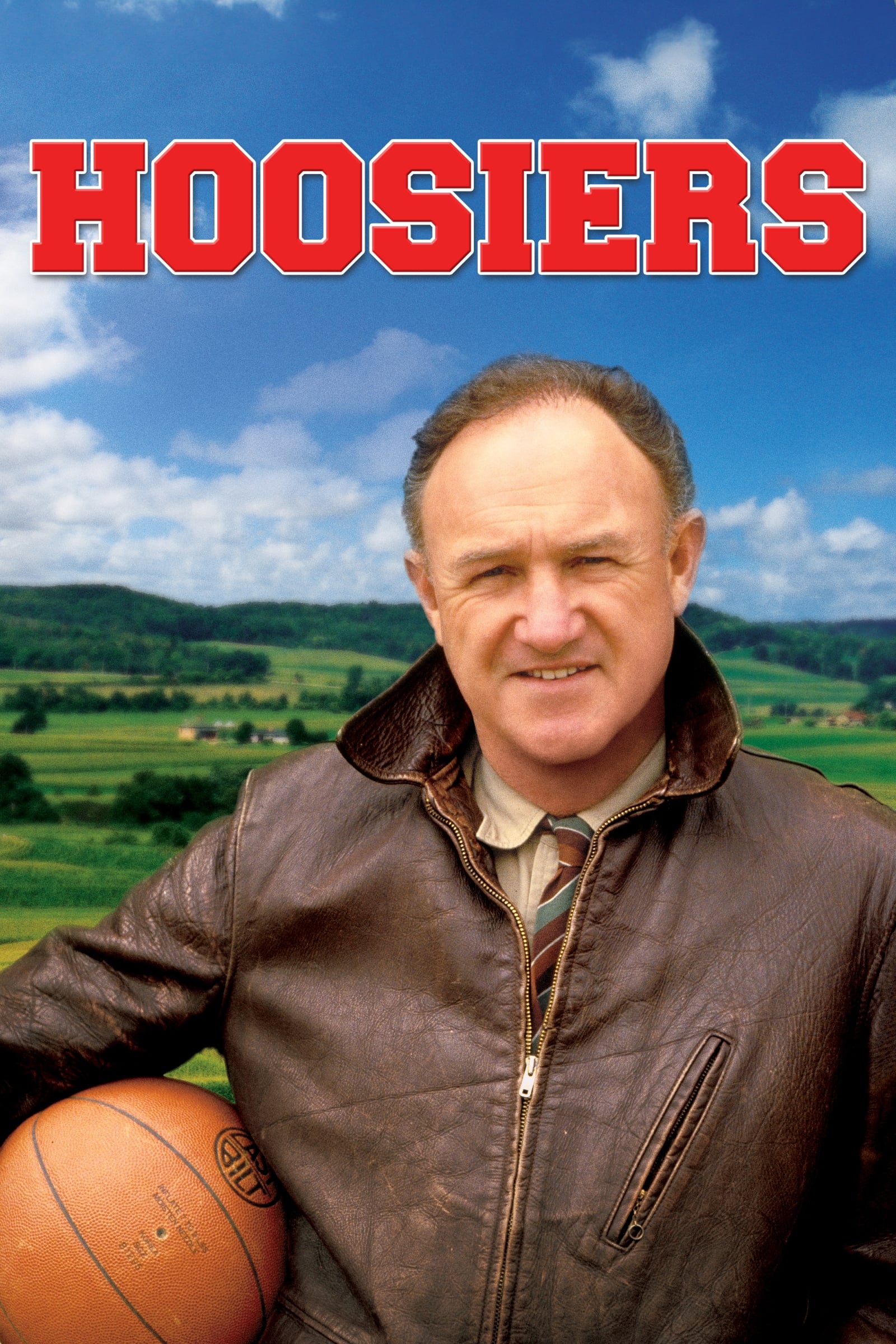
- A 2002 Hoosiers diary reconstructed the title-game box score: Jimmy 14 for 18 for 30 of the 42 points; the count is revisited with 26 points and 13 of 14 seen. — Bill Simmons
- Hoosiers did not invent the slow clap; Brubaker (about 1980) did, though Hoosiers has the best one. — Bill Simmons
- Coach Dale and Hickory are proposed as the most-played movie characters on NBA Jumbotrons, ahead of Animal House and Braveheart; a classroom clip is identified as Network. — Bill Simmons
- The pass-four-times rule might even help the 2022 Celtics. — Bill Simmons
- The Buddy Dentyne ('Dentine') scene was never used in a Dentyne ad; gum preferences include Mentos. — Bill Simmons
- Jimmy's next 15 years: maybe college at Indiana and dropping out quickly, like Larry Bird leaving Indiana under Bobby Knight. — Bill Simmons
- Norman Dale's next 10 years: maybe the punching incident resurfaces and he is canceled, or he follows Myra to Chicago and coaches under a new name. — Bill Simmons
In the discussion (5)
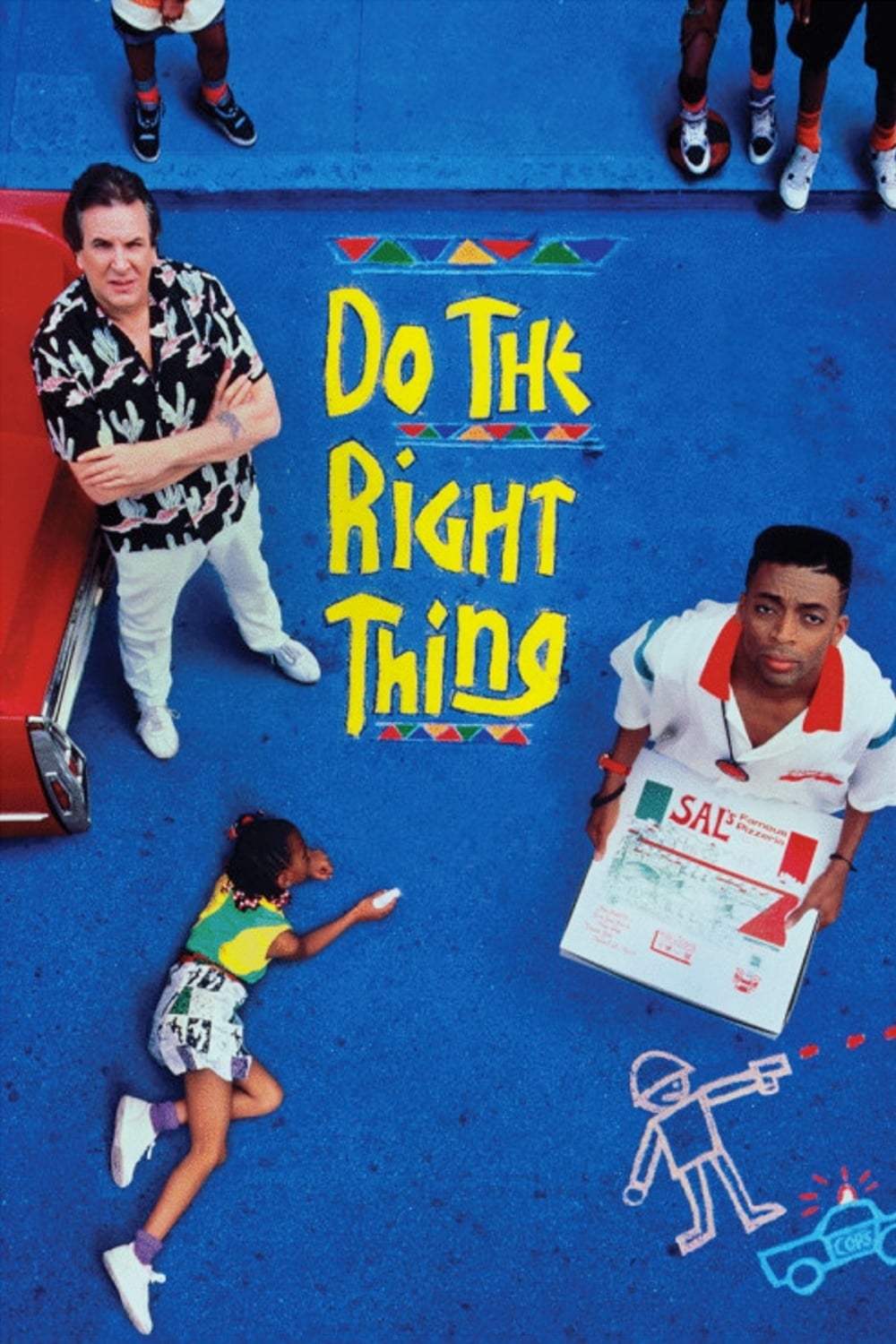
- Listed nominees: Bill Nunn as Radio Raheem, Robin Harris as Sweet Dick Willie, and Rosie Perez; Sam Jackson, Martin Lawrence and Roger Guenveur Smith are also raised. — Sean Fennessey
- Heat check is tricky because nearly every character gets about a scene and a half; Robin Harris is a 'bay leaf' outside the plot, always with Frankie Faison and Paul Benjamin. — Sean Fennessey
- John Savage's scene in a Larry Bird jersey, stepping on Buggin' Out's new Jordans, is offered as the pick and as a potential rewatchable scene.
- Savage's story that Larry Bird gave him the jersey through his sister is called apocryphal: per the hosts, Lee debunked it to Savage's face, saying he bought the shirt and gave it to costume designer Ruth Carter. — Sean Fennessey
- Challenged on picking a white guy, the picker is not scared: Savage's one memorable scene is a heat check moment. — Wesley Morris

In the discussion (3)
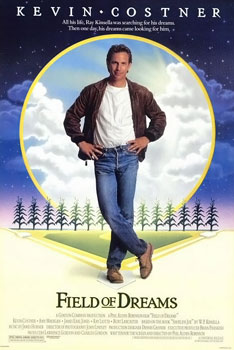
- Could this be remade as a ten-episode Netflix show: absolutely not, nobody would touch it, though it would be an interesting show.
- Field of Dreams 2 in the post-steroids era writes itself: Bonds and McGuire (as transcribed) return 48 years from now with normal-sized necks and 7.5 hats; or Ray pursues bringing the Negro Leaguers back to play; maybe it's a cartoon.
- A joke remake: a son who left at 17 calling Larry Bird a loser builds his father a basketball court in the cornfield; you'd make it a basketball movie set in a city.

Most Rewatchable Scene
The 'hell's coming with me' scene followed by the killing montage; Wyatt Earp confronting Billy Bob Thornton at the card table; or the stretch from Wyatt Earp, on his horse after Bill Paxton's death, seeing Powers Booth through to the creek
In the discussion (10)
- The nominated choices open with Wyatt Earp confronting a heavier Billy Bob Thornton near the beginning, the 'skin that smoke wagon' exchange played as a clip; Earp completely emasculates him and then tells the bartender he is taking 25% of the house; Thornton's grumbling just before, about playing cards with his brother's kids, is also loved and called a good heat check.
- More nominees: the first OK Corral shootout and Kurt Russell's 'hell's coming with me' speech, played as a clip and followed by a montage of them killing people; the creek shootout, Russell's version of Larry Bird walking on water in the 1987 playoffs; and Kilmer versus Michael Biehn, one-on-one at the end.
- Also proposed, the 'turn your head into a canoe' scene: after the character the hosts call Ben Johnson is killed, Kurt Russell comes out and pistol-whips the shooter, Thomas Hayden Church and the others surround Russell, and Val Kilmer shows up with 'you music lover' and 'I got two guns, one for each of you'.
- The first 'I'm your Huckleberry' is nominated with a clip: Michael Biehn is drunk, some of his buddies already killed, and is trying to challenge Earp when Doc comes from the shadows of the saloon and delivers the famous line; beyond Kilmer, Biehn is called really good, against type, a great villain and a great Johnny Ringo, the real-life figure.
- Biehn is so good that one host went online to research why his career was not bigger: The Terminator, this, Aliens and The Abyss, where he plays one of the crazy Navy SEALs, and then not much, partly because he stopped working with James Cameron, who makes few movies; it is argued he and Michael Rooker have switched parts, since 99 times out of 100 Rooker would play Ringo and Biehn the good guy you are not sure you trust, Rooker playing a lunatic in every movie.
- One favorite is the 'hell's coming with me' scene and the killing montage that follows.
- Asked whether anything else belongs in the pool, the answer is no, those are the big five. — Sean Fennessey
- Another host does add one: the scene at the very beginning when the brothers and their three women get off the train and look at each other in the mirror; nobody goes for the twelve-minute theater sequence, which they would have told George to cut.
- From a channel-flipping standpoint, if the film is on after Bill Paxton dies, with Kurt Russell on his horse pretending to leave and then seeing Powers Booth, one host watches from that point on, knowing he is going to stay and kill everybody and end it in the creek; that is called that host's favorite part.
- Another host's favorite is the Billy Bob scene, and Thornton reportedly improvised all his dialogue, as Kurt Russell told the hosts, though with Thornton that is hard to verify.
Probably Unanswerable Questions
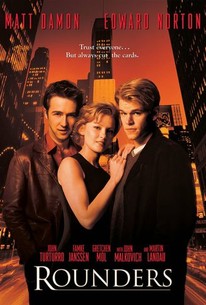
Was Knish the smartest of them and the hero? Where does Johnny Chan's cameo rank among sports cameos? Is this the best gambling movie ever made? Does 'women are the rake' hold up? Where did Worm go after Binghamton? Did Joe give Petrovsky the 10 grand? What was the perfect release year? Could Damon and Norton have switched parts?
In the discussion (9)
- Was Knish the smartest of all these people and the hero? He owned his own business, grinded out the rent money, was smart enough not to lend Mike McD 10 grand he would never see again, stayed away from Worm, and gives the Turkish bath speech that it is about making a living, not the World Series; he seems to live okay with his truck business despite alimony and child support.
- The ending at the World Series of Poker, which nobody watched then because you could not see the cards, became everyone's dream within five years; Positively Fifth Street by James McManus, about the World Series and Binion's, is recommended as one of the great crime and sports books, and Grantland tried to hire him.
- Where does Johnny Chan's cameo rank among sports-related cameos? The bar is Hulk Hogan in Rocky III; also Kareem in Airplane, Xavier McDaniel in Singles, Larry Bird in Blue Chips, though Koozie (as transcribed) with the left-handed free throws is the real Blue Chips flex and is acting rather than a cameo, and Bob Watson and Cesar Cedeno in the Bad News Bears sequel; Chan is up there even though he only mouths words.
- Is this the best gambling movie ever made? It is a host's favorite poker movie but not favorite gambling movie, which is Robert Altman's California Split with George Segal and Elliot Gould, about how befriending a gambler is bad for you; Koppelman and Levine are surely California Split guys, but as poker movies go Rounders is head and shoulders above everything.
- Where do we stand on 'in the poker game of life, women are the rake'? Iconic twenty years ago, it now reads as misogynist in the woke era, but the hosts still like it: it is Worm's line, this is a movie about card-playing, prison-dwelling dirtbags and that is how they talk, not a movie about the president or the Navy.
- Where did Worm go after Binghamton? In a 2013 Grantland mailbag Koppelman and Levine answered that he meant 'highway time' but needed road money, found a Bronx backroom game far from KGB's territory, and was chased across town by the man he had fleeced for cigarettes in the prison hearts game, a scene they shot, edited, screened and cut; they imagine he later scammed his way through the Moneymaker online boom, where Rounders 2 would pick up.
- Are we sure Joe gave Petrovsky the 10 grand? Why would she, and how would he know; and why did Petrovsky lend it in the first place to a bad student with a gambling problem, since nobody would give 10 grand to an untrusted, failing Ringer employee; Joe's look through the window pane suggests they will go another round, but nothing is certain.
- What year would have been perfect for release? It would have to be about two weeks before Moneymaker so the movie was still in theaters during the rush of interest, but Damon and Norton would be too old by then; a year later, after Fight Club and Ripley, is floated, yet both like how it played out and doubt a later release would have led to this podcast.
- An early question saved from this category: could Damon and Norton have switched parts? Norton 100 percent, since at the time he seemed the new Marlon Brando and the most important actor in a decade; Damon no, and Norton as the embodiment of filth and dishonesty is probably the more irreplaceable of the two.

