
Most Rewatchable Scene
Press conference; point-shaving review; Cousy free throws
In the discussion (23)
Approx. transcript time · 00:37:39Read transcript
- Pete’s repeated opening tirade is nominated as an anti-motivational introduction, contrasting hunched vulnerability with Pitino’s smooth confidence.
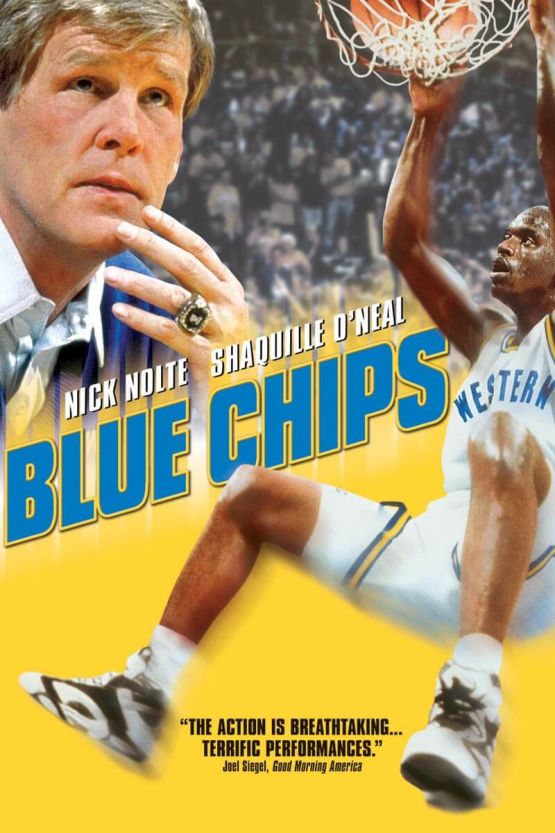
- Cousy’s free-throw conversation is nominated; a reported plan to alternate shooters failed when he made twenty-one straight, leaving Nolte’s complaint improvised.
- The kindly athletic director is interpreted as a deliberately incurious figurehead who would also lose his job after the scandal.
- The free-throw sequence is defended enthusiastically; Cousy reportedly recalled the crew’s reaction as contrasting his accuracy with Shaq’s misses the prior day.
- The recruiting trip is called the best fifteen-minute stretch, with Chicago highlights and rival coaches appearing at every stop.
- Gossett’s brief recruiter-facing school role is praised for balancing cynical control of the process with concern for the player; other actors accept small parts.
- Woodard’s blunt millionaire answer and demands for a job and house are recruiting-sequence highlights.
- The Indiana recruiting stop introduces Larry Bird and his actual French Lick home; the cameo leads into a commercial-location anecdote.
- Bird’s house shares the driveway from the Magic Johnson Converse commercial; mismatched eyelines are noticed, but Bird’s presence carries the scene.
- Shaq visiting the elementary classroom is praised for his gigantic yet childlike presence.
- The barn basketball sequence is admired, while its abundance of elite players, half-court rules and geography are questioned.
- Happy’s untraceable-money pitch and argument that players deserve compensation are admired as a precursor to modern collectives.
- The payoff montage gives the mother a job and house, Ricky money and a tractor, and Neon an unsolicited Lexus; Neon remains the purest character.
- Butch’s homesickness scene is a candidate.
- Happy claiming ownership of Pete is a candidate; whether his point-shaving admission fits his earlier denial of wrongdoing is questioned.
- Reviewing the 1991 point-shaving tape is a favorite, with comically obvious turnovers and clock checks; The Gambler’s version is considered better.
- The tape-review confrontation is called the best scene, while the wording distinguishes best from most rewatchable.
- Freddie’s detached needling of the assistant who recruited Tony builds the tape-review confrontation toward an explosion.
- Pete’s rebuke to Tony is read as self-accusation; an explicit display of Tony’s leverage would better explain why he stays on the team.
- The final game offers Knight’s referee arguments and Hurley’s play, but the improbable alley-oop and droning score disappoint; Tupac, Beastie Boys or The Natural music are imagined alternatives.
- The final press conference is nominated for Ed’s probing question and Pete’s confession, with the final declaration compared to A Time to Kill’s emotional climax.
- Two explicit choices favor the press conference; another response prefers the point-shaving review and adds Cousy’s free throws.
- The tape-review staging lets Freddie needle the foreground assistant while Nolte remains behind them.