
Film credit
John Ashton
Also referred to as Taggart
Stats
- Episodes featuring their films
- 4
- Movies in this archive
- 4
Rewatchables episodes featuring John Ashton’s films
Beverly Hills Cop
1984 film
Bill Simmons · Wesley Morris · Sean Fennessey · Chris Ryan
Aired September 17, 2019

Mentioned in discussions
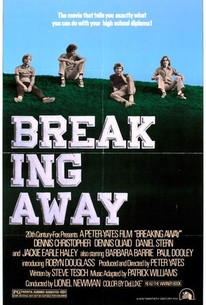

What’s Aged the Best?
College towns; Indiana sports; cycling movies; Rod; Robyn Douglass; Mercedes; Amy Wright; John Ashton; Barbara Barrie; P.J. Soles; Cutters nickname
In the discussion (11)
- College towns remain excellent film settings, with townie-student tension and familiar streets, bars and pizza places. — Chris Ryan
- Indiana sports in 1979 hold up especially well, coinciding with Larry Bird’s college season. — Sean Fennessey
- Cycling movies are more cinematic than running movies because crashes and interference create additional possibilities. — Bill Simmons
- Rod’s pink polo, blue convertible, swimming and handsome college-villain persona remain excellent, as does Bochner’s later Die Hard connection. — Bill Simmons
- Robyn Douglass is praised among a crowded field of seventies stars and for The Lonely Guy. — Bill Simmons
- Rod’s blue Mercedes and the reverse-driving shot are admired, alongside simpler seventies downtown streets. — Bill Simmons
- Amy Wright’s run through The Deer Hunter, The Amityville Horror, Breaking Away and Inside Moves demonstrates her character-actor strengths. — Bill Simmons
- John Ashton as Mike’s brother efficiently conveys their relationship when threatening to take the car away. — Bill Simmons
- Barbara Barrie is an outstanding screen mother with her own sexual life and a moving passport scene.
- P.J. Soles’s busy six-year run and appeal are praised, alongside the reported marriage to Quaid and lost Princess Leia role. — Bill Simmons
- Changing the local nickname from Stoners or Stonies to Cutters avoids drug confusion and produces a memorable name. — Bill Simmons


Recasting Couch
Tom Brady as Storm; John Ashton as O’Malley; Sharon Stone as nurse; Paul Gleason as Trent
In the discussion (4)
- A modern remake needs unintentional comedy: Tatum and Wahlberg are conventional options, but an athlete version with Brady, his wife and son is the dream. — Bill Simmons
- Ashton is proposed for 1990 O’Malley after Beverly Hills Cop II and Midnight Run, bringing credibility and humor. — Bill Simmons
- Stone is favored for LeBrock’s role, with Sciorra, Moore, Thiessen, Locklear, Thomas and Graham considered amid age, fame and budget objections. — Kyle Brandt
- Gleason is the alternative Trent for his beloved antagonistic persona in The Breakfast Club and Die Hard. — Kyle Brandt

In the discussion (2)
- A case is made for Rosewood and Taggart, and for Tony Scott because the film is so distinctively his, yet it is hard to name anyone other than Murphy. — Chris Ryan
- The answer is affirmed as Eddie Murphy while agreeing that others have credible claims. — Chris Ryan
Podcast choices

In the discussion (3)
- A Netflix version would be built around the Alphabet Killer, while Rosewood and Taggart could have been a sitcom. — Bill Simmons
- The original England plan reportedly paired Eddie with Sean Connery at Scotland Yard, seen as a backbone for The Rock. — Chris Ryan
- A better third film would send Rosewood and Taggart to Detroit as the fish out of water, even with limited Eddie scenes. — Chris Ryan

Half-Assed Internet Research
TV-series idea; 2GAT123 license plate; Richard James alias; Rambo and Cobra jabs; Axel gives away money; Don Simpson’s trunk guns; Nielsen’s romances
In the discussion (7)
- Paramount wanted a TV series, which Eddie turned down. — Bill Simmons
- The film’s license plate is reportedly a recurring placeholder plate, like 555 phone numbers, seen in L.A. Story, Go, Pay It Forward, Traffic, Drive, and Two and a Half Men. — Bill Simmons
- Axel’s gun-club alias Richard James is linked to Rick James. — Bill Simmons
- Taggart swears at Rambo while firing a rocket launcher and Rosewood has a Cobra poster, while Tony Scott reportedly had an affair with Stallone’s wife. — Bill Simmons
- Axel never keeps money, handing $20 to Billy, $50 to Chris Rock’s valet, and $200 to the mayor’s charity dinner. — Bill Simmons
- Rosewood’s trunk of guns was reportedly based on Don Simpson keeping guns in his trunk. — Bill Simmons
- Nielsen’s reported romances with Schwarzenegger, Stallone, Tony Scott, Flavor Flav, and others are recounted as quite a list. — Bill Simmons
Best Former That Guy / Former Joey Pants Award
Ronny Cox; John Ashton; Robert Ridgely; Robert Pastorelli; Paul Guilfoyle
The panel proposes a new category here.
In the discussion (3)
- Graduated That Guys are performers who were anonymous in 1987 but are known now: Ronny Cox, and John Ashton until Midnight Run. — Bill Simmons
- Robert Ridgely, the boss who fires Lutz and later the Colonel in Boogie Nights, is added. — Bill Simmons
- Robert Pastorelli, the credit-card guy Vinnie, and Paul Guilfoyle are added; Jürgen Prochnow is arguable because of his memorable name. — Bill Simmons
What’s Aged the Best?
Taggart and Rosewood; Brigitte Nielsen; opening theme music; I Want Your Sex; Chris Rock; Simpson and Bruckheimer; deleted laser scene; Playboy Mansion filming; Alphabet Crimes concept; Paul Reiser’s Playboy’s Sisters magazine
In the discussion (14)
- Taggart and Rosewood are named first, with a wish that Beverly Hills Cop movies had kept coming every two years, seven in all, to add more of them. — Bill Simmons
- Brigitte Nielsen is raised next, and this is judged the best part she ever had, better than her earlier Schwarzenegger film and definitely better than Cobra. — Bill Simmons
- An opening song thematically drawn from the movie is praised as something no longer done. — Chris Ryan
- Shakedown was reportedly meant for Glenn Frey until his voice gave out, so Bob Seger sang it; Harold Faltermeyer’s score is compared to 48 Hours, Escape from New York, Miami Vice, and Fletch. — Bill Simmons
- Shakedown is called Bob Seger’s only number-one hit, a late peak after Springsteen pulled ahead of him around 1981. — Bill Simmons
- George Michael’s I Want Your Sex is called an amazing ‘80s song used perfectly. — Bill Simmons
- Chris Rock’s early appearance has aged best, especially in light of the Will Smith incident. — Bill Simmons
- Asked about Jürgen Prochnow, the answer is lukewarm: he and Dean Stockwell step on each other as villains, and Paul Guilfoyle’s character is barely developed. — Bill Simmons
- A scene at the villains’ apartment revealing their strange relationship is wished for, and the debt-driven alphabet scheme is called too cute by half. — Bill Simmons
- Simpson and Bruckheimer have aged best; Simpson reportedly had Paramount pull writer Larry Ferguson off The Presidio to work on this film. — Bill Simmons
- A deleted gun-club scene where Axel, Rosewood, and Taggart sneak past lasers should have been kept. — Bill Simmons
- It was reportedly the first movie filmed at the Playboy Mansion after Hugh Hefner had long refused. — Bill Simmons
- The Alphabet Crimes concept could be a Fincher-style limited Netflix series with one letter per episode; the crimes ran through the jewelry store, Bogomil, City Deposit, and the racetrack, and should have reached J. — Bill Simmons
- Paul Reiser appears to be reading a Playboy’s Sisters magazine in several scenes, possibly a payoff for mansion access. — Chris Ryan
In the discussion (6)
- An early flag for this category asks whether Rosewood and Taggart could have been spun off into a TV series or limited series about bumbling LA cops solving rich people’s crimes. — Bill Simmons
- The added-character and spinoff ideas are carried over, and Wesley’s question from the first film about whether Axel Foley was gay is revisited; this sequel ignores it. — Bill Simmons
- A belated question asks whether the franchise had more legs; the sequels should have added new stars as Lethal Weapon and Die Hard did instead of running the same nucleus back. — Bill Simmons
- The third film, the Disneyland one, is called an abomination that is not even fun-bad. — Bill Simmons
- Adding characters is called the missed answer, and a Detroit-set sequel, perhaps with Rosewood undercover there, is endorsed. — Bill Simmons
- An alternative sequel premise has a newly famous Axel hired as a consultant on a Hollywood cop movie that turns out to be laundering drug money. — Bill Simmons
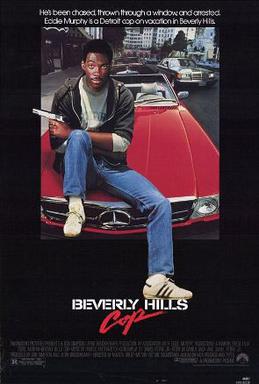
Probably Unanswerable Questions
Was Beverly Hills Cop 2 better than Beverly Hills Cop? Was Axel Foley gay?
In the discussion (17)
- Whether Cop 2 is better: it is a better story and a flat-out good, more fun movie with good music, the Taggart and Rosewood thing and Brigitte Nilsson (as transcribed), with Eddie still great; the fondness for Cop 1 comes from everything it meant for the Eddie arc.
- Was Axel Foley gay gets a yes, but the answer first returns to the period reviews, which were also upset about how the movie made white people look.
- Pauline Kale (as transcribed) did not believe in Eddie Murphy's stardom and found it offensive because he used it as a joke on how dumb white people could be made to look by a smart black person, a sort of pro-minstrel argument against an anti-minstrel work; LA Times letters in 1985 characterized Murphy's swagger with a racial slur and worried that black confidence would replace white comedians.
- One host as a kid felt the opposite, that it was the greatest thing that ever happened; Kale was about 65, not a racist, but had an interesting take on how black audiences responded to The French Connection, and old guard critics felt that way, so the rewatch was done aware that people were nervous Eddie was someone white people should fear.
- To one host it is a movie about a gay black man in the Detroit police whose former best friend, probably lover or hookup buddy, gets killed, sending him on a mission; not having sex with a woman does not make you gay, but a near two-hour movie whose protagonist on the verge of major stardom never gets a moment with the girl is striking, even allowing that Eddie arrived two weeks before filming and nothing was rewritten.
- Evidence: Jenny looks completely enamored, goes to the big three-room suite and immediately lies on the bed batting her eyelashes, and the only thing on Axel's mind is ordering room service for Taggart and Rosewood.
- The Mikey scenes are weird to watch: at the bar they look like they are about to make out, they exchange 'I love you', and when Axel gets home after the chewing-out by Inspector Todd to find Mikey broken in with the fridge open he is elated; the counter is that a friend out of prison eating a mayo sandwich in your kitchen would get 'get out of my house, you felon'.
- Gay characters are sprinkled throughout; it is an unintended consequence of a movie made with a ton of cocaine by the seat of its pants; at the strip joint he only tells Rosewood to give the dancer a dollar and does not partake, and his pretending is for plot rather than character; the movie is all pairs of men with emotional energy who could be on the verge of kissing, so subtext becomes text; 'is Axel gay' is a long-running Reddit conspiracy theory; James Russo brings a wild method energy to a two-minute part, a reckless guy out of prison who almost cries seeing his friend, which feels very real.
- Eddie is drawn into Russo rather than watching a method performance, they are on the same page; the original ending reportedly had Eddie back in his Detroit apartment opening the closet to find Mikey's shirt and sniffing it, prompting the joke that Martin Brest was robbed of an Oscar; the movie probably intended none of it.
- Intent does not matter because those things are in the movie we got; one host noticed it independently and wrote about it in a 2010 mailbag because the Jenny Summers scene jumped out, and may have inspired the theory; no other 80s action or genre movie lacks some nod to the hero's romantic life.
- Even in 48 Hours Nick Nolte's girlfriend calls to complain and Eddie gets laid by Olivia Brown, his primary obsession in that film; Eilbacher is a beautiful blonde, not a character actress like Joan Cusack, whose function in any other movie of the period, see Stripes, is to give a straight hero somewhere to put his sexuality; perhaps it was a black-white thing, since the sex scene was cut from The Golden Child and they were not ready for Eddie to do that in a mainstream movie.
- The conspiracy theory is compared to early Will Smith, who had Vivica A. Fox to get back to but few romantic leads for someone in his position, and did not help himself by skipping the kiss in Six Degrees of Separation, after which he always has a girlfriend, wife or dead spouse; the wish is that movies would acknowledge gay people exist and have sex lives instead of flicking at it.
- Damon Wayans giving him the fruit plate with the banana for the tailpipe is text, not subtext, and Eddie turns around on his way out to say thank you, perfectly comfortable with the man; the movie's own setup is the you-killed-my-lover revenge premise of other action movies, taken as a vacation; one host watched it for 26 years without noticing until the other wrote about it.
- The passion for Jenny Summers is the giveaway, how could a man not kiss her; the wish for one line where she hits on him and he insinuates he does not do that anymore is answered with 'that makes it worse'; it makes her character more interesting and hornier, and Eddie's complicated history with homophobia in his comedy makes the whole thing more frictive.
- A tangent on Eddie's homophobia turns into a bit about one host's bullies now being gay married with three kids: bully someone and your sexuality will come for you.
- During the scene discussion, 'before he dies, they're doing it' was raised about Axel and Mikey and saved for later.
- During what aged best, Jenny is said to be a love interest for neither man, though she really tried with Eddie, and the subject is parked until later.
Casting What-Ifs
Mickey Rourke signed a $400,000 holding deal and left; Sylvester Stallone rewrote it as a straight action film with Axel Cobretti and quit two weeks before filming; Martin Scorsese was offered the director's chair and dismissed the script; Eddie Murphy was hired two weeks before shooting
In the discussion (6)
- Mickey Rourke signed a $400,000 holding contract and then left the project; a New York Times quote has Don Simpson tearing a picture of Rourke out of a magazine, holding it up and saying 'isn't he great', which the hosts attribute to all the cocaine, although one says you did not need cocaine to want Rourke in 1984.
- This is the movie missing from Rourke's run before he started messing up his face: Heaven's Gate, Body Heat, Diner, Rumblefish, Pope of Greenwich Village, then the gap where Beverly Hills Cop could sit, followed by Eureka, Year of the Dragon and Nine and a Half Weeks; the holding deal's schedules did not work out.
- Stallone was more extreme: he made it a straight action film with the lead renamed Axel Cobretti, Michael Tandino as his brother and Jenny as his love interest, an opening meant to be like Saving Private Ryan on the beaches of Normandy, ideas deemed too expensive, and a climax of him driving a Lamborghini down the train tracks at a freight train driven by the villain; an urban legend has him quitting two weeks before filming over orange juice in his trailer.
- Scorsese was offered the director's chair while trying to get Last Temptation of Christ made, was bewildered by the script and dismissed it.
- Earlier context: Eddie was hired two weeks before filming on a script kicking around since the 70s, a cop-comes-to-another-town movie set up for various stars and directors, and he transformed it with improv; it does not work with Sylvester Stallone, who would have made it a dramatic action movie, and if Stallone is in that cigarette truck the movie weighs 150 pounds more; with anyone else it would be actively bad because we know who killed his friend in the first 30 minutes.
- The parts of Bogomil, Rosewood and Taggart were probably not rewritten after the casting changes, so the other actors are playing a script written for Mickey Rourke or Stallone with Eddie as the star; it was hard for them to handle his ad libs because takes got ruined by laughter.

What’s Aged the Worst?
The first 19 minutes; obvious stunt doubles; Victor Maitland's reaction to Mikey's death; the homophobia (nominated, then partly defended); Taggart punching Axel; Maitland's useless bodyguards; the Rolling Stone and Michael Jackson name-drop
In the discussion (8)
- The first 19 minutes could zip by faster; 1984 was not the peak of masking stunt work, so a guy gets punched and a different man flies through the window, Magnum PI level stunts: the man thrown through the buffet table is not Jonathan Banks, the truck driver has a mullet while the man who climbs out has a bald spot, Victor's tumble down the steps and Eddie through the plate glass are doubles; tumbling action has gone out of style and now reads as farce.
- Victor Maitland's reaction to Mikey's death is so bad that Stephen Burkoff (as transcribed) should have spent weeks in character; he has been in a Bond movie and is a good 80s guy; 80s villains were almost always played by sexy men, even Jonathan Banks, the future Mike Ermantrout (as transcribed), has an attractive energy.
- The whole movie is pairs of men, five different pairs with no female interruption, like Don Johnson and Philip Michael Thomas driving and looking at each other; it only jokes about that once at the club, is not homophobic, and is not afraid of what it means to have two men in close proximity.
- Homophobia is proposed for what aged worst, but one host finds it less homophobic than memory suggested: you simply see gay people be gay, Damon Wayans plays an effeminate man, and the one not-great moment is Eddie using a made-up disease, Herbie simplex 10 (as transcribed), as a weapon on the maitre d'; the defense is that the characters he invents are bits to get him into the next room, like the loudmouth journalist at the Beverly Palms; Eddie's early-80s homophobia is remembered from the stand-up specials and a little of 48 Hours, not this.
- Taggart punching Axel is pretty bad given what has been seen of the LA police, though Taggart then comes out, apologizes and offers to let charges be pressed; Maitland's bodyguards aged badly because all of them were terrible, and the strategy is dissected: five guys come in, four huge ones carry Axel through the building and the fifth just walks in front, so they can throw him through the window as evidence of a public disturbance.
- No white person thrown through that window ends up charged with public disturbance and in a police department; Axel never resists arrest because he is a cop from Detroit and a black man who knows what cops do, and he knows Todd will eventually vouch for him; the movie star's entitlement that the plot will give him something to do sits beside the reality of a black person in police presence, and there is a character logic in revealing less to learn how these officers act.
- When 48 Hours was a rewatchable the fight between Eddie and Nick Nolte looked like Nolte would kill him, so two years later the formula seems tweaked so Axel is never roughed up beyond a punch in the stomach, the window and being knocked out in the opening.
- Getting into the Beverly Palm by name-dropping Rolling Stone and a Michael Jackson profile is offered for aged worst; a follow-up, explicitly not offered as aged worst, is how magazines substitute for mobile phones: Rosewood reading Time about red meat, Victor Maitland flipping through a magazine in Jenny's office, and Jonathan Banks reading National Geographic, which is just how people passed time in 1984.
What’s Aged the Best?
Lisa Eilbacher as Jenny Summers (disputed); Jenny's red Mercedes convertible; the title; Harold Faltermeyer's score and the soundtrack; the Mumford Phys Ed t-shirt and cropped sweatshirts; Taggart and Rosewood; Murphy's early run of good directors; the rival cop duo
In the discussion (11)
- One host is still in love with Jenny Summers, played by Lisa Eilbach (as transcribed); the objection is not to the actress but to Hollywood casting interchangeable blondes with the same Kate Capshaw haircut, and another did not recognize her at all; what one host wants from the token female character in an Eddie Murphy movie is to dress well, laugh at his jokes and look great.
- She is not a love interest for either man, though she tried with Eddie, which is saved for later; she is serious about her career and it costs her nothing, and her damselification is believable because she insists on driving to the warehouse; 'great character' is countered with 'definitely not a great character' since nothing motivates her, she works at a coke lord's art gallery, and the Jenny, Tandino and Axel triangle of friendship makes no sense.
- Jenny is called a TV actress annihilated by everyone else on screen who did nothing afterward because she cannot hold the screen; a joke pitch imagines a Jenny Summers sequel in Don Simpson's office; she may be the first female gallerist in a movie.
- The defense of Jenny Summers is framed as a 15-year-old's crush recalled in the past tense. — Bill Simmons
- Jenny Summers' red Mercedes-Benz convertible is a dope car you cannot see anymore and is hard to keep in shape; in Beverly Hills they just take whatever car is closest; the little back seat is the Mikey spot.
- The title is great, as if they came up with it before they had a script; Harold Faltemeyer's run through Top Gun and Fletch is admired, the score fit an era of synth musicians like Howard Jones and Wang Chung.
- Faltermeyer is credited alongside Hans Zimmer on Top Gun Maverick, presumably because they use his themes; the soundtrack with The Heat Is On, Neutron Dance, Stir It Up and Nasty Girl is strong.
- Martin Brest draws 'the less said the better' from one host and a Midnight Run defense from another, who calls it a perfect movie and credits Brest with two of the best comedies of all time, alongside Gigi (as transcribed) and Son of a Woman (as transcribed); it is hard to know how much credit he gets here beyond being smart enough to let Eddie ad-lib, and Midnight Run also does not work without its two stars.
- The Mumford Phys Ed t-shirts were really a thing in the mid 80s with no internet to buy them, and the high school was flooded with requests; the Lions jacket in Cop 2 was intentional merchandising; the cropped sweatshirts, like the Josh Brolin Goonies look, are almost as iconic, and the hosts tease one of them about adopting cropped sweats.
- Taggart and Rosewood have aged best because this lays the groundwork for two heroic performances in Beverly Hills Cop 2 that could have been nominated; a key to Murphy is that, apart from Brest, he mostly worked with good directors early: Walter Hill, Tony Scott, Robert Townsend, John Landis, even Michael Ritchie on The Golden Child; Cop 3 is best left unmentioned.
- The 'not gonna fall for the banana in the tailpipe' guy is enjoyed for setting it up earlier with the first team insult for Taggart, and the hosts miss the mid-80s cop movie rivalry duo with sarcastic comments; Eilbacher is put back in by a second and declared a law, with 'Eilbacher Mountain' floated.


