Film credit
Damon Wayans
Also referred to as David Wayans
Stats
- Episodes featuring their films
- 2
- Movies in this archive
- 2
Episodes featuring Damon Wayans’s films
The Rewatchables
Beverly Hills Cop
1984 film
Bill Simmons · Wesley Morris · Sean Fennessey · Chris Ryan
Aired September 17, 2019
Mentioned in discussions


Apex Mountain
Michael Keaton; Jon Peters and Peter Guber
In the discussion (9)
- Keaton is a yes: the biggest movie ever when released, and his juice got Pacific Heights made. — Bill Simmons
- A joke asks whether Damon Wayans understood Apex Mountain.
- Pacific Heights is defended as great, prompting a joke to schedule it. — Bill Simmons
- Basinger could be argued yes given her fame and coming Alec Baldwin romance, but L.A. Confidential is offered instead; she worked little after it. — Bill Simmons
- Nicholson is a no; his apex is elsewhere. — Bill Simmons
- Peters and Guber are a yes, since this success helped them take over Sony before it fell apart. — Bill Simmons
- The Knox actor gets an “absolutely”, but it is immediately deferred to Arli$$ as his apex. — Bill Simmons
- For Burton, this film is possible but Batman Returns is preferred as the better movie he fully controlled; it has great performances throughout, with no bad Palance turn. — Sean Fennessey
- For Batman movies, the answer is no: The Dark Knight. — Sean Fennessey

Casting What-Ifs
Batman contenders; Joker alternatives; Vicki Vale recasting; Grissom refusal; Adam West
In the discussion (13)
- Casting what-ifs are deferred past the break; the film is said to have as many as any of the 226 editions, rivaling The Godfather. — Bill Simmons
- Nearly every 1980s star was reportedly considered for Batman, including Mel Gibson, Kevin Costner, Charlie Sheen, Tom Selleck, Bill Murray, Harrison Ford, and one further name garbled in the transcript, with uncertainty over what is real. — Bill Simmons
- Pierce Brosnan reportedly met Burton but did not want to play a comic-book hero. — Bill Simmons
- Bill Murray, with Ivan Reitman directing, was earlier buzz that Peters favored for years; the hosts are glad it did not happen. An Eddie Murphy as Robin rumor is doubted. — Bill Simmons
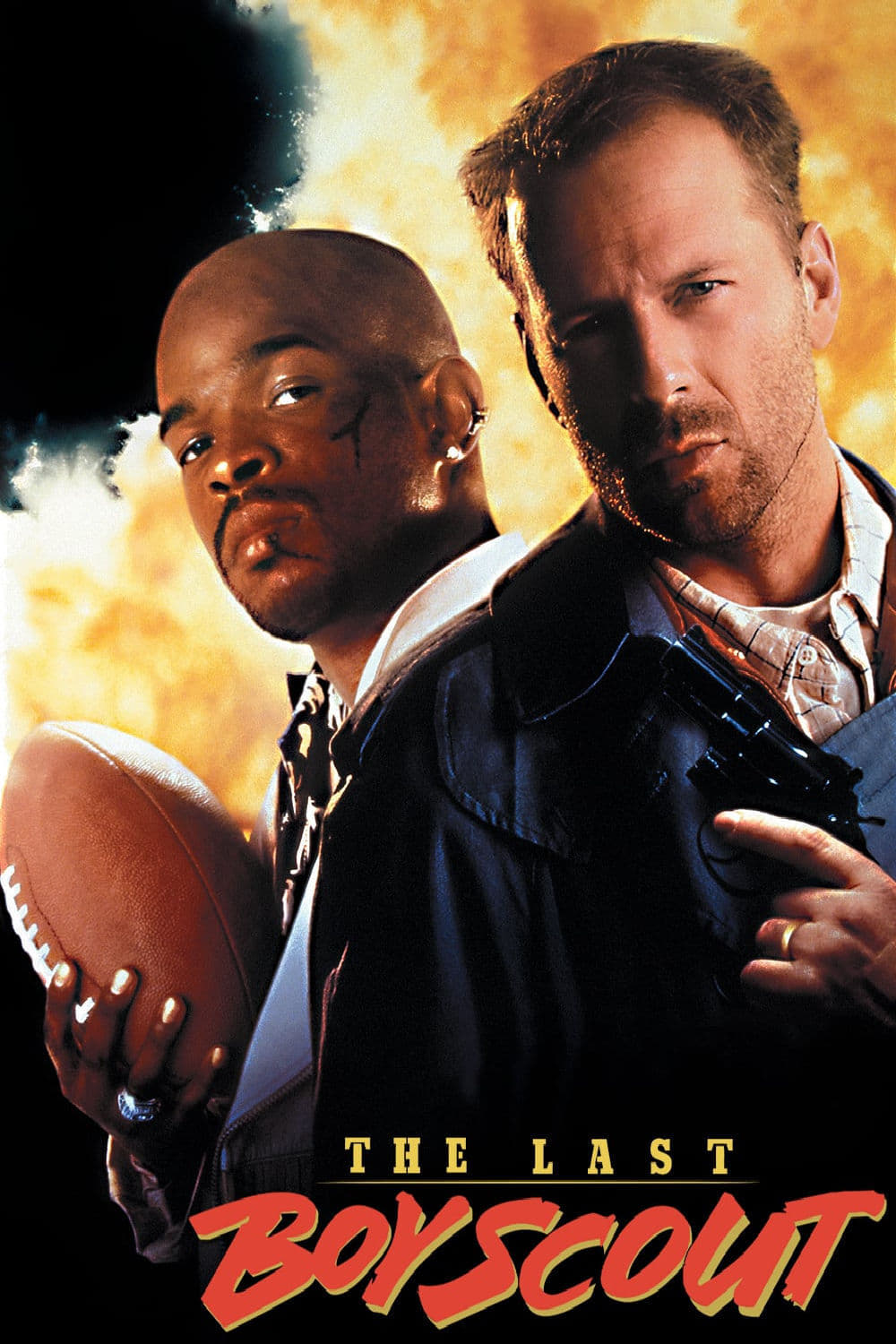
- Damon Wayans, met by chance, reportedly denied the research claim that he and Bruce Willis feuded on The Last Boy Scout, illustrating the unreliability of casting research. — Bill Simmons
- Nicholson was reportedly the studio’s top Joker choice since 1980, and Willem Dafoe reportedly stated in 2009 he had been in talks. — Bill Simmons
- Robin Williams was reportedly offered the Joker to pressure Nicholson, released once Nicholson agreed, and then refused Warner roles such as the Riddler without an apology; the apology detail is doubted. — Bill Simmons
- Dead Poets Society was 1989’s third-biggest film; swapping Nicholson and Williams would make both films worse, and “he stole my balloons” is called a favorite line.
- Nicholson’s reported conditions included top billing, a share of earnings including merchandise, capped work hours, and no work on Lakers home playoff games; his fee dropped from $11 million to $6 million, but he may have made $90 million. — Bill Simmons
- Martin Landau reportedly turned down Carl Grissom for Crimes and Misdemeanors, and Jack Palance in that role is imagined as bad.
- Sean Young was cast as Vicki Vale and replaced after a horse-riding injury; the Knox actor later claimed she sabotaged a read-through, which is doubted. Her Catwoman costume audition for Batman Returns is recalled.
- The Knox actor also claimed Keaton blocked Peters’ choice of Michelle Pfeiffer because they had dated, which is doubted since she is in the sequel. — Bill Simmons
- Adam West was publicly disappointed not to be asked to reprise Batman. — Bill Simmons

In the discussion (5)
- Willis is incredible, but the pick is Damon Wayans for a dynamite movie-star performance he never got the chance to repeat. — Chris Ryan
- The pick is agreed with: multiple people could have played the Bruce Willis role, including Don Johnson, but nobody else in 1991 could have been Jimmy Dix (Eddie too old, Denzel too established, Wesley Snipes weird, Jamie Fox too early). — Bill Simmons
- It was right time, right place for Wayans, who is likable, and it is a bummer he never got better scripts. — Bill Simmons
- Tony Scott was considered but rejected because this is not seen as a signature Tony Scott movie and it sounds agonizing to make. — Bill Simmons
- In a book about cocaine-era late 80s and 90s movies, this would be a chapter. — Bill Simmons
Podcast choices

Most Rewatchable Scene
The opening Billy Cole scene
In the discussion (16)
- The scene is set at halftime of a Cleveland versus Los Angeles game with Vern Lundquist, Dick Buckkiss and Lynn Swan as sideline reporter, who berates the L.A. owner about ratings, attendance and where all the heroes have gone. — Bill Simmons
- The hosts want sideline reporters to ask NBA players like Brandon Ingram and LeBron James where all the heroes have gone. — Chris Ryan
- Billy Cole is alleged to take PCP in the locker room, though one host always thought it was cocaine until reading Wikipedia. — Bill Simmons
- Early nits: whether he had the gun in his pants the whole quarter, how it did not affect his burst while breaking four tackles, and whether his touchdown would count for gamblers. — Bill Simmons
- He says 'Ain't life a bitch' as he shoots himself, and the broadcast presumably cuts to a test signal. — Chris Ryan
- Only one spotlight seems to be on in Cleveland Stadium, like a German expressionist film; Tony Scott's football is closer to Zach Snyder's 300 and the rain device returns in The Fan. — Chris Ryan
- The scene was a watershed; the movie arguably peaks in the first six minutes, helped by the Bill Medley Friday Night Football song. — Bill Simmons
- Other rewatchable scenes offered: Joe finding the guy in the closet, which leads to the first of several car bombs. — Bill Simmons
- Jimmy's speech on the NFL stance on drugs and gambling, played back by Craig, reads like Shane Black at 3:30 in the morning.
- Joe versus Kim Coats, where Joe warns him not to touch him again and then kills him. — Bill Simmons
- The quirky hitmen, like Pablo playing piano and Taylor Negron, feel Tarantino-like before Tarantino made a movie. — Bill Simmons
- The stuffed-animal scene with the car chase, despite not knowing how the gun fits in the stuffed animal. — Bill Simmons
- The big football-game ending: a throw from a wounded hand to the senator's box, Damon Wayans on a horse, and Bruce Willis's fight with Taylor Negron ending in a jig. — Bill Simmons
- The Hollywood Hills car chase with cars going down the hill that lands in the pool. — Bill Simmons
- The strip club with Corey and the Corey car-chase murder right after it are offered as another rewatchable scene; the other side left it out because seeing Halle Berry murdered hurts, wishing she had just taken one in the shoulder. — Bill Simmons
- Asked for a most rewatchable pick, the answer is the opening scene, watchable a hundred times in a row; it is jokingly why football had to leave L.A. — Bill Simmons

Recasting Couch
Ideas included Apollonia or Elisabeth Shue as Anna and Bill Paxton, Damon Wayans, or an early Chris Rock as Hawkins.
In the discussion (5)
- Apollonia was proposed for the hostage role.
- Elisabeth Shue was proposed for the hostage role.
- Bill Paxton was the most enthusiastic Hawkins proposal.
- Damon Wayans was proposed for a sharper wisecracking Hawkins. — Chris Ryan
- An early Chris Rock was proposed for a sharper wisecracking Hawkins. — Chris Ryan

Sequel, Prequel, Limited Series, or All-Black Remake
Already remade as the Fox series; True Detective as a de facto remake of the partnership
In the discussion (4)
- The Fox show already did it, with a legendary casting mismatch: Damon Wayans and a co-star never worked together. — Bill Simmons
- It should have been a profane, violent cable show, like Cinemax. — Bill Simmons
- True Detective effectively remade this cop dynamic: the family man with problems versus the rugged outsider. — Chris Ryan
- Andy Greenwald never came around on True Detective and died on that hill. — Bill Simmons
Probably Unanswerable Questions
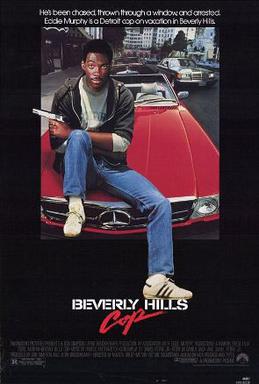
Was Beverly Hills Cop 2 better than Beverly Hills Cop? Was Axel Foley gay?
In the discussion (17)
- Whether Cop 2 is better: it is a better story and a flat-out good, more fun movie with good music, the Taggart and Rosewood thing and Brigitte Nilsson (as transcribed), with Eddie still great; the fondness for Cop 1 comes from everything it meant for the Eddie arc.
- Was Axel Foley gay gets a yes, but the answer first returns to the period reviews, which were also upset about how the movie made white people look.
- Pauline Kale (as transcribed) did not believe in Eddie Murphy's stardom and found it offensive because he used it as a joke on how dumb white people could be made to look by a smart black person, a sort of pro-minstrel argument against an anti-minstrel work; LA Times letters in 1985 characterized Murphy's swagger with a racial slur and worried that black confidence would replace white comedians.
- One host as a kid felt the opposite, that it was the greatest thing that ever happened; Kale was about 65, not a racist, but had an interesting take on how black audiences responded to The French Connection, and old guard critics felt that way, so the rewatch was done aware that people were nervous Eddie was someone white people should fear.
- To one host it is a movie about a gay black man in the Detroit police whose former best friend, probably lover or hookup buddy, gets killed, sending him on a mission; not having sex with a woman does not make you gay, but a near two-hour movie whose protagonist on the verge of major stardom never gets a moment with the girl is striking, even allowing that Eddie arrived two weeks before filming and nothing was rewritten.
- Evidence: Jenny looks completely enamored, goes to the big three-room suite and immediately lies on the bed batting her eyelashes, and the only thing on Axel's mind is ordering room service for Taggart and Rosewood.
- The Mikey scenes are weird to watch: at the bar they look like they are about to make out, they exchange 'I love you', and when Axel gets home after the chewing-out by Inspector Todd to find Mikey broken in with the fridge open he is elated; the counter is that a friend out of prison eating a mayo sandwich in your kitchen would get 'get out of my house, you felon'.
- Gay characters are sprinkled throughout; it is an unintended consequence of a movie made with a ton of cocaine by the seat of its pants; at the strip joint he only tells Rosewood to give the dancer a dollar and does not partake, and his pretending is for plot rather than character; the movie is all pairs of men with emotional energy who could be on the verge of kissing, so subtext becomes text; 'is Axel gay' is a long-running Reddit conspiracy theory; James Russo brings a wild method energy to a two-minute part, a reckless guy out of prison who almost cries seeing his friend, which feels very real.
- Eddie is drawn into Russo rather than watching a method performance, they are on the same page; the original ending reportedly had Eddie back in his Detroit apartment opening the closet to find Mikey's shirt and sniffing it, prompting the joke that Martin Brest was robbed of an Oscar; the movie probably intended none of it.
- Intent does not matter because those things are in the movie we got; one host noticed it independently and wrote about it in a 2010 mailbag because the Jenny Summers scene jumped out, and may have inspired the theory; no other 80s action or genre movie lacks some nod to the hero's romantic life.
- Even in 48 Hours Nick Nolte's girlfriend calls to complain and Eddie gets laid by Olivia Brown, his primary obsession in that film; Eilbacher is a beautiful blonde, not a character actress like Joan Cusack, whose function in any other movie of the period, see Stripes, is to give a straight hero somewhere to put his sexuality; perhaps it was a black-white thing, since the sex scene was cut from The Golden Child and they were not ready for Eddie to do that in a mainstream movie.
- The conspiracy theory is compared to early Will Smith, who had Vivica A. Fox to get back to but few romantic leads for someone in his position, and did not help himself by skipping the kiss in Six Degrees of Separation, after which he always has a girlfriend, wife or dead spouse; the wish is that movies would acknowledge gay people exist and have sex lives instead of flicking at it.
- Damon Wayans giving him the fruit plate with the banana for the tailpipe is text, not subtext, and Eddie turns around on his way out to say thank you, perfectly comfortable with the man; the movie's own setup is the you-killed-my-lover revenge premise of other action movies, taken as a vacation; one host watched it for 26 years without noticing until the other wrote about it.
- The passion for Jenny Summers is the giveaway, how could a man not kiss her; the wish for one line where she hits on him and he insinuates he does not do that anymore is answered with 'that makes it worse'; it makes her character more interesting and hornier, and Eddie's complicated history with homophobia in his comedy makes the whole thing more frictive.
- A tangent on Eddie's homophobia turns into a bit about one host's bullies now being gay married with three kids: bully someone and your sexuality will come for you.
- During the scene discussion, 'before he dies, they're doing it' was raised about Axel and Mikey and saved for later.
- During what aged best, Jenny is said to be a love interest for neither man, though she really tried with Eddie, and the subject is parked until later.

The Neil McCauley “A Book about Metals” Award for Best Line from the Movie
"Take those bananas"
In the discussion (2)
- The pick is 'take those bananas', the Damon Wayans line, which draws immediate agreement.
- A couple more are thrown in: 'this is not my locker'; Axel asking the valet to put the car in a good spot because all this shit happened the last time he parked there, which one host does not love; and credit for how Eddie sells the super cop scene, taking a beat to say the super cop thing was working really well and the guys messed it up.

What’s Aged the Worst?
The first 19 minutes; obvious stunt doubles; Victor Maitland's reaction to Mikey's death; the homophobia (nominated, then partly defended); Taggart punching Axel; Maitland's useless bodyguards; the Rolling Stone and Michael Jackson name-drop
In the discussion (8)
- The first 19 minutes could zip by faster; 1984 was not the peak of masking stunt work, so a guy gets punched and a different man flies through the window, Magnum PI level stunts: the man thrown through the buffet table is not Jonathan Banks, the truck driver has a mullet while the man who climbs out has a bald spot, Victor's tumble down the steps and Eddie through the plate glass are doubles; tumbling action has gone out of style and now reads as farce.
- Victor Maitland's reaction to Mikey's death is so bad that Stephen Burkoff (as transcribed) should have spent weeks in character; he has been in a Bond movie and is a good 80s guy; 80s villains were almost always played by sexy men, even Jonathan Banks, the future Mike Ermantrout (as transcribed), has an attractive energy.
- The whole movie is pairs of men, five different pairs with no female interruption, like Don Johnson and Philip Michael Thomas driving and looking at each other; it only jokes about that once at the club, is not homophobic, and is not afraid of what it means to have two men in close proximity.
- Homophobia is proposed for what aged worst, but one host finds it less homophobic than memory suggested: you simply see gay people be gay, Damon Wayans plays an effeminate man, and the one not-great moment is Eddie using a made-up disease, Herbie simplex 10 (as transcribed), as a weapon on the maitre d'; the defense is that the characters he invents are bits to get him into the next room, like the loudmouth journalist at the Beverly Palms; Eddie's early-80s homophobia is remembered from the stand-up specials and a little of 48 Hours, not this.
- Taggart punching Axel is pretty bad given what has been seen of the LA police, though Taggart then comes out, apologizes and offers to let charges be pressed; Maitland's bodyguards aged badly because all of them were terrible, and the strategy is dissected: five guys come in, four huge ones carry Axel through the building and the fifth just walks in front, so they can throw him through the window as evidence of a public disturbance.
- No white person thrown through that window ends up charged with public disturbance and in a police department; Axel never resists arrest because he is a cop from Detroit and a black man who knows what cops do, and he knows Todd will eventually vouch for him; the movie star's entitlement that the plot will give him something to do sits beside the reality of a black person in police presence, and there is a character logic in revealing less to learn how these officers act.
- When 48 Hours was a rewatchable the fight between Eddie and Nick Nolte looked like Nolte would kill him, so two years later the formula seems tweaked so Axel is never roughed up beyond a punch in the stomach, the window and being knocked out in the opening.
- Getting into the Beverly Palm by name-dropping Rolling Stone and a Michael Jackson profile is offered for aged worst; a follow-up, explicitly not offered as aged worst, is how magazines substitute for mobile phones: Rosewood reading Time about red meat, Victor Maitland flipping through a magazine in Jenny's office, and Jonathan Banks reading National Geographic, which is just how people passed time in 1984.