‹ All people

Film credit

Robin Williams

Also referred to as Robert Williams, Rob Williams, Rob Moams

Stats

Episodes featuring their films
4
Movies in this archive
4

Rewatchables episodes featuring Robin Williams’s films

Good Will Hunting

1997 film

Bill Simmons · Ryen Russillo · Chris Ryan · Sean Fennessey

Aired April 1, 2025

Mrs. Doubtfire

1993 film

Bill Simmons · Shea Serrano · Amanda Dobbins

Aired April 20, 2021

Good Will Hunting

1997 film

Bill Simmons · Shea Serrano · Chris Ryan · Sean Fennessey

Aired January 25, 2018
Displaying all 4 episodes

Mentioned in discussions

It Follows The Rewatchables
In the discussion (3)
Approx. transcript time · 01:11:33Read transcript
  • Going bigger than Micah Monroe (as transcribed), this is the kind of movie Jennifer Lawrence should have made in the 2010s instead of the David O. Russell area; Winter's Bone made people want this, a contract thing transcribed as The Last House on the Left came early in her career, and she would have been good in one elevated horror.
  • The actual answer moves it to Boston: she is at Bunker Hill Community College with Robin Williams, running around Charlestown, reciting the love song of J. Alfred Prufrock in a Boston accent.
  • Justin Long as Paul is raised but he was too old; a time machine would put Taylor Kitsch and Justin Long in this movie, and then Neve Campbell could have been the lead.
Ghostbusters

Casting What-Ifs

Michael Keaton as Venkman; Jeff Goldblum as Egon; other reported candidates (credibility questioned)

In the discussion (7)
Approx. transcript time · 01:33:36Read transcript
Ace Ventura: Pet Detective

Half-Assed Internet Research

Improvisation; bird movement; Cox’s animal fear and rewatch refusal; Letterman premise; Stoyanovich’s kick; fruit clue; VHS business card

In the discussion (4)
Approx. transcript time · 00:24:14Read transcript
  • Research reports Carrey’s improvised talking-backside routine, bird-inspired movement and deliberately divisive performance; Robin Williams is a comparison for improvisational range. — Bill Simmons
  • Shadyac’s filmography, Cox’s reported animal fear and the Letterman-inspired pet-detective premise are discussed as production research. — Bill Simmons
  • Research reports Cox refusing to rewatch the film and Pete Stoyanovich doubling the kick; his later playoff miss prompts a joking curse and comparisons with real missed kicks. — Bill Simmons
  • Late research notes fruit arranged as a visual clue on Einhorn’s desk and an Ace business card packaged with a VHS edition.
Good Will Hunting

Who Won the Movie?

Damon, with a joint Damon–Affleck outcome also defended

In the discussion (4)
Approx. transcript time · 01:47:53Read transcript
  • Damon is chosen for starring and writing despite missing the acting Oscar. — Bill Simmons
  • The usual single-winner rule is explicitly waived for both writers after their long effort and Oscar triumph. — Ryen Russillo
  • They made the screenplay despite years of being told it would not work, then backed it up with three decades of work; the speaker cannot split the choice, despite praising Robin Williams.
  • Affleck’s youngest-screenwriting-winner distinction is asserted and confirmed within the conversation, not externally verified here. — Bill Simmons
Podcast choices
Speaker not identified
Matt Damon and Ben Affleck
Speaker not identified
Matt Damon and Ben Affleck
Speaker not identified
Matt Damon and Ben Affleck
Night Shift The Rewatchables
In the discussion (7)
Approx. transcript time · 01:09:56Read transcript
  • The producer calls the film charming, funny, heartfelt, and consistently watchable. — Chris Ryan
  • Michael Keaton's performance balances awkwardness, irritation, lovability, and pathos without exhausting the audience. — Chris Ryan
  • Keaton is proposed as a plausible Michael Scott because of that balance. — Bill Simmons
  • Shelley Long is praised, with a wish that the movie gave her more comedy. — Chris Ryan
  • Belinda's morgue dialogue is singled out as funny before Keaton takes over the movie. — Chris Ryan
  • Charlotte's rigid parents are praised as comic supporting characters. — Chris Ryan
  • The discussion closes by considering Keaton in several Tom Hanks and Robin Williams roles. — Chris Ryan
Philadelphia

Casting What-Ifs

Day-Lewis; Keaton; Murray; Williams; Leguizamo; Woods

In the discussion (2)
Approx. transcript time · 01:24:19Read transcript
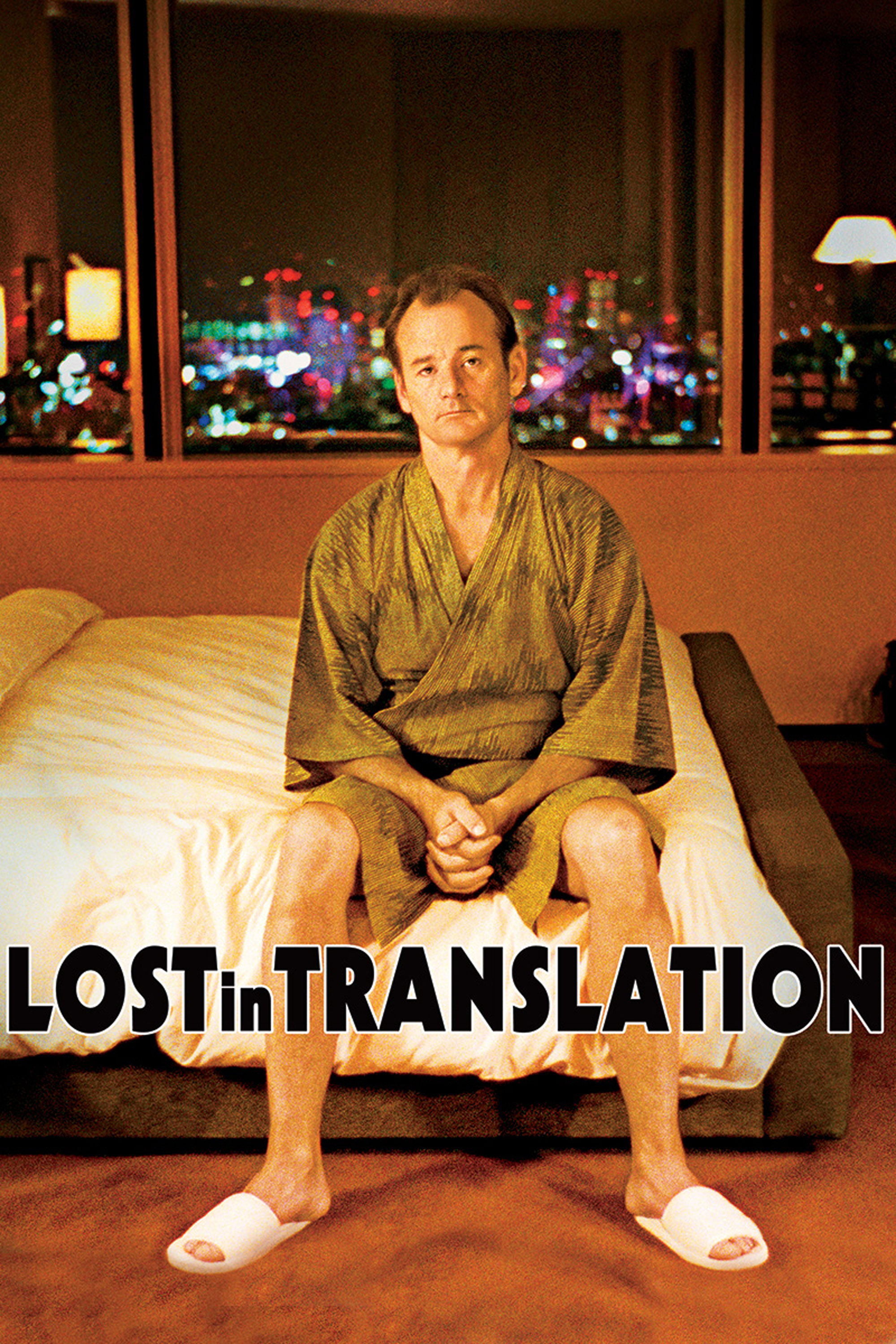
Lost in Translation

What’s Aged the Worst?

Young casting; prostitute scene, disputed; first drink; Murray mistaken for Williams

In the discussion (4)
Approx. transcript time · 00:55:40Read transcript
  • Johansson being eighteen is raised as a detail that has aged poorly. — Amanda Dobbins
  • The prostitute scene is criticized for pronunciation humor at her expense; the defense is that its chaos conveys Bob’s disorienting foreign experience. — Amanda Dobbins
  • Bob and Charlotte’s first drink is considered less effective than their later vodka-tonic encounter and a missed opportunity for a rewatchable scene. — Amanda Dobbins
  • A daughter confusing Murray with Robin Williams is jokingly selected as the winner; she otherwise enjoyed the film. — Bill Simmons
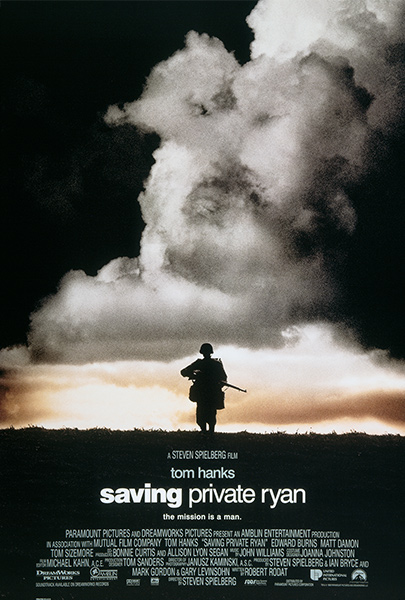
Saving Private Ryan

Half-Assed Internet Research

Production method; awards; screenplay origins; budget and gross; boot camp; beach shoot; disputed anecdotes

In the discussion (20)
Approx. transcript time · 00:09:41Read transcript
  • The cinematography is described as using altered lenses, film technique, and desaturation to produce a gray, muddy, visceral image. — Sean Fennessey
  • Spielberg is recalled as arriving without a shot list, shooting largely handheld and sometimes operating the camera himself, despite the huge number of extras and complicated effects resets. — Chris Ryan
  • The discussion names eleven Oscar nominations and enumerates wins for directing, cinematography, sound, editing, and sound-effects editing; the transcript renders the intervening win count unclearly. — Sean Fennessey
  • Brokeback Mountain and La La Land are identified as the two other films matching the described combination of precursor wins and a directing Oscar without Best Picture. — Sean Fennessey
  • Robert Rodat is credited with building the screenplay from an anecdote he read, with Mark Gordon producing. — Bill Simmons
  • The stated budget is $70 million and worldwide gross $485 million, placing it second for 1998; its cost is contrasted with The Gray Man and expensive television.
  • It is described as the third R-rated film to reach $200 million domestically, after Terminator 2 and Beverly Hills Cop. — Bill Simmons
  • Diesel’s account that Spielberg saw his filmmaking and created the role for him is discussed with explicit skepticism about the strongest version of the story. — Bill Simmons
  • The actors are said to have helped shape their parts, with Goldberg’s involvement in Mellish raised as an example. — Chris Ryan
  • The widely repeated account of Sizemore being drug-tested daily and threatened with replacement even at the end of filming is discussed; the threat to reshoot is doubted.
  • Damon is said to have improvised the barn story, which Spielberg retained. — Sean Fennessey
  • Goldman’s criticism is read from his essays on the five Best Picture nominees collected in The Big Picture; the publication attribution is corrected tentatively from New York to Premiere.
  • Darabont is credited with uncredited rewrites and creating the Bible-quoting sniper, whose dialogue is praised. — Bill Simmons
  • The story is traced to a D-Day book Rodat’s wife gave him and an account of a family whose surviving son was removed from Normandy; the transcript’s book date and family spelling are unclear. — Bill Simmons
  • The actors reportedly attended a ten-day boot camp while Damon trained separately to encourage resentment toward him. — Bill Simmons
  • The Omaha Beach sequence is said to have been filmed in Ireland for $12 million with 1,500 extras.
  • The movie’s body count is stated as 255 after guesses of 10,000, 500, and 192. — Bill Simmons
  • An alleged Spielberg ban on admitting late arrivals is discussed but rejected as implausible to enforce.
  • The historical account behind the Lincoln–Bixby letter is questioned; the sons’ outcomes are given inconsistently rather than treated as a verified tally. — Chris Ryan
  • Robin Williams introducing Damon to Spielberg is recalled as a route into the film. — Bill Simmons
Misery

Casting What-Ifs

Many actors declined Annie Wilkes and Paul Sheldon; several alternative Paul Sheldons are debated
In the discussion (7)
Approx. transcript time · 00:29:38Read transcript
Knocked Up

Most Rewatchable Scene

Nightclub hangout; breakfast with the children

In the discussion (11)
Approx. transcript time · 00:32:26Read transcript
  • The running jokes about Martin’s beard and Dirty Man competition are celebrated as endlessly funny male-friend banter, with Lennon, Scorsese, Cat Stevens, Richard Reid and Robin Williams-knuckle comparisons. — Bill Simmons
  • Wiig’s euphemistic weight-loss meeting is praised as an early display of her screen persona and perhaps her second-best movie work. — Bill Simmons
  • The nightclub’s beer-buying, teasing and dice-dance routine are a personal favorite; Mann and Heigl also excel and the bouncer setup pays off later. — Bill Simmons
  • Segel flirting with Mann is admired as an underrated supporting turn; supporting players can stay weird without the lead’s growth arc. — Craig Horlbeck
  • The obscene background gestures during Alison’s phone call and the sex-offender website argument are additional comic highlights. — Bill Simmons
  • The double date’s time-machine exchange showcases Rogen and Rudd’s chemistry and greater affection for each other than their partners. — Bill Simmons
  • The Vegas mushroom trip and intercut nightclub rejection by Robinson form a favored eight-minute stretch. — Bill Simmons
  • The fantasy baseball draft reveal feels painfully plausible, with the Matsui announcement especially funny. — Craig Horlbeck
  • Alison’s first visit to the messy house and Hill awkwardly watching Wild Things effectively show the gulf between young men’s and women’s maturity. — Juliet Litman
  • The breakfast conversation with Maude is explicitly chosen, with the meal setting laying out the film’s concerns. — Juliet Litman
  • Two closing preferences favor the nightclub after the breakfast choice. — Bill Simmons
Batman The Rewatchables
Batman

Casting What-Ifs

Batman contenders; Joker alternatives; Vicki Vale recasting; Grissom refusal; Adam West

In the discussion (13)
Approx. transcript time · 00:52:10Read transcript
  • Casting what-ifs are deferred past the break; the film is said to have as many as any of the 226 editions, rivaling The Godfather. — Bill Simmons
  • Nearly every 1980s star was reportedly considered for Batman, including Mel Gibson, Kevin Costner, Charlie Sheen, Tom Selleck, Bill Murray, Harrison Ford, and one further name garbled in the transcript, with uncertainty over what is real. — Bill Simmons
  • Pierce Brosnan reportedly met Burton but did not want to play a comic-book hero. — Bill Simmons
  • Bill Murray, with Ivan Reitman directing, was earlier buzz that Peters favored for years; the hosts are glad it did not happen. An Eddie Murphy as Robin rumor is doubted. — Bill Simmons
  • Damon Wayans, met by chance, reportedly denied the research claim that he and Bruce Willis feuded on The Last Boy Scout, illustrating the unreliability of casting research. — Bill Simmons
  • Nicholson was reportedly the studio’s top Joker choice since 1980, and Willem Dafoe reportedly stated in 2009 he had been in talks. — Bill Simmons
  • Robin Williams was reportedly offered the Joker to pressure Nicholson, released once Nicholson agreed, and then refused Warner roles such as the Riddler without an apology; the apology detail is doubted. — Bill Simmons
  • Dead Poets Society was 1989’s third-biggest film; swapping Nicholson and Williams would make both films worse, and “he stole my balloons” is called a favorite line.
  • Nicholson’s reported conditions included top billing, a share of earnings including merchandise, capped work hours, and no work on Lakers home playoff games; his fee dropped from $11 million to $6 million, but he may have made $90 million. — Bill Simmons
  • Martin Landau reportedly turned down Carl Grissom for Crimes and Misdemeanors, and Jack Palance in that role is imagined as bad.
  • Sean Young was cast as Vicki Vale and replaced after a horse-riding injury; the Knox actor later claimed she sabotaged a read-through, which is doubted. Her Catwoman costume audition for Batman Returns is recalled.
  • The Knox actor also claimed Keaton blocked Peters’ choice of Michelle Pfeiffer because they had dated, which is doubted since she is in the sequel. — Bill Simmons
  • Adam West was publicly disappointed not to be asked to reprise Batman. — Bill Simmons
Displaying discussions 1 - 12 of 45 in total

Films in the archive