

Half-Assed Internet Research
Production method; awards; screenplay origins; budget and gross; boot camp; beach shoot; disputed anecdotes
In the discussion (20)
Approx. transcript time · 00:09:41Read transcript
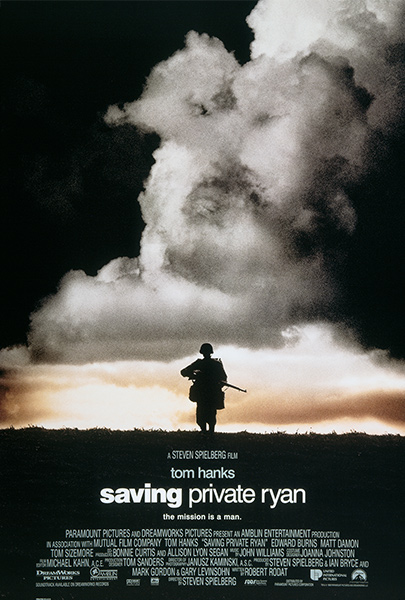
- The cinematography is described as using altered lenses, film technique, and desaturation to produce a gray, muddy, visceral image.
- Spielberg is recalled as arriving without a shot list, shooting largely handheld and sometimes operating the camera himself, despite the huge number of extras and complicated effects resets.
- The discussion names eleven Oscar nominations and enumerates wins for directing, cinematography, sound, editing, and sound-effects editing; the transcript renders the intervening win count unclearly.
- Brokeback Mountain and La La Land are identified as the two other films matching the described combination of precursor wins and a directing Oscar without Best Picture.
- Robert Rodat is credited with building the screenplay from an anecdote he read, with Mark Gordon producing.
- The stated budget is $70 million and worldwide gross $485 million, placing it second for 1998; its cost is contrasted with The Gray Man and expensive television.
- It is described as the third R-rated film to reach $200 million domestically, after Terminator 2 and Beverly Hills Cop.
- Diesel’s account that Spielberg saw his filmmaking and created the role for him is discussed with explicit skepticism about the strongest version of the story.
- The actors are said to have helped shape their parts, with Goldberg’s involvement in Mellish raised as an example.
- The widely repeated account of Sizemore being drug-tested daily and threatened with replacement even at the end of filming is discussed; the threat to reshoot is doubted.
- Damon is said to have improvised the barn story, which Spielberg retained.
- Goldman’s criticism is read from his essays on the five Best Picture nominees collected in The Big Picture; the publication attribution is corrected tentatively from New York to Premiere.
- Darabont is credited with uncredited rewrites and creating the Bible-quoting sniper, whose dialogue is praised.
- The story is traced to a D-Day book Rodat’s wife gave him and an account of a family whose surviving son was removed from Normandy; the transcript’s book date and family spelling are unclear.
- The actors reportedly attended a ten-day boot camp while Damon trained separately to encourage resentment toward him.
- The Omaha Beach sequence is said to have been filmed in Ireland for $12 million with 1,500 extras.
- The movie’s body count is stated as 255 after guesses of 10,000, 500, and 192.
- An alleged Spielberg ban on admitting late arrivals is discussed but rejected as implausible to enforce.
- The historical account behind the Lincoln–Bixby letter is questioned; the sons’ outcomes are given inconsistently rather than treated as a verified tally.
- Robin Williams introducing Damon to Spielberg is recalled as a route into the film.