‹ All movies
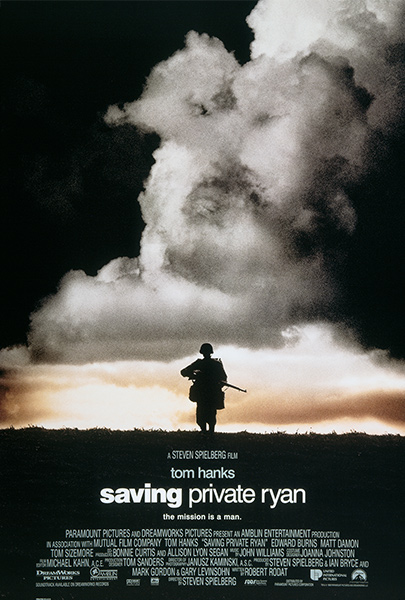
Saving Private Ryan poster

Saving Private Ryan

170 minutes

Cast

Selected cast credits · Film reference

Tom Hanks Captain John H. Miller
Tom Sizemore Technical Sergeant Michael Horvath
Edward Burns Private Richard Reiben
Matt Damon Private James Francis Ryan
Barry Pepper Private Daniel Jackson
Adam Goldberg Private Stanley Mellish
Vin Diesel Private Adrian Caparzo
Giovanni Ribisi T-Medic Irwin Wade
Ted Danson Captain Fred Hamill
Jeremy Davies Corporal Timothy Upham
Paul Giamatti Sergeant William Hill
Dennis Farina Lieutenant Colonel Walter Anderson
Joerg Stadler Steamboat Willie
Max Martini Corporal Henderson
Dylan Bruno Toynbe
Ian Porter Trask
Julian Spencer Garrity
Steve Griffin Wilson
Marc Cass Fallon
Markus Napier Major Hoess
Neil Finnighan Ramelle Paratrooper
Peter Miles Ramelle Paratrooper
Paul Garcia Field HQ Major
Seamus McQuade Field HQ Aide
Ronald Longridge Coxswain
Adam Shaw Delancey
Rolf Saxon Lieutenant Briggs
Corey Johnson Radioman
Loclann Aiken Soldier on the Beach
John Barnett Soldier on the Beach
Maclean Burke Soldier on the Beach
Victor Burke Soldier on the Beach
Aiden Condron Soldier on the Beach
Paschal Friel Soldier on the Beach
Shane Hagan Soldier on the Beach
Paul Hickey Soldier on the Beach
Shane Johnson Soldier on the Beach
Laird Macintosh Soldier on the Beach
Brian Maynard Soldier on the Beach
Martin McDougall Soldier on the Beach
Mark Phillips Soldier on the Beach
Lee Aaron Rosen Soldier on the Beach
Andrew Scott Soldier on the Beach
Matthew Sharp Soldier on the Beach
Vincent Walsh Soldier on the Beach
Grahame Wood Soldier on the Beach
John Sharian Corporal
Glenn Wrage Doyle
Crofton Hardester Senior Medical Officer
Martin Hub Czech Wehrmacht Soldier
Nigel Whitmey Private Boyd
Sam Ellis Private Hastings
Erich Redman German #1
Tilo Keiner German #2
Stephan Grothgar German #3 / Voice on Bullhorn
Michelle Evans Jean’s Wife
Martin Beaton Jean’s Son
Anna Maguire Jean’s Daughter
Nathan Fillion Minnesota Ryan
Leland Orser Lieutenant DeWindt
Michael Mantas Paratrooper Lieutenant
David Vegh Paratrooper Oliver
Ryan Hurst Paratrooper Mandelsohn
Nick Brooks Paratrooper Joe
Sam Scudder Paratrooper #1
John Walters Old French Man
Dorothy Grumbar Old French Woman
James Innes-Smith MP Lieutenant
Harve Presnell General Marshall
Dale Dye War Department Colonel
Bryan Cranston War Department Colonel
David Wohl War Department Captain
Eric Loren War Department Lieutenant
Valerie Colgan War Department Clerk
Amanda Boxer Mrs. Margaret Ryan
Harrison Young Ryan as Old Man
Kathleen Byron Old Mrs. Ryan
Rob Freeman Ryan’s Son
Thomas Gizbert Ryan’s Grandson
Nina Muschallik Ryan’s Granddaughter (uncredited)
Taylor Murphy Sergeant Blaine (uncredited)
Mac Steinmeier Waffen SS Soldier (uncredited)
Derek Lea Bangalore Assistant (uncredited)
Leo Stransky German Sniper (uncredited)
Vincent Ventresca Soldier on Beach (uncredited)

Saving Private Ryan | The Rewatchables

Explore episodeClose episode

Most Rewatchable Scene

Final bridge battle at Ramelle; sniper duel

In the discussion (20)
Approx. transcript time · 00:04:59Read transcript
  • The opening beach sequence is recalled as physically overwhelming in a theater, creating a wish for an intermission and a need for the slower material afterward.
  • The notification of Mrs. Ryan, including the long drive and music, creates an emotional change after the beach; the sentimentality is questioned while its emotional force is acknowledged.
  • Blood hitting the camera lens during the landing is remembered as an especially shocking detail.
  • The Omaha Beach sequence makes the geography and movement toward the bunkers legible while making survival seem nearly impossible.
  • A soldier retrieving his own arm is singled out from the beach landing.
  • The reveal that a dragged body is only a torso is another striking landing detail.
  • Miller’s revelation that he is a teacher, breaking up the Burns–Sizemore confrontation, is called the key to Hanks’s performance.
  • Omaha Beach is treated as one continuous most-rewatchable scene.
  • Miller using a little mirror to locate the firing position and bringing over Pepper’s sniper to turn the situation around is singled out.
  • Caparzo’s death leads into a surprise armed standoff when the wall collapses, briefly resembling a Tarantino confrontation.
  • The quiet church conversation is praised for letting the audience know the soldiers, especially Wade’s story about pretending to sleep when his mother came home.
  • Wade’s death is singled out for Ribisi’s suddenly pale face, his realization about his liver, his request to raise his legs, and the others giving him morphine.
  • Horvath’s confrontation with Reiben and Miller’s explanation of his mission and desire to get home are praised as a great five-minute sequence.
  • The final battle is nominated for the tension built around the approaching tank.
  • The sniper’s last stand in the tower, ending as he sees the tank aim at him, is singled out.
  • Mellish’s fight with the German soldier is described as uniquely vicious and disturbing, including the killer’s whispered urging to stop struggling.
  • Upham’s collapse during the final battle prompts an angry response, while another speaker notes that the film is designed to create that reaction.
  • Horvath and a German throwing their helmets at each other is singled out before Horvath’s death.
  • The final battle is preferred for rewatching because its geography is laid out in advance, its adventure structure is clearer, and the audience is invested in the characters.
  • Defending the bridge at Ramelle is the explicit final selection, with the brief sniper duel and identification of the shooter in the bell tower offered as another especially replayable sequence.

Half-Assed Internet Research

Production method; awards; screenplay origins; budget and gross; boot camp; beach shoot; disputed anecdotes

In the discussion (20)
Approx. transcript time · 00:09:41Read transcript
  • The cinematography is described as using altered lenses, film technique, and desaturation to produce a gray, muddy, visceral image.
  • Spielberg is recalled as arriving without a shot list, shooting largely handheld and sometimes operating the camera himself, despite the huge number of extras and complicated effects resets.
  • The discussion names eleven Oscar nominations and enumerates wins for directing, cinematography, sound, editing, and sound-effects editing; the transcript renders the intervening win count unclearly.
  • Brokeback Mountain and La La Land are identified as the two other films matching the described combination of precursor wins and a directing Oscar without Best Picture.
  • Robert Rodat is credited with building the screenplay from an anecdote he read, with Mark Gordon producing.
  • The stated budget is $70 million and worldwide gross $485 million, placing it second for 1998; its cost is contrasted with The Gray Man and expensive television.
  • It is described as the third R-rated film to reach $200 million domestically, after Terminator 2 and Beverly Hills Cop.
  • Diesel’s account that Spielberg saw his filmmaking and created the role for him is discussed with explicit skepticism about the strongest version of the story.
  • The actors are said to have helped shape their parts, with Goldberg’s involvement in Mellish raised as an example.
  • The widely repeated account of Sizemore being drug-tested daily and threatened with replacement even at the end of filming is discussed; the threat to reshoot is doubted.
  • Damon is said to have improvised the barn story, which Spielberg retained.
  • Goldman’s criticism is read from his essays on the five Best Picture nominees collected in The Big Picture; the publication attribution is corrected tentatively from New York to Premiere.
  • Darabont is credited with uncredited rewrites and creating the Bible-quoting sniper, whose dialogue is praised.
  • The story is traced to a D-Day book Rodat’s wife gave him and an account of a family whose surviving son was removed from Normandy; the transcript’s book date and family spelling are unclear.
  • The actors reportedly attended a ten-day boot camp while Damon trained separately to encourage resentment toward him.
  • The Omaha Beach sequence is said to have been filmed in Ireland for $12 million with 1,500 extras.
  • The movie’s body count is stated as 255 after guesses of 10,000, 500, and 192.
  • An alleged Spielberg ban on admitting late arrivals is discussed but rejected as implausible to enforce.
  • The historical account behind the Lincoln–Bixby letter is questioned; the sons’ outcomes are given inconsistently rather than treated as a verified tally.
  • Robin Williams introducing Damon to Spielberg is recalled as a route into the film.

Casting What-Ifs

Ford; Gibson; disputed Miller alternative; Norton; Brooks; Thornton; disputed Madsen; Schweiger; Bay

In the discussion (10)
Approx. transcript time · 00:21:39Read transcript
  • Harrison Ford and Mel Gibson are recalled as rumored alternatives for Miller; Gibson’s Australian identity makes him harder to picture.
  • Ford is considered plausible and naturally suited to Miller’s guarded command style, but likely to give a grouchier performance.
  • Ford is doubted as an equivalent for Hanks in the teacher speech because Hanks supplies unusual empathy and handles extended speeches naturally.
  • Michael Bay is said to have declined an approach to direct; Pearl Harbor is used to imagine the likely result.
  • Ford and Gibson are repeated as Miller alternatives; another proposed actor’s name is unclear in the transcript and the claim is explicitly doubted.
  • Norton is said to have declined Private Ryan because of American History X.
  • Garth Brooks is said to have briefly been considered for the sniper.
  • Thornton is discussed as a possible Horvath who did not want to film the water scenes; the claim is treated as plausible rather than established.
  • Madsen is said to have been offered Horvath and recommended Sizemore, but the account is explicitly doubted.
  • Schweiger is said to have declined the prisoner role to avoid typecasting; his inability to seem goofy is discussed.

Apex Mountain

Ribisi; filmed combat; Kaminski; Pepper; taking gum from another person’s mouth

In the discussion (13)
Approx. transcript time · 00:30:33Read transcript
  • Ribisi is called an Apex Mountain candidate during the introductory awards discussion.
  • Spielberg is rejected as an Apex.
  • Hanks is rejected, with the period after Forrest Gump preferred.
  • Damon is rejected as an Apex.
  • Burns is disputed: She’s the One is preferred as his moment of opportunity, while Ryan is defended as a larger role in a major film; the absence of subsequent momentum is held against Ryan.
  • The broader World War II movie Apex question remains debated, with Stalag 17, From Here to Eternity, Where Eagles Dare, The Guns of Navarone, The Great Escape, Von Ryan’s Express, and Castle Keep among the alternatives.
  • Filmed combat receives an explicit affirmative Apex assessment and agreement.
  • Kaminski receives an affirmative Apex assessment.
  • Sizemore is rejected as an Apex.
  • The transition from young to old Ryan is proposed for morphing, but its dissolve is distinguished from Terminator 2’s effects and Mystique in Days of Future Past is preferred by another speaker.
  • Pepper receives a yes, with 25th Hour offered as another personal preference.
  • Picking up one’s own arm and the expression FUBAR are raised without a settled affirmative selection; the claim that this film invented FUBAR is explicitly rejected.
  • Taking gum out of another person’s mouth is offered as an Apex, followed by disgust and discussion of the different rules for spouses or children.

Roger Ebert's review

In the discussion (3)
Approx. transcript time · 00:33:15Read transcript
  • Ebert’s rating is stated as four stars; no denominator is spoken.
  • Ebert’s review is paraphrased as praising the expression of complex ideas about war through images and action, with Upham serving as an audience surrogate.
  • The review itself is criticized as weak relative to the film and Ebert’s usual work; Stephen Hunter’s Spielberg’s Hell is offered as a stronger response. The three-and-a-half-star remark is speculation about Ebert’s feelings, not his reported rating.

Recasting Couch

Damon as Miller

In the discussion (7)
Approx. transcript time · 00:46:39Read transcript
  • Reiben is imagined as a role for mid-2000s DiCaprio, a surviving River Phoenix, or Heath Ledger in a version ten years later.
  • Phoenix is also proposed for Wade, prompting joking reshuffles of Ribisi and Davies; Reiben is characterized as the film’s best straightforward movie-star part.
  • The original 1998 casting is retained; for a modern Miller, Clooney is considered too old and Reynolds too youthful-looking.
  • Reilly is rejected as too old and Driver is doubted despite his military service because he lacks the desired reassuring Hanks quality; Dave Franco is briefly floated.
  • DiCaprio and Gyllenhaal are discussed, with Gyllenhaal considered too handsome and nervy; Ledger is mourned as someone who could have filled this type of role.
  • Damon is the accepted modern replacement for Miller.
  • Swapping Sizemore with Giamatti is proposed as a test of how essential he was, though Sizemore is credited with improving the film.

Picking Nits

Mellish’s tactics; Ryan’s collapse; German recognition and release; viewpoint shifts; staying with Ryan; Upham’s turn; historical details

In the discussion (10)
Approx. transcript time · 00:47:48Read transcript
  • Mellish is criticized for giving up his upper position to reach for his knife during the fight.
  • Ryan giving up near the end is disliked by someone wanting him to remain heroic; the response stresses his youth and lack of combat experience.
  • The spared German is considered insufficiently visually distinctive to recognize immediately when he returns.
  • Goldman’s unreliable-narrator objection is discussed: the opening enters old Ryan’s eyes before showing a beach landing he did not witness. Others accept the misdirection as effective rather than disqualifying.
  • The film’s later shift toward Upham as its point-of-view character is considered more distracting than the cemetery framing trick.
  • The squad staying after Ryan refuses to leave is questioned; Goldman’s proposed fix has them insist he come and begin leaving before the Germans arrive.
  • Ryan’s refusal to return home after losing his brothers is questioned, then defended through his commitment to the men beside him and the limits of outsiders’ understanding of combat bonds.
  • Freeing the German prisoner is criticized; wounding him or tying him to a tree are suggested alternatives.
  • Upham’s killing of the prisoner is defended as the collapse of his ethical view of warfare; the opposing objection is the abrupt shift from paralysis to corralling and shooting Germans, perhaps enabled by the arriving air support.
  • References to other American forces from beaches that had not yet linked up are cited as historical inaccuracies without a fuller catalogue.

What’s Aged the Best?

Title; personal tokens; pencil callback; Hanks; young cast; returning German; Farina and Danson; older Ryan; cinematography; squad archetypes; barn story

In the discussion (17)
Approx. transcript time · 00:52:24Read transcript
  • The title receives an enthusiastic ten-out-of-ten assessment; Horvath speaking the title adds to its appeal for one speaker.
  • Horvath’s title speech is criticized as corny and stapled into the film, but defended through its resemblance to Sizemore’s bank-is-worth-the-risk speech in Heat.
  • Horvath collecting dirt from different countries is praised as a small character detail.
  • Mellish crying after receiving the Hitler Youth knife is praised as another meaningful personal token.
  • The pencil is praised as a recurring detail, from Miller responding to Upham’s typewriter question to the later need to write a note for a deaf soldier.
  • Hanks’s performance is praised again.
  • The young Damon, Giamatti, Cranston, and Diesel are praised.
  • The spared German returning works as an action-movie device despite Goldman’s objection; his return is defended as plausible because he rejoins other Germans rather than appearing alone.
  • Farina and Danson’s unexpected appearances are enthusiastically praised, with Farina receiving the stronger joking exclamation-point rating.
  • The older Ryan is praised for looking like an aged Damon, and the image’s later use as an aging meme is noted.
  • Ryan’s attentive family at the cemetery is admired and contrasted jokingly with how the speakers’ own children might behave.
  • Kaminski’s cinematography is praised for lens-coating changes, shutter timing, and bleach-bypass treatment.
  • Saving Ryan’s Privates is nominated as an especially funny porn-parody title, without a claim to having seen it.
  • Watching Burns’s scenes while joking that he is in one of his own romantic dramas is described as a recurring pleasure.
  • The squad’s archetypes are praised as a strong lineup: Brooklyn guy, Italian guy, Jewish guy, religious guy, writer, medic, sergeant, and captain.
  • Ryan’s crude story is now appreciated more because its awkwardness and Miller’s patient reaction show the gap between a young soldier and an experienced teacher.
  • The film is credited with establishing the cloudy, foggy visual style of the later Spielberg–Kaminski partnership, contrasted with Amistad.

The Great Shot Gordo Award for Most Cinematic Shot

Mother in doorway; men crossing field; heads over hill; men on steps; helmet death; handheld combat; crossing tank; underwater landing

Flex pick · Chris Ryan

In the discussion (7)
Approx. transcript time · 01:04:48Read transcript
  • The mother framed in the doorway as the car approaches, followed by her collapse onto the porch, is a selected cinematic image.
  • The men walking across the field and heads appearing over the hill are offered as other striking compositions.
  • The wide shot of the men on the steps listening to the record player, apart from Hanks and Damon, is praised as poster-like.
  • A soldier surviving a shot that hits his helmet, removing it, and then being shot in the head is singled out as a brutal visual moment.
  • The intricate handheld battle shots are praised for coordinating several moving actions within one shot.
  • The tank crossing the opening in the final battle visually shows that the planned defense must change without explanatory dialogue.
  • The underwater imagery during the landing is praised, including the realization that soldiers can be shot underwater.

The Butch’s Girlfriend Award for the Weakest Link in the Film

Post-landing exposition; disputed dog-tag scene

In the discussion (2)
Approx. transcript time · 01:06:51Read transcript
  • The thirteen-minute section between Omaha Beach and Miller receiving his mission is considered too long and reducible to about four or six minutes.
  • The dog-tag scene is questioned as another unnecessary round of squad banter; others defend the story and explain the passing soldiers’ reaction as resentment at treating the dead flippantly.

What’s Aged the Worst?

Earn this; cemetery dialogue; photographing son; Stone’s criticism; reduced personal enthusiasm

In the discussion (9)
Approx. transcript time · 01:08:47Read transcript
  • Oliver Stone’s criticism of the film as promoting the good-war idea is called self-serving and overly restrictive about who can make war films.
  • The objection leads to a debate about whether exciting combat and heroic sacrifice undermine an anti-war message, including comparisons with Platoon; Ryan is defended as celebrating sacrifice without making war attractive.
  • Earn this is questioned as unclear, difficult to hear, and less profound than intended; make this matter is proposed as an alternative, while another view finds the original acceptable.
  • The older Ryan asking his wife whether he led a good life is strongly criticized as an overexplicit, sentimental ending to a film otherwise effective at showing rather than explaining.
  • Removing the prologue and epilogue entirely is proposed, with the counterargument that their sentimentality helped the film’s popularity; a narrower suggestion keeps the grave visit but removes the wife’s reassurance.
  • The invited producer response calls the line cheesy but argues that the moment, perhaps with different wording, needed to remain.
  • The cemetery scene is faulted for writing and acting, while the underlying idea that a survivor would reflect on whether he lived well is defended as reasonable.
  • Ryan’s son taking photographs during the cemetery walk is called irritating, with the wife’s reaction noticed.
  • One speaker questions his own reduced enthusiasm for Ryan compared with other Spielberg favorites despite its importance and the injustice of its Oscar loss; the painful opening and visible flaws are contrasted with Jaws, Raiders, and Close Encounters.

The Stephen A. Smith Hottest Take Award

Burns’s unrealized movie-star career; Out of Sight or The Truman Show for Best Picture

In the discussion (9)
Approx. transcript time · 01:20:28Read transcript
  • The suggestion that the last battle is better than the first is considered but withdrawn as a take the speaker does not fully believe.
  • Burns is praised as excellent and as a potential major mainstream star whose focus on writing and directing repetitive personal films limited his acting career.
  • Burns is imagined in the commercial lane Affleck occupied, including Reindeer Games and Pearl Harbor; Affleck replacing him in Ryan is considered possible but inferior.
  • Burns’s familiar Long Island charm is described as appealing for a few hours but lacking a further dimension, beginning a counterargument about his range.
  • Burns’s films are described as variations on the same romantic problem; his real-life attractiveness and relationships make his unlucky-in-love persona less convincing. His screen presence is distinguished from acting range.
  • The gap before 15 Minutes and the subsequent film choices are cited as missed opportunities for a cop or crime movie; replacing Norton in 25th Hour is floated but Norton’s greater acting ability is acknowledged.
  • A Long Island crime film is imagined as a direction Burns never pursued, with the geographical difficulty of escaping after a bank robbery becoming a joke.
  • The assumption that Ryan deserved Best Picture is challenged through a present-day preference for watching Out of Sight, leading to a debate about what Oscars should reward.
  • The Truman Show is proposed as the more original and prescient film of its moment, with Carrey at his peak.

The Joey Pants “That Guy” Award

Deaf soldier recognized from Remember the Titans; Max Martini; Dale Dye

In the discussion (3)
Approx. transcript time · 01:31:46Read transcript
  • The soldier who cannot hear, recognized as Gary from Remember the Titans, is selected without the performer’s name being supplied.
  • Max Martini is selected and praised for his voice and final-battle appearance; his eligibility as a that-guy actor is questioned.
  • Dale Dye, admonished by General Marshall, is another that-guy selection.
In the discussion (4)
Approx. transcript time · 01:32:37Read transcript
  • A three-tier split is suggested for squad members, other soldiers, and cameos, but squad members are then excluded from the heat-check category because they are central characters.
  • Farina is a cameo heat-check choice.
  • Giamatti is another cameo heat-check choice.
  • Cranston is another cameo heat-check choice.

Best Race Horse Name from This Movie

Private Ryan; Ugly Tree; Omaha Beach; Alice in the Barn; Earn This

In the discussion (5)
Approx. transcript time · 01:45:20Read transcript
  • Private Ryan is proposed as a racehorse name.
  • Ugly Tree is proposed as a racehorse name.
  • Omaha is proposed as a racehorse name.
  • Alice in the Barn is proposed as a racehorse name.
  • Earn This is proposed as a racehorse name.

Probably Unanswerable Questions

Ryan and Reiben cemetery reunion; Damon’s repeated reaction; whether Ryan earned it

In the discussion (3)
Approx. transcript time · 01:47:26Read transcript
  • Replacing the family cemetery visit with Ryan and Reiben visiting together is proposed as a less sentimental ending that would also show their lasting friendship.
  • Damon’s reaction to learning his brothers are dead is compared with his Good Will Hunting breakdown, prompting an imagined repetition of it’s not your fault.
  • Whether Ryan earned the sacrifice is asked; marriage and children are visible, while a regional Chevrolet sales job is speculation and more explanatory life history is rejected.
In the discussion (5)
Approx. transcript time · 01:55:22Read transcript
  • Patton is proposed for its related interest in what war does to men, while being judged inferior to Ryan.
  • Hardcore is offered as another George C. Scott pairing.
  • A Midnight Clear is proposed as an admired war film; its audition sides are said to have been used for Ryan.
  • Another answer rejects watching a second film afterward.
  • Days of Thunder is identified as what someone actually watched afterward and is then called the true double feature.

What Piece of Memorabilia Would You Want From This Movie?

Omaha sand tin; full dirt collection and knapsack; Wade’s liver; morphine

In the discussion (4)
Approx. transcript time · 01:57:26Read transcript
  • Horvath’s Omaha Beach sand tin is selected.
  • Another memorabilia preference expands to Horvath’s knapsack and all his tins of dirt.
  • Wade’s liver is offered as a joking memorabilia choice.
  • Wade’s morphine is another memorabilia choice.

The Coach Finstock Award for Best Life Lesson

War is hell; kill the bad guy when you can; earn this

In the discussion (3)
Approx. transcript time · 01:57:44Read transcript
  • War is hell is a stated lesson.
  • The discussion says to kill the captured Nazi rather than release him.
  • Earn this is another stated lesson.

Producer review

Few notes; Good job, Steve

In the discussion (1)
Approx. transcript time · 01:59:02Read transcript
  • The invited producer says he has seen the film a couple of times, perhaps first with his father, has few notes, and offers Good job, Steve; the conversation references reactions to earlier episodes.

More from the conversation

The opening discusses a Stallone movie Hall of Fame exercise and promotes the other film and television podcasts.
Approx. transcript time · 00:01:26Read transcript
The episode is introduced as a special Labor Day weekend episode.
Approx. transcript time · 00:02:25Read transcript
Saving Private Ryan is nominated as the greatest modern war film, with Black Hawk Down raised as a more frequently watched comparison and other war films described as more provocative.
Approx. transcript time · 00:03:28Read transcript
The film is distinguished as both a combat movie and a men-on-a-mission adventure; reports of veterans reacting strongly to the beach sequence are recalled.
Approx. transcript time · 00:03:40Read transcript
The structure moves from the older man in the cemetery to vomiting soldiers on the boat, then delays the introduction of the mission group until after the unexpectedly intense landing.
Approx. transcript time · 00:06:19Read transcript
The landing is contrasted with the more cinematic final battle; historians are recalled as questioning the tactics in the latter.
Approx. transcript time · 00:09:22Read transcript
The opening strips away the usual assurance that central characters will survive and complicates a simplified childhood picture of storming the beach and winning the war.
Approx. transcript time · 00:09:56Read transcript
Nazi villains, trust in Hanks, and familiar actors help establish the film quickly; Barry Pepper as the sniper is praised.
Approx. transcript time · 00:10:53Read transcript
The suggestion that this was Spielberg’s last truly great movie is challenged with A.I., Minority Report, Catch Me If You Can, and War of the Worlds.
Approx. transcript time · 00:11:26Read transcript
A.I. and Minority Report are placed in a personal Spielberg top ten, without a complete ranked list; another view distinguishes Jaws- or Raiders-level iconic work from merely great work.
Approx. transcript time · 00:12:05Read transcript
Spielberg’s 1993–98 run is discussed through Jurassic Park, Schindler’s List, DreamWorks, executive-producing blockbusters, the Jurassic Park sequel, Amistad, and Saving Private Ryan, following an earlier perceived decline around Hook.
Approx. transcript time · 00:12:55Read transcript
Saving Private Ryan is described as a necessary demonstration of Spielberg’s ability to make a brutal adult war movie, despite his established reputation and Schindler’s List.
Approx. transcript time · 00:13:30Read transcript
The combination of crowd-pleasing emotion and nasty combat is praised; sympathetic characters die while the coward, wiseass, and soldier whose rescue was questioned survive.
Approx. transcript time · 00:16:30Read transcript
Caparzo’s attempt to save the child is questioned as a dangerous decision despite its sympathetic motive.
Approx. transcript time · 00:17:24Read transcript
The film is likened to a final championship establishing Spielberg’s greatness; Ford, Kurosawa, and Hitchcock are comparison points, without a complete ranked directors list.
Approx. transcript time · 00:17:54Read transcript
Other preferred war films could include Inglourious Basterds, The Dirty Dozen, Stalag 17, or Dunkirk, but Ryan’s technical accomplishment is distinguished.
Approx. transcript time · 00:18:29Read transcript
Later combat scenes in Game of Thrones, Dunkirk, and Black Hawk Down are compared with Ryan; its opening avoids conventional master shots and a single character’s story to put the audience in the battle.
Approx. transcript time · 00:18:49Read transcript
The first Hanks–Spielberg collaboration is considered an unusually powerful meeting of a commercial director and actor at their peaks; Scorsese–DiCaprio and Ford–Wayne are comparisons.
Approx. transcript time · 00:19:58Read transcript
Hanks’s run is recalled through A League of Their Own, Radio Flyer, Sleepless in Seattle, Philadelphia, Forrest Gump, Toy Story, Apollo 13, That Thing You Do!, Saving Private Ryan, and You’ve Got Mail; the year for Ryan is corrected to 1998.
Approx. transcript time · 00:21:04Read transcript
Hanks’s ability to play ordinary people in extraordinary circumstances makes this an underrated performance.
Approx. transcript time · 00:23:18Read transcript
Hanks’s Oscar loss to Roberto Benigni is criticized and attributed partly to reluctance to award him a third win in six years, while Life Is Beautiful’s contemporary popularity is acknowledged.
Approx. transcript time · 00:23:56Read transcript
Shakespeare in Love’s Oscar victory is attributed to an aggressive Weinstein campaign attacking Ryan’s historical accuracy and to fatigue with Hanks and Spielberg winning; Life Is Beautiful is described as a parallel Miramax campaign.
Approx. transcript time · 00:24:55Read transcript
Saving Private Ryan is proposed for an enduring-1990s-movies list; ten other titles are supplied without ranks: Goodfellas, Heat, The Silence of the Lambs, Pulp Fiction, Fargo, Boogie Nights, The Matrix, Toy Story, Forrest Gump, and The Shawshank Redemption. The list is explicitly illustrative rather than definitive.
Approx. transcript time · 00:25:18Read transcript
Hanks in Saving Private Ryan, Cast Away, and Captain Phillips is preferred to his Forrest Gump performance despite the Oscar results.
Approx. transcript time · 00:26:06Read transcript
The absence of British boats from the landing is used as an example of a small historical objection that could accumulate into an awards argument against the film’s American focus.
Approx. transcript time · 00:27:21Read transcript
The other three Best Picture nominees are enumerated as Elizabeth, Life Is Beautiful, and The Thin Red Line; Out of Sight, The Truman Show, and A Simple Plan are among the alternatives preferred to the nominees.
Approx. transcript time · 00:28:09Read transcript
Norton in Rounders and American History X is raised in the acting discussion; The Game is proposed as a contemporary comparison and corrected to 1997.
Approx. transcript time · 00:28:55Read transcript
Spielberg’s director win is contrasted with the film’s loss; the other director nominees named are Benigni, John Madden, Terrence Malick, and Peter Weir.
Approx. transcript time · 00:29:24Read transcript
Sizemore, Davies, and Ribisi are suggested as deserving supporting-actor nominations; Sizemore’s difficult personal and on-set situation is raised as a possible obstacle.
Approx. transcript time · 00:29:43Read transcript
The speakers wish Oscar voting totals were released and propose revealing placements through the ceremony.
Approx. transcript time · 00:31:45Read transcript
Pepper’s run through Enemy of the State, 61*, and 25th Hour is praised; Battlefield Earth is blamed for interrupting his career momentum.
Approx. transcript time · 00:38:36Read transcript
Emotional speeches are jokingly treated as warnings that a character will die, including Wade’s mother story and Horvath saying the movie’s title.
Approx. transcript time · 00:42:21Read transcript
Sizemore is praised as perfectly suited to Horvath; his Heat and True Romance roles lead to a wish for a Sizemore–Chris Penn prequel.
Approx. transcript time · 00:44:43Read transcript
Damon’s subtle unlikeability, including Ryan’s crude improvised barn story, supports the question of whether this particular man was worth rescuing.
Approx. transcript time · 00:50:31Read transcript
The heat-check category is proposed as two separate contests, for cameos outside the squad and performances within the squad.
Approx. transcript time · 00:54:49Read transcript
An interview anecdote recalls Farina warmly starting a call, then refusing to repeat his police-officer-to-Michael-Mann origin story and insisting on discussing his new movie.
Approx. transcript time · 00:56:45Read transcript
Family recollections of World War II veterans who did not discuss their experiences, including a grandfather imprisoned in Italy, make the family trip to Normandy feel unfamiliar to one speaker.
Approx. transcript time · 00:58:24Read transcript
Damon’s surprise appearances are discussed through Interstellar, Thor, Chasing Amy, Dogma, and Jay and Silent Bob Strike Back, without a ranked or exhaustive list.
Approx. transcript time · 01:02:17Read transcript
The needle-drop and food-and-drink categories are explicitly dropped for this episode.
Approx. transcript time · 01:03:52Read transcript
Ryan’s strong win in a four-film audience poll is cited as evidence of continuing affection, even though it is less casually rewatched than some other favorites.
Approx. transcript time · 01:19:15Read transcript
Reiben’s jokes only partly landing is praised as a humanizing detail rather than evidence that he is a polished movie wiseass.
Approx. transcript time · 01:26:07Read transcript
The separate favorite-squad-member discussion considers Diesel and Ribisi, then produces Pepper as the repeated choice and Ribisi as another preference.
Approx. transcript time · 01:32:51Read transcript
A digression praises the cast of She’s the One and questions its central marital premise, without resolving the Burns Apex dispute.
Approx. transcript time · 01:39:45Read transcript
A father’s reply names Saving Private Ryan or Band of Brothers as his preferred World War II screen work.
Approx. transcript time · 01:43:54Read transcript
Goldman’s persuasive structural criticism is admired while his harsh delivery is compared with blunt problem-solving at work.
Approx. transcript time · 01:48:44Read transcript
The Ribisi preference is challenged, then defended through the church scene; whether medics carried guns is left uncertain.
Approx. transcript time · 01:58:28Read transcript
The closing explicitly credits production to Craig Horlebeck.
Approx. transcript time · 01:59:48Read transcript