
Film credit
Dustin Hoffman
Also referred to as Hoffman
Stats
- Episodes featuring their films
- 5
- Movies in this archive
- 5
Rewatchables episodes featuring Dustin Hoffman’s films
Mentioned in discussions


Recasting Couch
Sam Shepard, Tommy Lee Jones or Tom Hanks as Adam; Adam Brody as Harley; early Chris Pratt as a child
Flex pick · Mina Kimes
In the discussion (8)
- Nicholson or Harrison Ford might make viewers demand a romantic reunion, unlike Baldwin’s charming but unsuitable Jake. — Amanda Dobbins
- Sam Shepard is favored for Adam’s sensitive charisma; Dennis Quaid and Cruise are rejected.
- Tommy Lee Jones could play a blue-collar contractor; Dustin Hoffman offers a Kramer vs. Kramer callback but is judged too odd and insufficiently competitive romantically. — Mina Kimes
- Recasting was the flex already used. — Mina Kimes
- Michael Douglas is floated as Adam, with concern that his sexual charisma would overpower the role.
- Hanks is proposed as Adam and encouraged to take supporting romantic-comedy roles again.
- An early-career, funny Chris Pratt could improve one child role, although adding another NBC sitcom star might overload the cast.
- Adam Brody replacing Krasinski gains agreement; the earlier, charming Krasinski is nevertheless preferred.


Picking Nits
The exposition drive, Szell’s Diamond District visit and disguise, farmhouse detour, Jaws marquee, and Hoffman’s running form
In the discussion (6)
- Janeway telling Babe the entire Szell story during a circular drive is questioned, though defended as a confidence-building interrogation tactic.
- Szell personally visiting the Diamond District before retrieving the diamonds is questioned.
- Szell’s minimal disguise is criticized.
- The drive to the farmhouse is questioned again. — Bill Simmons
- A Jaws marquee visible behind Hoffman is said to break the Roy Scheider fiction. — Bill Simmons
- Hoffman’s running stride and marathon pacing are criticized as lurching and inefficient. — Bill Simmons

Apex Mountain
Dentistry and Goldman: near apex; Marathon Man for Diamond District scenes
In the discussion (10)
- Hoffman’s apex is disputed between his 1976 double of this film and All the President’s Men and Kramer vs. Kramer. — Bill Simmons
- Dentistry as a movie device is judged near its apex here. — Bill Simmons
- Scheider’s apex is placed around Jaws. — Bill Simmons
- Devane’s apex is jokingly assigned to The Bad News Bears in Breaking Training. — Bill Simmons
- The dental torture is placed among the most famous torture scenes, alongside Casino Royale, Reservoir Dogs, and others. — Bill Simmons
- Goldman is judged at or near his apex in 1976. — Bill Simmons
- Martha Keller and Schlesinger are assigned Black Sunday and Midnight Cowboy respectively. — Bill Simmons
- Inglourious Basterds is selected as the apex Jewish-revenge film. — Bill Simmons
- Christoph Waltz and the melting Nazi from Raiders are considered for Nazi-villain apex. — Bill Simmons
- The movie is preferred to Uncut Gems for Diamond District scenes. — Bill Simmons

What’s Aged the Worst?
Cuts to Doc’s action, the farmhouse, childhood flashbacks, stalking, discarded diamonds, the dated Nazi premise, Babe’s apartment, and Scheider’s missed stardom
In the discussion (7)
- Cutting Doc’s extended fight and reducing the violence while retaining the farmhouse sequence is criticized. — Bill Simmons
- The repeated childhood flashbacks are called unnecessary beyond establishing the father’s suicide. — Chris Ryan
- Following a woman home to initiate a date is criticized as dated. — Bill Simmons
- Babe refusing to keep the diamonds or cash is strongly criticized. — Bill Simmons
- The premise of active original Nazi criminals is said to have aged out of contemporary plausibility. — Bill Simmons
- Babe’s sweaty, poorly ventilated apartment is imagined as smelling terrible. — Chris Ryan
- Roy Scheider’s 1970s filmography is preferred to Hoffman’s, while his later aging and limited stardom are lamented. — Bill Simmons
Steven Seagal shitting on himself award for most unbelievable anecdote from the actual film shoot
The disputed Hoffman–Olivier method-acting exchange
In the discussion (5)
- The famous account says Olivier answered Hoffman’s sleep-deprivation method acting by suggesting that he simply act. — Bill Simmons
- The exchange has been retold in conflicting versions by participants and chroniclers. — Bill Simmons
- Hoffman’s Studio 54 detail is questioned because the club opened after the movie’s release. — Bill Simmons
- Hoffman later said Olivier was joking and described a warm final-day visit. — Bill Simmons
- The hosts favor Goldman’s version while acknowledging the dispute and Goldman’s stake in the rewritten ending. — Bill Simmons

In the discussion (2)
- Melanie Griffith is selected twice and receives agreement. — Bill Simmons
- Roger Ebert’s comparison of Griffith’s ownership of the movie to Dustin Hoffman in The Graduate is cited in support. — Bill Simmons
Podcast choices
- Speaker not identified
- Melanie Griffith
- Speaker not identified
- Melanie Griffith

Casting What-Ifs
Steve McQueen, James Caan, Pacino, Hoffman, Hackman, Nicholson, Streep, Irving, and others
In the discussion (7)
- Steve McQueen is reported to have declined because he could not cry on cue despite admiring the script. — Sean Fennessey
- James Caan, Dustin Hoffman, Al Pacino, and Gene Hackman are reported to have declined the lead, while Jack Nicholson had conflicts. — Bill Simmons
- Richard Dreyfuss is reported to have lobbied Spielberg persistently before salary demands briefly stalled the deal. — Bill Simmons
- Hackman's troubled marriage and reluctance to leave Los Angeles, along with Caan's price, are given as reasons the alternatives failed.
- Teri Garr wanted Jillian but was cast as Ronnie; Meryl Streep and Amy Irving also auditioned for Ronnie. — Bill Simmons
- Hal Ashby is reported to have recommended Melinda Dillon, who was cast only days before filming. — Bill Simmons
- Carrie Guffey reportedly lost the chance to play Danny Torrance because he was committed to other films. — Bill Simmons
Casting What-Ifs
Dustin Hoffman; deleted Lorraine Bracco role
In the discussion (2)
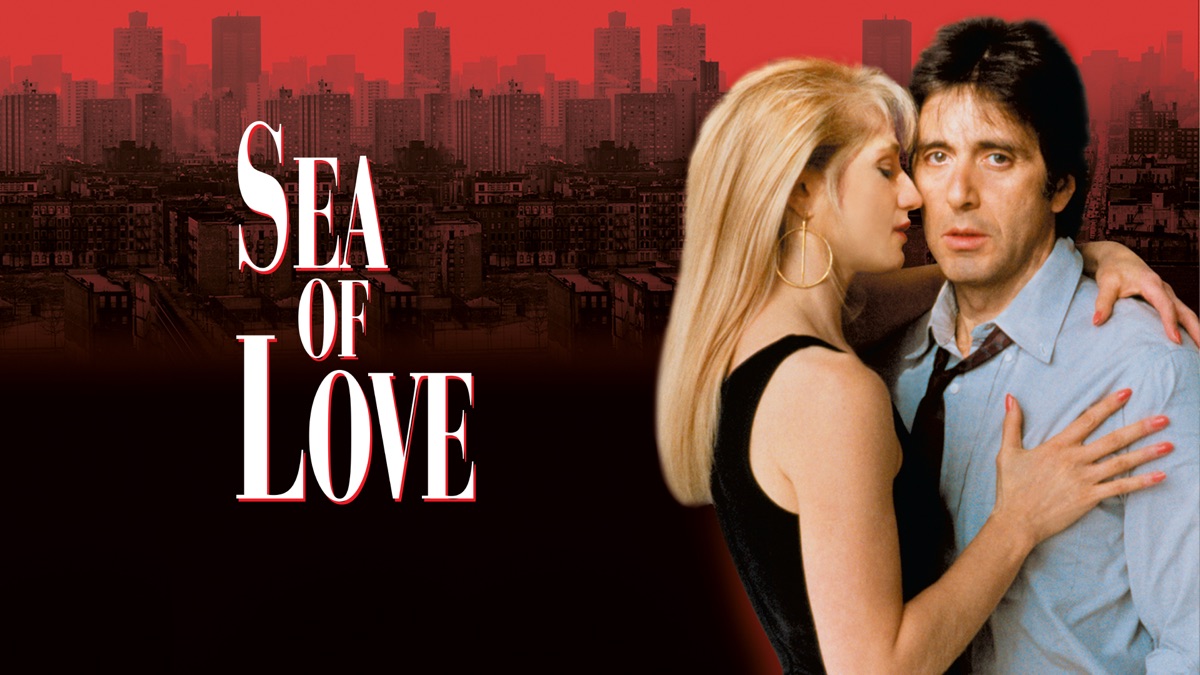
- Dustin Hoffman was initially intended for the lead, prompting concern that his pairing with Barkin would be even stranger. — Bill Simmons
- Lorraine Bracco’s deleted role is recalled.
Half-Assed Internet Research
Awards; budget and gross; Baltimore filming; rehearsals; armed judge; coffee cake; courtroom research
In the discussion (7)
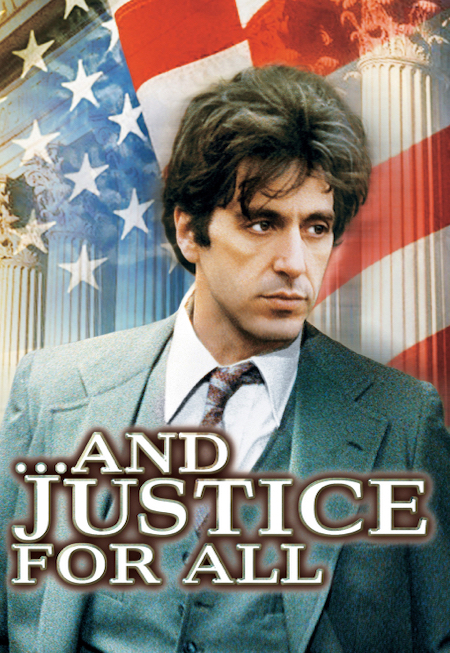
- The original-screenplay nominees were this film, The China Syndrome, Manhattan, All That Jazz and winner Breaking Away; the winner is respected but a retrospective result is uncertain. — Bill Simmons
- The actor field pairs Pacino with Jack Lemmon, Roy Scheider, Peter Sellers and winner Dustin Hoffman, with Scheider considered a likely winner in most other years. — Bill Simmons
- The film reportedly cost $4 million and earned $33 million. — Wesley Morris
- The production is reported to have filmed entirely in Baltimore; the claim of 26 performances of the final speech is corrected to 26 rehearsals.
- Jewison’s commentary reportedly attributes the gun-firing judge to a real Texas judge. — Bill Simmons
- The coffee-cake scene reportedly required 26 takes and made Warden vomit from overeating. — Bill Simmons
- Levinson’s courtroom research emphasized misleading first impressions and the distinction between truth and justice; the theme is connected to Homicide: Life on the Street. — Bill Simmons


Just One Oscar
Dustin Hoffman and John Leguizamo: Supporting Actor
In the discussion (2)
- Dustin Hoffman receives one Supporting Actor choice for making a very brief role believable. — Dave Chang
- John Leguizamo receives the other because every line and moment adds to the movie. — Bill Simmons

In the discussion (4)
- The full field includes Scarlett Johansson, Dustin Hoffman, Robert Downey Jr., Oliver Platt, Gary Clark Jr., Aaron Franklin, and Amy Sedaris. — Bill Simmons
- Amy Sedaris receives one vote because the PR conversation is exceptionally believable. — Bill Simmons
- Robert Downey Jr. receives the other vote for producing the equivalent of five long three-pointers in five minutes. — Bill Simmons
- The panel cannot identify another actor who could play the role with the same energy. — Bill Simmons
In the discussion (5)
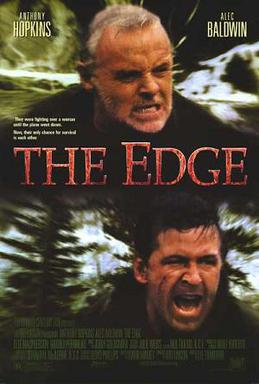
- Art Linson’s book is cited for the attempt to recruit Harrison Ford, whose participation was expected to make a much bigger hit; Ford passed. — Bill Simmons
- Bill Pullman was reportedly lined up as a last-minute replacement during Baldwin’s beard dispute. — Bill Simmons
- Dustin Hoffman turned down the role, and the production went far into discussions with De Niro. — Van Lathan
- De Niro reportedly gave a deliberately flat table read because he had not made character choices, frustrating Linson. — Bill Simmons
- De Niro reportedly remained concerned about the bear whether fake or real; Pullman is recalled as another near participant. — Bill Simmons


