
‹ All movies

One week is too short for the crisis

Amanda Dobbins: A single week in Tokyo seems too short to justify an existential crisis; dinners and a book could fill the time.

Bill Simmons: The film is argued to have permanently damaged Cameron Diaz’s career by making audiences reassess her persona.

Know who you are and what you want

Bill Simmons: Knowing who you are and what you want makes things less upsetting, receiving strong agreement.

The film

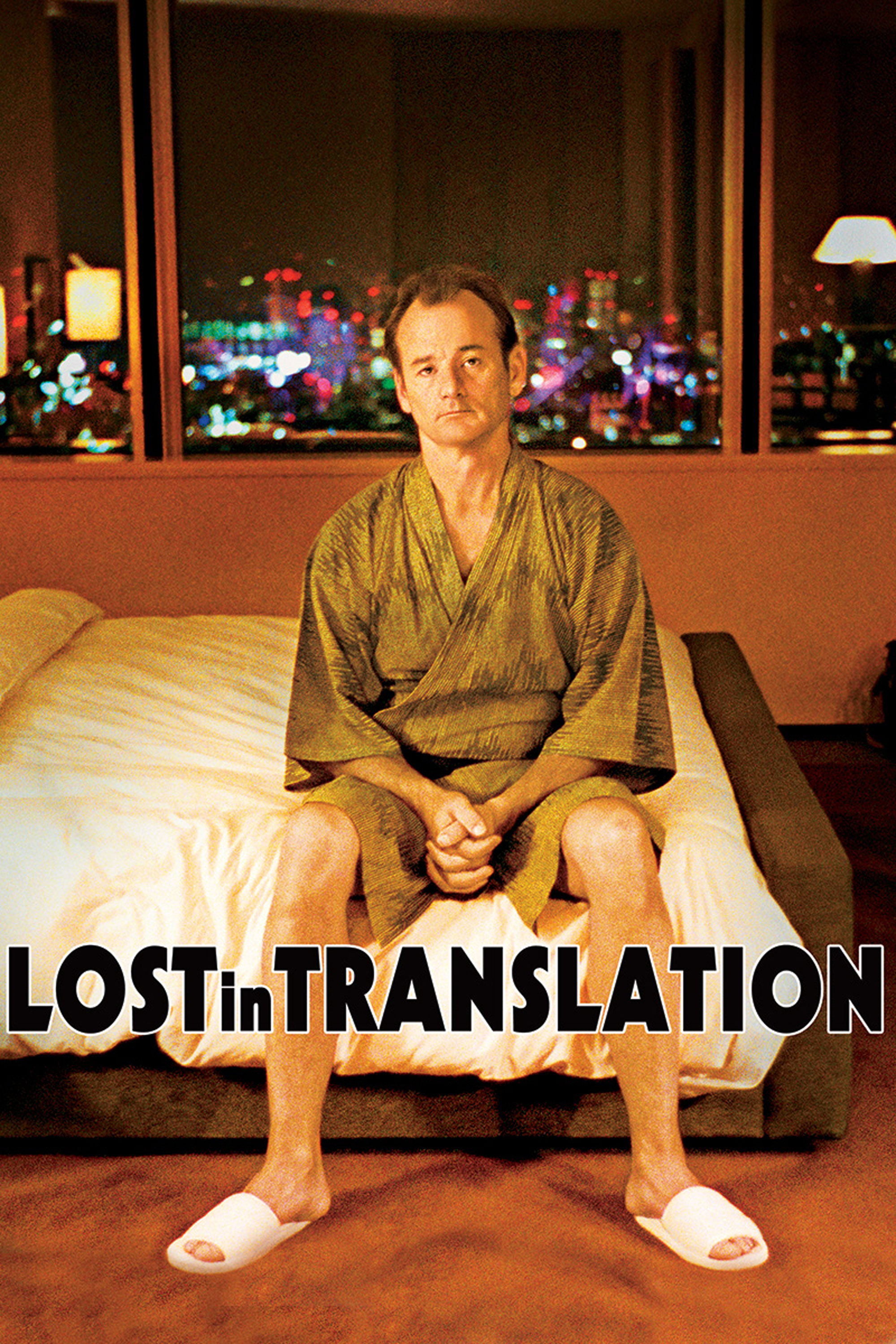
Lost in Translation (2003)

Directed by Sofia Coppola · Comedy

102 minutes

Cast

Selected cast credits · Film reference

Everything from the episode

In the order the hosts got to it. Open a row for the discussion.

14:44

Half-Assed Internet Research

Personal inspiration; Murray commitment; Johansson casting; awards and box office; lounge singer; Suntory commercial;...

Personal inspiration; Murray commitment; Johansson casting; awards and box office; lounge singer; Suntory commercial; Gondry dispute; golf course

In the discussion (10)
Approx. transcript time · 00:14:44Read transcript
  • Coppola reportedly pursued Murray for six months and began the $4 million production without a signed contract; his participation remained uncertain until he arrived shortly before shooting. — Bill Simmons
  • The bed conversation reportedly had to be postponed a day because Murray and Johansson were not getting along. — Bill Simmons
  • Coppola reportedly admired Johansson in Manny & Lo and her low-voiced, young-Lauren-Bacall quality, choosing her before testing chemistry with Murray. — Bill Simmons
  • Coppola is described as the first woman nominated for writing, directing, and producing in one year, winning Original Screenplay. — Bill Simmons
  • The film reportedly made $118.7 million on a $4 million budget. — Bill Simmons
  • Charlotte’s experience is connected to Coppola feeling like an ornament alongside Spike Jonze and to her own youthful uncertainty. — Bill Simmons
  • Catherine Lambert was reportedly a real lounge singer discovered performing in Tokyo in 2001, then tracked down for the film. — Bill Simmons
  • The Suntory commercial was reportedly inspired partly by a real 1970s commercial featuring Coppola’s father and Akira Kurosawa; the whisky is identified as seventeen-year-old Hibiki. — Bill Simmons
  • Michel Gondry reportedly confronted Coppola at the New York premiere about the unkind Jonze-based husband and later described the disagreement in a 2006 New York Times interview. — Bill Simmons
  • The golf course is identified by a name garbled in the transcript and praised as beautiful. — Bill Simmons
16:55

Recasting Couch

Will Ferrell as Bob

Will Ferrell as Bob

In the discussion (3)
Approx. transcript time · 00:16:55Read transcript
  • Murray is considered irreplaceable; a younger Nicholson is entertained but his debonair, roguish persona would change the film. — Bill Simmons
  • Pitt and DiCaprio are rejected because their screen personas make it difficult to believe they would not pursue Charlotte physically. — Amanda Dobbins
  • Will Ferrell is proposed as a contemporary counterpart who could benefit from a restrained dramatic role like Murray’s, though he would need to shed familiar comic habits. — Bill Simmons
37:07

Roger Ebert's review

In the discussion (1)
Approx. transcript time · 00:37:07Read transcript
  • Ebert gave four stars and praised Murray’s internally developed Bob Harris as simultaneously happy, sad, and resigned to being stuck. — Bill Simmons
38:01

Most Rewatchable Scene

Karaoke

Karaoke

In the discussion (18)
Approx. transcript time · 00:38:01Read transcript
  • The first television commercial is nominated. — Bill Simmons
  • The prostitute’s chaotic visit to Bob’s room is nominated as a funny scene. — Bill Simmons
  • Kelly’s first encounter with John and Charlotte is nominated, particularly Charlotte’s silent expressions of disgust and irritation.
  • Kelly’s cleanse discussion leading into Charlotte joining Bob for his prison-break remark is nominated. — Bill Simmons
  • The night out and karaoke are nominated, including Costello, Ferry, the Pretenders, a restrained More Than This, and the tender shoulder-rest afterward. — Bill Simmons
  • The sushi scene is nominated for its apparently improvised humor and Bob making Charlotte laugh about her injured toe. — Bill Simmons
  • Faris singing karaoke is another candidate. — Bill Simmons
  • The bed conversation is praised for reassurance about identity and the photography-phase observation. — Bill Simmons
  • The bed conversation’s description of parenthood is called a perfect, brief account of the experience; the scene reportedly required another attempt after initially failing to find its chemistry. — Bill Simmons
  • Charlotte walking around Tokyo with only music is nominated. — Bill Simmons
  • Charlotte teasing Bob after his hookup is nominated, including their barbed comments about age and attention. — Bill Simmons
  • The last hotel-bar night and elevator goodbye are nominated. — Bill Simmons
  • The ending is acknowledged as the obvious answer, though other personal choices follow. — Amanda Dobbins
  • The solitary golf swing is nominated through a spouse’s suggestion; the claim that Murray did it in one take is explicitly unverified. — Amanda Dobbins
  • Karaoke is the preferred scene, linking Murray’s comic singing to his SNL nightclub singer and then the emotional More Than This. — Bill Simmons
  • Brass in Pocket and the exchange over being special make karaoke a personal first choice. — Amanda Dobbins
  • One ranking puts karaoke first, lying in bed second, and the ending third; all three are described as essential to the film. — Bill Simmons
  • The ending is praised for its withheld dialogue, the decision not to unite the couple, and Murray’s joyful yet complicated expression as he walks away. — Amanda Dobbins
42:38

The Slow Ride / Kid Cudi – Pursuit of Happiness Award for Best Needle Drop

Phoenix; final Jesus and Mary Chain song; More Than This; I’m So Into You, disputed

Phoenix; final Jesus and Mary Chain song; More Than This; I’m So Into You, disputed

In the discussion (3)
Approx. transcript time · 00:42:38Read transcript
  • The hotel singer’s I’m So Into You is nominated, with an objection that stronger songs exist in this film. — Bill Simmons
  • Phoenix is suggested as the likely winner; the final Jesus and Mary Chain song is another preferred choice. — Bill Simmons
  • More Than This is an additional emotional needle-drop choice. — Amanda Dobbins
47:03

What’s Aged the Best?

Tokyo; hotel bar; smoking; no introductions; awkward fans; Phoenix; improvisation; departing husband; soundtrack; mar...

Tokyo; hotel bar; smoking; no introductions; awkward fans; Phoenix; improvisation; departing husband; soundtrack; marriage arithmetic; limited connectivity

In the discussion (11)
Approx. transcript time · 00:47:03Read transcript
  • Early-2000s Tokyo inspires a desire to visit and stay at the Park Hyatt. — Bill Simmons
  • Hotel bars with piano players are praised, with this bar considered exceptionally memorable as a film location. — Bill Simmons
  • Smoking cigarettes and cigars in bars evokes nostalgia despite acknowledged health harms. — Bill Simmons
  • Bob and Charlotte never formally introducing themselves is an appealing detail, despite his eventual ability to send a note to her room. — Bill Simmons
  • The awkward fans praising Bob’s stunt driving are enjoyed; his past stardom is compared to a Gene Hackman or French Connection type. — Bill Simmons
  • The film caught Phoenix before the band’s next breakthrough album. — Bill Simmons
  • Murray’s apparently improvised stretches reward spotting where the camera was left running. — Bill Simmons
  • Sending the husband away halfway through efficiently frees the central relationship to develop. — Bill Simmons
  • The soundtrack has held up exceptionally well. — Bill Simmons
  • Bob subtracting sleeping hours from the length of his marriage is a favorite comic theory. — Amanda Dobbins
  • The period’s faxes and limited mobile communication preserve isolation; modern texting and internet use would reduce loneliness and change the intrusions. — Bill Simmons
52:13

The Big Kahuna Burger Award for Best Use of Food and Drink

Suntory Time; awkward lunch and cocktails

Suntory Time; awkward lunch and cocktails

In the discussion (2)
Approx. transcript time · 00:52:13Read transcript
  • The awkward restaurant meal requiring the diners to steam their raw food is nominated. — Bill Simmons
  • The cocktails are praised, with Suntory Time receiving agreement as the answer. — Bill Simmons
52:49

The Den of Thieves Benihana Award for Scene-Stealing Location

Tokyo; Park Hyatt hotel bar

Tokyo; Park Hyatt hotel bar

In the discussion (1)
Approx. transcript time · 00:52:49Read transcript
  • Tokyo or the hotel bar are suggested, with Park Hyatt as the specific location. — Bill Simmons
53:03

The Great Shot Gordo Award for Most Cinematic Shot

Opening image; Shibuya walk; final embrace

Opening image; Shibuya walk; final embrace

In the discussion (3)
Approx. transcript time · 00:53:03Read transcript
  • The opening image is memorable and debated through a scholar’s male-gaze interpretation, including the argument that its duration provokes discomfort and self-awareness. — Bill Simmons
  • Charlotte walking through Shibuya is nominated; the street footage reportedly used no permits and sometimes filmed from a Starbucks above. — Amanda Dobbins
  • The final embrace amid a crowd, with Charlotte on tiptoe, is nominated. — Amanda Dobbins
54:14

The Butch’s Girlfriend Award for the Weakest Link in the Film

Wife’s calls, disputed; Charlotte wandering

Wife’s calls, disputed; Charlotte wandering

In the discussion (2)
Approx. transcript time · 00:54:14Read transcript
  • The wife’s telephone calls and the vocal performance are criticized, with immediate disagreement that the calls are funny. — Bill Simmons
  • The uncomfortable wife calls are considered skippable, while a different objection targets Charlotte wandering around looking confused. — Amanda Dobbins
55:40

What’s Aged the Worst?

Young casting; prostitute scene, disputed; first drink; Murray mistaken for Williams

Young casting; prostitute scene, disputed; first drink; Murray mistaken for Williams

In the discussion (4)
Approx. transcript time · 00:55:40Read transcript
  • Johansson being eighteen is raised as a detail that has aged poorly. — Amanda Dobbins
  • The prostitute scene is criticized for pronunciation humor at her expense; the defense is that its chaos conveys Bob’s disorienting foreign experience. — Amanda Dobbins
  • Bob and Charlotte’s first drink is considered less effective than their later vodka-tonic encounter and a missed opportunity for a rewatchable scene. — Amanda Dobbins
  • A daughter confusing Murray with Robin Williams is jokingly selected as the winner; she otherwise enjoyed the film. — Bill Simmons
57:45

The Ron Burgundy Flute Award for the Best Time for a Pee Break

Charlotte wandering or arcade; Bob’s wife calls

Charlotte wandering or arcade; Bob’s wife calls

In the discussion (1)
Approx. transcript time · 00:57:45Read transcript
  • Charlotte’s early wandering and arcade tour or Bob’s wife calls are suggested as break opportunities. — Bill Simmons
57:45

Is There a Better Title for This Movie?

Lost in Translation

Lost in Translation

In the discussion (1)
Approx. transcript time · 00:57:45Read transcript
58:03

The Neil McCauley “A Book about Metals” Award for Best Line from the Movie

Charlotte’s “I’m stuck” and photography-phase speech

Charlotte’s “I’m stuck” and photography-phase speech

In the discussion (1)
Approx. transcript time · 00:58:03Read transcript
  • Charlotte’s speech about feeling stuck and taking photographs of her feet is praised as a lasting account of youthful uncertainty. — Amanda Dobbins
58:20

The Stephen A. Smith Hottest Take Award

One week is too short for the crisis; the film damaged Diaz’s career

One week is too short for the crisis; the film damaged Diaz’s career

In the discussion (3)
Approx. transcript time · 00:58:20Read transcript
  • A single week in Tokyo seems too short to justify an existential crisis; dinners and a book could fill the time. — Amanda Dobbins
  • The film is argued to have permanently damaged Cameron Diaz’s career by making audiences reassess her persona. — Bill Simmons

  • Alternative explanations for Diaz’s decline include changes in gross-out comedy, her Gangs of New York performance, and the industry replacing actresses after a short period of stardom. — Bill Simmons
1:00:03

Casting What-Ifs

None found

None found

In the discussion (1)
Approx. transcript time · 01:00:03Read transcript
  • No alternative casting is found; the hypothetical backup if Murray declined remains unknown. — Bill Simmons
1:00:24

The Ruffalo / Hanna / Rubinek / Partridge Overacting Award

Masseuse/prostitute

Masseuse/prostitute

In the discussion (1)
Approx. transcript time · 01:00:24Read transcript
  • The masseuse/prostitute is the clear overacting choice. — Bill Simmons
1:00:24

The Joey Pants “That Guy” Award

None; Ribisi rejected

None; Ribisi rejected

In the discussion (1)
Approx. transcript time · 01:00:24Read transcript
  • No eligible choice is identified; Ribisi is rejected because he was recognizably Giovanni Ribisi in 2003, though that might change for future audiences. — Bill Simmons
1:00:42

The Dion Waiters Award for Best Heat Check Performance

Anna Faris; Lambert as backup

Anna Faris; Lambert as backup

In the discussion (2)
Approx. transcript time · 01:00:42Read transcript
  • Anna Faris is the decisive winner; three scenes are judged sufficiently brief, with a suggestion that the award could bear her name. — Bill Simmons
  • Catherine Lambert would be a backup candidate, particularly for introducing the band as Sausalito, but Faris remains the overwhelming choice. — Bill Simmons
1:05:09

Apex Mountain

Sofia Coppola; Suntory for American audiences; Park Hyatt; insomnia films; jet-lag films

Sofia Coppola; Suntory for American audiences; Park Hyatt; insomnia films; jet-lag films

In the discussion (10)
Approx. transcript time · 01:05:09Read transcript
  • Murray’s overall apex is rejected in favor of Ghostbusters, with Stripes also considered; an older-Murray qualification is entertained. — Bill Simmons
  • Johansson’s apex is rejected: the film may be among her best, but her career power came later, with the Marriage Story and Jojo Rabbit nominations cited. — Amanda Dobbins
  • Match Point is offered as Johansson’s strongest star performance, distinguished from best acting. — Bill Simmons
  • Coppola is agreed as an apex because of the nominations and screenplay Oscar despite another personal favorite. — Bill Simmons
  • Ribisi’s earlier Friends arc is raised instead of affirming this film as his apex. — Bill Simmons
  • Suntory whisky is affirmed with the qualification of its exposure to American film audiences. — Bill Simmons
  • Tokyo is qualified as a possible apex for an American or Western film location, while the long Japanese-film tradition prevents a universal claim. — Amanda Dobbins
  • The Park Hyatt Tokyo is emphatically affirmed as an apex, with its appeal compared to the White Lotus hotel. — Bill Simmons
  • Insomnia films receive agreement with Insomnia and Something’s Gotta Give as comparisons; jet-lag films receive a stronger number-one claim. — Amanda Dobbins
  • Phoenix is rejected because the band’s major breakthrough album came in 2009. — Amanda Dobbins
1:08:32

Best Race Horse Name from This Movie

Park Hyatt

Park Hyatt

In the discussion (1)
Approx. transcript time · 01:08:32Read transcript
  • Park Hyatt receives agreement as a racehorse name, with a sponsorship joke. — Bill Simmons
1:08:45

Picking Nits

Marriage timeline; restrained romance; unplanned kiss knowledge; mailed carpet samples

Marriage timeline; restrained romance; unplanned kiss knowledge; mailed carpet samples

In the discussion (5)
Approx. transcript time · 01:08:45Read transcript
  • Charlotte’s marriage timeline is questioned: a recent Yale philosophy graduate in her early twenties marries a somewhat older traveling photographer before finding direction. — Bill Simmons
  • The defense is that the rash marriage and regret are central themes, conveyed sufficiently by the shrine call and complaint about her husband’s hair products. — Amanda Dobbins
  • Not making a sexual move in bed is defended despite possible signals: the relationship mixes romantic possibility with a paternal quality, and Bob discusses his children. — Amanda Dobbins
  • Learning that the final kiss was unplanned diminishes the preferred mystery of the ending. — Bill Simmons
  • Sending carpet samples to Tokyo during an initially three-day trip seems absurd; the defense is that this exaggeration illustrates the couple’s strained marriage. — Craig Horlbeck
1:11:51

Probably Unanswerable Questions

Farewell whisper interpretations; fire alarm; Charlotte’s marriage and future

Farewell whisper interpretations; fire alarm; Charlotte’s marriage and future

In the discussion (11)
Approx. transcript time · 01:11:51Read transcript
  • The farewell whisper was reportedly improvised after scripted dialogue failed, with Coppola asking Murray to whisper something the audience would not hear; he also improvised the kiss. — Bill Simmons
  • One proposed enhanced-audio reading tells Charlotte to speak the truth to John before his next business trip; it is rejected as overly specific. — Bill Simmons
  • Another possible whisper reading says he must leave but will not let that come between them; this remains an interpretation, not verified dialogue. — Bill Simmons
  • A further interpretation asks Charlotte to promise to tell her husband the truth; it feels more plausible to the discussants but remains uncertain. — Bill Simmons
  • The truth-telling interpretation is read as Charlotte recognizing she can move past feeling stuck, perhaps by acknowledging dissatisfaction with her marriage. — Amanda Dobbins
  • A preferred imagined whisper thanks Charlotte for being special and passing through Bob’s life; another imagines romantic reassurance that she will figure things out. — Amanda Dobbins
  • Bob may have pulled the final-night fire alarm to see Charlotte again without appearing desperate; the theory receives enthusiasm. — Bill Simmons
  • Charlotte is firmly expected to leave her marriage, including the interpretation that Coppola wrote toward that outcome. — Amanda Dobbins
  • A present-day Charlotte is imagined back in New York and then possibly eastern Los Angeles. — Amanda Dobbins
  • Another future places Charlotte in Greenwich or Darien, married to a hedge-fund worker with children and selling real estate. — Amanda Dobbins
  • Charlotte might instead be a self-consciously distinctive mother blogger or podcaster whose personality drives the work. — Bill Simmons
1:14:54

Sequel, Prequel, Limited Series, or All-Black Remake

Untouchable; Tokyo prestige series considered

Untouchable; Tokyo prestige series considered

In the discussion (1)
Approx. transcript time · 01:14:54Read transcript
  • An eight- or ten-episode Tokyo series could expand Kelly and the commercial shoot, resembling White Lotus, but the film is ultimately preferred as untouchable. — Bill Simmons
1:16:15

Is This Movie Better With…?

None; Kathryn Hahn as lounge singer considered but distracting

None; Kathryn Hahn as lounge singer considered but distracting

In the discussion (1)
Approx. transcript time · 01:16:15Read transcript
  • The proposed substitute performers are mostly rejected; Kathryn Hahn as the lounge singer could be funny but distracting. — Bill Simmons
1:16:54

Just One Oscar

Coppola’s existing win retained; Murray acceptable

Coppola’s existing win retained; Murray acceptable

In the discussion (1)
Approx. transcript time · 01:16:54Read transcript
  • Coppola’s actual screenplay win is treated as settling the category, though giving Murray an Oscar would also be acceptable. — Bill Simmons
1:18:56

Best Double Feature

In the Mood for Love; Before Sunrise
In the discussion (2)
Approx. transcript time · 01:18:56Read transcript
  • In the Mood for Love is the primary choice for its beautiful romance between people briefly crossing paths; Coppola’s Oscar acknowledgment introduced the film and its director to one participant. — Amanda Dobbins
  • Before Sunrise is another definite choice for the same passing-encounter quality. — Bill Simmons
1:19:50

The Andy and Red – Zihuatanejo Award for What Happens the Next Day?

Charlotte divorces; Bob stays married

Charlotte divorces; Bob stays married

In the discussion (1)
Approx. transcript time · 01:19:50Read transcript
  • Charlotte is expected to divorce while Bob remains married. — Bill Simmons
1:20:06

What Piece of Memorabilia Would You Want From This Movie?

Suntory bottle; Bob’s watch; Park Hyatt stay, eligibility disputed

Suntory bottle; Bob’s watch; Park Hyatt stay, eligibility disputed

In the discussion (3)
Approx. transcript time · 01:20:06Read transcript
  • A week in the actual Park Hyatt room is desired, with the objection that an experience or home does not qualify as memorabilia. — Amanda Dobbins
  • The actual Suntory bottle used in the commercial scene is desired. — Amanda Dobbins
  • Bob’s watch from the ending is a fallback choice; its brand is not identified. — Amanda Dobbins
1:20:45

The Coach Finstock Award for Best Life Lesson

Know who you are and what you want

Know who you are and what you want

In the discussion (1)
Approx. transcript time · 01:20:45Read transcript
  • Knowing who you are and what you want makes things less upsetting, receiving strong agreement. — Bill Simmons
1:21:05

Who Won the Movie?

Bill Murray

Bill Murray

In the discussion (2)
Approx. transcript time · 01:21:05Read transcript
  • Johansson and Coppola are considered, but Murray receives two explicit final choices. — Bill Simmons
  • The performance completes Murray’s transition from comic star to serious dramatic actor, building on earlier work and the Wes Anderson period. — Bill Simmons
Podcast choices
Speaker not identified
Bill Murray
Speaker not identified
Bill Murray
1:22:48

Producer review

Age-dependent resonance; restrained relationship; final kiss disputed

Age-dependent resonance; restrained relationship; final kiss disputed

In the discussion (4)
Approx. transcript time · 01:22:48Read transcript
  • A first viewing inspires identification with Charlotte’s early-twenties aimlessness and the expectation that the film will reveal different meanings with age. — Craig Horlbeck
  • The unusual older-man/younger-woman bond is appreciated for avoiding sex, and the final hug is experienced as a relief. — Craig Horlbeck
  • The final kiss is criticized as an unnecessary step toward sexuality; the awkward earlier elevator kisses were sufficient. — Amanda Dobbins
  • The opposing defense reads the final kiss as sincere emotional closure rather than an invitation to go further; agreement remains that an overtly sexual kiss would be wrong. — Amanda Dobbins

More from the conversation

A Jam Session introduction discusses the Antonoff–Qualley wedding and the uncertain longevity of actor–musician marriages.
Approx. transcript time · 00:00:59Read transcript
The film’s twentieth anniversary renews the argument that excellence, originality, and repeat-viewing pleasure define a decade’s lasting films.
Approx. transcript time · 00:03:04Read transcript
Coppola’s attention to small visual and behavioral details makes new things emerge on successive viewings.
Approx. transcript time · 00:03:35Read transcript
Seven defining2000s candidates are listed: Almost Famous, The Dark Knight, Lost in Translation, Brokeback Mountain, No Country for Old Men, There Will Be Blood, and possibly Sideways. The criteria include immediate acclaim, some mainstream impact, and staying power.
Approx. transcript time · 00:03:54Read transcript
Johansson’s mature performance is surprising given her reported age of18 while playing a recent college graduate married for some time.
Approx. transcript time · 00:04:50Read transcript
Somewhere sharply divides the discussion: one view finds it empty, while the defense emphasizes father–daughter love and a father learning to express it.
Approx. transcript time · 00:05:58Read transcript
Coppola’s emergence moves from music videos, The Godfather Part III, fashion, and famous-family scrutiny to The Virgin Suicides and this breakthrough.
Approx. transcript time · 00:06:12Read transcript
Marie Antoinette is the personal favorite for one participant, while Lost in Translation remains the signature cultural breakthrough; Somewhere’s Los Angeles atmosphere is defended and The Bling Ring is respected as a worthwhile attempt.
Approx. transcript time · 00:07:03Read transcript
The upcoming Priscilla is considered an ideal Coppola subject: a young woman beside a culturally powerful man, with rich opportunities for style, music, and costume.
Approx. transcript time · 00:08:13Read transcript
Women filmmakers’ recent progress is contrasted with2003, naming Jane Campion, Amy Heckerling, Mimi Leder, and Kathryn Bigelow, while acknowledging continued underrepresentation.
Approx. transcript time · 00:08:53Read transcript
Coppola’s description of romantic melancholy captures an unexpected, finite connection that must end when ordinary life resumes.
Approx. transcript time · 00:09:33Read transcript
Tokyo is a vivid character, but the Park Hyatt hotel and all-night bar are central as temporary spaces that make people more open and unsettled.
Approx. transcript time · 00:10:28Read transcript
The early Phoenix music and general atmosphere make it recognizably early2000s; Garden State is offered as a tonal comparison, with the discussion calling them same-year films.
Approx. transcript time · 00:11:04Read transcript
The first Murray phase,1977–84, lists SNL, Meatballs, Caddyshack, Stripes, Tootsie, and Ghostbusters as his rise to stardom.
Approx. transcript time · 00:12:10Read transcript
The second Murray phase,1985–90, is described as uncertainty after stardom, naming The Razor’s Edge, Scrooged, Ghostbusters II, and Quick Change, whose improved reputation is disputed.
Approx. transcript time · 00:12:27Read transcript
The1991–2000 comeback lists What About Bob?, Groundhog Day, Mad Dog and Glory, Ed Wood, Kingpin, Space Jam, Rushmore, Charlie’s Angels, and renewed SNL appearances.
Approx. transcript time · 00:12:52Read transcript
Rushmore and Charlie’s Angels gave Murray both artistic credibility and mainstream visibility for younger viewers.
Approx. transcript time · 00:13:24Read transcript
The Royal Tenenbaums and Lost in Translation cement his legend in2001–03; this performance is considered his best, and the Oscar loss is speculated to have affected him.
Approx. transcript time · 00:13:51Read transcript
His later work and public appearances are described as more erratic and increasingly built around the persona of Bill Murray created by this film and Anderson’s work.
Approx. transcript time · 00:14:15Read transcript
Murray’s loss to Penn in Mystic River is criticized as a missed lifetime opportunity; the other nominees are Kingsley in House of Sand and Fog, Law in Cold Mountain, and Depp in Pirates of the Caribbean. Campaigning and personal relationships are proposed explanations.
Approx. transcript time · 00:15:27Read transcript
The comparison with an18-year-old daughter makes the actor age gap feel newly uncomfortable, despite the character being older.
Approx. transcript time · 00:17:28Read transcript
Murray’s selective charm and difficult working relationships are discussed, including his reported estrangement from Harold Ramis.
Approx. transcript time · 00:19:04Read transcript
The performance is considered Murray’s most important, illustrating an established star revealing an unexpected dimension.
Approx. transcript time · 00:20:31Read transcript
Comparable surprising star performances include Pitt in Moneyball, Cruise in Jerry Maguire, and Bullock in The Blind Side. Roberts in Erin Brockovich is judged a different kind of breakthrough; Charlie Wilson’s War never quite achieves the comparison.
Approx. transcript time · 00:21:18Read transcript
Johansson’s immediate star potential is compared to Roberts in Pretty Woman, Portman in Garden State, and Bullock in Speed.
Approx. transcript time · 00:24:23Read transcript
Her early post-breakthrough choices range through The Nanny Diaries, The Perfect Score, Match Point, Allen films, and the Timberlake video; the career initially seems unsettled.
Approx. transcript time · 00:25:32Read transcript
Johansson eventually combines Marvel blockbusters with serious work by Glazer and Baumbach; Iron Man2, He’s Just Not That Into You, and We Bought a Zoo are discussed as commercial choices.
Approx. transcript time · 00:26:20Read transcript
An adventurous run around2013 includes Don Jon, Under the Skin, Her, Chef, and Lucy.
Approx. transcript time · 00:26:45Read transcript
Johansson’s role in Her is notable because Jonze’s divorce film answers a film in which she plays a woman whose husband is understood as an unflattering Jonze stand-in.
Approx. transcript time · 00:26:58Read transcript
A making-of documentary and a contemporary profile are read as signs of strain between Coppola and Jonze, without claiming that his disappearance from the documentary proves a cause.
Approx. transcript time · 00:27:46Read transcript
Faris’s character is read as a vicious and funny Cameron Diaz caricature despite denials, especially the body-odor admission and vapid press-conference answers.
Approx. transcript time · 00:29:31Read transcript
The alleged Diaz satire circulated through early internet culture; the discussion imagines a far more intense public conflict under contemporary social media.
Approx. transcript time · 00:32:27Read transcript
A proposed one-great-movie comparison invokes Cimino, Singleton, and the District9 director, but Coppola is defended through The Virgin Suicides, this film, Marie Antoinette, and Somewhere as four major works.
Approx. transcript time · 00:33:25Read transcript
The father–daughter directing distinction is considered unusual, with no alternative daughter of a famous director and Oscar-nominated filmmaker identified.
Approx. transcript time · 00:34:28Read transcript
The2003 directing discussion names Jackson’s winning Lord of the Rings, City of God, Master and Commander, and Mystic River; the final director name is garbled in the transcript.
Approx. transcript time · 00:35:02Read transcript
Witness is proposed for a future episode, with enthusiasm for Harrison Ford; this is not a tag for the current film.
Approx. transcript time · 00:35:13Read transcript
Johansson’s Oscar omission is criticized; the named actress nominees are Theron in Monster, Castle-Hughes in Whale Rider, Keaton in Something’s Gotta Give, Morton in In America, and Watts in21Grams. Keaton’s nomination is specifically defended.
Approx. transcript time · 00:35:23Read transcript
The unknown farewell dialogue is praised as part of an ending that avoids a conventional romantic union; its exact words are deferred for later discussion.
Approx. transcript time · 00:45:58Read transcript
A contemporary profile is recommended for the developing connection between Coppola and Phoenix’s Thomas Mars, including a studio visit and the band’s later Marie Antoinette appearance.
Approx. transcript time · 00:49:13Read transcript
A daughter’s first viewing is judged successful despite intermittent phone use and a mistaken identification of Murray as Robin Williams.
Approx. transcript time · 00:57:11Read transcript
A prior Godfather Part III discussion favored Marisa Tomei; the conversation jokes about AI recasting while resisting diverting Francis Ford Coppola from current work.
Approx. transcript time · 01:01:14Read transcript
Francis Ford Coppola’s Instagram is recommended for cinema nostalgia, support for his daughter, Megalopolis updates, questions and answers, and breakfast posts.
Approx. transcript time · 01:02:07Read transcript
Whisky is appreciated when recommended enthusiastically by a friend, though tequila is the usual order.
Approx. transcript time · 01:03:41Read transcript
Marriage Story’s divorce drama is praised as powerfully acted but considered too painful for repeat viewing by one perspective, with Million Dollar Baby as a comparison.
Approx. transcript time · 01:05:45Read transcript
An unnamed recent Coppola–Murray film described as an unofficial sequel divides opinion: the New York companionship appeals, while Rashida Jones is criticized as unable to carry the vehicle.
Approx. transcript time · 01:15:35Read transcript
The film introduced one younger viewer to cultural references such as Roxy Music and Wong Kar-wai, extending its influence beyond its own story.
Approx. transcript time · 01:19:11Read transcript
A belated Netflix breakout comparable to Suits is rejected because the film is too slow, intimate, and unusual, despite confidence that persuaded viewers would like it.
Approx. transcript time · 01:25:41Read transcript
The fading sad-comedian persona is discussed through Murray, Steve Martin, Robin Williams, and Funny People, contrasted with comedians who now foreground tragedy.
Approx. transcript time · 01:26:01Read transcript
Older actors choosing personal low-budget projects are admired; Bob’s two-million-dollar whisky job is contrasted with Murray taking this artistic assignment, while the commercial fee’s realism remains uncertain.
Approx. transcript time · 01:26:31Read transcript
Johansson is respected beyond Marvel; a generational disagreement suggests younger audiences mainly know Downey as Iron Man, with Oppenheimer offered as their first dramatic exposure and its final hour criticized.
Approx. transcript time · 01:27:46Read transcript
The closing identifies guest Amanda Dobbins and explicitly credits producer Craig Horlbeck; the fantasy-football podcast is promoted and upcoming Rewatchables episodes are teased.
Approx. transcript time · 01:28:28Read transcript