
Film credit
Martin Landau
Also referred to as Martin Lando
Stats
- Episodes featuring their films
- 2
- Movies in this archive
- 1
Rewatchables episodes featuring Martin Landau’s films
Mentioned in discussions

In the discussion (2)
- After an interrupted cue, Teddy’s roughly 30 minutes may be too much. Petra, Kinnish and Grandma eligibility is argued over; Landau is offered as a slow heat check despite earlier criticism.
- Bill Kamp’s oily-finish cigar-bar line is the last candidate before the next category; no single final winner is declared. — Bill Simmons


Casting What-Ifs
Batman contenders; Joker alternatives; Vicki Vale recasting; Grissom refusal; Adam West
In the discussion (13)
- Casting what-ifs are deferred past the break; the film is said to have as many as any of the 226 editions, rivaling The Godfather. — Bill Simmons
- Nearly every 1980s star was reportedly considered for Batman, including Mel Gibson, Kevin Costner, Charlie Sheen, Tom Selleck, Bill Murray, Harrison Ford, and one further name garbled in the transcript, with uncertainty over what is real. — Bill Simmons
- Pierce Brosnan reportedly met Burton but did not want to play a comic-book hero. — Bill Simmons
- Bill Murray, with Ivan Reitman directing, was earlier buzz that Peters favored for years; the hosts are glad it did not happen. An Eddie Murphy as Robin rumor is doubted. — Bill Simmons
- Damon Wayans, met by chance, reportedly denied the research claim that he and Bruce Willis feuded on The Last Boy Scout, illustrating the unreliability of casting research. — Bill Simmons
- Nicholson was reportedly the studio’s top Joker choice since 1980, and Willem Dafoe reportedly stated in 2009 he had been in talks. — Bill Simmons
- Robin Williams was reportedly offered the Joker to pressure Nicholson, released once Nicholson agreed, and then refused Warner roles such as the Riddler without an apology; the apology detail is doubted. — Bill Simmons
- Dead Poets Society was 1989’s third-biggest film; swapping Nicholson and Williams would make both films worse, and “he stole my balloons” is called a favorite line.
- Nicholson’s reported conditions included top billing, a share of earnings including merchandise, capped work hours, and no work on Lakers home playoff games; his fee dropped from $11 million to $6 million, but he may have made $90 million. — Bill Simmons
- Martin Landau reportedly turned down Carl Grissom for Crimes and Misdemeanors, and Jack Palance in that role is imagined as bad.
- Sean Young was cast as Vicki Vale and replaced after a horse-riding injury; the Knox actor later claimed she sabotaged a read-through, which is doubted. Her Catwoman costume audition for Batman Returns is recalled.
- The Knox actor also claimed Keaton blocked Peters’ choice of Michelle Pfeiffer because they had dated, which is doubted since she is in the sequel. — Bill Simmons
- Adam West was publicly disappointed not to be asked to reprise Batman. — Bill Simmons
Picking Nits
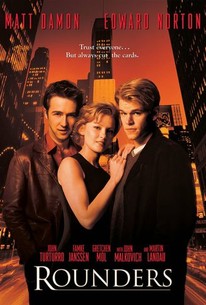
Mike McD taunting Teddy KGB after taking his money; the Oreo tell going unnoticed for 20 hours; Teddy's tell being so basic; Mike telling Teddy he knows the tell and showing his laid-down hand; Worm not smoking; Petrovsky's 10 grand loan; how 10 grand becomes 60; KGB's fold in the opening hand; Grandma's (as transcribed) arrangement with Teddy; Worm not playing
In the discussion (12)
- 'You feeling satisfied now, Teddy, because I can go on busting you up all night' is said after taking 60K off a man who may head the Russian mafia; Mike McD would be killed immediately and never leave the Chesterfield for taunting the warlord whose hand he just stole; a heat check in itself.
- Two questions about the Oreo tell, a controversial moment: Mike McD reads every judge's hand in 14 seconds yet plays Teddy for 20 hours without the tell clicking, which has no defense and is the biggest flaw; and Teddy, cleaning out basements for years, has the most basic tell imaginable, eating the cookie only when he likes his hand.
- In a less sophisticated poker movie, like Casino Royale where everyone has five kings, the tell would not stand out, but this film is so nuanced about table tics at the Taj that one glaring tell in the villain nags; still, it was made for audiences who do not know poker, and one host did not notice it until his fourth viewing while the other caught it at once.
- Why does Mike tell Teddy he knows the tell? One host long considered it a problem, since with the tell he could take the money in ten hands, like Belichick telling the other coach what he has figured out; the counter, credited as what the writers intended, is that it is a mind game that rattles KGB so his aggressive game falls apart.
- Showing a hand when laying it down is a real strategic question; whenever someone does that at a Vegas table the host thinks he is an idiot without security in his game, unless it is after ten hours to prove he actually laid one down; the 'laying this down, Teddy, top two pair' line is great.
- How is Worm not a smoker, the most likely smoker of any movie character? Research saved for here: Ed Norton is anti-smoking and did not want Worm to smoke; it also fits the plot that he plays for cigarettes in prison without smoking himself; still called the biggest reach in the movie.
- Mike McD's law professor lending him 10 grand to set up the finale, at the cost of another yeshiva story, draws a joke that the host would rather rob a liquor store than sit through it; the defense is an admittedly bullshitty theory of an underdog bond between Irish and Jewish people, with Italians thrown in, which makes the Petrovsky storyline make sense.
- Both like the old guy Petrovsky; Martin Landau's return as Bob Evans on a creatively dormant Entourage had a splash of Petrovsky in it, and Crimes and Misdemeanors, a favorite of both, is called incredible though unlikely to get an episode before season 19.
- How does Mike McD go from 10 grand to 60 against Teddy rather than 40? Koppelman and Levine told one host that Teddy reloads, visible in the chip changes, and that they fought for reload scenes but could only go so far into poker minutiae before it got boring; it is still weird that Teddy rebuys into his own game instead of calling it a day at 40K.
- Raised early and told it belongs in picking nits: KGB folding and walking away in the opening hand without seeing whether Mike McD had four nines; the reply is that he read Mike's face.
- Grandma (as transcribed) is a weird character whose arrangement with Teddy KGB is unclear; how the money works at the end is confusing, since Grandma got paid yet is upset, and the juice on Worm's debt, suddenly 15K, seems arbitrary with the numbers shifting; parked for nitpicks.
- Forgotten in nitpicking: why Worm, clearly good at poker, does not play with Mike to double their chances; the answer is that Mike does not trust him, and his instincts prove right when Worm sits down at the cop game and cheats.
In the discussion (5)
- The category is loaded for this movie: John Malkovich as Teddy KGB, Famke Jansen (as transcribed), John Turturro as Knish, Martin Landau with only three scenes who has to be mentioned, and the actor who played Grandma (as transcribed), Michael Rispoli, saved for the Joey Pants Award.
- Both agree there is only one answer, 'pay this man his fucking money', KGB: he is in the opening and closing scenes, maybe three in all, and his NBA box score is 12 minutes with 35 points, 10 rebounds and seven blocked shots.
- Famke Jansen (as transcribed) gets a shout-out and a case that she should have been Joe with another Russian character invented; Knish should not be overlooked either, with some of the greatest lines, representing lifetime grinders, based on a real man named Joel Bagels (as transcribed) whom Koppelman and Levine wrote about in 2014, whose real-life line was 'women are the rake'.
- The sauna confrontation where Knish refuses Mike McD the money is loved and the clip is played: two grand buys a day, Knish will not chase cards or pipe dreams of winning the World Series on ESPN because he owes rent, alimony and child support and his kids eat, offering calls and a place to stay instead.
- Knish is almost not a heat check because he is in too many scenes, whereas Malkovich is in two or two and a half, the ultimate Deion Weirder (as transcribed) and a fucking heat check.

What’s Aged the Worst?
Gretchen Maul's (as transcribed) wet-blanket girlfriend Joe and her performance; the judges' instant hand-reading scene; Mike McD not hooking up with Famke Janssen's character
In the discussion (11)
- Gretchen Mala (as transcribed) plays the stereotypical wet-blanket girlfriend, a staple of 80s and 90s sports movies for undermining the hero: a girlfriend or wife who does not believe in what he is doing.
- A Mount Rushmore of wet-blanket girlfriends: Adrian Balboa in Rocky IV, who quits on Rocky and shows up belatedly in Russia, leaving one host still in go-fuck-yourself-Adrian mode; Myra Fleener in Hoosiers, the number one, subject of an old ESPN magazine column, with no idea why Gene Hackman liked her.
- A theory: many men do not know how to write female characters, so they pour their own relationship anxieties into a figure who is holding the hero back, which is why so many movies have a woman you cannot place; the last Rushmore member is Ned Braden's wife in Slapshot (as transcribed), a tough hang who even throws it at Paul Newman.
- The defense from Koppelman and Levine, given in a back-and-forth with one host: Damon's girlfriend was originally in only three scenes, and a law-school best friend named Atkinson, a counterpoint to Worm, was in the script until the studio made them merge Joe and Atkinson and boost Joe, leaving her inessential and simply in Worm's way.
- Not a great performance either, though she rallied in the 2000s; she is flat-out bad and unlikable here, around the time of the Vanity Fair cover anointing her the next ingenue when she had made little more than Donnie Brasco, and hers is the only stretch where the movie loses its rhythm.
- The judges' card scene, which both like, has aged worst: Mike McD standing for eight to fourteen seconds and reading everyone's hand is not believable, even if Koppelman and Levine claim to have seen it happen; the clip is played; such reads take hours of study.
- The judges' game is not Texas Hold'em, perhaps a seven-card stud variant with many cards showing, which makes the reads more plausible, and the judges' cards are never shown, so he might have missed some; it sets him up as a savant, a reach one host is fine with.
- Martin Lando's (as transcribed) character is described as a cross between a law professor, Confucius, the fairy godmother and Red Arbeck (as transcribed); not a great character but essential, and the bar scene where he pours gin and tells the yeshiva story is loved; movies like this need an old guy, as Charlie Pierce was for Grantland.
- Mike McD not hooking up with Famke Jansen (as transcribed) is called the biggest flaw of the movie and maybe of a host's life, raised with Koppelman and Levine multiple times: his girlfriend has moved out, he is home alone watching an old World Series of Poker, she comes over about Worm's tab and makes a hard pass, and he says now is not the time, which is called inexplicable and indefensible.
- Her character is the manic poker dream girl, after the manic pixie dream girl of Penny Lane and the Zooey Deschanel movies: beautiful, a Bond girl three years earlier, works at the Chesterfield and recounts World Series hands; the case against is that he loves Joe, is trying to go straight, and Petra represents the old version of him.
- On rewatch the hosts think the two should simply have gotten together; Koppelman and Levine admit it is their biggest mistake, prompting a joke about adding a scene for the 25th anniversary; for one host it is the what's aged the worst, and the explanation offered does not convince him.
Casting What-Ifs
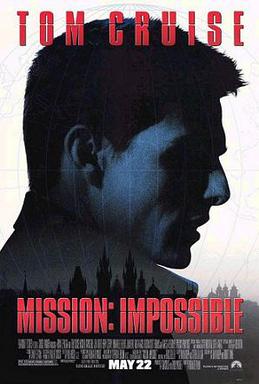
Juliette Binoche turned down Claire; Peter Graves and Martin Landau turned down roles after reading the script; Demi Moore floated as Claire
In the discussion (4)
- There are not many casting what-ifs because the movie was put together by Cruise and Wagner; Juliette Binoche turned down Claire because she did not want to be known for blockbusters, which worked out for her, and it would have been a funny coincidence with Kristen Scott Thomas in two well-seen 1996 movies in the year of The English Patient.
- Peter Graves and Martin Landau from the original series turned down roles after reading the script; Graves did not care for Jim Phelps being the villain and Landau thought it got away from what made the show good, though the hosts wonder whether the roles were smaller than they wanted and joke about Landau feeling himself after his 1994 Oscar.
- Since Claire did not have to be European, Demi Moore is floated as a reunion with Cruise after A Few Good Men; sex scenes between Claire and Ethan were written and cut, a kiss appears in the trailer that is not in the film, and despite the grabbing and handsiness and an implied night together there is not much chemistry.
- 1996 was the year of Striptease for Demi Moore, so it would have been a left turn; Claire is called an underwritten part and one of the weakest aspects, a Russian doll for Jim's motivations in a Hitchcockian way; Susan Sarandon is also mentioned, but the objection is that Moore is too visceral and signals a fight scene is coming, whereas Claire's sphinx-like quality serves the narrative, so maybe Emmanuel Bayer (as transcribed) is right for it after all.

What’s Aged the Worst?
Robin Williams's Boston accent; Matt Damon's frosted tips; the Miramax logo in the opening credits; Will's breakup with Skylar; the screenplay Oscar win over Boogie Nights; the length, especially the two long jokes when Skylar meets Will's friends
In the discussion (12)
- Robin Williams's Boston accent is not great and gets a little New York, though some hosts have no ear for it and thought they were all fine; one host says his own accent is gone and only comes out when drunk.
- Asked who has the best on-screen Boston accent, the answer is Matt Damon's Will Hunting, the gold standard in the history of movies, better than Wahlberg in The Departed, because the attitude, being ready to fight at all times, is half of it and Damon figured that out more than anyone.
- Matt Damon's hair has not aged well; he has talked about regretting the frosted tips and would probably spend money to CGI it away; one host had the same haircut without the tips and thinks it belongs to the mid nineties.
- The Miramax logo in the opening credits; Will's breakup with Skylar, I don't love you, has not so much aged badly as remained a rough, physical three minutes that is hard to watch.
- Good Will Hunting winning Best Screenplay over Boogie Nights: both are Oscar-worthy with a hundred memorable lines and great characterization, something has to win, and one host prefers Boogie Nights as a movie but calls it close and says this movie holds up.
- Asked to choose for the Oscar between Robin Williams and Robert Forster in Jackie Brown, the answer is that the Forster performance is amazing, Jackie Brown is really great, and this is not even the number one movie to have given Robin Williams an Oscar for. — Sean Fennessey
- Films Williams should have won for are then thrown out, apparently by more than one voice: Dead Poets, Fisher King, Garp, Good Morning Vietnam, all those movies.
- Asked Boogie Nights screenplay or Good Will Hunting screenplay, the answer is Good Will Hunting. — Shea Serrano
- Looking up the 1989 Oscars, Williams was nominated for Best Actor for Dead Poets against Kenneth Branagh, Morgan Freeman and Tom Cruise, with Daniel Day Lewis winning for My Left Foot; in supporting he would have faced Martin Landau, Marlon Brando, Dan Aykroyd, Danny Aiello and Denzel in Glory, so he was not winning an Oscar either way.
- It is long: from a rewatchable standpoint, when Skylar meets Will's buddies and the two long jokes come, you know the jokes after 50 viewings and it drags.
- That is a great Skylar scene and there is not enough of her; the great part is not the joke but watching everybody else, the awkwardness, realizing this is the woman he is going to marry, the see-about-a-girl scene playing out in real time with the friends. — Shea Serrano
- Others agree it is a necessary scene that only gets a little slow in a movie of about 2:05; Casey Affleck needling Ben back and forth is loved, as are scenes of people talking in bars and diners, and bombed out of his tree has been quoted for 20 years; the alternate jokes on YouTube were all funny; Damon's long barn story in Saving Private Ryan is called the worst part of that movie, though it is supposed to be bad because the guy is a dipshit.

