
‹ All people

Film credit

Joan Cusack

Also referred to as Joe Cusack, Q-Zack

Stats

Episodes featuring their films
2
Movies in this archive
3

Rewatchables episodes featuring Joan Cusack’s films

High Fidelity

2000 film

Bill Simmons · Chris Ryan · Joanna Robinson · Rob Mahoney

Aired December 16, 2025
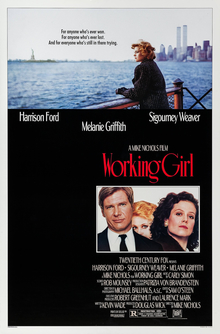
Working Girl

1988 film

Bill Simmons · Amanda Dobbins · Joanna Robinson

Aired June 10, 2025

Displaying all 2 episodes

Mentioned in discussions

The Player

Recasting Couch

Robert De Niro for Fred Ward’s role is the strongest recasting proposal, alongside multiple ideas for Bonnie.

In the discussion (8)
Approx. transcript time · 01:16:35Read transcript
Say Anything...

The Dion Waiters Award for Best Heat Check Performance

Eric Stoltz, Jeremy Piven, Mike Cameron, and Joan Cusack’s young son form the field; Lili Taylor is ruled too substantial.

In the discussion (4)
Approx. transcript time · 01:08:00Read transcript
  • Lili Taylor is ruled ineligible because she appears in too many scenes. — Bill Simmons
  • Piven, Stoltz, and Mike Cameron are the initial finalists.
  • Stoltz’s bird-costume role grew from his request to work as a production assistant and learn filmmaking.
  • Joan Cusack’s small son is added for tracking the household action with an unusually effective child performance. — Judd Apatow
Say Anything...

What’s Aged the Best?

The real Cusack siblings, Mahoney’s proud-father reaction, deep supporting cast, organic title drop, and durable soundtrack
In the discussion (5)
Approx. transcript time · 00:57:54Read transcript
  • John and Joan Cusack playing siblings gives the relationship an extra lived-in quality. — Bill Simmons
  • John Mahoney’s overwhelmed reaction to Diane’s fellowship is singled out as recognizable proud-parent behavior. — Bill Simmons
  • Lauren Dean, Pamela Adlon, B.B. Newworth, Jeremy Piven, Eric Stoltz, and Stone Gossard appearing in small roles shows the cast’s unusual depth. — Bill Simmons
  • The film says its own title naturally when Diane tells Lloyd he can say anything to her. — Bill Simmons
  • Peter Gabriel’s “In Your Eyes,” the Replacements, Living Colour, Fishbone, and the observed Red Hot Chilipvers create an era-specific soundtrack that still works.
In the discussion (17)
Approx. transcript time · 01:16:32Read transcript
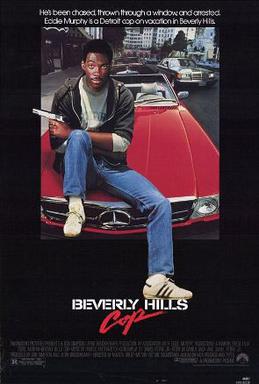
  • Whether Cop 2 is better: it is a better story and a flat-out good, more fun movie with good music, the Taggart and Rosewood thing and Brigitte Nilsson (as transcribed), with Eddie still great; the fondness for Cop 1 comes from everything it meant for the Eddie arc.
  • Was Axel Foley gay gets a yes, but the answer first returns to the period reviews, which were also upset about how the movie made white people look.
  • Pauline Kale (as transcribed) did not believe in Eddie Murphy's stardom and found it offensive because he used it as a joke on how dumb white people could be made to look by a smart black person, a sort of pro-minstrel argument against an anti-minstrel work; LA Times letters in 1985 characterized Murphy's swagger with a racial slur and worried that black confidence would replace white comedians.
  • One host as a kid felt the opposite, that it was the greatest thing that ever happened; Kale was about 65, not a racist, but had an interesting take on how black audiences responded to The French Connection, and old guard critics felt that way, so the rewatch was done aware that people were nervous Eddie was someone white people should fear.
  • To one host it is a movie about a gay black man in the Detroit police whose former best friend, probably lover or hookup buddy, gets killed, sending him on a mission; not having sex with a woman does not make you gay, but a near two-hour movie whose protagonist on the verge of major stardom never gets a moment with the girl is striking, even allowing that Eddie arrived two weeks before filming and nothing was rewritten.
  • Evidence: Jenny looks completely enamored, goes to the big three-room suite and immediately lies on the bed batting her eyelashes, and the only thing on Axel's mind is ordering room service for Taggart and Rosewood.
  • The Mikey scenes are weird to watch: at the bar they look like they are about to make out, they exchange 'I love you', and when Axel gets home after the chewing-out by Inspector Todd to find Mikey broken in with the fridge open he is elated; the counter is that a friend out of prison eating a mayo sandwich in your kitchen would get 'get out of my house, you felon'.
  • Gay characters are sprinkled throughout; it is an unintended consequence of a movie made with a ton of cocaine by the seat of its pants; at the strip joint he only tells Rosewood to give the dancer a dollar and does not partake, and his pretending is for plot rather than character; the movie is all pairs of men with emotional energy who could be on the verge of kissing, so subtext becomes text; 'is Axel gay' is a long-running Reddit conspiracy theory; James Russo brings a wild method energy to a two-minute part, a reckless guy out of prison who almost cries seeing his friend, which feels very real.
  • Eddie is drawn into Russo rather than watching a method performance, they are on the same page; the original ending reportedly had Eddie back in his Detroit apartment opening the closet to find Mikey's shirt and sniffing it, prompting the joke that Martin Brest was robbed of an Oscar; the movie probably intended none of it.
  • Intent does not matter because those things are in the movie we got; one host noticed it independently and wrote about it in a 2010 mailbag because the Jenny Summers scene jumped out, and may have inspired the theory; no other 80s action or genre movie lacks some nod to the hero's romantic life.
  • Even in 48 Hours Nick Nolte's girlfriend calls to complain and Eddie gets laid by Olivia Brown, his primary obsession in that film; Eilbacher is a beautiful blonde, not a character actress like Joan Cusack, whose function in any other movie of the period, see Stripes, is to give a straight hero somewhere to put his sexuality; perhaps it was a black-white thing, since the sex scene was cut from The Golden Child and they were not ready for Eddie to do that in a mainstream movie.
  • The conspiracy theory is compared to early Will Smith, who had Vivica A. Fox to get back to but few romantic leads for someone in his position, and did not help himself by skipping the kiss in Six Degrees of Separation, after which he always has a girlfriend, wife or dead spouse; the wish is that movies would acknowledge gay people exist and have sex lives instead of flicking at it.
  • Damon Wayans giving him the fruit plate with the banana for the tailpipe is text, not subtext, and Eddie turns around on his way out to say thank you, perfectly comfortable with the man; the movie's own setup is the you-killed-my-lover revenge premise of other action movies, taken as a vacation; one host watched it for 26 years without noticing until the other wrote about it.
  • The passion for Jenny Summers is the giveaway, how could a man not kiss her; the wish for one line where she hits on him and he insinuates he does not do that anymore is answered with 'that makes it worse'; it makes her character more interesting and hornier, and Eddie's complicated history with homophobia in his comedy makes the whole thing more frictive.
  • A tangent on Eddie's homophobia turns into a bit about one host's bullies now being gay married with three kids: bully someone and your sexuality will come for you.
  • During the scene discussion, 'before he dies, they're doing it' was raised about Axel and Mikey and saved for later.
  • During what aged best, Jenny is said to be a love interest for neither man, though she really tried with Eddie, and the subject is parked until later.
In the discussion (3)
Approx. transcript time · 01:15:33Read transcript
  • William Hurt's dad, whose name nobody knows, is a candidate; it is Prosky time: Bob Prosky, one of the great mammoth actors, best in Thief, who moved from sinister in the late 70s and early 80s, basically Wilford Brimley in The Firm for a decade, to good grandpa here, with two great moments, taking Aaron out to tell him he will be laid off and answering 'I need to be alone' with 'okay, I'll join you', and telling Jane she is not as good as he is but must take the job.
  • An Evil Brimley reading of the layoff speech is done as a joke; the control-room man who loves William Hurt's compliments looks so much like Philip Seymour Hoffman and is identified as Christian Clementson (as transcribed) from Bad Influence with James Spader.
  • Joan Cusack is called undersold: SNL in 85-86, Broadcast News in 87, Married to the Mob and Working Girl in 88, Say Anything in 89, Men Don't Leave and My Blue Heaven in 90, a great five-year run; the award goes to Prosky.
In the discussion (4)
Approx. transcript time · 01:13:24Read transcript
  • Jim Brooks is a yes: fully established as an A list movie director while already in the TV hall of fame and a year from taking a Simpsons meeting, the point of maximum leverage and juice, with the Simpsons humor already visible in the film; William Hurt is called indisputable on his third consecutive Oscar nomination, with the open question whether that counts for more than winning the Oscar.
  • This movie is allowed multiple apexes, a whole Himalayan range, since it is everyone among the main players; Holly Hunter is definite, because The Piano did not have the same lasting impact and this and Raising Arizona are her two best films, even though Raising Arizona feels closer to now.
  • Joan Cusack is questioned, with Say Anything in 1989 probably her peak and High Fidelity praised, before a hedged 'I guess this'; Bob Prosky is raised but not settled.
  • Earlier, her apex is deferred while noting a nice run ending in The Piano, where she wins the Oscar she did not win for this film.
In the discussion (6)
Approx. transcript time · 01:00:05Read transcript
  • Asked to define the award, the guest says it is who does the most with the least, and does not require the person to be a lunatic. — Chuck Klosterman
  • Lunatics are nonetheless often the winners because of the hosts' taste; the nominees are Jack Nicholson, Joan Cusack, Lois Childs (as transcribed) and the TV music composer guys; the minority pick is Cusack, one host going with her as memorable for how little she is on screen and for the Juergen Klinsmann slide under the filing cabinet.
  • One of the composer guys is Mark Shaman (as transcribed), among the most successful composers in Hollywood, who wrote all the songs in Mary Poppins Returns; the 'Big finish!' clip is played, and the scene is called the most sitcom-y of all time, proof the director made sitcoms.
  • Jack Nicholson is proposed as maybe the greatest Hitchcock performer in American movies, one who can take over films he is not the star of, as in Reds, A Few Good Men, Terms of Endearment and the Joker, and this is probably his smallest part ever, just reading the news and one office visit; one host makes him his vote for the award; it is a lost art Denzel Washington does not practice, though Cruise did it in Tropic Thunder, and Denzel should play Jessup if NBC stages A Few Good Men.
  • Nicholson's whole career has been like that, back to the small memorable role in the Fonda film; a second participant votes for him, making Nicholson the majority choice; sheer charisma carrying four weird scenes in a movie you are not important in is a category only Brando shares; De Niro in The Untouchables does not count because he is the bad guy; Nicholson's best scene is slinking away around the desk during the layoffs with no dialogue, something George Clooney could not do with the same impact, though Damon does it in Interstellar.
  • Late in the segment William Hurt's dad is raised as a Dion Waiters candidate, pretty good for being in Tucson; the host had him coming up later as a 'that guy'.
Broadcast News

What’s Aged the Best?

The theme of an unkillable media institution starting to die; Aaron as a proxy for the internet and his devil theory; Albert Brooks's heart-clutch on the correspondents' dinner balcony; Nicholson's reaction to the salary line; Joan Cusack's 'except for socially' line; the Holly Hunter character and the too-smart/not-smart dynamic of all three leads; the news as a daily appointment rather than a constant presence; Albert Brooks's lookalike son; the kaleidoscope gift; Lois Childs's arc (as transcribed)

In the discussion (8)
Approx. transcript time · 00:43:27Read transcript
  • The theme of an unkillable media institution starting to die has held up, lived through twice since; it is called the central problem of working in media, and it surprises one host that Brooks wanted to write a romance but also to grapple with a problem that still exists; Aaron is read as a proxy for whatever the internet would become ten years later, angry and clever.
  • Aaron's devil theory, the devil as someone we would not recognize who lowers our standards piece by piece, is a solid theory; Brooks's acting when he looks up at Jane waiting on the balcony at the correspondents' dinner and does the mock fall-back and heart clutch; Nicholson stopping and turning when told he could knock a million off his salary; and Joan Cusack's 'except for socially, you're my role model', played as a clip.
  • The Holly Hunter character in general has held up because anyone who has worked in media has met that person, from either sex, the one you want to tell to calm down and have a drink; all three characters hold up through the idea of the guy who is too smart to succeed and the guy who succeeds because he is not that smart, which happens over and over in life.
  • The sudden instability of media institutions is both what aged best and what aged worst; the real change is the centrality of news in life as a daily rather than constant presence: the staff gathered around the television for the Rockwell soldier-coming-home segment recalls a family oriented around the national news, local news then Dan Rather or Peter Jennings at 6:30, even as the movie treats Entertainment Tonight as something ominous; the news was something you waited for, which set the day's agenda, not a constant nattering in your ear. — Chris Ryan
  • The Libya special report, where everyone has to be pulled in from a dinner party, feels quaint now that network news always has someone ready; the hosts compare family news habits, Peter Jennings and ABC for one, Dan Rather for another, and Live at Five with Sue Simmons and Chuck Scarborough in Connecticut, a polished show from which one host learned a lot, better than the Boston versions.
  • Smaller items: how much Albert Brooks's son at the end looks like him; a kaleidoscope as the gift for a kid you no longer know; and Lois Childs (as transcribed), the anchor Hurt has the affair with and the lead woman in Moonraker, whose arc has her hook up with him and turn up in Alaska the next time we see her, after the great conversation asking Jane whether they are together.
  • Asked whether the film captures the 80s popularization of therapy, people articulating what they want in a way unlike the whiskey-soaked, cutthroat world of Network, the answer is that Brooks's humanizing writing makes you forget these are successful, erudite, upper-class people at the height of their industry, for whom Portland is a huge step down from Washington; they communicate in sophisticated ways because they are sophisticated people, which is easy to lose sight of when they seem like basket cases inside the workplace.
  • In eight years at newspapers and magazines, one participant found a large share of the married people in the office were married to each other, because when your identity is tied to your job there are things you can only talk about with people who do what you do; the scene where a third person asks whether anything is happening before asking someone out rings true, though now you are not really supposed to date anyone you work with.
Broadcast News

Most Rewatchable Scene

The blow-up in Aaron's apartment after Jane leaves the correspondents' dinner, or Jane confronting Tom about the faked tears
In the discussion (10)
Approx. transcript time · 00:34:12Read transcript
  • Six nominees are rattled off: the first time William Hurt anchors with Jane in his ear and Brooks on the phone, played as a clip of the F-14 dogfight interview; and the balcony scene where Hurt is asked by Aaron to name the cabinet members and stops with 'you're enjoying this, aren't you', also played as a clip.
  • Hurt teaching Aaron how to anchor, leading to the jacket trick, which one host used when he started doing Countdown on ESPN, thinking of William Hurt every time he sat on the bottom of his jacket; Aaron's television disaster, recalled as the bar of what not to do the first time doing PTI, your whole world ending on live TV; the big fight after the disaster between Jane and Aaron; and Jane confronting Tom about the video trick.
  • Joan Cusack running the tape to the control room, the 'Bobby, Bobby, Bobby' scene, is added after being mistaken for part of the first anchor spot; the airport ending is called an iconic movie ending, and the no-one-wins aspect of the real ending, with the 'you could get fired for things like that' exchange played, is called a really bold choice.
  • The confrontation over the tears is called the most memorable scene and the clip night shows used at the time, even though it does not reflect what the movie is; one host would pick it for the five seconds when Hurt realizes what she is mad about, an authentic look of knowing someone is angry and not believing this is the thing.
  • Told he likes fighting in movies, the guest answers that he does and loves arguments. — Chuck Klosterman
  • The 'Bobby, Bobby, Bobby' scene is told from William Hurt's perspective: nobody stops to explain, it is all 'punch in 1145' and 'we're not going to make it', he thinks 'what have I gotten myself into' and then laughs because this is exactly where he wants to be; Holly Hunter's face acting could be a gif at any second, and the guy saying he does not think she is going to make it is a favorite bit.
  • The other favorite is Jane leaving the correspondents' dinner for Aaron's house and their crazy blow-up: a movie of great yelling, from Jane screaming through the Libya special report while Paul turns and says he did not realize she was this good, to the apartment, called some of the best, most authentic yet sitcom-y yelling ever; two hosts make it their vote, noting it runs about eight minutes, feels like one take, uses the apartment Brooks scouted so the camera could move with the characters, and holds the devil speech and the 'two people' line.
  • The devil monologue is played as a clip, with Craig asked to cue it: Tom, while a very nice guy, is the devil, who will be attractive and helpful, influence a great God fearing nation, never do an evil thing and just bit by little bit lower our standards, flash over substance, and get all the great women.
  • Albert Brooks is called polarizing: one host is in the take-it-or-leave-it camp, another calls him one of his heroes and among the most creative and influential people of the last fifty years, funny, sad, melancholy and angry at all times here, and assumes the drunk reading-and-singing bit at home was not in the script; the scene ends with him realizing her date fell through and saying 'it was good to see you, Jane' as icy as possible; the hosts declare themselves split.
  • Earlier, before the categories, the scene where Hurt tutors Aaron about reading the news is named a favorite by far, because it shows the tips and the narcissism he has trained himself with, illuminating something in his brain he could never write down, and a focused intensity about what reading the news is.
True Romance The Rewatchables
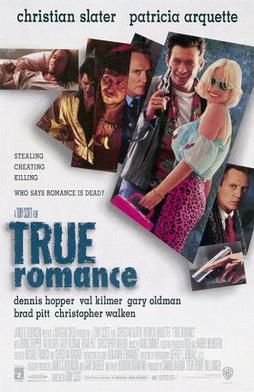
True Romance

Casting What-Ifs

Tarantino wanted Joan Cusack as Alabama; Tony Scott wanted Drew Barrymore; Jack Black (as transcribed: 'Jack Plack') was cut as a theater usher; Val Kilmer wanted Clarence; Tom Sizemore was first cast in Gandolfini's role and recommended Gandolfini


In the discussion (6)
Approx. transcript time · 00:52:43Read transcript
  • Tarantino wanted Joan Cusack for Alabama in the late-eighties script, which one host calls genius from the man who put John Travolta in Pulp Fiction; another doubts she has the sex appeal for the character, though she is sexy in The Addams Family, reviving a sixty-episode argument over whether she could pull off a sexy role.
  • Tony Scott, misnamed Ridley at first, wanted Drew Barrymore; a year before Mad Love she could have pulled off Alabama, had career baggage from drug and alcohol trouble, and might have become a star of the A list from it, whereas the film, which only made twelve million (as transcribed: '$12 billion'), did not propel Arquette, who is iconic in it and had a host's high school girlfriend curling her hair the same way.
  • Alabama is totally fake, a creation like the manic pixie dream girls discussed a few episodes ago; on the commentary Tarantino is unembarrassed about not having a girlfriend until 25 and inventing his dream girl, one who watches kung fu movies, eats chicken, drinks beer, smokes and is funny; Arquette was the perfect actress to embody it.
  • Jack Black (as transcribed: 'Jack Plack') was cut as an usher in the kung fu theater; Val Kilmer desperately wanted Clarence, but Tarantino originally saw the role as a David Carradine type, an older loser, so a Kilmer version would have been a man approaching middle age rather than a cool guy at a Detroit comic book store.
  • Tom Sizemore was initially cast in Gandolfini's role, was not comfortable with the scene beating up Arquette, asked to play the cop instead and recommended Gandolfini because they had been in a play together, giving him his big break.
  • A riff on Sizemore's heat check against De Niro in Heat, 'for me, the action is the juice', with the long dramatic pause, an ISO Michael Mann keeps giving him, Sizemore as Michael Mann's Joe Akeem Noah (as transcribed); what does not add up is that a year later he played the disgusting warden in Natural Born Killers, so perhaps domestic violence in his past, dating Heidi Fleiss and substance abuse made the scene hit too close.
Displaying all 12 discussions

Films in the archive

