The Wolf, Gimp, Walken, Roth, Plummer, Arquette, Stoltz, Maynard, Zed and cab driver are considered; Roth and Plummer are excluded for too much screen time. — Bill Simmons
Debate narrows to Walken and Keitel, with Stoltz defended and the Gimp playfully rejected.
One response initially chooses the Wolf, but Walken’s four-and-a-half-minute impact better fits the award; the final responses settle on Walken, including Craig’s explicit choice. — Bill Simmons
The original notebook already wanted Keitel, Walken, Roth and Plummer; Fishburne was Jules before Jackson, with Murphy another listed possibility rather than a confirmed offer. — Bill Simmons
Murphy’s move toward family films makes accepting this material uncertain, although it might have been a valuable career choice. — Bill Simmons
Madsen committed to Wyatt Earp instead of Vincent, and later Vega-brothers speculation linked his Reservoir Dogs character with Vincent.
Miramax reportedly resisted Travolta and pushed Day-Lewis; the panel imagines his unusual contemporary-hitman interpretation while strongly preferring the actual casting.
Dillon reportedly asked for a day before accepting Butch, during which Willis became available; the lost role might have changed Dillon’s trajectory despite later successes. — Bill Simmons
A competing Dillon story says he wanted an onscreen boxing match rather than merely asking for time to decide. — Chris Ryan
Max Julien and Sid Haig reportedly declined Marsellus; Jackson was another backup while Fishburne remained the intended Jules. — Bill Simmons
Cusack and possibly Oldman were considered for Lance, followed by Tarantino and then Stoltz; Buscemi’s unavailability led Tarantino to Jimmie, a preferable outcome to replacing Stoltz. — Bill Simmons
The most-rewatchable-scene discussion proposes eight selections and suggests almost the entire film qualifies except roughly twenty minutes. — Bill Simmons
The opening diner robbery and transition into the credits are praised. The discussion considers the switch between two songs and debates whether the typography still feels timeless; younger viewers may associate it with Stranger Things.
Misirlou prompts an association with the Black Eyed Peas song Pump It for a younger listener. — Craig Horlbeck
Vincent and Jules discussing Amsterdam and the Royale with Cheese is praised as exceptionally influential screenwriting. The conversation connects its everyday observations to the film's recurring contrasts between Europe and America.
The foot-massage argument, Mia's television pilot, and Antoine Tony Rocky Horror story are praised for combining casual conversation with the unexplained armed approach to an apartment. Vincent catches Jules with the offer to give him a foot massage. — Craig Horlbeck
The foot-massage debate leads to agreement that the gesture is intimate; professional massage is distinguished from a personal offer.
The apartment confrontation is introduced as another scene contender, with Samuel L. Jackson's performance prompting an early Rick Dalton Award mention. The Big Kahuna Burger and tasty-beverage dialogue, Frank Whaley's frightened performance, and the big-brain-on-Brett line receive praise.
Jackson's interaction with Burr Steers on the couch is singled out, while Travolta's quieter background performance also draws attention. — Chris Ryan
Travolta's relaxed background behavior contrasts with Jackson's commanding, repeatedly quotable performance in the apartment.
Jackson's extended biblical monologue is praised as an extraordinary sustained performance, prompting curiosity about how many takes the scene required. — Bill Simmons
Low angles, close-ups, and a camera move following Jackson's head turn establish him as a movie star, shifting attention away from Travolta. — Chris Ryan
The burger and the film's food generally are praised for looking appetizing.
Marsellus lecturing Butch about pride and his declining prime is selected as another scene; its advice is compared with Pacino's speech to DiCaprio in Once Upon a Time in Hollywood. — Bill Simmons
The speech's warning about aging inspires contemporary jokes about Joe Biden and Paul George's late-career contract.
Butch's confrontation with Vincent is discussed as the possible trigger for keying his car and deciding to betray Marsellus; a reported Tarantino answer supports the decision forming during that encounter.
Obscuring Marsellus's face during his speech is praised for building anticipation and making the crime boss seem mythical, with Mia's delayed reveal cited as a parallel.
Vincent buying heroin from Lance is selected for its elaborate product descriptions and sales pitch, including the more expensive Choco. — Chris Ryan
Lance remaining visible in a mirror is singled out as an easily missed visual detail. Mirrors and reflections recur with Mia, Fabienne, and Vincent. — Bill Simmons
Vincent confusing Trudi with Jody and describing the piercings on Jody's face is praised as an enduringly funny exchange; Stoltz's robe, sandals, and hair contribute to the performance.
The drug purchase captures obligatory small talk, with Lance echoing Vincent's complaints about his keyed car and using a salesman's suggestion that stock might run out. — Chris Ryan
Stoltz's appeal across different kinds of films is discussed. A festival encounter and his enthusiasm for Reservoir Dogs are offered as the background to his casting, alongside his other connections to Tarantino and Roger Avary. — Sean Fennessey
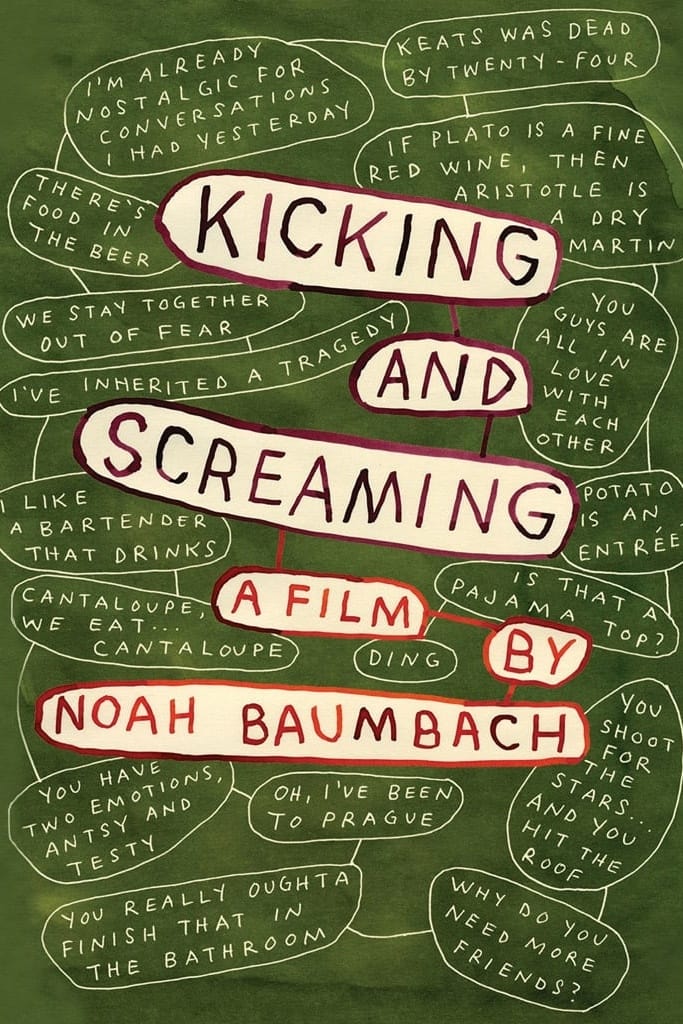
The discussion corrects Kicking and Screaming to 1995 and describes Stoltz's early-1990s mixture of indie leading roles and smaller appearances. — Bill Simmons
Vincent and Mia's date at Jack Rabbit Slim's is selected, including his arrival at her house. The restaurant's immersive design and automobile booths are praised; conflicting construction-budget recollections are discussed.
A reported Disney proposal to reproduce Jack Rabbit Slim's in a park was declined; the restaurant is compared with an unnamed real Los Angeles establishment. — Sean Fennessey
Characters repeatedly expressing pleasure in their food is suggested as part of why the meals look so appealing. Steve Buscemi's Buddy Holly waiter is highlighted. — Sean Fennessey
Fox Force Five's detailed character lineup inspires enthusiasm for an actual pilot and a comparison with Kill Bill; whether Tarantino wrote such a pilot is speculation.
The five-dollar milkshake exchange and its specific menu terminology are singled out as memorable date dialogue.
The date resolves the foot-massage rumor while Travolta's bashful, low-key delivery contrasts with Thurman's more animated cocaine-influenced behavior.
The twist contest and Chuck Berry song are praised. The discussion wonders how the dance would look to sober observers and reports that Travolta introduced additional period dances instead of only performing the twist.
A first-time viewer expects Vincent and Mia to have sex and face Marsellus's anger; the overdose instead provides an effective narrative swerve. The baggie rather than a balloon helps explain Mia mistaking heroin for cocaine. — Bill Simmons
Mia abandoning her lip-sync routine midway through the song is praised as a behavioral detail. Lance's quiet evening with cartoons, cereal, and a recliner makes Vincent's emergency arrival especially funny. — Chris Ryan
The injection effect reportedly used a needle pulled away from Thurman's chest with the footage reversed, after a fake chest was rejected. — Bill Simmons
Vincent pressuring Lance by explaining that Mia belongs to Marsellus adds another comic threat to the rescue; the rough handling of Mia on the lawn is noticed. — Chris Ryan
Thurman's ability to look glamorous and convincingly devastated, especially on the drive home, is praised. — Bill Simmons
Christopher Walken's watch monologue is selected as another scene. Its placement immediately after the overdose supplies another escalating surprise when a quieter flashback seems likely.
Walken's uninterrupted watch speech is praised, and the watch's Knoxville origin is connected to Butch's destination and Tarantino's biography.
Butch returning for the watch and killing Vincent is selected. One objection says Butch seems insufficiently frightened; the long approach through backyards is defended as an effective real-time buildup. Stopping for a toaster pastry is questioned.
Vincent's abrupt death is compared with Psycho's shocking removal of its apparent lead. Whether earlier politeness toward Butch would have saved him is raised, with survival offered as the reason Butch would shoot regardless.
The pawnshop basement and Gimp reveal are selected for their shocking narrative turn. Deliverance is a comparison, while the setting is read as a surreal personal hell for a powerful crime boss.
The Gimp emerging from the trunk is called a top-five shocking movie moment, without an enumerated ranking. The discussion debates deliberate provocation versus making the basement as strange as possible. — Bill Simmons
The Gimp laughing at Butch is compared to premature athletic taunting; the offscreen sounds prompt jokes about recording the scene.
The discussion debates returning to rescue an enemy versus escaping. Butch staying with Fabienne after she forgot the watch is also questioned.
The scene illustrates how Tarantino strategically withholds the sight of violence despite its strong effect. — Sean Fennessey
Vincent accidentally shooting Marvin and the ensuing trip to Jimmy's house are selected, highlighting Vincent's casual admission and the argument over whether a bump caused the gun to fire. — Craig Horlbeck
Jules and Vincent washing their hands and arguing about soap is praised, as is Vincent's impatient expectation that an apology should settle the accidental killing. — Bill Simmons
The Wolf's rapid arrival, appreciation of Jimmy's coffee, response to Vincent requesting politeness, and refusal to celebrate prematurely are highlighted alongside the argument over cleaning Marvin's remains. — Bill Simmons
The final breakfast and robbery confrontation is selected for Jules's transformation and the film's deepest thematic statement. Jackson's apartment performance remains a competing personal favorite.
The final diner confrontation is selected as the current favorite scene. — Sean Fennessey
Mia’s overdose through the injection and revival is selected as the most rewatchable scene.
The stretch from Marvin’s shooting through the Wolf leaving for the diner is separately identified as a favorite chapter.
The opening chapter is defended because it contains both the hitmen and Vincent’s date with Mia.
Jack Rabbit Slim’s through Mia’s revival is selected as an expanded scene choice. — Craig Horlbeck
Crowe's mother, Jann Wenner and Eric Stoltz are director-loves-this-person choices; Stoltz's apparently casual small role and recurring Crowe appearances are discussed. — Bill Simmons
The announced eleven-candidate list is Vedder and Ament as one entry, Stoltz, Horton, Pullman, Piven, Giamatti, LeGros, Walker, Burton, Skerritt and McDaniel; alternatives remain unranked. — Bill Simmons
McDaniel and Piven are an initial toss-up, while Stoltz is acknowledged as an obvious award choice. — Van Lathan
Piven receives final choices for the intensity of his arrival and pregnancy-test reaction; Stoltz receives a separate choice for making the smoking mime memorable.
The garage-door-opener detail and the Xavier McDaniel sexual-distraction scene became clearer and funnier with age. — Van Lathan
Steve’s drunken club phone call once seemed as romantic as Lloyd Dobler’s boombox gesture. — Chris Ryan
Linda’s betrayal by the apparently mysterious Luis is a gutting opening that establishes emotional chaos before Steve enters. — Van Lathan
Linda insisting she will not lose another garage opener and Steve resolving to focus on work express defensive certainty before romance disrupts it. — Van Lathan
The Peter Horton negotiation and the “popcorn with half this city” line remain memorable. — Van Lathan
Janet’s adoration cuts to Cliff’s Hendrix posturing and Touch Me I’m Dick, then his insistence that he sees other people meets her refusal to believe him. — Bill Simmons
Stoltz’s bitter talking mime provides an excellent transition into Alice in Chains performing.
Steve seeing Linda at the club is a love-struck reversal of his declared disinterest, followed by the sharp rejection that not having an act is itself his act.
The first date reveals Steve’s albums, wall decorations and X-Man poster, then his supertrain pitch meets Linda’s attachment to her car.
The Andy flashback establishes the sensitive-ponytail man and his emotional-larceny line. — Bill Simmons
The parking-underneath callback and Steve admitting he was nowhere near Linda’s neighborhood deepen the first-date sequence. — Bill Simmons
Xavier McDaniel’s basketball clip becomes the sexual-distraction cameo ending in the instruction not to come.
The café discussion that casual sex is lethal, with Cliff reacting as though he needs a clinic, is praised as the apparent blueprint for Friends’ dating-neighbors coffee-shop setup. — Bill Simmons
Vedder reading the devastating Citizen Dick review while Cliff tries to remain positive is a favorite short sequence; the review attacks his mediocre talent and urges him to leave town. — Bill Simmons
Piven’s fan recognizes Steve and invites him to DJ, demonstrating the Elvis Costello–Public Enemy mix; the short cameo felt authentic in 1992.
Debbie’s dating video and Tim Burton’s aspiring-director cameo are singled out as especially funny early-nineties material. — Bill Simmons
Depressed Steve passes the mime, then Soundgarden and the phone-booth call create another strong sequence. — Bill Simmons
Janet visiting the withdrawn Steve leads through the parallel-universe couple line into Drown. — Bill Simmons
The implant consultation is a final favorite: Pullman’s refusal to manipulate Janet’s body helps her recognize her worth, and he seems a better match than Cliff. — Van Lathan
The concluding “What took you so long?” reunion is admired as an early example of Crowe’s climactic romantic line, later echoed in Jerry Maguire. — Van Lathan
The whole Alice in Chains sequence, including the car ride, mime and Linda’s no-act rejection, receives two final scene choices. — Chris Ryan
A new conditional award, from an idea Bill Lawrence raised on the Out of Sight podcast, honors people famous figures bring along into their movies, such as a director casting Eric Stoltz. — Bill Simmons
Clint Smith wins: he was in 48 Hours in the jail cell, in Trading Places, on SNL with Eddie, and here the third barbershop guy under hours of Rick Baker makeup. — Bill Simmons
Jason Wiles; Carlos Jacott; the Bad Reputation singer; would-be-professor tweed-jacket look; Eric Stoltz's clout; Prague as an unseen movie destination
Jason Wiles may be the all-time Apex Mountain the category has covered, ripping off this and 90210 at once. — Bill Simmons
Josh Hamilton has had a respected career; since the movie did not do well, his Apex might instead be a supporting role like Alive. — Chris Ryan
Carlos Jakat, a Bombach friend who shows up in his later movies, gets an Apex Mountain yes; the food-in-his-beer scene is the biggest laugh.
Bombach no; Chris Aigman probably not, since Barcelona may be his best and showiest performance, though this one is sweeter. — Bill Simmons
Olivia Diabo no, because of The Wonder Years. — Bill Simmons
Fridi Johnson yes, for his song ending a movie out for 25 years, recalled alongside Can You Fly and Village Voice hype.
Jessica Heck's great career includes being on Friends when this came out.
Whether it is Apex Mountain for non-over-the-top college movies is debated against Animal House, Old School, Everybody Wants Some, Shithouse, School Days, Higher Learning and Blue Chips; it is only "definitely in the conversation."
The would-be-professor tweed-jacket look is the Apex Mountain of that style, with sport coats also in Bright Lights Big City and The Last Days of Disco. — Andy Greenwald
Eric Stoltz: a year after Pulp Fiction, the movie could only be made with him, so it is the Apex Mountain of his clout and the best use of him. — Andy Greenwald
Prague as a movie destination never actually seen is the pick, noting Arthur Phillips's novel Prague about people in Budapest. — Andy Greenwald
Parker Posey is argued to be the pick if eligible, but her eligibility is questioned as one of the six main characters. — Bill Simmons
Buono comes out of nowhere, from the first scene to the dining hall to threatening a bow hunter with a tire iron, and is allowed at about four scenes. — Andy Greenwald
Casting Elliot Gould as the father of a clearly Jewish character played by a non-Jew is saluted. — Andy Greenwald
There is not much to cast; another actor, never identified, was scheduled for the lead and dropped out at the last minute, which led to Eric Stoltz joining. — Bill Simmons
Ethan Hawk as Grover is floated as a guess, with the speaker saying he is sure he is wrong; Omar Epps is named among a group of six or eight actors.
The pick is narrowed from the opening cocktail party to Josh Hamilton and Olivia Diaba on the balcony, where she says she is going to Prague and he claims he has been to Prague; it introduces their relationship. — Bill Simmons
Prague was a mythical post-Berlin-Wall destination heard about on campuses, requiring a Fodor's book, a visa and travelers checks, so "going to Prague" became a thing in itself. — Andy Greenwald
A college roommate came back from a Prague junior year abroad judging everyone; skipping a semester abroad is a regret; the movie was seen on Thayer Street in Providence before the first Starbucks there. — Bill Simmons
The graduation party is up there with the wedding in The Godfather for getting to know every character, Skippy, Max and Otis. — Chris Ryan
The "You never even been to Prague" exchange riffs on the stop-shaving-your-armpits, read-The-Unbearable-Lightness-of-Being version of Prague.
The book club scene, added because Eric Stoltz had to be shoehorned in with ad-libbed scenes, has about seven laugh-out-loud lines about All the Pretty Horses.
Hollywood roller coaster: Stoltz was removed from Back to the Future, and ten years later this movie could not get money without him. — Andy Greenwald
Further nominations: Grover confronting Max about sleeping with Miami, with Chet sneaking back in; Skippy confronting Max; and Grover and Chet at the bar, where Chet saw it as a postponement of his life until realizing it was his life. — Bill Simmons
The final airport scene is spectacular: Grover's roughly three-minute monologue on a whim to go to Prague, with the camera on him.
Hamilton's airport performance echoes Dustin Hoffman banging on the church at the end of The Graduate. — Andy Greenwald
If asked at the end of 1995 which five young actors to bet on, Chris O'Donnell, Damon and Omar Epps would have been on the list along with Hamilton; the part could easily have been a Matt Damon part, but Hamilton is perfect in it. — Bill Simmons
Hamilton suffers on Google from the Texas Rangers ballplayer of the same name and is part of the 90s New York theater crew with Billy Crudeup, Ethan Hawke and Robert Sean Leonard. — Andy Greenwald
Jessica Hacked, who was on Friends as the lesbian lover of Ross's ex-wife, is great as the stewardess in the airport scene. — Bill Simmons
The flashbacks work, perhaps as the story Grover is writing, and the ending goes straight into the Fridi Johnson song Bad Reputation, a needle drop that hits like a bomb.
The last line, "let's pretend we're an old couple," happens before everything chronologically, and they do not actually kiss. — Andy Greenwald
The airport scene is one pick, with a special shout-out to the entire graduation party as a meet-everyone-at-a-gathering opening.
Every scene is equally rewatchable because the tone is so consistent, but the shout-out goes to the scene where he would rather be bow hunting.