
Film credit
Parker Posey
Also referred to as Posey
Stats
- Episodes featuring their films
- 4
- Movies in this archive
- 6
Rewatchables episodes featuring Parker Posey’s films
Mentioned in discussions

In the discussion (2)
- Higgins is one explicit movie-winner choice; another response cannot settle among Higgins, Posey, O’Hara and Willard. — Mallory Rubin
- Willard is the other settled winner choice, favored over Higgins because his performance is the film’s most widely recognized; Higgins is characterized as the deeper repeat-viewing choice. — Bill Simmons
Podcast choices


Probably Unanswerable Questions
Pet resemblance; judging influence; careers; Cookie’s past; Beatrice’s future
In the discussion (9)
- Beatrice receives sympathy because the Swans are blamed for her problems; whether she finds a better home is left as an unanswerable question. — Bill Simmons
- Whether Buck Laughlin would face a later misconduct reckoning is raised as a hypothetical, with a brief reference to Willard’s own controversy. — Bill Simmons
- Posey’s costume choices reportedly made Meg resemble Beatrice; whether people grow to resemble pets is countered by the idea they initially choose animals matching their energy. — Mallory Rubin
- Rhapsody’s betting odds are imagined as a heavy favorite given past wins, financial backing and Christy’s reputation. — Bill Simmons
- Whether money changes hands at the show is questioned; Milbank is defended as resisting overt pressure, while the annual party is viewed as influence-seeking. — Mallory Rubin
- The Flecks’ cassette sales are doubted, while Scott and Stefan’s custom-pet calendar business is predicted to succeed; American Bitch’s survival into the digital era remains a question. — Bill Simmons
- Cookie’s possible old nonmusical tapes become a joke compared with a Moira Rose plot. — Mallory Rubin
- Beatrice is hoped to thrive after leaving the Swans, against the darker farm joke. — Bill Simmons
- Cookie’s number of past partners is playfully estimated from her age, relationship length and nationwide encounters, with no settled count. — Mallory Rubin

Just One Oscar
Catherine O’Hara; editing; Fred Willard
In the discussion (5)
- Guest’s directing and writing are considered for the single Oscar before editing receives support; improvisation is raised as a concern about choosing screenplay. — Mallory Rubin
- O’Hara is proposed for the Oscar because her comparatively understated performance grounds the more extreme caricatures, with the limp jokingly offered as her ceremony clip. — Mallory Rubin
- The contemporary supporting-actress nominees are compared, with disagreement over Kate Hudson versus Frances McDormand in Almost Famous. — Bill Simmons
- Willard is proposed for supporting actor, then reconsidered against O’Hara after reviewing a strong field; another response agrees with Craig’s editing pick, and the O’Hara case gains support. — Mallory Rubin
- O’Hara is separated as the Oscar choice from Willard as an anticipated movie winner; Posey, Levy, Coolidge and Lynch are also considered difficult to replace. — Mallory Rubin

What role would Philip Seymour Hoffman play?
Stefan; Hamilton; Trevor Beckwith
In the discussion (3)
- Stefan is proposed for Hoffman. — Mallory Rubin
- Hamilton is proposed for Hoffman opposite Posey. — Bill Simmons
- Trevor Beckwith is proposed for Hoffman with an English accent and mounting exasperation. — Bill Simmons

Apex Mountain
Guest; Higgins; terrier songs; pet-owner movies
In the discussion (11)
- Guest receives an agreed Apex yes because this was when he had the most influence.
- Willard’s Fernwood success in the 1970s complicates his Apex candidacy. — Bill Simmons
- John Michael Higgins receives an Apex yes. — Mallory Rubin
- O’Hara receives no settled alternate peak, with Home Alone, Beetlejuice, Schitt’s Creek and After Hours discussed instead of this film. — Bill Simmons
- McKean’s Apex is placed at Better Call Saul. — Mallory Rubin
- Coolidge’s Apex is The White Lotus, while Legally Blonde and Stifler’s Mom support the possibility of more than one peak; a confused Stacy’s Mom song reference is explicitly corrected. — Mallory Rubin
- Willard’s Apex is ultimately no; dog shows are qualified against Westminster itself, while goat roasting, AM Philadelphia, terrier songs, American Bitch and pet-owner movies receive affirmative responses. — Mallory Rubin
- Lynch’s Apex is Glee. — Bill Simmons
- Posey’s peak is tentatively placed in the mid-1990s, with Dazed and Confused and Guffman mentioned, although her lack of a clear major peak is lamented. — Bill Simmons
- Levy’s Apex is Schitt’s Creek, including the added significance of working with his son. — Bill Simmons
- Best in Show is at least a top-ten comedy ensemble; Anchorman and Bridesmaids are comparison candidates, and Anchorman becomes the tentative best ensemble rather than an enumerated top-ten list. — Bill Simmons

In the discussion (2)
- Larry Miller as Max Berman is the heat-check pick, with Leslie Ward Cabot also nominated despite having almost no dialogue. — Mallory Rubin
- Harlan’s friends and the pet-shop owner are further heat-check candidates, the latter praised for holding steady opposite Posey. — Bill Simmons
Half-Assed Internet Research
Improv preparation; editing; origins; filming; dog-show rules
In the discussion (14)
- Guest compares the ensemble to a band requiring every player to contribute; Levy reportedly stopped because the process felt repetitive, while the weaker Mascots and For Your Consideration temper the desire for more. — Bill Simmons
- The Ringer oral history is recalled as possibly Fred Willard’s last interview; production reportedly involved twenty-five shooting days, sixty hours of footage and a year of editing. — Bill Simmons
- Guest reportedly conceived the film after a purebred dog owner reacted dismissively to his rescue dog. — Bill Simmons
- The reported budget is $10.8 million and gross $20 million. — Bill Simmons
- Detailed character backstories reportedly included Cookie’s roller-coaster encounter with Bulge despite the improvised dialogue. — Mallory Rubin
- Posey reportedly wore real braces; Kicking and Screaming and The Daytrippers are recalled among her valued roles. — Mallory Rubin
- Higgins reportedly won a real dog-handling competition while preparing; his and Lynch’s controlled show-ring movements are praised. — Mallory Rubin
- Posey reportedly admired Willard’s ability to improvise brilliant material from legal-pad notes during Waiting for Guffman. — Mallory Rubin
- The production reportedly filmed in Vancouver and Los Angeles and staged its own dog show. — Bill Simmons
- Westminster reportedly declined access; Willard’s commentator was based on Joe Garagiola and Guest instructed him not to research dogs, while Jim Piddock studied them. This account gives Willard’s shoot as a day and a half. — Mallory Rubin
- The first Rhapsody poodle was reportedly replaced because of its difficult handler. — Bill Simmons
- Dog-show testicle inspections reportedly guard against disqualifying single testicles and implants; the rule prompts jokes and objections to canine elitism. — Mallory Rubin
- Higgins reportedly organized an on-set vocal group with Lynch, O’Hara and Levy; his Letterman performance and voice work reinforce the wish he had more roles. — Mallory Rubin
- Guest’s inherited barony, former House of Lords seat and Jamie Lee Curtis’s corresponding title are recounted as research trivia. — Mallory Rubin

Most Rewatchable Scene
Cookie’s injury; Starbucks courtship; dinner with Max
In the discussion (23)
- The opening Swans therapy session is nominated, with the delayed reveal that the supposedly traumatized child is a dog praised as one of cinema’s great openings. — Bill Simmons
- The Flecks’ introduction is nominated: Cookie corrects dozens of boyfriends to hundreds, Gerry’s ugly school photograph undercuts his Casanova claim, and his two left feet set up the finale. — Bill Simmons
- Scott and Stefan’s meat-market introduction, college photo and hotel-room decoration are celebrated as consistently funny. — Mallory Rubin
- Leslie and Sherri Ann’s introduction, shared soup and snow-pea interests and conversational emptiness are favorite moments; Coolidge’s American Pie connection to Levy reportedly led to Guest’s ensemble. — Bill Simmons
- Christy’s explanation of a supposedly functional family model, ending in her mother’s suicide, is a nominated scene. — Bill Simmons
- Dinner with Cookie’s old boyfriend is the explicit scene pick, defended through Zach’s toy parachuter, the father’s hostage-negotiator boasting, Gerry’s breast compliment and the violent threats when Zach climbs outside. — Bill Simmons
- The dinner scene receives dissent: Cookie’s brazen exes work better when encountered unexpectedly at the party or recording studio. — Mallory Rubin
- The pre-show party’s melting ice sculpture and another former lover praising Cookie’s waitressing are nominated; her repeated reassurance that Gerry is her future sustains the joke. — Bill Simmons
- The missing Busy Bee sequence is nominated for Posey’s frantic performance, Hamilton entering the crate and the escalating demands to retrieve the toy.
- The Swans’ two-Starbucks courtship and catalog upbringing are an explicit number-one scene choice. — Bill Simmons
- The airport argument is another scene nomination and a recognizable portrait of a couple blaming each other over a pet’s needs. — Mallory Rubin
- Harlan’s long party story tormenting the Swans and Hamilton’s jacket question are additional pre-show highlights. — Mallory Rubin
- Willard’s Sherlock Holmes dog-costume idea, Christy’s makeup refusal and attempts to unsettle Harlan lead into the shih-tzu airplane joke. — Mallory Rubin
- Scott and Stefan mocking Christy while watching television is another highlight. — Mallory Rubin
- Willard’s priest aside, terrier count, miniature-dog breeding question and dog-bathing book title are praised as inspired commentary. — Mallory Rubin
- Meg’s toy-store search is nominated for its terrifying quiet rage, the bear-in-a-bee-costume rejection and her insistence she asked for an unavailable toy rather than an opinion; Posey is judged capable of more leading roles. — Bill Simmons
- Beatrice attacking the judge inspires the ham and Shoeless Joe Jackson commentary; the Rhapsody-has-two-mommies line adds to Higgins’s flawless comic run. — Mallory Rubin
- Cookie’s injury and limp followed by Gerry handling Winky is an explicit favorite; Willard’s questions about the dogs knowing the stakes, Gerry’s feet and the repeated proctologist joke sustain the climax. — Bill Simmons
- Every part of the six-month epilogue is praised, including the therapy bookend and the Flecks’ Captain and Cookie cassette; Busy Bee is the first memorabilia choice and the cassette second. — Mallory Rubin
- The epilogue’s dog songs anticipate A Mighty Wind, and recording engineer Bulge recognizing Cookie provides another payoff to her romantic history. — Bill Simmons
- American Bitch magazine, dogs posed as classic-film characters and Kipper’s leg-humping therapy epilogue are closing-scene highlights; Casablanca is the favorite photo recreation. — Mallory Rubin
- The omission of Harlan from one scene list is acknowledged; the final choice between Busy Bee and Cookie’s injury settles on the injury because it is impossible to look away.
- Cookie’s limp is proposed as an underused sports-injury meme; Joanna explicitly chooses the Starbucks-and-catalog scene. — Mallory Rubin
In the discussion (5)
- Nominees: Carabuono; Elliot Gould with one scene and answering-machine messages; Eric Stoltz is in it too much to be eligible; Perry Reeves throws heat in two scenes. — Bill Simmons
- Parker Posey is argued to be the pick if eligible, but her eligibility is questioned as one of the six main characters. — Bill Simmons
- Buono comes out of nowhere, from the first scene to the dining hall to threatening a bow hunter with a tire iron, and is allowed at about four scenes. — Andy Greenwald
- Casting Elliot Gould as the father of a clearly Jewish character played by a non-Jew is saluted. — Andy Greenwald
- "So Carabuno wins that one." — Bill Simmons
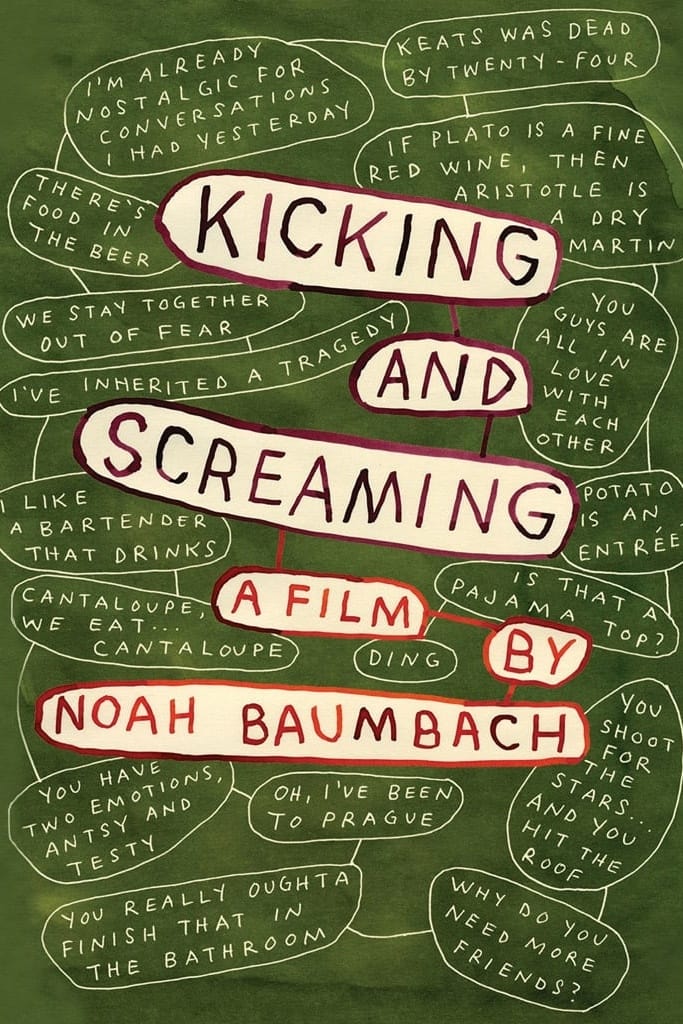

What’s Aged the Best?
Max's lines; broken glass sign; Max's date with Kate; bar-hopping; post-college home decor; Otis packing the remote twice; evergreen college moments; Bad Reputation; Otis's video store job; video store manager; answering machine plot device; Grover's smoking; Grover's dad's sports messages; Parker Posey; Jessica Hecht; Grover's C-plus love life; Perrey Reeves cameo; no internet or cell phones; Baumbach's cameo
In the discussion (19)
- Max nominees: "I'm nostalgic for conversations I had yesterday" and "What I used to be able to pass off as a bad summer could now potentially turn into a bad life," urged as a yearbook quote. — Bill Simmons
- More Max lines: the date-book line, "Somebody woke up on the wrong side of the futon," and "Isn't it bad enough to be whipped by your own mother" aimed at Otis, plus the jackanapes and "Jane 2, Electric Bugaloo" jokes. — Bill Simmons
- Max carefully writing a "broken glass" sign over broken glass is called the truest moment of a host's life as represented in the movie. — Andy Greenwald
- The favorite Max moment is his date with Kate, from meeting her at the mess hall to the pickup-truck confrontation where she threatens to break the guy's legs. — Chris Ryan
- Chris Eagerman deserves the veneration an earlier generation gave Redford, Newman and Poitier, as that guy in Metropolitan, Barcelona and this movie. — Andy Greenwald
- His sitcom, pitched as an LA Seinfeld with Jennifer Gray, is first recalled as lasting a handful of episodes, then two years; he should have had a younger-Frasier-style show.
- A reunion screening at BAM about eight years earlier suggested the cast chose New York lives, whether pushed or by choice. — Andy Greenwald
- Always talking about the next bar while drinking in one, from the Penguin to the Hole, holds up, a topic also raised when they did Swingers. — Chris Ryan
- The film captures post-college home decor: dark beat-up furniture, street finds and thrift-store items, like a Mission Hill house with an air hockey table hung as art. — Chris Ryan
- Otis packs his poster, maybe from a John Wu movie such as The Killer, and the remote control twice. — Andy Greenwald
- Evergreen college things: the Euro guy, the fan used only the first three weeks, and getting drunk in the middle of the day. — Andy Greenwald
- Fridi Johnson's Bad Reputation has to be on any mid-90s playlist. — Andy Greenwald
- Otis working in a video store, with a second interview at Video Planet, and the manager throwing heat about his version of Lolita. — Bill Simmons
- The answering machine as a plot device, Grover's smoking as affectation become habit, the broken glass sign, and Grover's dad leaving sports messages. — Bill Simmons
- Parker Posey had enormous sway over the mid-90s; her breakup with Skippy is a tornado that injects manic emotion into an intellectual movie. — Bill Simmons
- Jessica Hex had Seinfeld, Friends, this and Party of Five in about a year; Grover grading his love life a C plus; and a Perry Reeves cameo before Mrs. Ari on Entourage. — Bill Simmons
- No internet or cell phones helps: emails would make it a different movie, and the characters feel isolated on moon base alpha.
- The category ends with an offer to give it to Fridi and a suggestion to give it to Max's character, which is agreed.
- Bombach's own cameo as the guy asking whether people would rather have sex with a cow or kill their mother is added to aged best. — Andy Greenwald

Casting What-Ifs
Winona Ryder insisted on Ethan Hawke; Gwyneth Paltrow, the transcript-observed Ann Hatch, and Parker Posey auditioned for Vicki; Janeane Garofalo was fired and rehired.
This discussion recalls a choice from an earlier episode.
In the discussion (4)
- Hawke was in a career slump, but Ryder required his casting after seeing him in A Midnight Clear.
- Gwyneth Paltrow, Ann Hatch, and Parker Posey are named as auditioning for Vicki, with Posey judged the strongest alternate.
- Garofalo was fired over her attitude and then rehired after Ryder intervened; Garofalo later described her own poor work ethic and dislike of rehearsal.
- The ensemble is judged so well matched that changing any of the four principal performers would create a substantially different movie.

Probably Unanswerable Questions
What was Lee High School's 1976 football record? Did Randy Floyd play? Who did Randy Floyd take to the senior prom? Why didn't Jason London have a bigger career? How good was that Aerosmith concert?
In the discussion (7)
- Lee High School's 1976 record is guessed at 9-3 or 10-3: not going to state, but in the mix after making the tournament in the last week; the program was big enough for a real football coach with coordinators and a player personnel liaison pushing the oath, but not Friday Night Lights-level national emergency stakes.
- Randy Floyd is believed to have played, since he came back; his senior prom date was probably Joey Lauren Adams, unless they broke up over Jodie making a move, though monogamy was fluid and Jodie irresistible; Joey Lauren Adams was so drunk the night she and Parker Posey fell down together that she may never have gotten that information.
- Why Jason London did not have a bigger career: he is a cipher, fine in an important part but not someone you leave wanting to see more of; being great in a high school movie does not translate to playing people in their 20s or 30s, since those parts let you play a type with your own personality without being an antihero, so many John Hughes and Dazed actors never had huge careers.
- A counter: one host's wife loves Randy Pink Floyd, character and actor alike, says she is not alone and did not understand why he lacked a bigger career, and the host adds a call for justice for Pink; in the movie he was a game manager like Ryan Tannehill, never asked to do too much though he is the thread to everyone, after earlier comparisons to Fran Tarkenton and Johnny Manziel.
- Hypotheticals of a better actor as Pink: Mark Wahlberg as a Texas quarterback would have given Randy Pink Floyd an edge in the woods; Leo, in the perfect age range, would have been great but would have overpowered the movie and made it about Pink, and part of the film's perfection is that so many of its actors never went on to sully it with later fame; still, it is argued that it is a better movie with Leo in it and they win if Leo is in it.
- How good was that Aerosmith concert: 1976 was two months after Rocks came out and the band was headed to the Cotton Bowl, so it would have been awesome; research confirmed Aerosmith played Texas three times that year, so Linklater must have checked, and the Back in the Saddle era explains the obsession with tickets.
- 1976 was a top-four music year with many artists at the music version of Apex Mountain, and concerts mattered because they were the only way to see anything; much popular music, like Stevie Wonder and funk, is absent because the setting is Texas; the cars probably had 8-tracks rather than cassettes, which is what the imagined ZZ Top record would have played on.
Films in the archive
Best in Show
2000


Dazed and Confused
1993

Josie and the Pussycats
2001

Kicking and Screaming
1995

Sleep with Me
1994

You've Got Mail
1998