The most-rewatchable-scene discussion proposes eight selections and suggests almost the entire film qualifies except roughly twenty minutes. — Bill Simmons
The opening diner robbery and transition into the credits are praised. The discussion considers the switch between two songs and debates whether the typography still feels timeless; younger viewers may associate it with Stranger Things.
Misirlou prompts an association with the Black Eyed Peas song Pump It for a younger listener. — Craig Horlbeck
Vincent and Jules discussing Amsterdam and the Royale with Cheese is praised as exceptionally influential screenwriting. The conversation connects its everyday observations to the film's recurring contrasts between Europe and America.
The foot-massage argument, Mia's television pilot, and Antoine Tony Rocky Horror story are praised for combining casual conversation with the unexplained armed approach to an apartment. Vincent catches Jules with the offer to give him a foot massage. — Craig Horlbeck
The foot-massage debate leads to agreement that the gesture is intimate; professional massage is distinguished from a personal offer.
The apartment confrontation is introduced as another scene contender, with Samuel L. Jackson's performance prompting an early Rick Dalton Award mention. The Big Kahuna Burger and tasty-beverage dialogue, Frank Whaley's frightened performance, and the big-brain-on-Brett line receive praise.
Jackson's interaction with Burr Steers on the couch is singled out, while Travolta's quieter background performance also draws attention. — Chris Ryan
Travolta's relaxed background behavior contrasts with Jackson's commanding, repeatedly quotable performance in the apartment.
Jackson's extended biblical monologue is praised as an extraordinary sustained performance, prompting curiosity about how many takes the scene required. — Bill Simmons
Low angles, close-ups, and a camera move following Jackson's head turn establish him as a movie star, shifting attention away from Travolta. — Chris Ryan
The burger and the film's food generally are praised for looking appetizing.
Marsellus lecturing Butch about pride and his declining prime is selected as another scene; its advice is compared with Pacino's speech to DiCaprio in Once Upon a Time in Hollywood. — Bill Simmons
The speech's warning about aging inspires contemporary jokes about Joe Biden and Paul George's late-career contract.
Butch's confrontation with Vincent is discussed as the possible trigger for keying his car and deciding to betray Marsellus; a reported Tarantino answer supports the decision forming during that encounter.
Obscuring Marsellus's face during his speech is praised for building anticipation and making the crime boss seem mythical, with Mia's delayed reveal cited as a parallel.
Vincent buying heroin from Lance is selected for its elaborate product descriptions and sales pitch, including the more expensive Choco. — Chris Ryan
Lance remaining visible in a mirror is singled out as an easily missed visual detail. Mirrors and reflections recur with Mia, Fabienne, and Vincent. — Bill Simmons
Vincent confusing Trudi with Jody and describing the piercings on Jody's face is praised as an enduringly funny exchange; Stoltz's robe, sandals, and hair contribute to the performance.
The drug purchase captures obligatory small talk, with Lance echoing Vincent's complaints about his keyed car and using a salesman's suggestion that stock might run out. — Chris Ryan
Stoltz's appeal across different kinds of films is discussed. A festival encounter and his enthusiasm for Reservoir Dogs are offered as the background to his casting, alongside his other connections to Tarantino and Roger Avary. — Sean Fennessey
The discussion corrects Kicking and Screaming to 1995 and describes Stoltz's early-1990s mixture of indie leading roles and smaller appearances. — Bill Simmons
Vincent and Mia's date at Jack Rabbit Slim's is selected, including his arrival at her house. The restaurant's immersive design and automobile booths are praised; conflicting construction-budget recollections are discussed.
A reported Disney proposal to reproduce Jack Rabbit Slim's in a park was declined; the restaurant is compared with an unnamed real Los Angeles establishment. — Sean Fennessey
Characters repeatedly expressing pleasure in their food is suggested as part of why the meals look so appealing. Steve Buscemi's Buddy Holly waiter is highlighted. — Sean Fennessey
Fox Force Five's detailed character lineup inspires enthusiasm for an actual pilot and a comparison with Kill Bill; whether Tarantino wrote such a pilot is speculation.
The five-dollar milkshake exchange and its specific menu terminology are singled out as memorable date dialogue.
The date resolves the foot-massage rumor while Travolta's bashful, low-key delivery contrasts with Thurman's more animated cocaine-influenced behavior.
The twist contest and Chuck Berry song are praised. The discussion wonders how the dance would look to sober observers and reports that Travolta introduced additional period dances instead of only performing the twist.
A first-time viewer expects Vincent and Mia to have sex and face Marsellus's anger; the overdose instead provides an effective narrative swerve. The baggie rather than a balloon helps explain Mia mistaking heroin for cocaine. — Bill Simmons
Mia abandoning her lip-sync routine midway through the song is praised as a behavioral detail. Lance's quiet evening with cartoons, cereal, and a recliner makes Vincent's emergency arrival especially funny. — Chris Ryan
The injection effect reportedly used a needle pulled away from Thurman's chest with the footage reversed, after a fake chest was rejected. — Bill Simmons
Vincent pressuring Lance by explaining that Mia belongs to Marsellus adds another comic threat to the rescue; the rough handling of Mia on the lawn is noticed. — Chris Ryan
Thurman's ability to look glamorous and convincingly devastated, especially on the drive home, is praised. — Bill Simmons
Christopher Walken's watch monologue is selected as another scene. Its placement immediately after the overdose supplies another escalating surprise when a quieter flashback seems likely.
Walken's uninterrupted watch speech is praised, and the watch's Knoxville origin is connected to Butch's destination and Tarantino's biography.
Butch returning for the watch and killing Vincent is selected. One objection says Butch seems insufficiently frightened; the long approach through backyards is defended as an effective real-time buildup. Stopping for a toaster pastry is questioned.
Vincent's abrupt death is compared with Psycho's shocking removal of its apparent lead. Whether earlier politeness toward Butch would have saved him is raised, with survival offered as the reason Butch would shoot regardless.
The pawnshop basement and Gimp reveal are selected for their shocking narrative turn. Deliverance is a comparison, while the setting is read as a surreal personal hell for a powerful crime boss.
The Gimp emerging from the trunk is called a top-five shocking movie moment, without an enumerated ranking. The discussion debates deliberate provocation versus making the basement as strange as possible. — Bill Simmons
The Gimp laughing at Butch is compared to premature athletic taunting; the offscreen sounds prompt jokes about recording the scene.
The discussion debates returning to rescue an enemy versus escaping. Butch staying with Fabienne after she forgot the watch is also questioned.
The scene illustrates how Tarantino strategically withholds the sight of violence despite its strong effect. — Sean Fennessey
Vincent accidentally shooting Marvin and the ensuing trip to Jimmy's house are selected, highlighting Vincent's casual admission and the argument over whether a bump caused the gun to fire. — Craig Horlbeck
Jules and Vincent washing their hands and arguing about soap is praised, as is Vincent's impatient expectation that an apology should settle the accidental killing. — Bill Simmons
The Wolf's rapid arrival, appreciation of Jimmy's coffee, response to Vincent requesting politeness, and refusal to celebrate prematurely are highlighted alongside the argument over cleaning Marvin's remains. — Bill Simmons
The final breakfast and robbery confrontation is selected for Jules's transformation and the film's deepest thematic statement. Jackson's apartment performance remains a competing personal favorite.
The final diner confrontation is selected as the current favorite scene. — Sean Fennessey
Mia’s overdose through the injection and revival is selected as the most rewatchable scene.
The stretch from Marvin’s shooting through the Wolf leaving for the diner is separately identified as a favorite chapter.
The opening chapter is defended because it contains both the hitmen and Vincent’s date with Mia.
Jack Rabbit Slim’s through Mia’s revival is selected as an expanded scene choice. — Craig Horlbeck
Gibson is argued as a great, wild-eyed Garrison who would better represent Stone's mind, and who later made Conspiracy Theory; another questions casting an Australian. — Sean Fennessey
Harrison Ford doesn't make sense but is a big what-if, with a wish he had more movies like this.
Don Johnson tried hard for Garrison and has post-Miami Vice appeal, but doesn't read smart enough to be the district attorney. — Brian Koppelman
Jeff Bridges would have been amazing; 'Hank' (as transcribed) might work but may be two years too young and too aw-shucks. — Brian Koppelman
Frank Whaley was going to be Oswald, and after the part went to Oldman he was made the imposter.
Willem DeFoe (as transcribed) and John Malkovich turned down the Ferry role; Malkovich in the red wig would have been mind-boggling.
Stone considered Marlon Brando for Mr. X, joked to need SNL monologue-style cue cards.
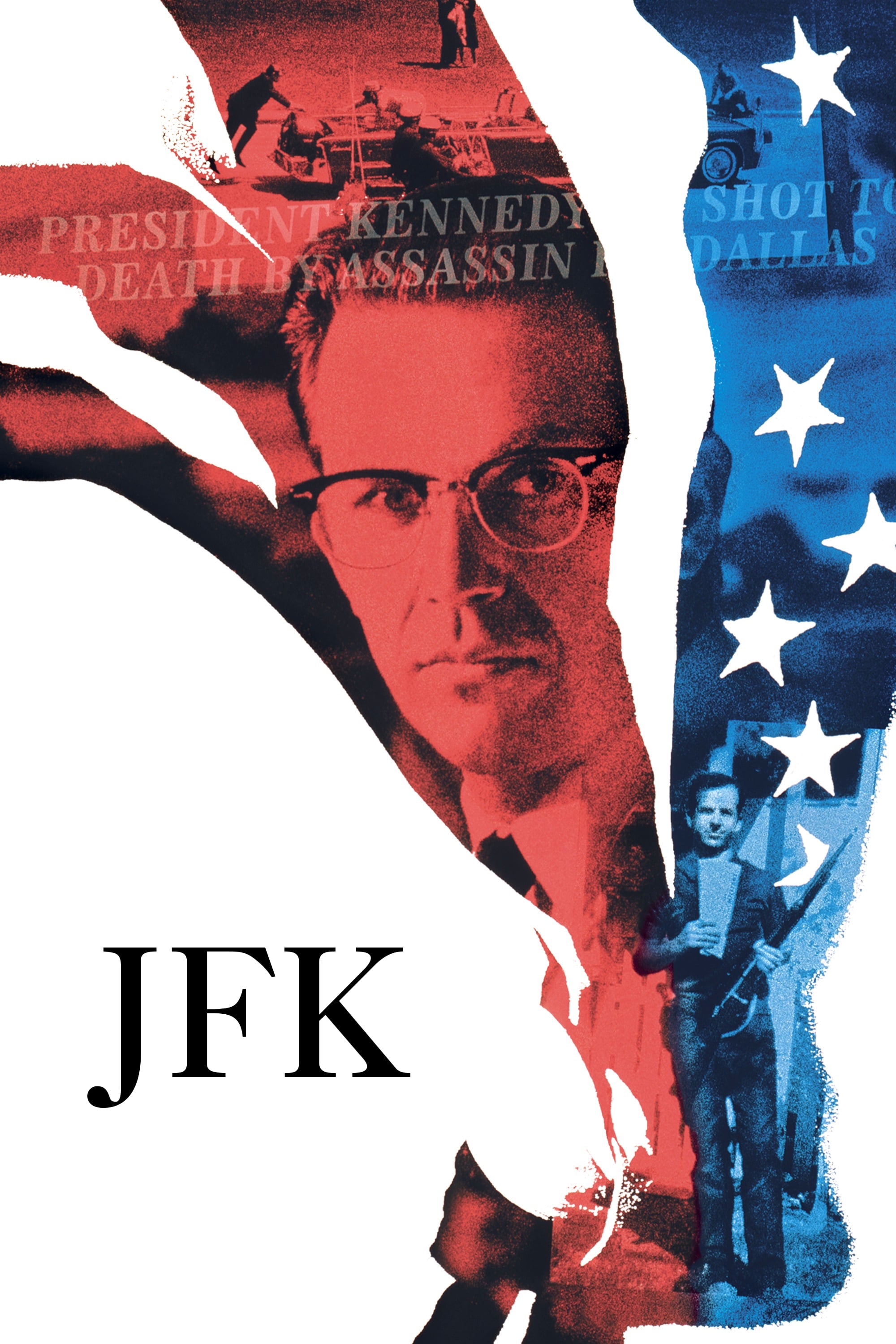
Origin: Stone met Warner Brothers about a Howard Hughes film, but Warren Beatty had the rights, so JFK was the backup pitch; jokes follow about carrying three pitches and a Doug Collins 1972 Olympics pitch.
Desert drug scenes are asked about as an Apex; the reply muses that the movie cemented the desert as the place for hallucinogenics, with no yes given. — Chuck Klosterman
Frank Whaley's Apex is put at Pulp Fiction or Career Opportunities; debate over whether Apex means peak or most juice; this movie was not a success. — Bill Simmons
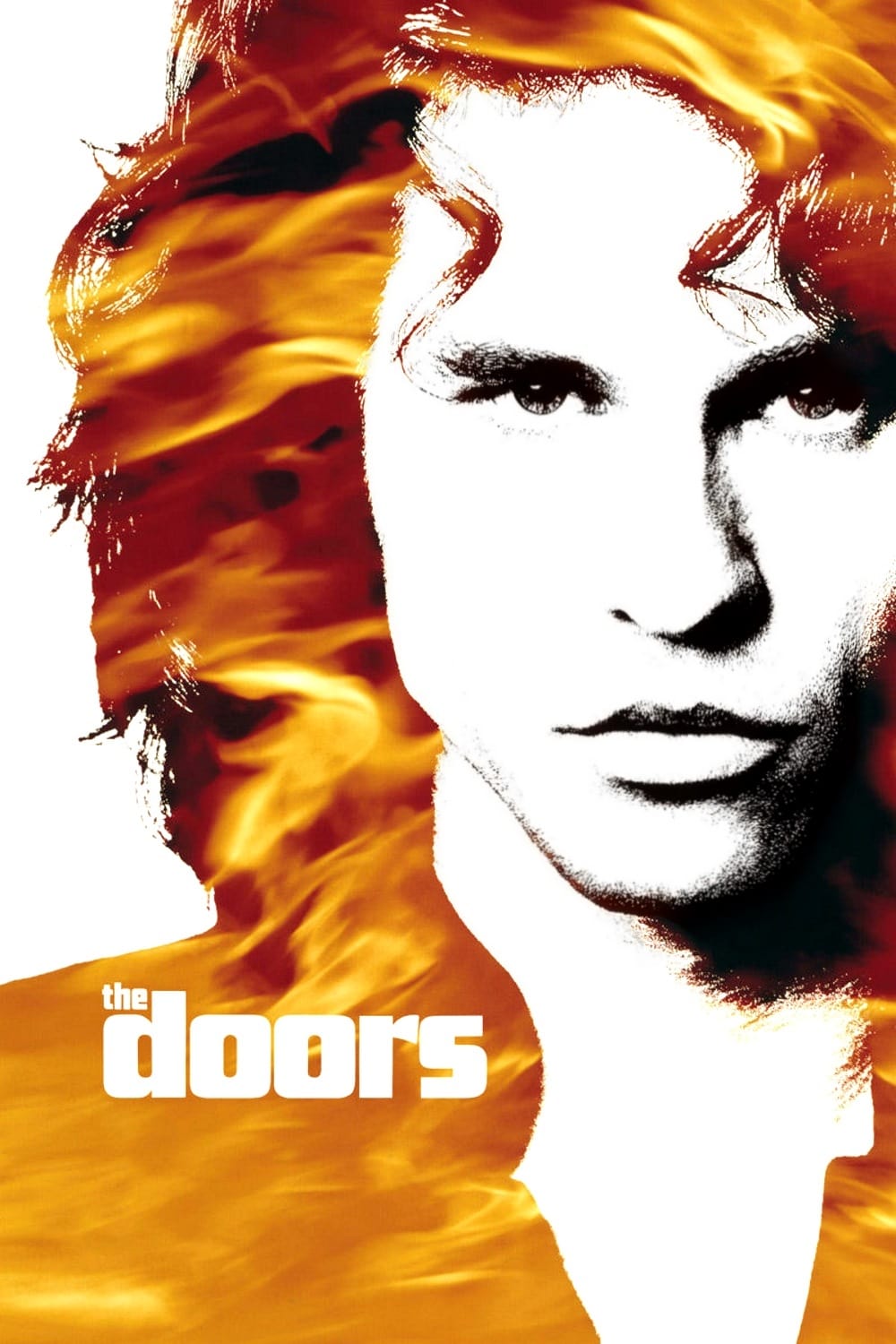
Selling-out concern; Oliver Stone's film-professor cameo; Top Gun connection; Break On Through performance; death theme; closing credits; Doors music; Frank Whaley's guitar playing
The concept of selling out with commercials, a big concern in 1991 (Michael Stipe would never have allowed it), tells more about 1991 than the 60s; Morrison's reaction resembles what one would expect of Cobain. — Chuck Klosterman
Stone's cameo as a film professor holds up for the thick, fake-looking goatee and a workshop that pisses on Morrison's film. — Chris Ryan
The Top Gun connection: Iceman and Goose's wife as the leads. — Bill Simmons
Jim turning around and the Break On Through performance. — Bill Simmons
The theme of death, with the bald man moving closer to Jim through the film, is well done; he looks like Jeff Bezos. — Bill Simmons
The closing credits bring in L.A. Woman, missing from the film, with the credits ending on "and Val Kilmer is Jim Morrison." — Bill Simmons
The Doors music sounds good, though this speaker never had a Doors period and came to it through Apocalypse Now; Frank Whaley convincingly plays guitar and is called the second-best person in the movie, with agreement. — Chris Ryan
Kevin Dillon looks like he is drumming; it is unclear whether McLaughlin (as spoken) can play organ, as he always plays the top and bottom keyboards at once.
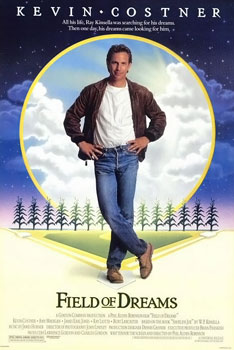
The field is tight: James Earl Jones is not eligible, Frank Whaley is liked but not a heat-check performance, Busfield is doing the most with the same Ray, you gotta sell the farm, why didn't you tell me routine.
Art LaFleur as Chick Gandil (transcribed 'Chick Gandal'), the first baseman, is liked, with his you get a cigarette lines; all the White Sox guys are great.
The Busfield character prompts a memory of parents paying the bills at the kitchen table and then fighting; Busfield is initially given the Waiters Award.
Gabby Hoffman is raised, every moment a heat check, she's great; a host's daughter at six was as great as her and yelled at goalies at Kings games, so Karen would have been a heckler; the award switches to Karen with an apology to Busfield (transcribed 'Westfield').
First nominee: Ray meets Shoeless Joe, is this heaven, no it's Iowa; a quick Liotta imitation; this was a year before Goodfellas, when he was a critic's darling after Something Wild; he still has never seen the movie and thought the script was dumb.
Liotta plays Joe Jackson like a sensitive, dew-eyed guy from 1989 rather than a period Black Sox type, which is perfect because he seems like a ghost who doesn't know he is one; a Chantix commercial with him in the cornfield and a second-half-of-Goodfellas Henry Hill emerging from the corn are joked about.
Second nominee: Ray goes to Cambridge in his Volkswagen van and meets Terrence Mann; the finger-or-gun exchange is played, the door slamming is really funny, and Mann flips fast once Ray brings up John Kinsella (transcribed 'John Consala'); great suspenders and belt.
The two hosts who have spent time in Boston are asked whether there really are that many Jewish people there, since the street looks like half of Brooklyn with Hebrew letters on windows; the Boston exteriors were apparently filmed in Dubuque with after-the-fact wide shots, though they obviously shot at Fenway.
Third nominee: after Fenway, Mann pretends he didn't see the scoreboard, drops Ray off, then is standing in the street; the Moonlight Graham, you saw it exchange is recited, New York Giants 1922, one game, never batted, Chisholm, Minnesota; that part is amazing.
Fourth nominee: the nighttime scrimmage with Archie, the first time Frank Whaley walks out, ghosts playing at 9:30 with Amy Madigan turning the lights on, the most baseball in the movie, a four-minute sequence.
A host doubts they could hit fly balls to a ghost who showed up in the backyard; the counter is that Ray had been prepping, taking BP every day; the one caveat is that Costner wears Timberlands the entire movie rather than Chucks or running shoes.
The James Earl Jones speech and the actual ending round out six nominees; the Beulah and Annie scene is rejected as padding rewatchable stats; Moonlight's sacrifice, Karen falling and being saved, is counted as its own scene separate from the catch with dad.
The opening catch-up montage is really good where it goes wrong in so many movies, and a secretly great choice is that the voice comes in the first scene with no thirty-minute build-up of farm life; Amy Madigan is quirky enough to buy it, unlike one host's wife, and she asks whether it's acid.
Ray meeting Moonlight for the first time and walking back to his office is poetry, resonant though removed from the climax; the rack focus to The Godfather on the marquee; the magic realism works seamlessly and the story is about life rather than baseball or fantasy.
Burt Lancaster's last movie, and the part was supposed to be, or at least offered to, Jimmy Stewart, blurted early and rebuked for stepping on half-assed internet research. — Chris Ryan
Ray simply accepting that it's 1972 is not ridiculous at all, which is why it is more a fantasy movie than a baseball movie.
One pick is when Ray goes to Boston: great chemistry, the reclusive countercultural icon surrounded by tapes and books who wants to be left alone, the locks on his doors; the last thirty minutes can only be watched once a decade, like dialing it up on YouTube to cry it out.
Seeing Terrence Mann for the first time has become a favorite, a well-written, well-acted five minutes, with a wish for four hours of deleted van small talk; the 1989-era library research for the old interview mentioning Ebbets Field is loved, as is Mann's heartbreak at not remembering and the you're from the 60s line.
Another pick is Moonlight crossing the line to save Karen and Ray's oh my God, you can't go back, the first thing that comes to mind about the movie, more than the catch; it is the emotional gut punch where every theme and tension, hope, purpose, sacrifice, is realized in one second.
A sneaky good scene is picking up Frank Whaley hitchhiking, the I need good karma line and his day-job baseball towns, looking like he's in Stand By Me; a host promises to ruin that scene later.
A further pick is when he sees Terrence Mann for the first time, and then really the pick is the James Earl Jones speech, with all the ghosts stopping to watch; baseball's a part of us, Ray.