‹ All people

Referenced person

Jimmy Stewart

Stats

Episodes featuring their films
0
Movies in this archive
0

Rewatchables episodes featuring Jimmy Stewart’s films

No episode credits in the archive yet.

No episodes found

Mentioned in discussions

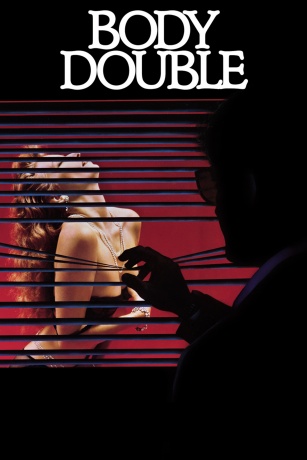
Body Double The Rewatchables
Body Double

Recasting Couch

Retain ordinary-man lead; Hanks; Russell; Dreyfuss; Caruso; Turner as Gloria

In the discussion (6)
Approx. transcript time · 00:16:16Read transcript
  • Wasson’s odd, unstarry presence is questioned, but a major star such as Travolta or Pacino might not work as this humiliated protagonist.
  • Kurt Russell might give a better performance but make a worse film; Hanks is considered ideal for the ordinary-man part. — Sean Fennessey
  • The casting is defended as a modern Jimmy Stewart ordinary man and struggling low-tier actor; Dreyfuss is considered but his career circumstances complicate it.
  • Wasson works best in the first act but may lack force for the later thriller. Caruso is floated, then doubted as someone a partner would cheat on. — Chris Ryan
  • Wasson’s mundane early behavior emphasizes his lack of star aura; Giamatti is imagined as a later-era alternative. — Chris Ryan
  • Kathleen Turner as Gloria could supply both the appearance and voice, though the character’s limited function would probably remain. — Bill Simmons
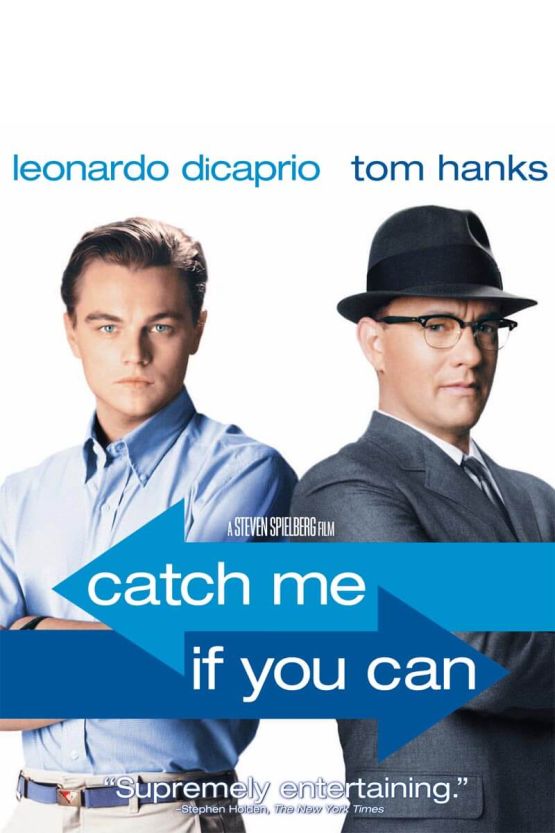
Catch Me If You Can

The Stephen A. Smith Hottest Take Award

DiCaprio’s first great lead performance; Hanks’s greatest-actor credentials disputed

In the discussion (22)
Approx. transcript time · 01:03:23Read transcript
  • The first-great-DiCaprio-performance hot take argues that this film depends more fully on him than Titanic or Romeo + Juliet; This Boy's Life is offered as an earlier exception. — Sean Fennessey
  • Hanks's greatest-actor claim is questioned through weak accents, while his extraordinary movie-star run, popularity and success are defended; Cruise and Denzel are personal alternatives. — Bill Simmons
  • Accent objections name Elvis, Charlie Wilson's War, The Post, Captain Phillips, The Terminal and Cloud Atlas, with disagreement over Captain Phillips. — Bill Simmons
  • Carl's composite identity makes the accent unnecessary; the performance is placed low in Hanks's career despite affection for his presence. — Bill Simmons
  • Hanks's two Oscars and serious films are weighed against Cruise's cultural force and comeback; Forrest Gump's standing draws disagreement. — Sean Fennessey
  • Hanks's likability and storytelling are distinguished from greatest-actor status; Cruise's potential in Big or Cast Away is debated, while Greyhound illustrates a sturdy role Hanks handles well. — Sean Fennessey
  • Cruise's consistent charismatic action lane is contrasted with Hanks's risky character work; hypothetical swaps include Philadelphia, Forrest Gump, Big, Mission: Impossible, Days of Thunder, Edge of Tomorrow, Minority Report, Taken, Eyes Wide Shut and A Few Good Men, with disagreement over equivalence.
  • Hanks is defended as the more accomplished actor while Cruise's longevity and Denzel's comparable stature complicate the comparison. — Bill Simmons
  • Hanks's post-Catch Me filmography is enumerated: The Ladykillers, The Terminal, The Polar Express, The Da Vinci Code, Charlie Wilson's War, Angels & Demons, Larry Crowne, Extremely Loud & Incredibly Close, Cloud Atlas, Captain Phillips, Saving Mr. Banks, Bridge of Spies, A Hologram for the King, Sully, Inferno, The Circle, The Post, Greyhound, A Beautiful Day in the Neighborhood, News of the World, Finch and Elvis. Cloud Atlas and the later dad-film run draw qualified defense. — Sean Fennessey
  • A Man Called Otto is acknowledged as a hit and praised by a family member, while another speaker calls it only okay and a close Scandinavian remake. — Sean Fennessey
  • Cruise's commercially bigger career is distinguished from Hanks's better career; comparing their 1988–2001 peaks prompts suggested Oscars for Hanks in Cast Away and Cruise in Jerry Maguire and Magnolia.
  • Denzel's paycheck films, including The Equalizer, Déjà Vu and The Taking of Pelham 123, are considered more entertaining; Hanks's self-imposed Jimmy Stewart image may constrain his roles.
  • Cruise losing for Magnolia to Caine in The Cider House Rules and for Jerry Maguire to Rush in Shine is challenged; Jude Law's Ripley performance is admired but placed below Cruise's Magnolia work. — Bill Simmons
  • Hanks's consecutive Philadelphia and Forrest Gump Oscars strengthen his case; Denzel's Glory and Training Day wins are recalled with Malcolm X considered another deserved award. — Sean Fennessey
  • Cruise's 2005-onward filmography is enumerated: War of the Worlds, Mission: Impossible III, Lions for Lambs, Tropic Thunder, Valkyrie, Knight and Day, Ghost Protocol, Rock of Ages, Jack Reacher, Oblivion, Edge of Tomorrow, Rogue Nation, Never Go Back, The Mummy, American Made, Fallout and Maverick; several weak films temper the franchise-success defense. — Bill Simmons
  • Hanks's willingness to experiment is defended against Cruise's safe action lane, while Cruise's ongoing audience appeal and perceived rescue of theatrical movies are counterarguments; longevity versus peak quality is compared with basketball greatness. — Bill Simmons
  • Cruise's 1990s-to-Minority Report run is compared with Hanks's peak, with The Others explicitly corrected as only an executive-producing credit; Toy Story is considered a decisive Hanks asset. — Chris Ryan
  • Cruise's film library is the preferred desert-island entertainment choice for one speaker, while De Niro is called the best actor of that speaker's lifetime; Daniel Day-Lewis's great performances are distinguished from rewatchability. — Bill Simmons
  • Weak later films and Hanks's lack of a Michael Mann collaboration enter the debate; both stars may be trapped by personas, but Cruise's stunts are considered more entertaining than Hanks's accents. — Bill Simmons
  • The proposed top tier includes Cruise, Hanks and Denzel, before Harrison Ford's placement is debated. — Bill Simmons
  • Ford's capacity for morally compromised sexuality is contrasted with Cruise's usual innocence; Hanks is urged to try a direct villain role without hiding behind makeup and accents. — Bill Simmons
  • The industry's shift away from movie stars is offered as context for older stars' weaker later work; DiCaprio's future is compared with Nicholson's transition, including disagreement over Wolf and Hoffa. — Sean Fennessey
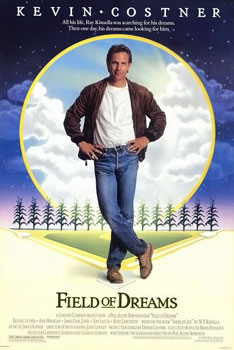
Field of Dreams

Casting What-Ifs

Tom Hanks reportedly offered Ray Kinsella; Costner not originally considered after Bull Durham; Jimmy Stewart the original choice for Moonlight Graham; Burt Lancaster turned it down until a friend changed his mind

In the discussion (4)
Approx. transcript time · 00:58:23Read transcript
  • The internet claims Tom Hanks was offered Ray Kinsella and turned it down, though nobody knows if it happened and a host will ask him if he's ever on a podcast; Costner wasn't considered because they thought he wouldn't follow Bull Durham, then got interested thinking it would be this generation's It's a Wonderful Life, which it probably is.
  • There are strands of Jimmy Stewart, especially Harvey; late-80s Hollywood, often Castle Rock, made throwbacks to Capra like City Slickers and Big, and Robin Williams tried to make that movie four times, What Dreams May Come being the worst version of this one.
  • Jimmy Stewart was ironically the original choice for Moonlight Graham and turned it down; Burt Lancaster turned it down too, then a baseball-fan friend told him he had to do it.
  • Earlier, during the scene nominees: Lancaster's last movie, and the part was supposed to be or offered to Jimmy Stewart. — Chris Ryan
Field of Dreams

Most Rewatchable Scene

Ray meeting Terrence Mann in Boston; Moonlight Graham crossing the line to save Karen; the James Earl Jones speech

In the discussion (17)
Approx. transcript time · 00:27:58Read transcript
  • First nominee: Ray meets Shoeless Joe, is this heaven, no it's Iowa; a quick Liotta imitation; this was a year before Goodfellas, when he was a critic's darling after Something Wild; he still has never seen the movie and thought the script was dumb.
  • Liotta plays Joe Jackson like a sensitive, dew-eyed guy from 1989 rather than a period Black Sox type, which is perfect because he seems like a ghost who doesn't know he is one; a Chantix commercial with him in the cornfield and a second-half-of-Goodfellas Henry Hill emerging from the corn are joked about.
  • Second nominee: Ray goes to Cambridge in his Volkswagen van and meets Terrence Mann; the finger-or-gun exchange is played, the door slamming is really funny, and Mann flips fast once Ray brings up John Kinsella (transcribed 'John Consala'); great suspenders and belt.
  • The two hosts who have spent time in Boston are asked whether there really are that many Jewish people there, since the street looks like half of Brooklyn with Hebrew letters on windows; the Boston exteriors were apparently filmed in Dubuque with after-the-fact wide shots, though they obviously shot at Fenway.
  • Third nominee: after Fenway, Mann pretends he didn't see the scoreboard, drops Ray off, then is standing in the street; the Moonlight Graham, you saw it exchange is recited, New York Giants 1922, one game, never batted, Chisholm, Minnesota; that part is amazing.
  • Fourth nominee: the nighttime scrimmage with Archie, the first time Frank Whaley walks out, ghosts playing at 9:30 with Amy Madigan turning the lights on, the most baseball in the movie, a four-minute sequence.
  • A host doubts they could hit fly balls to a ghost who showed up in the backyard; the counter is that Ray had been prepping, taking BP every day; the one caveat is that Costner wears Timberlands the entire movie rather than Chucks or running shoes.
  • The James Earl Jones speech and the actual ending round out six nominees; the Beulah and Annie scene is rejected as padding rewatchable stats; Moonlight's sacrifice, Karen falling and being saved, is counted as its own scene separate from the catch with dad.
  • The opening catch-up montage is really good where it goes wrong in so many movies, and a secretly great choice is that the voice comes in the first scene with no thirty-minute build-up of farm life; Amy Madigan is quirky enough to buy it, unlike one host's wife, and she asks whether it's acid.
  • Ray meeting Moonlight for the first time and walking back to his office is poetry, resonant though removed from the climax; the rack focus to The Godfather on the marquee; the magic realism works seamlessly and the story is about life rather than baseball or fantasy.
  • Burt Lancaster's last movie, and the part was supposed to be, or at least offered to, Jimmy Stewart, blurted early and rebuked for stepping on half-assed internet research. — Chris Ryan
  • Ray simply accepting that it's 1972 is not ridiculous at all, which is why it is more a fantasy movie than a baseball movie.
  • One pick is when Ray goes to Boston: great chemistry, the reclusive countercultural icon surrounded by tapes and books who wants to be left alone, the locks on his doors; the last thirty minutes can only be watched once a decade, like dialing it up on YouTube to cry it out.
  • Seeing Terrence Mann for the first time has become a favorite, a well-written, well-acted five minutes, with a wish for four hours of deleted van small talk; the 1989-era library research for the old interview mentioning Ebbets Field is loved, as is Mann's heartbreak at not remembering and the you're from the 60s line.
  • Another pick is Moonlight crossing the line to save Karen and Ray's oh my God, you can't go back, the first thing that comes to mind about the movie, more than the catch; it is the emotional gut punch where every theme and tension, hope, purpose, sacrifice, is realized in one second.
  • A sneaky good scene is picking up Frank Whaley hitchhiking, the I need good karma line and his day-job baseball towns, looking like he's in Stand By Me; a host promises to ruin that scene later.
  • A further pick is when he sees Terrence Mann for the first time, and then really the pick is the James Earl Jones speech, with all the ghosts stopping to watch; baseball's a part of us, Ray.
Jaws The Rewatchables
In the discussion (4)
Approx. transcript time · 00:46:17Read transcript
  • Quint is excluded for appearing too much; Mrs. Kintner and the discovered head are honorable mentions. — Bill Simmons
  • Hamilton as the mayor is the clear selection. — Bill Simmons
  • The ferry introduction, autopsy objection and panic-versus-business speech are praised.
  • Spielberg reportedly hired Hamilton because he loved him in The Graduate; Doris Day films, The Hustler, an FBI story with Jimmy Stewart, The Drowning Pool, Rich Man, Poor Man and extensive television work are recalled from Hamilton’s career. — Sean Fennessey
Displaying all 5 discussions