‹ All movies
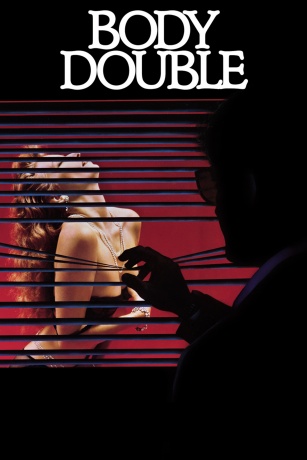
Body Double poster

Body Double

114 minutes

Cast

Selected cast credits · Film reference

Craig Wasson Jake Scully
Gregg Henry Sam Bouchard / Alexander Revelle
Melanie Griffith Holly Body
Deborah Shelton Gloria Revelle
Guy Boyd Jim McLean
David Haskell Drama teacher
Dennis Franz Rubin
Rebecca Stanley Kimberly
Larry Flash Jenkins Assistant director
Monte Landis Sid Goldberg
Linda Shaw Linda Shaw

Body Double | The Rewatchables

Explore episodeClose episode

Half-Assed Internet Research

Body-double premise; casting and dubbing; box office; locations; audition rumors

In the discussion (12)
Approx. transcript time · 00:06:43Read transcript
  • De Palma’s combative interview style and post-Scarface three-picture deal are connected with doubling down on sex and violence; the body-double idea reportedly grew from Dressed to Kill.
  • Robert Avrech reportedly worked from De Palma’s reinterpretations of Hitchcock, and the studio rejected the original plan for unsimulated sex.
  • Shelton’s performance was reportedly redubbed by Helen Shaver, an unusual American-production choice; an interview suggests Shelton’s own voice is normal, while Shaver’s sultry tone is praised.
  • Griffith’s casting and nomination revived her career; De Palma reportedly knew her through Trivial Pursuit with Stephen Bauer and recovering actors.
  • A $10 million budget and $8.8 million gross are reported; De Palma’s continued sense of failure contrasts with later affection for the movie.
  • Kael’s disappointment is contrasted with Ebert’s praise and her earlier De Palma advocacy; her Hollywood experience and critical judgments are debated.
  • The discussion identifies several real adult performers and Bauer’s cameo, while naming Michael Kearns as the stunt-cock performer; these are podcast casting claims rather than newly verified metadata.
  • Locations are listed with explicit uncertainty about the Beverly Center and whether the video store is Tower; the Chemosphere is preferred as the defining Los Angeles place.
  • The Relax set was reportedly reused for Fright Night’s nightclub sequence.
  • Jake’s car is identified as a 1967 Chevrolet Camaro RS convertible, prompting jokes about jumping into cars.
  • De Palma denies a persistent rumor of many women performing private auditions at his home, saying only Haven and Griffith worked there on the routine; the response is teased but not established as false.
  • Griffith’s routine audition tape was reportedly destroyed at her request.

The Stephen A. Smith Hottest Take Award

Jake should stay in adult films; permit real sex; best adult-industry integration

In the discussion (4)
Approx. transcript time · 00:13:57Read transcript
  • Despite De Palma’s provocative promises, the movie seems tamer than its potential and more interested in the absurd workaday sex business than arousal; Crimes of Passion is an extreme comparison.
  • Jake should remain in adult filmmaking after immediately landing featured work, with the Chemosphere an ideal set and comic qualifications about technique.
  • Consensual unsimulated sex in mainstream films is advocated as a remaining boundary, contrasted with screen violence; The Brown Bunny’s backlash and explicitly unconfirmed rumors about other films are discussed.
  • This is called the best limited integration of the adult-film world into a mainstream movie; Boogie Nights, Hardcore, Wonderland, 8MM, Orgazmo and others supply comparisons.

Recasting Couch

Retain ordinary-man lead; Hanks; Russell; Dreyfuss; Caruso; Turner as Gloria

In the discussion (6)
Approx. transcript time · 00:16:16Read transcript
  • Wasson’s odd, unstarry presence is questioned, but a major star such as Travolta or Pacino might not work as this humiliated protagonist.
  • Kurt Russell might give a better performance but make a worse film; Hanks is considered ideal for the ordinary-man part.
  • The casting is defended as a modern Jimmy Stewart ordinary man and struggling low-tier actor; Dreyfuss is considered but his career circumstances complicate it.
  • Wasson works best in the first act but may lack force for the later thriller. Caruso is floated, then doubted as someone a partner would cheat on.
  • Wasson’s mundane early behavior emphasizes his lack of star aura; Giamatti is imagined as a later-era alternative.
  • Kathleen Turner as Gloria could supply both the appearance and voice, though the character’s limited function would probably remain.

Casting What-Ifs

Curtis, Haven, Hamilton, Fisher; Kristel as Gloria

In the discussion (5)
Approx. transcript time · 00:23:23Read transcript
  • Jamie Lee Curtis is a rumored alternative, but Griffith is considered a better fit.
  • Annette Haven was considered and tested, contributed dialogue and advice, but Griffith’s test was stronger; Haven’s intelligence is contrasted with the role’s need for comic energy.
  • Linda Hamilton reportedly declined Holly for The Terminator, prompting speculation about swapping the careers and whether Griffith could have played Sarah Connor.
  • Curtis reportedly declined after Griffith introduced her; Fisher and Tatum O’Neal are less certain possibilities. Fisher’s cynical intelligence might fit Holly and break her Star Wars image.
  • Sylvia Kristel was reportedly wanted for Gloria but unavailable; discussion of her drinking problems raises doubt about the fit.

Most Rewatchable Scene

Relax; following Gloria; adult-industry stretch; first dance

In the discussion (21)
Approx. transcript time · 00:25:41Read transcript
  • Jake and Holly encountering another actress after drinks is identified as a scene where the two film-industry worlds look similar.
  • Sid Goldberg’s adult-industry interview and correction from expressionist to exhibitionist are singled out as comic highlights.
  • Jake discovering his girlfriend with another man is nominated: his cheerful obliviousness and humiliating retreat establish his weakness, with the staging compared to Boogie Nights.
  • The acting-class sardine exercise is judged important but not especially successful because Sam recognizes Jake’s vulnerability there.
  • The house-sitting offer provides an appealing leap into luxury, prompting an anecdote about temporary loft living after moving to Los Angeles.
  • Sam introducing the precise nightly striptease is absurd but persuasive to the entranced Jake, who accepts the house and spectacle without the obvious questions.
  • Jake follows Gloria to the Rodeo collection, behaving conspicuously at a payphone and retrieving discarded underwear; security intervention is deserved.
  • The mall’s moving camera, escalators, payphone staging and Donaggio score make apparently uneventful following mesmerizing, recalling Dressed to Kill’s museum sequence.
  • The crowded elevator triggers claustrophobia, while the underwear-shop viewpoint and later police rebuke emphasize Jake’s creepiness.
  • The purse-snatch chase offers tiring, realistic running and striking Long Beach terraces, though easy access to Gloria’s phone call and her calm reaction are questioned.
  • The tunnel repeats claustrophobia before an extravagant spinning kiss, whose dreamlike unreality and sweeping camera are connected with Hitchcock and Blow Out.
  • The drill murder is admired for not showing penetration, comic plugging-in interruptions and blood dripping through the floor, despite its contested phallic imagery.
  • Sid Goldberg’s program, Linda Shaw’s adult-film titles and his smooth transition to a trailer make the television sequence especially funny.
  • Holly Does Hollywood’s five-minutes joke and lurid review blurbs are praised as meticulously observed adult-film parody.
  • The move into the adult industry is considered a high point across video store, trailer, sets and casting, with strong influence on Boogie Nights; Goldberg is distinguished as a fictional role from real performer Linda Shaw.
  • The Relax adult-film/music-video sequence is praised as an early successful translation of MTV aesthetics into narrative film, with De Palma studying visual form and choosing Frankie Goes to Hollywood at the right moment.
  • Holly’s businesslike contract and boundary speech on the date is praised for effortless delivery; Jake’s producer impersonation is compared unfavorably with George C. Scott in Hardcore.
  • The encounter with Kimberly Hess and her career/body advice is admired as industry satire; the claim that her actor Rebecca Stanley was an adult performer is stated uncertainly rather than verified.
  • Jake confessing he is not a producer sends Holly away and leads to the visually striking but confusing reservoir confrontation.
  • Relax is the most-rewatched choice; the following sequence is another favorite, while the stretch from video discovery through Holly’s first date is called elite.
  • The first nightly dance is a late most-rewatchable-scene nomination, emphasizing the uncertainty between Shelton and Griffith.

What’s Aged the Best?

Griffith; Los Angeles; music; Peter Meter; enduring influence

In the discussion (10)
Approx. transcript time · 00:27:38Read transcript
  • Recognizable Los Angeles locations make repeat viewing richer; the city’s filming history prompts frustration about current production incentives.
  • Long Beach doubles for the coast nearer Los Angeles, while backlots, auditions and deliberately artificial locations reinforce the film’s interest in constructed appearances.
  • Young Griffith and the enduring Barney’s Beanery are praised; Wasson’s Maher/Meyer resemblance is a running joke.
  • Linda Shaw receives overdue praise through joking basketball-star comparisons.
  • A relapse at the bar and the horrified bartender’s questions are enjoyed, leading to a tangent about knowing regular bartenders.
  • The neighbor’s stripping music and Holly’s Peter Meter dance routine hold up; the score’s later use in Air is noted.
  • Sam claiming creative differences with the Seattle repertory company is enjoyed as an obviously convenient excuse.
  • The fake Vampire’s Kiss title reportedly inspired the later film; American Psycho’s Bateman obsessively rents Body Double, and an adult performer takes Holly Body as her name.
  • The Griffith–Dakota Johnson–Tippi Hedren lineage and the film’s influence after its flop are praised.
  • Sam applying elaborate disguise makeup himself is briefly admired, though the stereotyped identity is immediately challenged as having aged badly.

Roger Ebert's review

In the discussion (1)
Approx. transcript time · 00:33:18Read transcript
  • Ebert’s score is three and a half stars; his praise emphasizes pure filmmaking, Hitchcockian danger and identification with the flawed hero. No denominator is stated.

Picking Nits

Sam’s elaborate plan; Gloria’s whereabouts; drill; makeup; implausible coordination

In the discussion (16)
Approx. transcript time · 00:41:13Read transcript
  • The house’s parking/access and emphasized plant-watering duty raise questions; the plants may exist to keep Jake returning home but receive no clear payoff.
  • The blocking tree, Jake’s departure and the disguised watcher’s conspicuous positioning depend on unexplained coordination.
  • Starting with strangulation makes the drill plan unclear; the proposed safe-break-in explanation is challenged because the auger is for wood rather than metal.
  • Gloria not running away and instead calling 911 with her back to the attacker is questioned.
  • The highly elaborate sequence seems implausibly good for a 1984 adult film; its missing-climax complaint is compared with Boogie Nights.
  • Sam’s enormous grave at a reservoir crest seems an especially implausible plan vulnerable to erosion.
  • Jake misses obvious relationship and work warning signs yet rapidly solves an elaborate murder, creating inconsistent competence.
  • Sam’s plan requires disguises, cars, properties and a witness who fails to recognize him; a simpler staged staircase fall is proposed instead.
  • The urgent house-sitting handoff and plants depend on Sam finding a suitable replacement, although he has overheard Jake seeking housing.
  • Gloria’s whereabouts during Holly’s nightly bedroom performance are unexplained, with beach-house or social-life guesses.
  • Jake carrying Gloria’s underwear for roughly ten hours despite going home is noted, alongside his nearly unchanged outfit.
  • News coverage of Gloria’s murder should expose her husband’s face to Jake or fellow acting students, undermining Sam’s disguise-based scheme.
  • Jake immediately becoming a leading adult performer is questioned, but prolific production and his audition experience are offered as reasons it could happen.
  • Sam apparently applies a disguise alone that reportedly took the real production three and a half hours daily.
  • Hiring a famous adult star for the deception seems riskier than an unknown dancer, though Holly’s physical resemblance to Gloria is the explanation.
  • Sam bringing the dog everywhere causes his demise and seems avoidable.

The Great Shot Gordo Award for Most Cinematic Shot

Split-diopter payphone; reservoir coffin imagery

In the discussion (2)
Approx. transcript time · 00:46:42Read transcript
  • The split-diopter payphone view from the valet is nominated.
  • The reservoir confrontation’s coffin imagery is another possible Great Shot Gordo choice.

Producer review

Entertaining visual excess; well-cast Wasson except claustrophobic face

In the discussion (3)
Approx. transcript time · 00:53:56Read transcript
  • The invited first-time reaction initially mistakes Relax for a dream, then finds the unexpected on-set sequence compelling and entertaining.
  • The final invited response loves the film’s excessive ambition, personal cynicism, beauty and A-list craft applied to a B-movie genre, while doubting that it has a deep message.
  • Wasson is defended as well cast and effective except for the claustrophobic face; possible later roles are discussed without a convincing match.

The most "year the movie came out" thing

Music video inside a film; adult-video stores and tape formats

In the discussion (1)
Approx. transcript time · 00:58:37Read transcript
  • Putting a music video inside a movie and a large adult-video section with multiple tape formats define 1984.

The most GIFable moment

Claustrophobic face; Peter Meter

In the discussion (1)
Approx. transcript time · 01:04:08Read transcript
  • The claustrophobic face and Peter Meter routine are the GIF candidates.

Probably Unanswerable Questions

Dog’s survival; phone confidant; whole-film dream; hypothetical casting consequences

In the discussion (8)
Approx. transcript time · 01:06:41Read transcript
  • The dog is tentatively linked with White Dog, and its survival is imagined rather than established; Sam’s failure to swim also raises a question.
  • Whether Sam was also the man with Jake’s girlfriend is briefly wondered and considered unlikely.
  • Gloria’s payphone confidant is unidentified; an affair is presumed as a possible motive but remains speculative.
  • Jake’s physical suitability for adult performance is wondered about because his initial characterization seems inconsistent with his comfort there.
  • A hypothetical accidental casting of underage Traci Lords raises questions about removing footage or withdrawing tapes; the discussion distinguishes ordinary acting from explicit scenes and remains speculative.
  • The most humiliating sexual position to discover a partner in becomes a crude hypothetical, with doggy style proposed and a Longlegs joke added.
  • The whole story might be Jake’s claustrophobic fantasy: the spinning kiss, reservoir unreality and restored job suggest either an opening-set episode or acting-class trauma as a starting point.
  • An imagined De Palma interview confirming the dream theory is explicitly not a real statement he made.

What’s Aged the Worst?

Disguise stereotype; acting teacher; chaste adult-film world; Jake; Sam’s plan

In the discussion (5)
Approx. transcript time · 01:07:02Read transcript
  • The acting teacher and calling the disguised killer the Indian are criticized.
  • The conspicuous absence of drug use in the adult-film setting feels implausibly chaste.
  • Jake revealing the truth before sex with Holly is questioned, though his loser characterization offers an explanation.
  • Jake’s coffee-drinking manner and Wasson’s difficult screen presence may limit the film’s appeal, alongside its challenging surreal satire.
  • Sam’s needlessly complex murder plot and releasing the film against The Terminator are criticized.

Apex Mountain

Craig Wasson; Gregg Henry; Frankie Goes to Hollywood; 1980s adult films; telescopes; explicit body-double scenes

In the discussion (5)
Approx. transcript time · 01:26:30Read transcript
  • Wasson is emphatically accepted, with later audiobook work noted.
  • Griffith loses to Working Girl; De Palma is debated among Scarface, Blow Out, The Untouchables and Carrie, with Scarface’s resulting deal favored.
  • 1980s adult films in mainstream movies, Gregg Henry and Frankie Goes to Hollywood are accepted; the band’s 1984 momentum and later soundtrack use are recalled.
  • Telescopes and explicit demonstrations of body doubling are accepted; rotating beds are considered but Austin Powers is an alternative, and Barry challenges acting-class scenes.
  • Characterful Los Angeles houses are considered but Heat and Greenberg become competing examples, leaving the category unsettled.

Cruise or Hanks?

Hanks as Jake; Cruise as Sam alternative

In the discussion (1)
Approx. transcript time · 01:30:45Read transcript
  • Hanks is the final lead-role choice. A both version assigns Cruise the slick Sam/disguised villain and Hanks Jake, correcting an initial reversed assignment.

Best Race Horse Name from This Movie

Holly Does Hollywood; Water Sports

In the discussion (1)
Approx. transcript time · 01:31:25Read transcript
  • Holly Does Hollywood is suggested uncertainly as a racehorse name, with Water Sports another name floated under the combined naming prompt.

Sequel, Prequel, Limited Series, or All-Black Remake

OnlyFans-era prestige series; Holly and Jake’s production company

In the discussion (1)
Approx. transcript time · 01:39:20Read transcript
  • An OnlyFans-era prestige series is favored; a sequel could follow Holly and Jake’s production company, with an imagined hiring scandal involving Traci Lords.

Is This Movie Better With…?

Byron Mayo as Sid; Nell as Holly; Longlegs as assistant director

In the discussion (2)
Approx. transcript time · 01:40:16Read transcript
  • Byron Mayo as Sid Goldberg in the hot tub is the main suggestion, with Nell performing Holly’s dance another joke.
  • Longlegs as the adult-film set’s AD complaining that there are no cum shots is proposed.

Just One Oscar

Melanie Griffith; Stephen H. Burum

In the discussion (1)
Approx. transcript time · 01:40:53Read transcript
  • Griffith for supporting actress and Stephen H. Burum for cinematography are choices; De Palma is also floated amid an uncertain discussion of the year’s competition.

The Andy and Red – Zihuatanejo Award for What Happens the Next Day?

Holly burns brightly then fades; Jake enters adult production

In the discussion (2)
Approx. transcript time · 01:45:50Read transcript
  • Holly might burn brightly then fade while struggling to bridge into a more commercial adult-film era; the chronology of the Jameson comparison is questioned.
  • Jake is expected to move into adult production rather than mainstream stardom; a company with Holly is plausible, though why she would stay with him is questioned and access to legitimate acting is a possible motive.

The Coach Finstock Award for Best Life Lesson

Distrust too-good house-sitting offers; do not follow strangers

In the discussion (1)
Approx. transcript time · 01:47:37Read transcript
  • Distrust an extraordinary house-sitting offer from someone barely known, and avoid following strangers for long periods.

More from the conversation

Scary month is explicitly over; horny November is floated as a joke, and the film’s fortieth anniversary motivates the selection. Chris Ryan and Sean Fennessey are introduced.
Approx. transcript time · 00:02:04Read transcript
De Palma’s blend of Dressed to Kill, Rear Window and Vertigo is characterized as hornier Hitchcock with exceptional craft. A reported rehabilitation-era Trivial Pursuit circle links him with Griffith.
Approx. transcript time · 00:03:15Read transcript
The film’s twisted humor and background details invite rewinding and freeze-framing, with a comparison to Lynch.
Approx. transcript time · 00:04:27Read transcript
A spouse’s rejection prompts debate about gendered appeal, while De Palma’s provocative comments about watching women and endangered female characters are discussed as his stated views.
Approx. transcript time · 00:05:04Read transcript
The excess is defended as deliberate comic satire of human appetites, while Jake is described as an unusually compromised protagonist.
Approx. transcript time · 00:08:05Read transcript
De Palma’s criticism of dialogue-led digital storytelling frames a discussion of visual structure taking precedence over dialogue and even coherent plotting.
Approx. transcript time · 00:09:05Read transcript
Teenage home viewing places the film among early-1980s erotic noir, before the more commercial late-decade thriller wave; it is seen between Body Heat and Basic Instinct.
Approx. transcript time · 00:11:07Read transcript
Griffith’s early roles, difficulties and career revival are recalled, with Something Wild, Fear City, The Milagro Beanfield War and Working Girl marking her subsequent run.
Approx. transcript time · 00:12:16Read transcript
Her look fits the era’s music, adult-film and wrestling imagery; Pacific Heights inspires a future from-hell programming joke.
Approx. transcript time · 00:13:21Read transcript
The film’s easy Los Angeles driving contrasts with a much longer present-day commute.
Approx. transcript time · 00:15:57Read transcript
Death Game is offered as another full-performance dubbing example, reportedly caused by Cassell refusing to return for ADR.
Approx. transcript time · 00:21:17Read transcript
Griffith is placed in a smart-underestimated-blonde tradition with Holliday, Monroe, Diaz and Faris, but her naughty streetwise quality makes her especially convincing as Holly.
Approx. transcript time · 00:22:41Read transcript
De Palma’s pessimism about erotic thrillers and tech-company control is qualified by the fact that Coca-Cola already owned Columbia when this film was made.
Approx. transcript time · 00:23:54Read transcript
Anora’s treatment of sex-work consequences is contrasted with Body Double’s interest in parallels between adult filmmaking and ordinary Hollywood career-selling.
Approx. transcript time · 00:25:09Read transcript
The final body-double setup exposes the machinery behind erotic imagery, echoes Dressed to Kill and prompts memories of public fascination with doubles versus stars doing their own nudity.
Approx. transcript time · 00:26:19Read transcript
The Chemosphere’s actual hillside location and impractical access are discussed, including an imagined purchase ruled out by living with a young child; other houses on stilts are compared.
Approx. transcript time · 00:28:34Read transcript
De Palma’s difficult personality, intermittent hits and changing tastes are discussed as possible reasons for fewer later opportunities, despite his action skill and influence on younger directors.
Approx. transcript time · 00:32:19Read transcript
Ebert liking the film despite disliking slashers becomes a joke about erotic appeal winning out, followed by an imagined costumed review show.
Approx. transcript time · 00:34:39Read transcript
Jake’s brief alcoholism reference is followed by casual heavy drinking while he waits to watch the neighbor.
Approx. transcript time · 00:41:51Read transcript
The voyeurism is read either as ordinary looking taken further or as an accusation that the viewer shares Jake’s desire to keep watching.
Approx. transcript time · 00:45:13Read transcript
Films where someone discovers a partner having sex prompt Old School and Sideways comparisons and an unresolved request for another remembered example.
Approx. transcript time · 01:00:16Read transcript
Other film homes for sale prompt a remembered, abandoned idea of filming Ringer videos at the Boogie Nights house; its location is corrected to Covina/West Covina.
Approx. transcript time · 01:04:54Read transcript
Real cable and public-access adult-industry talk shows are recalled as possible models, including an uncertain Gloria Leonard identification and later Night Calls.
Approx. transcript time · 01:20:29Read transcript
A critical reading links voyeurism with Jake trying to recover imagined control after humiliation.
Approx. transcript time · 01:24:14Read transcript
A future Scarface episode becomes a joke about a marathon recording and drug-fueled method podcasting.
Approx. transcript time · 01:27:32Read transcript
An abandoned take comparing Frankie Goes to Hollywood with Queen is explicitly withdrawn after discussion; Relax is defended without retaining the broader ranking.
Approx. transcript time · 01:28:37Read transcript
The film’s lasting idiosyncrasy is defended within De Palma’s pattern of alternating hits with indulgent work; Raising Cain and Carlito’s Way prompt disagreement.
Approx. transcript time · 01:48:10Read transcript
Pacino’s memoir and a possible discussion video are floated, including reported unusual anecdotes and a claim about never trying cocaine.
Approx. transcript time · 01:49:21Read transcript
A path through De Palma’s earlier films is suggested, with future episodes and a possible themed month floated rather than announced as current.
Approx. transcript time · 01:51:46Read transcript
Craig’s producer credit is spoken with a surname transcribed Horleback; Chris and Sean are thanked, and the video version is promoted.
Approx. transcript time · 01:52:40Read transcript