
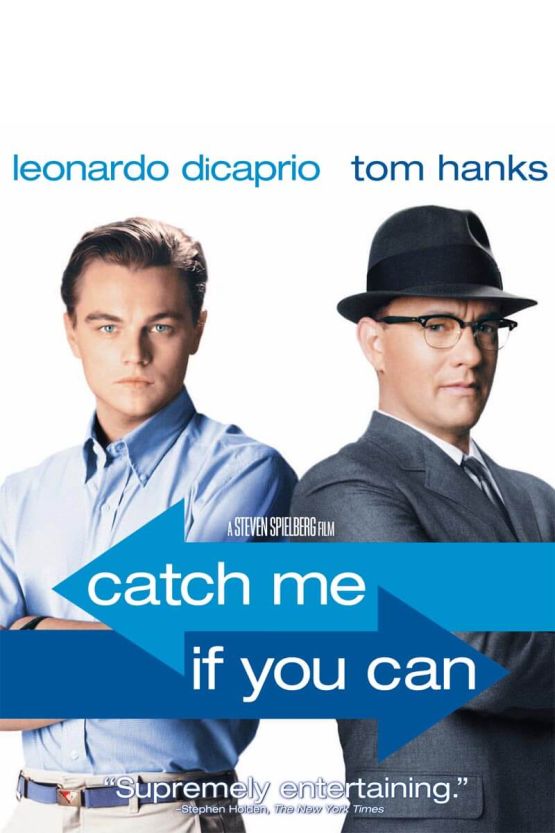

The Stephen A. Smith Hottest Take Award
DiCaprio’s first great lead performance; Hanks’s greatest-actor credentials disputed
In the discussion (22)
Approx. transcript time · 01:03:23Read transcript
- The first-great-DiCaprio-performance hot take argues that this film depends more fully on him than Titanic or Romeo + Juliet; This Boy's Life is offered as an earlier exception.
- Hanks's greatest-actor claim is questioned through weak accents, while his extraordinary movie-star run, popularity and success are defended; Cruise and Denzel are personal alternatives.
- Accent objections name Elvis, Charlie Wilson's War, The Post, Captain Phillips, The Terminal and Cloud Atlas, with disagreement over Captain Phillips.
- Carl's composite identity makes the accent unnecessary; the performance is placed low in Hanks's career despite affection for his presence.
- Hanks's two Oscars and serious films are weighed against Cruise's cultural force and comeback; Forrest Gump's standing draws disagreement.
- Hanks's likability and storytelling are distinguished from greatest-actor status; Cruise's potential in Big or Cast Away is debated, while Greyhound illustrates a sturdy role Hanks handles well.
- Cruise's consistent charismatic action lane is contrasted with Hanks's risky character work; hypothetical swaps include Philadelphia, Forrest Gump, Big, Mission: Impossible, Days of Thunder, Edge of Tomorrow, Minority Report, Taken, Eyes Wide Shut and A Few Good Men, with disagreement over equivalence.
- Hanks is defended as the more accomplished actor while Cruise's longevity and Denzel's comparable stature complicate the comparison.
- Hanks's post-Catch Me filmography is enumerated: The Ladykillers, The Terminal, The Polar Express, The Da Vinci Code, Charlie Wilson's War, Angels & Demons, Larry Crowne, Extremely Loud & Incredibly Close, Cloud Atlas, Captain Phillips, Saving Mr. Banks, Bridge of Spies, A Hologram for the King, Sully, Inferno, The Circle, The Post, Greyhound, A Beautiful Day in the Neighborhood, News of the World, Finch and Elvis. Cloud Atlas and the later dad-film run draw qualified defense.
- A Man Called Otto is acknowledged as a hit and praised by a family member, while another speaker calls it only okay and a close Scandinavian remake.
- Cruise's commercially bigger career is distinguished from Hanks's better career; comparing their 1988–2001 peaks prompts suggested Oscars for Hanks in Cast Away and Cruise in Jerry Maguire and Magnolia.
- Denzel's paycheck films, including The Equalizer, Déjà Vu and The Taking of Pelham 123, are considered more entertaining; Hanks's self-imposed Jimmy Stewart image may constrain his roles.
- Cruise losing for Magnolia to Caine in The Cider House Rules and for Jerry Maguire to Rush in Shine is challenged; Jude Law's Ripley performance is admired but placed below Cruise's Magnolia work.
- Hanks's consecutive Philadelphia and Forrest Gump Oscars strengthen his case; Denzel's Glory and Training Day wins are recalled with Malcolm X considered another deserved award.
- Cruise's 2005-onward filmography is enumerated: War of the Worlds, Mission: Impossible III, Lions for Lambs, Tropic Thunder, Valkyrie, Knight and Day, Ghost Protocol, Rock of Ages, Jack Reacher, Oblivion, Edge of Tomorrow, Rogue Nation, Never Go Back, The Mummy, American Made, Fallout and Maverick; several weak films temper the franchise-success defense.
- Hanks's willingness to experiment is defended against Cruise's safe action lane, while Cruise's ongoing audience appeal and perceived rescue of theatrical movies are counterarguments; longevity versus peak quality is compared with basketball greatness.
- Cruise's 1990s-to-Minority Report run is compared with Hanks's peak, with The Others explicitly corrected as only an executive-producing credit; Toy Story is considered a decisive Hanks asset.
- Cruise's film library is the preferred desert-island entertainment choice for one speaker, while De Niro is called the best actor of that speaker's lifetime; Daniel Day-Lewis's great performances are distinguished from rewatchability.
- Weak later films and Hanks's lack of a Michael Mann collaboration enter the debate; both stars may be trapped by personas, but Cruise's stunts are considered more entertaining than Hanks's accents.
- The proposed top tier includes Cruise, Hanks and Denzel, before Harrison Ford's placement is debated.
- Ford's capacity for morally compromised sexuality is contrasted with Cruise's usual innocence; Hanks is urged to try a direct villain role without hiding behind makeup and accents.
- The industry's shift away from movie stars is offered as context for older stars' weaker later work; DiCaprio's future is compared with Nicholson's transition, including disagreement over Wolf and Hoffa.