‹ All people

Film credit

Jude Law

Also referred to as Jula, Julep, Judah

Stats

Episodes featuring their films
3
Movies in this archive
3

Rewatchables episodes featuring Jude Law’s films

Contagion

2011 film

Bill Simmons · Sean Fennessey · Chris Ryan

Aired March 8, 2020

Displaying all 3 episodes

Mentioned in discussions

The Insider The Rewatchables
The Insider

What’s Aged the Best?

Plummer, with Pacino, cinematography, and the production process also praised
In the discussion (11)
Approx. transcript time · 00:44:43Read transcript
  • Pacino is praised for listening, processing information and guiding conversations naturally while pursuing an objective. — Chris Ryan
  • The Godfather2 and Sea of Love are comparison performances; Denzel and theater experience inform discussion of generous screen partners. — Sean Fennessey
  • The Pacino–Crow combination is prized, and the movie transcribed as Boyer Raced is recalled as another strong Crow performance.
  • The cinematography, Gulf imagery and inner workings of CBS are praised; the same corporate culture is reserved for aged-worst discussion. — Bill Simmons
  • Plummer increasingly defines Wallace as the real broadcaster recedes from daily memory; posture, gestures and confidence matter more than a literal impression.
  • The controlled smile and sip from a CBS Sports mug are admired details. — Bill Simmons
  • The supporting-actor nominees are debated; Plummer deserved inclusion, while his later Beginners win is treated as career recognition and Pacino’s exclusion is criticized.
  • The discussion marvels at Plummer’s late-career work and reported 1929 birth, then gives him the category.
  • Lindsay Krauss is a later addition, praised as a recognizable actress and part of an unusually normal Pacino marriage. — Chris Ryan
  • One speaker considers Plummer better than the supporting Oscar nominees except Jude Law, praising Law’s charisma in the Ripley role, and places Plummer at least in the top five. — Chris Ryan
  • Another contribution says they would probably go with Cruise too, preserving this alternative preference separately from the Plummer/Jude Law comparison. — Sean Fennessey
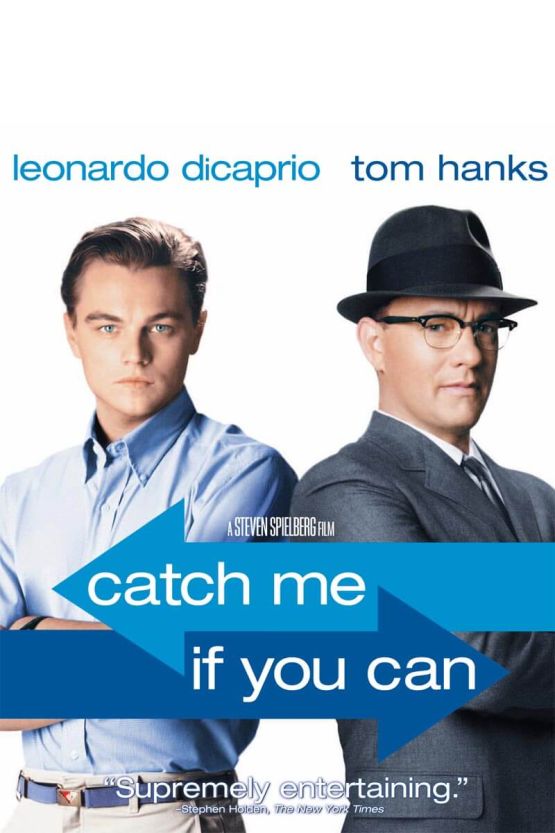
Catch Me If You Can

The Stephen A. Smith Hottest Take Award

DiCaprio’s first great lead performance; Hanks’s greatest-actor credentials disputed

In the discussion (22)
Approx. transcript time · 01:03:23Read transcript
  • The first-great-DiCaprio-performance hot take argues that this film depends more fully on him than Titanic or Romeo + Juliet; This Boy's Life is offered as an earlier exception. — Sean Fennessey
  • Hanks's greatest-actor claim is questioned through weak accents, while his extraordinary movie-star run, popularity and success are defended; Cruise and Denzel are personal alternatives. — Bill Simmons
  • Accent objections name Elvis, Charlie Wilson's War, The Post, Captain Phillips, The Terminal and Cloud Atlas, with disagreement over Captain Phillips. — Bill Simmons
  • Carl's composite identity makes the accent unnecessary; the performance is placed low in Hanks's career despite affection for his presence. — Bill Simmons
  • Hanks's two Oscars and serious films are weighed against Cruise's cultural force and comeback; Forrest Gump's standing draws disagreement. — Sean Fennessey
  • Hanks's likability and storytelling are distinguished from greatest-actor status; Cruise's potential in Big or Cast Away is debated, while Greyhound illustrates a sturdy role Hanks handles well. — Sean Fennessey
  • Cruise's consistent charismatic action lane is contrasted with Hanks's risky character work; hypothetical swaps include Philadelphia, Forrest Gump, Big, Mission: Impossible, Days of Thunder, Edge of Tomorrow, Minority Report, Taken, Eyes Wide Shut and A Few Good Men, with disagreement over equivalence.
  • Hanks is defended as the more accomplished actor while Cruise's longevity and Denzel's comparable stature complicate the comparison. — Bill Simmons
  • Hanks's post-Catch Me filmography is enumerated: The Ladykillers, The Terminal, The Polar Express, The Da Vinci Code, Charlie Wilson's War, Angels & Demons, Larry Crowne, Extremely Loud & Incredibly Close, Cloud Atlas, Captain Phillips, Saving Mr. Banks, Bridge of Spies, A Hologram for the King, Sully, Inferno, The Circle, The Post, Greyhound, A Beautiful Day in the Neighborhood, News of the World, Finch and Elvis. Cloud Atlas and the later dad-film run draw qualified defense. — Sean Fennessey
  • A Man Called Otto is acknowledged as a hit and praised by a family member, while another speaker calls it only okay and a close Scandinavian remake. — Sean Fennessey
  • Cruise's commercially bigger career is distinguished from Hanks's better career; comparing their 1988–2001 peaks prompts suggested Oscars for Hanks in Cast Away and Cruise in Jerry Maguire and Magnolia.
  • Denzel's paycheck films, including The Equalizer, Déjà Vu and The Taking of Pelham 123, are considered more entertaining; Hanks's self-imposed Jimmy Stewart image may constrain his roles.
  • Cruise losing for Magnolia to Caine in The Cider House Rules and for Jerry Maguire to Rush in Shine is challenged; Jude Law's Ripley performance is admired but placed below Cruise's Magnolia work. — Bill Simmons
  • Hanks's consecutive Philadelphia and Forrest Gump Oscars strengthen his case; Denzel's Glory and Training Day wins are recalled with Malcolm X considered another deserved award. — Sean Fennessey
  • Cruise's 2005-onward filmography is enumerated: War of the Worlds, Mission: Impossible III, Lions for Lambs, Tropic Thunder, Valkyrie, Knight and Day, Ghost Protocol, Rock of Ages, Jack Reacher, Oblivion, Edge of Tomorrow, Rogue Nation, Never Go Back, The Mummy, American Made, Fallout and Maverick; several weak films temper the franchise-success defense. — Bill Simmons
  • Hanks's willingness to experiment is defended against Cruise's safe action lane, while Cruise's ongoing audience appeal and perceived rescue of theatrical movies are counterarguments; longevity versus peak quality is compared with basketball greatness. — Bill Simmons
  • Cruise's 1990s-to-Minority Report run is compared with Hanks's peak, with The Others explicitly corrected as only an executive-producing credit; Toy Story is considered a decisive Hanks asset. — Chris Ryan
  • Cruise's film library is the preferred desert-island entertainment choice for one speaker, while De Niro is called the best actor of that speaker's lifetime; Daniel Day-Lewis's great performances are distinguished from rewatchability. — Bill Simmons
  • Weak later films and Hanks's lack of a Michael Mann collaboration enter the debate; both stars may be trapped by personas, but Cruise's stunts are considered more entertaining than Hanks's accents. — Bill Simmons
  • The proposed top tier includes Cruise, Hanks and Denzel, before Harrison Ford's placement is debated. — Bill Simmons
  • Ford's capacity for morally compromised sexuality is contrasted with Cruise's usual innocence; Hanks is urged to try a direct villain role without hiding behind makeup and accents. — Bill Simmons
  • The industry's shift away from movie stars is offered as context for older stars' weaker later work; DiCaprio's future is compared with Nicholson's transition, including disagreement over Wolf and Hoffa. — Sean Fennessey
In the discussion (4)
Approx. transcript time · 01:00:56Read transcript
In the discussion (4)
Approx. transcript time · 01:28:55Read transcript
  • Called a tough one, the answer is that it has to be Jude Law. — Bill Simmons
  • Another voice feels similarly, noting it is amazing that Damon, in such an important performance for a top-five actor of the last 25 years, does not win the movie. — Sean Fennessey
  • Just before recording, someone (transcribed 'Kate Hallowell') said the lasting impression is how incredibly hot Jude Law is in the movie, and the movie is never the same after he leaves. — Sean Fennessey
  • Leaving halfway is compared to a Corleone exit, though The Godfather recovered; getting gunned down halfway through is how you know you are a charismatic actor. — Bill Simmons
Podcast choices
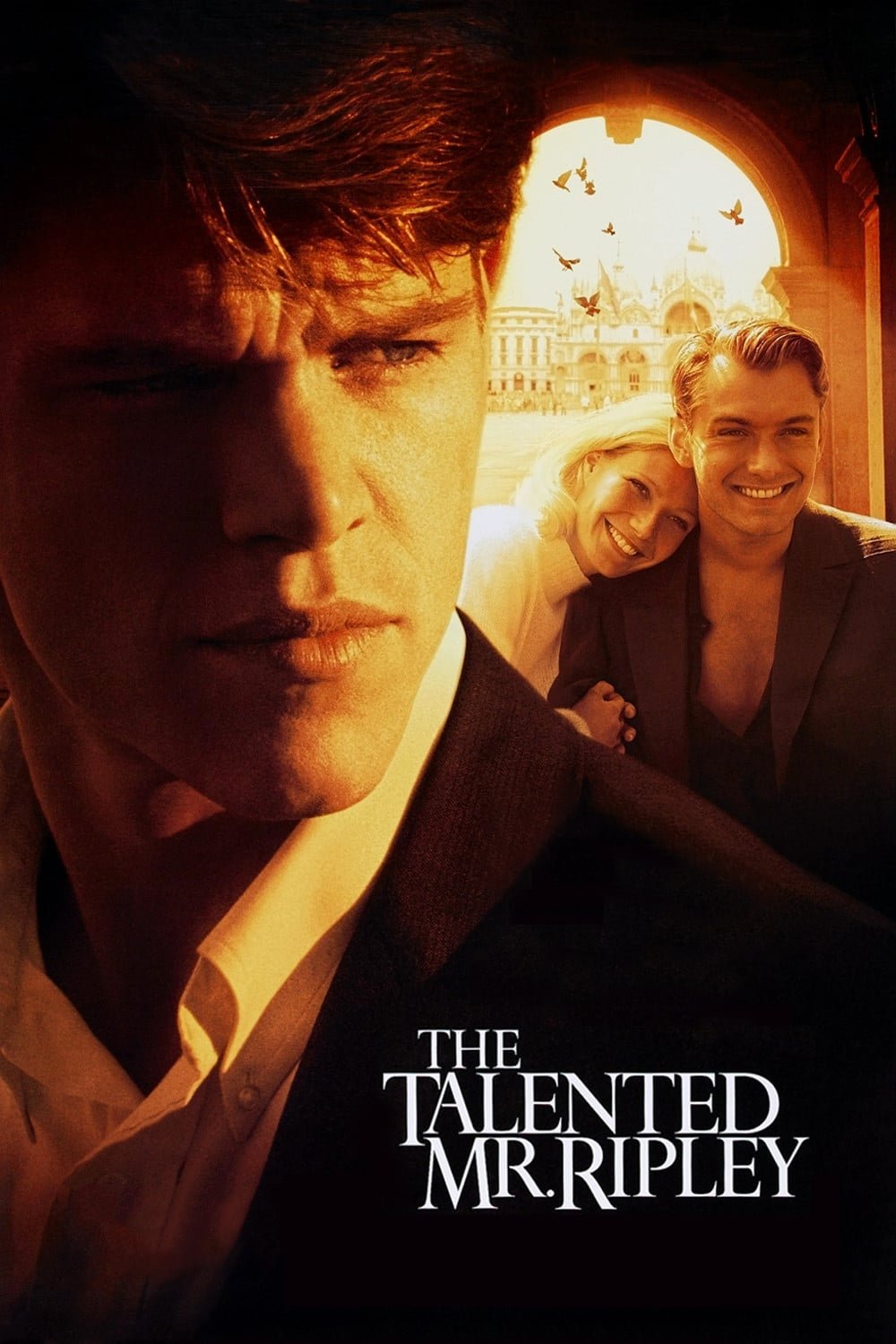
The Talented Mr. Ripley

Picking Nits

Father not going himself; coming clean on the boat; sparing Blanchett's character; Peter's body and the manifest; unchecked passport photo; missing newspaper or yearbook photo; two witnesses

In the discussion (11)
Approx. transcript time · 01:14:50Read transcript
  • Why wouldn't Dickie's dad just go to Italy and drag him back? He is too busy with his ships. — Bill Simmons
  • Could Ripley come clean about being Dickie on the boat with Blanchett's character? No, he would become a suspect. — Amanda Dobbins
  • Why does he kill Jack Davenport's character instead of her? Because people saw him with her, while nobody saw Davenport.
  • What does he do with Peter's body, presumably overboard, and how does he explain a second friend apparently killing himself when the ship's manifest is checked?
  • In the 1950s nobody checks anything: officials compare a passport photo of Jude Law to Matt Damon and say it checks out.
  • A related nit: some newspaper, or a Princeton yearbook, would surely have a real photo of Dickie Greenleaf, the famous shipping heir; the film has a lot of flaws and complicated plotting. — Amanda Dobbins
  • The Amanda Knox story is called basically a remake of this film.
  • This participant's middle name is Knox, which skewed their Google results for four or five years. — Amanda Dobbins
  • The tangent continues with a joke about not being able to go to Italy for a couple of years and being 'mostly vindicated', drawing a 'We?' reply. — Amanda Dobbins
  • Imagining being Ripley on the boat with Peter Smith Kingsley and Dickie's money, then seeing someone who knows them, would mean two witnesses; getting rid of Blanchett's character, even throwing her overboard, would at least be entertained. — Bill Simmons
  • Going overboard is what happens to everyone else except Freddie Miles, who gets found, while Marge gets out of it.
The Talented Mr. Ripley

Half-Assed Internet Research

Damon's weight loss, piano, running and body makeup; Damon singing My Funny Valentine; Jude Law's saxophone, weight gain and broken rib; The Room joke; Hadrian bust; location shooting in sequence

In the discussion (7)
Approx. transcript time · 01:11:06Read transcript
  • Damon allegedly lost 30 pounds, learned piano, ran six miles a day and was covered in body makeup to look pasty and pale, prompting a joke about a pale co-host wearing an undercoat. — Bill Simmons
  • The research says Damon actually sang My Funny Valentine and Jude Law learned the saxophone, leading to a question about Chet Baker. — Bill Simmons
  • The research says Jude Law gained weight to seem more substantial and broke a rib falling backward while filming the boat murder. — Bill Simmons
  • A joke item says a viewer named Tommy was so moved he vowed to make an equally compelling film and four years later made The Room; the hosts riff on the two being similar. — Bill Simmons
  • Tom kills Freddie with a bust of the Roman emperor Hadrian, who the research says had a gay lover who was killed, called a little on the nose. — Bill Simmons
  • A classics major explains that Hadrian built a long wall, partly in the UK, had a gay lover, and resembles the bust in the movie.
  • The research says the production shot in seaside towns, Rome, Sicily and Naples, sometimes hundreds of miles apart, and reportedly shot in sequence; a joke says Clint Eastwood would have banged out all the Sicily scenes in a day. — Bill Simmons
In the discussion (8)
Approx. transcript time · 01:06:25Read transcript
  • A strong case is made for Paltrow (transcribed 'Gwinterre'): she had already won the Oscar and had six commercial movies in two years. — Bill Simmons
  • The category is redefined as the peak of your powers, when you had the most career options; one participant suggests her Goop business peak might be right now. — Bill Simmons
  • Narrowed to acting, this film is called Apex Mountain for her, and it is called a good case. — Bill Simmons
  • Jude Law absolutely is at Apex: coming out of this movie he looked like a future James Bond and the most handsome man in the world, and never topped it. — Bill Simmons
  • A prediction says Law will win an Oscar around age 71 for a mediocre movie, likened to Michael Kane (as transcribed) winning for The Cider House Rules the year Law was nominated for this. — Sean Fennessey
  • 1950s Italy is offered as Apex Mountain, challenged by a reference to Roberto Rossellini's films of the era, and kept as a personal pick. — Sean Fennessey
  • A Hoffman case is mentioned but nobody is ready to make it. — Bill Simmons
  • The director is discussed: after The English Patient he followed up successfully with this, though one participant had thought The English Patient might be his peak; he died young and his later films such as Cold Mountain and Breaking and Entering feel not fully there. — Sean Fennessey
The Talented Mr. Ripley

What’s Aged the Best?

Jude Law; young Blanchett and Paltrow; Italy; production value; Dickie's clothes; Philip Baker Hall's scene; Peter's off-screen killing; scammer-era relevance; wealth-culture theme

In the discussion (11)
Approx. transcript time · 00:46:24Read transcript
  • Flagged as material for the aged-best category: the big-picture theme of a super-wealthy culture others aspire to, which Ripley infiltrates through the father's errand and then kills to avoid leaving. — Bill Simmons
  • Jude Law, already covered, opens the category. — Bill Simmons
  • Peak Blanchett and peak Paltrow are offered; one participant refines it to the young versions of them, caught at the perfect time of their careers. — Amanda Dobbins
  • Italy, with an exclamation point: the production value is sumptuous and makes you want to be part of it, at least for the first two-thirds, and to visit; this is offered as a reason a host's wife likes the film.
  • The film's town, transcribed 'Mangabello', does not exist, but Positano does, prompting a joke about a live Rewatchables there. — Bill Simmons
  • Dickie's clothes are listed, and Philip Baker Hall's one scene. — Bill Simmons
  • The 'Tom is talented, Tom is tender' sequence ending with 'Tom, you're crushing me' is praised; the camera cuts to Tom's room while the dialogue continues, and the hosts debate whether he strangles Peter from behind with a belt or a bear hug.
  • Scammer season: the film applies to recent events and the obsession with surfaces, from Anna Delvey to Instagram people trying to get closer to wealth they cannot access; a reference to Hathaway being scammed by an Italian comes up in passing. — Amanda Dobbins
  • Italy is named again as aging well with thousands of years of history; a wish is voiced to have seen Rome in the 1950s before mass tourism, with a joke about the year 1000 versus 1400. — Sean Fennessey
  • Rome is praised for history on the street and pasta, though a recent summer trip was crowded, hot and smelly; the Italian Mediterranean coast is called an A plus experience. — Amanda Dobbins
  • A participant's honeymoon theme was this movie without the murder, joking that the husband threw in one murder that was covered up. — Amanda Dobbins
The Talented Mr. Ripley

Probably Unanswerable Questions

1999 as the anti-hero's birth; Marge or Sylvana; Dickie and Tom; rooting for Tom; being a Dickie or a Tom; the name Marge coming back

In the discussion (15)
Approx. transcript time · 00:36:49Read transcript
  • Raised early from the Unanswerable Questions list: was 1999 the year the anti-hero was officially born, with Ripley, Tony Soprano and the Fight Club guys, followed by The Shield and The Wire? — Bill Simmons
  • A counterpoint cites Dirty Harry in the 1970s; the hosts joke about whether Dirty Harry is a good cop and call that era the vigilante era of Death Wish and Dirty Harry, close to anti-heroes but protective. — Bill Simmons
  • Would you rather be with Marge or the cute Italian girl? One participant is out on both and is called boring; another loves Sylvana; another wants Marge and mocks Sylvana's haircut.
  • Dickie is said to have been on the right path, playing his options in the 1950s while knowing he would marry Marge, until the plan fell apart.
  • Marge is picked because she can make a martini, has great style and is a writer; whether her novel was bad becomes a joke about writing about rich people in Italy, with a joke that she ends up on Mad Men involved with Don Draper.
  • Another participant prefers Blanchett's character, wealthy but self-hating and vulnerable, recalling her lines about packing lightly and about only being comfortable around others who have money and despise it.
  • Did Dickie ever think of hooking up with Tom? You are meant to think it crossed his mind, since he is a sensualist who wants to try everything. — Sean Fennessey
  • Do you root for Tom? Having seen it so often, one participant roots for no one, but compares rooting for bad people in Natural Born Killers; nearly everyone around Ripley except maybe Marge is not a good person, which partly justifies his choices to the audience. — Sean Fennessey
  • Have you ever been a Dickie or a Tom, someone looked up to aggressively or someone desperate to be another person, perhaps as a teenager? — Sean Fennessey
  • The My Brilliant Friend novels set in Naples (author transcribed 'Fronte') are cited as a female version of this obsessive friendship without the murder; that portrayal is rejected as not what female friendship is, while this film's unhealthy obsession is more relatable. — Amanda Dobbins
  • One participant's Dickies would be Jude Law and people in movies, reflecting a fixation on famous and rich people; charismatic-tornado characters are the ones remembered.
  • Jude Law presents the idealized mid-century American life of wealth, beauty and choosing to do nothing but sleep with beautiful women, listen to jazz and sail.
  • Will the name Marge ever come back? The Simpsons pretty much ended it; Maud is floated, which Judd Apatow tried, and old 1920s-30s names may return after the Olivia and Ava generation. — Bill Simmons
  • Margo is loved and already in rotation, and Paltrow's Tenenbaums character is a Margot; Jenny is pushed for a comeback since there are no Jennys under 15, drawing a Forrest Gump tease. — Bill Simmons
  • A Dickie comeback is wanted, though names with obvious bullying potential are now avoided; a Richie at the Ringer has never been called Dickie.
The Talented Mr. Ripley

Casting What-Ifs

Leo offered Ripley; Leo as Dickie; Christian Bale considered for Ripley; John Malkovich nearly directing

In the discussion (8)
Approx. transcript time · 00:33:55Read transcript
  • Casting What-Ifs is stepped on early: the director is quoted as wanting final say over who played Tom Ripley, refusing to settle for someone he was 80% about, and seeking the brightest young actors he could find, who were household names a year later. — Bill Simmons
  • All five leads needed chemistry with each other or to be plausible enemies; the director found five future movie stars, though Blanchett and Jude Law were not stars when cast, with Law coming off Gattaca. — Amanda Dobbins
  • A worse version of the movie stars Gretchen Mall (as transcribed) instead of Paltrow as Marge; she had a going-to-be-a-thing moment that did not last. — Bill Simmons
  • Leo reportedly declined the offer to play Ripley before Damon was cast, another instance of Damon versus Leo; his version would have been different and not as good. — Bill Simmons
  • Leo should have been Dickie: blonde, tall and handsome at that age.
  • Christian Bale was reportedly considered for Ripley; he could have done it but is slightly too menacing, lacking the boyish all-American look Damon turns in his face. — Amanda Dobbins
  • Bale a year later did American Psycho, called an interesting double feature of con men who lure people to be murdered; Leo later played Gatsby, which suits his flamboyant style better. — Amanda Dobbins
  • John Malcovich (as transcribed) reportedly came very close to directing the movie and later played Ripley himself.
The Holiday The Rewatchables
In the discussion (1)
Approx. transcript time · 01:18:44Read transcript
  • Jude Law won the movie, resoundingly: that guy is so hot it carries the movie, tough but true, and the movie does not work without him; there is no other answer, and yet, as transcribed, 'it still has Apex Mountain', how wild.
Podcast choices
Speaker not identified
Jude Law
Speaker not identified
Jude Law
Speaker not identified
Jude Law
The Holiday The Rewatchables
The Holiday

Probably Unanswerable Questions

Could Amanda be a stepmom? Would she move to England and stay? Does Graham travel with his glasses? Would Iris really let Jack Black pick something from her eyelash? Were two suitcases enough for Amanda's wardrobe? Did she buy the outfit she wore to Graham's house?

In the discussion (5)
Approx. transcript time · 01:17:31Read transcript
  • Cameron Diaz's character Amanda as a stepmom: nobody can imagine it; she would dress the girls in cute clothes and try hard, but it would be tough; perhaps she moves to England, wonders what she did, and works through it rather than flying home to her beautiful house and high-profile career, since she was unhappy there and already came back once.
  • Does Jude Law leave his glasses at his sister's house or travel with them for any big night out? He is assumed to be a low-grade, on-off glasses wearer, a dad around 40, with them in his suit pocket, and he looks so hot in them.
  • Would anyone let a stranger who just drove through the door in, or let Jack Black, in the Santa Ana winds, lean right in breathing on Kate Winslet's face to pick something from her eyelash? The hosts would recoil.
  • Were Cameron Diaz's two suitcases enough for five jackets, bulky shoes and boots, even allowing for compact light cashmere layers?
  • Did she buy the outfit she wore to his house, a long pencil skirt with a thick rhinestone belt and a beautiful top, since she expected no men there? She only dresses in pajamas or structured formal clothes, and maybe she packed everything she owns with weird expectations of England.
Displaying discussions 1 - 12 of 22 in total

Films in the archive