
Film credit
Jake Gyllenhaal
Also referred to as Gyllenhaal, gillenhall
Stats
- Episodes featuring their films
- 4
- Movies in this archive
- 4
Rewatchables episodes featuring Jake Gyllenhaal’s films
Mentioned in discussions


Apex Mountain
David Fincher (creative apex disputed); Mark Ruffalo as a movie detective; John Carroll Lynch; Zodiac within Fincher’s filmography
In the discussion (10)
- Fincher’s apex is disputed among Zodiac, The Social Network, Fight Club, and Gone Girl, with a distinct case for Zodiac as his creative apex.
- Mark Ruffalo is judged at an apex specifically as a movie detective, with Zodiac favored over Collateral. — Bill Simmons
- Gyllenhaal’s apex is debated against Nightcrawler and his End of Watch/Prisoners period.
- San Francisco movies are measured against 48 Hrs., Bullitt, and Dirty Harry. — Bill Simmons
- Chloë Sevigny is rejected in favor of The Last Days of Disco. — Bill Simmons
- Fincher villains are compared, with John Doe favored over Arthur Leigh Allen and Mark Zuckerberg. — Bill Simmons
- John Carroll Lynch movies are compared, and Zodiac is chosen over Fargo. — Bill Simmons
- Donovan needle drops are compared across Zodiac, To Die For, and Goodfellas.
- Wooden dildos receive a joking apex discussion.
- Zodiac is selected as Fincher’s best or favorite movie, with Seven and other later films discussed. — Sean Fennessey

Casting What-Ifs
Gary Oldman, Orlando Bloom, Brad Pitt, and Jennifer Aniston appear in a detailed casting history.
In the discussion (6)
- Gary Oldman was considered for Melvin Belli but physical resemblance was an issue. — Sean Fennessey
- Orlando Bloom was lined up as an alternative Graysmith. — Sean Fennessey
- Jennifer Aniston reportedly recommended Gyllenhaal and Ruffalo to Fincher. — Sean Fennessey
- Aniston declined the Chloë Sevigny role. — Sean Fennessey
- Fincher wanted Brad Pitt for Avery before Robert Downey Jr. — Bill Simmons
- The panel prefers Downey’s fast, nervy energy for Avery. — Sean Fennessey

What’s Aged the Worst?
The abrupt four-year title card, too little Downey–Gyllenhaal time, their fictionalized friendship, Anthony Edwards’s wig, and the film’s persuasive Arthur Leigh Allen framing
In the discussion (5)
- Replacing a planned two-minute musical time-passage montage with the abrupt “four years later” card is criticized. — Bill Simmons
- The film is judged about five minutes short on Downey and Gyllenhaal together. — Bill Simmons
- Their entertaining friendship is acknowledged as a movie invention rather than a real friendship. — Chris Ryan
- Anthony Edwards wearing a wig is criticized. — Bill Simmons
- The movie left one host certain Arthur Leigh Allen was the killer for years, a confidence later evidence unsettled. — Sean Fennessey
The David Fincher Award for “Wow, This Director May Have Been a Fucking Lunatic”
Digitally adding knuckle hair to Jake Gyllenhaal’s hands
The panel proposes a new category here.
In the discussion (3)
- The full new award name is spoken. — Bill Simmons
- Fincher reportedly judged Gyllenhaal’s hands too hairless and pretty. — Bill Simmons
- Hair was digitally added to close-ups of Gyllenhaal’s knuckles. — Bill Simmons

What’s Aged the Best?
True-crime culture, period San Francisco, Downey, the protagonist shift, Graysmith’s internet-like obsession, Fincher’s catalog, and several craft details
In the discussion (14)
- Chloë Sevigny’s humor and deliberately ordinary styling are praised.
- The rise of true-crime culture gives the film more resonance. — Bill Simmons
- Late-1960s and early-1970s San Francisco is nominated as an enduring setting. — Bill Simmons
- Fincher’s San Francisco feels haunted and geographically unmistakable.
- Downey’s mutterings and banter with Gyllenhaal are praised. — Chris Ryan
- The tonal and procedural shift from Toschi to the isolated Graysmith is praised. — Chris Ryan
- The unsolvability of mundane tragedy is treated as a lasting subject. — Sean Fennessey
- Graysmith’s external obsession anticipates internet behavior. — Sean Fennessey
- Robert Downey Jr.’s comeback context is nominated. — Bill Simmons
- Zodiac’s place in Fincher’s catalog is nominated. — Bill Simmons
- Paul Avery’s waterside home is praised.
- The Chronicle newsroom recreation is praised for capturing an empty morning newspaper office. — Bill Simmons
- The soundtrack’s gradual move into yacht rock is praised. — Bill Simmons
- Downey’s on-screen smoking is praised.

Steven Seagal shitting on himself award for most unbelievable anecdote from the actual film shoot
Fincher’s repeated takes and exacting treatment of Gyllenhaal, Downey, and Ruffalo supply several production-shoot anecdotes.
In the discussion (6)
- Fincher’s extreme number of takes is the central production anecdote. — Bill Simmons
- Gyllenhaal reportedly found the process bruising and later described difficulty working that way. — Bill Simmons
- A take in the mid-fifties was reportedly used after many repetitions. — Bill Simmons
- A reshoot involving Gyllenhaal’s father is discussed. — Bill Simmons
- Downey’s improvisational energy and Fincher’s control are contrasted. — Sean Fennessey
- Ruffalo’s experience with the exacting process is discussed. — Bill Simmons

Most Rewatchable Scene
The Arthur Leigh Allen interrogation
In the discussion (15)
- The Lovers Lane opening murder and its flashlight-on-gun image are nominated. — Bill Simmons
- The Vallejo fireworks opening is nominated. — Bill Simmons
- Graysmith reading the decoded letter as Paul Avery watches is nominated. — Bill Simmons
- The Lake Berryessa bluff murder is called one of the most unsettling murder scenes.
- Melvin Belli’s live television appearance is nominated.
- The Ione Skye car sequence is nominated. — Bill Simmons
- Downey and Gyllenhaal’s newsroom and bar exchanges are nominated.
- The Arthur Leigh Allen interrogation is the final favorite. — Bill Simmons
- The search of Allen’s trailer is nominated. — Bill Simmons
- The basement sequence is nominated, though one host says repeat viewings reduce its impact.
- Graysmith’s late-night visit to Toschi is nominated. — Bill Simmons
- The Ace Hardware stare-down is nominated.
- Toschi and Armstrong processing the taxi-cab murder scene is nominated. — Chris Ryan
- Graysmith and Toschi’s first meeting is nominated. — Sean Fennessey
- The final Door-to-Door breakfast is called a favorite except for the interrogation. — Sean Fennessey

Apex Mountain
Ledger’s living-career peak and Lee’s creative freedom: yes
In the discussion (3)
- Ledger’s living-career apex and Lee’s creative freedom are placed here; Gyllenhaal’s comes later around End of Watch and Prisoners. — Bill Simmons
- Williams and Hathaway are rejected; traumatized Williams wives peak in Manchester, and a sheep-film counterexample is favored. — Wesley Morris
- Gay Westerns qualify, while Power of the Dog does not work for either participant. — Wesley Morris
In the discussion (2)
- De Niro in Goodfellas is the unique10 benchmark, Cole Hauser’s Goodwill Hunt entrance about9.7, and Ledger9.5 for convincing cigarette handling. — Bill Simmons
- Gyllenhaal is around7.5 to8, including the shared postcoital smoking; Cruise, Roberts and Reeves in Hardball are unconvincing comparisons. — Bill Simmons
Most Rewatchable Scene
The quit-you confrontation and opening
In the discussion (10)
- The opening glances and famous tent scene are nominated. — Bill Simmons
- A first-time young viewer’s surprise at the tent scene becomes tears by the ending. — Bill Simmons
- The fight and goodbye, Ennis’s wall punch and the later refusal of another job are highlighted. — Bill Simmons
- Lorraine’s arrival and Jack’s reunion visit after the postcard are nominated. — Bill Simmons
- The reunion kiss and Alma discovering it expose the relationship through an outsider’s view; the loss of control is both moving and risky. — Wesley Morris
- The campfire tire-iron story establishes mortal stakes; the two Thanksgivings contrast father-in-law conflict with Alma revealing she knew about the fishing lie. — Bill Simmons
- The double date and cabin invitation are a favorite, with the invitation becoming a personal running joke. — Bill Simmons
- The quit-you confrontation is called the best scene; Ledger collapses and Gyllenhaal registers that he pushed too far. — Wesley Morris
- The ambiguous call to Lorraine and the parents’ house with the hidden shirts are praised. — Bill Simmons
- The opening is the other final favorite, praised as a modern dance between the men. — Bill Simmons
Recasting Couch
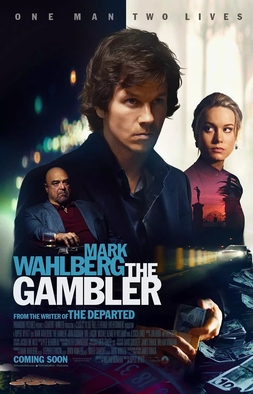
Jon Bernthal; Ethan Hawke; Oscar Isaac disputed; Jake Gyllenhaal qualified; Mark Ruffalo
In the discussion (7)
- Jon Bernthal is the ideal replacement proposed for the lead. — Bill Simmons
- Oscar Isaac, Ethan Hawke and Mark Ruffalo are further possibilities, especially for believable teaching scenes. — Bill Simmons
- Jake Gyllenhaal is another appealing replacement, imagined reacting with greater anguish at the roulette loss. — Bill Simmons
- Jon Bernthal is reaffirmed as the desired Wahlberg replacement. — Bill Simmons
- Oscar Isaac and Ethan Hawke are proposed for a more bookish lead; Isaac is challenged for lacking the unintentional comedy the film needs. — Bill Simmons
- Jake Gyllenhaal could supply comic excess, although his intensity and potential weight loss might go too far. — Bill Simmons
- Bernthal and Ruffalo are reaffirmed as performers who could deliver the classroom speech more convincingly. — Bill Simmons
Recasting Couch
Recognizable young stars considered, then challenged
In the discussion (2)
- Affleck, Damon and Paltrow are floated as an example of using recognizable actors. — Bill Simmons
- Michelle Williams, Heath Ledger and Jake Gyllenhaal are proposed, then the premise is challenged because recognizable actors would undermine it. — Bill Simmons



