‹ All movies
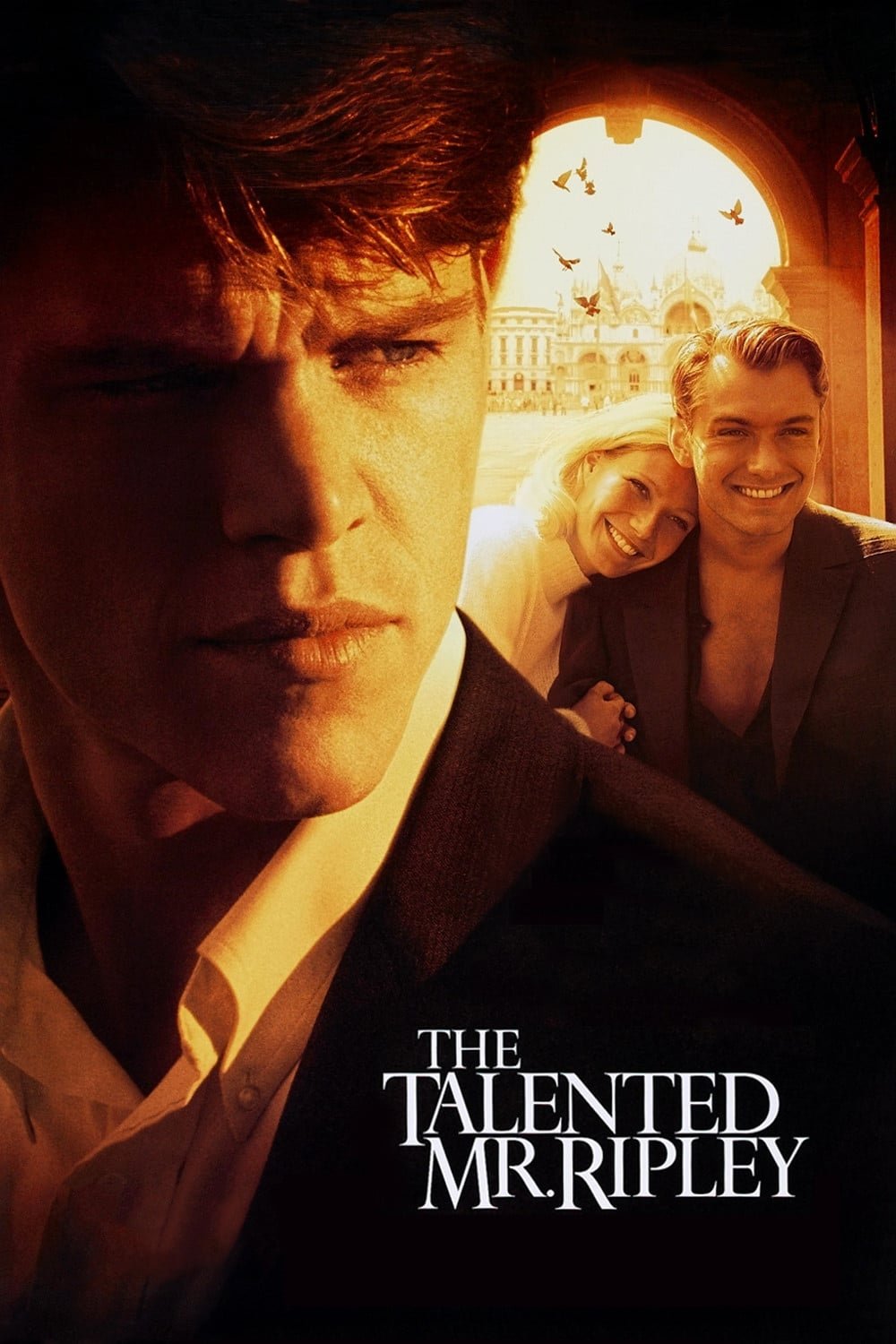
The Talented Mr. Ripley poster

The Talented Mr. Ripley

139 minutes

Cast

Selected cast credits · Film reference

Matt Damon Tom Ripley
Gwyneth Paltrow Marge Sherwood
Jude Law Dickie Greenleaf
Cate Blanchett Meredith Logue
Philip Seymour Hoffman Freddie Miles
Jack Davenport Peter Smith-Kingsley
James Rebhorn Herbert Greenleaf
Sergio Rubini Inspector Roverini
Philip Baker Hall Alvin MacCarron
Celia Weston Aunt Joan
Stefania Rocca Silvana

The Talented Mr. Ripley | The Rewatchables

Explore episodeClose episode

Producer credits not yet identified.

Casting What-Ifs

Leo offered Ripley; Leo as Dickie; Christian Bale considered for Ripley; John Malkovich nearly directing

In the discussion (8)
Approx. transcript time · 00:33:55Read transcript
  • Casting What-Ifs is stepped on early: the director is quoted as wanting final say over who played Tom Ripley, refusing to settle for someone he was 80% about, and seeking the brightest young actors he could find, who were household names a year later.
  • All five leads needed chemistry with each other or to be plausible enemies; the director found five future movie stars, though Blanchett and Jude Law were not stars when cast, with Law coming off Gattaca.
  • A worse version of the movie stars Gretchen Mall (as transcribed) instead of Paltrow as Marge; she had a going-to-be-a-thing moment that did not last.
  • Leo reportedly declined the offer to play Ripley before Damon was cast, another instance of Damon versus Leo; his version would have been different and not as good.
  • Leo should have been Dickie: blonde, tall and handsome at that age.
  • Christian Bale was reportedly considered for Ripley; he could have done it but is slightly too menacing, lacking the boyish all-American look Damon turns in his face.
  • Bale a year later did American Psycho, called an interesting double feature of con men who lure people to be murdered; Leo later played Gatsby, which suits his flamboyant style better.
  • John Malcovich (as transcribed) reportedly came very close to directing the movie and later played Ripley himself.

Roger Ebert's review

In the discussion (3)
Approx. transcript time · 00:35:44Read transcript
  • Ebert's review is quoted as calling it an intelligent thriller, insidious in leading us to identify with Tom Ripley, a monster we want to get away with it; the score is read as 'Four to four'.
  • Asked whether they root for Ripley, one answer is yes, against your will, because the film is structurally in his head and the first hour enraptures you with Dickie and Marge.
  • Another view is that he starts as a sympathetic lower-middle-class underdog but becomes a specific brand of evil, perhaps mentally ill; one participant says they rooted for him the whole time, even after he kills Freddie.

Probably Unanswerable Questions

1999 as the anti-hero's birth; Marge or Sylvana; Dickie and Tom; rooting for Tom; being a Dickie or a Tom; the name Marge coming back

In the discussion (15)
Approx. transcript time · 00:36:49Read transcript
  • Raised early from the Unanswerable Questions list: was 1999 the year the anti-hero was officially born, with Ripley, Tony Soprano and the Fight Club guys, followed by The Shield and The Wire?
  • A counterpoint cites Dirty Harry in the 1970s; the hosts joke about whether Dirty Harry is a good cop and call that era the vigilante era of Death Wish and Dirty Harry, close to anti-heroes but protective.
  • Would you rather be with Marge or the cute Italian girl? One participant is out on both and is called boring; another loves Sylvana; another wants Marge and mocks Sylvana's haircut.
  • Dickie is said to have been on the right path, playing his options in the 1950s while knowing he would marry Marge, until the plan fell apart.
  • Marge is picked because she can make a martini, has great style and is a writer; whether her novel was bad becomes a joke about writing about rich people in Italy, with a joke that she ends up on Mad Men involved with Don Draper.
  • Another participant prefers Blanchett's character, wealthy but self-hating and vulnerable, recalling her lines about packing lightly and about only being comfortable around others who have money and despise it.
  • Did Dickie ever think of hooking up with Tom? You are meant to think it crossed his mind, since he is a sensualist who wants to try everything.
  • Do you root for Tom? Having seen it so often, one participant roots for no one, but compares rooting for bad people in Natural Born Killers; nearly everyone around Ripley except maybe Marge is not a good person, which partly justifies his choices to the audience.
  • Have you ever been a Dickie or a Tom, someone looked up to aggressively or someone desperate to be another person, perhaps as a teenager?
  • The My Brilliant Friend novels set in Naples (author transcribed 'Fronte') are cited as a female version of this obsessive friendship without the murder; that portrayal is rejected as not what female friendship is, while this film's unhealthy obsession is more relatable.
  • One participant's Dickies would be Jude Law and people in movies, reflecting a fixation on famous and rich people; charismatic-tornado characters are the ones remembered.
  • Jude Law presents the idealized mid-century American life of wealth, beauty and choosing to do nothing but sleep with beautiful women, listen to jazz and sail.
  • Will the name Marge ever come back? The Simpsons pretty much ended it; Maud is floated, which Judd Apatow tried, and old 1920s-30s names may return after the Olivia and Ava generation.
  • Margo is loved and already in rotation, and Paltrow's Tenenbaums character is a Margot; Jenny is pushed for a comeback since there are no Jennys under 15, drawing a Forrest Gump tease.
  • A Dickie comeback is wanted, though names with obvious bullying potential are now avoided; a Richie at the Ringer has never been called Dickie.

Most Rewatchable Scene

Singing in the club

In the discussion (23)
Approx. transcript time · 00:38:37Read transcript
  • First nominee: Tom hanging out with Dickie for the first time, including the lunch where Tom impersonates Dickie's father and lists his talents as forging signatures, telling lies and impersonating practically anybody.
  • Revealing his talents so early seems odd, perhaps a mind trick; Dickie does not remember him from Princeton but is enamored, since charismatic people like being around those they can push around.
  • Con men often reveal part of their strategy to make you trust them, which makes the talents exchange a cool scene.
  • A shout-out goes to the opening credits, styled after Saul Bass's Hitchcock credits (Strangers on a Train was also a Highsmith adaptation), with sliding lines that fit the film's theme of how people are seen and can flip.
  • The mid-to-late 90s is called the era when movies got good at credits, citing Enemy of the State and Seven.
  • Tom singing jazz with Dickie in the club for the first time is called possibly a host's wife's favorite movie scene of all time, and another participant's spouse is also obsessed with it; it condenses the movie's themes into two minutes.
  • The singer Fausto sells the song, and Damon, brought in near the end, plays it as awkward but thrilled to be there, which is good character building.
  • Freddie's entrance is called an all-time five seconds and one of the best entrances in movie history: he pulls into a piazza in a cherry-red car and his first line asks whether you want to sleep with everyone you see just once.
  • The entrance is called sleazy but charming in a Freddie way.
  • Next come Freddie mocking Tom at breakfast for living off Dickie, the boat line asking why men at play always pretend to kill each other, and Freddie's repeated 'Tommy, how's the peeping', which the hosts wonder whether Hoffman improvised.
  • The boat murder is called violent, weird and well acted; it turns ugly with the 'third class mooch' insult and unfolds so that an unintentional killing seems realistic.
  • Dickie's 'you can be a leech, and it's boring' line, used in the cold open, is called one of the more devastating digs you can put on a person.
  • Ripley is also protecting things he wants known but will not say, such as being in love with Dickie; a counterpoint frames the tension as wanting to be with Dickie versus wanting to be Dickie.
  • The chess scene with Dickie in the bathtub is added as important: its unspoken power dynamics and possible sexual challenge set Ripley off.
  • Another participant left the bathtub scene out as trying 10% too hard to establish sexual tension; neither thought Dickie was gay, rather that he lords everyone's attraction over them, even Freddie's.
  • Tom running into Peter and Marge at the opera is nominated: right after the opera parallel to killing Dickie, he is strutting as Dickie, slinks around the corner to avoid exposure, and Marge shows the first hint of suspicion.
  • Freddie confronting Tom at the apartment is the next pick, for Hoffman's line readings about the new piano, the furnishings being bourgeois and Tom being a quick study.
  • Freddie is thought to know Tom is a con man who did not go to Princeton, but not that he killed Dickie; he suspects Tom of taking advantage of Dickie, as everyone does.
  • One participant has no more 100% rewatchable scenes and likes the first two-thirds more; Marge's late outburst at Tom is liked, a change from the book where she does not suspect him, but not given full rewatchable status.
  • The Phil Baker Hall scene is nominated because it seems headed one way and goes the other.
  • Like all the Ripley stories, including Purple Noon, the detective scene sets up a reveal and Ripley wriggles out; Purple Noon's ending, where he gets caught, is said to betray the uncatchable character.
  • The detective says he does not like bullshit, then instead of accusing Tom offers him money for doing a good job; Phil Baker Hall is basically playing his Boogie Knights (as transcribed) character and is loved every time.
  • Asked for the most rewatchable scene, the answer is the singing in the club, followed by 'I agree. I agree.'

What’s Aged the Best?

Jude Law; young Blanchett and Paltrow; Italy; production value; Dickie's clothes; Philip Baker Hall's scene; Peter's off-screen killing; scammer-era relevance; wealth-culture theme

In the discussion (11)
Approx. transcript time · 00:46:24Read transcript
  • Flagged as material for the aged-best category: the big-picture theme of a super-wealthy culture others aspire to, which Ripley infiltrates through the father's errand and then kills to avoid leaving.
  • Jude Law, already covered, opens the category.
  • Peak Blanchett and peak Paltrow are offered; one participant refines it to the young versions of them, caught at the perfect time of their careers.
  • Italy, with an exclamation point: the production value is sumptuous and makes you want to be part of it, at least for the first two-thirds, and to visit; this is offered as a reason a host's wife likes the film.
  • The film's town, transcribed 'Mangabello', does not exist, but Positano does, prompting a joke about a live Rewatchables there.
  • Dickie's clothes are listed, and Philip Baker Hall's one scene.
  • The 'Tom is talented, Tom is tender' sequence ending with 'Tom, you're crushing me' is praised; the camera cuts to Tom's room while the dialogue continues, and the hosts debate whether he strangles Peter from behind with a belt or a bear hug.
  • Scammer season: the film applies to recent events and the obsession with surfaces, from Anna Delvey to Instagram people trying to get closer to wealth they cannot access; a reference to Hathaway being scammed by an Italian comes up in passing.
  • Italy is named again as aging well with thousands of years of history; a wish is voiced to have seen Rome in the 1950s before mass tourism, with a joke about the year 1000 versus 1400.
  • Rome is praised for history on the street and pasta, though a recent summer trip was crowded, hot and smelly; the Italian Mediterranean coast is called an A plus experience.
  • A participant's honeymoon theme was this movie without the murder, joking that the husband threw in one murder that was covered up.

What’s Aged the Worst?

Slow last 45 minutes; confusing Sylvana death scene

In the discussion (4)
Approx. transcript time · 01:00:08Read transcript
  • The last 45 minutes are a little slow; about 10 minutes could have been cut.
  • Sylvana's death scene at the festival is still confusing: how she killed herself, how they knew it was suicide rather than murder, and what the festival was.
  • Drowning as a suicide method is questioned, her despair is not fully established beyond the pregnancy, and a scene seems missing.
  • The cut straight to Dickie implies he is responsible; whether he murdered her is left ambiguous, and a participant agrees they could not tell what the film was going for.
In the discussion (5)
Approx. transcript time · 01:04:37Read transcript
  • The Dion Waiters Award can only be Hoffman, repeated for emphasis.
  • The real Dion Waiters is said to be struggling, suspended twice in Miami for conduct detrimental to the team.
  • Renaming it the Freddie Miles Award is floated, calling this one of the all-time heat checks on the podcast.
  • A plan is described: after the 100th episode, with the 101st a reheat with Chris Ryan, listeners would pick a new name from four choices on Twitter.
  • An objection says the name cannot change yet because Dion Waiters was on the Oklahoma City Thunder comparison team and Hoffman's character is kind of the Dion Waiters.
In the discussion (8)
Approx. transcript time · 01:06:25Read transcript
  • A strong case is made for Paltrow (transcribed 'Gwinterre'): she had already won the Oscar and had six commercial movies in two years.
  • The category is redefined as the peak of your powers, when you had the most career options; one participant suggests her Goop business peak might be right now.
  • Narrowed to acting, this film is called Apex Mountain for her, and it is called a good case.
  • Jude Law absolutely is at Apex: coming out of this movie he looked like a future James Bond and the most handsome man in the world, and never topped it.
  • A prediction says Law will win an Oscar around age 71 for a mediocre movie, likened to Michael Kane (as transcribed) winning for The Cider House Rules the year Law was nominated for this.
  • 1950s Italy is offered as Apex Mountain, challenged by a reference to Roberto Rossellini's films of the era, and kept as a personal pick.
  • A Hoffman case is mentioned but nobody is ready to make it.
  • The director is discussed: after The English Patient he followed up successfully with this, though one participant had thought The English Patient might be his peak; he died young and his later films such as Cold Mountain and Breaking and Entering feel not fully there.
In the discussion (5)
Approx. transcript time · 01:09:04Read transcript
  • Philip Baker Hall is mentioned as a possible pick but set aside because he is 'Philip Baker Hall now'.
  • James Rebhorn, who plays Dickie's dad, is named an all-time that guy, with both called all-timers.
  • His credits are listed: a film transcribed as 'incentive of a woman' (also with Hoffman), My Cousin Vinny and Basic Instinct back to back, Carlito's Way, White Squall, a psychiatrist in Basic Instinct, and the dad on Homeland.
  • Rebhorn is called the G.D. Spradlin of his generation, who would have played Senator Geary in the 70s; a that-guy pyramid is proposed with Joe Panelliano (as transcribed) as the overlord for his 80s run.
  • Rebhorn's character hating jazz, paying a player $100 to stop, is liked; his hatred of Europe is explained as post-war American snobbery, with a Brexit joke.

Half-Assed Internet Research

Damon's weight loss, piano, running and body makeup; Damon singing My Funny Valentine; Jude Law's saxophone, weight gain and broken rib; The Room joke; Hadrian bust; location shooting in sequence

In the discussion (7)
Approx. transcript time · 01:11:06Read transcript
  • Damon allegedly lost 30 pounds, learned piano, ran six miles a day and was covered in body makeup to look pasty and pale, prompting a joke about a pale co-host wearing an undercoat.
  • The research says Damon actually sang My Funny Valentine and Jude Law learned the saxophone, leading to a question about Chet Baker.
  • The research says Jude Law gained weight to seem more substantial and broke a rib falling backward while filming the boat murder.
  • A joke item says a viewer named Tommy was so moved he vowed to make an equally compelling film and four years later made The Room; the hosts riff on the two being similar.
  • Tom kills Freddie with a bust of the Roman emperor Hadrian, who the research says had a gay lover who was killed, called a little on the nose.
  • A classics major explains that Hadrian built a long wall, partly in the UK, had a gay lover, and resembles the bust in the movie.
  • The research says the production shot in seaside towns, Rome, Sicily and Naples, sometimes hundreds of miles apart, and reportedly shot in sequence; a joke says Clint Eastwood would have banged out all the Sicily scenes in a day.
In the discussion (4)
Approx. transcript time · 01:13:26Read transcript

Picking Nits

Father not going himself; coming clean on the boat; sparing Blanchett's character; Peter's body and the manifest; unchecked passport photo; missing newspaper or yearbook photo; two witnesses

In the discussion (11)
Approx. transcript time · 01:14:50Read transcript
  • Why wouldn't Dickie's dad just go to Italy and drag him back? He is too busy with his ships.
  • Could Ripley come clean about being Dickie on the boat with Blanchett's character? No, he would become a suspect.
  • Why does he kill Jack Davenport's character instead of her? Because people saw him with her, while nobody saw Davenport.
  • What does he do with Peter's body, presumably overboard, and how does he explain a second friend apparently killing himself when the ship's manifest is checked?
  • In the 1950s nobody checks anything: officials compare a passport photo of Jude Law to Matt Damon and say it checks out.
  • A related nit: some newspaper, or a Princeton yearbook, would surely have a real photo of Dickie Greenleaf, the famous shipping heir; the film has a lot of flaws and complicated plotting.
  • The Amanda Knox story is called basically a remake of this film.
  • This participant's middle name is Knox, which skewed their Google results for four or five years. — Amanda Dobbins
  • The tangent continues with a joke about not being able to go to Italy for a couple of years and being 'mostly vindicated', drawing a 'We?' reply.
  • Imagining being Ripley on the boat with Peter Smith Kingsley and Dickie's money, then seeing someone who knows them, would mean two witnesses; getting rid of Blanchett's character, even throwing her overboard, would at least be entertained.
  • Going overboard is what happens to everyone else except Freddie Miles, who gets found, while Marge gets out of it.

The Neil McCauley “A Book about Metals” Award for Best Line from the Movie

"I always thought it would be better to be a fake somebody than a real nobody."; "No matter what you do, no matter how awful, no one ever thinks they're a bad person."; "Why is it when men play they always play at killing each other?"

In the discussion (3)
Approx. transcript time · 01:18:32Read transcript
  • Beyond those already mentioned, 'I always thought it would be better to be a fake somebody than a real nobody' is offered.
  • 'No matter what you do, no matter how awful, no one ever thinks they're a bad person' is called a great quote that would make an unsettling senior yearbook quote.
  • 'Why is it when men play they always play at killing each other' is called a great one, and the hosts say all the other lines were already mentioned.
In the discussion (6)
Approx. transcript time · 01:19:25Read transcript
  • The first answer to a 10-episode Netflix remake is an emphatic yes: ten episodes in Italy.
  • The hosts say a remake is already being made with Andrew Scott, the hot priest from Fleabag, as Ripley, unsure whether it is for Amazon or HBO Max rather than Netflix.
  • The hosts say there are five Ripley books and four or five film versions, and that con man stories are the best.
  • A reservation says the story is still a little evil and following this person for 10 hours is a little much; the reply is that he would not turn until about episode five, as Breaking Bad delays judging Walt.
  • A joke defense of Walt follows, refusing to judge his choices from far away.
  • The hosts then state it is a Showtime show of eight episodes written and directed by the screenwriter of The Irishman, and they are excited for it.
In the discussion (4)
Approx. transcript time · 01:28:55Read transcript
  • Called a tough one, the answer is that it has to be Jude Law.
  • Another voice feels similarly, noting it is amazing that Damon, in such an important performance for a top-five actor of the last 25 years, does not win the movie.
  • Just before recording, someone (transcribed 'Kate Hallowell') said the lasting impression is how incredibly hot Jude Law is in the movie, and the movie is never the same after he leaves.
  • Leaving halfway is compared to a Corleone exit, though The Godfather recovered; getting gunned down halfway through is how you know you are a charismatic actor.
Podcast choices
Speaker not identified
Jude Law

More from the conversation

A trailer and film-clip cold open precedes the introductions, which say Dobbins and Fennessey are on the episode and that the host has not recorded with Amanda in a while.
Approx. transcript time · 00:00:46Read transcript
The film is called the most late-90s movie: it gathers many people at great points of their careers, should not have worked, and has been watched a million times.
Approx. transcript time · 00:02:09Read transcript
The cast is called one of the more decorated in movie history, catching a generation now aged about 45 to 53 at the sweet spot of fame: Paltrow right after her Oscar, Jude Law's star-making role, Damon after Good Will Hunting, Hoffman becoming the character actor of his generation, and Blanchett making a nothing part special.
Approx. transcript time · 00:02:31Read transcript
The ensemble is compared to a European Dazed and Confused and to the 2012 Oklahoma City Thunder, a comparison credited to Amanda.
Approx. transcript time · 00:03:08Read transcript
One participant calls this a favorite Matt Damon performance, says everyone is at or near their highest level, and saw it at about 15 as one of the first serious grown-up movies; the sexual undercurrents deepen over time, and it is a movie about movie watching that indicts the love of beautiful, shiny, charming things.
Approx. transcript time · 00:03:41Read transcript
The film is described as two movies: a beautiful first half about wealthy living in Europe that holds up on rewatch, and a second half that is less fun once you know where it goes.
Approx. transcript time · 00:04:53Read transcript
Damon seems to be having fun playing a duplicitous, smart, evil man, becoming evil in real time; he has usually played decent, hyper-intelligent heroes, even as Jason Bourne.
Approx. transcript time · 00:05:22Read transcript
When it came out it looked like it might bomb: the knives were out for Paltrow and Damon, she was famously dating Ben Affleck and had won the Oscar with a speech people were annoyed by, and a 1950s period setting looked like a mistake; it turned out the opposite.
Approx. transcript time · 00:06:08Read transcript
Five actors, Damon, Paltrow, Hoffman, Jude Law and Blanchett, are caught at moments when you would have bought stock in all of them.
Approx. transcript time · 00:06:26Read transcript
A piece by Wesley earlier in the year about Paltrow's unfulfilled career is cited; Marge could have been bad in the wrong hands, for example with Jennifer Aniston, and the actors got the most out of all five parts.
Approx. transcript time · 00:07:01Read transcript
From reading about the Patricia Highsmith novel, Marge was not very smart or significant on the page; the film amplifies surface elements, stays inside Ripley's head and gives the ensemble more to do.
Approx. transcript time · 00:07:23Read transcript
Damon is credited with better IMDb choices than Affleck, but a wish is voiced that he had taken two more weird chances like this; his Soderbergh experiments and a desert film with Casey Affleck are cited as weird attempts that did not work as well.
Approx. transcript time · 00:07:42Read transcript
Damon's best performances carry intelligence and smart-aleckness; here he plays against his good looks, and Ripley's evil is a journey over the movie rather than a fixed trait.
Approx. transcript time · 00:08:58Read transcript
Damon's other bad-guy turns, in Siriana (as transcribed) and The Informant, are called buffoonish; he was supposed to play the Casey Affleck part in Manchester by the Sea, and Ford v Ferrari is cited as his heroic, down-the-middle mode.
Approx. transcript time · 00:09:15Read transcript
The hosts list that from 1997 to 1999 Damon did Good Will Hunting, Saving Private Ryan, Rounders, Dogma and this film; Will Hunting, the Rounders lead and Ripley in about 18 months show incredible range.
Approx. transcript time · 00:10:33Read transcript
In the theater 20 years ago Damon looked like a possible Paul Newman for his generation; the Departed is called a variation of this kind of chance.
Approx. transcript time · 00:11:08Read transcript
The research says Damon lost 30 pounds to look pale and pasty, after losing about 40 for Courage Under Fire; the hosts doubt the number because he looks cut in a scene with Blanchett and in good shape on the beach. After this film he, still under 30, looked like a top draft pick that everyone would have chosen for the best next 20 years.
Approx. transcript time · 00:11:08Read transcript
The movie was a tough sell but a hit; Highsmith's sociopathic stories are crazy and weird, and 1999 was one of the last years when everyone took huge swings; the Rewatchables 99 project never got to Fight Club.
Approx. transcript time · 00:13:03Read transcript
The director had capital after The English Patient and used it; a two-hour-twenty-minute movie about a gay con man murderer making $150 million is called the best context for 1999.
Approx. transcript time · 00:13:31Read transcript
Paltrow's 1998-99 run is listed: Sliding Doors, Great Expectations, A Perfect Murder, Hush, Shakespeare in Love and this film; Great Expectations is called not the best of them.
Approx. transcript time · 00:13:52Read transcript
One host's history with Paltrow is that her father Bruce Paltrow created his favorite TV show, The White Shadow, so he had season tickets when she became an actress.
Approx. transcript time · 00:14:29Read transcript
A Perfect Murder is defended as better than people remember, or at least fun and of its time.
Approx. transcript time · 00:15:08Read transcript
Asked whether Paltrow has range, one answer is that she was the prep-school girl who carried herself like an adult; that bearing marked her first five years of movies and gives Marge real dignity even as Dickie cheats on and ignores her.
Approx. transcript time · 00:15:22Read transcript
Marge loves Dickie throughout, never believes Tom's story and grows suspicious; her clothes darken as she hits a dark side.
Approx. transcript time · 00:15:52Read transcript
Bounce is praised as one of her last good, likeable performances before her off-screen persona intruded; Wesley's piece is called right that she was a special actress.
Approx. transcript time · 00:16:33Read transcript
Damon is said to have no comparable off-screen baggage and to avoid being photographed; the one slip they cite was dating his Good Will Hunting co-star (transcribed 'Mini Driver').
Approx. transcript time · 00:17:03Read transcript
Paltrow, a child of show business, has been limelight-focused; Duets is where the wheels started coming off, though Country Strong is loved; she is said to have dated Brad Pitt in 1996, with matching haircuts.
Approx. transcript time · 00:17:28Read transcript
A host jokes about still hoping to run into her at a Boston bar, with the pickup line 'I love The White Shadow'.
Approx. transcript time · 00:18:11Read transcript
Another participant did not get Paltrow until The Royal Tenenbaums, which makes the flawed, tragic version of the prep-school archetype relatable; she is called an underrated comedic actress from Emma to Tenenbaums, or simply underrated.
Approx. transcript time · 00:18:33Read transcript
It is called a bummer she did not act more; early-internet fame, dating Chris Martin and her Madonna phase colored how people saw her movies, which is called unfair.
Approx. transcript time · 00:19:25Read transcript
After her Oscar she did not take a paycheck movie; Shallow Hal is when people turned on her, followed by marriage, kids, an early Iron Man role and Goop starting around 2008 or 2009, as the hosts recall.
Approx. transcript time · 00:19:58Read transcript
This is called Blanchett's first signature movie; per the research the director extended her part because he loved her, and she and Paltrow are perfectly cast as 1950s debutantes.
Approx. transcript time · 00:21:00Read transcript
Blanchett has maybe four or five scenes; on this rewatch she stood out, subtly telegraphing insecurity and snobbery as a mirror image of Ripley in a part expanded from the novel.
Approx. transcript time · 00:21:00Read transcript
She arrived with Elizabeth in 1998 and became dependable in prestige films and big movies alike, including Lord of the Rings, Thor, The Shipping News, The Missing and The Aviator.
Approx. transcript time · 00:22:00Read transcript
Unlike the famous Paltrow, Blanchett is closer to Damon: little is known about her, but she never makes you think she was bad; she is likened to a British theater actor, to Alan Rickman, and to Hoffman in owning short screen time, as in The Aviator and Life Aquatic.
Approx. transcript time · 00:22:39Read transcript
Jude Law looked like a future huge star; a host's wife would list Dickie among her five favorite performances, and the character is someone you just want to be around.
Approx. transcript time · 00:23:38Read transcript
Dickie had to be a tornado people get caught up in; the performance is called perhaps the most concentrated example of charisma and charm in a movie, natural and shiny, with chemistry with everyone.
Approx. transcript time · 00:24:24Read transcript
Law built so much equity with female viewers that his nanny cheating scandal did not end his career; the hosts compare an actor (transcribed 'Billy Crutt') leaving Mary Louise Parker for Claire Danes and say Sienna Miller suffered more from the association.
Approx. transcript time · 00:25:20Read transcript
In Closer, only about five years later, Law seems 20 years older as his hair goes; here he is a hair icon and a hat icon, golden with perfect clothes.
Approx. transcript time · 00:26:43Read transcript
Marge's line that with Dickie the sun shines on you and then he forgets you is quoted; it takes a magnetic performance for that not to sound ridiculous, and Dickie gets away with playing saxophone in a jazz hat as the original white guy who loves jazz in movies.
Approx. transcript time · 00:27:14Read transcript
Dickie is demonstrably a bad person who does terrible things, yet the viewer does not care because of how bewitching Jude Law is.
Approx. transcript time · 00:27:47Read transcript
Law never topped this; his next films look like a rejection of his beauty: A.I., Road to Perdition with a gap in his teeth, Cold Mountain covered in dirt, and I Heart Huckabees, where his Brad Stand is like a Dickie Greenleaf born in 1980.
Approx. transcript time · 00:28:21Read transcript
Hoffman's 1999-2000 character-actor run: Flawless is called not aging well and now gone; Magnolia iconic; then this film, State and Maine (as transcribed) and Almost Famous.
Approx. transcript time · 00:29:15Read transcript
Hoffman is called by far the best actor of his generation, at once the funniest, scariest and most vulnerable, best when passing through as Scotty J or Miles rather than in leads like Capote and The Master.
Approx. transcript time · 00:29:48Read transcript
In Magnolia he plays a meek, sweet character sobbing in the background of the big Cruz scene (as transcribed); he reportedly filmed the Almost Famous part in two days while sick.
Approx. transcript time · 00:30:37Read transcript
This is called one host's single favorite Hoffman performance: in three scenes he blows big movie stars off the screen and has the magnetism character actors often lack.
Approx. transcript time · 00:31:13Read transcript
Hoffman builds Freddie from a simple brief, Dickie's douchey prep-school buddy, with touches like the record-store look of contempt at Ripley without dialogue and the breakfast takedown.
Approx. transcript time · 00:31:40Read transcript
Stated figures: Damon reportedly called it his favorite film he has made; a $40 million budget, about $130 million gross, five Oscar nominations, and four Oscar winners in the cast, with Jude Law nominated.
Approx. transcript time · 00:33:00Read transcript
The OKC Thunder comparison is called legit; the hosts note the director died at 54 of a fatal hemorrhage, having tried to make the film on his own terms for a long time.
Approx. transcript time · 00:33:35Read transcript
Listening booths at record stores are recalled from as late as 1994, before streaming existed.
Approx. transcript time · 00:43:08Read transcript
A playful exchange imagines how often 'Tommy, how's the peeping' has been said to people who do not get the reference, and suggests saying it to a colleague named Tommy Alter.
Approx. transcript time · 00:45:24Read transcript
Phil Baker Hall's run is listed: Air Force One, Boogie Knights (as transcribed), The Truman Show, Rush Hour, Enemy of the State, the Psycho remake, Cradle Will Rock, The Insider, Magnolia, this film and Rules of Engagement; he is called the that guy of his time, getting ahead of the category.
Approx. transcript time · 00:53:40Read transcript
A joke about the festival scene's lack of virgins leads to banter about the podcast being sex positive and a co-host being teased as a sex shamer, which is denied.
Approx. transcript time · 01:00:48Read transcript
Within the Luminary read the hosts plug the Ringer's podcast on Seattle losing its team, a Woodstock 99 story, and the Rewatchables 1999 spinoff, noting Fight Club is still to be done and pushed to 2000.
Approx. transcript time · 01:03:48Read transcript
The episode closes by thanking Amanda and Sean and teasing a final year-end episode: a trilogy chosen by a famous person important to the podcast who recorded all three with them; it ends with Merry Christmas.
Approx. transcript time · 01:29:48Read transcript