
Film credit
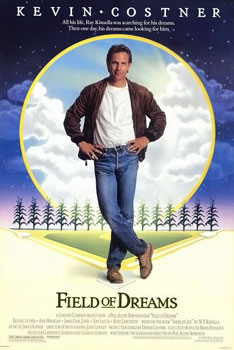
Amy Madigan
Stats
- Episodes featuring their films
- 1
- Movies in this archive
- 1
Rewatchables episodes featuring Amy Madigan’s films
Mentioned in discussions

Picking Nits
Annie is impossibly understanding; the movie needs a sex scene; Ray Liotta bats righty as the lefty Shoeless Joe; the Fenway scoreboard reads 10:30 in the third inning; no black players before 1947; the two-acre field at $2,200 an acre; professional lights beside splintery bleachers; Mark vanishes for a glass of water; Mark isn't thrown off the property; Ray doesn't recognize his father in the scrimmage; Dwyer Brown's catching; Annie wouldn't wait when Karen falls; Karen could be carried onto the field; Archie already existed off the field; the cornfield's ground rules; only one book-burner is opposed; Shoeless Joe's no-errors defense
In the discussion (19)
- Notes on Amy Madigan are held for nitpicks; the first written down is whether anyone's wife has ever been this understanding in the history of mankind: she objects to Boston but not to mowing the cornfield; only the people who marry serial killers in prison compare; it's the 60s.
- The movie needs a sex scene to understand what fuels Annie's blind devotion; Terrence Mann's response to Ray is you're seeing a whole team of psychiatrists, while Annie's is follow your bliss, moving and aspirational but also ridiculous, probably an extension of the hippie ethos.
- Annie's Fenway big green wall vision is when she really buys in, versus her initial don't go, we're underwater doubt; by the Christmas montage of Ray staring at the field in a snowstorm every relative would want him in a mental hospital; and once Joe Jackson shows up, why not replant the corn instead of hosting a 162-game season.
- Ray Liotta batted righty while Shoeless Joe was a lefty, everybody's biggest nitpick for thirty years and indefensible since they could have flipped the shot and cheated the background; come on, Phil Alden-Robertson (as transcribed), bad job.
- The Fenway scoreboard reads 10:30 p.m. in the third inning with no rain delay, obviously shot after a game; it has bothered one host for thirty years.
- The movie gives second chances to Ray and his dad, Moonlight Graham (joked as Grom, the gelato), Terrence Mann, Shoeless Joe and the Black Sox, yet ignores every black player before 1947; instead of the cheating White Sox, Satchel Paige, Cool Papa Bell or Josh Gibson, and Terrence Mann would surely have raised it in the van; Robinson called it his greatest regret; it is the biggest flaw in the movie.
- Mark's do you know how much this land is worth is undercut by Ray's $2,200 an acre: a baseball field is about two acres, so he isn't losing much on a farm of hundreds of acres; the counter is that he built and maintains a triple-A field with expensive electricity.
- Why have the lights at all, where does a regular person get professional lighting, and why is the construction so perfect and precise while the bleachers are splintery unvarnished planks with smashed-in nails that aren't safe for a child; the lights do give an ethereal vibe and the film addresses how lights changed the game.
- Busfield's Mark finally sees the ghosts after Karen is saved, Annie sends him inside for water, and he is never seen again; the counter is that interrupting the reunion with we can charge $20 a car would be in character; the opposite nitpick is that he should be kicked off the premises for nearly killing the child.
- The editing is shady when Mark grabs and shakes Karen, and a parent would fight anyone who touched their six-year-old; Ray never recognizes his dad during the scrimmage despite catcher's gear and three hours in the stands.
- Dwyer Brown's childlike catching has an explanation from research: the catch had to be shot in a ten-minute magic hour with an 85-year-old rock-hard catcher's mitt he feared dropping, so apologies to him, though his throwing wasn't loved; it wasn't as bad as the kid at the end of The Natural.
- Karen falling off the bleachers eating the hot dog has holes: Annie would run to call the paramedics and no mom on the planet stops because her husband has an idea, since a mother whose child is hurt becomes superhuman.
- Why not carry Karen five feet onto the field so Moonlight needn't cross; the counter is that young Moonlight hasn't been through medical school, answered that he is a timeless ghost who has lived his life and knows the grand design; Ray doesn't yet know Graham can't cross back.
- Archie already existed outside the field as a hitchhiker, and the implication that Terrence Mann will come back with a long-form piece on heaven raises why Moonlight can't return; none of them can come off the field; Archie is on a different timeline and had to be brought there; he left the field and became a drummer for the Doors.
- One host is devastated the other doesn't like a scene seen 700 times; the fair questions raise whether you need to understand the rules of the magic to like the movie; it's magic and faith, believing what you can't see, so you opt in, which is why Mark seeing the ghosts at the end is disliked, since he never opened himself up.
- Smaller nits: the park's ground rules, what a ground-rule double in the cornfield is, an outfielder vanishing into heaven shagging a fly, where all the baseballs go, Janet's void; if Terrence Mann could walk into the corn, why wouldn't Ray try; maybe the spirits have to bring you, and it's about what you are pursuing.
- The town hall over salacious literature is moral panic, but only the one woman is actually opposed and nobody in the room supports her; the counter is that it's about how hysterical people get together; that scene could be aged-best because it's what the internet is like now.
- A sequel vision: Mark comes back out after his cold drink and lectures the ghosts about walks, shifts and swing planes, disparages Shoeless Joe for not getting on base, and brings his friend Bill James with notes.
- Shoeless Joe's no-errors stat is cited as proof he didn't throw the series, but outfielders rarely commit errors in one series and it would have to be an obvious overthrow; the Rothstein gambling contingent, Boardwalk Empire; the segment ends with Mark asked how his glass of water is.

The Ruffalo / Hanna / Rubinek / Partridge Overacting Award
Beulah, the woman at the PTA meeting
In the discussion (1)
- The overacting award goes to the woman at the PTA meeting, dubbed Eva Braun, Beulah, who is over the top, punching the air and sliding into lockers, though it works; it is explicitly not Amy Madigan, whose notes are held for nitpicks; Meg Ryan is floated as the only other possible casting for Amy Madigan's part, and Chris is teased for being sweet on Amy Madigan.

In the discussion (7)
- Costner is a yes for this movie rather than Dances with Wolves, since this sets up Dances with Wolves and made him the biggest star; a case for the Apex Mountain Supreme Court; he is cooler in Bull Durham, and 88 and 89 are treated as a pair, plus No Way Out, which deserves its own episode; he was able to direct Dances with Wolves only because of the roll he was on as the most bankable actor, and Robin Hood is placed after Dances with Wolves.
- He was never more likable across America, everybody was in on Kevin Costner, whereas Dances with Wolves drew a fuck that guy backlash and Goodfellas-should-have-won complaints; this movie has no backlash.
- James Earl Jones: not enough is known of his career, Darth Vader or Othello, but this feels like his longest-lasting performance, so no answer is given; Timothy Busfield was in thirtysomething and directed a lot of Sorkin, but no question this is his.
- Amy Madigan, yes, for sure; Gabby Hoffman, no.
- Iowa: late-80s Iowa, Kirk Ferentz, Steve Alford, its role in the presidential process, but it's hard to top literally standing in for heaven; 100 percent yes.
- Baseball might have been at its apex: the end of the great baseball movie decade cresting with this, the 86 World Series, the Twins, before the earthquake series, steroids not yet involved though Consico and McGuire (as transcribed) looked like Pacific Rim, cocaine cleaned up, integration achieved; the thought trails off into I don't know.
- Shoeless Joe as a sympathetic figure: Eight Men Out and this came back to back, and most people's knowledge of the Black Sox comes from these two movies; the Eight Men Out book is a staple that lays out how unfair some of it was; he's a tragic figure; Craig is asked whether his generation reads books.

Most Rewatchable Scene
Ray meeting Terrence Mann in Boston; Moonlight Graham crossing the line to save Karen; the James Earl Jones speech
In the discussion (17)
- First nominee: Ray meets Shoeless Joe, is this heaven, no it's Iowa; a quick Liotta imitation; this was a year before Goodfellas, when he was a critic's darling after Something Wild; he still has never seen the movie and thought the script was dumb.
- Liotta plays Joe Jackson like a sensitive, dew-eyed guy from 1989 rather than a period Black Sox type, which is perfect because he seems like a ghost who doesn't know he is one; a Chantix commercial with him in the cornfield and a second-half-of-Goodfellas Henry Hill emerging from the corn are joked about.
- Second nominee: Ray goes to Cambridge in his Volkswagen van and meets Terrence Mann; the finger-or-gun exchange is played, the door slamming is really funny, and Mann flips fast once Ray brings up John Kinsella (transcribed 'John Consala'); great suspenders and belt.
- The two hosts who have spent time in Boston are asked whether there really are that many Jewish people there, since the street looks like half of Brooklyn with Hebrew letters on windows; the Boston exteriors were apparently filmed in Dubuque with after-the-fact wide shots, though they obviously shot at Fenway.
- Third nominee: after Fenway, Mann pretends he didn't see the scoreboard, drops Ray off, then is standing in the street; the Moonlight Graham, you saw it exchange is recited, New York Giants 1922, one game, never batted, Chisholm, Minnesota; that part is amazing.
- Fourth nominee: the nighttime scrimmage with Archie, the first time Frank Whaley walks out, ghosts playing at 9:30 with Amy Madigan turning the lights on, the most baseball in the movie, a four-minute sequence.
- A host doubts they could hit fly balls to a ghost who showed up in the backyard; the counter is that Ray had been prepping, taking BP every day; the one caveat is that Costner wears Timberlands the entire movie rather than Chucks or running shoes.
- The James Earl Jones speech and the actual ending round out six nominees; the Beulah and Annie scene is rejected as padding rewatchable stats; Moonlight's sacrifice, Karen falling and being saved, is counted as its own scene separate from the catch with dad.
- The opening catch-up montage is really good where it goes wrong in so many movies, and a secretly great choice is that the voice comes in the first scene with no thirty-minute build-up of farm life; Amy Madigan is quirky enough to buy it, unlike one host's wife, and she asks whether it's acid.
- Ray meeting Moonlight for the first time and walking back to his office is poetry, resonant though removed from the climax; the rack focus to The Godfather on the marquee; the magic realism works seamlessly and the story is about life rather than baseball or fantasy.
- Burt Lancaster's last movie, and the part was supposed to be, or at least offered to, Jimmy Stewart, blurted early and rebuked for stepping on half-assed internet research. — Chris Ryan
- Ray simply accepting that it's 1972 is not ridiculous at all, which is why it is more a fantasy movie than a baseball movie.
- One pick is when Ray goes to Boston: great chemistry, the reclusive countercultural icon surrounded by tapes and books who wants to be left alone, the locks on his doors; the last thirty minutes can only be watched once a decade, like dialing it up on YouTube to cry it out.
- Seeing Terrence Mann for the first time has become a favorite, a well-written, well-acted five minutes, with a wish for four hours of deleted van small talk; the 1989-era library research for the old interview mentioning Ebbets Field is loved, as is Mann's heartbreak at not remembering and the you're from the 60s line.
- Another pick is Moonlight crossing the line to save Karen and Ray's oh my God, you can't go back, the first thing that comes to mind about the movie, more than the catch; it is the emotional gut punch where every theme and tension, hope, purpose, sacrifice, is realized in one second.
- A sneaky good scene is picking up Frank Whaley hitchhiking, the I need good karma line and his day-job baseball towns, looking like he's in Stand By Me; a host promises to ruin that scene later.
- A further pick is when he sees Terrence Mann for the first time, and then really the pick is the James Earl Jones speech, with all the ghosts stopping to watch; baseball's a part of us, Ray.