
‹ All movies

Light My Fire rehearsal through the everything's-taking-off montage and Ed Sullivan

Bill Simmons: The opening is liked but left out; the film-school scene is enjoyed; the first scene with Jim and Ray on the beach is picked, from "great fucking lyrics" to "people want to fight or fuck," setting up the 60s in three sentences, called a great four minutes.

Bill Simmons: Kilmer is not singing well yet on the beach, and later works out a raspier drunk-Jim voice.

The film

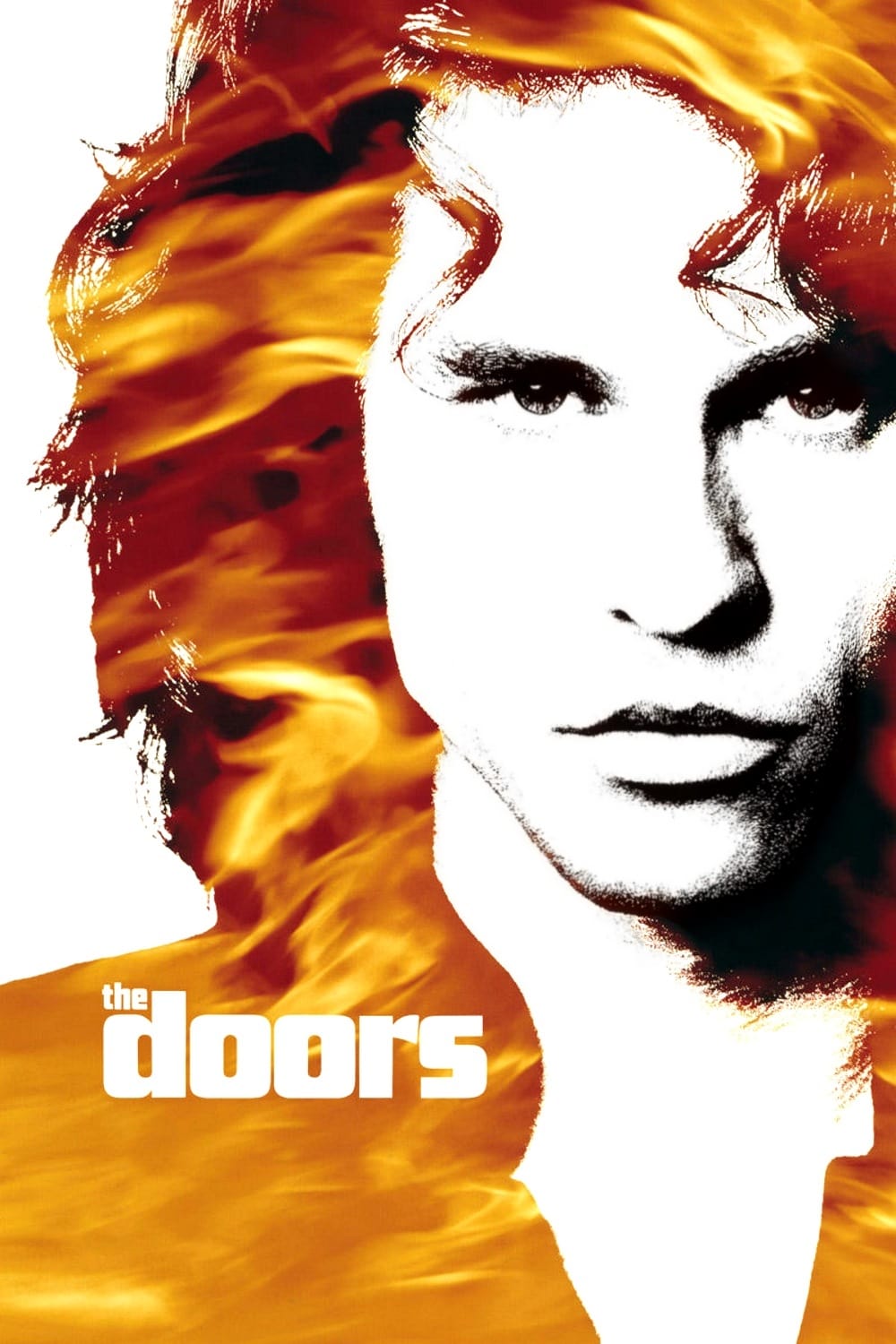
The Doors (1991)

Directed by Oliver Stone · Musical

141 minutes

Cast

Selected cast credits · Film reference

Val Kilmer Jim Morrison
Meg Ryan Pamela Courson
Kyle MacLachlan Ray Manzarek
Frank Whaley Robby Krieger
Kevin Dillon John Densmore
Kathleen Quinlan Patricia Kennealy
Michael Madsen Tom Baker
Michael Wincott Paul A. Rothchild
Josh Evans Bill Siddons
Crispin Glover Andy Warhol
Mimi Rogers Gloria Stavers
Titus Welliver Macing Cop
Floyd Red Crow Westerman Native American Spirit
Oliver Stone UCLA film professor

Everything from the episode

In the order the hosts got to it. Open a row for the discussion.

30:47

Most Rewatchable Scene

Light My Fire rehearsal through the everything's-taking-off montage and Ed Sullivan; the early fan-mania scene; the M...

Light My Fire rehearsal through the everything's-taking-off montage and Ed Sullivan; the early fan-mania scene; the Miami sequence from backstage to performance

In the discussion (31)
Approx. transcript time · 00:30:47Read transcript
  • The opening is liked but left out; the film-school scene is enjoyed; the first scene with Jim and Ray on the beach is picked, from "great fucking lyrics" to "people want to fight or fuck," setting up the 60s in three sentences, called a great four minutes. — Bill Simmons
  • Kilmer is not singing well yet on the beach, and later works out a raspier drunk-Jim voice. — Bill Simmons
  • The beach is identified as Venice. — Bill Simmons
  • The likely pick is the first band rehearsal where Light My Fire comes together in about two minutes. — Chuck Klosterman
  • A good detail is Morrison walking through the rough chord changes; the speed seems crazy, but it shows how a band turns one member's rough version into a song. — Chuck Klosterman
  • The organ intro gets worked out during a five-minute break; the path-to-a-hit device is loved here and in That Thing You Do and the NWA movie. — Bill Simmons
  • The first live performance of The End at the Whiskey is incredible and hilarious, along with the short scene where he will not face the crowd and then turns around. — Bill Simmons
  • The crowd at that show is unrealistically attractive compared with real rock shows like a Poison concert. — Bill Simmons
  • Stone captures the band's early mania in a news-camera style; on the plane each member states name and occupation (Manzarek, Densmore as percussionist, Krieger), the girlfriend is introduced as an ornament and Morrison just says "Jim," which drew theater laughter. — Chuck Klosterman
  • It is hard to recall what he knew about the Doors at 19, including whether he read No One Here Gets Out Alive before or after the movie. — Chuck Klosterman
  • The everything's-taking-off montage and the character reset are loved, compared with a favorite Boogie Nights deleted scene; it leads into Ed Sullivan. — Chuck Klosterman
  • The New Haven 1968 concert used 4,000 extras over five days, which seemed new for a concert scene; the announcer sounds like Mike Francesa; The Blues Brothers' concert was probably about 1,000 people, and films like the first two Rockies cheated with extras. — Bill Simmons
  • The Thanksgiving dinner where Pam meets Patricia over a duck is very funny, with the knife and the quoted confrontation.
  • The Thanksgiving scene and the closet-fire scene are both made up; odd details like the burnt duck make it seem real, a Stone trick also used in JFK, and the invented closet fire effectively casts Morrison as a murderer. — Chuck Klosterman
  • The scene reflects a type of man who invites both women to extend his power over them; the real Pam and Patricia were reportedly cordial. — Chuck Klosterman
  • Pam's family was involved in the movie and there is a rumor she bought the heroin; in the scene she only wants him to wait on the acid, so she was not advocating sobriety. — Chuck Klosterman
  • Jim's friends, Michael Madsen and Billy Idol's biker types, could have had their own prequel. — Bill Simmons
  • Drunk Jim recording Touch Me might be the single best scene, followed by his outburst over the Light My Fire commercial ($75,000; Feliciano had sold 2 million). — Bill Simmons
  • The short plane scene with Madsen before Miami ("what are you going to do for act three") and Morrison asking for heroin on the plane are liked. — Chuck Klosterman
  • In Miami, drunk Jim insults everyone, then police and the Native American figure appear and he glides through the crowd; called one of the coolest two-minute scenes of the era and the film's peak.
  • The real Miami concert audio is on YouTube, but the Kilmer version is called better. — Chris Ryan
  • The Miami backstage stretch is a favorite: everyone voicing their feelings, peyote with Krieger, and a journalist dictating that The Soft Parade was disappointing while Densmore listens. — Chris Ryan
  • Kevin Dillon's "we took drugs to expand our minds, not to escape" is something no drug user says; Stone co-wrote with Randall Johnson (as spoken).
  • Stone oddly emphasizes Morrison's impotence (coke, blood); the Wiccan blood marriage could be cut from a two-hour-20-minute movie. — Chuck Klosterman
  • Stone handles the transgressive background (Ed Sullivan, decency laws, Manson) in a minute or two while lingering on rants, Wiccan ceremonies, shamanism and the desert. — Chuck Klosterman
  • The Ed Sullivan scene is dramatized: the Stones visibly protested their lyric change, but in the actual Doors performance they just play the song and he does not change the lyric; the scene contrasts wholesome acts with the band. — Chuck Klosterman
  • A short book about the band by Grill Marcus (as spoken) is cited: people were not shocked by The End at the Whiskey; the lyrics signaled a different way to live, which the movie does not convey except in the on-the-nose beach scene. — Chuck Klosterman
  • The last scene of the band together, which first seemed like heaven, is enjoyed. — Bill Simmons
  • Favorite rewatchable scene: Light My Fire all the way through the everything's-taking-off montage and Ed Sullivan. — Bill Simmons
  • Favorite scene is the "first time they're present" (as transcribed), for the mania, with a woman kissing him and the girlfriend hitting him with a purse; the live performances run a bit long. — Chuck Klosterman
  • Picks the whole Miami sequence, from backstage to the performance. — Chris Ryan
56:31

What’s Aged the Best?

Selling-out concern; Oliver Stone's film-professor cameo; Top Gun connection; Break On Through performance; death the...

Selling-out concern; Oliver Stone's film-professor cameo; Top Gun connection; Break On Through performance; death theme; closing credits; Doors music; Frank Whaley's guitar playing

In the discussion (8)
Approx. transcript time · 00:56:31Read transcript
  • The concept of selling out with commercials, a big concern in 1991 (Michael Stipe would never have allowed it), tells more about 1991 than the 60s; Morrison's reaction resembles what one would expect of Cobain. — Chuck Klosterman
  • Stone's cameo as a film professor holds up for the thick, fake-looking goatee and a workshop that pisses on Morrison's film. — Chris Ryan
  • The Top Gun connection: Iceman and Goose's wife as the leads. — Bill Simmons
  • Jim turning around and the Break On Through performance. — Bill Simmons
  • The theme of death, with the bald man moving closer to Jim through the film, is well done; he looks like Jeff Bezos. — Bill Simmons
  • The closing credits bring in L.A. Woman, missing from the film, with the credits ending on "and Val Kilmer is Jim Morrison." — Bill Simmons
  • The Doors music sounds good, though this speaker never had a Doors period and came to it through Apocalypse Now; Frank Whaley convincingly plays guitar and is called the second-best person in the movie, with agreement. — Chris Ryan
  • Kevin Dillon looks like he is drumming; it is unclear whether McLaughlin (as spoken) can play organ, as he always plays the top and bottom keyboards at once.
1:01:18

What’s Aged the Worst?

Runtime; reporter girlfriend subplot; Meg Ryan as Pam; Kevin Dillon as Johnny Drama; Wayne's World 2 parody; wigs; de...

Runtime; reporter girlfriend subplot; Meg Ryan as Pam; Kevin Dillon as Johnny Drama; Wayne's World 2 parody; wigs; desert special effects; Doors missing Woodstock; easy fact-checking; the film's potential audience today

In the discussion (16)
Approx. transcript time · 01:01:18Read transcript
  • The movie is 25 minutes too long; the reporter girlfriend could be cut to a minute like Mimi Rogers' photographer, and the timeline of Jim's girlfriends and the Wiccan subplot, later negated by "I was stoned," is superfluous.
  • Teased as the all-time aged worst: Meg Ryan as Pam was horribly miscast, like Meg Ryan in a wig in a different movie; Stone later disowned the casting. — Bill Simmons
  • A reply calls it a thankless part as Stone conceived it, criticized by people around the Doors, though she does seem to be in another movie.
  • A different view: she is not that bad, seems to impersonate Nicole Kidman on the roof (Kidman would have been better), and is funny at Thanksgiving; the role was central partly because her family contributed. — Chuck Klosterman
  • There was controversy over nude scenes Stone required of whoever took the part; it ended up halfway. — Chuck Klosterman
  • Kevin Dillon reads as Johnny Drama; Entourage should have made the Doors drummer Drama's best role. — Bill Simmons
  • Wayne's World 2 parodied the Native American material, which a son did not understand. — Bill Simmons
  • The wigs are terrible on everyone except Morrison, with Ed Sullivan even joking about hair. — Bill Simmons
  • The desert drug special effects are dated, and the witch reporter girlfriend is noted again. — Bill Simmons
  • The film is a reminder the Doors were not invited to Woodstock, a giant miss where they might have stolen the show or been the worst band. — Bill Simmons
  • It would be hard to be the worst band there, but drunk Jim could have; by 1968-69 the Doors were moving into something darker than the hippie movement. — Chuck Klosterman
  • The office scene where everyone tells Jim they were not invited to Woodstock is another expository gem. — Chris Ryan
  • Allegations about Stone's casting process surfaced during Me Too in 2017, with Malora Hardin (as spoken), Melissa Gilbert and an actress named Caitlin O'Haney (as spoken) (who broke a non-disclosure agreement) speaking out; listeners are pointed to research it themselves. — Bill Simmons
  • What has not aged well: a biopic today is easily fact-checked, unlike 1991, which would have hurt Stone; critics would dwell on invented scenes rather than, as in Ebert's review, a self-destructive man. — Chuck Klosterman
  • Offered hesitantly: the potential audience has aged worse, as a new viewer feels an obligation to have the film declare Morrison a bad person, whereas in 1991 that was not a conversation. — Chuck Klosterman
  • Counter: it was assumed then that the character was a sociopath; one view says that is why movies are less interesting now. — Chuck Klosterman
1:09:04

Casting What-Ifs

Ian Astbury as Jim Morrison; Michael Madsen for Morrison; Billy Idol as Tom Baker; Patricia Arquette as Pam; Kyle Mac...

Ian Astbury as Jim Morrison; Michael Madsen for Morrison; Billy Idol as Tom Baker; Patricia Arquette as Pam; Kyle MacLachlan in Platoon

In the discussion (6)
Approx. transcript time · 01:09:04Read transcript
  • Stone offered Jim Morrison to Ian Aspery (as spoken) of the Cult, who turned it down and later toured with the Doors in the early 2000s; his voice, like Eddie Vedder's, was compared to Morrison's. — Bill Simmons
  • An unverified report that Bono wanted the role; Michael Hutchins (as spoken) could have been good, while Bono doing it seems strange. — Chuck Klosterman
  • Michael Madsen auditioned for Morrison and was moved to Tom Baker, initially Billy Idol's role, losing 40 pounds. — Bill Simmons
  • Billy Idol's motorcycle accident also cost him the T-1000; without it he might be huge, joked into Lincoln or an HBO prestige series. — Bill Simmons
  • The casting director said Patricia Arquette auditioned well for Pam and should have gotten it; an unknown would have been better. — Bill Simmons
  • Kyle McLaughlin (as spoken) was Stone's first choice for the Charlie Sheen role in Platoon. — Bill Simmons
1:11:12

The Joey Pants “That Guy” Award

Michael Wincott

Michael Wincott

In the discussion (3)
Approx. transcript time · 01:11:12Read transcript
1:11:49

The Ruffalo / Hanna / Rubinek / Partridge Overacting Award

Crispin Glover

Crispin Glover

In the discussion (3)
Approx. transcript time · 01:11:49Read transcript
1:14:54

The Dion Waiters Award for Best Heat Check Performance

Michael Madsen

Michael Madsen

In the discussion (3)
Approx. transcript time · 01:14:54Read transcript
1:15:59

Recasting Couch

Robin Wright as Pam; Olivia d'Abo as Pam

Robin Wright as Pam; Olivia d'Abo as Pam

In the discussion (3)
Approx. transcript time · 01:15:59Read transcript
  • The Meg Ryan part must be recast: Robin Wright as Pam, a 1970s Jenny Gump and a better actress. — Bill Simmons
  • Olivia Diaba (as spoken), described as the teenage daughter from The Wonder Years and from Kicking and Screaming, would be the right age and easy to buy. — Chuck Klosterman
  • Sharon Stone is floated, but would compete with Morrison too much; she could have played the Kathleen Quinlan part.
1:17:02

Half-Assed Internet Research

Band and Courson-family opposition; Kilmer eye-contact memo; leather pants; invented scenes; Manzarek's criticism; co...

Band and Courson-family opposition; Kilmer eye-contact memo; leather pants; invented scenes; Manzarek's criticism; composite reporter; Mojave fine; Billy Idol's reduced role; Barney's Beanery; Break script rumor

In the discussion (10)
Approx. transcript time · 01:17:02Read transcript
  • The band opposed the film and wanted to be in it, like Queen with its movie; the Courson family wanted Pam portrayed as an angel. — Bill Simmons
  • A memo told someone not to make eye contact with Val Kilmer during filming. — Bill Simmons
  • A participant who profiled Kilmer around 2005-06 interviewed Stone, who said Kilmer's biggest issue was wearing the same black leather pants every day. — Chuck Klosterman
  • Stone invented or took liberties with the closet fire, Thanksgiving and Morrison's anger over Light My Fire. — Bill Simmons
  • A 1991 Manzarek quote says the film was about "Jimbo Morrison, the drunk," not the sensitive poet and funny guy he knew. — Bill Simmons
  • The reporter was a composite character, not a real person. — Bill Simmons
  • The desert scenes were shot in the East Mojave Preserve, drawing a fine; Billy Idol's role shrank after his motorcycle accident, so he is seated or framed around it. — Bill Simmons
  • The bar Morrison frequents is Barney's Beanery in West Hollywood, where he pisses in the film. — Bill Simmons
  • Did not know which bar it was. — Chris Ryan
  • A single-site claim that an early Stone script, Break, an early Platoon, was in Morrison's apartment in France when he died; flagged as half-assed.
1:21:00

Apex Mountain

Val Kilmer; Billy Idol's movie career; Barney's Beanery

Val Kilmer; Billy Idol's movie career; Barney's Beanery

In the discussion (9)
Approx. transcript time · 01:21:00Read transcript
  • Oliver Stone: no. — Chris Ryan
  • Kilmer's Apex: Batman or the Tombstone Huckleberry role are mentioned, but this giant movie-star role made him a star; agreed.
  • Meg Ryan: no. — Bill Simmons
  • Desert drug scenes are asked about as an Apex; the reply muses that the movie cemented the desert as the place for hallucinogenics, with no yes given. — Chuck Klosterman
  • Frank Whaley's Apex is put at Pulp Fiction or Career Opportunities; debate over whether Apex means peak or most juice; this movie was not a success. — Bill Simmons
  • Kyle McLaughlin (as spoken): no, Twin Peaks; Michael Madsen: no. — Bill Simmons
  • Billy Idol's movie career definitely peaked in 1991, with Cameron and Stone wanting him. — Bill Simmons
  • Barney's Beanery: no question. — Bill Simmons
  • Hedged: you could argue the Doors music was most potent in 1991; disputed, with three Doors periods described. — Chuck Klosterman
1:31:02

Picking Nits

Reporter girlfriend subplot; invented dinner party; mystical opening; Ray disappearing; no bass-player discussion; un...

Reporter girlfriend subplot; invented dinner party; mystical opening; Ray disappearing; no bass-player discussion; unexplained 66 jersey; missing early-band material; long final stretch; bathtub reaction

In the discussion (9)
Approx. transcript time · 01:31:02Read transcript
  • The reporter girlfriend runs too long, and the invented dinner party is a pivotal scene that should have happened. — Bill Simmons
  • Asked how much Native American material is needed, a pitch replaces the made-up opening dream sequence with Morrison's real early life; counter: that mystical material is why people wanted the movie, tied to Danny Sugarman's (as spoken) book, so it could not have been made otherwise. — Chuck Klosterman
  • Ray disappears in the second half and needs a scene expressing concern. — Bill Simmons
  • Biggest nitpick: no discussion of the band having no bass player and using an organ, which gives Break On Through a surf-music quality. — Chuck Klosterman
  • Morrison wears a number 66 jersey while recording poetry, possibly Browns; nobody knows whose, Marion Motley is guessed.
  • Biggest nitpick: deleted scenes on YouTube show more early performance; more early-band material would beat the last hour, 15 minutes too fat. — Bill Simmons
  • The 20 minutes after Miami, including the birthday party, could move faster. — Chuck Klosterman
  • Pam finding him dead accuses him of joking, a movie cliche. — Chuck Klosterman
  • Asked about the skinny, handsome dead Morrison instead of a bloated one, ranks it with the two Morrisons following down the hall to meet Warhol. — Chris Ryan
1:38:20

Sequel, Prequel, Limited Series, or All-Black Remake

No; a late-1960s Sunset Boulevard series instead

No; a late-1960s Sunset Boulevard series instead

In the discussion (1)
Approx. transcript time · 01:38:20Read transcript
  • A 10-episode Netflix remake is rejected; a late-1960s "Sunset Boulevard" (as spoken) series is suggested instead, needing many good actors. — Chris Ryan
1:38:41

Probably Unanswerable Questions

USC film school prequel; telling books lying around; best use of an Arthur Rimbaud book; Madsen's character

USC film school prequel; telling books lying around; best use of an Arthur Rimbaud book; Madsen's character

In the discussion (4)
Approx. transcript time · 01:38:41Read transcript
  • Would watch a prequel about Jim's entire USC film school stint, every class. — Chris Ryan
  • Did they always have such telling books lying around, like Mailer's Armies of the Night next to the TV, with every title visible; jokes about Bill's own set-dressed books.
  • Eddie and the Cruisers, definitely, is the best use of an Arthur Rimbaud book. — Chris Ryan
  • Was Madsen's character a Roger Corman type? Answer: an actual hanger-on in Warhol and Paul Morrissey art porn. — Bill Simmons
1:40:46

Who Won the Movie?

Val Kilmer

Val Kilmer

In the discussion (2)
Approx. transcript time · 01:40:46Read transcript
  • Kilmer wins convincingly, likened to a unanimous NBA MVP vote, no question. — Bill Simmons
  • An enjoyable rewatch; the Kilmer performance is the legacy of the movie. — Bill Simmons
Podcast choices

More from the conversation

Chris Ryan and Chuck Klosterman join for the 30th anniversary of one of the weirdest, most flawed, most entertaining early-90s movies; the Jim Morrison film was a banged-around Hollywood project for at least 10 years.
Approx. transcript time · 00:01:44Read transcript
The legacy of the movie is Val Kilmer: unlike biopics where you admire an actor's portrayal, watching this feels like watching Jim Morrison himself, and everything associated with Morrison becomes associated with Kilmer.
Approx. transcript time · 00:02:07Read transcript
Agrees; Jim Carrey as Andy Kaufman seems like an impersonation, while Kilmer seems like Morrison without seeming to impersonate him.
Approx. transcript time · 00:02:54Read transcript
Saw it opening night in college in a packed theater; Doors music was everywhere on campus for two months afterward, but the movie ultimately damaged how the Doors are perceived.
Approx. transcript time · 00:04:10Read transcript
A reply: also saw it in college and went back to see it again in the theater, starting a two-month Doors deep dive; in the exchange, two Doors runs are described, one in high school and one in college.
Approx. transcript time · 00:04:40Read transcript
An early-80s Doors revival began with Apocalypse Now using The End in 1979, a greatest-hits album, a TV tribute, the book No One Here Gets Out Alive and a 1981 Rolling Stone cover ("He's hot, he's sexy, he's dead"); Travolta started pursuing the movie then, and it could not get made for the rest of the decade.
Approx. transcript time · 00:05:11Read transcript
Kilmer is not lip-syncing; Rami Malek won the Oscar lip-syncing Freddie Mercury while Kilmer was not even nominated, called one of the all-time Oscar travesties.
Approx. transcript time · 00:05:34Read transcript
That year's Best Actor field: Anthony Hopkins won for The Silence of the Lambs (acceptable), De Niro for Cape Fear, then Warren Beatty (Bugsy), Nick Nolte (The Prince of Tides) and Robin Williams (The Fisher King); Kilmer should have nudged out one of the last three.
Approx. transcript time · 00:06:21Read transcript
Kilmer's physicality, capturing Morrison's mannerisms on and off stage, is as impressive as his singing.
Approx. transcript time · 00:06:57Read transcript
After a list of actors playing musicians (Jamie Foxx, Angela Bassett, Rami Malek, J-Lo, Joaquin Phoenix, Gary Busey, Sissy Spacek, Jessica Lange, Diana Ross), Kilmer is rated the best of them.
Approx. transcript time · 00:07:37Read transcript
Ranks Kilmer first among actors playing musicians, and says he might contend for first even without singing.
Approx. transcript time · 00:08:00Read transcript
Many viewers do not realize he sings, because real Doors recordings are used and his early beach singing to Manzarek does not sound credible, so they assume lip-syncing.
Approx. transcript time · 00:08:24Read transcript
His expression looks like someone on drugs even when not; the movie has replaced the real Morrison in the speaker's mind, though bandmates objected that Stone missed that Morrison could be funny and personable and was not always on acid.
Approx. transcript time · 00:09:19Read transcript
The film makes the other Doors seem to hate being in the band, yet the surviving members promote the band's legacy more than the Beatles and Led Zeppelin combined; the movie may have galvanized that.
Approx. transcript time · 00:10:54Read transcript
The Queen movie helped Queen but this hurt the Doors; it became a cautionary tale because the last hour is about what a drunk maniac Morrison was, though he kind of was one.
Approx. transcript time · 00:11:28Read transcript
1991 was about 20 years on, the right time for nostalgia, compared with the Britney Spears documentary; classic rock was still gigantic and a lot rode on an Oliver Stone Doors movie that was not quite what people expected.
Approx. transcript time · 00:12:17Read transcript
Morrison was on a 1990 Spin cover for 35 years of rock; before the movie he was a madman tapping into rock fantasy, after it he seemed full of it, more tied to rock pretension.
Approx. transcript time · 00:13:19Read transcript
Stone also made JFK in 1991, which might come up later this year on The Rewatchables; the speaker saw JFK with his mom, who was shaken, and says a 1991 late-60s movie is like doing a Nirvana movie now.
Approx. transcript time · 00:13:52Read transcript
Disagreement: the cultural gap from 1971 to 1991 is called greater than from 1991 to now, citing Mark Fisher's slow cancellation of the future; 1991 records like Nirvana, The Low End Theory and Blood Sugar Sex Magik would have baffled 1971 listeners, while today's music would not seem strange in 2001.
Approx. transcript time · 00:15:21Read transcript
Has not heard of Mark Fisher.
Approx. transcript time · 00:15:57Read transcript
The greatest-hits album factor was huge in the 80s; the Doors' greatest hits was a staple, L.A. Woman still fires him up, and there were stakes in who played the mythical Morrison, with Kilmer then Iceman from Top Gun.
Approx. transcript time · 00:17:08Read transcript
Research: Kilmer learned 50 songs (15 performed), paid for an audition video because Stone wanted a bigger star, spent hundreds of hours with producer Paul Rothchild, and the Doors could not tell his vocals from Morrison's.
Approx. transcript time · 00:17:54Read transcript
Concert scenes used the Doors master tapes with Morrison's vocals removed; Kilmer's voice deteriorated after a few takes, The End took five days and 24 takes, he stayed in character, and he said he needed a therapist afterward.
Approx. transcript time · 00:18:34Read transcript
The performance belongs among the most important of the 90s but lacks that legacy.
Approx. transcript time · 00:19:07Read transcript
Tombstone is usually cited as Kilmer's great role; the film is viewed negatively, yet he has seen it about five times, it is very flawed but rewatchable as a drop-in, and it is clearly the best performance of Kilmer's career, though he prefers rock stars to cowboys.
Approx. transcript time · 00:19:22Read transcript
The movie is not in vogue and is not how biopics are made now; it is an impressionistic fever dream built around four major live performances, with little sense of why Morrison became who he was.
Approx. transcript time · 00:20:13Read transcript
A love of insanely expository biopic dialogue: "we took drugs to expand our minds, not to escape" and Manzarek on the beach saying "Vietnam is over there"; a Bill Simmons biopic would need a line like "Donald Trump is over there, man."
Approx. transcript time · 00:21:07Read transcript
Biopics compress months of thought into one line; the film-class scene ("better than a Warhol movie" / "No, it isn't") and Manzarek as hype man are examples; biopics try to explain fame as fast as possible.
Approx. transcript time · 00:22:29Read transcript
Joke that a Simmons biopic would have him take peyote and invent the draft diary.
Approx. transcript time · 00:23:54Read transcript
A favorite is the last time Morrison sees the band, including Frank Whaley's "I played music with Dionysus" line and adding rain effects to Riders on the Storm before a child's birthday party.
Approx. transcript time · 00:24:20Read transcript
The Doors is framed as the moment Stone loses his mind as a filmmaker, after Platoon, Wall Street and Born on the Fourth of July, leading to JFK, Natural Born Killers, Nixon and Any Given Sunday.
Approx. transcript time · 00:25:01Read transcript
Counterpoint: the unraveling happens with Natural Born Killers; JFK is insane too; Adam Curtis's documentary takes Garrison seriously, and most Americans then believed in a JFK conspiracy yet Stone was criticized.
Approx. transcript time · 00:25:48Read transcript
The Doors is fairly linear around five or six events (Ed Sullivan, San Francisco, New Haven, Miami); a recut in the Natural Born Killers multimedia style would be neat.
Approx. transcript time · 00:26:57Read transcript
The surviving Doors were involved in a limited capacity to protect the legacy and disowned the film; Stone seemingly did the opposite of what everyone told him.
Approx. transcript time · 00:27:20Read transcript
Development history: after the 1981 revival, Travolta studied Morrison for months with Brian De Palma, while William Friedkin was on a rival version; Travolta called its collapse the biggest disappointment of his career.
Approx. transcript time · 00:28:02Read transcript
In 1988, with rights about to expire, Mario Kassar and Andrew Vajna (spoken as Mara Casasar and Andrew Vajda) of Carolco bought in and hired Stone for three to four million plus gross points; the film cost $32 million and made $34.4 million, barely breaking even.
Approx. transcript time · 00:28:50Read transcript
Asked whether the Factory depiction of Nico was accurate, says he does not think so; she is a confusing person, and he thinks of her in a turtleneck.
Approx. transcript time · 01:12:58Read transcript
The depicted Nico's "let's fuck" behavior makes her seem like a star-seeker, and Lou Reed is nowhere to be seen.
Approx. transcript time · 01:13:40Read transcript
After a dentist visit showing The Office, the Jim-and-Pam overlap prompts a joke about a special episode with Jim doing peyote.
Approx. transcript time · 01:28:17Read transcript
The film assumes an artist interested in death wants to die; a 20-something fixates on death without wanting it, citing his own book Killing Yourself to Live; Morrison is shown challenging people to kill him.
Approx. transcript time · 01:29:24Read transcript
The Doors were the most polarizing band of their era when the asker was in high school and college, looked down on by snooty music people (Troy in Reality Bites hated them).
Approx. transcript time · 01:41:05Read transcript
Answers that his memory of the Doors in the 80s is scant; they were in the canonical group with the Beatles, Stones, Zeppelin, the Kinks and the Who, and the least respected of them.
Approx. transcript time · 01:42:11Read transcript
Late-90s view that Morrison and Clapton were the most overrated, partly because of this film; Five to One, sampled by Jay-Z on Takeover, is a great song.
Approx. transcript time · 01:43:00Read transcript
The Doors were polarizing rather than uncool in the 80s; Zeppelin and Sabbath seemed older then than now, and Spotify playlists have helped the Doors.
Approx. transcript time · 01:44:22Read transcript
Snooty listeners favored the Beatles and Stones; the Eagles were revived by greatest hits; the classic-rock format and CDs in the mid-80s meant about 20 CDs everyone owned, followed by a Doors backlash.
Approx. transcript time · 01:45:47Read transcript
There was no culture around the Doors like the Grateful Dead's; liking them signaled liking poetry; their organ-based, bassless sound has aged well; had Morrison lived, late-70s Doors records would have been awful, like Jefferson Starship.
Approx. transcript time · 01:47:24Read transcript
Sign-off names Chris Ryan and Chuck Closterman (as spoken), with "Thanks, Bill" in reply.
Approx. transcript time · 01:49:23Read transcript

Mentions across The Rewatchables

Recorded movie reference

Tombstone

The Rewatchables · aired December 24, 2018

The Doors is listed in the sourced research for this episode. The precise discussion has not been linked yet.

Recorded movie reference

The Silence of the Lambs

The Rewatchables · aired September 14, 2017

The Doors is listed in the sourced research for this episode. The precise discussion has not been linked yet.