Film credit
Holly Hunter
Stats
- Episodes featuring their films
- 1
- Movies in this archive
- 1
Rewatchables episodes featuring Holly Hunter’s films
Mentioned in discussions


Casting What-Ifs
Casting notebook alternatives
In the discussion (14)
- The original notebook already wanted Keitel, Walken, Roth and Plummer; Fishburne was Jules before Jackson, with Murphy another listed possibility rather than a confirmed offer. — Bill Simmons
- Murphy’s move toward family films makes accepting this material uncertain, although it might have been a valuable career choice. — Bill Simmons
- Madsen committed to Wyatt Earp instead of Vincent, and later Vega-brothers speculation linked his Reservoir Dogs character with Vincent.
- Miramax reportedly resisted Travolta and pushed Day-Lewis; the panel imagines his unusual contemporary-hitman interpretation while strongly preferring the actual casting.
- Dillon reportedly asked for a day before accepting Butch, during which Willis became available; the lost role might have changed Dillon’s trajectory despite later successes. — Bill Simmons
- A competing Dillon story says he wanted an onscreen boxing match rather than merely asking for time to decide. — Chris Ryan
- Virginia Madsen was an early Mia choice. — Bill Simmons
- Miramax preferred Meg Ryan or Holly Hunter before Tarantino won the argument for Uma Thurman. — Bill Simmons
- Max Julien and Sid Haig reportedly declined Marsellus; Jackson was another backup while Fishburne remained the intended Jules. — Bill Simmons
- Cusack and possibly Oldman were considered for Lance, followed by Tarantino and then Stoltz; Buscemi’s unavailability led Tarantino to Jimmie, a preferable outcome to replacing Stoltz. — Bill Simmons
- Irène Jacob and Julie Delpy were considered for Fabienne. — Bill Simmons
- Delpy’s perceived intelligence makes the panel more interested in that version. — Bill Simmons
- Phil LaMarr read for Jules and Brett before being cast as Marvin. — Bill Simmons
- Courtney Love’s claim that Cobain would play Lance and she would play Jody is explicitly doubted. — Bill Simmons

Recasting Couch
Robert De Niro for Fred Ward’s role is the strongest recasting proposal, alongside multiple ideas for Bonnie.
In the discussion (8)
- Robert De Niro is proposed for Fred Ward’s security-chief role. — Bill Simmons
- Jennifer Jason Leigh is proposed for Bonnie. — Wesley Morris
- Mary McDonnell is considered for Bonnie. — Wesley Morris
- Holly Hunter is considered for Bonnie. — Wesley Morris
- Joan Cusack is considered for Bonnie.
- Annabella Sciorra is considered for Bonnie. — Sean Fennessey
- Glenn Headly is considered for Bonnie. — Wesley Morris
- Lisa Kudrow is considered for Bonnie. — Wesley Morris
Picking Nits
Abandoned mission; unexplained cooperation; trunk supplies; lone investigator; teacher disguise; stairwell dog; undisguised Eagles gear; late pointing; license plate photo; repeated boasts
In the discussion (13)
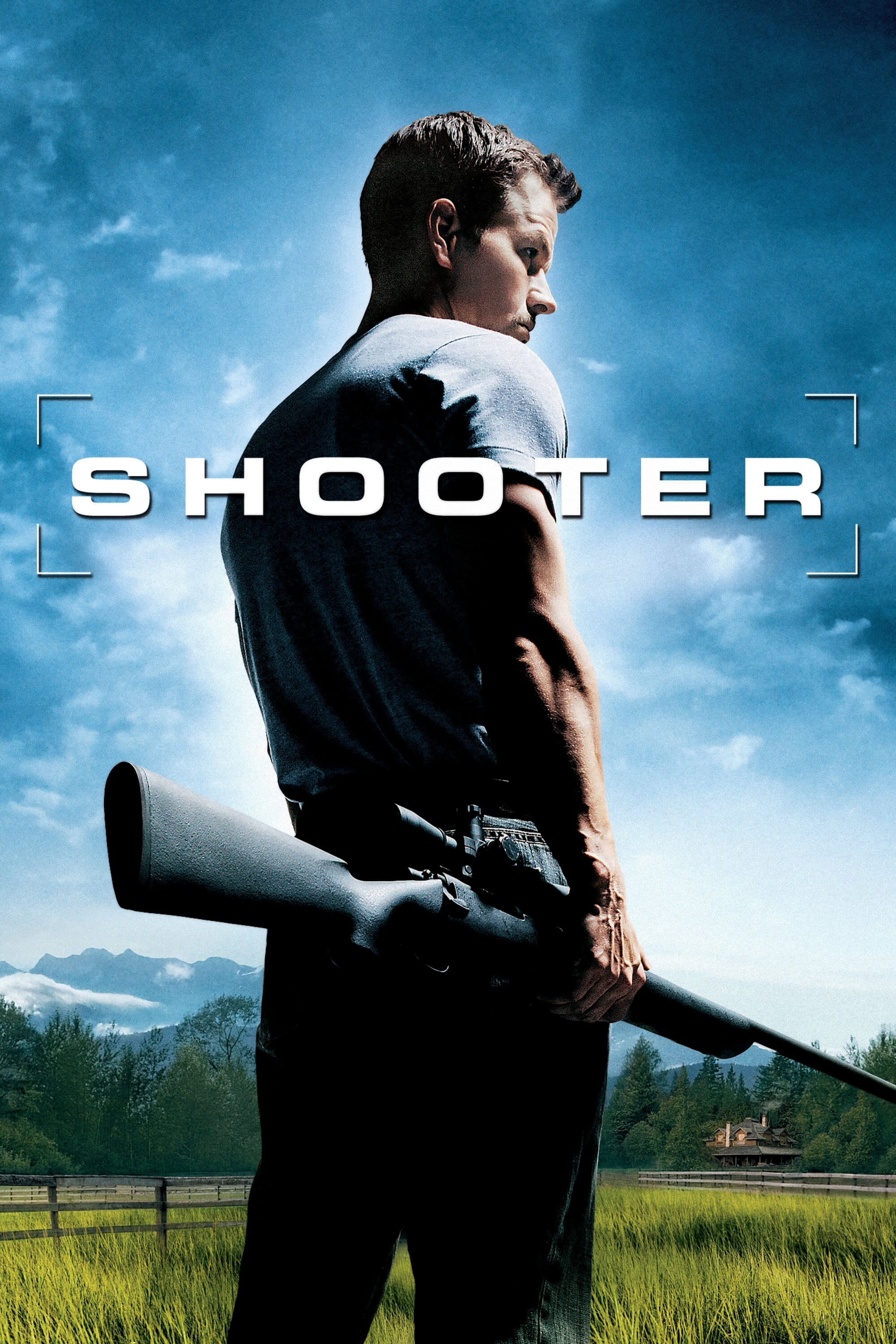
- A nit is raised early: a conspiracy-minded recluse agrees at once when an unnamed agency asks him to plan a presidential assassination.
- Aborting the opening mission and leaving the two men behind strains faith in the military.
- The film never explains why conspiracy-minded Swagger helps the government, or why he never realizes he is being framed.
- It is doubtful every FBI car trunk holds blood-clotting supplies; the river escape is also listed.
- Kate Mara's character having no boyfriend for three years in rural Kentucky is not believable.
- Memphis is the only one investigating, despite spotting that CNN had pre-cut footage within 12 minutes.
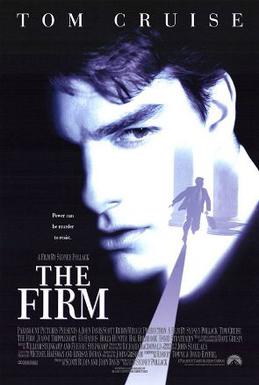
- A rural third-grade teacher suddenly plays bait in a blonde wig like a movie star, or Holly Hunter in The Firm.
- Swagger foils several cops and a German shepherd, twice pulling the fake-surrender gun grab while the dog falls over the stairwell.
- The most wanted man returns to Philadelphia without a disguise, wearing shiny Eagles gear.
- Online discussion says a straight-on head shot would have been gruesome, explaining why the archbishop's shooting is barely shown.
- Glover starts pointing constantly about 35 minutes from the end. — Chris Ryan
- Glover photographs the car to capture a license plate he could have memorized.
- Glover repeatedly telling people he always wins wears thin.

In the discussion (4)
- Holly Hunter is named at once, in one of the toughest calls the show has had, because nobody can be substituted for her and the movie is not as good or the same without her; the same is felt about the Albert Brooks part, and he is called the biggest loser within the movie.
- William Hurt can be removed from contention because Jeff Bridges could have played the part 95 percent as well; Brooks is the biggest loser because he gets neither the woman nor the job and tells her he loves her knowing it will make no difference, unlike Ben Stiller in Reality Bites, who thinks he should get the girl, and the character seems to feel she deserves the good-looking mannequin; he could not be replaced even though many would think they could do that role.
- A case is made for Jim Brooks winning the movie, since this kind of film, a modern love triangle trying to say something, feels very 40s, a Cary Grant version or expert-level Neil Simon, and nobody had made one since the 70s, when people thought the form was gone.
- Brooks is an original voice whose influences, Preston Sturges, Sid Caesar, Neil Simon, Woody Allen, 60s sitcoms and Norman Lear, are all visible at once, and Cameron Crowe spent the next fifteen years making his version after Brooks took him under his wing and produced his films; the Brooks case is acknowledged but the vote goes to Holly Hunter, a performance and character unique to her, helped by her height, since only a five-foot-one actress like Kristen Chenoweth (as transcribed) or Linda Hunt could substitute; the closing joke is that the audience is the winner.
Podcast choices
- Speaker not identified
- Holly Hunter

Probably Unanswerable Questions
Did Holly Hunter's character die alone? What is the best movie of the 1980s?
In the discussion (9)
- Did Holly Hunter die alone in this movie? She says there's a guy, which one host thinks she made up and others put at two or three dates, since a woman who will not show a man tying his shoes unless he is really tying them would not lie about a relationship; she is successful, beautiful and smart, and the whole institution of marriage is driven by crazy people; leaving the correspondents' dinner is called crazy behavior by one host while the others disagree and say many people are drawn to that energy.
- One host holds that she is a little too crazy, cannot sign up for the correspondents'-dinner exit, and would have been really mad if his date left the biggest night of the year in DC before they even went in. — Bill Simmons
- The holdout is told this is a weird run after also disliking Troy from Reality Bites, and answers that he liked Troy as a character but would not have liked him or Holly Hunter's character in reality; he is teased as threatened by her and told to put on his suit of armor.
- The best movie of the 80s splits into two strands, Die Hard, Aliens, Raiders of the Lost Ark and E.T. versus Broadcast News, Raging Bull and The Color of Money; this movie exemplifies the best of 80s movies with its zippy Bill Conti score, great performances, pitch-perfect writing, a solid two hours and five minutes and stakes that are high without anyone diving off a skyscraper; one host would answer Bull Durham or Aliens on other days but, forced to pick one, says Raiders of the Lost Ark.
- Broadcast News is called a better movie than Raiders, but personal taste cannot drive the answer, and media people are as biased toward it as archaeologists would be toward Raiders; the 80s was the video-store decade of watching fifteen movies a hundred times each, Goonies, Ferris Bueller, Aliens, Predator, Lethal Weapon, Die Hard; the decade was weird, with Oscar winners that baffle now, and the first half of Full Metal Jacket is the best movie of the 80s but the second half is not.
- The framework used for The Social Network is reapplied: how well made, acted and original the film is, what it meant culturally and whether its meaning changed, and how it aged, all of which Broadcast News passes; the 80s are called the weakest film decade of the last thirty years of the century, behind the 70s and the 90s with its independent boom, full of sequels and canonical films like Tootsie and Gandhi that seem bad now, so a top ten of the 80s is hard to fill with anything but personal favorites or films that dated immediately, because producers took over and sanded off the edges.
- Empire's best of the 80s list is read: Raiders, The Empire Strikes Back, Raging Bull, Blade Runner, Back to the Future, Die Hard, Aliens, E.T., Spinal Tap, Evil Dead and The Shining, all big popular movies; Back to the Future is a good candidate that aged nicely and mattered; When Harry Met Sally is a specifically 80s mass-screen sitcom; Broadcast News was cribbed from every year after, in its love triangle, its distinct characters and its dramedy mix; Do the Right Thing is the most culturally significant film of the decade, left out of the conversation.
- Hollywood runs a thirty-year cycle of down periods: the 50s studio musicals and melodramas, the 70s boom that producers then monetized, the 80s with Gandhi, Out of Africa and Chariots of Fire winning Best Picture, and now franchises and comic-book movies with The Shape of Water and Green Book winning while Black Panther or Get Out will be remembered; the purpose of the Oscars may be to be wrong in the present tense, since Citizen Kane losing is still meaningful and the right calls, like Gump, are forgotten.
- The case for Broadcast News as best of the 80s gains support because every imitation since has gone down in flames, including James L. Brooks's own, each piece having to work like Jenga; Airplane is a dark-horse candidate, though 1980 films like The Shining, Raging Bull and Airplane feel like 70s movies, while Fatal Attraction and Die Hard define the 80s movie; decades start late, the 80s in music running 1983 to 1991 and the 80s in film from Fast Times to Reservoir Dogs, which is why The Silence of the Lambs feels less 90s than The Matrix.

Sequel, Prequel, Limited Series, or All-Black Remake
Already made as The Newsroom; Sports Night is the closest show to the film
In the discussion (4)
- Asked whether it could be a ten-episode Netflix series, the answer is that it has already been made as The Newsroom, a Sorkin show about what if the news were the most important thing in the world; it was heavy-handed, though Broadcast News is heavy-handed too, and Olivia Munn's high-strung producer was hilarious.
- The Newsroom is called one of the funniest shows of the last ten years, unintentionally, every episode funnier than the last until it got good at the end, which made it worse; Sorkin, on one host's podcast, said he had a pebble in his shoe writing it and never got an episode right, a line his own characters would say; the reason it should not be a show is that Broadcast News is three people in a room while Newsroom had ten with ABC plots, checking in on Alison Pill and Sam Watterson (as transcribed).
- Death Patel (as transcribed) and Chris Messina get laughs just by being named in a wild cast; one host would still watch it every Sunday for twenty years without claiming it taught him anything about being human, the distinction between enjoying and good; it crammed Holly Hunter's character into nine or eleven minutes of Emily Mortimer, and the mistake was making Jeff Daniels, the William Hurt figure, the star rather than the Hunter figure.
- The hosts wish more shows were that polarizing, recalling that two of them died on Vinyl Island; Sports Night is the show closest to Broadcast News, more modest with more space; Goodnight Beantown, a Boston show with Bill Bixby and the woman from The Incredible Hulk, did not work.

The Ruffalo / Hanna / Rubinek / Partridge Overacting Award
Albert Brooks yelling "You go to hell" in the apartment showdown; Paul, the executive played by a newscaster
In the discussion (4)
- The award is hard because the movie is so understated: people dial it up but it never feels like overacting, and any Holly Hunter crying scene would only qualify because of the way it has been memefied since. — Chris Ryan
- One host does not feel there is any overacting in the movie, offering only Brooks's 'you go to hell' as she walks out. — Sean Fennessey
- The showdown yelling is defended as an accurate reflection of losing your shit without being articulate, then slowing down and getting your lines together, as Aaron paces outside assembling the devil theory; it is compared to Saul Rubenek (as transcribed), and the 'get out of my house now, you go to hell' clip is played.
- One candidate is Paul, the executive in charge of everything, played by a newscaster rather than a real actor, who does not match Nicholson in their scene; he is nonetheless part of the single funniest line, offering help to a laid-off man who replies that he hopes he will die soon.

In the discussion (4)
- Jim Brooks is a yes: fully established as an A list movie director while already in the TV hall of fame and a year from taking a Simpsons meeting, the point of maximum leverage and juice, with the Simpsons humor already visible in the film; William Hurt is called indisputable on his third consecutive Oscar nomination, with the open question whether that counts for more than winning the Oscar.
- This movie is allowed multiple apexes, a whole Himalayan range, since it is everyone among the main players; Holly Hunter is definite, because The Piano did not have the same lasting impact and this and Raising Arizona are her two best films, even though Raising Arizona feels closer to now.
- Joan Cusack is questioned, with Say Anything in 1989 probably her peak and High Fidelity praised, before a hedged 'I guess this'; Bob Prosky is raised but not settled.
- Earlier, her apex is deferred while noting a nice run ending in The Piano, where she wins the Oscar she did not win for this film.
Half-Assed Internet Research
Albert Brooks phoned James L. Brooks at 3 a.m. after seeing a CNN reporter sweat, creating the sweating scene; Nicholson went unpaid at his own request; the sweating scene took 24 takes; Switching Channels (1988) flopped as a competitor; Brooks and Hurt ambushed Holly Hunter with an ad-libbed cab-ride alternate ending that was spoiled by a crew member
In the discussion (4)
- Albert Brooks was watching CNN when a reporter he had never seen before or since began sweating badly; he phoned James L. Brooks at three in the morning to say Aaron had to start sweating, which became the sweating scene, with the makeup lady's 'Jesus' a highlight; Jack Nicholson was not paid for his role at his own request.
- James Brooks made them do 24 takes of that scene, which he does not usually do, because he thought it was the key part of the movie and wanted it perfect; Switching Channels, made in 1988 with Kathleen Turner and Burt Reynolds, was almost a competitor, a critical and box-office failure that started a Kathleen Turner slide.
- The alternate ending is on YouTube; Brooks told Premiere he was open to who Jane ends up with, and during the cab scene he and William Hurt planned to surprise Holly Hunter by having Hurt jump in and ad-lib for two minutes, trusting she would not break character, but a crew member gave it away by saying 'Bill' just before the roll; Hurt and Hunter later felt the movie should have ended that way, while Brooks himself felt it was not right.
- Flagged earlier as stepping on internet research: the Holly Hunter character is based on a woman Brooks met in 1984 at the conventions who was dating two men who worked in TV at the same time; he never said who, and the hosts imagine a Deep Throat reveal after they die.
Casting What-Ifs
Debra Winger was cast as Jane and dropped out when she became pregnant; Sigourney Weaver, Judy Davis, Elizabeth McGovern, Christine Lottie (as transcribed) and Elizabeth Perkins were also considered
In the discussion (3)
- Also considered for the Holly Hunter part were Sigourney Weaver, Judy Davis, Elizabeth McGovern, whom one host always kind of liked, Christine Lottie (as transcribed) and Elizabeth Perkins; Lottie would have been good.
- Debra Winger was cast and got pregnant, forcing the production to remove her and scramble for replacements; one host doubts the movie works with Winger because he had too much history with her from too many 80s movies, whereas Holly Hunter was unknown to him, tiny, seemingly crazy and passionate, unlike any actress he had seen; Harrison Ford could be seen in the William Hurt role, and Luke Wilson is floated as a joke.
- Brooks's search for a female heroine brought him to Debra Winger, who probably wishes she had waited nine months, since she would have been nominated again and the hosts would be talking about the Winger decade after Urban Cowboy, An Officer and a Gentleman and Terms of Endearment; Winger and William Hurt are two sides of the same coin, huge 80s stars a moderately interested 2019 moviegoer would struggle to place.

What’s Aged the Worst?
Dating inside the office; sending the Alaska anchor away to keep her from Tom; Aaron's dismissal of the date-rape segment; Holly Hunter's hair and dress at the correspondents' dinner; her outfit and Tom's fiancée in the epilogue
In the discussion (7)
- Workplace dating opens the category, with jokes that in twenty years everyone will work in a suit of armor and that the conversation should be preemptively cancelled for HR reasons; the near hook-up followed by Tom saying he will be working with her would be over in 2019 because she is technically his boss, whereas in the movie it makes the romance and love triangle more interesting.
- With no internet in the 80s you met people at work, at a bar or at a party; a friend from ESPN told Jacoby on Libby's first day that he would marry her, and they did and have two kids; what has changed is not that people meet at work, which will never change, but the sensitivity and intensity around putting things out in the open.
- The film is called less a love triangle than a mental-abuse love triangle; Hurt asking Holly Hunter whether anything is going on with her, yet never asking Albert Brooks, is noticed; sending the anchor to Alaska to keep her away from Tom would now read as a woman working against another woman and draw an HR suit, even though the Alaskan serial killer is a good story, and it is the one case where Holly Hunter's flaws hurt someone besides herself; one participant had not seen the film since about 1989 and had forgotten Nicholson was in it.
- Aaron's dismissal of the date-rape segment, asking where the real news is, would not happen now, though it is what fake news meant in 1987 and Haley writes about the scene well; his own soldier-coming-home piece has syrup on it too, so he is just being a dick, and the hosts relish 'he really blew the lid off of Nookie'; the newsroom standard that you cannot show a guy tying his shoes unless he is naturally tying them means anything happening to one person is almost not news in that world.
- Every iteration of news has a performative aspect: unless you stumble on an event in real time, the people you interview perform their memory and the reporter performs to compel them to speak, and television makes it acute with makeup, editing and music. — Chris Ryan
- The movie is credited with seeing no wide chasm between what Hurt's and Brooks's characters do; the difference offered is motive, Hurt amplifying a story by putting himself and a signifier of emotion in it while Brooks simply wanting people to know what is important, countered by the view that Brooks is the same, insecure and wanting Nicholson to notice him, the lies we tell ourselves; dissolving the Rockwell picture over the returning soldier is called equally manipulative, because it is Hollywood and on screen.
- Holly Hunter's hair and dress at the correspondents' dinner made one host's wife audibly gasp and yell at the television, though the short bob in the next scene looks great; her outfit in the epilogue was not great either; Tom's fiancée at the end puzzled one host while another called it a nice touch, since you can only picture a partner with you until you see them with someone else, and the easy layup would have been a 22-year-old weather lady named Victoria; discussion of the scene sent around is deferred.

What’s Aged the Best?
The theme of an unkillable media institution starting to die; Aaron as a proxy for the internet and his devil theory; Albert Brooks's heart-clutch on the correspondents' dinner balcony; Nicholson's reaction to the salary line; Joan Cusack's 'except for socially' line; the Holly Hunter character and the too-smart/not-smart dynamic of all three leads; the news as a daily appointment rather than a constant presence; Albert Brooks's lookalike son; the kaleidoscope gift; Lois Childs's arc (as transcribed)
In the discussion (8)
- The theme of an unkillable media institution starting to die has held up, lived through twice since; it is called the central problem of working in media, and it surprises one host that Brooks wanted to write a romance but also to grapple with a problem that still exists; Aaron is read as a proxy for whatever the internet would become ten years later, angry and clever.
- Aaron's devil theory, the devil as someone we would not recognize who lowers our standards piece by piece, is a solid theory; Brooks's acting when he looks up at Jane waiting on the balcony at the correspondents' dinner and does the mock fall-back and heart clutch; Nicholson stopping and turning when told he could knock a million off his salary; and Joan Cusack's 'except for socially, you're my role model', played as a clip.
- The Holly Hunter character in general has held up because anyone who has worked in media has met that person, from either sex, the one you want to tell to calm down and have a drink; all three characters hold up through the idea of the guy who is too smart to succeed and the guy who succeeds because he is not that smart, which happens over and over in life.
- The sudden instability of media institutions is both what aged best and what aged worst; the real change is the centrality of news in life as a daily rather than constant presence: the staff gathered around the television for the Rockwell soldier-coming-home segment recalls a family oriented around the national news, local news then Dan Rather or Peter Jennings at 6:30, even as the movie treats Entertainment Tonight as something ominous; the news was something you waited for, which set the day's agenda, not a constant nattering in your ear. — Chris Ryan
- The Libya special report, where everyone has to be pulled in from a dinner party, feels quaint now that network news always has someone ready; the hosts compare family news habits, Peter Jennings and ABC for one, Dan Rather for another, and Live at Five with Sue Simmons and Chuck Scarborough in Connecticut, a polished show from which one host learned a lot, better than the Boston versions.
- Smaller items: how much Albert Brooks's son at the end looks like him; a kaleidoscope as the gift for a kid you no longer know; and Lois Childs (as transcribed), the anchor Hurt has the affair with and the lead woman in Moonraker, whose arc has her hook up with him and turn up in Alaska the next time we see her, after the great conversation asking Jane whether they are together.
- Asked whether the film captures the 80s popularization of therapy, people articulating what they want in a way unlike the whiskey-soaked, cutthroat world of Network, the answer is that Brooks's humanizing writing makes you forget these are successful, erudite, upper-class people at the height of their industry, for whom Portland is a huge step down from Washington; they communicate in sophisticated ways because they are sophisticated people, which is easy to lose sight of when they seem like basket cases inside the workplace.
- In eight years at newspapers and magazines, one participant found a large share of the married people in the office were married to each other, because when your identity is tied to your job there are things you can only talk about with people who do what you do; the scene where a third person asks whether anything is happening before asking someone out rings true, though now you are not really supposed to date anyone you work with.