Film credit
Holly Hunter
Stats
- Episodes featuring their films
- 1
- Movies in this archive
- 1
Rewatchables episodes featuring Holly Hunter’s films
Mentioned in discussions


Most Rewatchable Scene
The blow-up in Aaron's apartment after Jane leaves the correspondents' dinner, or Jane confronting Tom about the faked tears
In the discussion (10)
- Six nominees are rattled off: the first time William Hurt anchors with Jane in his ear and Brooks on the phone, played as a clip of the F-14 dogfight interview; and the balcony scene where Hurt is asked by Aaron to name the cabinet members and stops with 'you're enjoying this, aren't you', also played as a clip.
- Hurt teaching Aaron how to anchor, leading to the jacket trick, which one host used when he started doing Countdown on ESPN, thinking of William Hurt every time he sat on the bottom of his jacket; Aaron's television disaster, recalled as the bar of what not to do the first time doing PTI, your whole world ending on live TV; the big fight after the disaster between Jane and Aaron; and Jane confronting Tom about the video trick.
- Joan Cusack running the tape to the control room, the 'Bobby, Bobby, Bobby' scene, is added after being mistaken for part of the first anchor spot; the airport ending is called an iconic movie ending, and the no-one-wins aspect of the real ending, with the 'you could get fired for things like that' exchange played, is called a really bold choice.
- The confrontation over the tears is called the most memorable scene and the clip night shows used at the time, even though it does not reflect what the movie is; one host would pick it for the five seconds when Hurt realizes what she is mad about, an authentic look of knowing someone is angry and not believing this is the thing.
- Told he likes fighting in movies, the guest answers that he does and loves arguments. — Chuck Klosterman
- The 'Bobby, Bobby, Bobby' scene is told from William Hurt's perspective: nobody stops to explain, it is all 'punch in 1145' and 'we're not going to make it', he thinks 'what have I gotten myself into' and then laughs because this is exactly where he wants to be; Holly Hunter's face acting could be a gif at any second, and the guy saying he does not think she is going to make it is a favorite bit.
- The other favorite is Jane leaving the correspondents' dinner for Aaron's house and their crazy blow-up: a movie of great yelling, from Jane screaming through the Libya special report while Paul turns and says he did not realize she was this good, to the apartment, called some of the best, most authentic yet sitcom-y yelling ever; two hosts make it their vote, noting it runs about eight minutes, feels like one take, uses the apartment Brooks scouted so the camera could move with the characters, and holds the devil speech and the 'two people' line.
- The devil monologue is played as a clip, with Craig asked to cue it: Tom, while a very nice guy, is the devil, who will be attractive and helpful, influence a great God fearing nation, never do an evil thing and just bit by little bit lower our standards, flash over substance, and get all the great women.
- Albert Brooks is called polarizing: one host is in the take-it-or-leave-it camp, another calls him one of his heroes and among the most creative and influential people of the last fifty years, funny, sad, melancholy and angry at all times here, and assumes the drunk reading-and-singing bit at home was not in the script; the scene ends with him realizing her date fell through and saying 'it was good to see you, Jane' as icy as possible; the hosts declare themselves split.
- Earlier, before the categories, the scene where Hurt tutors Aaron about reading the news is named a favorite by far, because it shows the tips and the narcissism he has trained himself with, illuminating something in his brain he could never write down, and a focused intensity about what reading the news is.

Picking Nits
Mitch trusts Tammy instantly; Avery's flip; the firm never tails Mitch; the premise collapses under scrutiny; Mitch would be shot walking into the mob boss's suite
In the discussion (4)
- Mitch trusts Holly Hunter's character within seconds on the word of a maniac felon, and Abby then does too; Avery flipping and telling Abby everything is explained as depression in a middle-aged spiral; the firm should have been tailing Mitch from the forty-minute mark, though he may be assuming surveillance in the diner.
- The premise does not hold: Harvard's crackerjack lawyer never asks who the clients are or how the firm makes money, representing the mafia is not illegal, no firm would launder money this way, and attorney-client privilege means the firm would never need to kill departing lawyers; the reluctant host says this is why he resisted the episode, yet the Xeroxing-and-overbilling plot still makes it rewatchable.
- Walking into Sorvino's hotel suite, Mitch would simply be shot rather than heard out.
- Earlier, while still on what aged worst, the hosts admit they are already picking nits: the FBI having the mob family's itinerary, Mitch getting the overbilling idea from the client being overbilled, and Avery rolling over for Abby.

In the discussion (5)
- Tom Cruise is not at Apex Mountain here.
- Wilford Brimley is argued for, but the others put his peak in the Cocoon and The Natural era, since this is against-type Brimley rather than the quintessence.
- Jeanne Tripplehorn is a yes: Basic Instinct, then Tom Cruise's wife in a huge hit, then Waterworld; Big Love is considered but rejected.
- Holly Hunter is a yes for most, with this and The Piano out the same year, though one host prefers Broadcast News, which prompts a tangent on that film and William Hurt.
- John Grisham is a yes: three of the top six bestseller spots, a Tom Cruise movie and seven more coming, although he has published a book every year since 1991; The Pelican Brief is called rough.

The Stephen A. Smith Hottest Take Award
Jeanne Tripplehorn is better than Holly Hunter in this movie
In the discussion (1)
- The take is that Tripplehorn was better than Holly Hunter in this film; the others agree she is very good in a part that is not easy and gives a real sense of who Abby is.
Half-Assed Internet Research
Hackman's name was left off the poster over Cruise's above-the-title deal; the ending differs from the book; Tripplehorn dated Ben Stiller for six years; Pollack voices the prison warden; a 2012 TV series continued the story; the Hyatt Regency Grand Cayman was destroyed by Hurricane Ivan; Hackman has not made a film since 2004
In the discussion (4)
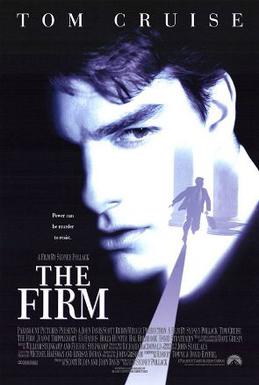
- Gene Hackman's name did not appear on the release poster because Cruise's Paramount deal allowed only his name above the title; Hackman asked to be removed entirely and appears only in the end credits.
- The ending differs significantly from the book, where Mitch swindles ten million from the firm and there is a manhunt; Jeanne Tripplehorn dated Ben Stiller for six years, and the hosts think she was a nineties face who had a better career than remembered, including Big Love, with one calling her better than Holly Hunter here.
- Sidney Pollack voices the prison warden on the phone to Ed Harris's agent; a 2012 TV series picked up Mitch ten years later; the Cayman hotel was the Hyatt Regency Grand Cayman, destroyed by Hurricane Ivan in 2004 and later demolished.
- Hackman's last film was Welcome to Mooseport in 2004; Grantland accidentally made people think he had died through a headline Sean Fennessey wrote; Tarantino wanted him for the Robert Forster role in Jackie Brown; a 2018 bicycling article shows him at 88 riding an electric bike in New Mexico.

In the discussion (4)
- Wilford Brimley qualifies and therefore wins; David Strathairn, Holly Hunter, Paul Sorvino playing a mob boss again after Goodfellas, the actor beside Sorvino and Gary Busey make up the rest of the top five.
- Brimley is his own planet in the film: the hosts quote his 'oral and whatnot' speech, note that Hackman was five years older yet Brimley seemed born at fifty, recall him as the Quaker Oats man and the manager in The Natural, and perform his catalog monologue, which the Ringer's president Jeff Chow does best.
- Brimley had never played a bad guy before, brings an unexpected edge, and the blockbuster hinges on him checking whether the fax machine has paper; it is traumatic to watch Cruise fall on him and kick him, and whether he died is left for unanswerable questions.
- Brimley carried himself like a hated stepfather and makes the office scene before the chase feel like Mitch is about to be killed; the 'oral and whatnot' line is recited again and he is declared the winner.
Most Rewatchable Scene
The chase: Mitch summoned to the partners after taking Avery's files, Tarrance's 'get out of there' call, and the escape through Memphis
In the discussion (5)
- The chase is the one pick: Mitch takes files from Avery's office, is stopped for a word, Brimley comes down, and the Ed Harris 'get out of there' call starts a fifteen-minute stretch the host watches every time, with Cruise running, jumping onto a truck that happens to carry pillows, riding the tram and hanging on while the two hitmen chase him; it carries the movie and is Sidney Pollack doing Three Days of the Condor twenty years later.
- The scene where Mitch guesses his salary is a minor but good dramatic scene, one of the few that shows his intellect at work, and the hosts play the clip; the final maneuver that turns the ending into a court proceeding with Lambert as judge and Lamar as defense lawyer is also loved.
- The Grand Cayman meeting where Mitch and Avery talk Sonny Capps into a tax loophole shows why Mitch is a great lawyer, though Cruise's profane 'fucked with a dick big enough for an elephant to feel it' line sounds like a robot wrote it; Jerry Weintraub playing a dirtbag years before Ocean's Eleven is enjoyed.
- The chase, Cruise on the run, is called one of the best fifteen-minute sequences of the nineties; the wined-and-dined montage of Mitch learning the firm while Abby grows suspicious through Lamar's wife is also entertaining, the first hour is strong, the middle sags and the ending picks up, including the demolished house and Abby's return.
- The boat scene between Strathairn and Holly Hunter, with the crooked-smile exchange, is a couple the host would have taken ten more minutes of instead of the beach scene.

Casting What-Ifs
Luke and Owen Wilson as the Malloy brothers; Joel and Ethan Coen as the Malloys; Ralph Fiennes as Terry Benedict; Alan Arkin as Saul; Mike Myers attached; Johnny Depp as Linus; Mark Wahlberg as Linus; Bruce Willis as Danny Ocean
In the discussion (10)
- Luke and Owen Wilson were originally slated to play the Malloy brothers, eventually played by Scott Kahn (as transcribed) and Casey Affleck; they could not do the movie because they had to shoot Tenenbaums, and two of the hosts spent ten minutes on this the day before.
- The Wilsons would have been an infusion of Bottle Rocket, but more twee, with more emphasis on the pitter patter of their speech; they also had bigger profiles in 2001 than Kahn and Affleck and might have taken shine from the top three, like needing an Iguodala and a David West on the roster.
- Owen can play dumb better than Luke; the Mormon twins' gags are supposed to be stupid so you laugh at and with them, and the Wilsons might have made it too pretentious or arch; this is the only what-if one host would have been okay with, since the brothers are comic relief, and the hosts are glad Tenenbaums got made.
- Joel and Ethan Coen were reportedly also up for the Malloy brothers; one host wants documentation because the Coens in front of the camera seems implausible, while another likes it given the stories of them living with Holly Hunter and Frances McDormand after college, but agrees it is too inside-joke.
- Ralph Fiennes, whom one host presumed was up for Basher on the strength of In Bruges, was actually one of three possible Terry Benedicts; he has done villains, including he who shall not be named; as Benedict it would scramble the allegiances because it is too close to English Patient and you might want Julia to be with Ray Files (as transcribed), when you need to be on Danny's side.
- Alan Arkin was originally going to play Saul, the role played by Carl Reiner, which would have been fine; Mike Myers was attached to the cast; one of the earliest articles about Brad Pitt circling the film, a 2000 Hollywood Reporter Variety piece, has Johnny Depp playing Linus.
- One host is against Depp, enjoying him only in What's Eating Over Grape (as transcribed) and finding the rest overacting; another was a fan in 2000, before Willy Wonka and Pirates of the Caribbean, but not at the right frequency for this movie: a darkness, the same handsome vibe as Pitt, and impossible to picture in glasses, a baseball hat and a parka in Chicago getting dunked on, since he never wants to blend in and would want to be bald with a snaggle tooth.
- Mark Wahlberg was also attached to play Linus and had a weird reaction after the fact; a question to Amanda about the Julia Roberts role turns up no other what-ifs.
- Bruce Willis was reportedly, on specious evidence, in contention for Danny Ocean, which would be an entirely different movie because Clooney anchors the whole thing; his absence set up a favorite Ocean's 12 cameo, where he arrives mid-heist while Julia Roberts' Tess is pretending to be Julia Roberts, with a SpongeBob pillow, as commentary on 2000s celebrity; the hosts are glad he turned the role down, and Ocean's 12 made one like Julia Roberts even more.
- Earlier, in the intro: Mark Wahlberg, initially slated to play Linus, was salty after release, saying he went off and made Planet of the Apes and The Truth About Charlie, which both sucked, rather than sit around patting George on the back.

Casting What-Ifs
Holly Hunter is named as the alternative to Rosie Perez for Gloria, with the panel stressing that the character would have been different.
In the discussion (1)
- The production is credited with taking a chance on Rosie Perez rather than Holly Hunter; a participant imagines Hunter playing either a different Gloria or, jokingly, the same characterization. — Chris Ryan