‹ All people

Film credit

Alan Arkin

Also referred to as Arkin

Stats

Episodes featuring their films
3
Movies in this archive
4

Episodes featuring Alan Arkin’s films

The Rewatchables

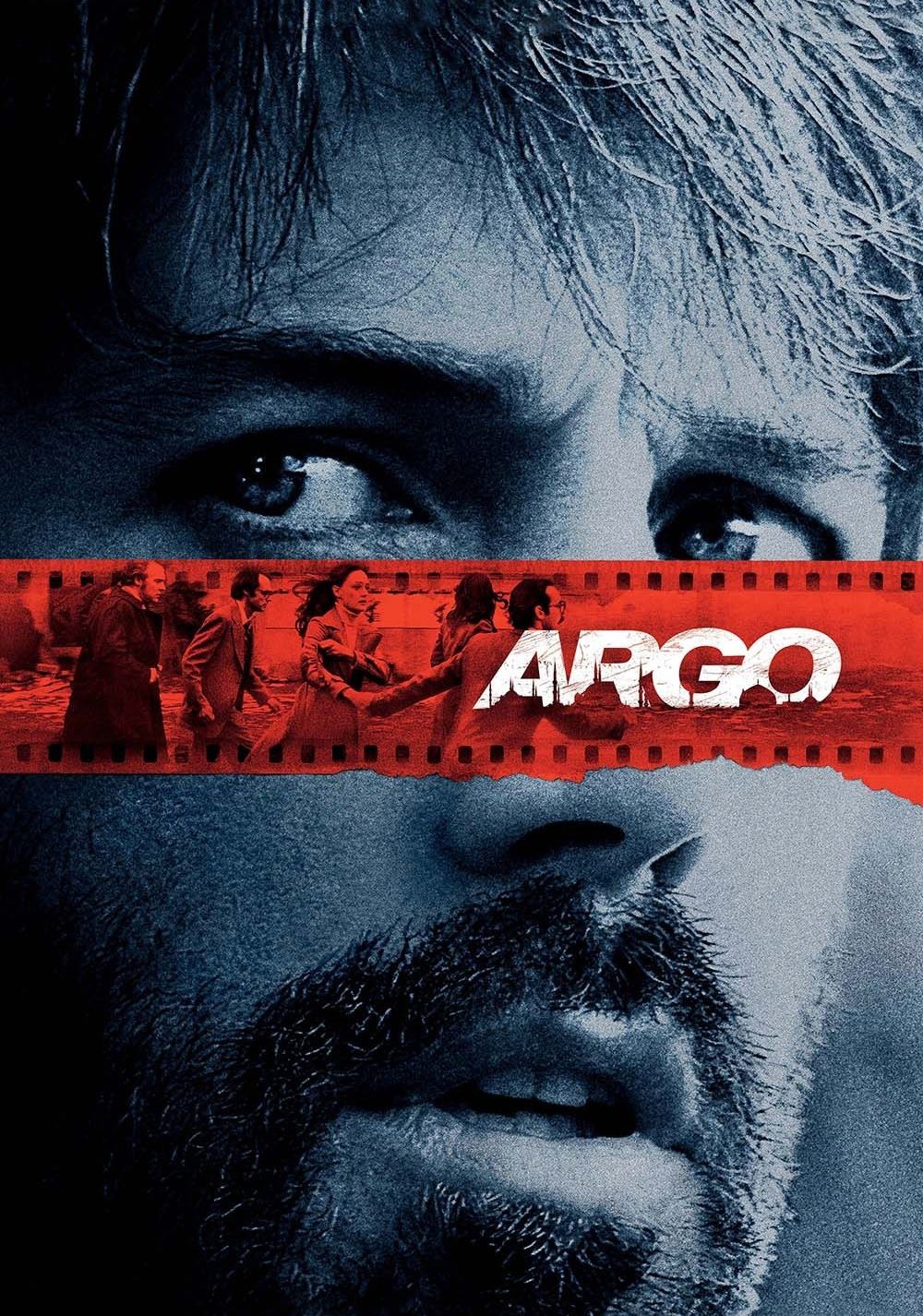
Argo

2012 film

Bill Simmons · Chris Ryan

Aired August 16, 2021

Displaying all 3 episodes

Mentioned in discussions

In the discussion (15)
Approx. transcript time · 00:25:56Read transcript
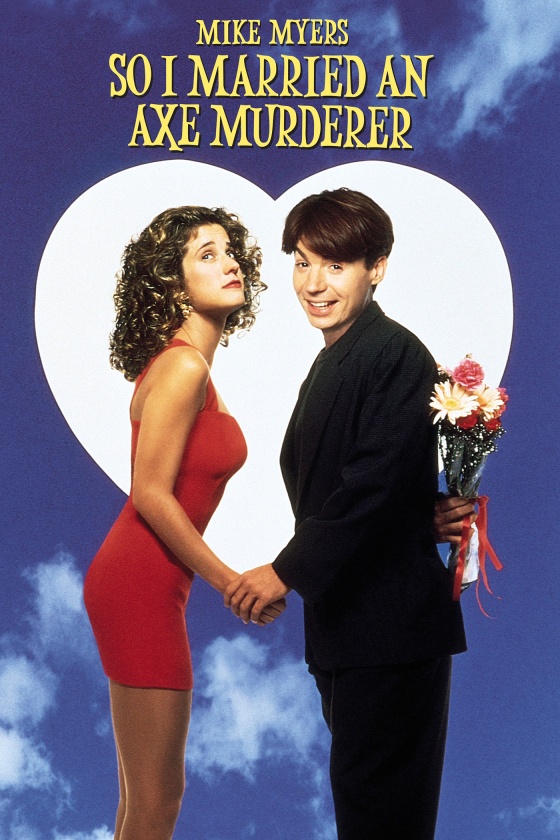
  • The opening follows a coffee mug through the coffeehouse and captures a 1990s setting. — Bill Simmons
  • The large-cappuccino joke, soup-smelling girlfriend and opening Woman poem are enthusiastically praised. — Bill Simmons
  • The first visit to the parents includes the Scottish wall, Bay City Rollers and William’s head jokes, with LaPaglia visibly struggling not to laugh. — Bill Simmons
  • The Pentaverate conspiracy and Colonel Sanders attack are praised; the later Netflix adaptation is considered unnecessary.
  • The scene keeps adding jokes, including Tony kissing the mother and William crying on his huge pillow. — Bill Simmons
  • The planetoid and weather-system head jokes are praised even as written dialogue. — Bill Simmons
  • The butcher-shop flirting montage is nominated. — Bill Simmons
  • Hartman’s Alcatraz guide Vicky, his disturbing prison story and his glare at Charlie are praised as exceptionally funny. — Bill Simmons
  • Michael Richards’s smoking, explosive cameo is nominated. — Bill Simmons
  • Arkin’s supportive captain learning to act like a tough television boss is praised, especially the later confession scene.
  • The reconciliation poem and discovery of the supposed murderer are liked, though the first hour supplies the best scenes. — Bill Simmons
  • The first Stuart/MacKenzie-family scene receives agreement from all three; its greater length breaks the comparison with Hartman’s scene.
  • Grodin objecting to dashboard drumming receives a special mention. — Sean Fennessey
  • Wright’s premature-birth dream line is recalled. — Sean Fennessey
  • The late first-time viewer chooses beat poetry as a personal favorite. — Craig Horlbeck
Glengarry Glen Ross

Half-Assed Internet Research

Stage origins; casting; awards; Baldwin rehearsal; cars; ensemble; desk direction; off-day visits; possible Rio Rancho appreciation

In the discussion (14)
Approx. transcript time · 00:03:00Read transcript
  • Pacino admired Foley’s At Close Range and wanted to adapt Mamet’s Pulitzer-winning play with him; Lemmon reportedly called this his greatest ensemble. — Chris Ryan
  • Baldwin’s speech was absent from the original play and became widely replayed and parodied, including on Saturday Night Live. — Sean Fennessey
  • The original stage ensemble is recalled as Mantegna, J.T. Walsh, Robert Prosky as Levene and James Tolkan as Moss; Tolkan and Harris embody the angry bald-man archetype. — Sean Fennessey
  • Arkin was reportedly slowest to sign because Aaronow mainly suffers humiliation; the discussion corrects his status at the time from Oscar winner to nominee. — Sean Fennessey
  • The ensemble is said to have accumulated 29 Oscar nominations, with surprisingly few for this film. — Sean Fennessey
  • Spacey was recruited from theater work associated with Lemmon and a Pacino–Foley visit to see him perform; the adaptation took nearly a decade and several cast iterations. — Chris Ryan
  • Mamet reportedly considers this a favorite adaptation; the interiors work as strengths rather than merely stretching a play outdoors. — Chris Ryan
  • Foley reportedly said Lemmon badly wanted a nomination; the earlier winning role is corrected from Missing to Save the Tiger. — Sean Fennessey
  • Foley’s oral-history account says Baldwin arrived with the speech memorized and performed it perfectly in a single rehearsal, leaving nothing to direct. — Chris Ryan
  • An AutoWeek article is cited for the cars: Blake’s 850, Williamson’s Pontiac Bonneville, Levene’s deteriorating ten-year-old car and Roma’s Buick Riviera. — Chris Ryan
  • Lemmon’s greatest-ensemble statement is explicitly said to have been watched in a video rather than merely read secondhand. — Chris Ryan
  • Roma’s desk uniquely faces away from Williamson’s office; production design makes the room feel worn by years of careless occupants. — Chris Ryan
  • Actors reportedly visited on days off to watch their colleagues work. — Chris Ryan
  • Rio Rancho may have become a profitable investment as an Albuquerque suburb, but the location match and calculations are explicitly unverified. — Chris Ryan
In the discussion (22)
Approx. transcript time · 00:16:48Read transcript
  • Roma across the table from the Jonathan Pryce character and the Roma–Moss confrontation are preferred on later viewings. — Sean Fennessey
  • The Baldwin speech remains an all-time favorite but is so familiar that it can feel skippable; Moss and Levene grow more meaningful with age. — Chris Ryan
  • Blake’s speech is an obvious scene choice, with tiny familiar moments such as deciding to start without Roma still producing chills. — Chris Ryan
  • The played Blake speech includes the coffee-for-closers rebuke and the threat of firing. — Sean Fennessey
  • The played sales-contest prizes descend from a Cadillac Eldorado to steak knives to dismissal. — Sean Fennessey
  • The played speech rejects weak-leads excuses and insults the salesmen through a Hyundai–BMW wealth comparison. — Sean Fennessey
  • The played speech delivers Always Be Closing and AIDA, demanding action from the salesmen. — Sean Fennessey
  • Moss and Aaronow’s car and restaurant conversations are a fresh-viewing favorite, moving from a failed sales call and doughnuts to the proposed robbery. — Chris Ryan
  • Moss’s shifting robbery proposal exposes his larger secret payout and pressures Aaronow by invoking accomplices.
  • Moss traps Aaronow by declaring that listening already makes him an accessory; the combined conversations are called miraculous.
  • Harris’s performance depends on Arkin’s befuddled one-word replies, revealing two different forms of failure through cadence rather than speeches. — Sean Fennessey
  • Roma’s train-compartment monologue and seduction of Lingk stand out on rewatch, mixing the self-deluding con artist with Pacino’s controlled and explosive modes. — Sean Fennessey
  • Roma’s tender, self-effacing conversation is manipulative from the moment he identifies Lingk as a mark; the apparent sincerity serves the sale. — Chris Ryan
  • Pacino’s precise syllables and apparently spontaneous thought make Mamet’s language feel native to Roma; the speech resembles a precursor to The Devil’s Advocate. — Sean Fennessey
  • The long office sequence offers many memorable interactions: Roma’s entrance, the stolen phones, Williamson confrontation, Levene’s celebration, Moss’s exit and Lingk’s return. — Chris Ryan
  • Levene’s failed sit with the Bruce Altman character is singled out as heartbreaking, showing a customer who actively hates the encounter. — Sean Fennessey
  • The Roma–Moss showdown with Levene refereeing is a favorite office sequence, showcasing both actors at their strongest in furious verbal combat. — Sean Fennessey
  • Williamson identifying Levene as the thief culminates in the crushing “because I don’t like you,” with Lemmon’s eyes conveying devastation. — Sean Fennessey
  • Levene improvising D. Ray Morton’s American Express executive identity is delightful, including his inability to finish the job title and Roma’s subsequent praise. — Chris Ryan
  • Roma’s attempt to re-close Lingk leads to his blistering attack on Williamson for spoiling the deal. — Chris Ryan
  • Levene’s “you are a shithead” illustrates Lemmon’s false bravado against Pacino’s genuine bravado. — Chris Ryan
  • Both settle on Blake’s speech as the most-rewatchable choice after entertaining more unusual favorites. — Chris Ryan
Argo The Rewatchables
Argo

What Piece of Memorabilia Would You Want From This Movie?

Scoot McNairy's glasses; Alan Arkin's gold Rolls-Royce; the original Argo script; the storyboards

In the discussion (3)
Approx. transcript time · 01:20:56Read transcript
  • Scoot's glasses are picked. — Bill Simmons
  • Arkin's gold Rolls-Royce is the most 70s item, straight out of 1979 TV, though expensive. — Bill Simmons
  • A cheaper pick is the original Argo script, or the storyboards framed on a wall. — Bill Simmons
Argo The Rewatchables
Argo

Apex Mountain

Ben Affleck; Scoot McNairy; Iran hostage crisis movies and TV; the other five of the Argo Six; Bryan Cranston

In the discussion (10)
Approx. transcript time · 01:08:54Read transcript
  • Affleck is a yes: the Oscar, the sympathetic narrative, a Fincher movie next and Batman after Gone Baby Gone and The Town. — Chris Ryan
  • Scoot McNary is probably a yes. — Chris Ryan
  • Arkin is a no because of Little Miss Sunshine. — Chris Ryan
  • Goodman is a no. — Bill Simmons
  • Movies or TV shows about the Iran hostage crisis get a yes, with probably no others. — Bill Simmons
  • The other five of the Argo Six get a yes. — Bill Simmons
  • Tate Donovan's own Apex is floated as Friends before settling on season one of The O.C. — Bill Simmons
  • Cranston first gets a no for Breaking Bad, then a yes on the argument that Breaking Bad is surging toward its finale while he establishes himself in movies. — Bill Simmons
  • The CIA is joked about as making a comeback after killing JFK, but no explicit Apex yes is given. — Bill Simmons
  • Whether this is the Apex for exfils is asked but drifts into Proof of Life and Predator without an answer; exfiltration is defined. — Bill Simmons
Argo The Rewatchables
In the discussion (4)
Approx. transcript time · 01:03:25Read transcript
Argo The Rewatchables
Argo

What’s Aged the Best?

Alan Arkin and John Goodman; Affleck's hair; movie-business in-jokes; the Intelligence Star; the 1979 Iran feel; the heightened escape day; opening credits; soundtrack; Scoot McNairy; 70s thriller vibe and ensembles

In the discussion (16)
Approx. transcript time · 00:43:07Read transcript
  • Goodman and Arkin end the category; the casting is a 15 out of 10, and once the right people are cast there is little left to do. — Chris Ryan
  • The six were cast without star power, chosen to resemble the real people shown in the closing credits, while the stars went to Affleck, Arkin, Goodman and the government roles. — Bill Simmons
  • Goodman has one of the strangest filmographies, working constantly across hits and misses, and is best in dramas where he provides comic relief. — Bill Simmons
  • Affleck's hair continues to delight. — Bill Simmons
  • The movie-business in-jokes, such as the WGA line, hold up. — Bill Simmons
  • The Intelligence Star, an award with no ceremony that must be handed back immediately, is a favorite concept and is joked about as a Ringer podcast award for 2021. — Bill Simmons
  • Affleck breaks out his Good Will Hunting wistful half-smile when receiving the Intelligence Star. — Bill Simmons
  • It is unclear where the Iran scenes were shot, but the film feels like 1979, helped by cutting in news footage. — Chris Ryan
  • The decision to make the escape day far more tense holds up, though think pieces say the real departure was easy. — Chris Ryan
  • The hosts say Affleck was upfront about taking liberties and that the bazaar confrontation and the plane chase did not happen, and Zero Dark Thirty drew more trouble by presenting itself as closer to documentary. — Chris Ryan
  • Movies based on a true story should be watched for the story, not history; even Spotlight changed things, and the hosts say Arkin's character is a merger of real people. — Bill Simmons
  • The opening credit sequence and a soundtrack of four bangers, including Dance the Night Away and When the Levee Breaks, are praised despite a song that came out too late. — Bill Simmons
  • Song-year accuracy matters only if a film goes all in; still, the anachronistic song made one host think it was 1982. — Bill Simmons
  • Scoot McDerry is incredible as the only real foil to Affleck, though the constant doubting invites a shut-up. — Chris Ryan
  • His career is judged worse than it should have been; he could have had a Gandolfini-style leading turn, and his name may have hurt him. — Bill Simmons
  • The 70s political-thriller vibe and the stacked ensembles, from Titus Wellever and Kyle Chandler to Scoot McNary, Tate Donovan and Cleo Duval, add up to 15 good people. — Bill Simmons
Argo The Rewatchables
Argo

Most Rewatchable Scene

Rescue-plan presentation; airport through the celebration montage

In the discussion (16)
Approx. transcript time · 00:31:10Read transcript
  • The storming of the U.S. embassy is the first nominee, an electric eight-minute scene: the dartboard with the Ayatollah picture, the Marine commander going out to reason and being grabbed, and the order not to shoot anyone or start World War III while they burn the classified material. — Bill Simmons
  • The opening establishes each of the six, with Tate Donovan leading but an airhead and Scoot as the locker-room guy questioning the coach; small details include a captor taking a woman's glasses. — Chris Ryan
  • The frantic destruction of equipment recalls a Grantland one-hour evacuation plan near the end of the ESPN era that was never executed. — Bill Simmons
  • Mendez shooting down every rescue plan, such as bicycles 300 miles to the Turkish border with a tire pump, is the next nominee; it is compared to Chuck Kosterman calmly rejecting pitches at Grantland, and the scene is full of that-guy actors like Titus Welliver. — Bill Simmons
  • Goodman listening to the plan and the "associate producer at best" exchange lead into meeting Arkin, who is basically playing Alan Arkin with lines like the one about counting the wrinkles on his dog's balls. — Bill Simmons
  • Arkin was nominated essentially for playing himself; once Goodman and Arkin arrive, the film gains levity, comedy and sunlit Hollywood scenes. — Bill Simmons
  • Arkin buys the script from Richard Kind for $10,000 after the Warren Beatty and unionizing Zulu extras story.
  • Mendez meeting the Canadian six ("I get people out"), Scoot's "bad cards" speech and the intense bazaar scouting trip are singled out. — Bill Simmons
  • Affleck drilling everyone on their cover stories before the airport is praised as hard, tough-love coaching. — Bill Simmons
  • The hosts relate that Led Zeppelin allowed When the Levee Breaks but required the needle to sit near the end of the album side, matching the song's real position, so the shot was redone. — Bill Simmons
  • The song is called perfect for the night before the escape while things fall apart back home. — Bill Simmons
  • The last-minute ticket scramble with Cranston and the airport checks start the last 20 minutes, called the best part of the film, up to the announcement that alcohol can be served after clearing Iranian airspace. — Bill Simmons
  • Scoot explaining the movie premise to the angry guard, the call to Arkin and Goodman and the takeoff are listed. — Bill Simmons
  • The celebration montage is a favorite and covers the whole spectrum of celebrations, from Cranston's dry crying and Scoot's handshake to Messina's premature celebration and Arkin and Goodman dancing.
  • Asked for a final pick, one participant chooses the presentation of all the different escape plans. — Chris Ryan
  • The other pick is the stretch from the airport to the celebration montage, the part that led to watching the film over and over. — Bill Simmons
Ocean's Eleven

Casting What-Ifs

Luke and Owen Wilson as the Malloy brothers; Joel and Ethan Coen as the Malloys; Ralph Fiennes as Terry Benedict; Alan Arkin as Saul; Mike Myers attached; Johnny Depp as Linus; Mark Wahlberg as Linus; Bruce Willis as Danny Ocean

In the discussion (10)
Approx. transcript time · 00:12:44Read transcript
  • Luke and Owen Wilson were originally slated to play the Malloy brothers, eventually played by Scott Kahn (as transcribed) and Casey Affleck; they could not do the movie because they had to shoot Tenenbaums, and two of the hosts spent ten minutes on this the day before.
  • The Wilsons would have been an infusion of Bottle Rocket, but more twee, with more emphasis on the pitter patter of their speech; they also had bigger profiles in 2001 than Kahn and Affleck and might have taken shine from the top three, like needing an Iguodala and a David West on the roster.
  • Owen can play dumb better than Luke; the Mormon twins' gags are supposed to be stupid so you laugh at and with them, and the Wilsons might have made it too pretentious or arch; this is the only what-if one host would have been okay with, since the brothers are comic relief, and the hosts are glad Tenenbaums got made.
  • Joel and Ethan Coen were reportedly also up for the Malloy brothers; one host wants documentation because the Coens in front of the camera seems implausible, while another likes it given the stories of them living with Holly Hunter and Frances McDormand after college, but agrees it is too inside-joke.
  • Ralph Fiennes, whom one host presumed was up for Basher on the strength of In Bruges, was actually one of three possible Terry Benedicts; he has done villains, including he who shall not be named; as Benedict it would scramble the allegiances because it is too close to English Patient and you might want Julia to be with Ray Files (as transcribed), when you need to be on Danny's side.
  • Alan Arkin was originally going to play Saul, the role played by Carl Reiner, which would have been fine; Mike Myers was attached to the cast; one of the earliest articles about Brad Pitt circling the film, a 2000 Hollywood Reporter Variety piece, has Johnny Depp playing Linus.
  • One host is against Depp, enjoying him only in What's Eating Over Grape (as transcribed) and finding the rest overacting; another was a fan in 2000, before Willy Wonka and Pirates of the Caribbean, but not at the right frequency for this movie: a darkness, the same handsome vibe as Pitt, and impossible to picture in glasses, a baseball hat and a parka in Chicago getting dunked on, since he never wants to blend in and would want to be bald with a snaggle tooth.
  • Mark Wahlberg was also attached to play Linus and had a weird reaction after the fact; a question to Amanda about the Julia Roberts role turns up no other what-ifs.
  • Bruce Willis was reportedly, on specious evidence, in contention for Danny Ocean, which would be an entirely different movie because Clooney anchors the whole thing; his absence set up a favorite Ocean's 12 cameo, where he arrives mid-heist while Julia Roberts' Tess is pretending to be Julia Roberts, with a SpongeBob pillow, as commentary on 2000s celebrity; the hosts are glad he turned the role down, and Ocean's 12 made one like Julia Roberts even more.
  • Earlier, in the intro: Mark Wahlberg, initially slated to play Linus, was salty after release, saying he went off and made Planet of the Apes and The Truth About Charlie, which both sucked, rather than sit around patting George on the back.
Displaying all 10 discussions

Films in the archive