Film credit
Sydney Pollack
Also referred to as Sidney Pollack, Pollack, Cindy Pollack, Pollock
Stats
- Episodes featuring their films
- 4
- Movies in this archive
- 5
Rewatchables episodes featuring Sydney Pollack’s films
Eyes Wide Shut
1999 film
Bill Simmons · Chris Ryan · Sean Fennessey · Mallory Rubin
Aired August 15, 2023

Mentioned in discussions


Half-Assed Internet Research
Utah locations, Pollack’s financial commitment, severe cold, Del Gue’s behavior, Cannes premiere, and illnesses
In the discussion (7)
- The film reportedly used nearly one hundred Utah locations. — Bill Simmons
- Sydney Pollack reportedly mortgaged his home when the production was running out of money. — Bill Simmons
- The cold reportedly made second takes difficult and left the crew miserable. — Bill Simmons
- Del talking to himself is explained as a tactic to be regarded as touched and left alone. — Bill Simmons
- The film was the first Western accepted at Cannes. — Bill Simmons
- Redford listed cases of frostbite, strep throat, and pneumonia during production. — Bill Simmons
- The filmmakers accepted less money in order to shoot in Utah rather than relocate.


What’s Aged the Best?
Party joke; Kidman; redheads; Pollack; Shining echoes; piano music; natural bodies; home marijuana; taxi era; masks; timeless desire and relationship concerns
In the discussion (12)
- The masked party has endured as a reusable cultural joke, comparable to the key party in The Ice Storm. — Bill Simmons
- Late-1990s Kidman’s beauty and sexual confidence are praised, from the opening nude shot to her final line.
- The film’s many redheads are celebrated, including Sally. — Bill Simmons
- Pollack, especially in suspenders, is praised as an accomplished director giving a major performance; his eagerness to learn from Kubrick is offered as an explanation.
- The opening ballroom’s use of music associated with The Shining and its visual resemblance are appreciated. — Bill Simmons
- The eerie, simple piano motif is memorable enough to imagine a child learning it. — Bill Simmons
- The natural appearance of the nude performers is praised, with a qualification that cosmetic surgery cannot be known merely by looking. — Bill Simmons
- Smoking marijuana at home, keeping it in a Band-Aid container, and unwinding into frank conversation are nominated. — Mallory Rubin
- The taxi era without GPS or spouse-tracking smartphones enables Bill’s wandering, though an early mobile phone is acknowledged. — Mallory Rubin
- Masks, secret societies, and the exploration of sexual appetite feel timeless rather than tied to1999. — Mallory Rubin
- Marion’s confession broadens the film beyond the real stars’ marriage by showing desire expressed in front of a father, fiancé, and desired man; grief-driven vulnerability is an alternative interpretation. — Mallory Rubin
- The film’s emotional concerns and nonspecific period make it a candidate for the best-aged1999film, with modern tracking and communication as the main differences. — Chris Ryan

Most Rewatchable Scene
Stoned marital fight, two choices; masked party, one choice
In the discussion (15)
- Stoned Alice confronting Bill is nominated.
- Alice’s dance with the Hungarian is praised as intensely sexy and revealing about marriage; opposing reactions find him creepy and his performance poor.
- The confrontation over Bill’s certainty of Alice’s fidelity is a personal favorite; the performances are defended as right for this strange film even if conventionally bad. — Chris Ryan
- Alice’s confrontation is praised for musical delivery, rhythmic strangeness, and its escalation from reassurance into a carefully controlled fight. — Chris Ryan
- The confession about abandoning husband and daughter for the naval officer is read as a deliberately wounding disclosure, not merely an honest admission. — Mallory Rubin
- The entire night-out sequence from Marion through Domino to Nick is nominated.
- Marion’s painful love confession is praised and interpreted as a clue toward dream logic because it seems implausible for someone Bill barely knows.
- The masked party builds from spectacle into unpredictable danger, producing uncertainty about where the story could possibly go. — Bill Simmons
- The escalating strangeness of Marion, Domino, Nick, the costume shop, and the masked party is admired as a progression. — Chris Ryan
- The costume-shop encounter is nominated for its unsettling wigs and the proprietor’s remarkable comic performance while trying to serve his customer.
- Bill realizing he is being followed through New York is nominated, particularly the creepy music.
- The pool-table conversation is nominated, with Pollack’s performance praised as consistently smooth and excellent. — Bill Simmons
- The final conversation in the store is nominated.
- Alice’s dream account is nominated for its savage description of humiliating Bill, with astonishment that a real married couple performed it. — Mallory Rubin
- The stoned fight receives two final preferences; the masked party receives another. — Bill Simmons

Craziest Kubrick Story From This Movie
Repeated takes; private marriage conversations; secret notes; barred set; extended shoots; sexual-content research; translated newspaper; visible Kubrick videos
In the discussion (7)
- Cruise reportedly performed95takes of walking through a door. — Bill Simmons
- Kubrick reportedly privately explored Cruise and Kidman’s marriage and supplied separate notes they could not discuss with each other. — Bill Simmons
- Kidman’s naval-officer scene reportedly took six days; Cruise was barred from set and she was forbidden to tell him about it. — Bill Simmons
- The late Cruise–Pollack conversation reportedly required three weeks and200takes. — Bill Simmons
- Basic Instinct, Showgirls, and Red Shoe Diaries were reportedly researched to judge limits on sexual content. — Bill Simmons
- An Italian newspaper version of the death-discovery shot was reportedly requested for an Italian cut. — Bill Simmons
- A stack of Kubrick videos reportedly appears before the mask discovery, topped by Full Metal Jacket. — Bill Simmons
In the discussion (10)
- The film is based on a1926 Arthur Schnitzler novella whose rights Kubrick reportedly acquired in the1960s. — Bill Simmons
- The production reportedly lasted400days and is claimed as a Guinness continuous-shoot record, with explicit skepticism about that distinction.
- Kubrick’s small London crew and home-based postproduction are offered as reasons the unusually long shoot could cost no more than a more conventionally scheduled production. — Sean Fennessey
- The film reportedly grossed$162million, mainly overseas. — Bill Simmons
- David Hughes’s Kubrick book is identified as a source for several casting claims; Val Kilmer reportedly sent thirty unsolicited audition tapes. — Chris Ryan
- Cate Blanchett reportedly supplied the mysterious masked woman’s voice. — Bill Simmons
- Cruise and Kidman reportedly sued Star magazine over a claim that sex therapists coached their scenes. — Chris Ryan
- Pollack’s arrival prompted unverified speculation that he represented Warner Bros. oversight or could manage Cruise; these are explicitly rumors. — Chris Ryan
- A Gary Oldman anecdote describes Keitel leaving after repeated takes; other alleged reasons are deliberately withheld.
- An article, tentatively remembered as The Independent, reportedly identifies two actresses portraying the Mandy-related appearances; the research is explicitly described as limited. — Mallory Rubin
Casting What-Ifs
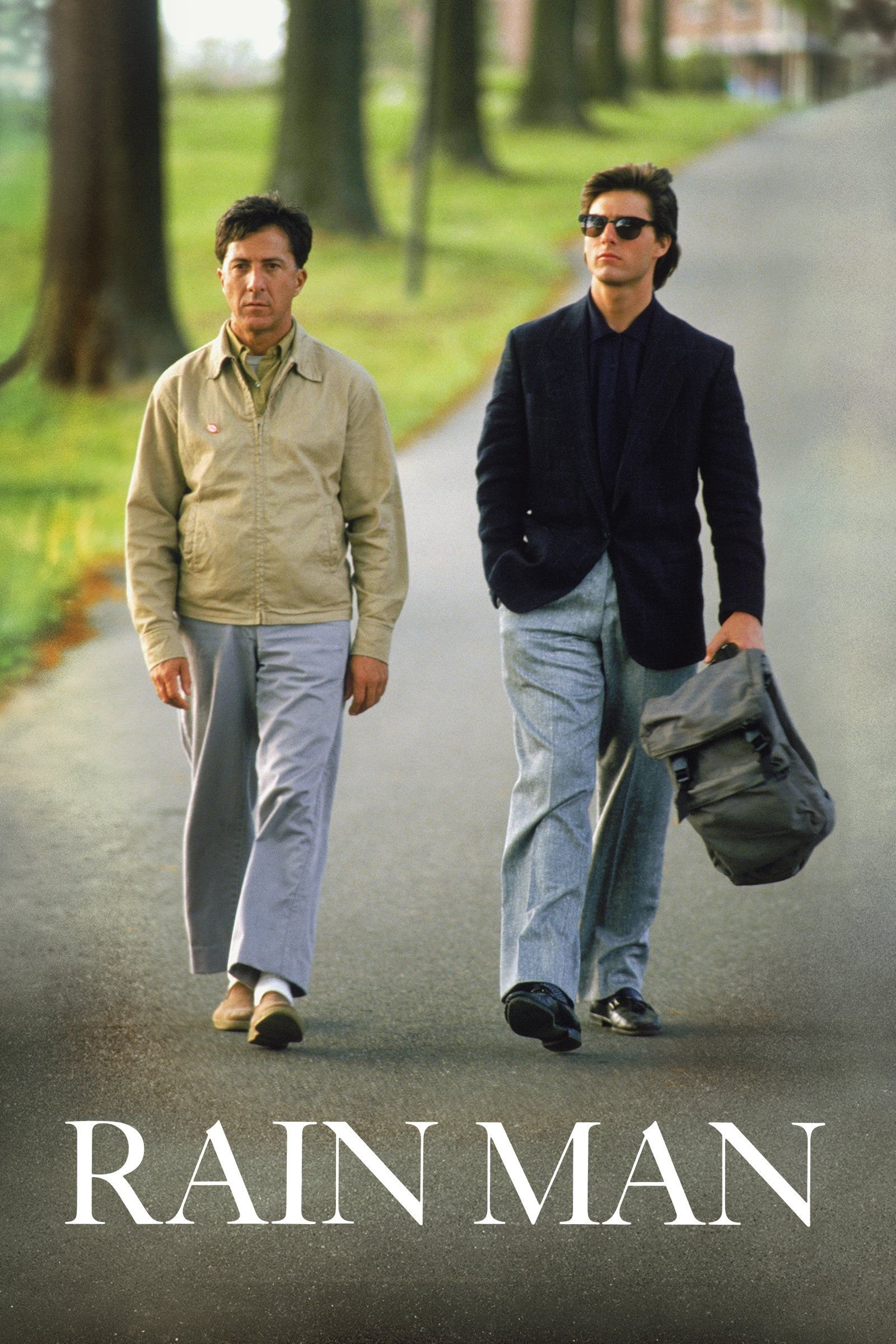
Dustin Hoffman as Charlie with Bill Murray as Raymond; Martin Brest, Steven Spielberg or Sydney Pollack as director; J.T. Walsh as the psychiatrist
In the discussion (6)
- Michael Ovitz sent Hoffman the script thinking Hoffman would play the Cruise part; Hoffman preferred the other role. — Bill Simmons
- CAA wanted Dustin Hoffman and Bill Murray, with Hoffman as Charlie; Murray went on to make What About Bob, called a similar but different-toned lane that suited him better. — Bill Simmons
- CAA agent Paula Wagner, later Cruise's producing partner, suggested making Charlie the younger brother to get Tom Cruise in, raising objections that the two could never be brothers given the age gap. — Bill Simmons
- Martin Bress, Spielberg and Sydney Pollack all circled the film; Pollack and Hoffman legendarily despised each other on Tootsie, but Pollack got Levinson to read it. — Bill Simmons
- Levinson acts in the film because J.T. Walsh was supposed to play the psychiatrist but had a conflict. — Bill Simmons
- Jokes follow about Walsh playing the part as Markinson or as Happy Kikindale from Blue Chips. — Bill Simmons

In the discussion (2)
- Candidates are Dave Grusin, Cruise, Brimley, Hackman, Grisham and Pollack, for whom this was the first good film in a long time, since Out of Africa, with Havana a dud; the score is declared the winner as the best part of the film and what makes it stand out twenty-five years later, and the others agree.
- A Brimley aside asks how the briefcase survives being swung thirty times and jokes that the gymnastics exist so Mitch can hang from the ceiling.
Podcast choices
- Speaker not identified
- Dave Grusin
- Speaker not identified
- Dave Grusin
Half-Assed Internet Research
Hackman's name was left off the poster over Cruise's above-the-title deal; the ending differs from the book; Tripplehorn dated Ben Stiller for six years; Pollack voices the prison warden; a 2012 TV series continued the story; the Hyatt Regency Grand Cayman was destroyed by Hurricane Ivan; Hackman has not made a film since 2004
In the discussion (4)
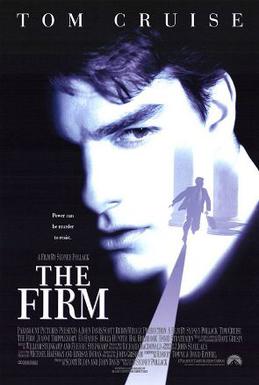
- Gene Hackman's name did not appear on the release poster because Cruise's Paramount deal allowed only his name above the title; Hackman asked to be removed entirely and appears only in the end credits.
- The ending differs significantly from the book, where Mitch swindles ten million from the firm and there is a manhunt; Jeanne Tripplehorn dated Ben Stiller for six years, and the hosts think she was a nineties face who had a better career than remembered, including Big Love, with one calling her better than Holly Hunter here.
- Sidney Pollack voices the prison warden on the phone to Ed Harris's agent; a 2012 TV series picked up Mitch ten years later; the Cayman hotel was the Hyatt Regency Grand Cayman, destroyed by Hurricane Ivan in 2004 and later demolished.
- Hackman's last film was Welcome to Mooseport in 2004; Grantland accidentally made people think he had died through a headline Sean Fennessey wrote; Tarantino wanted him for the Robert Forster role in Jackie Brown; a 2018 bicycling article shows him at 88 riding an electric bike in New Mexico.

In the discussion (7)
- The 155-minute length has aged badly; the beach scene could be ten seconds, though one host argues it is needed to show the infidelity and the repair, and the film should be about two hours, with Pollack seemingly refusing to cut anything.
- Cruise's pirate shirt in the Caymans and the sweaty basketball scene, where he never actually plays, have not aged well; his athletic ability is a favorite topic, with softball in A Few Good Men and cornerback in All the Right Moves the most believable, and Vision Quest imagined as his ideal sports film.
- Cruise's backflips with a street tumbler on Beale Street, set up so he can be sad walking past the kid later, immediately date the film; nobody in real life does that, Abby's 'there he goes' makes no sense, and Kaya, asked whether she would date a man who did it, answers absolutely and then absolutely not.
- Cruise eats a rib on the rooftop like a popsicle, as if he had never eaten ribs, prompting the joke that he learned human behavior through acting.
- Tarrance and another agent order steak sandwiches at a late-night diner and get them within thirty-five seconds; Abby's plan to fly to Grand Cayman makes no sense, since she could not know the hotel or get a direct flight from Memphis.
- Wilford Brimley as head of security and muscle has aged oddly; the last forty-five minutes are heavy on plot maintenance, such as the FBI holding the mob family's itinerary, Mitch getting the overbilling idea from the overbilled client, and Avery rolling over for Abby after she drugs him.
- The film has a ton of flaws but is still great; the show does not require Citizen Kane.
What’s Aged the Best?
Dave Grusin's piano score; the name Mitch McDeere; the Cayman Islands as a locale; nineties Cruise; the cast as a whole; the Memphis setting; the foresight in casting future character actors
In the discussion (4)
- The soundtrack, controversial at the time, has aged the best: Dave Grusin's piano is a character in itself, adding humor, melancholy, romance and suspense, recurring in themes such as the guitar on Beale Street and the drive by the river, and it puts Grusin on the Who Won the Movie list; it is called one of the best scores of the last twenty-five years and was Oscar-nominated, though polarizing when released.
- Mitch McDeere is a great name; the Cayman Islands have always aged well as a mysterious locale; nineties Cruise is a peak era, and the hosts miss having an actor you buy season tickets for, floating Emma Stone, Miles Teller, Damon and Leo.
- The totality of the cast and the Memphis setting, an emptied, fading southern metropolis, have aged well; on rewatch Mitch and Abby are themselves idiosyncratic, a self-made striver and a more moneyed wife, which reads as a Clinton-era, sell-out-or-not story that David Rabe and Robert Towne were obsessed with.
- The character-actor foresight has aged well: Dean Norris and Tobin Bell as the two assassins before Breaking Bad and Saw, Terry Kinney before Oz and Billions, and Margo Martindale as the secretary, classic Pollack casting where the eighteenth most important person is a great actor.
Most Rewatchable Scene
The chase: Mitch summoned to the partners after taking Avery's files, Tarrance's 'get out of there' call, and the escape through Memphis
In the discussion (5)
- The chase is the one pick: Mitch takes files from Avery's office, is stopped for a word, Brimley comes down, and the Ed Harris 'get out of there' call starts a fifteen-minute stretch the host watches every time, with Cruise running, jumping onto a truck that happens to carry pillows, riding the tram and hanging on while the two hitmen chase him; it carries the movie and is Sidney Pollack doing Three Days of the Condor twenty years later.
- The scene where Mitch guesses his salary is a minor but good dramatic scene, one of the few that shows his intellect at work, and the hosts play the clip; the final maneuver that turns the ending into a court proceeding with Lambert as judge and Lamar as defense lawyer is also loved.
- The Grand Cayman meeting where Mitch and Avery talk Sonny Capps into a tax loophole shows why Mitch is a great lawyer, though Cruise's profane 'fucked with a dick big enough for an elephant to feel it' line sounds like a robot wrote it; Jerry Weintraub playing a dirtbag years before Ocean's Eleven is enjoyed.
- The chase, Cruise on the run, is called one of the best fifteen-minute sequences of the nineties; the wined-and-dined montage of Mitch learning the firm while Abby grows suspicious through Lamar's wife is also entertaining, the first hour is strong, the middle sags and the ending picks up, including the demolished house and Abby's return.
- The boat scene between Strathairn and Holly Hunter, with the crooked-smile exchange, is a couple the host would have taken ten more minutes of instead of the beach scene.

In the discussion (4)
- The award goes to someone with very little screen time who makes the most of it, and this is called a unanimous election for Sidney Pollack, an acclaimed director in his own right who was born to play Marty Bach; the clip is played of Marty reading Arthur's files and realizing he is building a case against U North.
- Michael O'Keefe, Dennis O'Hare and Merit Weaver (as transcribed) are floated as other candidates; one voice is sold on Pollack despite having tried to dethrone him with Chris Cooper purely out of loyalty to Cooper, and a further 'I have to go Sidney Pollack, too' follows.
- In retrospect it is an elegiac role, since Pollack died about six months after the film came out; IMDb shows his actual final acting credit was the 2008 rom-com Maid of Honor (as transcribed), one of the great title puns, which one participant saw in the theater while skipping Michael Clayton; this is counted as his final performance, a fitting homage to the films he directed and to his presence as an actor.
- Pollack makes Marty so lived in, sunken eyes and all, that it has a trickle-down effect on everyone else's performances; Dennis O'Hare, as the man who does the hit and run in his Jaguar, is in the truest sense of the Dion Waiters Award probably the winner and will get a different award, but Pollack does the most with the time he has on screen.