Gives ten out of ten for entertainment with many notes, calling the film a cultural case study worthy of sociology discussion. — Craig Horlbeck
Notes Sam Levinson's age when his father made the film, prompting speculation that seeing it as a child influenced him; the viewing and influence are conjectural. — Craig Horlbeck
Enjoyed with Liz it but paused repeatedly over the plot. The recording and incriminating files arrive through convenient phone calls after substantial buildup, found dramatically weak. — Craig Horlbeck
Praises the office aesthetic, including bulky computers and clutter, as especially appealing amid 1990s nostalgia. — Craig Horlbeck
Barry Levinson is selected for tackling several difficult social themes in an entertaining film, despite disagreement with some conclusions. — Bill Simmons
Recasting the director: late-1990s David Fincher could have made the film one of the decade's best, with The Game as a reference point. — Bill Simmons
Brian De Palma is another director choice, imagined bringing more sexuality and a Seattle following sequence. Levinson's brighter, lighter style and prior commercial success are considered an awkward fit. — Bill Simmons
Levinson's light touch may have broadened the audience, while a Fincher version might have earned less. Gone Girl is proposed as his later version of related material. — Bill Simmons
Scene-stealing location: the office building, reportedly constructed for the film because Levinson wanted glass walls that let people observe one another. — Bill Simmons
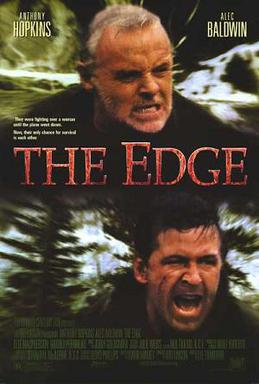
Linson’s production accounts; locations and gross; Bart’s career; Hopkins’s injury; reality adaptation; Baldwin’s criticism; Fischer; What Just Happened
Linson recounts Baldwin’s angry refusal to shave his beard and subsequent refusal to speak to the director or producer after finally shaving. — Bill Simmons
Linson’s account of the studio pitch includes an executive objecting that viewers would not root for a rich man; Mamet developed the bear and betrayal elements to win sympathy. — Bill Simmons
Alberta and British Columbia are named as filming locations; no budget figure was found, while the gross is reported as 43.3 million. — Van Lathan
Bart the Bear is described as a 23-year-old star near the end of his career, reunited with Hopkins after Legends of the Fall.
Bart’s credits are listed as Windwalker, The Clan of the Cave Bear, The Great Outdoors, The Bear, White Fang, The Giant of Thunder Mountain, Homeward Bound, On Deadly Ground, Legends of the Fall,12 Monkeys, Walking Thunder, The Edge and final film Meet the Deedles, plus Grizzly Adams and a Kenny Rogers television movie. — Bill Simmons
Bart reportedly presented at the 1998 Oscars and was unusually docile and trusted by actors; his trainer recalled Hopkins respecting him as a fellow performer. — Bill Simmons
Hopkins reportedly combined a neck/back problem and painkillers with hypothermia after river work, causing a roughly 10-day production shutdown. — Bill Simmons
The film reportedly inspired a Brazilian survival reality show using Charles’s techniques. — Bill Simmons
Baldwin’s autobiography reportedly praised Mamet’s script but attacked the director for turning it into a dumb action movie. — Bill Simmons
Jenna Fischer reportedly calls it a favorite she watches annually; informal barbershop recollections illustrate its broad cable familiarity. — Bill Simmons
A claim on Wikipedia that Bart won an Oscar but could not attend is identified as an obvious joke or false insertion. — Van Lathan
What Just Happened is described as a 2008 Barry Levinson fictionalization of Linson’s book, including the difficult bear movie and beard dispute; De Niro and Bruce Willis are named. — Van Lathan
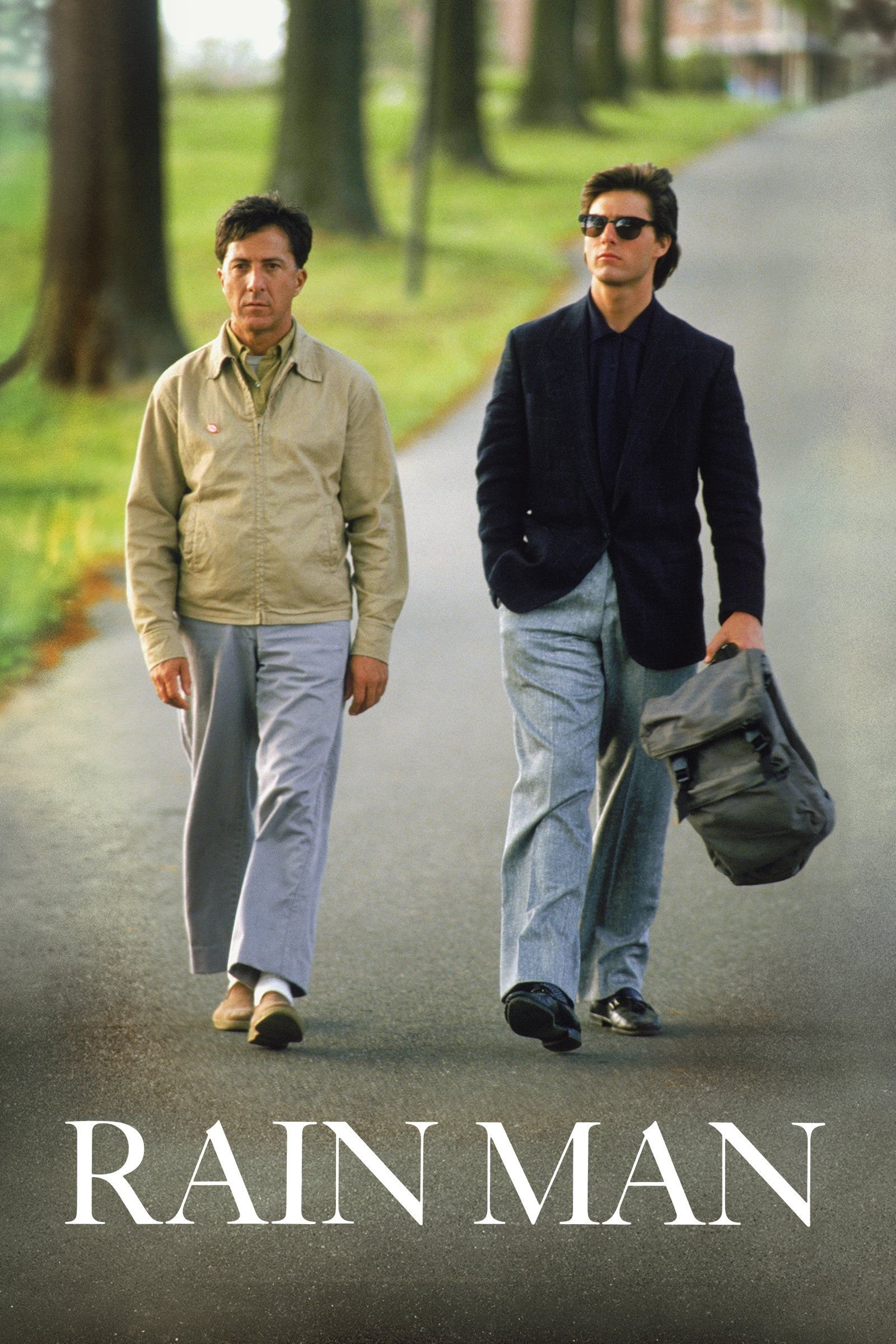
Hoffman would have been the pick years ago, but Cruise wins the movie, and not as a contrarian zag. — Bill Simmons
Another voice agrees and adds that the movie is Cruise's story of transformation, his first real adult part, pointing toward the rest of his career. — Bill Simmons
Barry Levinson is floated: Best Picture, Best Director and the number one movie, though nothing he made after is as good; he is rejected because people see it as a Hoffman-Cruise movie. — Sean Fennessey
Asked who from the last 20 years could pull off Charlie, Leo, Damon, Affleck, Chris Evans, Brad Pitt, E. McGregor, Michael Keaton and others are floated; Hanks would not be believable as a chain-smoking dick. — Bill Simmons
Pressed, the answer is Hoffman: Raymond became an iconic figure, won Best Actor and launched a wave of imitators; Hoffman is the not-overthinking-it answer, Levinson the overthinking one, and Cruise the smart answer. — Sean Fennessey
A voice says it really wants Cruise to win and feels bad; a reply says he'll be okay and jokes that he can't win the Oscar or Who Won the Movie. The count is not restated. — Sean Fennessey
Tom Cruise: no for this movie, though a case is made for 1988; another view puts his peak at 1996 with Mission: Impossible, his first production, and McGuire. — Bill Simmons
Asked directly, the reply is "No, I think I'm going to go with" what a co-host is saying. — Chris Ryan
Hoffman's Apex is Kramer vs. Kramer, as decided on an earlier episode; Outbreak and Sphere are mentioned jokingly. — Bill Simmons
People's Court never got better: crushing it in the late 80s and prominently featured in the number one movie, part of the 4:30-6 p.m. TV block with Jeopardy and Wheel of Fortune. — Bill Simmons
Asked if he had heard of People's Court, the answer is vaguely; Judge Judy took it over. — Craig Horlbeck
Barry Levinson is a yes for this period: best director and the number one movie at the box office. — Bill Simmons
Levinson was also key to 30 for 30; once he committed, other directors followed. — Bill Simmons
Levinson pretty much invented modern TV with Homicide a couple of years later and has perhaps the most underrated behind-the-scenes career, though his filmography is called hit and miss. — Bill Simmons
Diner created a template everyone ripped off, and Levinson was already an Oscar-nominated screenwriter before that, having written ...And Justice for All in the 70s. — Bill Simmons
Kasdan is proposed as the winner of a most-underrated tournament; Grand Canyon is mocked.
Valeria Galena's Apex is Hot Shots.
Road-trip movies: no, though this is a great road-trip movie shot sequentially; a list follows: Easy Rider, Thelma & Louise, Almost Famous, Blues Brothers, Midnight Run, Planes, Trains and Automobiles, Smokey and the Bandit, Dumb and Dumber and Tommy Boy, with Road Trip, Vacation and Due Date added.
Handheld TVs, the Sony Watchman, were a thing for about three years. — Bill Simmons
Who's on First: not its Apex overall, but perhaps for the last 40 years. — Bill Simmons
The 1949 Buick Roadmaster and Qantas Airlines are yeses; Qantas is still throwing the no-hitter. — Bill Simmons
During filming Hoffman and Cruise called the movie two schmucks in a car and constantly worried it would not work. — Bill Simmons
Principal photography happened during the 1988 Writers Guild strike, so the final scene was apparently winged without writers. — Bill Simmons
The ending is questioned as unsatisfying for a Best Picture winner, since it lacks a sappy payoff where Raymond stays with Charlie. — Sean Fennessey
A sentimental Amtrak scene always lands for someone who spent the 80s riding Amtrak between a mom's house and a dad's house. — Sean Fennessey
Card counting is meant to be the climax that brings the brothers close and saves Charlie's business; the ending is neither victory nor defeat, and its ambiguity is liked. — Chris Ryan
Jokes imagine a modern version with Raymond as a Marvel superhero, a Wallbrook driveway epilogue, or Lenny killing Charlie.
Airline versions deleted the airline-accident scene, except on Qantas. — Bill Simmons
Choosing a flight at the airport and hopping on last minute was possible through the late 90s. — Bill Simmons
The film was written by Barry Morrow and Ronald Bass; Morrow created Raymond after meeting real-life savant Kim Peek. — Bill Simmons
Hoffman beat Gene Hackman for Best Actor and hugged him; they were playhouse classmates who shared Hackman's apartment on 2nd Avenue and 26th Street, where Hoffman slept on the kitchen floor before moving in with Robert Duvall on West 109th Street. — Bill Simmons
The three as roommates is pitched as a documentary or original series, compared to LeBron, Wade and Carmelo on one AAU team. — Bill Simmons
Asked whose career they would rather have, one voice picks Duvall and Hackman is picked as well; Hackman was the most liked by other actors; Denzel and Will Smith took movies to work with him. — Bill Simmons
Hackman won a second Oscar for a supporting part in Unforgiven, something Hoffman never did. — Bill Simmons
Duvall is picked as the best storyteller of the three, with Godfather and Apocalypse Now stories.
The Replacements is called a top-five Hackman performance, with scenes apparently done in one take. — Bill Simmons
CAA wanted Dustin Hoffman and Bill Murray, with Hoffman as Charlie; Murray went on to make What About Bob, called a similar but different-toned lane that suited him better. — Bill Simmons
CAA agent Paula Wagner, later Cruise's producing partner, suggested making Charlie the younger brother to get Tom Cruise in, raising objections that the two could never be brothers given the age gap. — Bill Simmons