
Film credit
Chris Cooper
Also referred to as Cooper
Stats
- Episodes featuring their films
- 3
- Movies in this archive
- 4
Rewatchables episodes featuring Chris Cooper’s films
Mentioned in discussions

In the discussion (1)
- Chris Cooper is the emphatic choice for roughly three scenes; Jackson and Kiefer are explicitly ineligible. — Wesley Morris
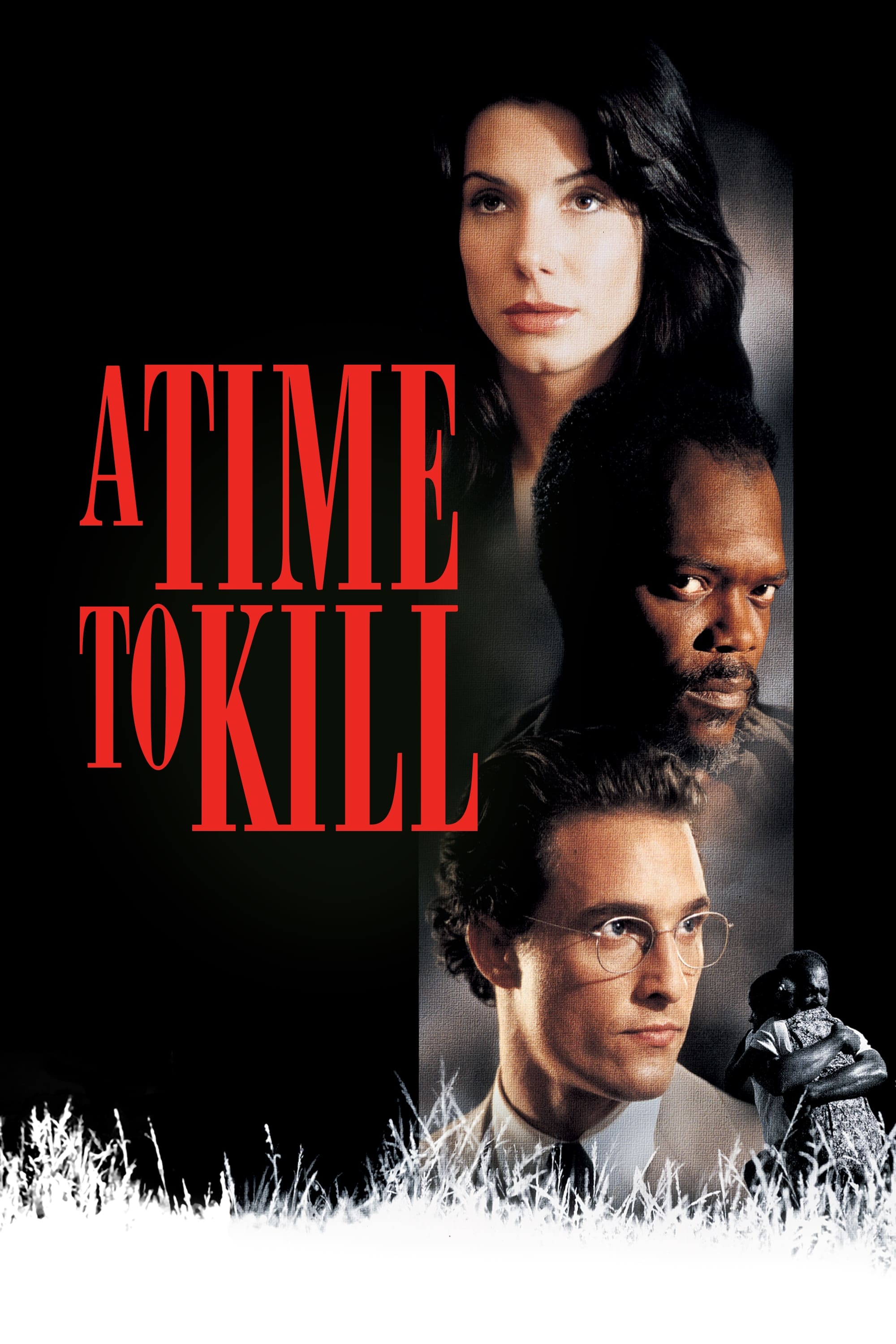

Most Rewatchable Scene
Carl Lee’s jail speech and Jake’s closing summation, combined
In the discussion (13)
- Dutton arresting the two attackers in a Southern bar, followed by Jake learning what happened from Cooper, is praised as an effective setup. — Bill Simmons
- Carl Lee’s courthouse shooting is nominated as an effective, shameless action sequence, including his preparation the night before. — Bill Simmons
- The early hearing with Bullock’s motion and Kiefer’s hostile sideways look is nominated. — Bill Simmons
- Carl Lee visiting Cooper after shooting him is an emotional favorite. — Bill Simmons
- Carl Lee turning the tables on the reverend and civil-rights organization is nominated. — Bill Simmons
- Jake and Ellen’s flirty lunch while recruiting her to the case is praised for the actors’ chemistry, distinct from the later hotel sequence. — Bill Simmons
- The jury-selection sequence is nominated. — Wesley Morris
- Deputy Looney’s insistence that Carl Lee is a hero who should be freed is a major witness-stand highlight. — Bill Simmons
- Carl Lee’s declaration that the attackers deserved to die and should burn in hell is another explosive courtroom highlight. — Bill Simmons
- Carl Lee’s jail speech identifies Jake as his secret weapon precisely because he shares the white jury’s perspective. — Wesley Morris
- Jake’s final summation is one participant’s first choice and proposed as McConaughey’s greatest career moment. — Bill Simmons
- The verdict itself is also nominated. — Bill Simmons
- The final preference combines the jail speech and summation because Carl Lee’s challenge supplies the emotional and moral foundation for Jake’s closing. — Wesley Morris

Half-Assed Internet Research
Oscar count; auditions; Grisham’s inspiration; Lucien’s drunkenness; Dazed and Confused reunion
In the discussion (7)
- The cast reportedly contained two Oscar winners during production—Spacey and Fricker—and six by the discussion, adding McConaughey, Bullock, Cooper and Spencer. — Bill Simmons
- The film received no Oscar nominations, despite discussion of possible recognition for McConaughey and Jackson. — Bill Simmons
- The film reportedly cost $40 million and grossed $152 million. — Bill Simmons
- McConaughey reportedly auditioned for Freddie Lee Cobb before lobbying to play Jake; the discussion inaccurately describes that initial role as one of the men killed. — Bill Simmons
- Grisham reportedly developed the story after hearing a young rape victim’s testimony in 1984 and imagining her father killing the attackers. — Bill Simmons
- Sutherland reportedly wanted Lucien to be much drunker, but Schumacher rejected that approach, leaving an uncertain characterization. — Bill Simmons
- McConaughey and Nicky Katt had both appeared in Dazed and Confused. — Bill Simmons

Half-Assed Internet Research
Damon's stunts and combat training, the red bag, the death count, Liman's family history, Prague locations, Swiss-bank tropes, and Tony Gilroy's later scripts
In the discussion (13)
- Damon performed many stunts after three months of weapons, boxing, and martial-arts training. — Chris Ryan
- He performed the hand-to-hand combat and climbed the safe-house walls. — Chris Ryan
- The red bag later appears as a hanging planter in Marie's scooter-rental shop. — Chris Ryan
- The panel counts eight deaths in the film. — Chris Ryan
- Liman's father served as chief counsel during the Iran-Contra hearings. — Chris Ryan
- Chris Cooper's character was allegedly modeled on Oliver North because Liman's father interrogated him. — Chris Ryan
- Much of the film was shot in Prague while representing Switzerland and Paris. — Chris Ryan
- The panel questions whether Swiss banks are as anonymous and permissive as movie convention suggests. — Chris Ryan
- Tony Gilroy made a one-draft, no-notes, no-rewrites deal for the third film and was paid an amount Damon called exorbitant. — Chris Ryan
- Damon publicly called that draft unreadable and embarrassing while blaming the studio for accepting the deal. — Chris Ryan
- Gilroy later directed the non-Damon franchise entry. — Bill Simmons
- The panel speculates that making the non-Damon entry helped prompt Damon and Greengrass to return for Jason Bourne. — Bill Simmons
- One participant ranks Identity above Supremacy, Legacy, and Ultimatum despite calling Supremacy technically better made. — Bill Simmons

Half-Assed Internet Research
The Melrose bank location, prison filming, and the disputed Charlestown bank-robbery statistics
In the discussion (6)
- A former MassBank branch in Melrose was used for the opening robbery. — Bill Simmons
- The Chris Cooper scene was filmed at MCI Cedar Junction, reportedly a first for the prison. — Bill Simmons
- The trailer claimed more than 300 annual bank robberies centered in Charlestown. — Bill Simmons
- Contemporary Massachusetts robbery statistics were much lower. — Bill Simmons
- Charlestown residents objected to the portrayal. — Bill Simmons
- The source book was set in the mid-1990s, when the reputation fit better. — Bill Simmons

What’s Aged the Worst?
Helicopter shots, Hamm’s accent, prison material, Heat echoes, law-enforcement logic, escape mechanics, and generic shirts
In the discussion (9)
- The movie uses too many overhead helicopter shots. — Bill Simmons
- Hamm’s brief mock-Boston accent is debated as intentionally bad.
- The Chris Cooper prison scene is considered emotionally inert by one host. — Bill Simmons
- Several surveillance and shootout beats directly echo Heat. — Bill Simmons
- The film’s redemptive ending for Doug is questioned given the violence.
- The FBI’s inability to secure charges or block escape routes is questioned. — Chris Ryan
- Doug escaping in an MBTA uniform while carrying money is questioned. — Bill Simmons
- Generic Boston-themed T-shirts are criticized.
- The film’s treatment of its murderers is considered harder to defend in a current context.
In the discussion (4)
- The award goes to someone with very little screen time who makes the most of it, and this is called a unanimous election for Sidney Pollack, an acclaimed director in his own right who was born to play Marty Bach; the clip is played of Marty reading Arthur's files and realizing he is building a case against U North.
- Michael O'Keefe, Dennis O'Hare and Merit Weaver (as transcribed) are floated as other candidates; one voice is sold on Pollack despite having tried to dethrone him with Chris Cooper purely out of loyalty to Cooper, and a further 'I have to go Sidney Pollack, too' follows.
- In retrospect it is an elegiac role, since Pollack died about six months after the film came out; IMDb shows his actual final acting credit was the 2008 rom-com Maid of Honor (as transcribed), one of the great title puns, which one participant saw in the theater while skipping Michael Clayton; this is counted as his final performance, a fitting homage to the films he directed and to his presence as an actor.
- Pollack makes Marty so lived in, sunken eyes and all, that it has a trickle-down effect on everyone else's performances; Dennis O'Hare, as the man who does the hit and run in his Jaguar, is in the truest sense of the Dion Waiters Award probably the winner and will get a different award, but Pollack does the most with the time he has on screen.


What’s Aged the Best?
The film's specific post-Enron, pre-financial-crisis moment of lots of money and lots of paranoia
In the discussion (6)
- Candidates offered: Clooney's stubble, the unadulterated footage of Clooney chilling in cabs or in his Mercedes, flip phones, or the Trump-era vibe of complicity within a corrupted system; the three of them nostalgically look back at the days of being reachable only by flip phone.
- This capsule of movies is associated with Bush-era cynicism and total Chris Cooper vibes, the first time one participant started really watching dad movies about talkers and players; the janitor sequence is Michael Clayton shrugging off the magic of lawyerdom.
- A timeless post-9/11 cynicism about how soul-crushing systems are not magic and are moved through by money rather than hyper-competence; the film makes sure you understand Clooney is not the best to have ever done anything, just a man who put himself in the service of the right people, who only sounds ineffectual once he stops representing those interests, left with his $80,000 and his dead friend Arthur.
- All of the above: a shout-out to the script supervisor for the continuity of the levels of stubble, from five o'clock shadow to several days unshaven, across the four-days-ago flash structure; an all-time great flip phone movie that made the speaker want to go back to a Motorola, because if Clooney can take down U North without an iPhone there is no need to tweet; and the grainy flip phone photo of Karen at the end ('I gotcha'). — Lindsay Zoladz
- One of the last great American thrillers pre-iPhone: scenes would be plotted differently with a smartphone, since so much of the film is having to go see people, and Arthur could have been found more easily by text, although a man really hiding should not walk around with a conspicuous bouquet of a dozen baguettes; the mood is post-Enron but pre-financial-crisis Bush era, with a whole whistleblower vibe, and since those themes are unfortunately current again the film has aged impressively against other Bush-era movies.
- Wondering whether they would feel the same doing the podcast again in 2028, the dialogue and jargon are singled out first despite being rooted in a changing industry, along with the law-firm environment: a wake for Arthur would still be in the bar where Barry and Marty hug at the end, and Marty Bach would still be in his Long Island home with his dress shirt untucked going through files; the award then goes to the use of that specific post-Enron, pre-financial-crisis time with a lot of money and a lot of paranoia.
Casting What-Ifs
Denzel Washington was offered Michael Clayton and turned it down; Mark Wahlberg as Michael Clayton (floated as a joke, rejected); Chris Cooper as Marty Bach (rejected, allowed as Barry)
In the discussion (9)
- The one really interesting casting what-if: the role was originally offered to Denzel Washington, who in a GQ interview named Seven and Michael Clayton as the two roles he most regretted turning down, and who was scared off by Tony Gilroy being a first-time director.
- Denzel later played a lawyer for the other Gilroy brother, Dan Gilroy, in last year's Roman J. Israel, thought underrated or misunderstood and remembered mostly for his Best Actor nomination.
- Denzel is really good at playing exasperated, so his version would have been a different take: Clooney is not exasperated but conflicted in a repressed way, whereas Denzel would have been much more 'what do you want me to do?' — Justin Charity
- Asked for a Michael Clayton line in a Denzel voice, the request gets a flat no, but the 'I'm not the guy you kill. I'm the guy you buy' line is delivered anyway and called incredible.
- Denzel is thought better in films like Crimson Tide or Malcolm X where he leans into his charisma, though his choices show he likes playing downtrodden, beaten-down, morally compromised people, as in Inside Man from around the same time, the film one participant watched right before seeing Michael Clayton for the first time.
- Asked who else could be imagined as Michael Clayton, the answer is that this is a very hard one to recast because everybody seems really well cast. — Lindsay Zoladz
- Mark Wahlberg as Michael Clayton is floated and knocked down: he would try to play the hero too much, whereas Clooney's performance is never triumphant, dejected and tired in the cab at the end rather than smiling, and Wahlberg would look for the noble firefighter element; the proposer confesses the suggestion was meant partly as comedy, since Wahlberg's weird, confused tone could have made a funny alternative take.
- Chris Cooper as Marty Bach: there is a running list of aughts films that either have Chris Cooper in them or are defined by the fact that they should have, and this people-in-suits, corruption-everywhere, racing-to-do-the-thing film is a classic Chris Cooper movie. — Justin Charity
- Chris Cooper would be allowed as Barry but not as Marty, because Pollack in that role is a classic look.


The Ruffalo / Hanna / Rubinek / Partridge Overacting Award
James Van Der Beek's 'I don't want your life' scene
In the discussion (5)
- A new category named for Mark Ruffalo dialing it up in Spotlight; there is said to be only one obvious nominee, the 'I don't want your life' scene, and the clip is played.
- The Texas accents are very tough; Paul Walker's is super thick in his first scene telling Billy Bob he has a dream and by the end he is in Fast and the Furious.
- Two hosts perform the father-son exchange, one as the dad and one as Dawson; the reading runs well past the promised two lines, with an admission of getting caught up and being unable to stop, and a quip about being the father of a starting quarterback.
- A dad debate follows: he is called both a great, supportive dad and a terrible one; the billboard was built by boosters, whoever Buddy Garrity is for the Coyotes; the one mark against him is answering the free Brown acceptance with the Friday game plan, defended as what a dad saving $300,000 would do, since he knows your life in West Canaan is ruined if you play badly.
- Mox's dad looks like Ed Werder of ESPN and Paul Walker's dad like Chris Cooper, as if the film could not afford the real ones; a second nomination for the overacting award is the scene of the dads making the boys throw the ball, deciding the best quarterback in Texas by a three-yard throw.



