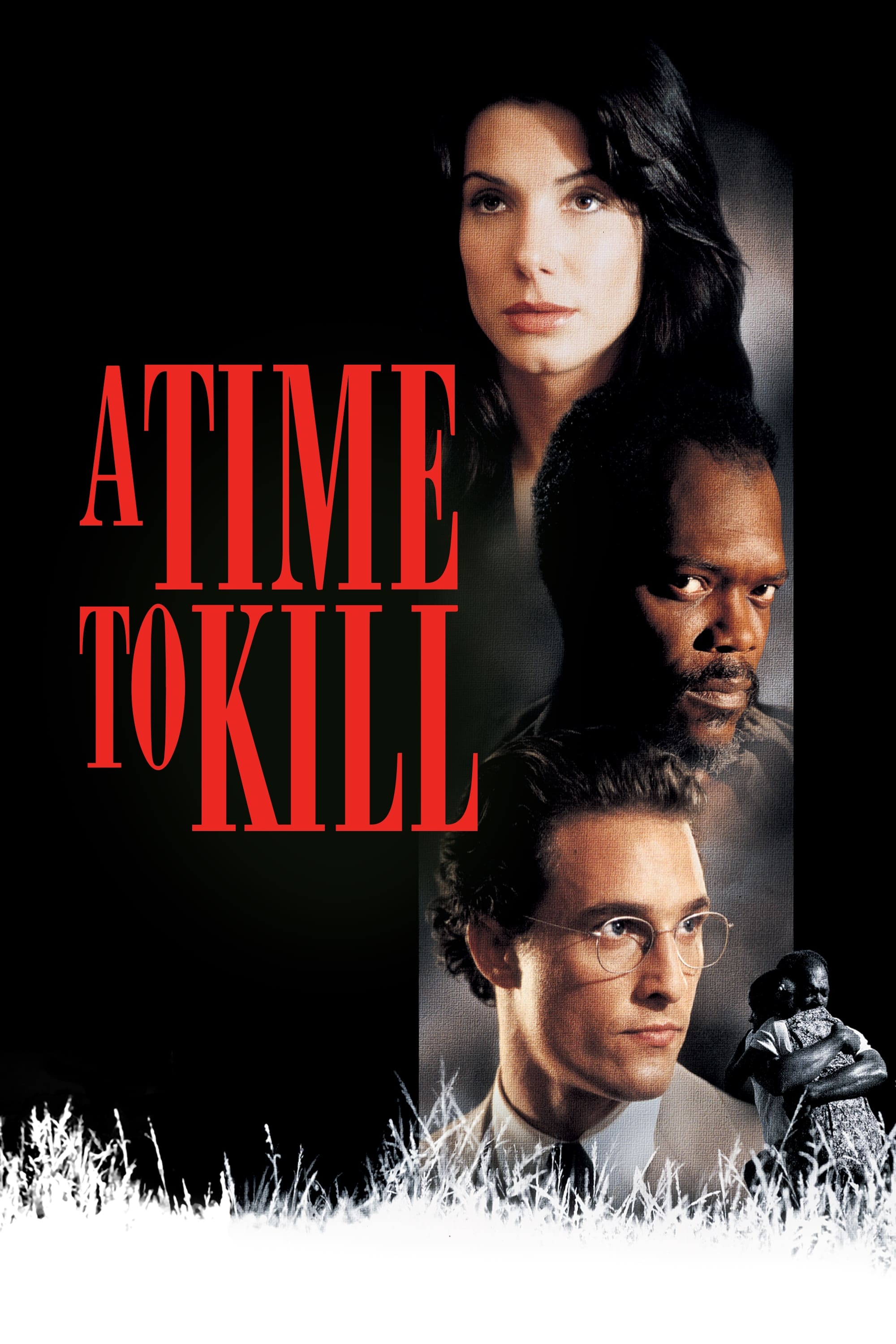
McConaughey’s later Dallas Buyers Club, True Detective, Magic Mike and Wolf of Wall Street period is preferred over this film. — Bill Simmons
Jackson’s peak is placed around Jackie Brown the following year rather than here. — Bill Simmons
Grisham is placed in this mid-1990s adaptation boom, with The Pelican Brief’s release corrected back to 1993. — Wesley Morris
Bullock is judged not yet at her peak, with The Blind Side Oscar offered as a later milestone. — Wesley Morris
Judd’s peak is assigned to Double Jeopardy. — Wesley Morris
Nicky Katt villains receive a qualified affirmative choice over Dazed and Confused, based on the impact of a few minutes as an overt racist. — Bill Simmons
The early-1960s green Porsche is rejected in favor of Dylan McKay’s longer television run. — Bill Simmons
The cast reportedly contained two Oscar winners during production—Spacey and Fricker—and six by the discussion, adding McConaughey, Bullock, Cooper and Spencer. — Bill Simmons
The film received no Oscar nominations, despite discussion of possible recognition for McConaughey and Jackson. — Bill Simmons
The film reportedly cost $40 million and grossed $152 million. — Bill Simmons
McConaughey reportedly auditioned for Freddie Lee Cobb before lobbying to play Jake; the discussion inaccurately describes that initial role as one of the men killed. — Bill Simmons
Grisham reportedly developed the story after hearing a young rape victim’s testimony in 1984 and imagining her father killing the attackers. — Bill Simmons
Sutherland reportedly wanted Lucien to be much drunker, but Schumacher rejected that approach, leaving an uncertain characterization. — Bill Simmons
The drug dealer who is hit over the head and stripped should have been a more famous actor of the era: Nikki Kat, who looks and acts like him and was available. — Chris Ryan
Michael Imperiali is offered, still gettable as Spider from Goodfellas and on The Sopranos; Madsen or Seismore are also named, though possibly already in the wilderness. — Bill Simmons
Mitch's pitching scenes apparently needed a double; the cast lived and partied together at a Radisson; Linklater wanted Led Zeppelin's Rock and Roll for the end credits but Robert Plant refused; the beer was real except for the minors; 'man' is said 203 times; Mitch touches his nose 42 times; Linklater made character mixtapes; classmates sued over the film and lost; Wooderson's Ted Nugent t-shirt; Sean Andrews's part was phased out as McConaughey's grew
The first, garbled item seems to concern Mitch's pitching scenes and a double, with the view that when you need a double for a sports scene you should hang it up; the cast all lived together at a Radisson in a free-for-all party hookup, like Survivor with showmances and alliances.
Linklater originally wanted Led Zeppelin's Rock and Roll over the end credits; Jimmy Page agreed but Robert Plant denied him, which draws abuse for Plant as the kind of guy who likes money.
The beer in the movie was real, though the minors did not drink; Cole Hauser's ten-second bit of trying to stand up hammered, burping and sitting back down is one of the best in the film, and he may really have been drunk.
'Man' is said 203 times and Mitch touches his nose 42 times, yet another arrow against Mitch Kramer; the Jovovich and Sean Andrews annulled marriage is recalled from earlier.
Linklater made individual mixtapes for the actors' characters, Adam Goldberg's being Elo (as transcribed) and the like; he was later sued by classmates who said the film disparaged them, as someone named O'Banion might feel, and the suit was thrown out.
Wooderson's t-shirt is a Ted Nugent album cover, and the shirt can be bought online; a host recounts two absurd days in their early twenties hunting with Nugent outside Auburn Hills, Michigan, while he hosted a hunting reality show, stocking his acres with wildlife, killing it and butchering it in real time, simultaneously the worst person the host had ever met and a really nice guy; Nugent is now a controversial hard-right figure, but his records in the film are great.
Nugent has two songs in the film, Stranglehold and Hey Baby.
Sean Andrews, who played Pickford and married Mila Jovovich, is key in the first 20 to 25 minutes but had his part phased out during filming because nobody in the cast liked him, he feuded with Jason London and he isolated himself with Jovovich; the film opens on the two of them in that incredible car.
As the cast turned on him, Linklater, a who's-vibing-with-whom director willing to add scenes and ad libs, kept giving scenes to McConaughey, who was supposed to be in only two since Wooderson is not in the class but was clearly a movie star; the driving at the end and the final football-field scene were supposed to be Sean Andrews's, and McConaughey is in the last 15 minutes instead.
Nicky Cat (as transcribed), already a pretty cool actor, stands next to McConaughey in the car-hood scene when he was basically an extra, and may have wondered about it, though they were both in A Time to Kill in 1996; the most memorable Wooderson scenes were improvised or written on set, including the spelled-out L.I.V.I.N. and the Top Notch invitation to the nerds, making Wooderson the glue and the second most important character despite not being there from the beginning.
Clint the Bully, played by Nicky Cat (as transcribed), is the runner-up: seen in nine things without being placeable, including Boston Public, A Time to Kill and a cut-down role in The Dark Knight as one of the cops chased by the Joker while escorting Aaron Eckhart; at about 5'7" he could be more imposing but has the greaser attitude.
The answer is the one black actor, who plays Mel, Melvin Spivey: Jason O. Smith has no Wikipedia page and two IMDb credits, this film and Overexposed nine years earlier as Jerry Solomon, a film with a salacious cover about a rock singer secretly posing for a men's magazine; the award could be renamed for him.