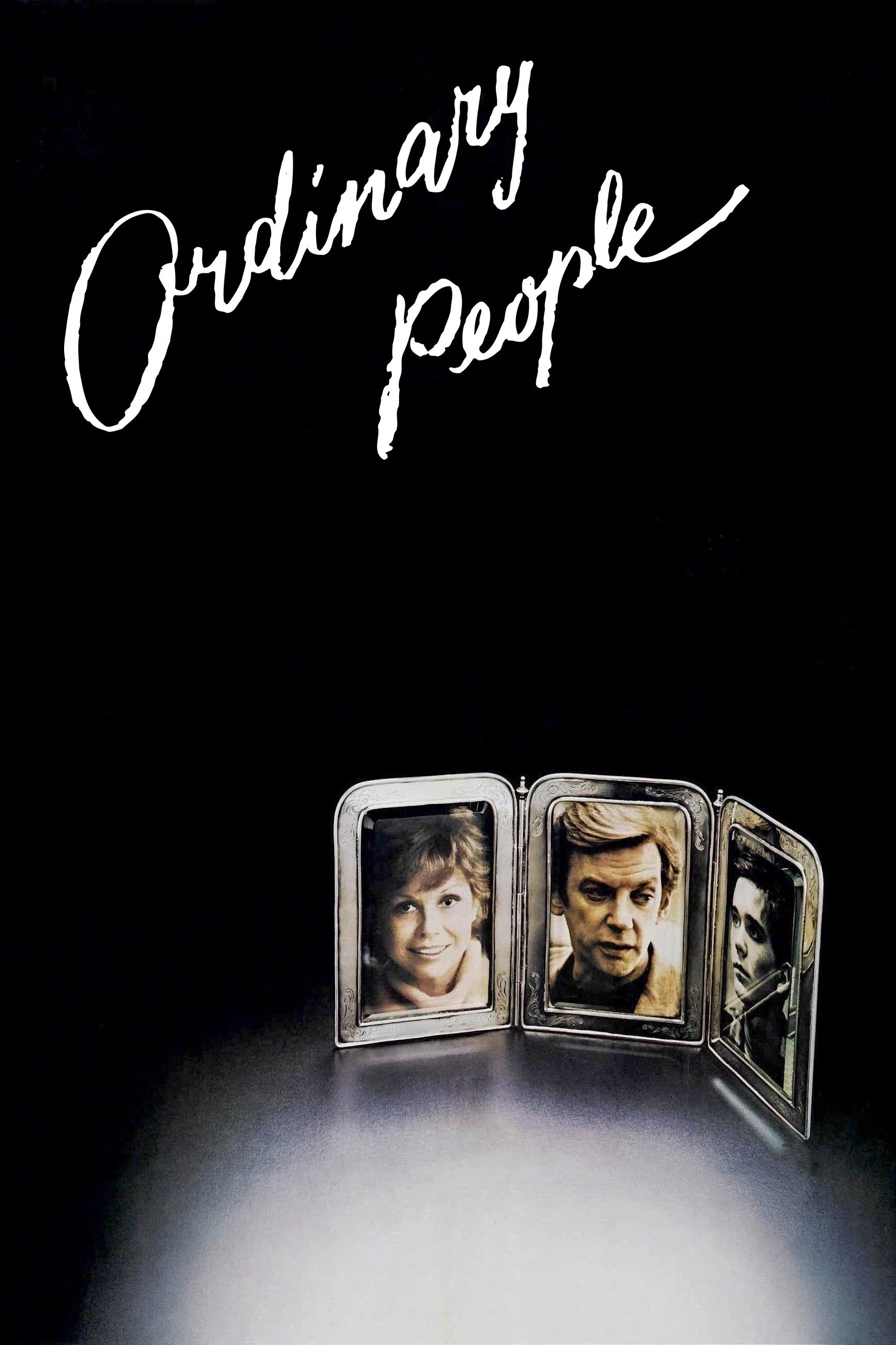
Redford is a yes: one of the most bankable actors, at his handsome peak, and a Best Director winner who took down Scorsese; the Sundance Institute was formed in 1981.
Timothy Hutton is a probable yes, with Taps also considered, but the Oscar closes the deal.
Mary Tyler Moore is a no, followed by a tangent on attractive stars of earlier decades and her Laura Petrie on The Dick Van Dyke Show.
The 1981 Oscars are considered, but one host names 1994 as the Apex telecast and 1975's hosts are read; no Apex call is made for 1981.
Sutherland could be talked into Apex, but his peak is also placed at the 24-era moment when viewers learned he is Kiefer's father, and at JFK.
The name Buck is declared Apex Mountain by one voice, supported with Buck Henry, Buck Showalter, Magic Johnson's nickname Young Buck, Craig's suggestion of Uncle Buck and Bucky Barnes, while Yankee fans' Bucky Dent is waved off.
The name Ward belongs to Ward Cleaver, but Buck and Ward in the same movie is declared Apex Mountain.
Intense Chicago movies are becoming Apex but are not there yet, and fucked up family movies are a no.
The studio wanted Redford to play Calvin; he declined as too predictable, and the hosts think he would have overpowered or sunk the film.
Hackman as Calvin is intriguing, recalling his surprising turn in The Firm.
The EW oral history links Hackman to both the Berger and Calvin parts; research indicates it was the Sutherland part.
Per Redford, he wanted Richard Dreyfuss as the psychiatrist, but the reply was that Dreyfuss was having a nervous breakdown; Sutherland then said he wanted the husband rather than the psychiatrist.
Hackman was cast as Calvin but dropped out over compensation, per a Chicago Tribune article; Sutherland was told it was him or Hackman.
Elizabeth McGovern got special permission from Juilliard to be in the film.
Per Redford, he found Judd Hirsch on Taxi, which the hosts note was a top show, and saw Mary Tyler Moore alone on a Malibu beach, a story half believed.
Natalie Wood reportedly wanted to play the mother and had worked with Redford in the 60s; they never spoke again after Mary Tyler Moore was cast.
Conrad's depression cues; Beth's haircut; evil Mary Tyler Moore; Elizabeth McGovern; swim coach's office; movie psychiatrists; 'It hurts too much to be around you'; performances; Canon in D score; fashion; Conrad's books; actor-to-director transition; Chicago-suburb setting
Redford instructed the cast and crew not to interact with Hutton so he would feel isolated like his character; it worked.
Psychiatrists in movies have aged the best, beyond a Woody Allen or erotic-thriller gimmick.
After Conrad punches the swimmer, telling his friend 'it hurts too much to be around you' lands because the friend reminds him of Buck.
The performances hold up on repeat viewing, as do the piano-heavy Canon in D score and the fashion, especially the suede outerwear. — Mallory Rubin
Conrad's desk and books are noted: Return of the King, Thomas Hardy's Jude the Obscure, and Hunter S. Thompson.
The answer's own style is a fusion of Cal's and Berger's clothes. — Sean Fennessey
The actor-to-director glow up became more common after Redford, and late-70s and early-80s Chicago-suburb films, with Risky Business, Ferris Bueller and Thief, have aged well.
The rewatchable-scene format is awkward for this theme, making it almost a best-scene category.
Beth sitting in Buck's preserved room, followed by the awkward trig conversation with Conrad and 'I bought you two shirts,' is the first nomination.
The mother-son relationship strains credulity at times, a testament to how effectively she distances herself; the scene would not be pulled up on YouTube, but it is gripping.
Retitling the category for the theme is floated: most gripping scene, which scene held on, or most dysfunctional scene.
The museum-like room, Conrad trying to talk about swimming the 50 and his trig grade to a statue-like Beth, and her dismissive gesture to get off the hutch are called devastating; a later effort by her fizzles as soon as Buck is mentioned.
The party, with Beth's fake party personality and Cal on the staircase explaining Conrad's doctor visits, and the car ride ('You drink too much at parties, Calvin') are nominated together; the party is called nimbly directed and 'it is a very private matter' an iconic line.
The family photo fight over the camera is called an all-timer and painful to watch; the Rachel Getting Married rehearsal-dinner speeches are compared.
Beth learning Conrad quit the swim team escalates into the hospital exchange and 'Buck never would have been in the hospital,' called one of the cruelest moments in film six weeks after his suicide attempt; it shows she is embarrassed by him.
The food-court line about having had enough change offers a path to empathy, but learning she went to Europe instead of visiting during his four months in the hospital makes that hard.
Mary Tyler Moore letting herself be this unlikable is rare even in today's prestige TV, contrasted with Big Little Lies.
The garage scene after Cal's first therapy visit, about what he wore to Buck's funeral, ends with at least a half-hearted hug.
The garage scene is in one participant's top two: Calvin's brokenness, the lines about what he wore on his feet, and recognizing oneself fixating on something mundane in despair, which also offers a way to understand Beth.
The first date with Elizabeth McGovern, with Conrad describing depression as falling into a hole, the intruding jackasses at the restaurant and the God exchange, is praised as a sensitive portrayal of depression.
The golf-course argument is another all-timer: Beth's outburst at Ward about his kids and the swimming pool he's so proud of is called her most honest moment, along with her saying she cannot respond to someone asking to be loved.
Asides: don't play golf or tennis with your spouse, and the name Ward prompts an Outer Banks reference.
The late-night breakup scene, which had to be refilmed, with 'We would have been all right if there hadn't been any mess,' is the last nomination in the list.
The big scene, Conrad's session with Berger after learning his hospital friend is dead, with the flashback and 'Why did you let go?', is called one of the best seven-minute scenes in a drama and probably why the film won.
Earlier sessions set it up, from 'I never promised you a rose garden' to the first session where Conrad keeps his jacket and backpack on and cannot get comfortable.
The lounge-chair session shows how far they have come, and the 'I hung on' scene is the film's true culmination, with the coda effective.
How much of the timeline cutting comes from directing, editing or the screenplay is asked; it is called ahead of its time for 1980.
A dissent says the flashbacks during the session hold the viewer's hand, since earlier flashes came in dreams.
Counterpoints: the brother disappearing into the water is effective, and waking flashbacks appear earlier, such as at the train tracks and in Cal's memory of the sweater argument.
Favorite lines include 'Did it ever occur to you that you might've been stronger?', called the key line, and 'I hung on. I stayed with the boat.'
All agree this session is the most rewatchable, or most gripping, scene.