
‹ All movies
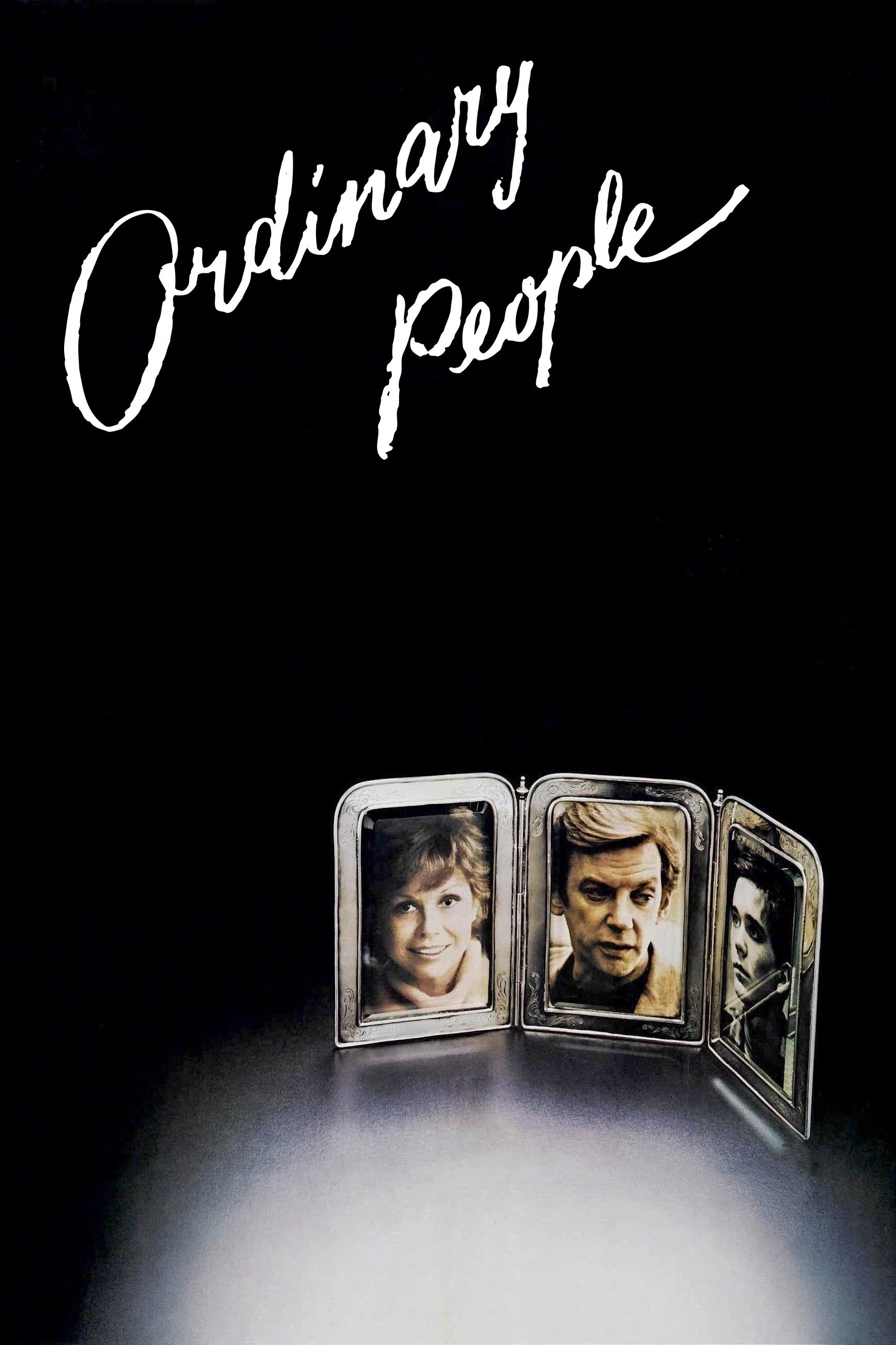
Ordinary People poster

Ordinary People

124 minutes

Cast

Selected cast credits · Film reference

Donald Sutherland Calvin Jarrett
Mary Tyler Moore Beth Jarrett
Judd Hirsch Tyrone C. Berger
Timothy Hutton Conrad Jarrett
Elizabeth McGovern Jeannine Pratt
Dinah Manoff Karen Aldrich
Fredric Lehne Joe Lazenby
James B. Sikking Ray Hanley
Quinn Redeker Ward Butler
Mariclare Costello Audrey Butler
Richard Whiting Howard Butler
Meg Mundy Ellen Butler
Adam Baldwin Kevin Stillman
Scott Doebler Buck Jarrett

Ordinary People | The Rewatchables

Explore episodeClose episode

Roger Ebert's review

In the discussion (2)
Approx. transcript time · 00:51:14Read transcript
  • Roger Ebert gave the film four stars; his review is quoted calling it an intelligent, perceptive and deeply moving film, rare in its characters facing such challenges.
  • Ebert is called right on this one.

Most Rewatchable Scene

Conrad and Dr. Berger's climactic session

In the discussion (24)
Approx. transcript time · 00:51:40Read transcript
  • The rewatchable-scene format is awkward for this theme, making it almost a best-scene category.
  • Beth sitting in Buck's preserved room, followed by the awkward trig conversation with Conrad and 'I bought you two shirts,' is the first nomination.
  • The mother-son relationship strains credulity at times, a testament to how effectively she distances herself; the scene would not be pulled up on YouTube, but it is gripping.
  • Retitling the category for the theme is floated: most gripping scene, which scene held on, or most dysfunctional scene.
  • The museum-like room, Conrad trying to talk about swimming the 50 and his trig grade to a statue-like Beth, and her dismissive gesture to get off the hutch are called devastating; a later effort by her fizzles as soon as Buck is mentioned.
  • The party, with Beth's fake party personality and Cal on the staircase explaining Conrad's doctor visits, and the car ride ('You drink too much at parties, Calvin') are nominated together; the party is called nimbly directed and 'it is a very private matter' an iconic line.
  • The family photo fight over the camera is called an all-timer and painful to watch; the Rachel Getting Married rehearsal-dinner speeches are compared.
  • Beth learning Conrad quit the swim team escalates into the hospital exchange and 'Buck never would have been in the hospital,' called one of the cruelest moments in film six weeks after his suicide attempt; it shows she is embarrassed by him.
  • The food-court line about having had enough change offers a path to empathy, but learning she went to Europe instead of visiting during his four months in the hospital makes that hard.
  • Mary Tyler Moore letting herself be this unlikable is rare even in today's prestige TV, contrasted with Big Little Lies.
  • The garage scene after Cal's first therapy visit, about what he wore to Buck's funeral, ends with at least a half-hearted hug.
  • The garage scene is in one participant's top two: Calvin's brokenness, the lines about what he wore on his feet, and recognizing oneself fixating on something mundane in despair, which also offers a way to understand Beth.
  • The first date with Elizabeth McGovern, with Conrad describing depression as falling into a hole, the intruding jackasses at the restaurant and the God exchange, is praised as a sensitive portrayal of depression.
  • The golf-course argument is another all-timer: Beth's outburst at Ward about his kids and the swimming pool he's so proud of is called her most honest moment, along with her saying she cannot respond to someone asking to be loved.
  • Asides: don't play golf or tennis with your spouse, and the name Ward prompts an Outer Banks reference.
  • The late-night breakup scene, which had to be refilmed, with 'We would have been all right if there hadn't been any mess,' is the last nomination in the list.
  • The big scene, Conrad's session with Berger after learning his hospital friend is dead, with the flashback and 'Why did you let go?', is called one of the best seven-minute scenes in a drama and probably why the film won.
  • Earlier sessions set it up, from 'I never promised you a rose garden' to the first session where Conrad keeps his jacket and backpack on and cannot get comfortable.
  • The lounge-chair session shows how far they have come, and the 'I hung on' scene is the film's true culmination, with the coda effective.
  • How much of the timeline cutting comes from directing, editing or the screenplay is asked; it is called ahead of its time for 1980.
  • A dissent says the flashbacks during the session hold the viewer's hand, since earlier flashes came in dreams.
  • Counterpoints: the brother disappearing into the water is effective, and waking flashbacks appear earlier, such as at the train tracks and in Cal's memory of the sweater argument.
  • Favorite lines include 'Did it ever occur to you that you might've been stronger?', called the key line, and 'I hung on. I stayed with the boat.'
  • All agree this session is the most rewatchable, or most gripping, scene.

What’s Aged the Best?

Conrad's depression cues; Beth's haircut; evil Mary Tyler Moore; Elizabeth McGovern; swim coach's office; movie psychiatrists; 'It hurts too much to be around you'; performances; Canon in D score; fashion; Conrad's books; actor-to-director transition; Chicago-suburb setting

In the discussion (11)
Approx. transcript time · 01:17:56Read transcript
  • The subtle ways the film shows Conrad is depressed in the first 15 minutes are called smart.
  • Beth's haircut is perfect, de-glamorizing America's sweetheart; NBC gave Willow Bay the same cut.
  • Evil Mary Tyler Moore has aged fantastically, and Elizabeth McGovern is a delight who is still working, as Cora on Downton.
  • The swim coach's office feels completely 1980.
  • Redford instructed the cast and crew not to interact with Hutton so he would feel isolated like his character; it worked.
  • Psychiatrists in movies have aged the best, beyond a Woody Allen or erotic-thriller gimmick.
  • After Conrad punches the swimmer, telling his friend 'it hurts too much to be around you' lands because the friend reminds him of Buck.
  • The performances hold up on repeat viewing, as do the piano-heavy Canon in D score and the fashion, especially the suede outerwear. — Mallory Rubin
  • Conrad's desk and books are noted: Return of the King, Thomas Hardy's Jude the Obscure, and Hunter S. Thompson.
  • The answer's own style is a fusion of Cal's and Berger's clothes. — Sean Fennessey
  • The actor-to-director glow up became more common after Redford, and late-70s and early-80s Chicago-suburb films, with Risky Business, Ferris Bueller and Thief, have aged well.

What’s Aged the Worst?

Canon in D as a wedding song; Sutherland's Best Actor snub; Mary Tyler Moore shock value; Good Will Hunting borrowing; odd dialogue; unwrapped candy apples

In the discussion (9)
Approx. transcript time · 01:21:55Read transcript
  • The Canon, the theme of one of the most dysfunctional family movies, is now the standard wedding song.
  • Sutherland's Best Actor snub has aged the worst.
  • The shock of Mary Tyler Moore as the evil mom has faded; there is no current equivalent, perhaps Aniston in the mid-2000s.
  • Good Will Hunting borrowing from this film bugs one host a tiny bit, prompting a joke to get Matt and Ben back on the show.
  • A spouse noticed odd lines that could fuel a sketch, like Sutherland's remark about the leaves at the end; the counterpoint is that he is incoherent because Beth left.
  • In a 2013 Esquire profile Redford claimed Kael turned on him after he refused her offer of tips; one host distrusts Redford, citing how Redford treated William Goldman, a friend of the host's, over All the President's Men.
  • In reply, Kael was tempted by figures like Warren Beatty to develop movies, so an exchange with Redford is believable, though no one can be trusted on what happened.
  • Kael also feuded with Clint Eastwood, and in the last Dirty Harry movie a critic resembling her is murdered.
  • Handing out unwrapped candy apples for Halloween could not happen now.

Casting What-Ifs

Robert Redford as Calvin; Gene Hackman as Calvin; Richard Dreyfuss as Dr. Berger; Natalie Wood as Beth

In the discussion (8)
Approx. transcript time · 01:26:51Read transcript
  • The studio wanted Redford to play Calvin; he declined as too predictable, and the hosts think he would have overpowered or sunk the film.
  • Hackman as Calvin is intriguing, recalling his surprising turn in The Firm.
  • The EW oral history links Hackman to both the Berger and Calvin parts; research indicates it was the Sutherland part.
  • Per Redford, he wanted Richard Dreyfuss as the psychiatrist, but the reply was that Dreyfuss was having a nervous breakdown; Sutherland then said he wanted the husband rather than the psychiatrist.
  • Hackman was cast as Calvin but dropped out over compensation, per a Chicago Tribune article; Sutherland was told it was him or Hackman.
  • Elizabeth McGovern got special permission from Juilliard to be in the film.
  • Per Redford, he found Judd Hirsch on Taxi, which the hosts note was a top show, and saw Mary Tyler Moore alone on a Malibu beach, a story half believed.
  • Natalie Wood reportedly wanted to play the mother and had worked with Redford in the 60s; they never spoke again after Mary Tyler Moore was cast.

Recasting Couch

Casting left intact

In the discussion (5)
Approx. transcript time · 01:33:05Read transcript
  • The casting would not be touched, and a pass is declared.
  • The casting is called pretty great. — Sean Fennessey
  • Dreyfuss in place of Judd Hirsch is floated, but Hirsch's delicate, restrained performance is defended.
  • Pacino as Dr. Berger is floated.
  • Later, one participant almost had Beth recastings such as Ellen Burstyn, Shirley MacLaine or Gena Rowlands, but concludes Mary Tyler Moore is perfect for the part.

Half-Assed Internet Research

Paramount greenlight; refilmed Sutherland scene; banned-books ranking

In the discussion (6)
Approx. transcript time · 01:35:44Read transcript
  • Paramount's Michael Eisner and Jeffrey Katzenberg did not like the project, but Barry Diller did, so it was made; this is compared with doubts at The Ringer about launching The Watch.
  • Redford's version: Sutherland's big late scene felt too much, they reviewed it together, and Sutherland agreed to reshoot it.
  • Sutherland's version: he felt humiliated watching dailies, told them he had overdone it, and Redford called three months later to redo it, standing in for Mary Tyler Moore.
  • One host chooses to believe Sutherland because Redford is an unreliable narrator.
  • Sutherland is likely self-regarding too, so the truth may never be known. — Sean Fennessey
  • The book ranked 52nd among the most challenged books in schools and libraries, per the figure read on air, just ahead of American Psycho; it is likened to 13 Reasons Why for its depiction of suicidal ideation and depression.

Apex Mountain

Robert Redford; Timothy Hutton; Judd Hirsch; Buck and Ward in the same movie

In the discussion (10)
Approx. transcript time · 01:38:59Read transcript
  • Redford is a yes: one of the most bankable actors, at his handsome peak, and a Best Director winner who took down Scorsese; the Sundance Institute was formed in 1981.
  • Timothy Hutton is a probable yes, with Taps also considered, but the Oscar closes the deal.
  • Mary Tyler Moore is a no, followed by a tangent on attractive stars of earlier decades and her Laura Petrie on The Dick Van Dyke Show.
  • The 1981 Oscars are considered, but one host names 1994 as the Apex telecast and 1975's hosts are read; no Apex call is made for 1981.
  • Sutherland could be talked into Apex, but his peak is also placed at the 24-era moment when viewers learned he is Kiefer's father, and at JFK.
  • Judd Hirsch is an emphatic yes.
  • Elizabeth McGovern is a no.
  • The name Buck is declared Apex Mountain by one voice, supported with Buck Henry, Buck Showalter, Magic Johnson's nickname Young Buck, Craig's suggestion of Uncle Buck and Bucky Barnes, while Yankee fans' Bucky Dent is waved off.
  • The name Ward belongs to Ward Cleaver, but Buck and Ward in the same movie is declared Apex Mountain.
  • Intense Chicago movies are becoming Apex but are not there yet, and fucked up family movies are a no.

Picking Nits

Preserved dead child's room; drowned champion swimmer; Beth's departure; Adam Baldwin's build; discarded French toast; Beth's psychology; swim team focus; swim coaching; swim season length; packed swim meet

In the discussion (10)
Approx. transcript time · 01:45:18Read transcript
  • The gimmick of the family keeping the dead child's room intact should be retired.
  • A spouse questioned how a champion swimmer with so many trophies drowned; the reply is that they may have been out there for hours.
  • Beth's seizure-like moment while packing is called bad acting, and it is unclear where she was going at dawn in 1980 with a suitcase; perhaps to Ward's in Houston.
  • Asked about ever just leaving, the answer is no. — Mallory Rubin
  • Adam Baldwin does not have a swimmer's body, while Hutton is believable as a swimmer.
  • Beth throwing Conrad's French toast in the disposal upset a spouse, since it heats up perfectly.
  • Beth's psychology is probed: an uptight mother, a cheery photo-taking father, and an attachment to Buck in the flashback that seems inappropriately flirtatious, which one host finds hard to accept as a storytelling choice.
  • One host sees Beth as a monster, while Judith Guest described her as an unfinished character whose feelings go unexpressed except in the outburst at Ward.
  • Why swim team was so central to the family, and how swim coaches coach beyond yelling to go faster, is asked.
  • The swim season seems year-round, and the stands being packed for a swim meet is attributed to 1980 having nothing else to do.

Probably Unanswerable Questions

Gene Hackman as the dad; Conrad's college; Beth's love life in Houston; Beth's golf handicap; Calvin and Beth's sex life

In the discussion (5)
Approx. transcript time · 01:51:13Read transcript
  • Is it a better movie with Gene Hackman as the dad? No, but it would be worth seeing.
  • Conrad probably goes out of state, maybe Michigan State given the tickets mentioned, or an Amherst or Williams type school.
  • Beth is in a new relationship very quickly, needing to rebuild a semblance of family life, but not with anyone from the golf course. — Mallory Rubin
  • Beth's golf handicap is estimated at 12 or 13, or 10.
  • Calvin and Beth's sex life is judged active early on and a way for them to convince each other they still have something.

What Piece of Memorabilia Would You Want From This Movie?

Timothy Hutton's shearling jacket; Lake Forest swim team merch; a crack at Ward's pool

In the discussion (3)
Approx. transcript time · 01:54:43Read transcript
  • Hutton's shearling jacket from the last hour of the movie is wearable now.
  • Lake Forest swim team merch, such as varsity jackets, track suits or swim pullovers, is another choice.
  • A crack at Ward's pool, which he is so proud of.
In the discussion (6)
Approx. transcript time · 01:55:11Read transcript
  • This is among the five or six hardest winner calls, on the 221st movie the show has done.
  • Redford is predicted as one participant's usual, predictable pick and argued for: he directed it, won Best Director and Picture, and was the biggest star on the planet.
  • A shared Hirsch and Hutton case is raised but called a cheat; Sutherland wins the actual movie while Redford wins everything that came from it.
  • A joke subtitles the episode 'Goldman's Revenge.'
  • Sutherland wins the movie: the host went in thinking Hutton and left thinking Sutherland had the key performance; Mary Tyler Moore had a chance until the packing seizure.
  • Mary Tyler Moore is a TV actor in a bracing against-type role, while Sutherland is a skilled film actor in a different class.
Podcast choices
Speaker not identified
Robert Redford
Speaker not identified
Donald Sutherland

More from the conversation

The episode opens a five-week special series, fucked up family February, starting with the Oscar winner Ordinary People; a trailer plays.
Approx. transcript time · 00:01:25Read transcript
Ordinary People came out in 1980, received six Oscar nominations and won four including Best Picture and Best Director; it is called polarizing yet still holding up, and one of Mallory's favorite movies of all time.
Approx. transcript time · 00:02:44Read transcript
The film's appeal is credited to mesmerizing performances and direction and to a story about loss, grief, sorrow, guilt and shame fracturing the people closest to each other; the speaker first watched it in 11th grade and watched it four times that weekend.
Approx. transcript time · 00:03:10Read transcript
The film is framed as probably the gold standard of fucked up family movies and the one that hit the zeitgeist hardest.
Approx. transcript time · 00:04:34Read transcript
Asked whether this invented the modern indie movie, the answer is no: Paramount greenlit it up to Barry Diller, though Redford's Sundance lineage favors family dramas about people who cannot communicate; it is called a bridge movie released two months before Heaven's Gate, and the film that beat Raging Bull.
Approx. transcript time · 00:05:04Read transcript
The film paved the way for filmmakers who realized they could make relationship dramas without famous stars; Soderbergh's Sex, Lies, and Videotape is cited.
Approx. transcript time · 00:07:25Read transcript
Everyone's family is a little fucked up; a friend's seemingly normal family is joked about.
Approx. transcript time · 00:07:56Read transcript
Family films are said to resonate through shared human experience and the introspective idea of losing and rebuilding trust with yourself; the lines from the play early on and Cal's line about there being no mess in the late breakup are highlighted.
Approx. transcript time · 00:08:22Read transcript
Redford's strength as director is casting; Mary Tyler Moore, the biggest TV star of the 70s, plays perhaps the most evil mom on film, and the hosts plead for her to hug her son.
Approx. transcript time · 00:09:55Read transcript
Pauline Kael's review essentially called it a TV movie; the hosts argue the performances, even Elizabeth McGovern's, make it special.
Approx. transcript time · 00:10:53Read transcript
Redford cast Mary Tyler Moore after seeing her looking sad and alone on a beach, a detail from an Entertainment Weekly oral history; he is not a visionary visual director like Mike Nichols but identifies the right people, and the film is not as impressive an achievement as Raging Bull for one host.
Approx. transcript time · 00:11:46Read transcript
The TV-movie put-down is weighed against the era of ABC After School Specials and network TV movies; there is some truth in it, but it is insulting to the actors.
Approx. transcript time · 00:13:30Read transcript
Timothy Hutton, who won Best Supporting Actor at 20 in his first movie, is praised; the favorite part of the film is his scenes with Judd Hirsch building to the climactic session, plus the swim meet and his repeating his own name before calling a girl.
Approx. transcript time · 00:14:21Read transcript
Hutton was the first of his acting generation to hit; Sean Penn, Cruise, Emilio Estevez and Rob Lowe are compared, Hutton is likened to Vince Carter as an early peak, and later shared films such as Taps, The Falcon and the Snowman, The Outsiders and Rumble Fish are listed.
Approx. transcript time · 00:16:08Read transcript
Tom Cruise would not have been believable as a struggling teen; Hutton looks sleepless and wrung out, a skilled performance for such a young actor.
Approx. transcript time · 00:18:18Read transcript
The first 15 minutes convey the weight of what happened before the audience knows it: Conrad won't eat, lies on his bed, and pretends to read when someone knocks.
Approx. transcript time · 00:18:45Read transcript
Depression was a taboo, a sign of weakness, at the time; novelist Judith Guest wrote the book out of fascination with depression, and a modern version would not shame him for seeing a therapist.
Approx. transcript time · 00:19:11Read transcript
Some mental-health elements are tethered to their time: the 1976 novel, the swim coach's talk and his electroshock question; the coach's actor, called Emmett Walsh on air, is praised as an undefeated character actor.
Approx. transcript time · 00:20:06Read transcript
The appalling attitudes sit against progressive threads: Conrad and Dr. Berger bonding, and Cal seeking his own session and trying to bring Beth.
Approx. transcript time · 00:20:32Read transcript
Two hosts have not read the novel because books after movies confuse them; one began reading it this week and notes the narration alternates between Cal and Conrad, so Beth is seen only through their eyes.
Approx. transcript time · 00:21:25Read transcript
Judith Guest wanted Beth's motives to stay ambiguous; she is hateable on its face, but small moments hint at how she was raised.
Approx. transcript time · 00:22:46Read transcript
It is called one of the first films to dramatize therapy seriously rather than as a Woody Allen joke; Good Will Hunting's Will and Sean relationship is said not to exist without it.
Approx. transcript time · 00:23:12Read transcript
With only about 100-110 releases a year, films became talking points; the depression and therapy angle spread like jogging after Rocky, and the film made almost $100 million.
Approx. transcript time · 00:24:10Read transcript
Redford was among the biggest stars alongside Newman, Reynolds and Eastwood; actors crossing into directing faced industry distrust, yet by the end of 1980 he may have been the most powerful actor in the world.
Approx. transcript time · 00:25:03Read transcript
Redford is called savvy but not a top-five actor-turned-filmmaker; Kael's point that actor-directors choose serious issue films as penance is applied to Clooney, Jolie and Affleck; Quiz Show is loved and Lions for Lambs called bad.
Approx. transcript time · 00:25:57Read transcript
Quotes from Kael's review are read: the penance line citing Newman's Rachel, Rachel, the prestigious TV movie jab, the shrine bedroom, and Mary Tyler Moore as a voodoo doll stuck full of pins.
Approx. transcript time · 00:28:00Read transcript
The bowling shot with Elizabeth McGovern's head peering over the ball is called the film's only visual flourish; actor-directors with an eye include Chaplin, Ron Howard, Affleck and Mel Gibson (Passion of the Christ, Apocalypto).
Approx. transcript time · 00:28:55Read transcript
Redford is ranked a universal one seed among objectively handsome actors, possibly in the final with Brad Pitt, while Ralph Fiennes is this participant's personal number one.
Approx. transcript time · 00:30:42Read transcript
Redford's Best Director Oscar speech shows him at peak handsomeness, between All the President's Men and The Natural, with The Electric Horseman the year before.
Approx. transcript time · 00:31:09Read transcript
The actor playing Bucky is noted to strongly resemble the golden-boy Redford, down to the haircut.
Approx. transcript time · 00:31:34Read transcript
Staples of a fucked up family movie are listed: accidental death with a guilty survivor, suicide or attempted suicide, horrific parenting (the Kramer vs. Kramer mom), infidelity, darker themes like child abuse, and a triggering event.
Approx. transcript time · 00:32:03Read transcript
Another staple added is that no one says what they mean, effectively repression; In the Bedroom is called a darker 3.0 version, and Todd Field is eyed for a 2023 edition.
Approx. transcript time · 00:34:25Read transcript
A further staple is the compulsion to wear a facade, with Beth actively fabricating a perception at the party; Cal's 'Dear God, not the Murrays' line is cited.
Approx. transcript time · 00:35:44Read transcript
A child in harm's way is not a staple but helps, since viewers are protective of teenagers and kids in movies.
Approx. transcript time · 00:36:36Read transcript
The untouched room signals a dead brother; many films borrowed from this one, including the room in The Sure Thing and Good Will Hunting's therapy scenes building to a breakthrough hug.
Approx. transcript time · 00:37:02Read transcript
Redford is quoted saying he had produced but never directed and wanted material about behavior and feelings, finding it in Judith Guest's book; the film won Best Picture, Director, Adapted Screenplay (Alvin Sargent) and Supporting Actor (Hutton) from six nominations.
Approx. transcript time · 00:37:29Read transcript
Donald Sutherland's lack of a nomination is called a travesty: his is judged the key performance the film depends on, and Gene Hackman nearly had the part.
Approx. transcript time · 00:37:56Read transcript
One host has done a 180 on Cal since having a kid, now understanding that a child's safety comes first; Sutherland usually plays elusive, funny, weird men, so this was a change of pace.
Approx. transcript time · 00:38:47Read transcript
Hutton was arguably a lead placed in Supporting Actor, in twice as much of the film as Best Actress nominee Mary Tyler Moore; Sutherland's role is likened to his part in Six Degrees of Separation, and Best Actor had De Niro in Raging Bull and John Hurt in The Elephant Man.
Approx. transcript time · 00:39:40Read transcript
Unable to explain the omission, the answer cites Conrad's 'jello and pudding' line, which the film disproves, and the garage exchange about what he wore on his feet as the payoff of Cal's arc; the performance is called overlooked.
Approx. transcript time · 00:41:04Read transcript
William Goldman's 'Rain Man Tom Cruise' idea of an unrecognized anchor performance is applied to Sutherland, who has the final moment with 'I love you, Dad' and the hug.
Approx. transcript time · 00:41:57Read transcript
The Oscars then are called elitist; the 1981 ceremony was postponed after Reagan was shot, as was the NCAA title game; with Johnny Carson hosting and Redford beating Raging Bull, it is ranked among the top Oscars.
Approx. transcript time · 00:42:55Read transcript
The legacy became that it robbed Scorsese, who chased the award until The Departed; Forrest Gump is a comparable case.
Approx. transcript time · 00:44:23Read transcript
Quentin and Scorsese are said to have deserved Best Picture several times; Norman Jewison produced the telecast; Ordinary People is the safe version of people bursting at the seams next to Raging Bull, and David Lynch's Elephant Man recognition made the slate unusually compelling, with Redford the home team.
Approx. transcript time · 00:44:52Read transcript
Other 1980 films shut out include The Shining; Duvall in The Great Santini drew the short straw against De Niro before winning for Tender Mercies; The Elephant Man bored one host at 10; Peter O'Toole in The Stunt Man and Jack Lemmon in Tribute rounded out Best Actor, prompting 'The Unfindables' as a spinoff joke.
Approx. transcript time · 00:46:43Read transcript
The year also had The Blues Brothers, Caddyshack, Friday the 13th, Xanadu and American Gigolo.
Approx. transcript time · 00:48:34Read transcript
A participant's husband, watching it for the first time for the pod, kept calling the wins over Raging Bull and The Elephant Man absurd; the couple debated which of them is Beth and which is Calvin, and the verdict is that both are Beth.
Approx. transcript time · 00:49:05Read transcript
Hutton beat Judd Hirsch, Michael O'Keefe, Joe Pesci and Jason Robards; Sissy Spacek beat Mary Tyler Moore, Goldie Hawn, Ellen Burstyn and Gena Rowlands; the film cost $6.2 million and made $90 million.
Approx. transcript time · 00:50:23Read transcript
Producer Craig is invoked as too young to know the older actors in That Guy, and later is reported to suggest Uncle Buck; Craig and Dylan are said not to recognize a reference.
Approx. transcript time · 01:30:53Read transcript
Offered the choice of discussing Judd Hirsch now or at Apex Mountain, the hosts do it now: Taxi, Independence Day and Without a Trace are loved; he had a real early-80s moment, then was out of movies from 1988 to 1996 after Running on Empty, with Teachers (1984) cooling Hollywood on him.
Approx. transcript time · 01:33:56Read transcript
The discussion is celebrated as full of laughs for a two-hour conversation about Ordinary People.
Approx. transcript time · 01:55:11Read transcript
The closing credits the producer, says four more Fucked Up Family February movies are coming with other guests, then a digression covers having nothing to do in that era, the 1978 blizzard in Brookline, and friends currently snowed in on the East Coast before the sign-off.
Approx. transcript time · 01:58:21Read transcript