‹ All people

Film credit

James L. Brooks

Also referred to as Jim Brooks, James Brooks, Jim Briggs

Stats

Episodes featuring their films
1
Movies in this archive
2

Episodes featuring James L. Brooks’s films

The Rewatchables

Broadcast News

1987 film

Bill Simmons · Chuck Klosterman · Chris Ryan · Sean Fennessey

Aired March 12, 2019
Displaying 1 episode

Mentioned in discussions

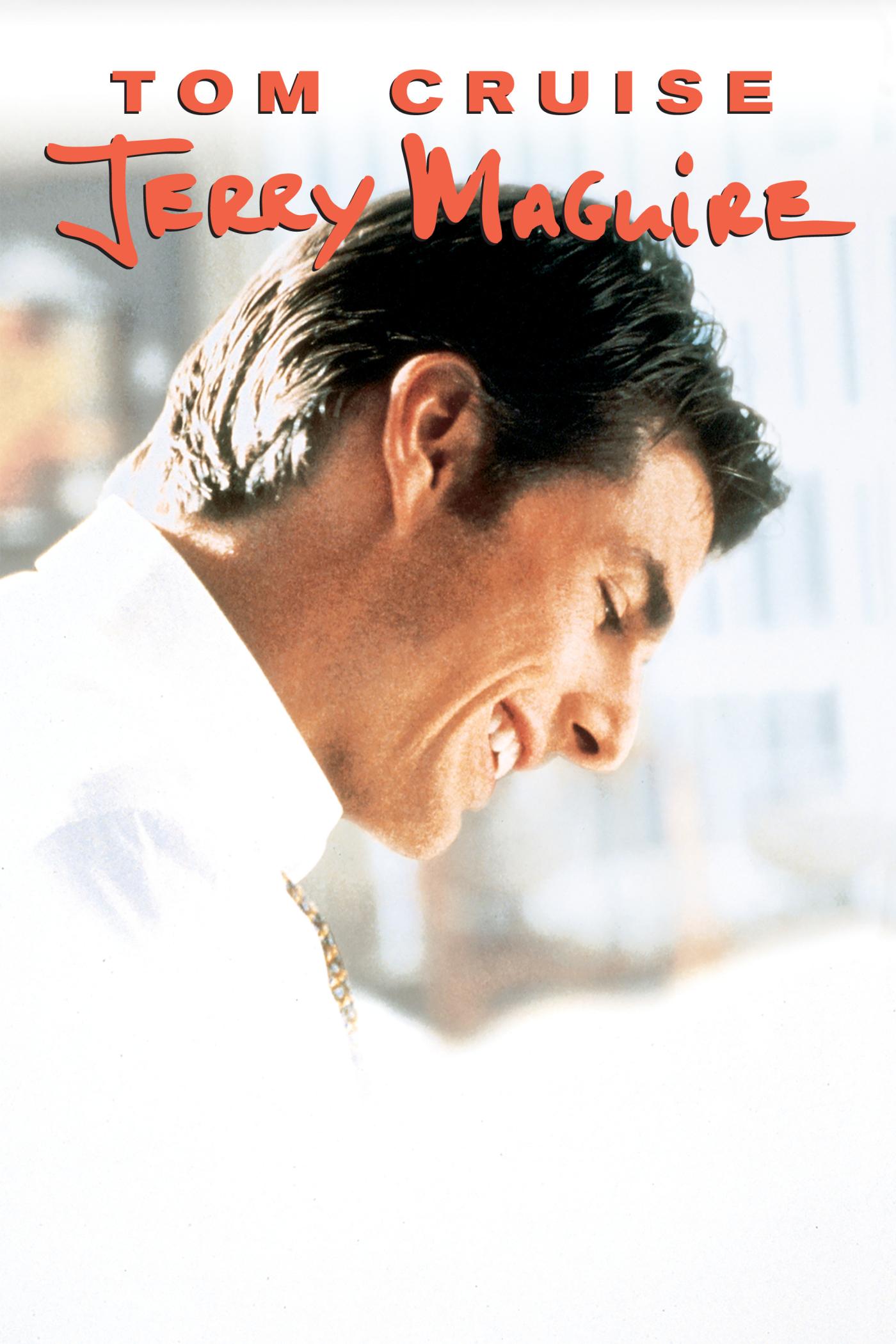
Jerry Maguire

Half-Assed Internet Research

Script inspirations; auditions; VHS sales; production and sequel anecdotes

In the discussion (14)
Approx. transcript time · 00:17:50Read transcript
  • Twenty script drafts are credited with deepening characters; Rod's brother saying he was too small for the NFL while he lies injured is praised as painfully accurate envy within a family.
  • Crowe is praised for lingering on faces, including Dorothy during the Springsteen cue and her concealed delight at Jerry's breakup; the latter drew a large theatrical response, but Sean's wife still rejected the desperation.
  • James L. Brooks reportedly supplied a Gary Wichard/Brian Bosworth photo as an inspiration. The discussion links Leigh Steinberg’s departing partner to the agent rivalry, naming an agent rendered “Drew Rosenbaum” in the transcript; that identity is unresolved. — Bill Simmons
  • The mission statement reportedly drew on Jeffrey Katzenberg's 1991 Disney memo; DreamWorks is jokingly compared with Rod as the successful aftermath. — Bill Simmons
  • Crowe, Brooks and cinematographer Janusz Kamiński are credited; a childhood classroom photo essay by Kamiński is recalled. The film received five Oscar nominations and Gooding won supporting actor. — Bill Simmons
  • Rod's touchdown, dance and postgame press conference are nominated. Cruise reportedly supplied one script note asking where Jerry was during the celebration so he could build toward the ending, leading to his run onto the field. — Bill Simmons
  • Jerry's return and the You complete me/You had me at hello exchange introduce the final scene nominee. — Bill Simmons
  • A deleted four-minute Mohr telephone sequence is praised as a near-continuous performance across numerous clients, though too long for the finished film. — Bill Simmons
  • Aimee Mann's Wise Up was reportedly recorded for Jerry Maguire but judged not to fit, then used in Magnolia. — Bill Simmons
  • The film is described as the biggest-selling non-Disney VHS title, with over three million copies in its first week. — Bill Simmons
  • Lipnicki reportedly arrived on set with the human-head fact, which Crowe added to the film. — Bill Simmons
  • Rod's knockout hit reportedly required 29 takes and three stunt performers; Regina King was reportedly pregnant during filming. — Bill Simmons
  • Crowe reportedly regarded agents' disbelief at Jerry finding a conscience as confirmation that the story's theme was right. — Bill Simmons
  • Two 2017 mockumentaries reportedly imagined Cushman retiring after four years with athlete's foot, Rod rejecting a richer deal without quan, and adult Ray opening a boxing gym. The real 1995 Christmas Cardinals–Cowboys game ended Dallas 37–13, with Dave Krieg interceptions and Aikman passing for 350 yards recalled. — Bill Simmons
In the discussion (4)
Approx. transcript time · 01:35:43Read transcript
  • Holly Hunter is named at once, in one of the toughest calls the show has had, because nobody can be substituted for her and the movie is not as good or the same without her; the same is felt about the Albert Brooks part, and he is called the biggest loser within the movie.
  • William Hurt can be removed from contention because Jeff Bridges could have played the part 95 percent as well; Brooks is the biggest loser because he gets neither the woman nor the job and tells her he loves her knowing it will make no difference, unlike Ben Stiller in Reality Bites, who thinks he should get the girl, and the character seems to feel she deserves the good-looking mannequin; he could not be replaced even though many would think they could do that role.
  • A case is made for Jim Brooks winning the movie, since this kind of film, a modern love triangle trying to say something, feels very 40s, a Cary Grant version or expert-level Neil Simon, and nobody had made one since the 70s, when people thought the form was gone.
  • Brooks is an original voice whose influences, Preston Sturges, Sid Caesar, Neil Simon, Woody Allen, 60s sitcoms and Norman Lear, are all visible at once, and Cameron Crowe spent the next fifteen years making his version after Brooks took him under his wing and produced his films; the Brooks case is acknowledged but the vote goes to Holly Hunter, a performance and character unique to her, helped by her height, since only a five-foot-one actress like Kristen Chenoweth (as transcribed) or Linda Hunt could substitute; the closing joke is that the audience is the winner.
Podcast choices
Speaker not identified
Holly Hunter
Broadcast News

Probably Unanswerable Questions

Did Holly Hunter's character die alone? What is the best movie of the 1980s?

In the discussion (9)
Approx. transcript time · 01:24:39Read transcript
  • Did Holly Hunter die alone in this movie? She says there's a guy, which one host thinks she made up and others put at two or three dates, since a woman who will not show a man tying his shoes unless he is really tying them would not lie about a relationship; she is successful, beautiful and smart, and the whole institution of marriage is driven by crazy people; leaving the correspondents' dinner is called crazy behavior by one host while the others disagree and say many people are drawn to that energy.
  • One host holds that she is a little too crazy, cannot sign up for the correspondents'-dinner exit, and would have been really mad if his date left the biggest night of the year in DC before they even went in. — Bill Simmons
  • The holdout is told this is a weird run after also disliking Troy from Reality Bites, and answers that he liked Troy as a character but would not have liked him or Holly Hunter's character in reality; he is teased as threatened by her and told to put on his suit of armor.
  • The best movie of the 80s splits into two strands, Die Hard, Aliens, Raiders of the Lost Ark and E.T. versus Broadcast News, Raging Bull and The Color of Money; this movie exemplifies the best of 80s movies with its zippy Bill Conti score, great performances, pitch-perfect writing, a solid two hours and five minutes and stakes that are high without anyone diving off a skyscraper; one host would answer Bull Durham or Aliens on other days but, forced to pick one, says Raiders of the Lost Ark.
  • Broadcast News is called a better movie than Raiders, but personal taste cannot drive the answer, and media people are as biased toward it as archaeologists would be toward Raiders; the 80s was the video-store decade of watching fifteen movies a hundred times each, Goonies, Ferris Bueller, Aliens, Predator, Lethal Weapon, Die Hard; the decade was weird, with Oscar winners that baffle now, and the first half of Full Metal Jacket is the best movie of the 80s but the second half is not.
  • The framework used for The Social Network is reapplied: how well made, acted and original the film is, what it meant culturally and whether its meaning changed, and how it aged, all of which Broadcast News passes; the 80s are called the weakest film decade of the last thirty years of the century, behind the 70s and the 90s with its independent boom, full of sequels and canonical films like Tootsie and Gandhi that seem bad now, so a top ten of the 80s is hard to fill with anything but personal favorites or films that dated immediately, because producers took over and sanded off the edges.
  • Empire's best of the 80s list is read: Raiders, The Empire Strikes Back, Raging Bull, Blade Runner, Back to the Future, Die Hard, Aliens, E.T., Spinal Tap, Evil Dead and The Shining, all big popular movies; Back to the Future is a good candidate that aged nicely and mattered; When Harry Met Sally is a specifically 80s mass-screen sitcom; Broadcast News was cribbed from every year after, in its love triangle, its distinct characters and its dramedy mix; Do the Right Thing is the most culturally significant film of the decade, left out of the conversation.
  • Hollywood runs a thirty-year cycle of down periods: the 50s studio musicals and melodramas, the 70s boom that producers then monetized, the 80s with Gandhi, Out of Africa and Chariots of Fire winning Best Picture, and now franchises and comic-book movies with The Shape of Water and Green Book winning while Black Panther or Get Out will be remembered; the purpose of the Oscars may be to be wrong in the present tense, since Citizen Kane losing is still meaningful and the right calls, like Gump, are forgotten.
  • The case for Broadcast News as best of the 80s gains support because every imitation since has gone down in flames, including James L. Brooks's own, each piece having to work like Jenga; Airplane is a dark-horse candidate, though 1980 films like The Shining, Raging Bull and Airplane feel like 70s movies, while Fatal Attraction and Die Hard define the 80s movie; decades start late, the 80s in music running 1983 to 1991 and the 80s in film from Fast Times to Reservoir Dogs, which is why The Silence of the Lambs feels less 90s than The Matrix.
In the discussion (4)
Approx. transcript time · 01:13:24Read transcript
  • Jim Brooks is a yes: fully established as an A list movie director while already in the TV hall of fame and a year from taking a Simpsons meeting, the point of maximum leverage and juice, with the Simpsons humor already visible in the film; William Hurt is called indisputable on his third consecutive Oscar nomination, with the open question whether that counts for more than winning the Oscar.
  • This movie is allowed multiple apexes, a whole Himalayan range, since it is everyone among the main players; Holly Hunter is definite, because The Piano did not have the same lasting impact and this and Raising Arizona are her two best films, even though Raising Arizona feels closer to now.
  • Joan Cusack is questioned, with Say Anything in 1989 probably her peak and High Fidelity praised, before a hedged 'I guess this'; Bob Prosky is raised but not settled.
  • Earlier, her apex is deferred while noting a nice run ending in The Piano, where she wins the Oscar she did not win for this film.
Broadcast News

Half-Assed Internet Research

Albert Brooks phoned James L. Brooks at 3 a.m. after seeing a CNN reporter sweat, creating the sweating scene; Nicholson went unpaid at his own request; the sweating scene took 24 takes; Switching Channels (1988) flopped as a competitor; Brooks and Hurt ambushed Holly Hunter with an ad-libbed cab-ride alternate ending that was spoiled by a crew member

In the discussion (4)
Approx. transcript time · 01:05:57Read transcript
  • Albert Brooks was watching CNN when a reporter he had never seen before or since began sweating badly; he phoned James L. Brooks at three in the morning to say Aaron had to start sweating, which became the sweating scene, with the makeup lady's 'Jesus' a highlight; Jack Nicholson was not paid for his role at his own request.
  • James Brooks made them do 24 takes of that scene, which he does not usually do, because he thought it was the key part of the movie and wanted it perfect; Switching Channels, made in 1988 with Kathleen Turner and Burt Reynolds, was almost a competitor, a critical and box-office failure that started a Kathleen Turner slide.
  • The alternate ending is on YouTube; Brooks told Premiere he was open to who Jane ends up with, and during the cab scene he and William Hurt planned to surprise Holly Hunter by having Hurt jump in and ad-lib for two minutes, trusting she would not break character, but a crew member gave it away by saying 'Bill' just before the roll; Hurt and Hunter later felt the movie should have ended that way, while Brooks himself felt it was not right.
  • Flagged earlier as stepping on internet research: the Holly Hunter character is based on a woman Brooks met in 1984 at the conventions who was dating two men who worked in TV at the same time; he never said who, and the hosts imagine a Deep Throat reveal after they die.
Displaying all 5 discussions

Films in the archive