
‹ All people

Referenced person

Cary Grant

Stats

Episodes featuring their films
0
Movies in this archive
0

Rewatchables episodes featuring Cary Grant’s films

No episode credits in the archive yet.

No episodes found

Mentioned in discussions

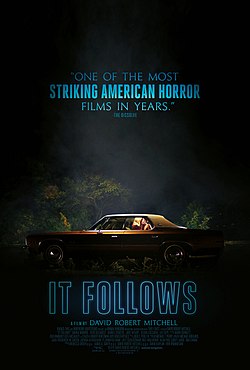
It Follows The Rewatchables
It Follows

Apex Mountain

Everyone in the cast except Michael Monroe (as transcribed); David Robert Mitchell; backward leg murders; the Playpen magazine

In the discussion (6)
Approx. transcript time · 01:15:24Read transcript
  • Everyone in this cast is first called a no, then immediately corrected to a yes, except for Michael Monroe (as transcribed).
  • Monroe hasn't hit her apex yet; probably Long Legs, which vaulted her to another level, and she stars in these movies, like Watcher.
  • No above-ground pool scenes come to mind, though the pool becomes a symbol in the movie.
  • David Robert Mitchell is a yes for sure, with a lot of stock bought after this movie, after a joke about David Robert Marshall pitching for the Brewers.
  • High school horror movies are a no, that's Scream and Halloween; backward leg murders get a yeah, though this one is not as good as the first death in the Ring.
  • Charade with Cary Grant and Audrey Hepburn is a no; the Playpen magazine gets a yeah for the tissues on top and the photo of his high school girlfriend.
In the discussion (4)
Approx. transcript time · 01:23:48Read transcript
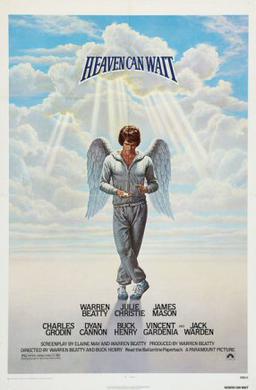
  • Retired Grant reportedly declined a million dollars for Mr. Jordan, offered by Beatty with Cannon enlisted to persuade him. Mason in The Verdict and as Captain Nemo is praised, with evil Mason preferred. Keaton was allegedly the first female-lead choice; Henry reports actress testing and a preference for Christie, but the pronoun does not securely identify whose preference this was. — Van Lathan
  • The repetition of a small group of stars in casting anecdotes is discussed; Beatty is retrospectively ranked first with Newman/Redford2a/2b for financing clout. Eastwood’s reliability and narrow fit are debated; Jack Horner is a hypothetical role for him.
  • Arthur Penn, Mike Nichols and Bogdanovich were considered before Beatty took directing duties. Henry reportedly handled other actors in scenes with Beatty, leading to a question about the division of work.
  • Henry’s biography remarks are described as bitter; a Neil Diamond Heaven Can Wait song was allegedly composed then rejected. — Bill Simmons
In the discussion (4)
Approx. transcript time · 01:35:43Read transcript
  • Holly Hunter is named at once, in one of the toughest calls the show has had, because nobody can be substituted for her and the movie is not as good or the same without her; the same is felt about the Albert Brooks part, and he is called the biggest loser within the movie.
  • William Hurt can be removed from contention because Jeff Bridges could have played the part 95 percent as well; Brooks is the biggest loser because he gets neither the woman nor the job and tells her he loves her knowing it will make no difference, unlike Ben Stiller in Reality Bites, who thinks he should get the girl, and the character seems to feel she deserves the good-looking mannequin; he could not be replaced even though many would think they could do that role.
  • A case is made for Jim Brooks winning the movie, since this kind of film, a modern love triangle trying to say something, feels very 40s, a Cary Grant version or expert-level Neil Simon, and nobody had made one since the 70s, when people thought the form was gone.
  • Brooks is an original voice whose influences, Preston Sturges, Sid Caesar, Neil Simon, Woody Allen, 60s sitcoms and Norman Lear, are all visible at once, and Cameron Crowe spent the next fifteen years making his version after Brooks took him under his wing and produced his films; the Brooks case is acknowledged but the vote goes to Holly Hunter, a performance and character unique to her, helped by her height, since only a five-foot-one actress like Kristen Chenoweth (as transcribed) or Linda Hunt could substitute; the closing joke is that the audience is the winner.
Podcast choices
Speaker not identified
Holly Hunter
In the discussion (5)
Approx. transcript time · 00:25:55Read transcript
  • Three candidates cover it: the tone, George Clooney's suits, and the heist.
  • A sartorial question asks whether Clooney here invented the open shirt collar with a suit; invent is a strong word, he popularized or cemented a Vegas rich-guy cool look; his reserved navy, gray and white contrasts with Pitt's loudness and the Ted Nugent's shirt line, showing the alpha and omega of the pair; perfect frame, height, hair and tailoring for 2001, turning a look that can go Vegas lounge rat into Cary Grant; it may have started in Out of Sight after the Jennifer Lopez encounter.
  • Swingers, seen coming out of high school, is try-hard and stressful about Vegas: get the suits, drive six hours; this is effortless, as if everyone is at a spa though it was probably 101 degrees and everyone needed moisturizing cream; iridescent, shimmery clothes on Brad Pitt and Julia Roberts; one host loves Soderbergh and calls The Knicks (as transcribed) a favorite show.
  • The getting-a-gang-together sequence was reinvented here and has been ripped off for fifteen years, patently absurd like the Greaseman setup observed at Barnum's and the travels to Florida to get Saul; the tone is named as what aged best, encapsulating it all.
  • The heist, almost twenty years later, could have been technologically dependent and silly, but the mechanics still seem entirely plausible, a vault working that way and cutting a phone line, with no cheesy CGI or made-up words; smart or lucky, maybe both.
Displaying all 4 discussions