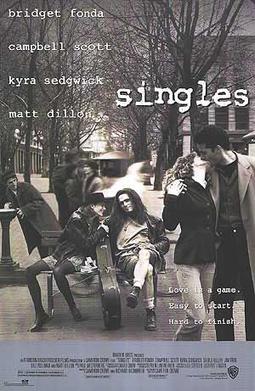
Xavier McDaniel’s cameo is the point at which an already delighted viewer would have handed over his wallet to keep watching; this prompts an explicit new-category suggestion. — Bill Simmons
Dillon and Pearl Jam are rejected; Kelley’s television work is offered instead. — Bill Simmons
Long, anguished nineties phone messages receive an emphatic affirmative choice. — Bill Simmons
McDaniel’s Knicks–Bulls playoff and Singles period is accepted as a career-era peak, with his Celtics signing mentioned. — Bill Simmons
Garage-door openers receive immediate agreement. — Van Lathan
Video dating in movies is accepted, reinforced by Burton directing the fictional video. — Bill Simmons
Tim Burton cameos are proposed as a separate candidate without a clear response.
The supertrain concept is compared with the 1979 NBC series; its repeated failure leaves no clear winner. — Bill Simmons
Apartment buildings as plot devices lose to Melrose Place or Rosemary’s Baby. — Bill Simmons
Sub Pop is rejected in favor of roughly two years earlier. — Bill Simmons
Early-nineties Seattle is favored, though the exact year is debated through Sleepless in Seattle, the Sonics and Griffey; later civic and musical changes complicate the nostalgia. — Bill Simmons
The old red Saab fastback is an affirmative final candidate. — Bill Simmons
Douglas Coupland’s Generation X is noted as another major contemporary touchstone; no explicit final ruling is stated. — Bill Simmons
The garage-door-opener detail and the Xavier McDaniel sexual-distraction scene became clearer and funnier with age. — Van Lathan
Steve’s drunken club phone call once seemed as romantic as Lloyd Dobler’s boombox gesture. — Chris Ryan
Linda’s betrayal by the apparently mysterious Luis is a gutting opening that establishes emotional chaos before Steve enters. — Van Lathan
Linda insisting she will not lose another garage opener and Steve resolving to focus on work express defensive certainty before romance disrupts it. — Van Lathan
The Peter Horton negotiation and the “popcorn with half this city” line remain memorable. — Van Lathan
Janet’s adoration cuts to Cliff’s Hendrix posturing and Touch Me I’m Dick, then his insistence that he sees other people meets her refusal to believe him. — Bill Simmons
Stoltz’s bitter talking mime provides an excellent transition into Alice in Chains performing.
Steve seeing Linda at the club is a love-struck reversal of his declared disinterest, followed by the sharp rejection that not having an act is itself his act.
The first date reveals Steve’s albums, wall decorations and X-Man poster, then his supertrain pitch meets Linda’s attachment to her car.
The Andy flashback establishes the sensitive-ponytail man and his emotional-larceny line. — Bill Simmons
The parking-underneath callback and Steve admitting he was nowhere near Linda’s neighborhood deepen the first-date sequence. — Bill Simmons
Xavier McDaniel’s basketball clip becomes the sexual-distraction cameo ending in the instruction not to come.
The café discussion that casual sex is lethal, with Cliff reacting as though he needs a clinic, is praised as the apparent blueprint for Friends’ dating-neighbors coffee-shop setup. — Bill Simmons
Vedder reading the devastating Citizen Dick review while Cliff tries to remain positive is a favorite short sequence; the review attacks his mediocre talent and urges him to leave town. — Bill Simmons
Piven’s fan recognizes Steve and invites him to DJ, demonstrating the Elvis Costello–Public Enemy mix; the short cameo felt authentic in 1992.
Debbie’s dating video and Tim Burton’s aspiring-director cameo are singled out as especially funny early-nineties material. — Bill Simmons
Depressed Steve passes the mime, then Soundgarden and the phone-booth call create another strong sequence. — Bill Simmons
Janet visiting the withdrawn Steve leads through the parallel-universe couple line into Drown. — Bill Simmons
The implant consultation is a final favorite: Pullman’s refusal to manipulate Janet’s body helps her recognize her worth, and he seems a better match than Cliff. — Van Lathan
The concluding “What took you so long?” reunion is admired as an early example of Crowe’s climactic romantic line, later echoed in Jerry Maguire. — Van Lathan
The whole Alice in Chains sequence, including the car ride, mime and Linda’s no-act rejection, receives two final scene choices. — Chris Ryan
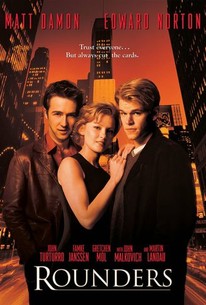
Was Knish the smartest of them and the hero? Where does Johnny Chan's cameo rank among sports cameos? Is this the best gambling movie ever made? Does 'women are the rake' hold up? Where did Worm go after Binghamton? Did Joe give Petrovsky the 10 grand? What was the perfect release year? Could Damon and Norton have switched parts?
Was Knish the smartest of all these people and the hero? He owned his own business, grinded out the rent money, was smart enough not to lend Mike McD 10 grand he would never see again, stayed away from Worm, and gives the Turkish bath speech that it is about making a living, not the World Series; he seems to live okay with his truck business despite alimony and child support.
The ending at the World Series of Poker, which nobody watched then because you could not see the cards, became everyone's dream within five years; Positively Fifth Street by James McManus, about the World Series and Binion's, is recommended as one of the great crime and sports books, and Grantland tried to hire him.
Where does Johnny Chan's cameo rank among sports-related cameos? The bar is Hulk Hogan in Rocky III; also Kareem in Airplane, Xavier McDaniel in Singles, Larry Bird in Blue Chips, though Koozie (as transcribed) with the left-handed free throws is the real Blue Chips flex and is acting rather than a cameo, and Bob Watson and Cesar Cedeno in the Bad News Bears sequel; Chan is up there even though he only mouths words.
Is this the best gambling movie ever made? It is a host's favorite poker movie but not favorite gambling movie, which is Robert Altman's California Split with George Segal and Elliot Gould, about how befriending a gambler is bad for you; Koppelman and Levine are surely California Split guys, but as poker movies go Rounders is head and shoulders above everything.
Where do we stand on 'in the poker game of life, women are the rake'? Iconic twenty years ago, it now reads as misogynist in the woke era, but the hosts still like it: it is Worm's line, this is a movie about card-playing, prison-dwelling dirtbags and that is how they talk, not a movie about the president or the Navy.
Where did Worm go after Binghamton? In a 2013 Grantland mailbag Koppelman and Levine answered that he meant 'highway time' but needed road money, found a Bronx backroom game far from KGB's territory, and was chased across town by the man he had fleeced for cigarettes in the prison hearts game, a scene they shot, edited, screened and cut; they imagine he later scammed his way through the Moneymaker online boom, where Rounders 2 would pick up.
Are we sure Joe gave Petrovsky the 10 grand? Why would she, and how would he know; and why did Petrovsky lend it in the first place to a bad student with a gambling problem, since nobody would give 10 grand to an untrusted, failing Ringer employee; Joe's look through the window pane suggests they will go another round, but nothing is certain.
What year would have been perfect for release? It would have to be about two weeks before Moneymaker so the movie was still in theaters during the rush of interest, but Damon and Norton would be too old by then; a year later, after Fight Club and Ripley, is floated, yet both like how it played out and doubt a later release would have led to this podcast.
An early question saved from this category: could Damon and Norton have switched parts? Norton 100 percent, since at the time he seemed the new Marlon Brando and the most important actor in a decade; Damon no, and Norton as the embodiment of filth and dishonesty is probably the more irreplaceable of the two.