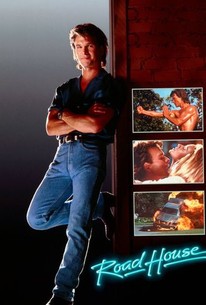
Dalton's first-name recognition across bars before the internet raises questions about an underground bouncer-information network; the opening bar's location is unspecified.
The hosts wonder where one buys bladed boots, whether they are custom-made and why this blade remains exposed rather than retracting.
The price of buying off a whole police department is left speculative. — Bill Simmons
Wesley controls a tiny town while destroying its few businesses, yet his ownership and wealth source remain unclear. A Chicago-mob origin and additional local businesses are speculation. — Kyle Brandt
The physical possibility of ripping out a throat is disputed without resolution. — Bill Simmons
The group wonders which parts of Jasper Wesley leaves alone and why there is no strip club; the Double Deuce may already fill that role. — Bill Simmons
Why no Swayze sequel around 1993? Los Angeles and the Viper Room are proposed as a setting for Dalton's next cleanup.
Terry Funk is proposed as a leading wrestler crossover below Hulk Hogan's Thunderlips, but André the Giant in The Princess Bride and Roddy Piper in They Live push him down; no formal numbered ranking is settled.
Dalton's Memphis killing appears to be self-defense after unknowingly dating a married woman, making his shame puzzling. His alertness to weapons contrasts with missing her marriage, and the hosts question whether earlier bar fights also killed anyone. — Chris Ryan
Dalton's attachment to German cars and whether anyone called about the Buick sale remain unanswered.
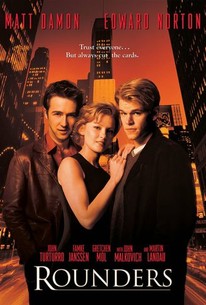
Was Knish the smartest of them and the hero? Where does Johnny Chan's cameo rank among sports cameos? Is this the best gambling movie ever made? Does 'women are the rake' hold up? Where did Worm go after Binghamton? Did Joe give Petrovsky the 10 grand? What was the perfect release year? Could Damon and Norton have switched parts?
Was Knish the smartest of all these people and the hero? He owned his own business, grinded out the rent money, was smart enough not to lend Mike McD 10 grand he would never see again, stayed away from Worm, and gives the Turkish bath speech that it is about making a living, not the World Series; he seems to live okay with his truck business despite alimony and child support.
The ending at the World Series of Poker, which nobody watched then because you could not see the cards, became everyone's dream within five years; Positively Fifth Street by James McManus, about the World Series and Binion's, is recommended as one of the great crime and sports books, and Grantland tried to hire him.
Where does Johnny Chan's cameo rank among sports-related cameos? The bar is Hulk Hogan in Rocky III; also Kareem in Airplane, Xavier McDaniel in Singles, Larry Bird in Blue Chips, though Koozie (as transcribed) with the left-handed free throws is the real Blue Chips flex and is acting rather than a cameo, and Bob Watson and Cesar Cedeno in the Bad News Bears sequel; Chan is up there even though he only mouths words.
Is this the best gambling movie ever made? It is a host's favorite poker movie but not favorite gambling movie, which is Robert Altman's California Split with George Segal and Elliot Gould, about how befriending a gambler is bad for you; Koppelman and Levine are surely California Split guys, but as poker movies go Rounders is head and shoulders above everything.
Where do we stand on 'in the poker game of life, women are the rake'? Iconic twenty years ago, it now reads as misogynist in the woke era, but the hosts still like it: it is Worm's line, this is a movie about card-playing, prison-dwelling dirtbags and that is how they talk, not a movie about the president or the Navy.
Where did Worm go after Binghamton? In a 2013 Grantland mailbag Koppelman and Levine answered that he meant 'highway time' but needed road money, found a Bronx backroom game far from KGB's territory, and was chased across town by the man he had fleeced for cigarettes in the prison hearts game, a scene they shot, edited, screened and cut; they imagine he later scammed his way through the Moneymaker online boom, where Rounders 2 would pick up.
Are we sure Joe gave Petrovsky the 10 grand? Why would she, and how would he know; and why did Petrovsky lend it in the first place to a bad student with a gambling problem, since nobody would give 10 grand to an untrusted, failing Ringer employee; Joe's look through the window pane suggests they will go another round, but nothing is certain.
What year would have been perfect for release? It would have to be about two weeks before Moneymaker so the movie was still in theaters during the rush of interest, but Damon and Norton would be too old by then; a year later, after Fight Club and Ripley, is floated, yet both like how it played out and doubt a later release would have led to this podcast.
An early question saved from this category: could Damon and Norton have switched parts? Norton 100 percent, since at the time he seemed the new Marlon Brando and the most important actor in a decade; Damon no, and Norton as the embodiment of filth and dishonesty is probably the more irreplaceable of the two.
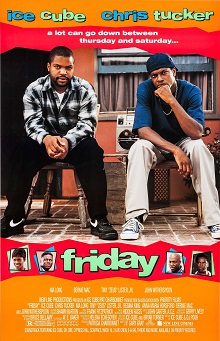
Picking one scene is called difficult because the first hour is basically a rewatchable hour; Craig getting high is nominated first, since you wait the whole movie for him to finally take a puff, and Smokey's angel dust flashback is noted as funny but a little problematic.
Red getting his chain snatched by Deebo is nominated as the classic bully scene: when Deebo approaches, Smokey rips his own chain off and puts it in his back pocket, while Red only tucks his in and says so, which is not thorough at all; the Bernie Mac pastor scene and Bye Felicia are also nominated.
The first hour is a procession of immaculate character bits that happen on the stoop over one day rather than discrete scenes, so a line like 'you ain't got to lie, Craig' is a memorable quote, a fifteen-second bit, not a rewatchable scene.
Craig getting high works because Cube underplays it: body language shifts, chuckling, offering to make Kool-Aid, weird non sequiturs rather than Smokey-style running in front of a car; it is a progression over fifteen minutes rather than a scene, and a vulnerable, goofy Cube is striking after years of scowling, with the Cypress Hill cue a little on the nose.
One vote goes to Red getting his chain snatched by Deebo because it has a lot of moving parts: Deebo, Red's cameo, and Cube and Smokey reacting to Deebo; another vote goes to the Craig scene, not for Craig but for Smokey's Michael Jackson-style dancing, possibly the start of Chris Tucker moonwalking in every appearance, which got him into a Michael Jackson video.
A second vote joins the Red pick in a garbled exchange that addresses Charity and pairs the name with 'Craig getting that', so which pick Charity proposed is unclear; the Craig-scene voter stands alone; the Red scene's moving parts are the core of the movie and set up its end game, and Deebo is loved.
Tiny Lister was known as a wrestler in the WWE and appeared in the Hulk Hogan movie No Holds Barred, so he was one of the more famous people in the film after Ice Cube; Deebo is indelible, Lister in interviews is just Deebo, though behind the scenes he is reportedly gentle and sweet and gets joked on, a huge man blind in one eye who lumbers through the movie creating havoc.