

‹ All movies
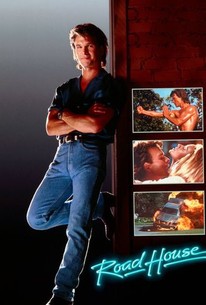
Road House poster

Road House

114 minutes

Cast

Selected cast credits · Film reference

Sam Elliott Wade Garrett
Ben Gazzara Brad Wesley
Red West Red Webster
Kevin Tighe Tilghman

Road House | The Rewatchables

Explore episodeClose episode

Producer credits not yet identified.

The Butch’s Girlfriend Award for the Weakest Link in the Film

The absence of meaningful law enforcement.

In the discussion (2)
Approx. transcript time · 00:07:40Read transcript
  • An opening joke rejects a Butch's Girlfriend weakness because all the girlfriends are awesome.
  • The near-total absence of police despite repeated public violence is the main weakness; the late-arriving sheriff hardly resolves it.

Top Ten List

Ten Dalton quirks, followed by his leaded-or-unleaded coffee habit.

In the discussion (11)
Approx. transcript time · 00:15:04Read transcript
  • Dalton avoids flying because he considers it too dangerous.
  • Dalton stitches his own cuts.
  • Dalton carries his medical records to save time.
  • Dalton is called a Hall of Fame smoker.
  • Dalton refuses anesthetic: pain does not hurt.
  • Dalton protects an old, low-mileage Mercedes under a cover.
  • Dalton allows his mentor Wade Garrett to flirt with his date.
  • Dalton practices shirtless outdoor tai chi.
  • Dalton never flinches; his posture and composure are admired.
  • Dalton reads Jim Harrison.
  • An additional quirk follows the ten: Dalton calls coffee leaded or unleaded.

The Vivian Award for Best Clothes

Brad Wesley’s linen and leather; Dalton’s pleated trousers.

In the discussion (1)
Approx. transcript time · 00:21:38Read transcript
  • Brad Wesley's linen, leather vest and gloves are celebrated as a remarkable wardrobe; Dalton's pleated trousers and tucked T-shirt also influence a host's casual clothes.

Half-Assed Internet Research

Stunts and injuries, deleted Keith David material, casting-era anecdotes, cars and constructed locations.

In the discussion (9)
Approx. transcript time · 00:24:39Read transcript
  • The discussion reports a $15 million budget, $61.6 million gross and an estimated further $200 million from home viewing formats.
  • The hosts report actual contact during the Jimmy fight, Teague cracking two of Swayze's ribs with a log, several long shooting days and Swayze requiring knee drainage.
  • A Keith David interview describes an initially four-week job becoming eleven weeks and enjoyable fights, including Terry Funk; Harrington later told him the long cut required removing his role. The hosts enthusiastically want the extended cut, while speculation about Ernie cleaning up the bar remains conjecture.
  • Teague reportedly took his mother to the premiere, where she proudly identified him after the prison line.
  • The discussion says the actors performed their own stunts and trained with Benny the Jet, who considered Swayze capable of competitive kickboxing. Swayze's recurring knee trouble is linked to an earlier football injury.
  • Bigfoot number seven was reportedly built for the film, with the dealership sequence costing $500,000.
  • A 2009 Barbara Walters interview is cited for Swayze's account of heavy drinking and smoking up to 60 cigarettes daily; the hosts reflect sadly on his illness and death.
  • Dalton's Mercedes is identified as a silver/light-blue 1986 560 SEC; the Double Deuce and Red's Auto Parts were built for filming.
  • An IMDb-attributed claim that Harrington thought the film changed club security worldwide is rejected as implausible, given the hosts' view that its popularity developed slowly.

Roger Ebert's review

In the discussion (1)
Approx. transcript time · 00:25:37Read transcript
  • Ebert awarded two and a half stars, finding the film poised between enjoyable bad filmmaking and mere badness; the hosts reject his reluctance to recommend its entertainment value.

Most Rewatchable Scene

Dalton’s first night and rules; Dalton versus Jimmy; Wesley’s breakfast.

In the discussion (11)
Approx. transcript time · 00:26:29Read transcript
  • Dalton's arrival at the Double Deuce, quietly surveying its chaos, showcases Swayze's charisma. The brawl over paid sexual touching is recalled as disturbing now but exciting to a young viewer.
  • Dalton fires staff and gives three rules: do not underestimate opponents, take fights outside and be nice until necessary. His explanation of insults and 'trustees of modern chemistry' speech reveal an unexpectedly literary bouncer.
  • The hospital flirtation after Dalton's fight has clipped, almost Mamet-like dialogue. His philosophy degree, 'Pain don't hurt' and 'Nobody wins a fight' lines remain funny because he plays them sincerely.
  • The revenge fight includes Dalton detecting a bladed boot and the advice that even the biggest opponent drops after a groin strike.
  • Wade saves Dalton from four attackers, then spends the evening flirting and dancing with Dalton's girlfriend; Dalton's willingness to get a beer after severe blows is part of the fun.
  • Denise's lengthy striptease to Hoochie Coochie Man leads into Jimmy's commanding pool-cue entrance. His athletic vault, intensity and skill transform the threat level after Wesley's weaker henchmen; Wesley ends the fight with a gunshot.
  • Dalton versus Jimmy follows Emmett's fire, motorcycle taunting and the prison line, ending in the throat rip. The fight creates a credible fear that Dalton could lose.
  • The Jimmy fight's back-and-forth damage contrasts with Seagal's invulnerability. Michael Kamen's score and the previously foreshadowed throat rip make the climax especially satisfying.
  • The final assault ends with townspeople taking turns shooting Wesley; the hosts ask why they did not simply do that months earlier.
  • Final preferences include Dalton's speech and first night at the Double Deuce, the Dalton–Jimmy fight, and Kyle's additional breakfast scene where Wesley shifts from civic boasting to murder allegations.
  • Craig particularly enjoys Dalton's arrival, rule-setting and firing the employee stealing money.

Probably Unanswerable Questions

Throat-rip feasibility, Jasper’s businesses, Memphis, cars and the missing Swayze sequel.

In the discussion (10)
Approx. transcript time · 00:26:46Read transcript
  • Dalton's first-name recognition across bars before the internet raises questions about an underground bouncer-information network; the opening bar's location is unspecified.
  • The hosts wonder where one buys bladed boots, whether they are custom-made and why this blade remains exposed rather than retracting.
  • The price of buying off a whole police department is left speculative.
  • Wesley controls a tiny town while destroying its few businesses, yet his ownership and wealth source remain unclear. A Chicago-mob origin and additional local businesses are speculation.
  • The physical possibility of ripping out a throat is disputed without resolution.
  • The group wonders which parts of Jasper Wesley leaves alone and why there is no strip club; the Double Deuce may already fill that role.
  • Why no Swayze sequel around 1993? Los Angeles and the Viper Room are proposed as a setting for Dalton's next cleanup.
  • Terry Funk is proposed as a leading wrestler crossover below Hulk Hogan's Thunderlips, but André the Giant in The Princess Bride and Roddy Piper in They Live push him down; no formal numbered ranking is settled.
  • Dalton's Memphis killing appears to be self-defense after unknowingly dating a married woman, making his shame puzzling. His alertness to weapons contrasts with missing her marriage, and the hosts question whether earlier bar fights also killed anyone.
  • Dalton's attachment to German cars and whether anyone called about the Buick sale remain unanswered.

Apex Mountain

Marshall Teague; movie bouncers and coolers; Jeff Healey; white blues guitarists’ era; Kelly Lynch’s period; throat-rip kills; prison-sex threats; outdoor tai chi; 1989 action movies.

In the discussion (8)
Approx. transcript time · 00:34:36Read transcript
  • Drambuie is proposed as an Apex because of the conspicuous quantities at the Double Deuce.
  • Marshall Teague's career peak is affirmed despite his continued later work.
  • Swayze's Apex is placed later around Ghost, Point Break and Road House's rental growth. Elliott alternatives include Mask and 1883; Terry Funk's is assigned to early-eighties wrestling.
  • Movie bouncers and coolers, Jeff Healey, the era of white blues guitarists, and Kelly Lynch around this period receive affirmative support.
  • Gazzara is only tentatively considered a belated Apex through recognition; Elliott's pubic-hair suggestion becomes a joke about a future 1883 appearance.
  • Throat-rip kills, prison-sex threats and outdoor tai chi are affirmed. Action-star names and mullets are discussed with competing examples rather than a settled unique winner.
  • Death-deciding coin tosses are proposed but compared with No Country for Old Men; persevering with a repeatedly damaged car is another suggestion without a clear final endorsement.
  • 1989 action movies receive an explicit Apex claim because established stars and a new generation overlap.
In the discussion (1)
Approx. transcript time · 00:43:06Read transcript
  • Nominees include the dump-truck-balls exchange and 'Opinions vary'; the brains-and-ass remark; kill-or-be-killed advice; the ugly-wife story; sleeping when dead; and Wesley's trophy-room threat. The prison-sex taunt is declared the winner, with disagreement about whether it functions as insult, compliment or both.

What’s Aged the Best?

Famous bouncers, caged bands, recruiting the best, extravagant destruction, Swayze, Elliott, Healey and the throat rip.

In the discussion (11)
Approx. transcript time · 00:44:57Read transcript
  • Chris chooses the apparently cocaine-fueled men at the opening bar and their 'moose lips' dialogue. Chris Ryan
  • Kyle loves the pre-internet fame of bouncers, imagining trading cards, Cooler Illustrated and a fantasy league despite the premise's implausibility. Kyle Brandt
  • Bands protected by cages and the action-film premise of recruiting 'the best' share a top preference.
  • The gratuitous monster-truck destruction of the dealership exemplifies beloved expensive action excess, even though Wesley's villainy is already clear.
  • Sam Elliott's hair is another choice.
  • Elliott's timeless appearance and ability to call someone 'mijo' remain appealing; Swayze himself is missed, and Kevin Tighe's shift from Emergency! lead to character actor is appreciated.
  • The closing song When the Night Comes Falling and swimming-hole ending are praised; the singer is clarified as Jeff Healey rather than Swayze.
  • Shirtless tai chi, Jimmy Reno, uncertainty about whether Dalton is a first or last name, 'Nobody wins a fight' and the nipple-to-nipple invitation all retain appeal.
  • The hero's hidden Memphis past is an appealing trope, though his shame needs explanation; the hosts imagine a missing confession scene. The throat-rip move still shocks.
  • Julie Michaels's stunt background and later Point Break fight, the Family Guy tribute and Jeff Healey's performance are additional pleasures.
  • Swayze's effortless cigarette flick and drifting smoke are praised as hall-of-fame movie smoking, despite the real-life tragedy discussed.

The Big Kahuna Burger Award for Best Use of Food and Drink

Broken beer bottles; Wesley’s breakfast; morning diner beers.

In the discussion (1)
Approx. transcript time · 00:55:51Read transcript
  • Beer bottles broken over heads, Wesley's breakfast eggs and drink, and Wade and Dalton's morning diner beers are the three choices; the last prompts concern about the doctor's imminent workday.

The Great Shot Gordo Award for Most Cinematic Shot

Dean Cundey’s overall photography; a joke nomination for Elliott’s exposure.

In the discussion (2)
Approx. transcript time · 00:57:19Read transcript
  • No single shot is selected; Dean Cundey's overall cinematography receives the praise.
  • Elliott's exposed pubic hair receives a joking alternative nomination.

What’s Aged the Worst?

Sparing Wesley, absent sports, the weaker finale, editing gaps, lodging, lip-syncing and Road House 2.

In the discussion (10)
Approx. transcript time · 01:00:54Read transcript
  • Dalton sparing Wesley seems inconsistent after his other killings; a counterargument says Elizabeth's warning about becoming another tyrant establishes the moral choice, without convincing everyone.
  • The haircuts and exposure of Elliott's pubic hair are criticized, though another participant jokingly nominates the latter for Great Shot Gordo.
  • Bars without televised Kansas City sports feel wrong, especially given Bo Jackson and the area's prominent teams; shared sports might even unite the town.
  • The opening song Don't Throw Stones is merely adequate compared with the closing song.
  • The Jimmy fight overshadows the Wesley finale. Moving it immediately before the townspeople kill Wesley could improve the structure and avoid Dalton's oddly rapid recovery between locations.
  • The waitress's obvious lip-syncing, the barn's lack of air conditioning, Wesley's consequence-free abuse of a henchman and the ineffective stuffed-bear attack are criticized.
  • Dalton leaves his old job without notice, raising doubts about his reliability and whether his bar improvements last after departure.
  • Road House 2 with Jake Busey is rejected as a squandered sequel opportunity.
  • Modern litigation might make violent professional coolers less viable, though the speaker invites correction.
  • Dalton's constant smoking conflicts with his spiritual, mind-and-body discipline, though pain and personal demons are offered as possible explanations.

Picking Nits

Missing fights, pay and equity, Tinker’s switch, lodging, continuity, sex scenes and implausible relatives.

In the discussion (9)
Approx. transcript time · 01:04:53Read transcript
  • Terry Funk deserved a substantial final fight instead of appearing dead offscreen. A Keith David–John Doe bartender fight is another missed opportunity.
  • Dalton's $5,000 upfront, $500 nightly and covered medical expenses produce a very lucrative cash job; the hosts speculate that he reports little of it and compare its purchasing power with a modern salary.
  • The owner does not negotiate Dalton's rate. Dalton and Jimmy should seek equity rather than wages; Jimmy's long-term ambitions are unclear.
  • Tinker apparently switches sides after surviving the bear attack rather than being arrested; one defense treats him as a likable, useful teammate. Red carrying shotguns past arriving police adds to the absurdity.
  • Healey's character might be better off working in a safer city rather than enduring abuse at a dangerous bar.
  • Dalton could afford better lodging than the hot barn. After the fire and throat-rip fight, his immediately clean clothes and lack of trauma make the next daytime scene feel out of order.
  • The standing sex against a stone wall seems implausibly aggressive for a second date; Lynch reportedly needed back padding. Open curtains also let Wesley watch across the lake.
  • Steve appears instantly dressed without visible arousal after interrupted sex, a framing complaint rather than a request for nudity; his claim to be on break draws sympathy.
  • Red and the doctor seem implausible relatives, prompting an unnamed possible category about unconvincing family connections, compared with Beautiful Girls.
In the discussion (1)
Approx. transcript time · 01:11:24Read transcript
  • The Double Deuce is favored as an alternative title. A roadhouse is described as a more isolated roadside establishment, though the hosts also associate it with bands.

The Stephen A. Smith Hottest Take Award

Dalton gentrifies the bar; the greatest villain line ever; Wesley may have a point.

In the discussion (3)
Approx. transcript time · 01:12:06Read transcript
  • Chris prefers the dangerous old Double Deuce and calls Dalton a gentrifier whose cleanup turns it into a family chain restaurant. Chris Ryan
  • Kyle calls Jimmy's prison taunt the greatest villain line ever: a few words suddenly establish a terrifying history. The group wants a Jimmy prison prequel. Kyle Brandt
  • A deliberately contrarian defense credits Wesley with building Jasper's businesses and asks whether Dalton is the villain; the protection-money objection is answered by calling it Wesley's town.

Casting What-Ifs

Swayze left Tango & Cash; Bening, Garner and Glenn alternatives; injury reportedly led Swayze to Ghost.

In the discussion (3)
Approx. transcript time · 01:16:15Read transcript
  • Swayze reportedly left the Kurt Russell part in Tango & Cash for Road House, a swap the group thinks benefited both films; Russell would have needed a different Dalton.
  • Annette Bening originally had Lynch's role; Lynch's claim that she was fired for poor chemistry with Swayze is explicitly doubted. James Garner was sought for Wesley, and Scott Glenn reportedly declined Jimmy, raising questions about his fighting ability.
  • Swayze's knee injury reportedly led him to decline Predator 2 and choose the less physically demanding Ghost; the hosts identify the proposed role as probably the lead.
In the discussion (2)
Approx. transcript time · 01:19:55Read transcript
  • Jimmy wins against Sam Elliott and Terry Funk. Elliott's entrance is superb, but his later material feels cut down; the missing Wade and Funk deaths are regretted.
  • The performer playing Steve's Saturday-night date receives a special mention for an apparent one-credit film career; her ASR-rendered name is unresolved in this note.

Recasting Couch

Ronda Rousey’s abandoned remake; interest in Gyllenhaal’s version.

In the discussion (1)
Approx. transcript time · 01:21:34Read transcript
  • A proposed 2015 Ronda Rousey remake reportedly collapsed after her Holly Holm loss. The hosts are intrigued by the pending Gyllenhaal version but wonder whether it will displace the original's cultural identity.

Best Memory Hole

Proposed award for forgetting Jimmy’s shocking prison line between viewings.

The panel proposes a new category here.

In the discussion (1)
Approx. transcript time · 01:23:36Read transcript
  • A tentative new award is proposed for a shocking moment forgotten between viewings, named after Jimmy's prison line; the group explicitly leaves it for workshopping.

Sequel, Prequel, Limited Series, or All-Black Remake

Jimmy Reno prison prequel; pro-Wesley documentary; Wade and Dalton in Memphis.

In the discussion (1)
Approx. transcript time · 01:38:33Read transcript
  • A Jimmy Reno prison prequel with Gyllenhaal is preferred to a remake. Other proposals are a revisionist documentary told from Wesley's perspective and a five- or six-episode Wade-and-Dalton Memphis love-triangle series.

Is This Movie Better With…?

Byron Mayo as Emmett.

In the discussion (1)
Approx. transcript time · 01:40:01Read transcript
  • Byron Mayo as Emmett, interrupting Dalton and Elizabeth's sex scene to suggest joining them, is the selection.

Just One Oscar

Stunt coordination; Ben Gazzara also imagined as a nominee.

In the discussion (1)
Approx. transcript time · 01:40:48Read transcript
  • The stunt coordinator is the first choice despite no such Oscar then; Gazzara is also imagined as a supporting-actor nominee, with the breakfast speech favored as his clip over Sh-Boom driving.

The Andy and Red – Zihuatanejo Award for What Happens the Next Day?

The creek-sex ending; inheritance, revenge and police-investigation possibilities.

In the discussion (1)
Approx. transcript time · 01:46:34Read transcript
  • Wesley's house raises inheritance and cleanup questions, plus a revenge story for his sister played by Bening. A realistic police investigation conflicts with the movie's carefree creek-sex ending, which is identified as the literal next-day answer.

What Piece of Memorabilia Would You Want From This Movie?

Elliott’s sunglasses; Dalton’s shirt; a Double Deuce shirt; Jimmy’s pool cue.

In the discussion (1)
Approx. transcript time · 01:47:55Read transcript
  • Elliott's sunglasses, Dalton's karate-style shirt, a screen-worn Double Deuce shirt and Jimmy's pool cue are choices; the bar sign is considered too large.

Producer review

Craig’s first viewing meets high expectations: sincere, funny and thoroughly entertaining.

In the discussion (2)
Approx. transcript time · 01:49:15Read transcript
  • Craig's first viewing meets high expectations: he calls it exceptionally male-oriented, sincere and entertaining, comparing its quality with a durable old T-shirt. His partner also appreciated its earnestness.
  • Craig considers the nudity warranted and the prison line startling and excellent; he interprets the line primarily as an insult rather than a compliment.

More from the conversation

Chris Ryan and Kyle Brandt join the episode. Bill recalls renting the film in college and loving its uncertain balance of action, drama and comedy; Kyle remembers sleepovers and repeatedly seeing its first half.
Approx. transcript time · 00:00:00Read transcript
The film's mixture of fighting, smoking, drinking, sex and monster trucks makes it a singularly happy viewing experience; the dive-bar analogy explains its repeat appeal.
Approx. transcript time · 00:01:34Read transcript
After Dirty Dancing, playing the world's greatest bouncer seemed an unlikely career move for Swayze, yet the implausible premise became a durable success.
Approx. transcript time · 00:03:18Read transcript
Kyle argues that sincere acting rather than intentional parody makes the absurd material work. Dean Cundey's polished photography and carefully staged fights reinforce that seriousness, with Point Break as a comparison.
Approx. transcript time · 00:04:39Read transcript
The film is proposed as the funniest action movie, supported by strong production and a relentless pace; the discussion counts nine fights.
Approx. transcript time · 00:06:30Read transcript
The filmmakers' Western conception appears in character names and the stranger-cleaning-up-a-town premise, combined with older action traditions and Swayze's dance-trained movement.
Approx. transcript time · 00:08:00Read transcript
1989 is celebrated as a peak action year with multiple generations of stars active. Modern image management might reject the sincere tai chi scene; Dalton's philosophy and spirituality distinguish him from a conventional bruiser.
Approx. transcript time · 00:09:17Read transcript
Swayze's run from The Outsiders through Point Break is reviewed, with Next of Kin treated as Road House's weaker cousin. His particular late-eighties style, modest build and lasting cultural presence distinguish him from muscular peers.
Approx. transcript time · 00:11:41Read transcript
Unexpectedly credible action leads such as Willis, Swayze and Reeves are valued, while Swayze's romantic appeal let him cross between action and love stories unusually well.
Approx. transcript time · 00:13:38Read transcript
Kelly Lynch's short prominent run includes Cocktail, Road House, Drugstore Cowboy, Curly Sue and Three of Hearts; the last is described as difficult to find.
Approx. transcript time · 00:17:44Read transcript
Lynch's career prompts discussion of actresses being replaced after short leading runs.
Approx. transcript time · 00:18:10Read transcript
Wesley's control of the police excuses implausible municipal inaction. Gazzara's enjoyment, Chicago origins, Korean War background and anger toward a draft dodger give the villain extra texture.
Approx. transcript time · 00:18:32Read transcript
The hosts recall their existing villain scale, from Passenger 57 to Hans Gruber, and joke that Gazzara reprises Wesley in The Big Lebowski.
Approx. transcript time · 00:20:28Read transcript
Wesley's reckless driving, pink-bathrobe parties, two pool tables and belief in destiny enrich the character's absurdity.
Approx. transcript time · 00:20:57Read transcript
Rowdy Harrington's name seems perfectly matched to the film. Kyle tells of a friend naming his son Dalton; Bill recalls choosing Ben's middle name Oakley.
Approx. transcript time · 00:22:55Read transcript
A Dalton promotional standee has followed the Ringer through offices. Producer Craig's first-time response is promised for the end.
Approx. transcript time · 00:25:17Read transcript
The group imagines Dalton writing a novel about a bouncer who may have committed murder.
Approx. transcript time · 00:30:42Read transcript
Bill recalls a college friend's joke that one should not pursue a woman who just stapled one's side.
Approx. transcript time · 00:32:20Read transcript
The prison taunt prompts a comparison with Mike Tyson's threatening press-conference rhetoric.
Approx. transcript time · 00:44:40Read transcript
Bill recalls unsuccessfully proposing 'coolers' as a name for baseball setup relievers.
Approx. transcript time · 00:46:56Read transcript
Austin Butler's firearms-practice footage prompts speculative enthusiasm about Heat 2, tempered by doubts after Ferrari.
Approx. transcript time · 00:58:42Read transcript
John Doe's work in X and his courtroom role in Boogie Nights are admired.
Approx. transcript time · 01:17:53Read transcript
Swayze's football ability prompts quarterback comparisons to Jake Plummer and Rich Gannon, regret that he made no football feature, and speculation about the Dennis Quaid role in Any Given Sunday.
Approx. transcript time · 01:24:41Read transcript
Kyle recalls wearing a similar mullet around 1990–91, inspired by Jeremy Roenick; the closing conversation notes hints of the style returning.
Approx. transcript time · 01:51:55Read transcript