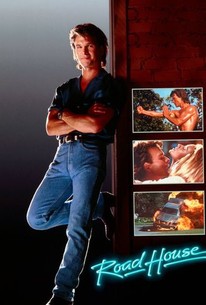
Chris chooses the apparently cocaine-fueled men at the opening bar and their 'moose lips' dialogue. — Chris Ryan
Kyle loves the pre-internet fame of bouncers, imagining trading cards, Cooler Illustrated and a fantasy league despite the premise's implausibility. — Kyle Brandt
Bands protected by cages and the action-film premise of recruiting 'the best' share a top preference.
The gratuitous monster-truck destruction of the dealership exemplifies beloved expensive action excess, even though Wesley's villainy is already clear.
Elliott's timeless appearance and ability to call someone 'mijo' remain appealing; Swayze himself is missed, and Kevin Tighe's shift from Emergency! lead to character actor is appreciated.
The closing song When the Night Comes Falling and swimming-hole ending are praised; the singer is clarified as Jeff Healey rather than Swayze.
Shirtless tai chi, Jimmy Reno, uncertainty about whether Dalton is a first or last name, 'Nobody wins a fight' and the nipple-to-nipple invitation all retain appeal.
The hero's hidden Memphis past is an appealing trope, though his shame needs explanation; the hosts imagine a missing confession scene. The throat-rip move still shocks.
Julie Michaels's stunt background and later Point Break fight, the Family Guy tribute and Jeff Healey's performance are additional pleasures.
Swayze's effortless cigarette flick and drifting smoke are praised as hall-of-fame movie smoking, despite the real-life tragedy discussed.
Marshall Teague; movie bouncers and coolers; Jeff Healey; white blues guitarists’ era; Kelly Lynch’s period; throat-rip kills; prison-sex threats; outdoor tai chi; 1989 action movies.
Drambuie is proposed as an Apex because of the conspicuous quantities at the Double Deuce.
Marshall Teague's career peak is affirmed despite his continued later work.
Swayze's Apex is placed later around Ghost, Point Break and Road House's rental growth. Elliott alternatives include Mask and 1883; Terry Funk's is assigned to early-eighties wrestling.
Movie bouncers and coolers, Jeff Healey, the era of white blues guitarists, and Kelly Lynch around this period receive affirmative support.
Gazzara is only tentatively considered a belated Apex through recognition; Elliott's pubic-hair suggestion becomes a joke about a future 1883 appearance.
Throat-rip kills, prison-sex threats and outdoor tai chi are affirmed. Action-star names and mullets are discussed with competing examples rather than a settled unique winner.
Death-deciding coin tosses are proposed but compared with No Country for Old Men; persevering with a repeatedly damaged car is another suggestion without a clear final endorsement.
1989 action movies receive an explicit Apex claim because established stars and a new generation overlap.