
Film credit
Patrick Swayze
Also referred to as Swayze
Stats
- Episodes featuring their films
- 3
- Movies in this archive
- 3
Rewatchables episodes featuring Patrick Swayze’s films


Point Break
1991 film
Bill Simmons · Shea Serrano · Jason Concepcion · Mark Titus
Aired August 24, 2017
Mentioned in discussions

In the discussion (6)
- Bill Murray and Patrick Swayze are reported as lead considerations; Murray is rejected by the speakers, Swayze interests them, and a later Keanu Reeves/Hardball version is imagined while Schwarzenegger remains preferred. — Kyle Brandt
- Roadhouse dialogue, throat-ripping and a crude prison taunt are jokingly transplanted into Kindergarten Cop rather than reported as actual scenes. — Bill Simmons
- Reported DeVito consideration is questioned because the police role seems implausible despite the opposite height joke; a Roadhouse crossover with Sam Elliott is imagined. — Bill Simmons
- Catherine O Hara is reported unavailable because of Home Alone; Sandra Bullock and Elijah Wood are said not to have landed parts. The speaker’s identification of Joyce as the abused child’s mother is uncertain. — Bill Simmons
- Christian Slater is said to have been considered for Crisp after Heathers but to have chosen Pump Up the Volume, which receives approval. — Bill Simmons
- A story that Audrey Hepburn rejected Eleanor Crisp because she loved children is explicitly treated as unverified; the thermometer scene is joked about.

In the discussion (4)
- Michelle Pfeiffer reportedly declined Susan; Young is preferred as more plausible in this particular social setting. — Bill Simmons
- Reports that Mel Gibson and Patrick Swayze declined Tom are explicitly treated as uncertain.
- Paul Newman and Gregory Peck are discussed as implausible Brice alternatives because of interest or age.
- Reported Scott alternatives include Gary Oldman, Stephen Lang, Alec Baldwin, Michael Biehn and James Spader; Oldman excites interest, Spader seems young, and Patton remains preferred. — Bill Simmons

In the discussion (1)
- Swayze is declared the winner before Craig's review begins. — Bill Simmons
Podcast choices

The Ruffalo / Hanna / Rubinek / Partridge Overacting Award
Kelly Lynch’s confrontation; Gazzara and Swayze also nominated.
In the discussion (1)
- Gazzara is initially proposed, with Swayze dragging Jimmy and shouting Wesley as another choice; the discussion settles on Lynch's 'Who's gonna save them from you?' confrontation. — Kyle Brandt
In the discussion (3)
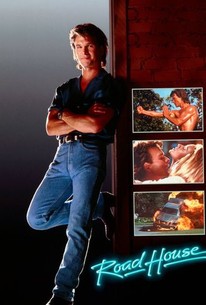
- Swayze reportedly left the Kurt Russell part in Tango & Cash for Road House, a swap the group thinks benefited both films; Russell would have needed a different Dalton. — Chris Ryan
- Annette Bening originally had Lynch's role; Lynch's claim that she was fired for poor chemistry with Swayze is explicitly doubted. James Garner was sought for Wesley, and Scott Glenn reportedly declined Jimmy, raising questions about his fighting ability. — Bill Simmons
- Swayze's knee injury reportedly led him to decline Predator 2 and choose the less physically demanding Ghost; the hosts identify the proposed role as probably the lead. — Chris Ryan

What’s Aged the Best?
Famous bouncers, caged bands, recruiting the best, extravagant destruction, Swayze, Elliott, Healey and the throat rip.
In the discussion (11)
- Chris chooses the apparently cocaine-fueled men at the opening bar and their 'moose lips' dialogue. — Chris Ryan
- Kyle loves the pre-internet fame of bouncers, imagining trading cards, Cooler Illustrated and a fantasy league despite the premise's implausibility. — Kyle Brandt
- Bands protected by cages and the action-film premise of recruiting 'the best' share a top preference. — Bill Simmons
- The gratuitous monster-truck destruction of the dealership exemplifies beloved expensive action excess, even though Wesley's villainy is already clear. — Kyle Brandt
- Sam Elliott's hair is another choice. — Bill Simmons
- Elliott's timeless appearance and ability to call someone 'mijo' remain appealing; Swayze himself is missed, and Kevin Tighe's shift from Emergency! lead to character actor is appreciated. — Bill Simmons
- The closing song When the Night Comes Falling and swimming-hole ending are praised; the singer is clarified as Jeff Healey rather than Swayze. — Kyle Brandt
- Shirtless tai chi, Jimmy Reno, uncertainty about whether Dalton is a first or last name, 'Nobody wins a fight' and the nipple-to-nipple invitation all retain appeal.
- The hero's hidden Memphis past is an appealing trope, though his shame needs explanation; the hosts imagine a missing confession scene. The throat-rip move still shocks. — Bill Simmons
- Julie Michaels's stunt background and later Point Break fight, the Family Guy tribute and Jeff Healey's performance are additional pleasures. — Bill Simmons
- Swayze's effortless cigarette flick and drifting smoke are praised as hall-of-fame movie smoking, despite the real-life tragedy discussed. — Bill Simmons

Apex Mountain
Marshall Teague; movie bouncers and coolers; Jeff Healey; white blues guitarists’ era; Kelly Lynch’s period; throat-rip kills; prison-sex threats; outdoor tai chi; 1989 action movies.
In the discussion (8)
- Drambuie is proposed as an Apex because of the conspicuous quantities at the Double Deuce. — Chris Ryan
- Marshall Teague's career peak is affirmed despite his continued later work. — Kyle Brandt
- Swayze's Apex is placed later around Ghost, Point Break and Road House's rental growth. Elliott alternatives include Mask and 1883; Terry Funk's is assigned to early-eighties wrestling.
- Movie bouncers and coolers, Jeff Healey, the era of white blues guitarists, and Kelly Lynch around this period receive affirmative support.
- Gazzara is only tentatively considered a belated Apex through recognition; Elliott's pubic-hair suggestion becomes a joke about a future 1883 appearance. — Kyle Brandt
- Throat-rip kills, prison-sex threats and outdoor tai chi are affirmed. Action-star names and mullets are discussed with competing examples rather than a settled unique winner. — Bill Simmons
- Death-deciding coin tosses are proposed but compared with No Country for Old Men; persevering with a repeatedly damaged car is another suggestion without a clear final endorsement. — Chris Ryan
- 1989 action movies receive an explicit Apex claim because established stars and a new generation overlap. — Kyle Brandt

Probably Unanswerable Questions
Throat-rip feasibility, Jasper’s businesses, Memphis, cars and the missing Swayze sequel.
In the discussion (10)
- Dalton's first-name recognition across bars before the internet raises questions about an underground bouncer-information network; the opening bar's location is unspecified.
- The hosts wonder where one buys bladed boots, whether they are custom-made and why this blade remains exposed rather than retracting.
- The price of buying off a whole police department is left speculative. — Bill Simmons
- Wesley controls a tiny town while destroying its few businesses, yet his ownership and wealth source remain unclear. A Chicago-mob origin and additional local businesses are speculation. — Kyle Brandt
- The physical possibility of ripping out a throat is disputed without resolution. — Bill Simmons
- The group wonders which parts of Jasper Wesley leaves alone and why there is no strip club; the Double Deuce may already fill that role. — Bill Simmons
- Why no Swayze sequel around 1993? Los Angeles and the Viper Room are proposed as a setting for Dalton's next cleanup.
- Terry Funk is proposed as a leading wrestler crossover below Hulk Hogan's Thunderlips, but André the Giant in The Princess Bride and Roddy Piper in They Live push him down; no formal numbered ranking is settled.
- Dalton's Memphis killing appears to be self-defense after unknowingly dating a married woman, making his shame puzzling. His alertness to weapons contrasts with missing her marriage, and the hosts question whether earlier bar fights also killed anyone. — Chris Ryan
- Dalton's attachment to German cars and whether anyone called about the Buick sale remain unanswered.

Most Rewatchable Scene
Dalton’s first night and rules; Dalton versus Jimmy; Wesley’s breakfast.
In the discussion (11)
- Dalton's arrival at the Double Deuce, quietly surveying its chaos, showcases Swayze's charisma. The brawl over paid sexual touching is recalled as disturbing now but exciting to a young viewer. — Bill Simmons
- Dalton fires staff and gives three rules: do not underestimate opponents, take fights outside and be nice until necessary. His explanation of insults and 'trustees of modern chemistry' speech reveal an unexpectedly literary bouncer. — Bill Simmons
- The hospital flirtation after Dalton's fight has clipped, almost Mamet-like dialogue. His philosophy degree, 'Pain don't hurt' and 'Nobody wins a fight' lines remain funny because he plays them sincerely.
- The revenge fight includes Dalton detecting a bladed boot and the advice that even the biggest opponent drops after a groin strike. — Kyle Brandt
- Wade saves Dalton from four attackers, then spends the evening flirting and dancing with Dalton's girlfriend; Dalton's willingness to get a beer after severe blows is part of the fun. — Chris Ryan
- Denise's lengthy striptease to Hoochie Coochie Man leads into Jimmy's commanding pool-cue entrance. His athletic vault, intensity and skill transform the threat level after Wesley's weaker henchmen; Wesley ends the fight with a gunshot.
- Dalton versus Jimmy follows Emmett's fire, motorcycle taunting and the prison line, ending in the throat rip. The fight creates a credible fear that Dalton could lose. — Bill Simmons
- The Jimmy fight's back-and-forth damage contrasts with Seagal's invulnerability. Michael Kamen's score and the previously foreshadowed throat rip make the climax especially satisfying.
- The final assault ends with townspeople taking turns shooting Wesley; the hosts ask why they did not simply do that months earlier. — Bill Simmons
- Final preferences include Dalton's speech and first night at the Double Deuce, the Dalton–Jimmy fight, and Kyle's additional breakfast scene where Wesley shifts from civic boasting to murder allegations.
- Craig particularly enjoys Dalton's arrival, rule-setting and firing the employee stealing money. — Bill Simmons
Half-Assed Internet Research
Stunts and injuries, deleted Keith David material, casting-era anecdotes, cars and constructed locations.
In the discussion (9)
- The discussion reports a $15 million budget, $61.6 million gross and an estimated further $200 million from home viewing formats. — Kyle Brandt
- The hosts report actual contact during the Jimmy fight, Teague cracking two of Swayze's ribs with a log, several long shooting days and Swayze requiring knee drainage. — Bill Simmons
- A Keith David interview describes an initially four-week job becoming eleven weeks and enjoyable fights, including Terry Funk; Harrington later told him the long cut required removing his role. The hosts enthusiastically want the extended cut, while speculation about Ernie cleaning up the bar remains conjecture.
- Teague reportedly took his mother to the premiere, where she proudly identified him after the prison line.
- The discussion says the actors performed their own stunts and trained with Benny the Jet, who considered Swayze capable of competitive kickboxing. Swayze's recurring knee trouble is linked to an earlier football injury. — Bill Simmons
- Bigfoot number seven was reportedly built for the film, with the dealership sequence costing $500,000. — Bill Simmons
- A 2009 Barbara Walters interview is cited for Swayze's account of heavy drinking and smoking up to 60 cigarettes daily; the hosts reflect sadly on his illness and death.
- Dalton's Mercedes is identified as a silver/light-blue 1986 560 SEC; the Double Deuce and Red's Auto Parts were built for filming. — Bill Simmons
- An IMDb-attributed claim that Harrington thought the film changed club security worldwide is rejected as implausible, given the hosts' view that its popularity developed slowly. — Kyle Brandt

Casting What-Ifs
Patrick Swayze reportedly left for Road House; both resulting casting choices are celebrated.
In the discussion (4)
- The script was originally The Setup; Swayze reportedly dropped out to make Roadhouse and Russell replaced him. — Bill Simmons
- Swayze here and Russell in Roadhouse is an appealing counterfactual, but both films are thought slightly worse in that swap, especially Russell’s leg-fighting credibility. — Bill Simmons
- The swap is compared with Van Damme leaving Predator for Bloodsport; Face and the Cockney henchman reportedly gained scenes during rewrites at Stallone’s request. — Bill Simmons
- Face’s broken-jaw recollection implies earlier clashes with Tango beyond the opening arrest; Stallone is reported to have fired the original cinematographer. — Shea Serrano

Casting What-Ifs
Chevy Chase and John Travolta were considered for Griffin, and several cut cameos and cast relationships are discussed.
In the discussion (5)
- Chevy Chase wanted to play Griffin, but Warner Bros. rejected the idea. — Bill Simmons
- Robert Altman reportedly considered John Travolta for Griffin. — Bill Simmons
- The panel prefers Robbins and notes his early-1990s career run. — Wesley Morris
- Jeff Daniels golfing in surgical clothes and Patrick Swayze doing karate were filmed and cut. — Bill Simmons
- Greta Scacchi and Vincent D’Onofrio were in a relationship and had a daughter. — Bill Simmons

