‹ All people

Referenced person

James Garner

Also referred to as James Gardner, Garner

Stats

Episodes featuring their films
0
Movies in this archive
0

Rewatchables episodes featuring James Garner’s films

No episode credits in the archive yet.

No episodes found

Mentioned in discussions

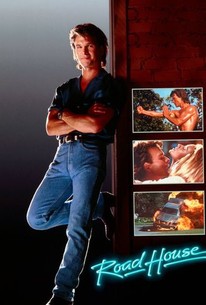
Road House

Casting What-Ifs

Swayze left Tango & Cash; Bening, Garner and Glenn alternatives; injury reportedly led Swayze to Ghost.

In the discussion (3)
Approx. transcript time · 01:16:15Read transcript
  • Swayze reportedly left the Kurt Russell part in Tango & Cash for Road House, a swap the group thinks benefited both films; Russell would have needed a different Dalton. — Chris Ryan
  • Annette Bening originally had Lynch's role; Lynch's claim that she was fired for poor chemistry with Swayze is explicitly doubted. James Garner was sought for Wesley, and Scott Glenn reportedly declined Jimmy, raising questions about his fighting ability. — Bill Simmons
  • Swayze's knee injury reportedly led him to decline Predator 2 and choose the less physically demanding Ghost; the hosts identify the proposed role as probably the lead. — Chris Ryan
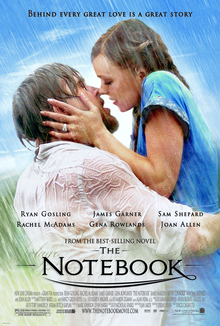
The Notebook

Picking Nits

The home-restoration and engagement timeline; the health of young Noah and Allie's relationship; building and stocking a house for someone unseen in seven years; Allie going off the grid on Lon; the hand-cut arrows and Xerox paper; Lon's convoluted proposal; the $50,000 asking price for the plantation; the abrupt ending; how Noah pays the bills

In the discussion (15)
Approx. transcript time · 01:01:45Read transcript
  • Invited to go first, the number one nit, written in caps, is a request to explain the timeline of the home restoration and how long Ali and Lon were engaged. — Amanda Dobbins
  • The timeline is laid out: they meet June 6, 1940, Allie at 17 starts Sarah Lawrence that fall and graduates in spring 1944, and she returns to Noah in 1947, since she says she waited seven years, so she has been with Lon about three years.
  • Asked what questions remain, meeting at the end of the war in 1944 or 1945 makes sense, and the concern is that we are shown the engagement and then Noah starting work on the house. — Amanda Dobbins
  • Perhaps she took a year off to nurse; in the 40s there were about six weeks between engagement and marriage and this woman would have married faster, yet the movie shows the entire restoration, Sam Shepard dying in between, Noah pulling off the facade floorboard by floorboard alone, and his newspaper feature alongside her wedding announcement; even allowing six months for a society wedding, one person cannot renovate a house like that, so the timeline makes no sense.
  • Asked for a major nit, there are concerns about early Noah and Allie's relationship and its health. — Andrew Gruttadaro
  • The relationship runs on adrenaline and hating Allie's mom; they get into physical fights, hitting each other rather than bickering, which may be meant to communicate passion, though rewatching Big Little Lies prompts a rethink of the link between physical aggression and passion; Noah also gets a personality transplant, barely talking in the second half before transforming back into James Garner.
  • Also a nitpick: is it healthy to build an entire house for someone you have not spoken to in seven years and stock it with sketch notebooks, pencils and canvases? Romantic in the movie, weird and stalkery in real life; a beautiful house is one host's love language but the third sketch notebook is intense, a flip-side Mrs. Havisham who was called a madwoman, a double standard, and a Lloyd Dobler problem of movie romance ignoring boundaries; Gosling gets credit for channeling the break with reality it would take.
  • Allie going off the grid for two or three days is really rude to lovely Lon and not good behavior, even if you are uncontactable on Seabrook Island in 1947 and Noah's remote house probably has no phone; why Noah never got another friend after Kevin Connolly died is answered with 'once you have E' there are no replacements.
  • Two smaller nits: Noah could not have had time to cut so many differently shaped arrows for the painting scene, a two-hour project at most, and the paper looked like straight-up Xerox paper, not 1947-approved; Marsden's proposal is extremely convoluted, the bit about her parents does not land, 'I've asked your parents already' is always hated, and it needed a rewrite.
  • Asked for other nits, Noah is only asking $50,000 for the plantation, which in the 1940s is like $500,000 and not enough money; he needs a better understanding of the real estate market and his land. — Andrew Gruttadaro
  • Coastal property goes for far more; classic Noah not consulting an expert.
  • The movie ends abruptly, panning up from the bed to credits; one host would end on Allie returning to the house and the all-time McAdams shrug, up there with the Jordan shrug, and stops watching there because the extra fifteen minutes of old people are unnecessary, while another starts weeping then because it shows love is real and the hospital plot cannot be left unresolved.
  • Netflix quietly used an alternate ending in which the old couple simply go to bed and no nurse finds them dead, which the hosts agree is better; the fifteen-minute epilogue is unneeded even by someone who usually loves an epilogue.
  • One host, perhaps cold at heart, has never been moved to tears by this movie despite loving sad things, and thinks the old people ruin it, while the weeping host stands with Craig in the corner valuing love that lasts a lifetime; the abrupt-ending complaint is really a wish for one more young Noah and Allie moment, since her return is no guarantee it works out, although the old-people premise is that it does and their kids come; some are interested in the old-people story and some are not.
  • Earlier, during the research, whether Noah's furniture is how he pays the bills was flagged as unknown and parked for picking nits.
The Notebook

Half-Assed Internet Research

James Garner told Gosling 'I don't do accents, kid'; Gosling moved to South Carolina before filming; Gosling made furniture to prepare; the leads disliked each other on set; Cassavetes directed his mother Gina Rollins (as transcribed); the trivia comes from the DVD commentary

In the discussion (8)
Approx. transcript time · 00:48:18Read transcript
  • Asked for the anecdote, Gosling tried to get real actor-to-actor with James Garner, asking what accent he was going to do, and Garner apparently told him 'I don't do accents, kid' and that accents are stupid. — Andrew Gruttadaro
  • The hosts side with Team James Gardner (as transcribed); Gosling also raised his blue eyes against Garner's brown and the response was that he did not care; Garner seemed to have no time for him.
  • Asked whether the affection for Gosling survives the deep-theater-kid contact-lens matching, the answer is that this is the part of Gosling we try not to acknowledge: there is weird indie-band, indie-movie Gosling and funny, charming Gosling, a one-for-them, one-for-me approach, and the pesky method kid who writes extreme character biographies and journals, so a Noah notebook surely exists in the archives. — Amanda Dobbins
  • More research: Gosling moved to South Carolina before the movie to get comfortable with the terrain, which would be weirder if he were not Canadian, though he spent time in Florida for the Mickey Mouse Club as a Disney kid; he contains multitudes, as Walt Whitman would say.
  • Gosling also started making furniture to prepare for the role. — Andrew Gruttadaro
  • The furniture is a fun wrinkle that one host wishes there were more of, while another thinks one close-up on the beautiful furniture in his workshop was the right amount; whether that is how he pays the bills is unknown and parked for picking nits.
  • Earlier: the two leads did not like each other on set and fought a lot, and a big blowout apparently made things better.
  • Earlier: Gina Rollins (as transcribed) is the director's mother, James Garner would break when the director called 'okay, mom, action', and the director dominates the DVD commentary, the source of the trivia the hosts cite.
In the discussion (8)
Approx. transcript time · 00:44:32Read transcript
  • Nominees are Joan Allen, Gina Rollins (as transcribed) and James Garner, with honorable mention to Sam Shepard, who is barely in the movie but charming and a clear link to Gosling's Noah, and James Marsden added.
  • Asked to make a case, it is Joan Allen, throwing heaters as an extremely Southern mom, especially her reading of 'Sarah Lawrence is in New York'. — Andrew Gruttadaro
  • The Sarah Lawrence exchange is played; she is hilarious as a Southern lady and brings the evil-parent vibe that spices up the movie, an evil parent who then tries to redeem herself by sharing her own story.
  • Asked to make a case, it is James Garner, because he pretty much carries the old-people plot, which is hard, and is very charming; Jeanette Rollins (as transcribed) does good work but her part is not fun. — Amanda Dobbins
  • Rowlands's character is supposed to be confused the whole time, while Garner carries the narrative and emotional thrust and plays it straight enough that you do not know who he is.
  • A case is made for James Marsden: delightful and likable, beginning the James Marsden good-guy saga in a role where likability is hard; Lon Hammond Jr. of the Cotton Hammonds gets a bad rap and is not evil just because he has money; his hotel room line is saved for best quote, he is a charmer showing up at her school, and his bravado works even in a full body cast; the speaker also confesses a weakness for Marsden as Cyclops.
  • No pick is made; there are just a lot of great Dion Waiters performances in this movie.
  • Later, during the overacting award, Joan Allen is argued to be a bit of a heat check, and the hosts debate the award's definition: a Dion Waiters heat check is not necessarily good but is 'wow, she's really going for it'; nobody has ever understood whether it is doing the most with the least, and the standing rule from Bill is that it is doing the most with the least, which is why one voice gives it to James Garner, interpreted positively, even though that differs from the hot-hand sense.
In the discussion (17)
Approx. transcript time · 00:21:38Read transcript
  • The obvious one is the chemistry between Gosling and McAdams, astonishing and all-time, and partly luck since the casting had to be right; it makes the hosts sad they are no longer together, and Gosling told GQ after the breakup that women yelled at him on the street for breaking up with her because of this movie.
  • Movies like this raise the question of whether acting is real or whether magic moments are just captured on camera; the half-assed research spills early: the two did not like each other on set and fought a lot, a big blowout reportedly made things better, and he seemed to arrive ready to be a serious actor throwing fastballs that she threw right back.
  • The Nick Cassavetes part is a weird movie for him to make and the best he has made; his credits include She's So Lovely, a much darker love triangle, John Q, Alpha Dog and The Other Woman with a Kate Upton performance called a historical moment.
  • Gina Rollins (as transcribed) is his mom, as the son of Gina Rollins and John Cassavetes, and an anecdote has James Garner breaking up when the director called 'okay, mom, action'; he is the star of the DVD extras and the source of the trivia cited later, and he gets immense credit for casting McAdams and Gosling after a long search for her.
  • Rachel McAdams in general: so good, looks amazing, an incredible performance; asked to choose between Allie and Regina George, one host picks Regina George as the historical, impactful one while loving this performance and her wavy hair.
  • Asked which role is preferred, the performance caught this viewer a little off guard on rewatch; Regina George is the more iconic character but it is hard to say, and Allie might be liked more. — Andrew Gruttadaro
  • Allie seems like a better hang and really fun, loves to swim, with so much of the opening montage spent jumping into water, though she is a little fungible, whereas Regina is strong in her convictions even when they are suspect.
  • Incorporating Charleston is nominated because Charleston in 2019 is really having a moment. — Juliet Litman
  • The counter puts Charleston under what aged worst: there is too much plantation stuff, everyone in a service role, nurse or household staff, is black, which is glaring and uncomfortable now, a bizarre choice especially at the retirement home, where the one white person is a male doctor.
  • The movie is a period piece: set in the 40s, so the costumes and references never age, which works fifteen years later; there are almost no references beyond the war, Walt Whitman and the cotton trade.
  • The structure is really good: whatever one thinks of the dementia plot or the writing in the notebook itself, which seems terrible with respect to Ali Hamilton, the pacing keeps you in young Noah and Ali's world so that you forget James Garner and Gina Rollins (as transcribed) until halfway, and by the time you learn who they are you are invested enough to buy a ridiculous device; one host could not even work out what the notebook was.
  • Asked about the old-people side, the device is appreciated, but by the time it is revealed that they are them it loses its power. — Andrew Gruttadaro
  • You realise it is her when she plays the piano and him much later; nobody remembers first finding out, possibly spoiled, yet it still makes one host cry at the end; producer Craig is cited as loving the old people, the framing gives gravitas to the younger story, and nobody can imagine reading the Nicholas Sparks novel, so it is an achievement.
  • Asked what else has aged well, the offer is maybe James Marsden's inclusion. — Andrew Gruttadaro
  • Marsden is a really good hit, not really famous when the movie came out, who went on to be a rom-com guy and now a guy who dies in sci-fi movies.
  • It starts his career as the other guy, the passed-over guy, but the movie makes you root for Lon and feel bad for him, putting him with Dempsey in Sweet Home Alabama, Karen on The Office and just below Keanu in Something's Gotta Give, where Diane Keaton should have chosen Keanu Reeves.
  • Deciding, the hosts first propose the old-people device, then remember the chemistry, and settle on giving it to the sex scene described at length earlier, so the chemistry wins in the form of that scene; other nominees were McAdams's performance, Charleston, the period setting, the old-people structure and Marsden's inclusion; a joke proposes a video bonus breaking down the choreography on a telestrator.
Displaying all 6 discussions