
‹ All people

Film credit

Joan Allen

Also referred to as Joan Ellen

Stats

Episodes featuring their films
4
Movies in this archive
4

Rewatchables episodes featuring Joan Allen’s films

The Ice Storm

1997 film

Bill Simmons · Chris Ryan · Sean Fennessey

Aired March 1, 2022

Manhunter

1986 film

Bill Simmons · Sean Fennessey · Chris Ryan

Aired April 13, 2021

Face/Off

1997 film

Bill Simmons · Shea Serrano · Chris Ryan · Jason Concepcion

Aired October 26, 2017
Displaying all 4 episodes

Mentioned in discussions

In the discussion (4)
Approx. transcript time · 01:26:31Read transcript
  • Ang Lee is the first pick. — Bill Simmons
  • Ang Lee and Joan Allen are the finalists; Allen wins among the actors, Jim Carver clearly lost, and Lee is favored because the film confirmed him as a major American filmmaker. — Sean Fennessey
  • Lee is rejected because the film did not do well; Joan Allen is picked for her run of roles and her best dramatic performance besides The Contender, which has aged poorly. — Bill Simmons
  • Her Face/Off and Ice Storm work together are said to have solidified 1997 for her. — Bill Simmons
Podcast choices
In the discussion (10)
Approx. transcript time · 01:11:45Read transcript
  • Kline is not at Apex; Weaver is also a no, her peak being around Ghostbusters, Aliens, and Working Girl. — Bill Simmons
  • Ang Lee is a no, with Brokeback Mountain cited among his two directing Oscars. — Sean Fennessey
  • Joan Allen’s Apex is opened as this film versus her first spy-franchise role. — Chris Ryan
  • Counter-alternatives are her Pamela Landy role, Face/Off and Pleasantville, or The Contender, which earned an Oscar nomination.
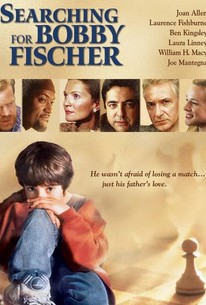
  • Her filmography is recapped, from Manhunter and a chess-prodigy film through The Crucible and The Contender. — Bill Simmons
  • This is declared her Apex for the podcast’s purposes while still admiring her Pamela Landy. — Chris Ryan
  • The Upside of Anger is praised, and Allen is called one of the most believable movie moms. — Bill Simmons
  • Maguire and Holmes are no; key parties are an emphatic yes. — Bill Simmons
  • Whether key parties peaked elsewhere is questioned, perhaps with Elizabeth Taylor and Richard Burton, at the Playboy Mansion, in John Updike’s fiction, or in Thy Neighbor’s Wife. — Sean Fennessey
  • Forrest Gump remains the peak for premature-ejaculation scenes, so this film is not.
The Ice Storm

What’s Aged the Best?

Self-abuse talk; key parties; split-level house; Nixon shadow; Kline and Weaver pairing; bong scenes; Maguire and Holmes debuts; dorm posters; Francis and Paul; Weaver

In the discussion (12)
Approx. transcript time · 00:51:29Read transcript
  • Ben’s awkward self-abuse advice to his son is the first pick.
  • Key parties as a pop-culture gimmick age well; CBS’s Swingtown tried and failed, and Mad Men had adultery but no key party. — Bill Simmons
  • The 1970s house with a single step up between rooms is a style never seen again, recalling the sunken living room in Help! — Bill Simmons
  • The Nixon and Watergate shadow is cited again. — Chris Ryan
  • Kline and Weaver, who played a president and first lady four years earlier, reuniting as adulterers is enjoyed. — Bill Simmons
  • Bong scenes and the Amaretto-and-brandy combination are enjoyed. — Bill Simmons
  • This was the Paul actor’s breakout before Pleasantville and Katie Holmes’s first film, before Dawson’s Creek and Disturbing Behavior; admiration for Holmes and a sneaky-tall anecdote follow. — Bill Simmons
  • Paul’s boarding-school posters, including Planet of the Apes, the Doors, and Nixon, reward set-dressing attention. — Bill Simmons
  • Francis and Paul’s roommate banter, including their reading-recommendation exchange, is a welcome change of gear. — Chris Ryan
  • Sigourney Weaver is picked out of simple love for her. — Chris Ryan
  • Asked who should have been Oscar-nominated since the film had no acting nominations, the hosts agree on Joan Allen, citing her tearing up when the Reverend hits on her. — Chris Ryan
  • Reviewing that year’s supporting-actress field, the Titanic nomination is called an abomination that took Allen’s spot, and Heather Graham in Boogie Nights is also raised. — Bill Simmons
In the discussion (15)
Approx. transcript time · 00:41:47Read transcript
  • Nominations are framed as good scenes rather than truly rewatchable ones. — Bill Simmons
  • The first dinner party, from the spilled wine to the couples sitting beside spouses they seem not to like, sets the tone. — Bill Simmons
  • Ben’s affair reveal with Weaver’s character is nominated, including his golf babbling and her reply that she already has a husband and needs no other. — Bill Simmons
  • Kline left alone in Weaver’s house then discovering Wendy and Mikey with the Nixon mask is nominated and called one of the most unnerving scenes in a non-horror film. — Bill Simmons
  • The film handles Christina Ricci’s character without feeling exploitative; carrying her home because her feet are cold captures a child longing to be older.
  • Paul’s homecoming exchange with his sister shows the kids know their parents are odd. — Sean Fennessey
  • The car ride to the key party, where Ben and Joan Allen’s character debate what will happen, is where tensions come to a simmer. — Bill Simmons
  • The Elton John needle drop is loved even though the party it scores lacks a payoff; the song is called a top-five Elton John song. — Bill Simmons
  • The key party itself is nominated, returned to in pieces until one key remains and Ben is passed out in the bathroom. — Bill Simmons
  • The electrocution is not fun to rewatch but is called brilliant and horror-like, with impressive ice effects for 1997. — Bill Simmons
  • The final 30 minutes cross-cut three storylines in a novelistic way, making it hard to isolate scenes; the key party spans about 30 minutes. — Sean Fennessey
  • Under the Fucked Up Family February “most gripping” framing, the final 15 minutes would win, though a channel-flipper would start at the key party. — Sean Fennessey
  • Joan Allen at the book sale meeting the Reverend and seeing Wendy on her bike is nominated by two hosts. — Bill Simmons
  • Ben driving Paul home from the train and discussing self-abuse is held for Aged Best.
  • The key party is settled on as the scene. — Chris Ryan
Manhunter

Apex Mountain

William Petersen’s movie career, Tom Noonan, Captiva, burning corpses on rolling chairs, and cutoff gray shirts: yes
In the discussion (10)
Approx. transcript time · 01:21:55Read transcript
  • William Petersen is judged at his movie apex, though CSI complicates his overall apex. — Bill Simmons
  • Tom Noonan is judged at his apex. — Bill Simmons
  • Michael Mann is judged below his apex.
  • Joan Allen is judged below her apex.
  • Burning corpses on rolling chairs are jokingly assessed as an apex. — Bill Simmons
  • Profiling is denied an apex because CSI and The Silence of the Lambs took it further. — Bill Simmons
  • The climactic song use is debated as an apex. — Bill Simmons
  • Sprinting through a window is assessed against being thrown through one.
  • Captiva is judged at its apex.
  • Cutoff gray shirts receive an apex joke. — Sean Fennessey
Love & Basketball

Apex Mountain

Sanaa Lathan; Barcelona professional women's basketball; early WNBA optimism
In the discussion (8)
Approx. transcript time · 01:21:54Read transcript
  • Sanaa Lathan is a yes, with a big stock buy after this movie leading to good roles. — Bill Simmons
  • Asked about Oscar potential, the 2000 Best Actress nominees are listed (Julia Roberts winning, Joan Allen, Laura Linney and others); the year is called loaded and Linney is said to have deserved it. — Bill Simmons
  • A possible original screenplay nomination is raised, joked about as ignored by the Oscars committee; the five nominees are listed and Billy Elliot is said not to have aged well. — Bill Simmons
  • Omar Epps is called a no; the other participant makes the yes case from his longevity, escape from typecasting, and TV resurgence, saying he could put up a fight. — Jemele Hill
  • USC basketball is a no. — Bill Simmons
  • Barcelona professional women's basketball is a yes, and the other participant agrees. — Bill Simmons
  • The early WNBA seeming optimistic about the league's future is an emphatic yes; the film explained why the league was pushed: the players had nowhere to play. — Bill Simmons
  • Dick Vitale is later floated as a possible Apex candidate that should have been brought in. — Bill Simmons
In the discussion (7)
Approx. transcript time · 00:57:10Read transcript
  • It has got to be Joan Allen, though she was also placed under what aged worst and argued as a heat check.
  • Asked to make the case, a Dion Waiters heat check is not necessarily a good thing, but it is 'wow, she's really going for it'. — Andrew Gruttadaro
  • Given the floor for critical things about Joan Allen: in the wedding-dress scene with fifteen anonymous women with terrible Southern accents, she leans into the scheming Southern mom, 'society event of the year', with her thickest accent and a shoulder shimmy, and it does not work; she brings home the emotional stuff at the end, but the shallow Southern mom of the first half is a bit much. — Amanda Dobbins
  • At the dance with the offensively stereotypical, largely black brass band she must have a dance double, since she does full leg kicks.
  • Asked whether the dance scene seemed odd, all of it works for this viewer, who is on board with evil Joan Allen. — Andrew Gruttadaro
  • The band leader is Oba Babatunde (as transcribed), the ousted principal in season three of Dawson's Creek, filmed around the same time, another Carolina connection and a WB that-guy who does not count for normal people.
  • Kevin Connolly is also totally doing too much, but Joan Allen is the third or fourth biggest lead and it is hard to make a case for anyone else; she is a wonderful actress, excellent recently on Broadway in The Waverly Gallery, but not channeling that energy here.
In the discussion (8)
Approx. transcript time · 00:44:32Read transcript
  • Nominees are Joan Allen, Gina Rollins (as transcribed) and James Garner, with honorable mention to Sam Shepard, who is barely in the movie but charming and a clear link to Gosling's Noah, and James Marsden added.
  • Asked to make a case, it is Joan Allen, throwing heaters as an extremely Southern mom, especially her reading of 'Sarah Lawrence is in New York'. — Andrew Gruttadaro
  • The Sarah Lawrence exchange is played; she is hilarious as a Southern lady and brings the evil-parent vibe that spices up the movie, an evil parent who then tries to redeem herself by sharing her own story.
  • Asked to make a case, it is James Garner, because he pretty much carries the old-people plot, which is hard, and is very charming; Jeanette Rollins (as transcribed) does good work but her part is not fun. — Amanda Dobbins
  • Rowlands's character is supposed to be confused the whole time, while Garner carries the narrative and emotional thrust and plays it straight enough that you do not know who he is.
  • A case is made for James Marsden: delightful and likable, beginning the James Marsden good-guy saga in a role where likability is hard; Lon Hammond Jr. of the Cotton Hammonds gets a bad rap and is not evil just because he has money; his hotel room line is saved for best quote, he is a charmer showing up at her school, and his bravado works even in a full body cast; the speaker also confesses a weakness for Marsden as Cyclops.
  • No pick is made; there are just a lot of great Dion Waiters performances in this movie.
  • Later, during the overacting award, Joan Allen is argued to be a bit of a heat check, and the hosts debate the award's definition: a Dion Waiters heat check is not necessarily good but is 'wow, she's really going for it'; nobody has ever understood whether it is doing the most with the least, and the standing rule from Bill is that it is doing the most with the least, which is why one voice gives it to James Garner, interpreted positively, even though that differs from the hot-hand sense.
In the discussion (16)
Approx. transcript time · 00:32:19Read transcript
  • The way race is portrayed is horrific; the wartime scenes could have been cut, since showing Kevin Connolly dying in battle was unnecessary; the portrayal of Sarah Lawrence College is a weird, unnecessary transition.
  • The portrayal of dementia is on the list: there is something to periods of lucidity in Alzheimer's, as in the medical-drama arc where Meredith's mother briefly becomes lucid, but the movie does not accurately represent how long it lasts or whether it can be induced.
  • Willing yourselves into death together is another weird one, with shades of Titanic's couple going down together in bed; other light Titanic influences are Jack telling Rose she will die an old lady warm in her bed, and 'you jump, I jump' echoing 'if you're a bird, I'm a bird'; all the medical stuff fails against the winds of time.
  • Joan Allen's mother portrayal is held for another category, but one host finds it accurate to the time, since in the 40s you did not get to marry who you wanted.
  • Asked for more things that aged badly, Allie's dad is nominated. — Andrew Gruttadaro
  • Allie's dad: the mustache, extremely Southern, basically Colonel Sanders, a throwaway, unrealized character who is supposed to be intimidating and unnecessarily harsh yet isn't; the all-white party dinner is very Titanic, and he is inferior to the other dad, the great Sam Shepard.
  • Addressed by name for anything else, the nomination is Kevin Connolly in this movie. — Amanda Dobbins
  • Kevin Connolly's lowest moment is his death, dead and still bad at acting; Entourage was a thing and he may have been the most famous person in the cast at the time, but the choice has aged poorly as Entourage and his role in it downgraded; Martha Shaw is also raised as rough.
  • Agreeing that Martha Shaw is rough, the feeling is simply of being really bad for her. — Andrew Gruttadaro
  • Martha Shaw is nevertheless a realistic portrayal of an emotionally unavailable man; she takes it too well, inviting Allie to dinner, and there is no reason for Allie to join except to punish herself; Martha mostly serves as a vehicle for Noah to show what a good guy he is.
  • Asked why Martha Shaw is on the list, the answer is that Noah basically treats her like garbage. — Andrew Gruttadaro
  • The supposedly heartwarming meeting of new girlfriend and ex comes off weird and does not show Noah is a good guy; one host had rewritten Martha in her head as a single mother to make her more tragic, when she is just a widow.
  • The final pick is the whole Southern race aspect of the movie. — Amanda Dobbins
  • The final pick is Kevin Connolly. — Andrew Gruttadaro
  • Another voice has Kevin Connolly as runner-up and goes with race as well, plus the treatment of dementia and Alzheimer's, also in the running.
  • Earlier, while on what aged best, Charleston's plantation imagery and the all-black service roles, including at the retirement home, were already filed under what aged worst.
The Notebook

Most Rewatchable Scene

The dock scene in the rain: 'why didn't you write me', 'it wasn't over, it still isn't over' and the kiss

In the discussion (19)
Approx. transcript time · 00:07:33Read transcript
  • Before any nominees, the question is whether a scene without both Ryan Gosling and Rachel McAdams can even make a case, such as Joan Allen taking Allie to see the boyfriend that never was; the answer is no, that belongs in a different category, so this is a Noah and Allie podcast, young Noah and Allie, with old Noah and Allie saved for later.
  • The first nominee is the first date: they lie down in the empty street, almost get hit by a car, then dance while Gosling hums 'I'll be seeing you'; it is called one of the more romantic movie scenes of the 21st century, the insistence on dancing is sweet, he is a trained dancer from the Mickey Mouse Club, and the scene is the purest expression of the chemistry that animates the movie.
  • Asked whether the scene works because of their chemistry or because of Ryan Gosling, the answer is both: they are really magnetic with each other, and McAdams's reactions and the way she plays off him in that scene are really good. — Andrew Gruttadaro
  • Her guffawing when they almost get hit by a car seems not to fit her character but makes it whole; her charm jumps off the screen, the role is written as feisty and she is the aggressive one, both characters keep catching each other on the back foot, so you watch them discovering each other in real time and the credit cannot all go to Gosling.
  • Gosling looks so young, more like his Remember the Titans character than at any other point, which he was fresh off; the next nominee is the montage of them falling in love that culminates on the beach with 'if you're a bird, I'm a bird'.
  • Asked where the bird scene ranks among tearjerkers, the answer is that it is up there: the weird conversation about being birds takes you aback and then turns out to be beautiful. — Andrew Gruttadaro
  • The hosts remember having to explain 'if you're a bird, I'm a bird' to Chris Ryan; the movie got a second life on the Internet, like Mean Girls two months earlier, and the line became a meme, though for one host and her college roommates who watched it constantly it was already something they said to each other, and the movie became a thing partly because college kids who loved it then started using the internet.
  • Next nominee: Allie first arrives at the restored house, having come from Charleston, where both actors moved beforehand to get familiar with the city, which is read as very Canadian; she is awkward, he barely speaks, she tries to drive off and hits the fence and ends up staying; the clip is played, and this is the scene nominated, not the next-day scene.
  • The next-day scene follows: the blue dress she then wears for most of the movie, the birds, the rain, 'why didn't you write me', 'I wrote you every day for 365 days', building to 'it wasn't over, it still isn't over' and the kiss and sex in the house, the most famous scene from the movie; he catches her on an inhalation when he kisses her.
  • The choreography of the sex scene is elaborate, with confusion about why he keeps his pants on to walk upstairs, emphasis on stripping down one stocking at a time, and heavy blocking from the dock to their falling asleep; the heart of the movie rests on their chemistry here and they hit the fiery tone, though one host is distracted by how easily he pulls the boat out of the water.
  • They won Best Kiss at the MTV Movie Awards and reenacted the kiss on stage, where she wore a strapless bustier-type top and looked incredible, very 2005; the appearance came two years after they filmed the movie.
  • Next nominee: after the outing with her mom she returns flustered, they have their last big fight and he says 'I want all of you'; it is called the most powerful Ryan Gosling moment, the source code for what he becomes, and the start of his habit of yelling random words of emphasis; he dominates the scene because she barely speaks, and the gregarious Noah of the opening never returns after the break, a thought parked for a later category.
  • Asked whether any nominee has been forgotten, the Ferris wheel is offered, and later it is confirmed as the only other one on the list. — Andrew Gruttadaro
  • The Ferris wheel is good but happens too early in the movie to have been seen multiple times on cable; one host realised she had never seen the first five minutes or the opening credits with the man rowing a boat, so the objection is a technicality; the scene is up there but the passion has not been established yet.
  • Asked for a number one, the pick is 'it still isn't over': the most famous scene, but if you turn the movie on within twenty or thirty minutes of it you have to keep watching until you see it. — Amanda Dobbins
  • Asked for a most rewatchable scene, the answer is agreement that it is hardly an argument. — Andrew Gruttadaro
  • A bad Alzheimer's joke compares the compulsion to keep watching with Allie's condition.
  • Another voice rides hard for the fight scene and has great affection for the first date, called the most romantic five minutes of cinema of the past two decades, but in terms of rewatchability it is 'it still isn't over'.
  • The vote is conceded two to one.
Face/Off The Rewatchables
Face/Off

Apex Mountain

Nick Cage (one host's yes at 157; the moderator closes 'nobody had an apex' at 159)

In the discussion (7)
Approx. transcript time · 00:47:41Read transcript
  • John Woo: no, with no explanation offered.
  • Joan Allen: no, though a contender, and one host would feel so bad if this were her Apex Mountain.
  • Gina Gershon: no; Bound is suggested instead, and Cocktail (as transcribed) comes up with a don't-get-me-started.
  • Travolta: no way; he was the biggest star in the world, but this is a second, mini-pleasant apex era for him rather than the peak.
  • Nick Cage: a definite yes, this rather than the Oscar is his Apex, after the trilogy of those films in a row, followed by the movie where he plays an angel who comes back, after which it all fell apart.
  • Tangent: Travolta also played an angel, in 1996's Michael, whereas in Phenomenon he had an accident rather than being an angel and is remembered only for the poster pose.
  • After a joke asking whether this is the apex for smoking a cigarette without a face, the host wraps up by saying nobody had an apex, despite the definite yes for Cage moments earlier.
Displaying discussions 1 - 12 of 14 in total

Films in the archive


