
‹ All movies
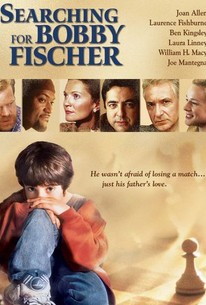
Searching for Bobby Fischer poster

Searching for Bobby Fischer

110 minutes

Cast

Selected cast credits · Film reference

Ben Kingsley Bruce Pandolfini
Joe Mantegna Fred Waitzkin
Joan Allen Bonnie Waitzkin
Robert Stephens Poe’s teacher
David Paymer Kalev
William H. Macy Tunafish father
Max Pomeranc Josh Waitzkin
Austin Pendleton Asa Hoffman
Tony Shalhoub Chess club member
Josh Mostel Chess club regular
Dan Hedaya Tournament director
Laura Linney School teacher
Anthony Heald Fighting parent
Michael Nirenberg Jonathan Poe

Searching for Bobby Fischer | The Rewatchables

Explore episodeClose episode

Producer credits not yet identified.

Half-Assed Internet Research

Vinnie composite; budget/gross; real-match differences; casting; Waitzkin’s later martial arts

In the discussion (6)
Approx. transcript time · 00:19:40Read transcript
  • Vinnie is explained as a composite of three Black park players: Vinnie Livermore, Poe McClinton and an older Jerry. This reassures Charles that the character has a real-world basis rather than purely stereotyped invention.
  • A 12 million budget, 7.3 million gross and cinematography nomination are cited. The crowded 1993 summer is blamed for poor box office despite a durable afterlife.
  • The real rival Jeff Sarwer is said to have been younger, gifted and from a troubled family, with the actual championship shared after a draw. Bruce and other real models reportedly disliked unflattering portrayals, illustrating winner-authored history.
  • The film’s winning position was invented; an October 1995 Chess Life analysis attributed to Larry Evans reportedly found that the opponent could have won. A participant also questions the king pursuit but is teased for lacking expertise.
  • Max Pomeranc was reportedly selected partly for actual chess ability. The real Bruce is described as friendly, soft-spoken, mustached and curly-haired, unlike the film’s severe figure.
  • Real park players informed characters; Waitzkin later left chess for Chinese martial arts, won titles and earned a Brazilian jiu-jitsu black belt, as reported by the hosts.

The Butch’s Girlfriend Award for the Weakest Link in the Film

Too little Vinnie; underused sister; disappearing professor

In the discussion (4)
Approx. transcript time · 00:21:01Read transcript
  • More Fishburne is wanted: the relationship skips its early testing phase and Vinnie lacks the arc given to Kingsley and the father. Whether the mother gets an arc is debated.
  • The underused younger sister is criticized as generic sibling baggage; others defend her effect on family psychology and her refusal to play chess as showing Josh’s difference.
  • The professor needs more scenes as an antagonist and disappears after an outsized introduction.
  • Fishburne needs another 15 minutes and more wisdom; his absence from the family home and travel funding provoke questions.

The Stephen A. Smith Hottest Take Award

More Vinnie; chess beats screen basketball; competitive contempt; mother–Vinnie affair

In the discussion (4)
Approx. transcript time · 00:23:01Read transcript
  • The park community could support its own film; two additional Vinnie scenes would clarify his work, personality and emotional insight. The father’s druggie label seems poorly supported and possibly prejudiced.
  • Charles argues chess is more enjoyable and harder to perform convincingly onscreen than basketball; others counter that visibly bad physical sports acting is much more distracting.
  • Charles argues Bruce is right about competitive contempt and that the offered draw helped normalize participation trophies; the provocation is amusedly received rather than treated as evidence.
  • Van imagines the mother’s support for park chess masking an affair with Vinnie, extending the earlier divorce joke.

What’s Aged the Best?

Script and narration; New York; comeback rhythm; parental pressure; rival; shoes; adult feuds

In the discussion (11)
Approx. transcript time · 00:29:12Read transcript
  • Zaillian’s script integrates distinct arcs, narration and stock footage; the child’s opening voice has aged particularly well.
  • The claustrophobic, lived-in New York chess spaces are praised, comparable with Rounders; Josh’s comfort in the intimidating club shows his love.
  • Editing, clock sounds and swelling music convey regained confidence like a sports comeback; Josh’s trick-or-treat jab signals his return.
  • Opening narration and tournament-parent culture endure; a charter-school anecdote recalls chess students occupying the highest academic-status tier.
  • Pressure after becoming number one is a universal gunslinger dilemma: winning becomes expected and defeat catastrophic. Josh’s later loss of love for chess adds poignancy to the upbeat ending.
  • The Young Fischer callback shifts from Josh to the rival, compared with overhyping young basketball prospects.
  • Vinnie’s first encounter shows insight into Josh’s combination play and his promise to watch out for him.
  • The rival’s ominous appearance and intimidating presence make him a child Drago despite discomfort about portraying an actual child as evil.
  • The rival and professor resemble Drago and his trainer, their isolation and contempt constructed to intimidate Josh.
  • Josh’s Reebok pump shoes are admired, with childhood memories of parents refusing to buy them.
  • Fighting tournament parents and nosy teachers remain recognizable; the professor’s gratuitous application visit is admired as pure psychological warfare against Bruce and Josh.

Cultural Funeral

Chess’s cultural relevance disputed

The panel proposes a new category here.

In the discussion (1)
Approx. transcript time · 00:31:29Read transcript
  • A proposed Cultural Funeral category asks whether chess lost mainstream relevance after this film and Fresh. Craig doubts contemporary interest; others cite The Queen’s Gambit, COVID and an unnamed African chess film, disagreeing over revival versus merely good television.

Roger Ebert's review

In the discussion (1)
Approx. transcript time · 00:36:27Read transcript
  • Ebert’s four-star review is praised for connecting chess to human nature and questioning whether genius must be pursued at the cost of happiness. No denominator is stated.

Most Rewatchable Scene

Fred confronts the teacher

In the discussion (13)
Approx. transcript time · 00:38:54Read transcript
  • Josh initially avoids beating his father until encouraged, illustrating tenderness rather than lack of skill.
  • Josh beating Shalhoub’s player and offering candy is a favorite one-scene appearance.
  • Parents banished from the tournament rely on child messengers; their willingness to be confined reveals how much the competition matters to them.
  • The teacher confrontation and Fred’s defense of his son’s gift are called an easy winner and perhaps Mantegna’s greatest acting. Whether his fury is justified versus embarrassing is disputed; modern spectators would record it.
  • After Josh loses in seven moves, his request that his father stand closer resolves the rain scene through vulnerability. The child actor’s quiet, perceptive sadness and ability to hold his own with major actors make it work.
  • Bruce revealing the certificates are meaningless shatters Josh, and the mother expels him. The scene suggests Bruce’s unresolved trauma; a Black household is imagined intervening sooner, while the child’s love of stickers is questioned then defended by his age.
  • The parents’ argument defends Josh’s decency and threatens separation if competitive pressure destroys it.
  • Fred offers to let Josh quit, but the boy insists it is more than a game; restoring the trophies and taking him back to Vinnie completes the reconciliation.
  • Vinnie’s park lesson restores instinct and risk-taking, urging Josh to play the opponent rather than merely protect the board.
  • Bruce warns Fred how damaging a fall can be, and Fred replies that he understands; Bruce’s vulnerability shows.
  • Bruce’s framed certificate and declaration of pride before the final match supply an emotional reconciliation.
  • The final match combines psychological pressure, the queen motif, board visualization and the offered draw. Josh wins by integrating rather than suppressing his personality.
  • Van and Bill choose the teacher confrontation, while Charles chooses the reunion with Vinnie.

Picking Nits

Public teacher criticism; paternal disapproval; apartment; unreconciled mentors; instant chess knowledge; baseball; cheering rivals

In the discussion (8)
Approx. transcript time · 00:41:35Read transcript
  • The teacher should raise concerns privately in a conference rather than criticizing the family before the class.
  • Calling Josh weak and depicting his father as disapproving feel underestablished despite the slump and trophy handling. A reported real-life history of Fred failing at chess would clarify the projection, but is absent onscreen.
  • A sportswriter supporting four people in a spacious Washington Square apartment is questioned, though the 1980s/early 1990s economics may make it plausible.
  • Bruce joining the Chicago trip after being expelled needs reconciliation with the mother; Vinnie’s ticket and the family’s earlier rejection also need explanation or an apology.
  • The missing ideal scene has a parent visit Vinnie, allowing an account of his lost promise and changing how they support Josh; a former-champion photo is imagined.
  • Josh seems to learn all chess rules and etiquette instantly; innate pattern recognition may not explain missing instruction.
  • The supposed baseball talent is undermined by awkward running, though the child may be exaggerating his athletic ability.
  • Other defeated children staying to cheer Josh feels implausible, countered by shared chess interest and outsider solidarity.

What’s Aged the Worst?

Park prejudice; Fischer’s later legacy; fishing trip disputed

In the discussion (3)
Approx. transcript time · 01:10:23Read transcript
  • The mother’s fear of Black men in the park is criticized; later visits show a more beautiful Washington Square, with the older setting acknowledged.
  • Fischer’s later reputation and decline undermine the romantic tortured-genius framing; other volatile sports figures illustrate a formerly tolerated archetype.
  • A two-week fishing reward sounds miserable to two hosts, while Van strongly defends fishing with one’s father and recalls a lake trip.

Probably Unanswerable Questions

Mother and Vinnie; rival’s final loss

In the discussion (2)
Approx. transcript time · 01:19:14Read transcript
  • A joking future affair between the mother and Vinnie is imagined beginning at the Chicago hotel.
  • The rival’s loss is framed as arrogance, rigidity and inability to see the board rather than simple choking; Josh’s humanity wins.

Is There a Better Title for This Movie?

Bring the Queen Out; Me and Vinnie; Checkmate; questioning Fischer

In the discussion (1)
Approx. transcript time · 01:23:10Read transcript
  • Bring the Queen Out, Me and Vinnie, Checkmate and question-mark variations are proposed because Fischer’s later reputation makes the existing title uncomfortable.

Casting What-Ifs

Ice-T offered Vinnie

In the discussion (2)
Approx. transcript time · 01:26:30Read transcript
  • Vinnie was reportedly first offered to Ice-T.
  • Ice-T could bring an appealing edge but would weaken this film; a separate disagreement erupts over his New Jack City performance.

Apex Mountain

Chess movies; Max Pomeranc; ambitious 1993 children’s films; Washington Square Park, personally

In the discussion (5)
Approx. transcript time · 01:35:04Read transcript
  • Chess movies and Pomeranc are affirmed; Mantegna is rejected in favor of Godfather III’s greater contemporaneous impact despite the film’s possible belated stature.
  • A case is endorsed for ambitious 1993 children’s live-action films, citing The Sandlot, Cool Runnings, Hocus Pocus and Homeward Bound, plus animated Batman: Mask of the Phantasm and The Nightmare Before Christmas.
  • Bringing the queen out early is floated and turns into suggestive wordplay and a discussion of which chess piece suits Van; no clear settled award follows.
  • Kingsley and Allen are rejected, with The Contender proposed for Allen. Fishburne’s 1993 Oscar run is argued for but challenged by Morpheus and The Matrix’s lasting cultural identification.
  • Evil kids is rejected. Washington Square Park is personally affirmed for this movie, while I Am Legend and When Harry Met Sally are raised as comparisons without resolving the broader claim.

Is This Movie Better With…?

Jackson; Trejo; Buscemi as father or tournament parent

In the discussion (1)
Approx. transcript time · 01:48:24Read transcript
  • Jackson and Trejo as Vinnie are recalled; Buscemi could play the father or a tournament parent such as the Paymer role.

Just One Oscar

Zaillian’s screenplay; the film also suggested

In the discussion (1)
Approx. transcript time · 01:48:48Read transcript
  • Zaillian’s screenplay receives agreement; the film itself is another suggestion. Its cinematography nomination is corrected from a claimed win.

What Piece of Memorabilia Would You Want From This Movie?

Knight; framed certificate; pump shoes; candy; chess table

In the discussion (1)
Approx. transcript time · 01:54:58Read transcript
  • The knight piece, framed master certificate, original pump shoes, candy and furniture-style chess table are considered; one participant initially has no choice before selecting the table.

The Coach Finstock Award for Best Life Lesson

Competitive contempt; impressing Dad; multiple sports

In the discussion (2)
Approx. transcript time · 01:55:56Read transcript
  • Have contempt for your enemies is affirmed over the original impress-your-dad suggestion; the mother-child bond and power of paternal disappointment are discussed.
  • Craig recommends encouraging multiple sports rather than forcing early specialization.

Who Won the Movie?

Josh and the Waitzkin family; chess also considered

In the discussion (1)
Approx. transcript time · 01:58:03Read transcript
  • Chess is an initial choice, but Josh or the Waitzkin family’s favorable portrayal becomes the preferred answer; Mantegna is a conditional actor choice, not an independent final winner. The character’s humanity is explicitly distinguished from any one actor.
Podcast choices
Speaker not identified
Josh Waitzkin

Producer review

Slow and unengaging despite strong themes; narration unclear

In the discussion (1)
Approx. transcript time · 01:59:22Read transcript
  • Craig dislikes the slow pace, checks his phone and finds the themes better than the film. Lack of childhood or parenting attachment may matter; he also finds the child’s narration and Kingsley hard to understand, provoking disagreement.

More from the conversation

Charles joins Bill and Van together for the first time after moving to Los Angeles; an anniversary backlog choice becomes the final movie of the year.
Approx. transcript time · 00:02:00Read transcript
The film’s sports rhythm, strong adult cast and parenting lessons reward childhood VHS/cable familiarity and adult rewatching. Winning, art and responsibility to talent are central questions.
Approx. transcript time · 00:03:32Read transcript
Fischer’s absence creates an accessible messianic mystery; his 1970 scultural stature is compared with Ali and a hypothetical vanished Jordan, while a younger viewer initially knew nothing about him.
Approx. transcript time · 00:05:19Read transcript
The costs of greatness and chess’s uncertain financial future make adult negotiations over a child unsettling. Fischer’s later return, Jeremy Schaap confrontation, conspiracism and antisemitism darken the film’s model of genius.
Approx. transcript time · 00:07:41Read transcript
Josh’s empathy contrasts jokingly with Mamba mentality. Parents must distinguish their own competitive desire from the child’s wishes; Bill recalls the pressures his daughter faced.
Approx. transcript time · 00:10:52Read transcript
A video of Rick Brunson training young Jalen illustrates discipline’s benefits and possible childhood costs. The child must also want the work, as with Bill’s son practicing bass; Charles recalls his short wrestling career and less encouraging father.
Approx. transcript time · 00:13:54Read transcript
The film is both father-son and two-parent storytelling. A book written by the father makes him unusually sympathetic, while the mother acts as moral compass and threatens to leave if Josh is changed.
Approx. transcript time · 00:16:26Read transcript
Kingsley and Fishburne offer complementary formal and street mentorship: joy restores Josh’s motivation, but disciplined visualization supplies the final winning insight. Park chess resembles voluntary pickup basketball.
Approx. transcript time · 00:17:44Read transcript
A proposed Bagger Vance/magical-Negro category brings up Green Book, Bagger Vance, The Green Mile and Driving Miss Daisy; the discussion is a suggestion, not an established award.
Approx. transcript time · 00:20:28Read transcript
Bill recalls an early paid Yankee magazine profile of a Cambridge chess hustler, whose surrounding community resembled the film’s park.
Approx. transcript time · 00:23:27Read transcript
Mentors embody Josh’s possible selves: Vinnie’s humanity, parental protection and Kingsley’s institutional discipline. Bruce’s return to speed chess suggests burnout and rediscovered pleasure, undercutting his warning to Josh.
Approx. transcript time · 00:24:43Read transcript
The extraordinary supporting ensemble is celebrated through later careers, with Joan Allen and Fran Drescher attraction tangents. Linney, Macy, Paymer, Hedaya, Pendleton and Shalhoub make it a that-guy training ground.
Approx. transcript time · 00:26:41Read transcript
Fishburne’s 1993 Oscar recognition may explain his outsized impact in a small role; a theory that his part grew to accommodate him is explicitly speculative.
Approx. transcript time · 00:30:07Read transcript
Winning Time and Semi-Pro are praised as convincing screen basketball; Wesley Snipes’s White Men Can’t Jump technique is criticized despite athleticism, while Harrelson is praised. Tommy Lee Jones’s college football background becomes a tangent.
Approx. transcript time · 00:34:54Read transcript
Fischer’s later deterioration and objectionable behavior add a darker tint to the film’s aspirational name.
Approx. transcript time · 00:37:16Read transcript
A sportswriter father observing greatness, Josh wanting to play for the Yankees and Bruce’s lost potential explain the adults’ projections; the script gives each trauma expression.
Approx. transcript time · 00:49:21Read transcript
The certificate becomes a joke about awarding great podcast performances, with Chris’s Boston-history speech in The Town singled out.
Approx. transcript time · 00:50:00Read transcript
Speed chess restores emotion and instinct by reducing overthinking; the contrast is compared with the Celtics becoming overly methodical late in games.
Approx. transcript time · 00:54:33Read transcript
Bill’s son refuses a chess movie, raising doubts about modern children’s attention; Netflix discovery and familiar actors could nevertheless revive it.
Approx. transcript time · 01:00:20Read transcript
Bill recalls quitting childhood lessons after hearing the teacher needed 200 losses before a first win; chess’s pattern learning is compared with piano study.
Approx. transcript time · 01:03:16Read transcript
Fishburne presenting the child with a knight-versus-baseball choice anticipates his Matrix mentor role.
Approx. transcript time · 01:15:42Read transcript
Kingsley’s range, Species and Sexy Beast lead to a debate about his Gandhi Oscar over Newman and Hoffman, changing prestige tastes, Chariots of Fire and a Biden joke.
Approx. transcript time · 01:28:33Read transcript
Rudy’s groundskeeper supplies a parallel mentor, with criticism of his self-blame for racism and affection for the climactic emotional clap.
Approx. transcript time · 01:42:25Read transcript
Van recalls working at TMZ with the performer playing Rudy’s friend Pete and asking him about the role.
Approx. transcript time · 01:43:23Read transcript
A childhood confrontation over a bully stealing reward chips illustrates competitive and defensive instincts.
Approx. transcript time · 01:46:06Read transcript
Early-queen aggression versus patience is compared with family Fortnite tactics and different personalities.
Approx. transcript time · 01:49:52Read transcript
An extended 1990 sHBO appreciation covers The Rat Pack, The Late Shift, And the Band Played On, a Sam Giancana story, Gia, sex-work documentaries, Autopsy and The Iceman interviews. Cheadle’s Sammy Davis Jr.performance receives particular praise; limited availability is lamented.
Approx. transcript time · 01:50:51Read transcript
Oz’s frightening impact as childhood viewing is recalled.
Approx. transcript time · 01:54:23Read transcript
A disappointing college transcript, parenting obligations and Ben’s unexpected appreciation of Raekwon illustrate the fatherhood conversation.
Approx. transcript time · 01:56:50Read transcript
Comic-book parallels move from Xavier/Magneto chess to Tom Holland’s Spider-Man as a gifted child guided by several adult mentors. The episode ends with points/certificate jokes and holiday wishes.
Approx. transcript time · 02:01:25Read transcript