The ranking covers only comedies, excluding horror and science-fiction versions such as Face/Off, Freaky (called actually really liked), Nine Lives with Kevin Spacey trapped in a cat, and The Cobbler with Adam Sandler. — Bill Simmons
Asked for thoughts, the reply places it in the latter days of Meg Ryan's arc, a film that felt like a favor but was enjoyable; it made the playoffs but is not a round-two movie. — Juliet Litman
Lawrence’s toughness and partly goth styling are essential to avoiding cuteness; Vaughn might make a functional but lesser film, while Rob McElhenney and Kat Dennings are joking alternatives. — Andy Greenwald
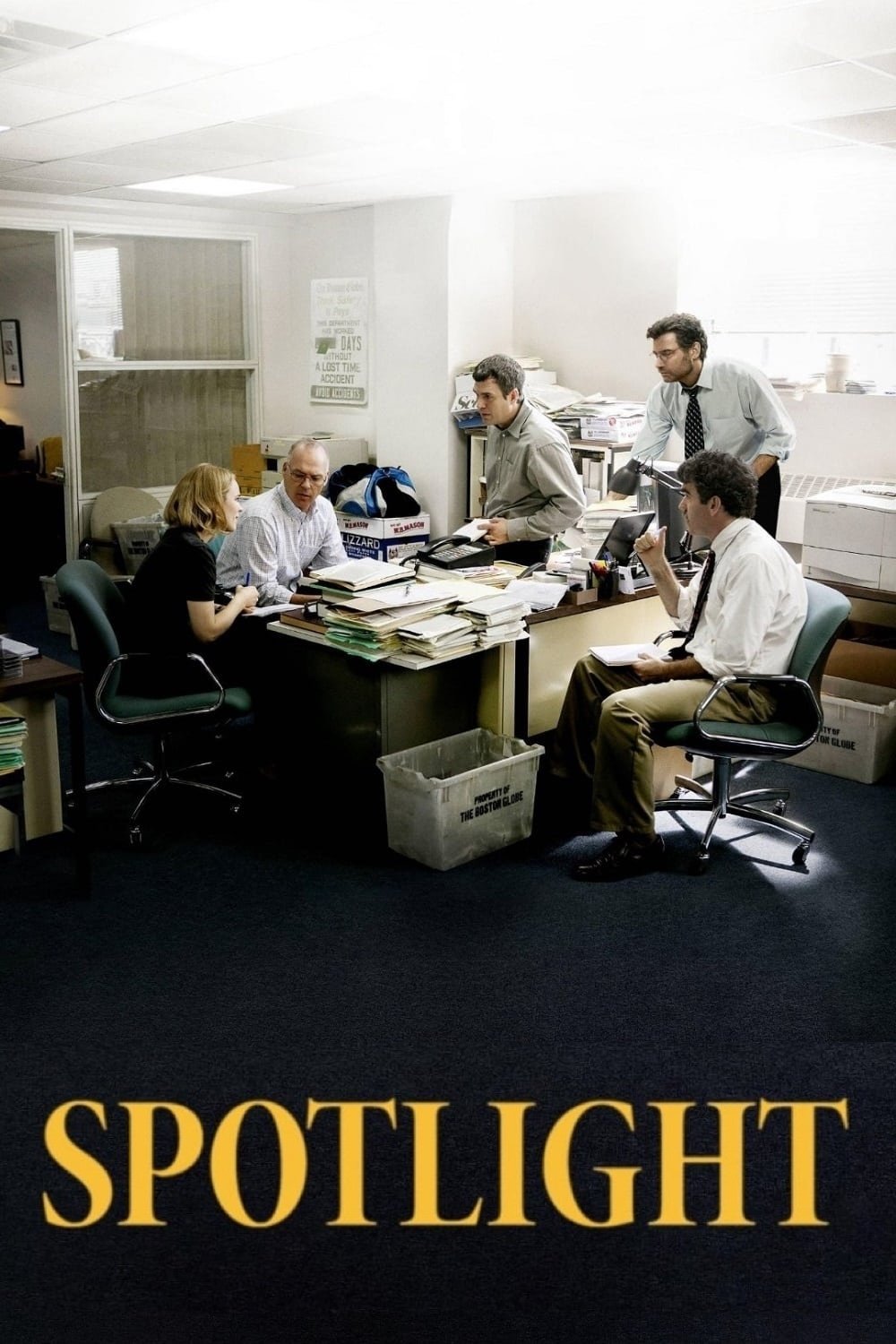
Some accuracy was traded for narrative: the priest interview happened after the first big story and was compressed, which is judged ultimately fine. — Bill Simmons
Crudup's character is protective at first and then says he already mailed the names, which does not make sense on rewatch; a counterpoint cites client confidentiality. — Bill Simmons
Whether McAdams's character is a single workaholic is questioned; the man turns out to be her spouse, so it is no longer a nitpick.
The Boston Globe in real life is floated, still powerful before the internet, fresh off a Pulitzer; the answer is 'maybe' and 'in play'. — Bill Simmons
Ruffalo is close but not at Apex; Zodiac is preferred, and he later spent his time on Hulk.
Slattery lands his best movie role here, but Mad Men is his Apex.
Liev Schreiber gets a yes, with Ray Donovan and the Chuck Weppner movie at the same time, but is challenged ('Are we sure?') and the talk drifts to his stage career. — Ryen Russillo
Rachel McAdams is a no (with an apparent reference to The Notebook), and newspaper movies are a no. — Bill Simmons
A category transcribed as 'pre-scandal movies' (the intended phrase is unclear in the transcript) gets a 'yes, unfortunately'; kept out of the result as unclear. — Ryen Russillo
Schreiber is in the Damien remake that one host's son loves. — Bill Simmons
One participant names khakis as an Apex Mountain, asking whether any film features them more prominently. — Chris Ryan
For saying the title in the movie, Face/Off remains Apex despite Spotlight's frequent title drops. — Bill Simmons
Baron's first staff meeting, where he asks whether Spotlight would consider picking this story, is singled out. — Bill Simmons
The survivor Saviano (first misnamed Josh Saviano, then corrected) explaining that the abuse is spiritual as well as physical is really good and important. — Bill Simmons
The second Crudup meeting is a cat-and-mouse scene about private mediations that left no court records. — Bill Simmons
The speakerphone call, voiced by Richard Jenkins, with the pull-back across the office, is when the stakes rise from a few priests to about 90.
Baron telling them to go after the system rather than individual priests is an incredible journalism lesson, set against Ruffalo's fear of being scooped by the Herald. — Bill Simmons
McAdams's character visiting the priest who matter-of-factly describes his conduct, before his sister intervenes and a school bus appears, is highlighted.
Many of these scenes are not technically rewatchable; Ruffalo getting the documents, the cab ride and his 'They knew' speech is called iconic, with All the President's Men DNA in the copier bit.
Keaton visiting Jim the lawyer at home, with the cheerful wife and the cold husband, ends with 'you and everyone else'; the Red Sox complaints about the 2001 season are a nice touch.
Robbie admitting he had the story in 1993, followed by Marty's speech, is chosen as the favorite scene.
Another set of favorites includes the Red Sox game banter, hauling directories out of a basement with a dead rat, and Crudup's character snapping 'I sent you the names' (the sick-leave code realization is filed under What's Aged the Best); the speakerphone scene is the pick because it reveals the magnitude. — Chris Ryan
McAdams's interview with Joe Crowley, intercut with Ruffalo's, is added for explaining the victim's side, including 'Who, a priest?' with a church beside a playground. — Ryen Russillo
The Crowley sequence was also listed under What's Aged the Best; small details such as his nerves, the muffins and the Dorchester-to-Back-Bay remark avoid handholding. — Ryen Russillo
Only Lucy is recast; it is hard because asking an actress to be universally likable is no longer how female actors are thought of. — Amanda Dobbins
Florence Pugh is floated in bangs and a beanie; she would be more aggressive, a "fire hose" in a Big Picture colleague's phrase, committing to the intensity and the slapstick. — Amanda Dobbins
Victoria Justice is suggested as a Nickelodeon star who might have remade herself five years ago, though probably not a good enough actress. — Juliet Litman
Rachel McAdams brings the same antic, determined energy seen in Morning Glory, a shared favorite, and could sell the implausible elements; the choice amounts to recasting for Bullock herself. — Amanda Dobbins
Elizabeth Olson (as transcribed) is raised but rejected, since the role needs someone who fills the space of doubt and goes on offense. — Amanda Dobbins
Emma Stone is floated for physical comedy, but her wryness would make the audience too aware that the circumstances are wrong; "it's just a no." — Amanda Dobbins
A second closing "final answer" is garbled in the transcript ("I'm going on a stone") and may name Emma Stone; the speaker and choice are unresolved. — Juliet Litman
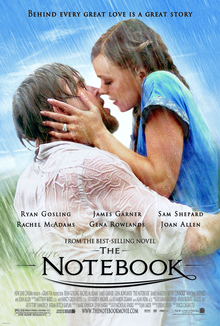
One answer is Rachel McAdams, already much loved in this movie and so good; the case for Gosling is that he gets the best lines, since all the quotes are his, but he would not be this great without her, a performance in reaction, watching chemistry like science; she is the dynamic force.
Asked to fight back, Gosling is the one setting the tone for the relationship and she has to hit the balls back; she fully matches him, but another actor who would not go to this place would not give us this relationship. — Andrew Gruttadaro
They are so well matched that neither would be who they are without the other; the host who picked McAdams holds that she steals it with her charisma but it is really a perfect pair.
Asked what would compel reading a Nicholas Sparks book, the answer is a lot of money, probably the only thing. — Andrew Gruttadaro
Asked the same, the answer is that the gist comes through from the movies and there are enough Southern or beach authors already on the list. — Amanda Dobbins
Nicholas Sparks recently got in trouble for bigoted remarks in an email and apologized; it comes through in this movie, which does not make his books necessary reading.
To one host this is absolutely McAdams's Apex Mountain, more than Mean Girls, for her charm and infectious energy; but the standing rule from Bill is that Apex Mountain is not subjective, it is about the point in the career, so the hosts do the objective peak first and an emotional assessment after.
The objective peak argued is Wedding Crashers, the big movie after Mean Girls and The Notebook; a wedding-crashers joke doubles as a Red Eye joke; she may not have capitalized on the moment but came back with an Oscar nomination for Spotlight and Morning Glory, a great 21st-century rom-com on Hulu.
A third voice also goes with The Notebook, making it two of three for this film over the Wedding Crashers argument, conceding Wedding Crashers is undeniable movies-wise, because the real-life relationship made them celebrities and they were dating by the time Wedding Crashers came out in summer 2005; the MTV kiss recreation is floated as her apex moment.
In the Tom Cruise or Julia Roberts sense of turning acting parts into celebrity, the moment is a soaring high for her and Gosling together; subjectively The Notebook is one host's personal McAdams apex, especially on rewatch, and she was that host's winner of the movie.
She is so skinny in this movie, perhaps too skinny; the clothes are great and flattering, the kind of 40s things you would see in Brooklyn now, which should have gone under what aged best as part of the period-piece idea.
The obvious one is the chemistry between Gosling and McAdams, astonishing and all-time, and partly luck since the casting had to be right; it makes the hosts sad they are no longer together, and Gosling told GQ after the breakup that women yelled at him on the street for breaking up with her because of this movie.
Movies like this raise the question of whether acting is real or whether magic moments are just captured on camera; the half-assed research spills early: the two did not like each other on set and fought a lot, a big blowout reportedly made things better, and he seemed to arrive ready to be a serious actor throwing fastballs that she threw right back.
The Nick Cassavetes part is a weird movie for him to make and the best he has made; his credits include She's So Lovely, a much darker love triangle, John Q, Alpha Dog and The Other Woman with a Kate Upton performance called a historical moment.
Gina Rollins (as transcribed) is his mom, as the son of Gina Rollins and John Cassavetes, and an anecdote has James Garner breaking up when the director called 'okay, mom, action'; he is the star of the DVD extras and the source of the trivia cited later, and he gets immense credit for casting McAdams and Gosling after a long search for her.
Rachel McAdams in general: so good, looks amazing, an incredible performance; asked to choose between Allie and Regina George, one host picks Regina George as the historical, impactful one while loving this performance and her wavy hair.
Asked which role is preferred, the performance caught this viewer a little off guard on rewatch; Regina George is the more iconic character but it is hard to say, and Allie might be liked more. — Andrew Gruttadaro
Allie seems like a better hang and really fun, loves to swim, with so much of the opening montage spent jumping into water, though she is a little fungible, whereas Regina is strong in her convictions even when they are suspect.
Incorporating Charleston is nominated because Charleston in 2019 is really having a moment. — Juliet Litman
The counter puts Charleston under what aged worst: there is too much plantation stuff, everyone in a service role, nurse or household staff, is black, which is glaring and uncomfortable now, a bizarre choice especially at the retirement home, where the one white person is a male doctor.
The movie is a period piece: set in the 40s, so the costumes and references never age, which works fifteen years later; there are almost no references beyond the war, Walt Whitman and the cotton trade.
The structure is really good: whatever one thinks of the dementia plot or the writing in the notebook itself, which seems terrible with respect to Ali Hamilton, the pacing keeps you in young Noah and Ali's world so that you forget James Garner and Gina Rollins (as transcribed) until halfway, and by the time you learn who they are you are invested enough to buy a ridiculous device; one host could not even work out what the notebook was.
Asked about the old-people side, the device is appreciated, but by the time it is revealed that they are them it loses its power. — Andrew Gruttadaro
You realise it is her when she plays the piano and him much later; nobody remembers first finding out, possibly spoiled, yet it still makes one host cry at the end; producer Craig is cited as loving the old people, the framing gives gravitas to the younger story, and nobody can imagine reading the Nicholas Sparks novel, so it is an achievement.
Marsden is a really good hit, not really famous when the movie came out, who went on to be a rom-com guy and now a guy who dies in sci-fi movies.
It starts his career as the other guy, the passed-over guy, but the movie makes you root for Lon and feel bad for him, putting him with Dempsey in Sweet Home Alabama, Karen on The Office and just below Keanu in Something's Gotta Give, where Diane Keaton should have chosen Keanu Reeves.
Deciding, the hosts first propose the old-people device, then remember the chemistry, and settle on giving it to the sex scene described at length earlier, so the chemistry wins in the form of that scene; other nominees were McAdams's performance, Charleston, the period setting, the old-people structure and Marsden's inclusion; a joke proposes a video bonus breaking down the choreography on a telestrator.
Before any nominees, the question is whether a scene without both Ryan Gosling and Rachel McAdams can even make a case, such as Joan Allen taking Allie to see the boyfriend that never was; the answer is no, that belongs in a different category, so this is a Noah and Allie podcast, young Noah and Allie, with old Noah and Allie saved for later.
The first nominee is the first date: they lie down in the empty street, almost get hit by a car, then dance while Gosling hums 'I'll be seeing you'; it is called one of the more romantic movie scenes of the 21st century, the insistence on dancing is sweet, he is a trained dancer from the Mickey Mouse Club, and the scene is the purest expression of the chemistry that animates the movie.
Asked whether the scene works because of their chemistry or because of Ryan Gosling, the answer is both: they are really magnetic with each other, and McAdams's reactions and the way she plays off him in that scene are really good. — Andrew Gruttadaro
Her guffawing when they almost get hit by a car seems not to fit her character but makes it whole; her charm jumps off the screen, the role is written as feisty and she is the aggressive one, both characters keep catching each other on the back foot, so you watch them discovering each other in real time and the credit cannot all go to Gosling.
Gosling looks so young, more like his Remember the Titans character than at any other point, which he was fresh off; the next nominee is the montage of them falling in love that culminates on the beach with 'if you're a bird, I'm a bird'.
Asked where the bird scene ranks among tearjerkers, the answer is that it is up there: the weird conversation about being birds takes you aback and then turns out to be beautiful. — Andrew Gruttadaro
The hosts remember having to explain 'if you're a bird, I'm a bird' to Chris Ryan; the movie got a second life on the Internet, like Mean Girls two months earlier, and the line became a meme, though for one host and her college roommates who watched it constantly it was already something they said to each other, and the movie became a thing partly because college kids who loved it then started using the internet.
Next nominee: Allie first arrives at the restored house, having come from Charleston, where both actors moved beforehand to get familiar with the city, which is read as very Canadian; she is awkward, he barely speaks, she tries to drive off and hits the fence and ends up staying; the clip is played, and this is the scene nominated, not the next-day scene.
The next-day scene follows: the blue dress she then wears for most of the movie, the birds, the rain, 'why didn't you write me', 'I wrote you every day for 365 days', building to 'it wasn't over, it still isn't over' and the kiss and sex in the house, the most famous scene from the movie; he catches her on an inhalation when he kisses her.
The choreography of the sex scene is elaborate, with confusion about why he keeps his pants on to walk upstairs, emphasis on stripping down one stocking at a time, and heavy blocking from the dock to their falling asleep; the heart of the movie rests on their chemistry here and they hit the fiery tone, though one host is distracted by how easily he pulls the boat out of the water.
They won Best Kiss at the MTV Movie Awards and reenacted the kiss on stage, where she wore a strapless bustier-type top and looked incredible, very 2005; the appearance came two years after they filmed the movie.
Next nominee: after the outing with her mom she returns flustered, they have their last big fight and he says 'I want all of you'; it is called the most powerful Ryan Gosling moment, the source code for what he becomes, and the start of his habit of yelling random words of emphasis; he dominates the scene because she barely speaks, and the gregarious Noah of the opening never returns after the break, a thought parked for a later category.
Asked whether any nominee has been forgotten, the Ferris wheel is offered, and later it is confirmed as the only other one on the list. — Andrew Gruttadaro
The Ferris wheel is good but happens too early in the movie to have been seen multiple times on cable; one host realised she had never seen the first five minutes or the opening credits with the man rowing a boat, so the objection is a technicality; the scene is up there but the passion has not been established yet.
Asked for a number one, the pick is 'it still isn't over': the most famous scene, but if you turn the movie on within twenty or thirty minutes of it you have to keep watching until you see it. — Amanda Dobbins
Asked for a most rewatchable scene, the answer is agreement that it is hardly an argument. — Andrew Gruttadaro
A bad Alzheimer's joke compares the compulsion to keep watching with Allie's condition.
Another voice rides hard for the fight scene and has great affection for the first date, called the most romantic five minutes of cinema of the past two decades, but in terms of rewatchability it is 'it still isn't over'.