
Stats
- Episodes featuring their films
- 2
- Movies in this archive
- 3
Rewatchables episodes featuring Adam Sandler’s films
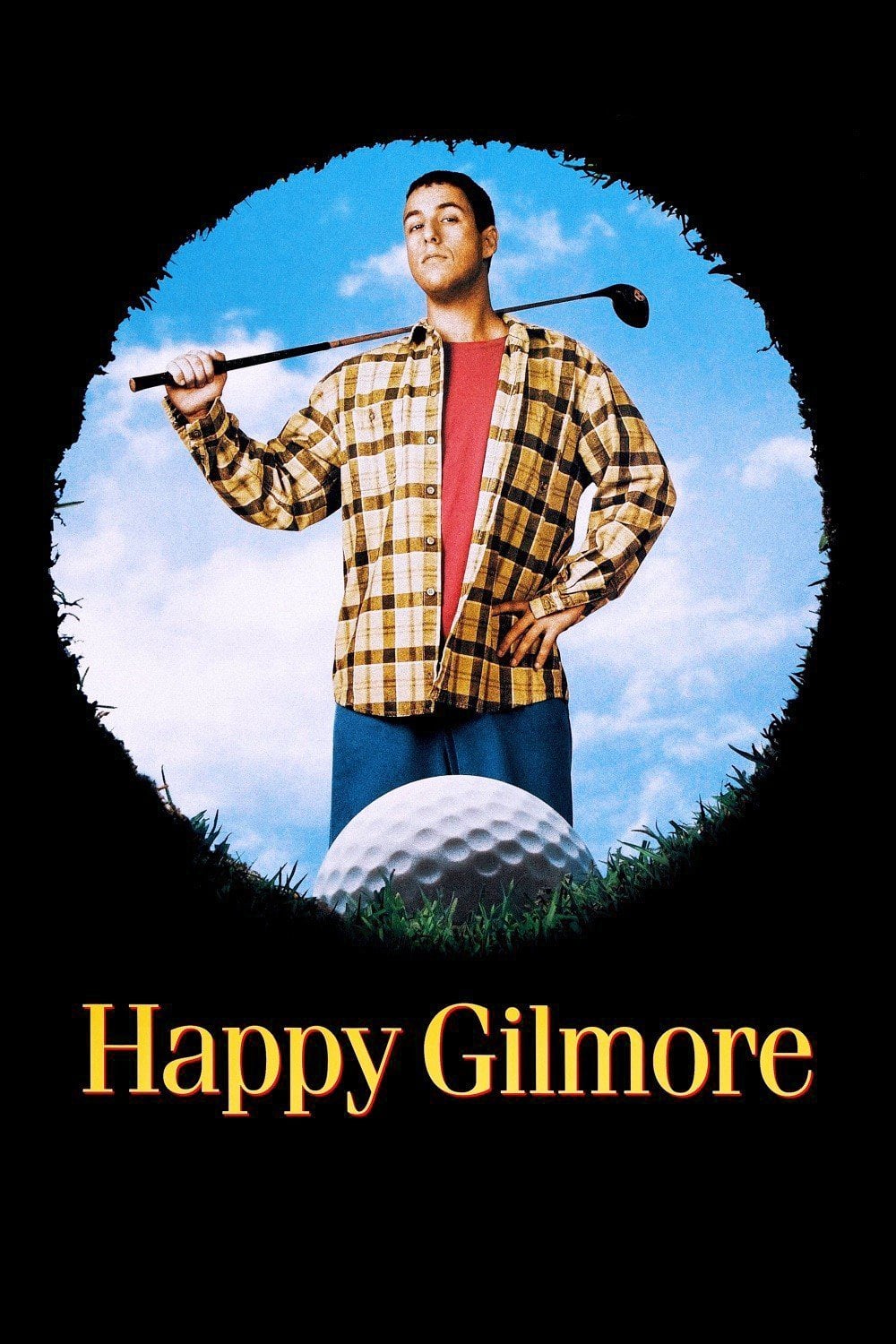
Happy Gilmore
1996 film
Bill Simmons · Sean Fennessey · Josh Safdie · Benny Safdie
Aired December 10, 2019
Mentioned in discussions

Top Ten List
Body-switch comedies




In the discussion (9)
- The ranking covers only comedies, excluding horror and science-fiction versions such as Face/Off, Freaky (called actually really liked), Nine Lives with Kevin Spacey trapped in a cat, and The Cobbler with Adam Sandler. — Bill Simmons
- The list builds from one out of ten, The Hot Chick with Rob Schneider and Rachel McAdams, joking she should make a Notebook sequel to buy up all copies. — Bill Simmons
- Two out of ten is Dream a Little Dream with the Corys, a rare four-person switch that somehow got a sequel. — Bill Simmons
- Three out of ten groups the father-son versions: 17 Again, Like Father Like Son with Kirk Cameron and Dudley Moore, and Vice Versa with Judge Reinhold and Fred Savage, the best of the three. — Bill Simmons
- Four out of ten is The Change-Up with Ryan Reynolds and Jason Bateman, not a very good movie. — Bill Simmons
- Five out of ten is Prelude to a Kiss with Meg Ryan and Alec Baldwin, called the Juliet stratosphere. — Bill Simmons
- Asked for thoughts, the reply places it in the latter days of Meg Ryan's arc, a film that felt like a favor but was enjoyable; it made the playoffs but is not a round-two movie. — Juliet Litman
- Six out of ten is All of Me with Steve Martin and Lily Tomlin; seven is the 2003 Freaky Friday with Lindsay Lohan and Jamie Lee Curtis, called rock solid, with a tangent on Lohan's Parent Trap to Mean Girls run. — Bill Simmons
- Eight is 13 Going on 30, nine Being John Malkovich as the highbrow version, and ten Big, called the best one ever and the icon everything else derives from. — Bill Simmons

Who Won the Movie?
Sonny’s father and the judge / Adam Sandler
In the discussion (2)
- Sonny’s father is chosen for delivering a realistic judgment of his irresponsibility; the judge is added to that answer. — Joe House
- Adam Sandler is chosen for the career and production-company benefits and his unusual ability to sustain audience sympathy. — Joe House
Podcast choices
- Joe House
- Sonny’s father and the judge

The Ruffalo / Hanna / Rubinek / Partridge Overacting Award
Adam Sandler after social services takes the child
In the discussion (1)
- Sandler’s reaction after social services takes the child is criticized as emotionally unconvincing. — Bill Simmons

In the discussion (2)
- The Sprouse twins are proposed as benefiting from the film and their subsequent Disney success. — Bill Simmons
- Sandler receives agreement: a major hit caps his comedy streak and positions him to launch his own production company. — Bill Simmons

Producer review
The producer praises the football and final forty minutes, finds the first hour dated, admires the older stars’ natural presence, wants a stronger final speech, and argues Crewe should have thrown the game
In the discussion (9)
- The producer had only seen and enjoyed the Adam Sandler remake before this viewing. — Craig Horlbeck
- He finds the final forty minutes highly rewatchable but the opening hour visibly fifty years old. — Craig Horlbeck
- The real football players and wide staging make the game convincing. — Craig Horlbeck
- Reynolds, Harrison Ford, Paul Newman, and Brando are contrasted with more manicured modern stars. — Craig Horlbeck
- Reynolds’s quiet, still star power is described as nearly extinct. — Craig Horlbeck
- The football includes credible reverses, sneaks, and a back-shoulder pass. — Craig Horlbeck
- The addendum wanted more than roughly fifteen words from Crewe’s final speech. — Craig Horlbeck
- The producer argues Crewe should have thrown the game and left prison after eighteen months. — Craig Horlbeck
- Norm Macdonald’s Saturday Night Live impression shaped his first understanding of Burt Reynolds. — Craig Horlbeck

Casting What-Ifs
Rob Lowe as Richard; Adam Sandler as Richard; Matthew McConaughey for the Lowe role; Roseanne Barr as Helen
In the discussion (4)
- As the hosts tell it, Michaels originally envisioned Farley with Lowe as the foil in the Richard part, which fell through because Lowe had other commitments. — Bill Simmons
- The hosts say Farley pushed for Spade or Sandler; Sandler was already shooting Billy Madison, so Spade was the third choice, called the right one. — Bill Simmons
- The hosts say scheduling conflicts nearly forced Lowe out, and quick auditions included Matthew McConaughey, which would have been fun between Dazed and Confused and A Time to Kill. — Bill Simmons
- Helen the waitress was reportedly meant for Roseanne Barr, who was busy with her show; called a good miss. — Bill Simmons
In the discussion (5)
- Adam Sandler won the movie.
- Francis Bay is also named, met with "Come on."
- This is the film that set Sandler up and made people obsessed with him, mixing Billy Madison craziness with naturalism and heart.
- Dugan is raised and rejected as not an option.
- Carl Weathers supposedly considered the film a huge game changer for him.
Podcast choices
- Speaker not identified
- Adam Sandler
Half-Assed Internet Research
Predator hand joke; Mark Lye's gold-jacket claim; Lee Trevino's regret; deleted Stiller window scene
In the discussion (4)
- Chubbs's missing hand was an inside joke between Sandler and Hurley about Predator. — Bill Simmons
- The first draft reportedly had Happy winning the Masters until consultant Mark Lye suggested a fictional tournament with gold jackets; his telling is mocked. — Bill Simmons
- Lee Trevino reportedly regretted appearing because of the swearing; called a bad take. — Bill Simmons
- A deleted scene of Happy throwing Ben Stiller through a window is noted. — Bill Simmons

In the discussion (8)
- Nominees include Ben Stiller and Bob Barker.
- Vern's silent partner Jack, identified as Sandler's New York University roommate Giaraputo, never speaks. — Bill Simmons
- Bob Barker is called an all-time Dionne Waiters performance and gets a vote. — Bill Simmons
- Joe Flaherty, Lee Trevino, Nealon and Alan Cover (as transcribed) are added as nominees.
- Nealon is preferred by another participant.
- The case for Barker: five memorable minutes like 21 points; Nealon is the coach who draws up the winning play.
- A vote is cast for Bob, and another participant goes Nealon.
- Vern is floated as a candidate for grounding the movie as a credible golf announcer. — Sean Fennessey

What’s Aged the Best?
Happy swing; Kevin Nealon; ninth-green sprinkler trick; Tuesday's Gone; "go to your home" and "tap it in" lines; homeless caddy; Julie Bowen; Shooter McGavin; Ben Stiller's orderly; alligator fight; Subway commercial
In the discussion (12)
- The Happy swing is athletic and hard to pull off; Sandler golfs but is not thought to be very good.
- The Nealon scene is called the best use of Kevin Nealon in a movie, and he should appear in every movie.
- Aged-best items include the ninth-green sprinkler trick and Tuesday's Gone.
- The "go to your home" outburst is something everyone says when playing golf. — Bill Simmons
- "Just tap it in" applies to a lot of life.
- Alan Covert's homeless caddy is called the best; he is in every Sandler movie.
- Julie Bowen is named; everyone had a crush on her, and her "Happy, look out" yell sticks. — Bill Simmons
- Shooter McGavin is called perhaps the number one sports movie villain, with details like his phony Portland interview and turned back before introductions.
- A real-life Shooter is compared to Brooks Kepka and Nick Faldo.
- Ben Stiller's orderly, the air conditioner falling, the piano in the reborn happy place and the alligator fight are added.
- Whether the role helped McDonald's career is questioned, since he worried about typecasting as a villain.
- The Subway tie-in is called probably the best-aged thing and a legitimately good commercial.
In the discussion (7)
- Ebert is called a little overrated and often wrong; another participant defends him as important to understanding film history. — Bill Simmons
- Ebert gave the film one and a half stars out of four. — Bill Simmons
- Ebert is quoted saying Sandler's character lacks a pleasing personality, seems angry even when he should not, and that pounding everyone he dislikes is tiring. — Bill Simmons
- The review is called kind of right while being wrong, since the angry, psychotic yet warm persona is the point.
- Ebert would have praised the same traits in an art film, such as a Hurtzog movie; he had many bad takes on 1990s comedies, including The Mask.
- Ebert's review also listed the film's product placements, including Pepsi, Subway, Budweiser, Michelob, Visa, Bell Atlantic, AT&T, Sizzler, Red Lobster, Wilson, Golf Digest, ESPN and Top Flight golf balls. — Bill Simmons
- The product-placement criticism is called totally unfair, though Ebert is still called a great critic even when wrong. — Bill Simmons

Most Rewatchable Scene
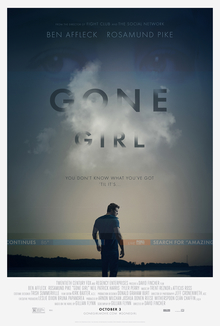
The reveal: Amy's 'I'm so much happier now that I'm dead' monologue
In the discussion (17)
- The first hour is watchable but rewatchability heats up around the big turn; the first nominee is Affleck coming home to find Amy missing and calling the police, with the neighbor across the street, the lady cop quietly suspicious because it is usually the husband, and the meticulousness of the search, which sets the film up as a whodunit it is not.
- You have to instantly believe Rhonda Boney knows what she is doing, because she is a central figure and the last life raft for hoping someone keeps pursuing the case; her post-it notes on the blood spatter and the way she reads the plugged-in iron beside a dress that represents romance show something is up right away.
- The outdoor Amy rally with protesters is a good scene with a good twist, shot wide so it feels like another bullshit vigil before the turn against Ben Affleck; Casey Wilson is great as Noelle, the extremely dumb pregnant neighbor seduced into Amy's plan, and the shots of Emily Ratajkowski mouthing words back at him and of Affleck fleeing cameras in slow motion like a lumbering old quarterback are smartly staged.
- The big reveal, 'I am so much happier now that I'm dead', arrives one hour and seven minutes in, a point where Bloodsport is nearly over; Amy's monologue runs about five pages on IMDb though it is much shorter than the book's cool girl passage, and a first-time viewer briefly fears a dead-narrator movie before 'technically missing, soon to be presumed dead' lands.
- Asked to read the bold paragraph aloud, she asks which part, protests that her dad listens to these podcasts, hates the 'befriend a local idiot, fake a murder' part because she feels bad for the local, and identifies the waxing passage as the part she is being made to read before reading it. — Mallory Rubin
- The paragraph read aloud, waxing, canned beer and Adam Sandler movies, cold pizza at a size two, forging the man of her dreams and being the happiest couple they knew, is called the whole movie in one paragraph: a couple that learned to like the identity of being a couple more than being together; someone asks whether there were no salons in New York.
- Taking issue with that reading, he recalls his father, not a speech-giver, sitting him down before his wedding to say that people change: Nick changes and becomes a less good partner, Amy becomes more insane with a history of manipulation involving Skeet Ulrich's character, and after the sparks of first meeting everyone has pitched a slightly more appealing version of themselves. — Sean Fennessey
- The other key passage is 'you think I'd let him destroy me and end up happier than ever? No fucking way. He doesn't get to win. Grownups work for things, grownups pay, grownups suffer consequences.'
- Teased that he has the happiest marriage anyone on the show knows and yet loves a film that is its opposite, he answers that it ends with her covered in blood coming back, and it is fun to watch and be glad that is not him right now. — Shea Serrano
- Lola Kirk (as transcribed) is shouted out as the runaway Dionne Waiters (as transcribed) winner, especially the pool scene and her re-enactment of Affleck touching Emily's face; Nick's interview with the TV host played by the actress from The Fugitive (transcribed 'Cee LaWord') works like the unseen heist in Reservoir Dogs, cutting to the car where he is told how good he was.
- Amy's return to Nick's house is called amazing: one host watching with Laramie, who had read the book, could not believe her stumbling out of the car covered in blood, with Affleck's 'you bitch' in her ear, the 'I'm not a quitter' lead-up to the interview and the twin sister crying devastated in the kitchen, an amazing Carrie Coon performance; that host's pick is Amy returning and everything after, while another much prefers the beginning.
- Smaller early picks: the first police interview, where 'she's a voracious reader' reveals how little Nick knows about his wife, Boney's instant lack of trust, Gil asking whether they are really married and the blood-type question, which leaves the hosts admitting they do not know their own or their wives' blood types, or even their social security numbers.
- The press conference: Nick's four words devoid of sincere emotion, the iconic pie-eating grin beside the poster, contrasted with her parents going into stump-speech mode with talking points; the parents sold her childhood and turned her into something others could digest, which earns some sympathy for Amy and explains both relationships.
- The Desi murder has to be in the list as the most iconic, amazingly staged scene, with Amy untucking his shirt so the security cameras catch him tucking it back in, but some find it too unpleasant to rewatch; even on a seventh or eighth viewing, the throat slicing still shocks.
- The reveal is the pick for several: one expected the familiar turn where the husband's face goes evil and the body is in the basement, and instead sat hands on head listening to her explain everything; 'America loves pregnant women' followed by calling Noelle a pregnant idiot, and the closing pregnancy reveal, tie it all neatly together.
- The seduction scenes are also good: the meet-cute at the party, the proposal at the Amazing Amy book party, Nick posing as a journalist, really a men's-magazine writer; the reveal, another host's pick, references those fairy-tale early days as true and crucial, the foundation for believing in their love at all.
- What makes the reveal great beyond the shock is the pride and vindication in Amy's meticulous steps, 300 diary entries written with different pens, sitting on the kitchen floor of a home in his hometown she never wanted, an IV draining her own blood while she reads a book, with a quick shot that Nick would clean poorly; one host would pay for just the first part as a rom-com, which is said to already exist as He's Just Not That Into You.



